

Barbell Lying Back Of The Head Tricep Extension vs Barbell Lying Close-grip Press
Compare target muscles, equipment, difficulty, movement type, and secondary muscles for Barbell Lying Back Of The Head Tricep Extension and Barbell Lying Close-grip Press.
Get comparison link
Select the link and use your device's Copy command.
Comparison overview
AI-generatedExercise Comparison
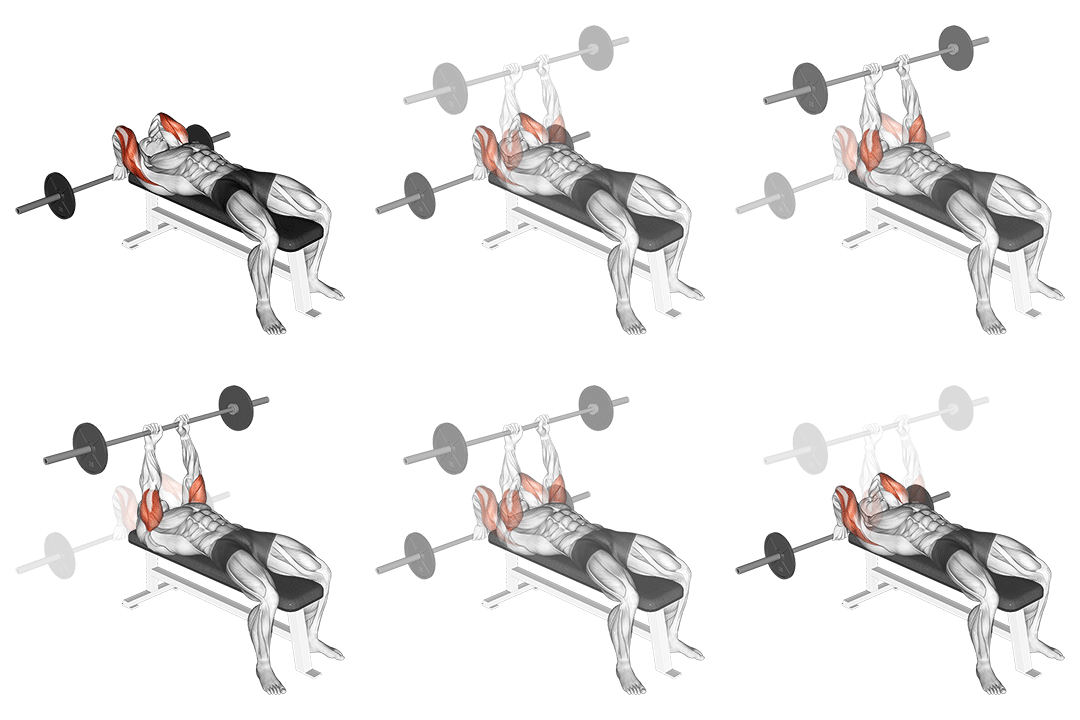
Barbell Lying Back Of The Head Tricep Extension
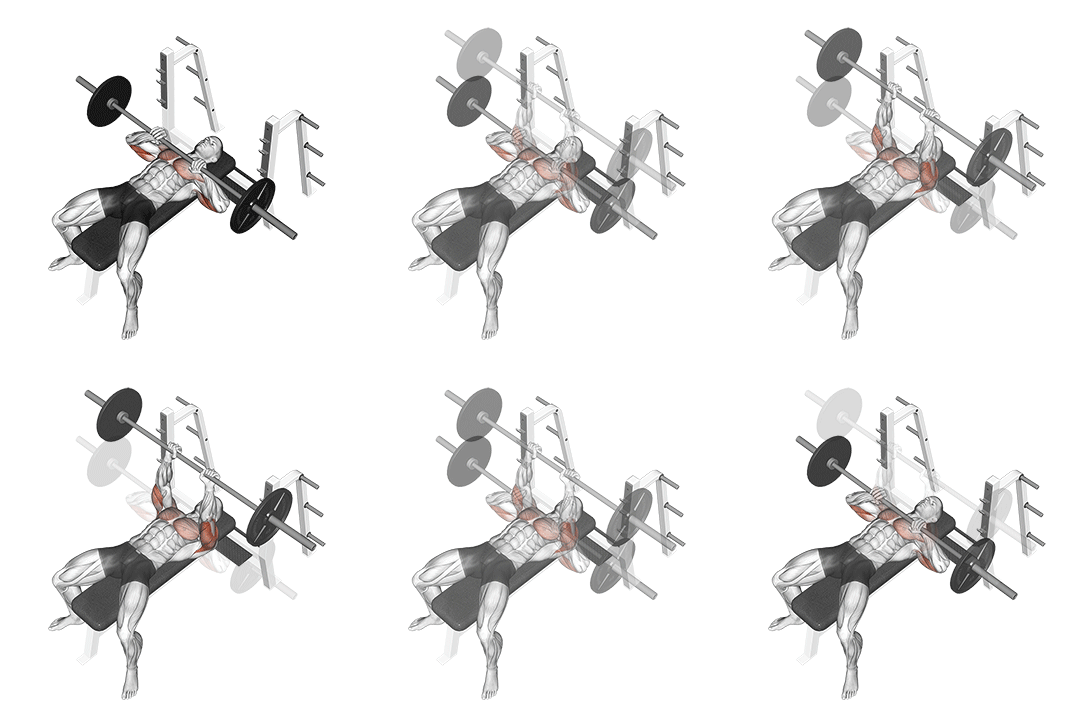
Barbell Lying Close-grip Press
Head-to-Head Comparison
Different values are marked. These are catalogue attributes, not performance scores.
Muscles used
Listed target and secondary muscles, shown on the body. Locations, not activation or strength scores.
- Target
- Secondary
- Not highlighted
Barbell Lying Back Of The Head Tricep Extension
- Target
- Triceps
- Secondary
- Shoulders
Not shown on diagram: Shoulders. These labels do not identify a precise region on this map.
Barbell Lying Close-grip Press
- Target
- Triceps
- Secondary
- Chest, Shoulders
Not shown on diagram: Shoulders. These labels do not identify a precise region on this map.
Grey does not mean a muscle is unused. The diagrams show only the mapped catalogue labels.
| Attribute | Barbell Lying Back Of The Head Tricep Extension | Barbell Lying Close-grip Press |
|---|---|---|
| Target Muscle | Triceps |
Triceps |
| Body Part | Upper-arms |
Upper-arms |
| Equipment | Barbell |
Barbell |
| Difficulty | Intermediate |
Intermediate |
| Movement Type Different | Isolation |
Compound |
| Secondary Muscles Different | Shoulders |
Chest, Shoulders |
Visual Comparison
An illustrative 1–10 profile derived from catalog difficulty, equipment, and listed-muscle fields—not measured performance or muscle activation.
Key Differences
- Barbell Lying Back Of The Head Tricep Extension is an isolation exercise, while Barbell Lying Close-grip Press is a compound movement.
- Both exercises target the Triceps using Barbell. The catalogue does not establish which exercise is better for an individual goal.
Muscle comparison
Shared target muscles
Secondary muscle differences
Muscle involvement analysis
Equipment and setup
Barbell Lying Back Of The Head Tricep Extension: setup
Barbell Lying Close-grip Press: setup
Access and practicality
Learning and progression
Learning the movements
Progression considerations
Limitations and precautions
Pros & Cons
Barbell Lying Back Of The Head Tricep Extension
+ Pros
- Direct triceps isolation — strong focus on long head stretch and peak contraction
- Excellent for higher-rep hypertrophy sets (8–15+ reps) and controlled eccentrics
- Clean length-tension emphasis when upper arm is vertical — good for sculpting the triceps
- Can be done with EZ bar to reduce wrist stress and improve comfort
− Cons
- Higher technique demand — poor form risks hitting the head or stressing elbows
- Limited absolute load capacity compared to compound presses
- Requires a bench and often a spotter for heavier sets
Barbell Lying Close-grip Press
+ Pros
- Compound lift — builds pressing strength and transfers to bench pressing
- Handles heavier loads, making it superior for low-rep strength work (3–6 reps)
- More accessible — easier to spot, rack, and floor-press if needed
- Simultaneously trains chest and shoulders, saving time in programming
− Cons
- Less pure triceps isolation — chest and delts share the load which can limit triceps stimulus
- Wrist and shoulder discomfort with very narrow grips if mobility is limited
- Hand placement and elbow flare can shift emphasis away from triceps if performed incorrectly
When Each Exercise Wins
The extension puts the long head under stretch and allows an extended time-under-tension with focused eccentrics and peak contraction. Use 8–15 reps, controlled 2–3 second eccentrics, and keep upper arms vertical to maximize triceps fiber recruitment.
Close-grip presses let you handle heavier loads and train the CNS for powerful elbow extension under compressive press vectors; program 3–6 rep sets with progressive overload and 2–5 minute rests.
The movement mimics the bench press pattern and is easier to learn and spot; novices can build pressing coordination and strength before isolating the triceps with extensions.
You can floor-press the close-grip variation if you lack a bench, and it requires less precise bar path control. That makes it more practical for limited-equipment setups.
Frequently Asked Questions
Can I do both Barbell Lying Back Of The Head Tricep Extension and Barbell Lying Close-grip Press in the same workout?
Which exercise is better for beginners?
How do the muscle activation patterns differ?
Can Barbell Lying Close-grip Press replace Barbell Lying Back Of The Head Tricep Extension?
Comparison Summary
Exercise instructions
Steps from the exercise catalogue. Read the full sequence before starting.
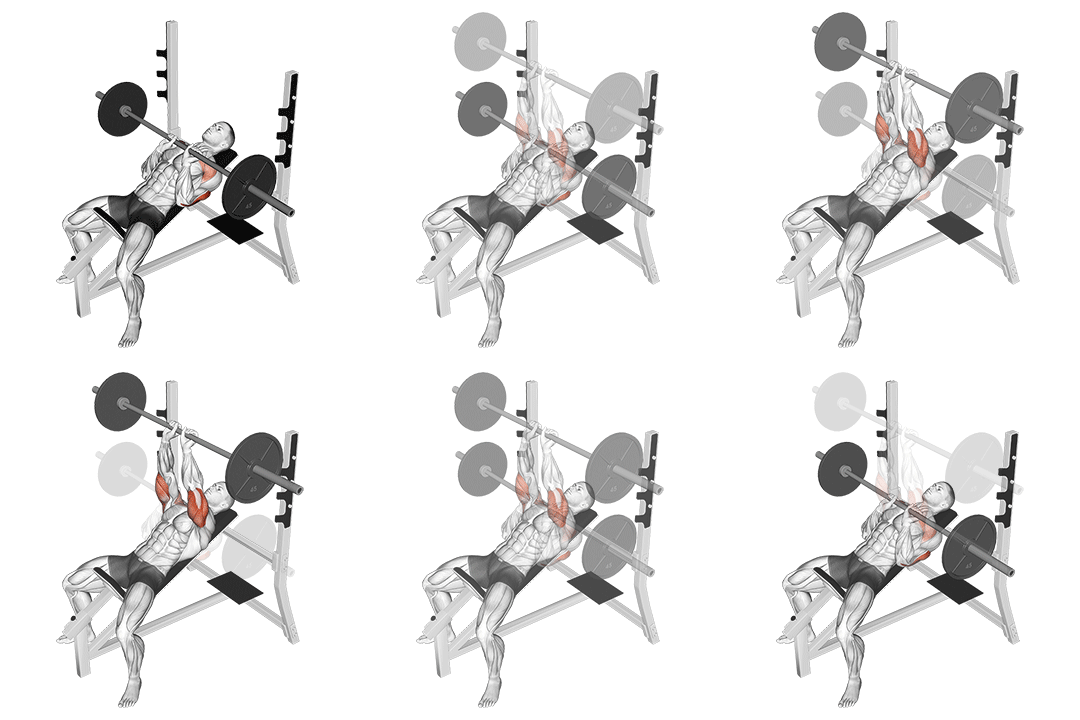
Barbell Lying Back Of The Head Tricep Extension
- Lie flat on a bench with your feet flat on the ground and your head at the end of the bench.
- Hold a barbell with an overhand grip, hands shoulder-width apart, and extend your arms straight up over your chest.
- Keeping your upper arms stationary, slowly lower the barbell behind your head by bending your elbows.
Read remaining steps for Barbell Lying Back Of The Head Tricep Extension
- Pause for a moment, then extend your arms back up to the starting position.
- Repeat for the desired number of repetitions.
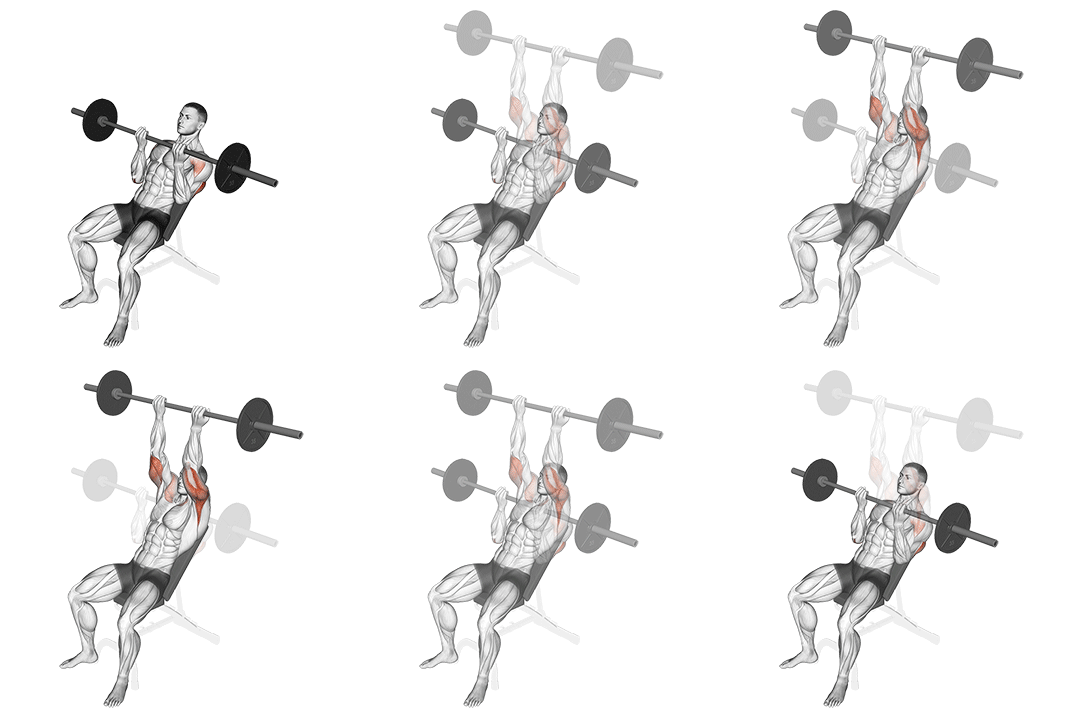
Barbell Lying Close-grip Press
- Lie flat on a bench with your feet flat on the ground and your back pressed against the bench.
- Grasp the barbell with a close grip, hands shoulder-width apart, palms facing towards your feet.
- Lift the barbell off the rack and hold it directly above your chest with your arms fully extended.
Read remaining steps for Barbell Lying Close-grip Press
- Slowly lower the barbell towards your chest, keeping your elbows close to your body.
- Pause for a moment when the barbell touches your chest, then push it back up to the starting position.
- Repeat for the desired number of repetitions.
Also Compare
More comparisons with Barbell Lying Back Of The Head Tricep Extension
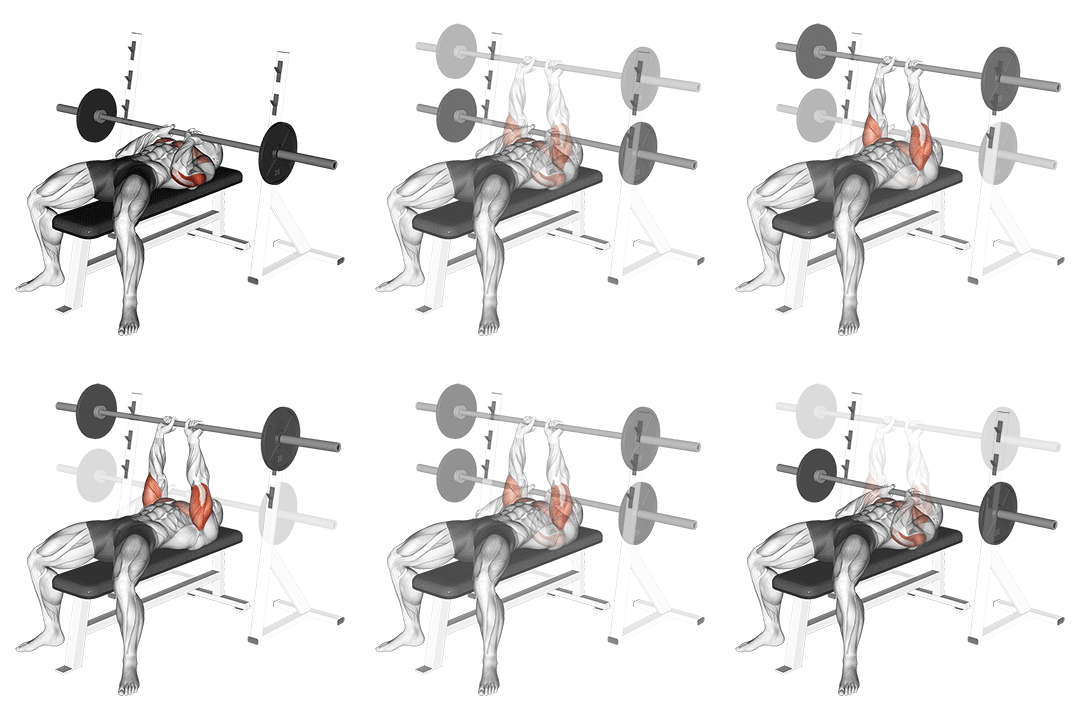
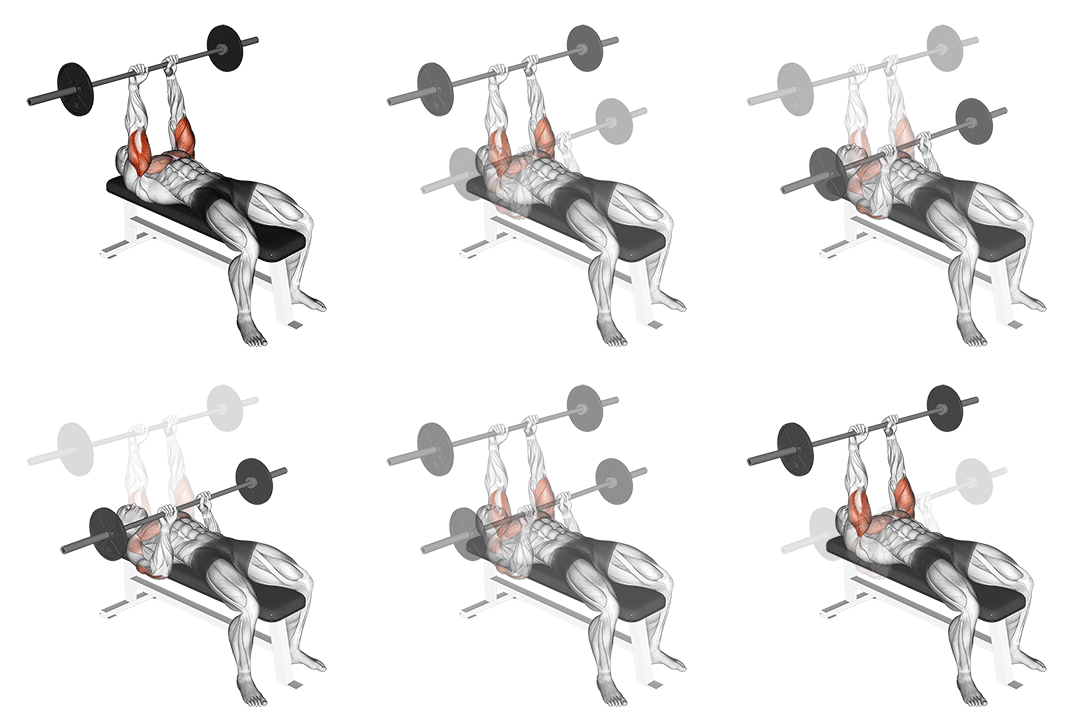
More comparisons with Barbell Lying Close-grip Press
Compare another pair
Choose two exercises to see their differences side by side.