

Barbell Deadlift vs Barbell Romanian Deadlift: Complete Comparison Guide
Barbell Deadlift vs Barbell Romanian Deadlift — you're choosing between two heavy-hitting hip-hinge moves that both target the glutes and posterior chain. This guide walks you through muscle activation, equipment needs, technical cues, programming (rep ranges and progression), and injury considerations so you can pick the right lift for strength, muscle growth, or accessory work. I'll show clear technique cues, explain the biomechanics (lever arms, hip extension moment, length-tension), and give actionable recommendations you can use in your next workout.
Exercise Comparison
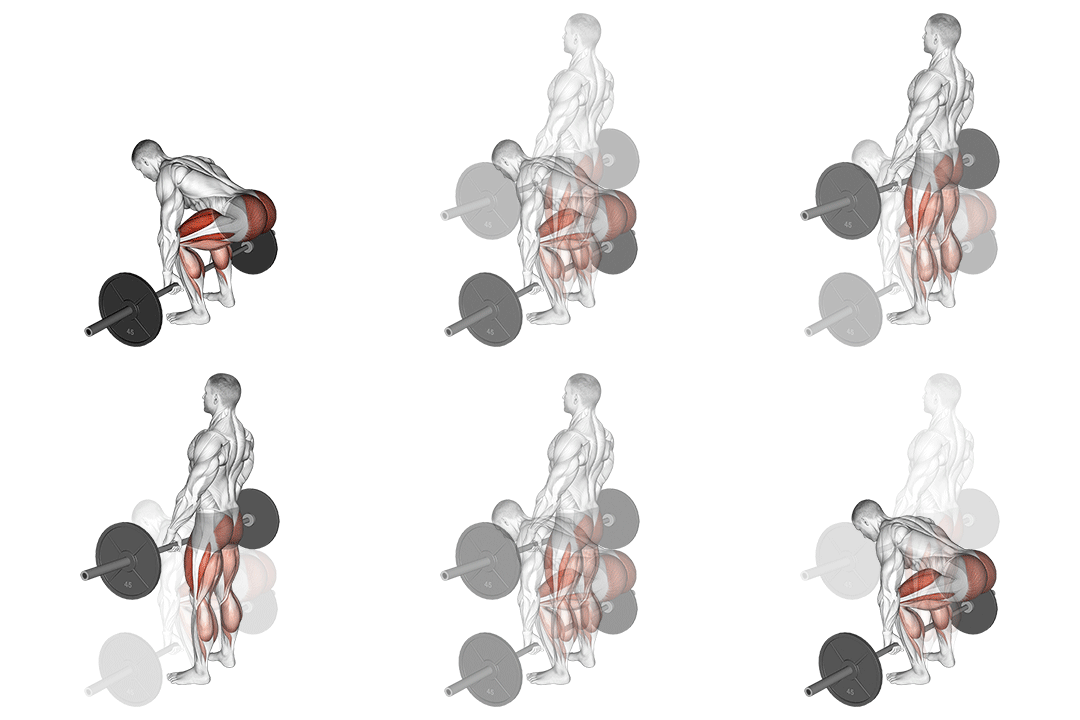
Barbell Deadlift
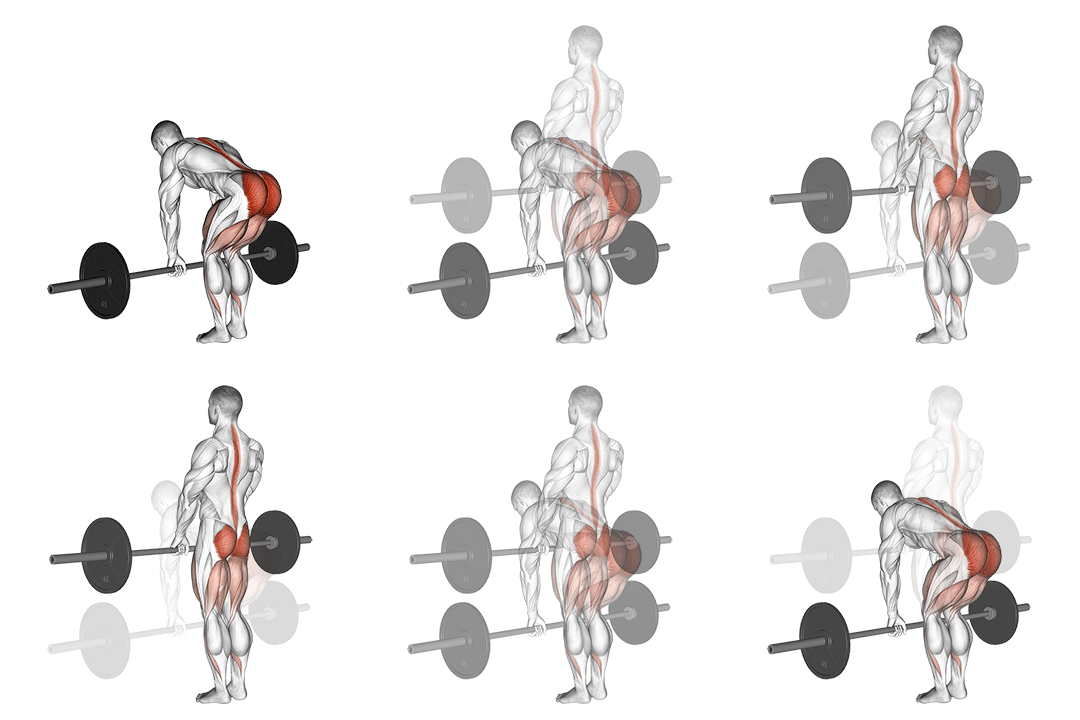
Barbell Romanian Deadlift
Head-to-Head Comparison
| Attribute | Barbell Deadlift | Barbell Romanian Deadlift |
|---|---|---|
| Target Muscle |
Glutes
|
Glutes
|
| Body Part |
Upper-legs
|
Upper-legs
|
| Equipment |
Barbell
|
Barbell
|
| Difficulty |
Advanced
|
Intermediate
|
| Movement Type |
Compound
|
Compound
|
| Secondary Muscles |
2
|
2
|
Secondary Muscles Activated
Barbell Deadlift
Barbell Romanian Deadlift
Visual Comparison
Overview
Barbell Deadlift vs Barbell Romanian Deadlift — you're choosing between two heavy-hitting hip-hinge moves that both target the glutes and posterior chain. This guide walks you through muscle activation, equipment needs, technical cues, programming (rep ranges and progression), and injury considerations so you can pick the right lift for strength, muscle growth, or accessory work. I'll show clear technique cues, explain the biomechanics (lever arms, hip extension moment, length-tension), and give actionable recommendations you can use in your next workout.
Key Differences
- Difficulty levels differ: Barbell Deadlift is advanced, while Barbell Romanian Deadlift is intermediate.
- Both exercises target the Glutes using Barbell. The main differences are in their movement patterns and muscle activation angles.
Pros & Cons
Barbell Deadlift
+ Pros
- Maximal force development and absolute strength gains (ideal for 1–5 rep strength work)
- High systemic load — great for whole-body strength and posterior chain recruitment
- Strong transfer to lifts and sports that require hip and knee extension force
- Multiple variations and heavy loading options (sumo, deficit, paused)
− Cons
- Higher technical demand and coordination between hip and knee extension
- Greater peak spinal loading at heavy weights
- Requires heavier plates and more setup space
Barbell Romanian Deadlift
+ Pros
- Superior hamstring and glute hypertrophy stimulus via longer muscle length and eccentric tension (ideal for 6–12 reps)
- Lower peak spinal compression than heavy conventional deadlifts
- Easier to teach and scale for beginners or accessory days
- Versatile for tempo work, pause eccentrics, and high-volume programming
− Cons
- Lower carryover to maximal 1RM strength compared with conventional deadlifts
- Can overstress hamstrings if volume/tempo is too high
- Less quad involvement — not ideal if you need knee-extension strength
When Each Exercise Wins
RDLs keep the hamstrings and glutes under tension across a long hip ROM, boosting time under tension and eccentric loading. Use 3–5 sets of 6–12 reps with a controlled 2–3s eccentric to maximize hypertrophy.
Conventional deadlifts allow heavier absolute loading and train both hip and knee extension torque needed for maximal strength. Program 1–6 rep ranges with heavy sets and specific variations (e.g., deficit or pause) to build maximal force.
RDLs are easier to learn because they emphasize a single hip-hinge pattern and maintain consistent torso angles. Start with light loads, teach hinge cues (push hips back, keep neutral spine, bar close), and build to heavier sets.
RDLs need less weight to be effective and can be done with dumbbells or a light barbell, making them ideal when you lack heavy plates or a lifting platform. They also offer safer low-equipment progression for posterior-chain development.
Frequently Asked Questions
Can I do both Barbell Deadlift and Barbell Romanian Deadlift in the same workout?
Yes. A common approach is heavy Barbell Deadlift first for 1–5 reps, then RDLs for 3–4 sets of 6–10 reps as an accessory. That order preserves maximal strength output on heavy singles and uses the RDL to add hypertrophy and eccentric control.
Which exercise is better for beginners?
Barbell Romanian Deadlift is generally better for beginners because it isolates the hip-hinge pattern with less coordination demand between knees and hips. Start light, practice pushing hips back and maintaining a neutral spine before adding heavy deadlifts.
How do the muscle activation patterns differ?
The deadlift produces high overall EMG across glutes, quads, and erectors due to combined knee and hip extension; peak force near lockout. The RDL shifts activation toward hamstrings and glutes at longer lengths with greater eccentric demand, increasing time under tension for those muscles.
Can Barbell Romanian Deadlift replace Barbell Deadlift?
Not if your main goal is absolute strength: RDLs don't substitute for the multi-joint knee/hip loading and neural demand of heavy deadlifts. For posterior-chain hypertrophy, technique work, or lower-equipment contexts, RDLs can replace deadlifts temporarily.
Expert Verdict
Use the Barbell Deadlift when your priority is maximal strength and transferring force production to sport or heavy compound lifts — program low reps (1–5), heavy sets, and deadlift-specific variations. Choose the Barbell Romanian Deadlift when you want targeted glute and hamstring hypertrophy, improved hinge mechanics, or an accessible accessory movement — program 3–5 sets of 6–12 reps with controlled eccentrics. Ideally, combine both: heavy deadlifts once per week for strength and RDLs as an accessory for volume and lengthened hamstring loading. Focus on technique cues (hip hinge, neutral spine, bar close) and match volume to recovery capacity.
Also Compare
More comparisons with Barbell Deadlift
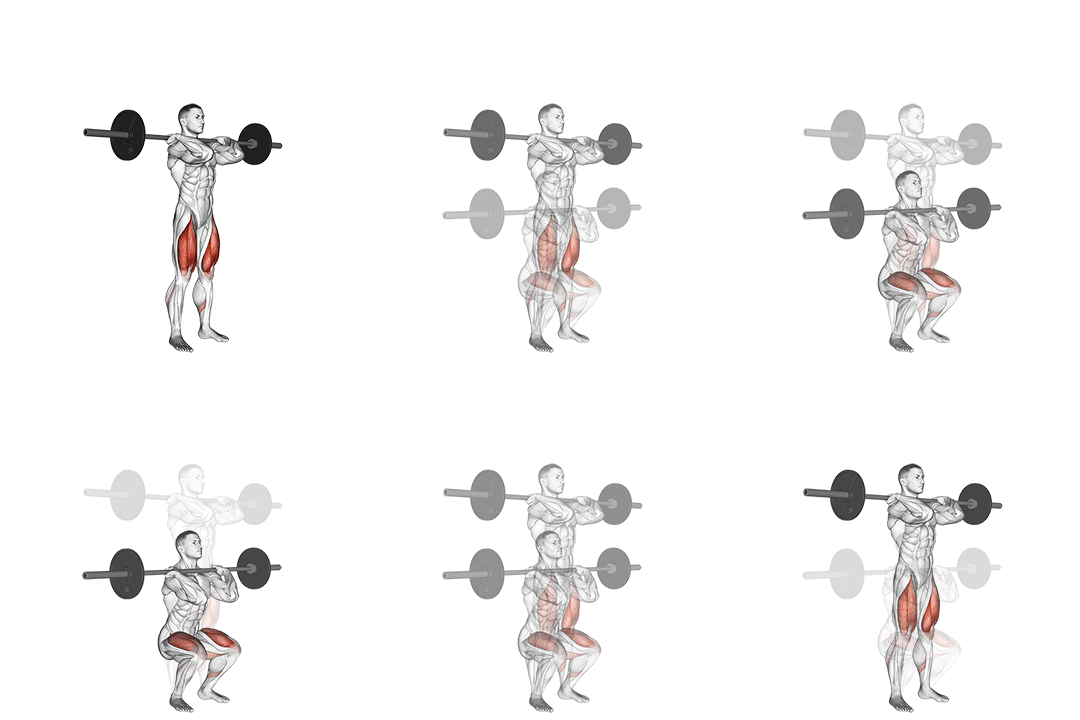
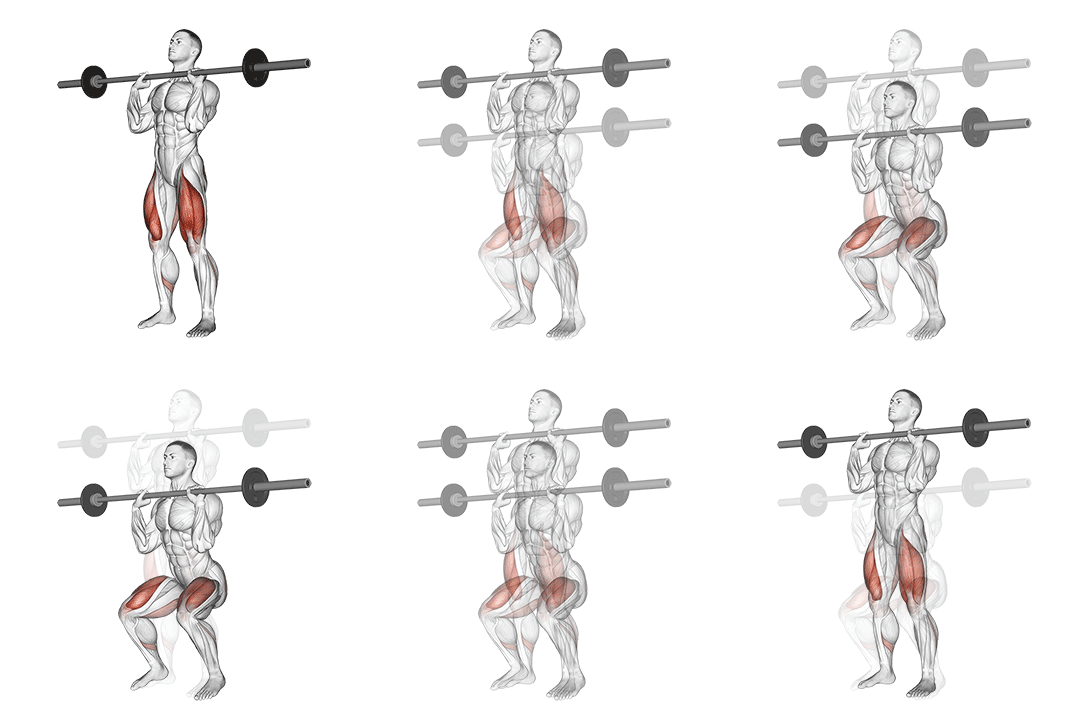
More comparisons with Barbell Romanian Deadlift
Compare More Exercises
Use our free comparison tool to analyze any two exercises head-to-head.
Compare Exercises