

Barbell Full Squat vs Barbell Romanian Deadlift: Complete Comparison Guide
Barbell Full Squat vs Barbell Romanian Deadlift — both target the glutes and upper legs, but they load your body very differently. You’ll get clear, actionable guidance on technique cues, muscle activation, equipment needs, and which exercise fits your goal: muscle growth, strength, or easy implementation at home. I’ll cover how the force vectors and joint angles change which muscles work hardest, give rep-range recommendations (6–12 for hypertrophy, 1–5 for max strength), and show when to pick one over the other based on biomechanics and progression options.
Exercise Comparison
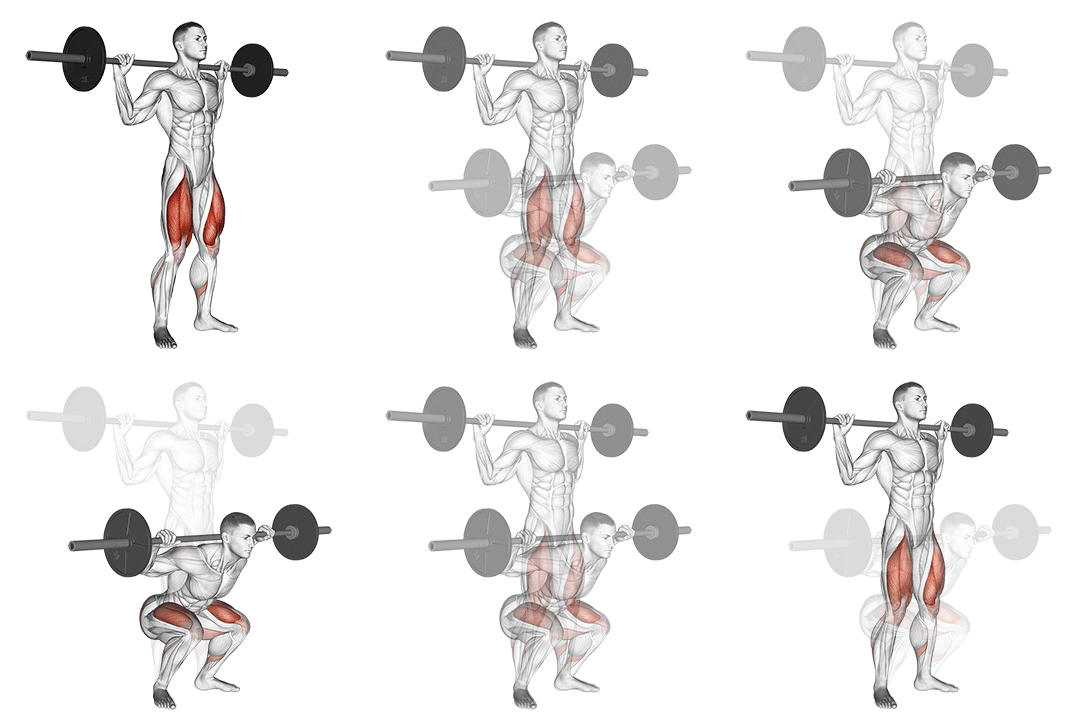
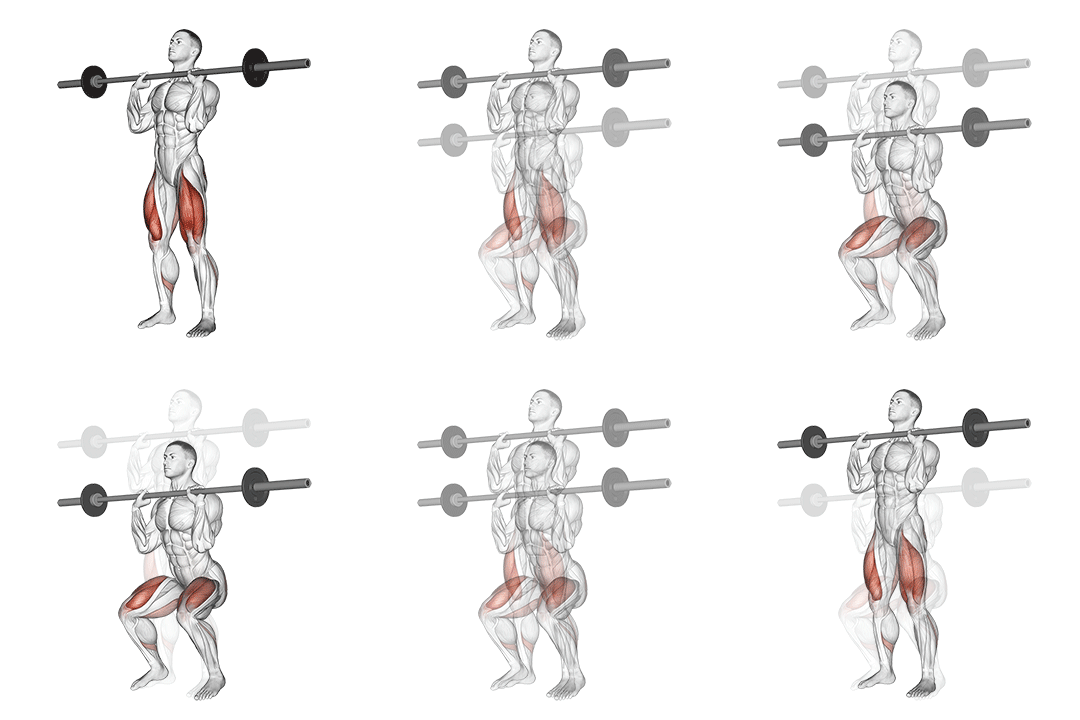
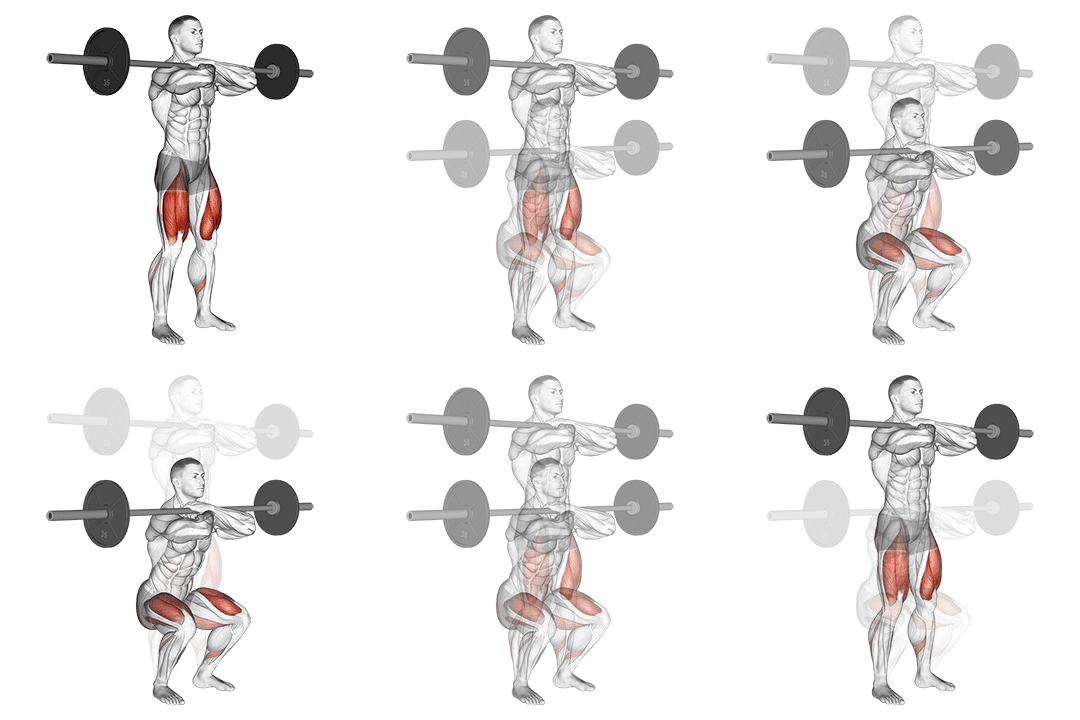
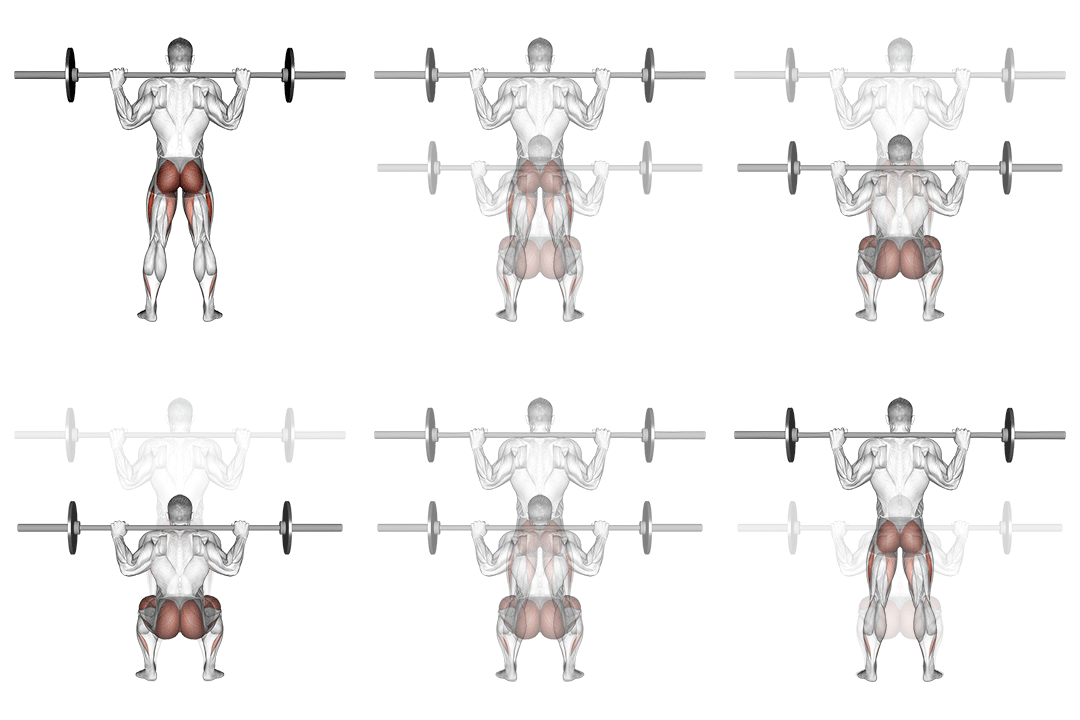
Barbell Full Squat
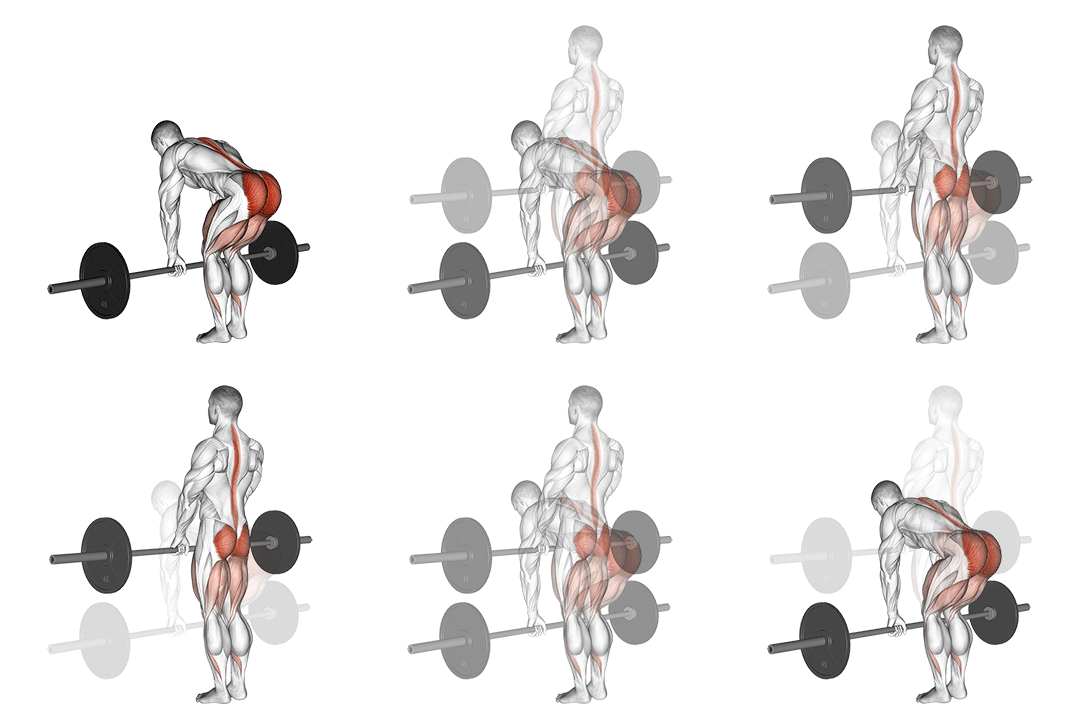
Barbell Romanian Deadlift
Head-to-Head Comparison
| Attribute | Barbell Full Squat | Barbell Romanian Deadlift |
|---|---|---|
| Target Muscle |
Glutes
|
Glutes
|
| Body Part |
Upper-legs
|
Upper-legs
|
| Equipment |
Barbell
|
Barbell
|
| Difficulty |
Intermediate
|
Intermediate
|
| Movement Type |
Compound
|
Compound
|
| Secondary Muscles |
4
|
2
|
Secondary Muscles Activated
Barbell Full Squat
Barbell Romanian Deadlift
Visual Comparison
Overview
Barbell Full Squat vs Barbell Romanian Deadlift — both target the glutes and upper legs, but they load your body very differently. You’ll get clear, actionable guidance on technique cues, muscle activation, equipment needs, and which exercise fits your goal: muscle growth, strength, or easy implementation at home. I’ll cover how the force vectors and joint angles change which muscles work hardest, give rep-range recommendations (6–12 for hypertrophy, 1–5 for max strength), and show when to pick one over the other based on biomechanics and progression options.
Key Differences
- Both exercises target the Glutes using Barbell. The main differences are in their movement patterns and muscle activation angles.
Pros & Cons
Barbell Full Squat
+ Pros
- Mass recruitment of quads, glutes, hamstrings and core — high total work per rep
- Great for developing maximal lower-body strength and power
- Easier to overload with heavy concentric force via vertical force vector
- Multiple training variants (paused, tempo, wide/narrow stance) for targeted progression
− Cons
- Requires a squat rack and good ankle/hip mobility to perform safely
- Higher technical demand on breathing, bracing, and bar path
- Greater stress on knees for poorly cued lifters or extreme stance choices
Barbell Romanian Deadlift
+ Pros
- Highly effective for posterior-chain hypertrophy (hamstrings, glutes, erectors)
- Requires minimal equipment — no rack needed
- Lower technical barrier for teaching the hip-hinge movement pattern
- Great for improving hamstring length–tension and eccentric control
− Cons
- Less quad development compared with squats
- Limited for maximal absolute leg strength and vertical force outputs
- Risk of lumbar rounding under heavy load if hip hinge is poorly executed
When Each Exercise Wins
Full squats recruit more total muscle mass per rep — quads, glutes, hamstrings and core — making them superior for overall upper-leg hypertrophy. Use 6–12 reps, tempo control (2–4 s eccentric), and go below parallel (~100° knee flexion) to stimulate both quads and glutes.
Squats allow heavier absolute loads and produce large knee- and hip-extension torques needed for maximal strength and power. Train in the 1–5 rep range with progressive overload and heavy triples to build true lower-body strength.
RDLs teach the hip-hinge with fewer mobility constraints and simpler setup, so beginners can load the posterior chain safely while practicing neutral spine and eccentric control. Start with light loads and 6–10 reps to build patterning.
RDLs need only a barbell and plates — no rack or platform — making them far more practical for limited-space setups. They also scale well with lighter loads and single-leg variants for variety.
Frequently Asked Questions
Can I do both Barbell Full Squat and Barbell Romanian Deadlift in the same workout?
Yes — you can program both in the same session by sequencing heavy squats first (1–5 or 6–8 reps) then doing RDLs as a posterior-chain accessory for 6–10 reps and controlled eccentrics. Keep total volume in check and manage fatigue: for example, 3–5 squat sets followed by 3 RDL sets.
Which exercise is better for beginners?
RDLs are often better to start with because they teach the hip-hinge and require less shoulder/ankle mobility and no rack. Begin with light loads and focus on a neutral spine and hip pushback before progressing to barbell full squats.
How do the muscle activation patterns differ?
Squats emphasize quadriceps early in ascent and shift to greater glute contribution as the hip extends from below parallel, while RDLs load hamstrings and glutes through a lengthened eccentric phase and concentric hip extension. That difference stems from force vectors: squats produce vertical ground reaction forces with large knee moments, RDLs create larger hip moments with minimal knee torque.
Can Barbell Romanian Deadlift replace Barbell Full Squat?
No — not entirely. RDLs can replace squats for posterior-chain emphasis or when equipment is limited, but they won’t match squats for quad development or maximal vertical force output. Choose RDLs for hamstring-focused phases and squats for full lower-body strength and mass.
Expert Verdict
Choose Barbell Full Squats when your priority is overall lower-body muscle growth, maximal strength, or power. The squat’s combined knee and hip torque recruits more muscle mass and allows heavier loading across 1–12 rep ranges. Pick Barbell Romanian Deadlifts when you want targeted posterior-chain development, easier setup for home training, or to teach and strengthen the hip-hinge. For most trainees, a program that cycles both—squat-focused weeks for strength and RDL-focused sessions for hamstring and eccentric work—offers the most balanced progress in muscle growth and movement quality.
Also Compare
More comparisons with Barbell Full Squat
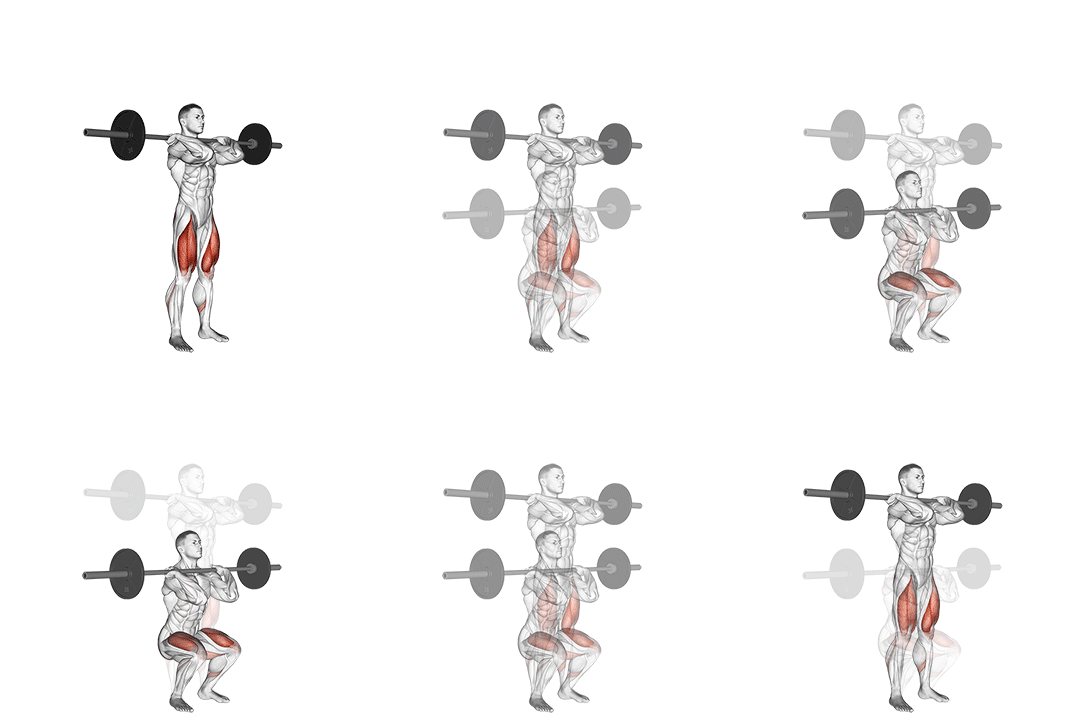
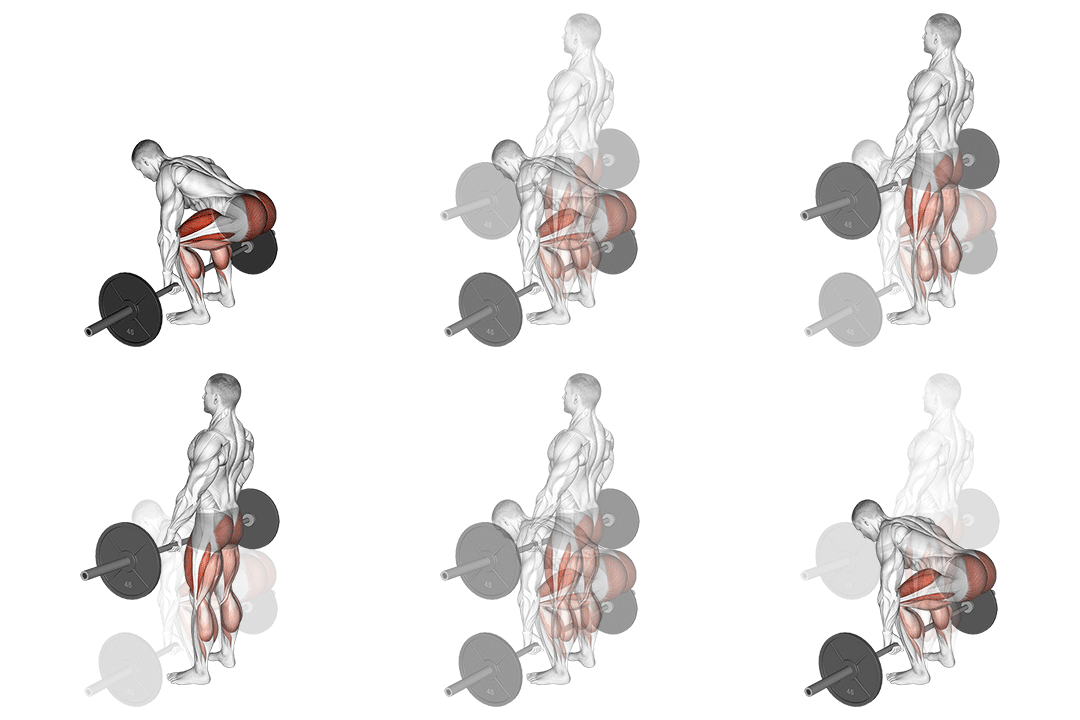
More comparisons with Barbell Romanian Deadlift
Compare More Exercises
Use our free comparison tool to analyze any two exercises head-to-head.
Compare Exercises