

Barbell Good Morning vs Power Clean: Complete Comparison Guide
Barbell Good Morning vs Power Clean — two advanced barbell moves that hit the hamstrings but in very different ways. You’ll get a clear comparison of muscle activation, biomechanics, equipment needs, technique cues, and injury considerations so you can choose the right lift for your goals. I’ll walk you through how each movement loads the posterior chain, when to favor heavy, slow tension versus explosive triple extension, sample rep ranges (3-6, 6-12, 1-5), and practical progressions you can use in the gym or on the field.
Exercise Comparison
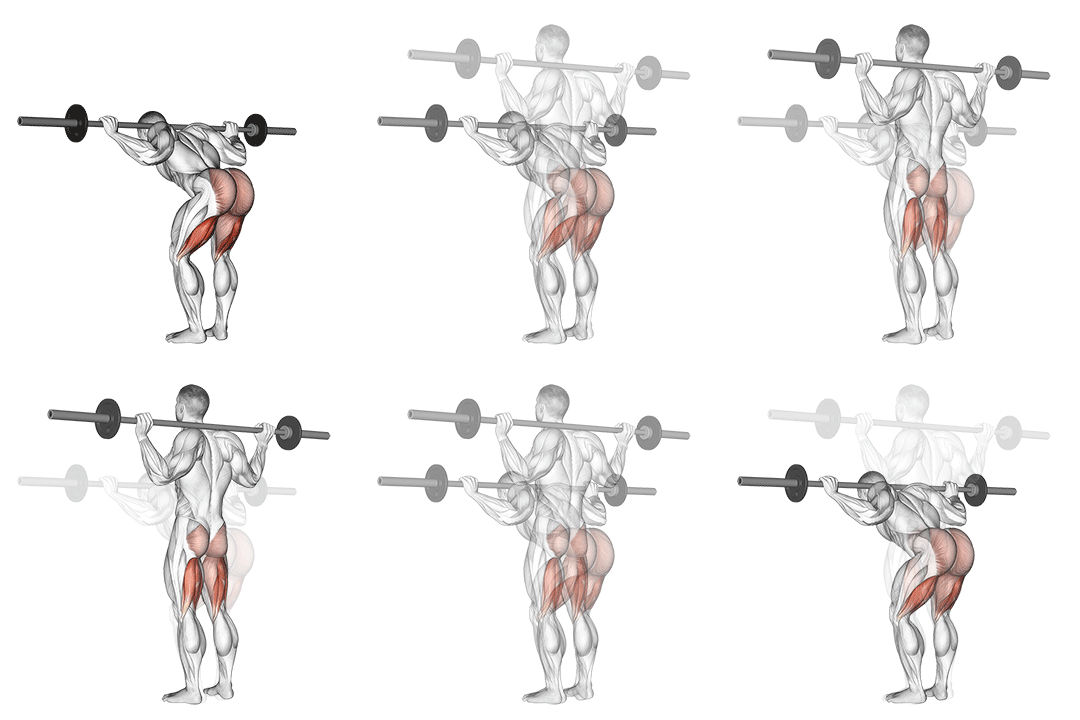
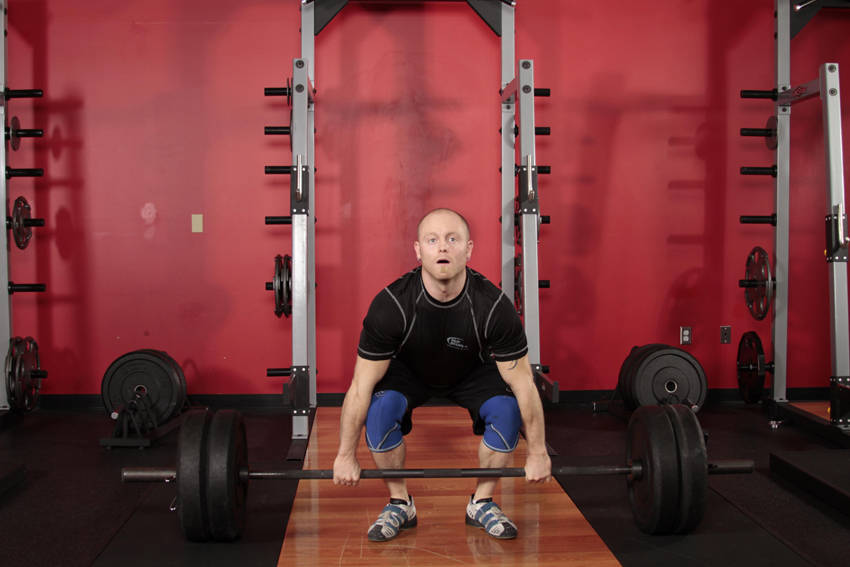
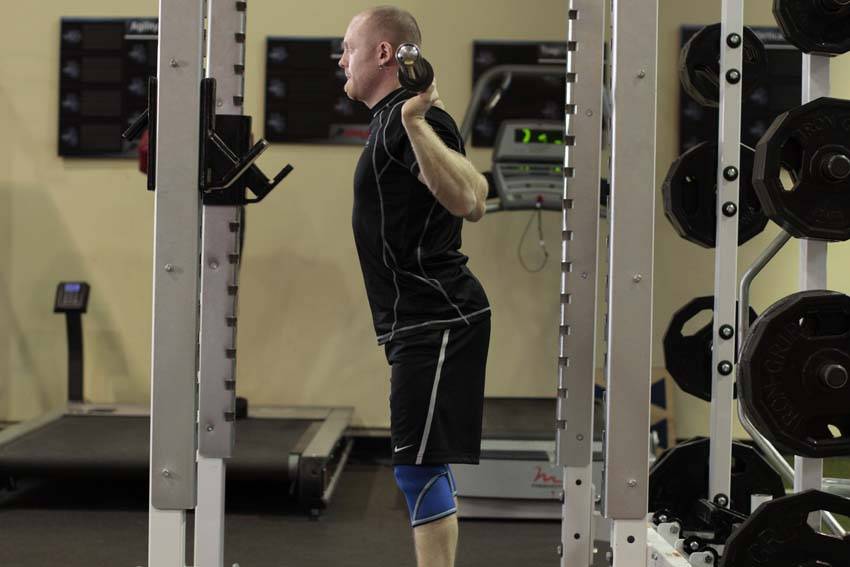
Barbell Good Morning
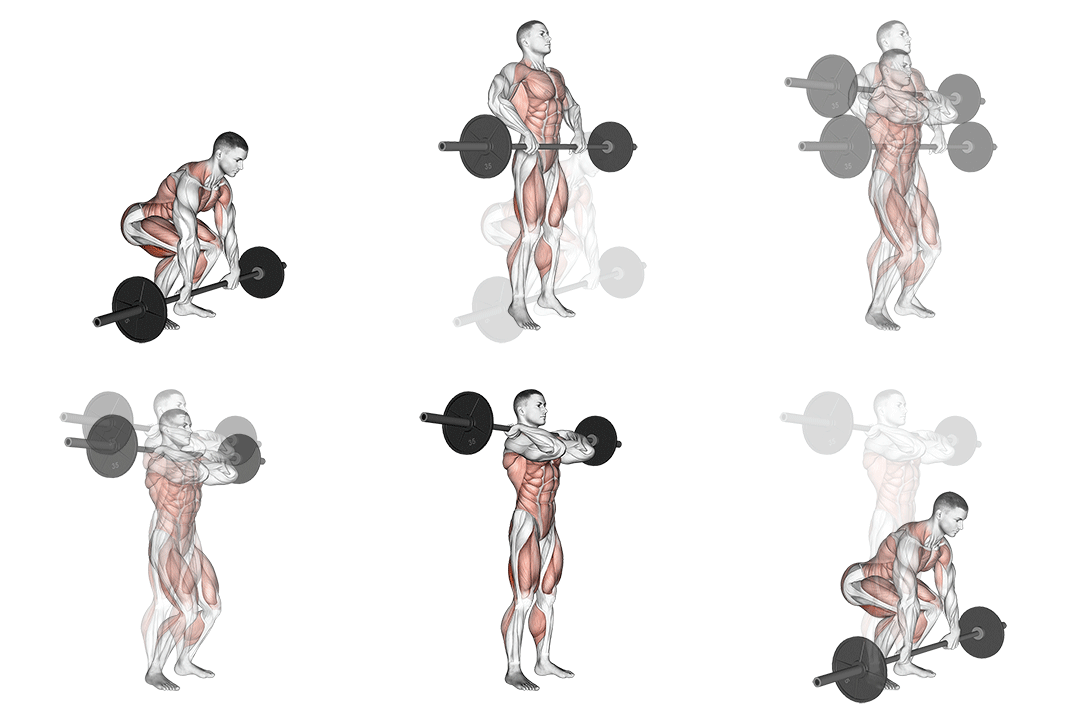
Power Clean
Head-to-Head Comparison
| Attribute | Barbell Good Morning | Power Clean |
|---|---|---|
| Target Muscle |
Hamstrings
|
Hamstrings
|
| Body Part |
Upper-legs
|
Upper-legs
|
| Equipment |
Barbell
|
Barbell
|
| Difficulty |
Advanced
|
Advanced
|
| Movement Type |
Compound
|
Compound
|
| Secondary Muscles |
1
|
3
|
Secondary Muscles Activated
Barbell Good Morning
Power Clean
Visual Comparison
Overview
Barbell Good Morning vs Power Clean — two advanced barbell moves that hit the hamstrings but in very different ways. You’ll get a clear comparison of muscle activation, biomechanics, equipment needs, technique cues, and injury considerations so you can choose the right lift for your goals. I’ll walk you through how each movement loads the posterior chain, when to favor heavy, slow tension versus explosive triple extension, sample rep ranges (3-6, 6-12, 1-5), and practical progressions you can use in the gym or on the field.
Key Differences
- Both exercises target the Hamstrings using Barbell. The main differences are in their movement patterns and muscle activation angles.
Pros & Cons
Barbell Good Morning
+ Pros
- Direct, high-tension hamstring and lower-back loading ideal for hypertrophy and posterior-chain strength
- Simple hip-hinge pattern that scales with heavier loads (sets of 3–6 for strength)
- Low equipment footprint — no need to drop the bar or rely on bumper plates
- Easy to manipulate tempo and eccentric length to target length-tension relationships
− Cons
- High compressive and shear load on the lumbar spine if form breaks down
- Less carryover to explosive, athletic movements compared to cleans
- Advanced difficulty — requires excellent hip mobility and thoracic control
Power Clean
+ Pros
- Builds explosive hip extension and rate of force development critical for athletics
- Recruits glutes, quads, calves, traps and forearms for a full-body power output
- Excellent neural stimulus for improving vertical jump and sprint drive
- Scalable with hang, high-pull, and power variations to target weaknesses
− Cons
- Technically complex — needs coaching and progression to master safely
- Requires bumper plates/space to drop and a platform or open area
- Less isolated hamstring tension — less efficient for targeted hamstring hypertrophy
When Each Exercise Wins
Good Mornings place long-duration eccentric load on the hamstrings and lower back, improving length-tension stimulus for muscle growth. Use 6–12 rep ranges and slowed eccentrics (2–4 s) to maximize time under tension.
For pure posterior-chain strength and increasing maximal hip-hinge force, Good Mornings let you safely accumulate heavy slow reps (3–6) and progressive overload. They transfer directly to deadlift-style strength by improving hip extension torque.
Although technical, the Power Clean can be introduced with regressions (PVC drills, hang power clean, high pulls) to teach hip drive and coordination—progressions are clear and transfer to many sports. It develops timing and power early, but must be coached and kept light initially (1–5 reps).
Good Mornings require minimal space and no bumper plates or dropping area, so they’re easier to perform safely at home. You can control volume and tempo to get a strong posterior-chain stimulus with a single barbell.
Frequently Asked Questions
Can I do both Barbell Good Morning and Power Clean in the same workout?
Yes — but order matters. Do Power Cleans early when fresh to preserve speed and technique (1–5 rep sets), then use Good Mornings later for heavy, slower posterior-chain loading (3–6 or 6–12). That sequencing protects your power output and reduces technical breakdown under fatigue.
Which exercise is better for beginners?
Start with progressions: teach the hip hinge before either lift. If you must pick one for early development, begin with regressions of the Power Clean (PVC work, hang clean) to train timing and hip drive, while using Romanian deadlifts or light Good Morning variations to build posterior strength.
How do the muscle activation patterns differ?
Good Mornings produce a prolonged eccentric stretch on hamstrings and sustained hip-hinge torque, emphasizing length-tension. Power Cleans create a rapid concentric burst with shared hamstring/glute/quad activation and high rate-of-force production during the second pull.
Can Power Clean replace Barbell Good Morning?
Not fully. Power Cleans train explosive coordination and recruit many muscles, but they don’t produce the same sustained hamstring and lumbar loading needed for maximal hypertrophy or heavy hip-hinge strength. Use Power Cleans for power phases and Good Mornings when you need direct posterior-chain strength or hypertrophy.
Expert Verdict
Choose Barbell Good Morning when your priority is hamstring hypertrophy, posterior-chain strength, or when you need a low-space, high-tension lift. Prescribe 3–6 reps for strength or 6–12 reps with controlled eccentrics for growth, and keep a neutral spine with a slight knee bend (10–30°). Choose Power Clean when you want to train power, rate of force development, and athletic triple extension — use 1–5 reps and focus on speed and technique (keep the bar close, explode through the hips, then pull under). Both lifts are advanced; program Good Mornings for strength/hypertrophy blocks and Power Cleans for power or sport-specific phases.
Also Compare
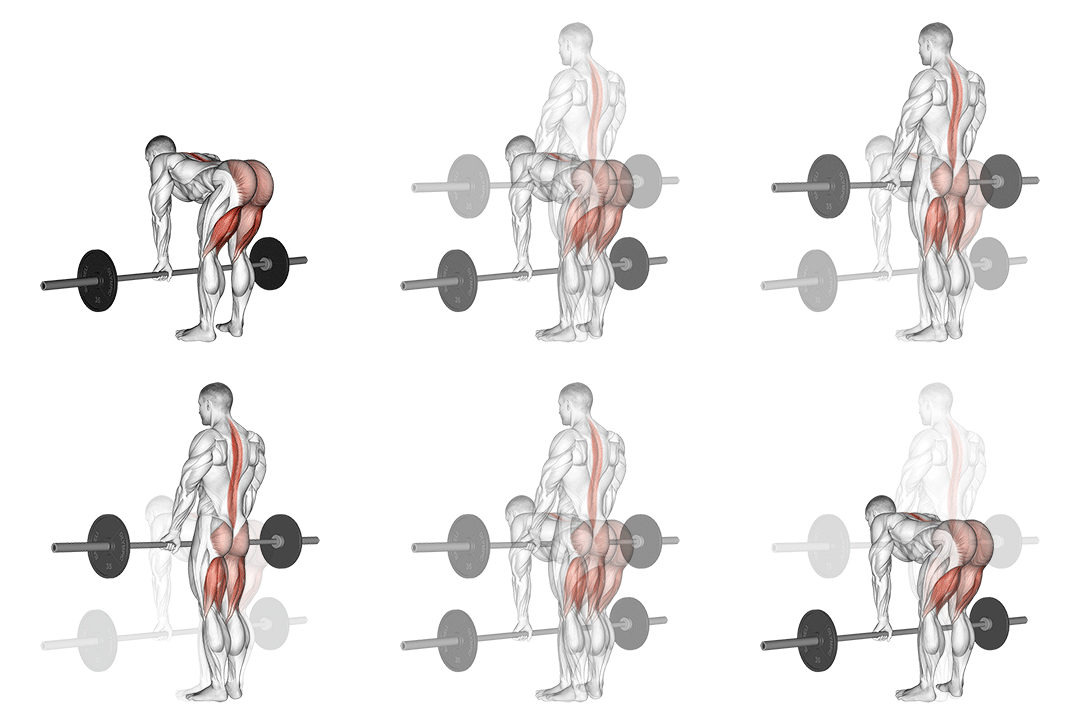
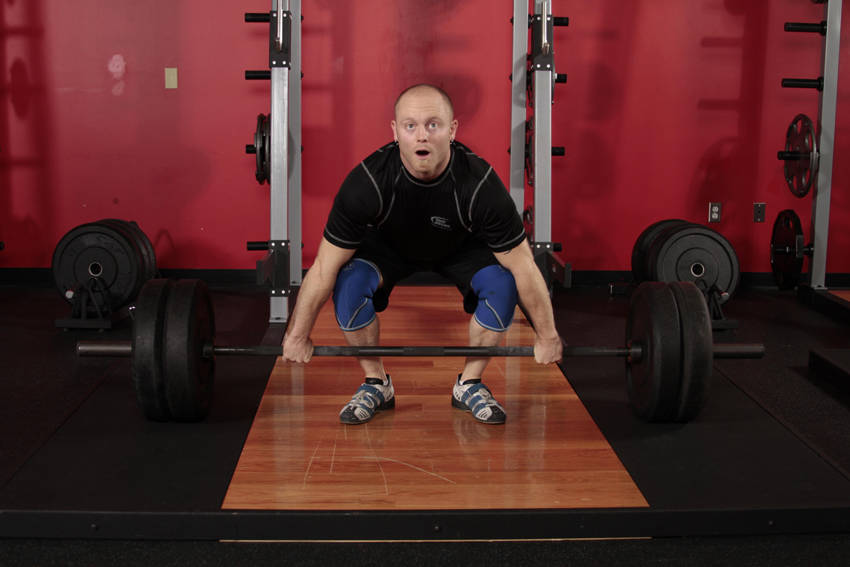
More comparisons with Barbell Good Morning
Compare More Exercises
Use our free comparison tool to analyze any two exercises head-to-head.
Compare Exercises