

Barbell Incline Close Grip Bench Press vs Barbell Incline Reverse-grip Press: Complete Comparison Gu
Barbell Incline Close Grip Bench Press vs Barbell Incline Reverse-grip Press — two compound upper-arm presses that target your triceps while loading the upper chest and shoulders. If you want to prioritize triceps size, lockout strength, or upper-chest shaping, this guide breaks down biomechanics, muscle activation, technique cues, rep ranges, and safety. You’ll get clear comparisons on primary and secondary muscle work, required equipment, learning curves, and when to pick each lift depending on your goal (hypertrophy, strength, or programming variety). Read on for actionable cues and exact numbers — incline angles, rep ranges, and progression tips you can use in your next session.
Exercise Comparison
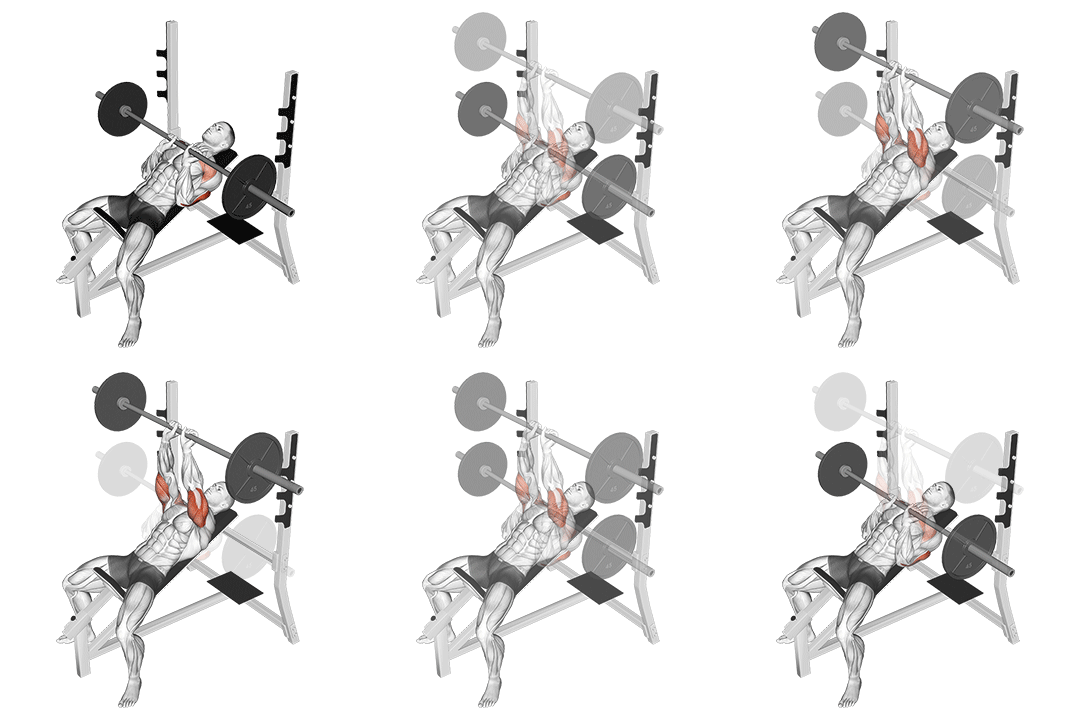
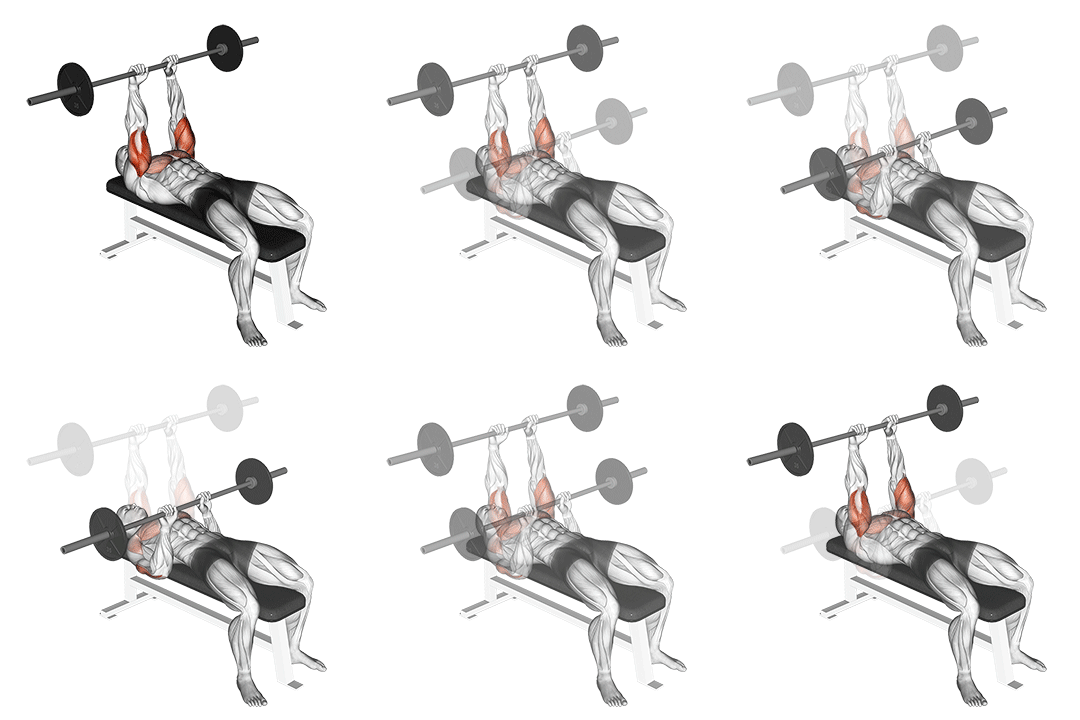
Barbell Incline Close Grip Bench Press
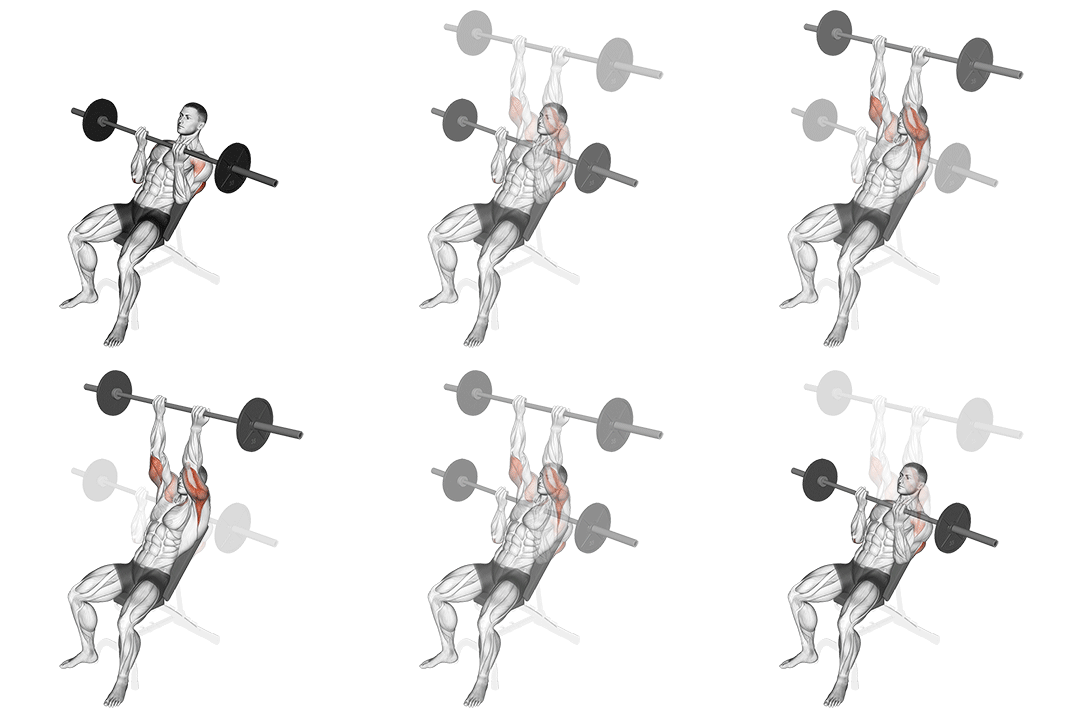
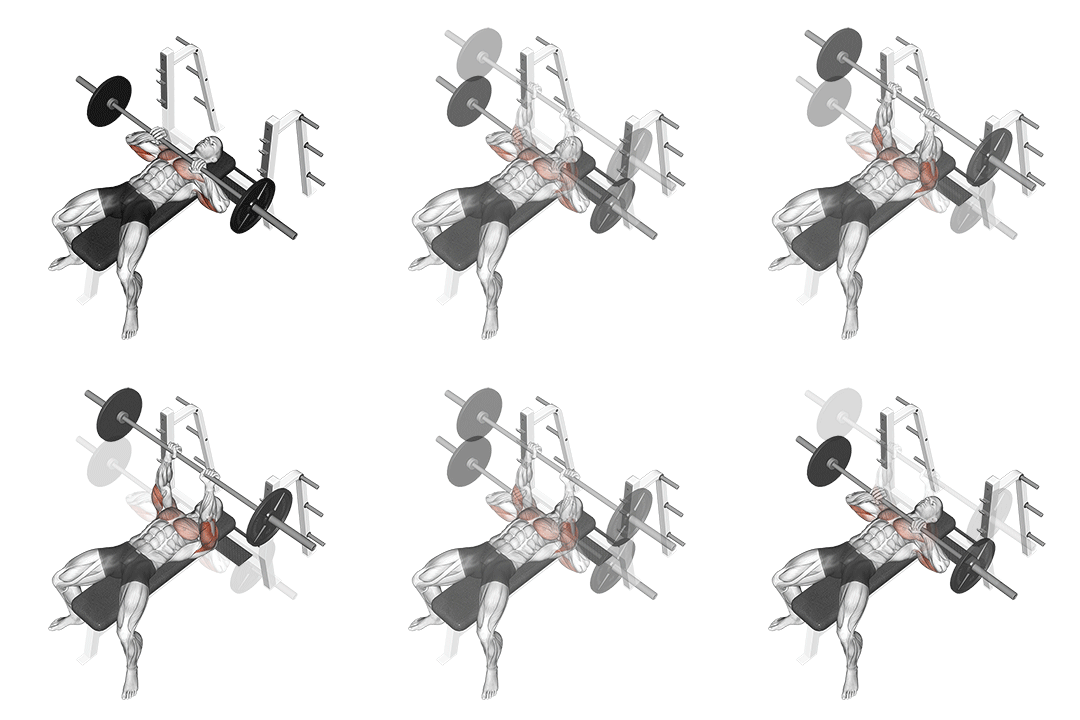
Barbell Incline Reverse-grip Press
Head-to-Head Comparison
| Attribute | Barbell Incline Close Grip Bench Press | Barbell Incline Reverse-grip Press |
|---|---|---|
| Target Muscle |
Triceps
|
Triceps
|
| Body Part |
Upper-arms
|
Upper-arms
|
| Equipment |
Barbell
|
Barbell
|
| Difficulty |
Intermediate
|
Intermediate
|
| Movement Type |
Compound
|
Compound
|
| Secondary Muscles |
2
|
2
|
Secondary Muscles Activated
Barbell Incline Close Grip Bench Press
Barbell Incline Reverse-grip Press
Visual Comparison
Overview
Barbell Incline Close Grip Bench Press vs Barbell Incline Reverse-grip Press — two compound upper-arm presses that target your triceps while loading the upper chest and shoulders. If you want to prioritize triceps size, lockout strength, or upper-chest shaping, this guide breaks down biomechanics, muscle activation, technique cues, rep ranges, and safety. You’ll get clear comparisons on primary and secondary muscle work, required equipment, learning curves, and when to pick each lift depending on your goal (hypertrophy, strength, or programming variety). Read on for actionable cues and exact numbers — incline angles, rep ranges, and progression tips you can use in your next session.
Key Differences
- Both exercises target the Triceps using Barbell. The main differences are in their movement patterns and muscle activation angles.
Pros & Cons
Barbell Incline Close Grip Bench Press
+ Pros
- Stronger, more stable overhand grip for heavier loads
- Better for progressive overload and 3–6 rep strength cycles
- Cleaner triceps bias by limiting wide pec recruitment
- Easier to teach and safer wrist positioning
− Cons
- Can place more compressive load on the elbows at high volume
- Less upper-pectoral (clavicular) activation than reverse-grip
- Bar path may contact lower on sternum if elbows flare
Barbell Incline Reverse-grip Press
+ Pros
- Greater upper-pectoral and anterior deltoid engagement
- Can feel more comfortable for some lifters’ shoulder impingement patterns
- Provides useful variation to break plateaus and shift force vectors
- Emphasizes vertical force component mid-range for different stimulus
− Cons
- Requires better wrist mobility and supination control
- Harder to spot or bail safely with a supinated grip
- Slower load progression for many lifters due to cautious grip
When Each Exercise Wins
The close-grip lets you safely accumulate more quality tension and progressive overload across 6–12 rep sets, producing higher triceps-specific stimulus. Its stable grip supports heavier loads and more total volume, which drives muscle growth in the upper-arms.
Close-grip allows faster increases in absolute load and better technique consistency for 3–6 rep strength cycles. The overhand grip and neutral wrist position let you load the triceps and lockout mechanics more aggressively.
Beginners benefit from a simpler overhand grip and clearer bar path; the close-grip requires less wrist mobility and is easier to coach. That reduces injury risk while teaching elbow tracking and pressing mechanics.
Home setups often lack spotters and specialized grips; close-grip is safer with collars and rack pins. Reverse-grip’s higher wrist demands and harder bail mechanics make it less practical at home.
Frequently Asked Questions
Can I do both Barbell Incline Close Grip Bench Press and Barbell Incline Reverse-grip Press in the same workout?
Yes, but order matters: do the close-grip as your primary heavy movement for 3–6 or 6–8 reps, then use the reverse-grip for 2–3 lighter sets of 8–12 reps to target the upper chest and vary the stimulus without compromising your main strength set.
Which exercise is better for beginners?
Beginners should start with the Barbell Incline Close Grip Bench Press because the overhand grip and predictable bar path reduce wrist and shoulder strain. It teaches elbow tracking and pressing mechanics with a lower learning curve.
How do the muscle activation patterns differ?
Close-grip keeps elbows tucked, increasing triceps moment arm and emphasizing elbow extension, especially near lockout. Reverse-grip supinates the forearm and shifts the force vector upward, increasing clavicular-pec and anterior-delta activation while preserving triceps involvement.
Can Barbell Incline Reverse-grip Press replace Barbell Incline Close Grip Bench Press?
Not entirely. Reverse-grip serves as an effective variation for upper-chest focus and shoulder-friendly mechanics for some lifters, but it generally limits maximum loading and progression. Use it as a supplement or rotation rather than a full replacement if your primary goal is triceps strength and heavy progressive overload.
Expert Verdict
Pick the Barbell Incline Close Grip Bench Press when you want a straightforward, high-overload triceps builder and a safer platform for strength work—it’s the go-to for progressive loading, consistent technique, and home or crowded-gym training. Use the Barbell Incline Reverse-grip Press as a targeted variation when you want extra upper-pectoral and anterior-delt stimulus or to change the force vector for variety; keep loads lighter, prioritize wrist mobility, and use it for 8–12 rep accessory work. Program both across a mesocycle—dominant close-grip for core phases, reverse-grip for accessory weeks—to compound adaptation while managing joint stress.
Also Compare
More comparisons with Barbell Incline Close Grip Bench Press
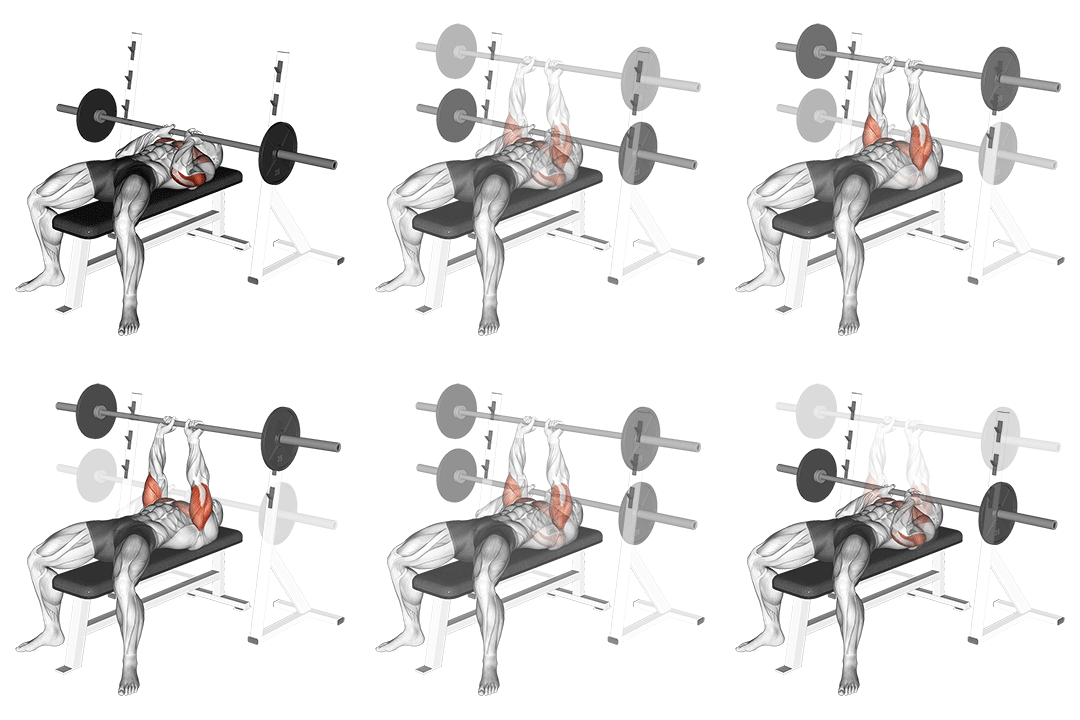
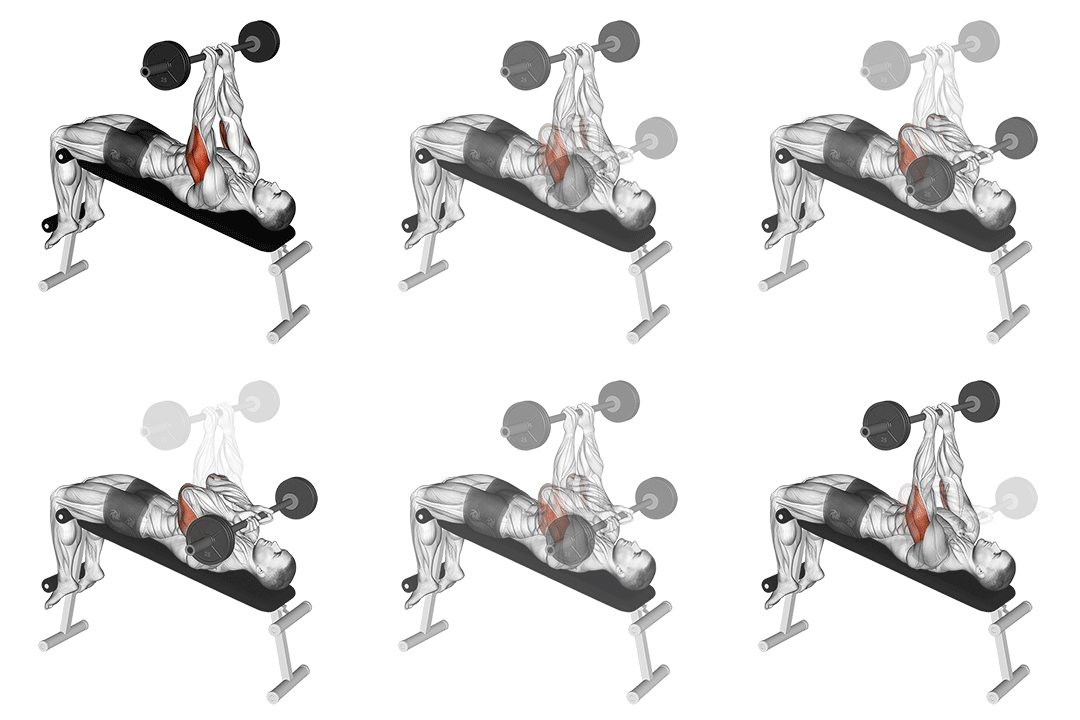
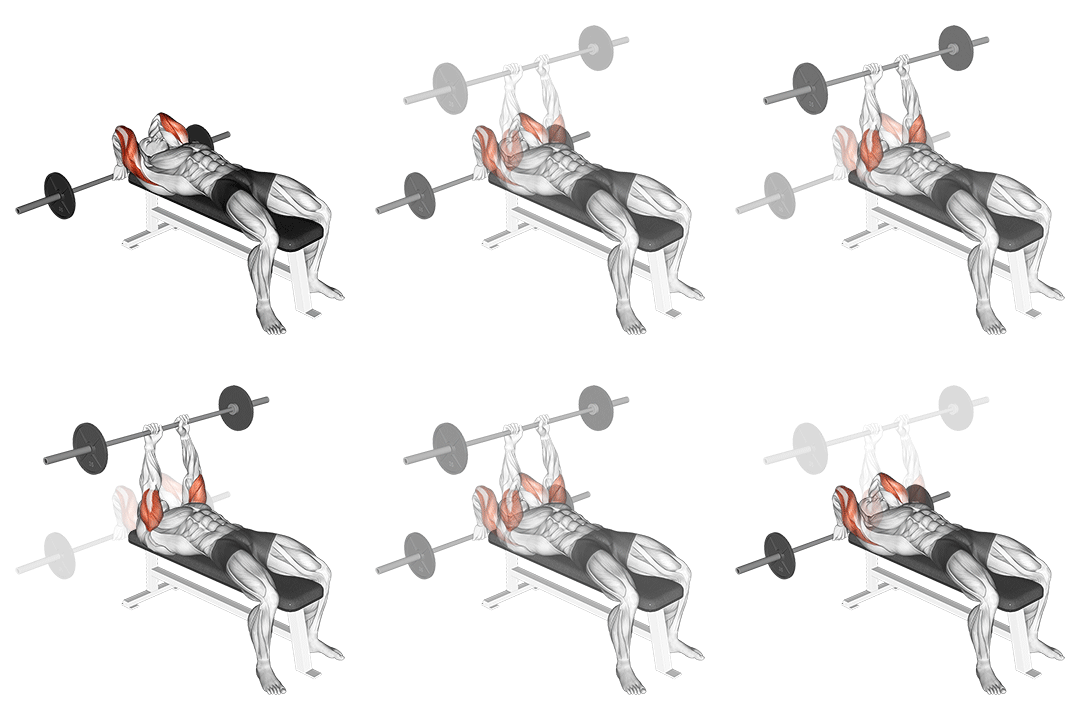
More comparisons with Barbell Incline Reverse-grip Press
Compare More Exercises
Use our free comparison tool to analyze any two exercises head-to-head.
Compare Exercises