

Barbell Lying Preacher Curl vs Barbell Preacher Curl: Complete Comparison Guide
Barbell Lying Preacher Curl vs Barbell Preacher Curl — both isolate the biceps and trim out cheating from the shoulders, but they load the muscle differently. In this comparison you’ll see how each variation changes biceps length-tension, force vector, and range of motion. I’ll cover primary and secondary muscle activation, exact technique cues (arm and elbow angles, tempo), equipment needs, safety, and which one to pick for hypertrophy, strength, beginners, or home use. Read on and you’ll know exactly when to use each curl and how to set reps, tempo, and progression.
Exercise Comparison
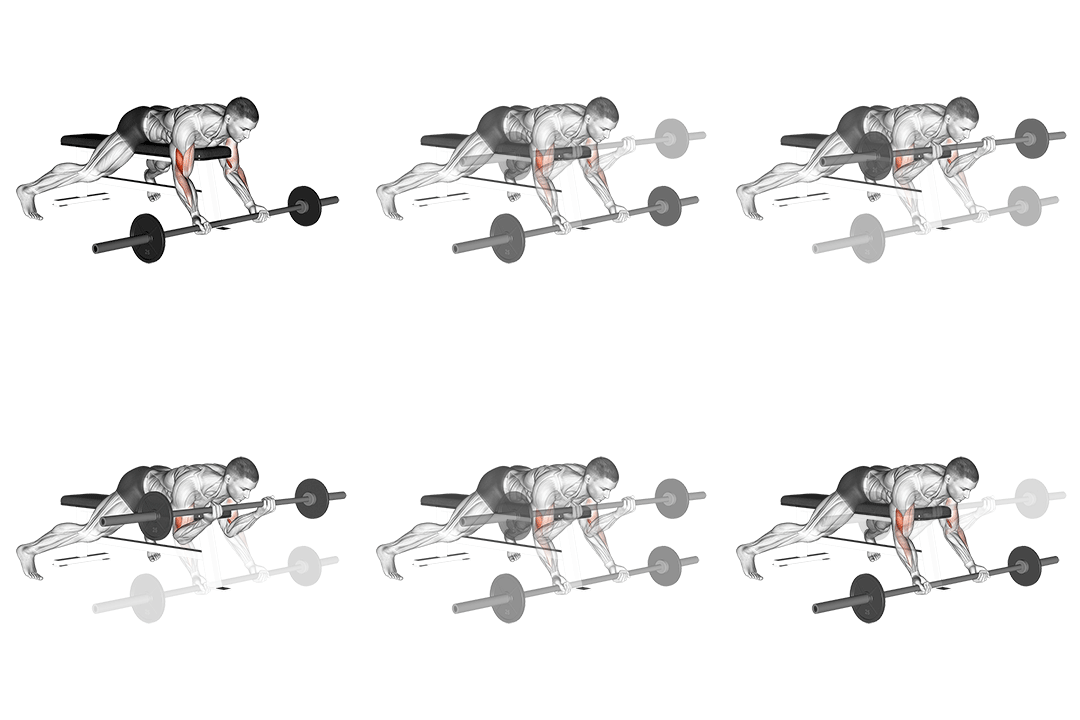
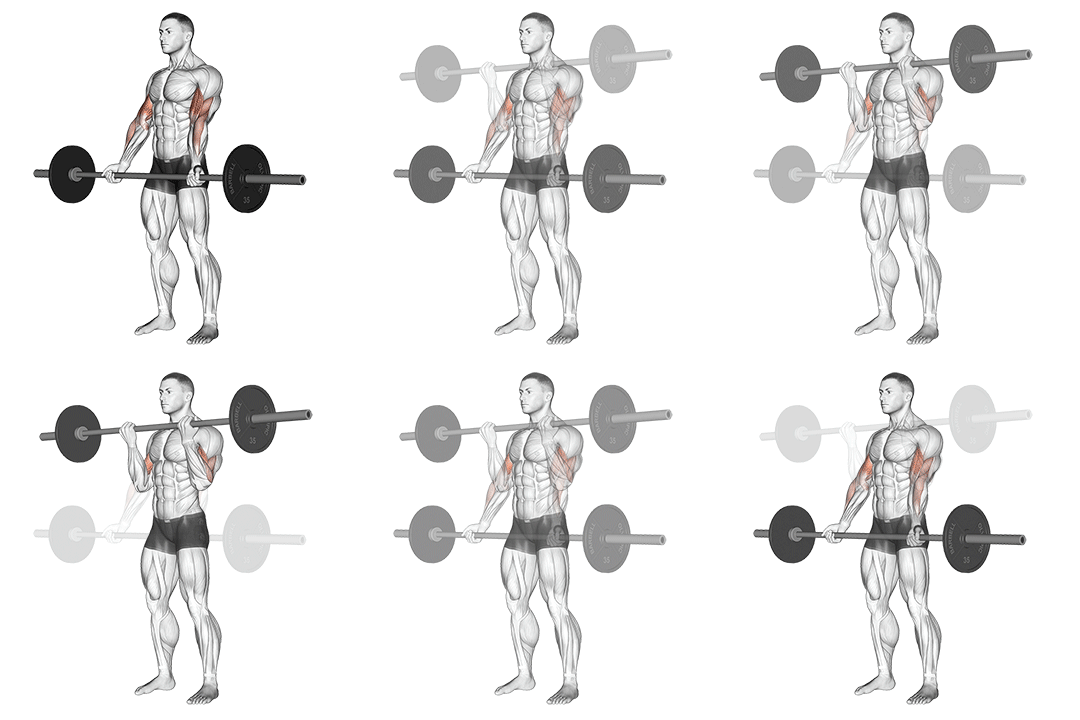
Barbell Lying Preacher Curl
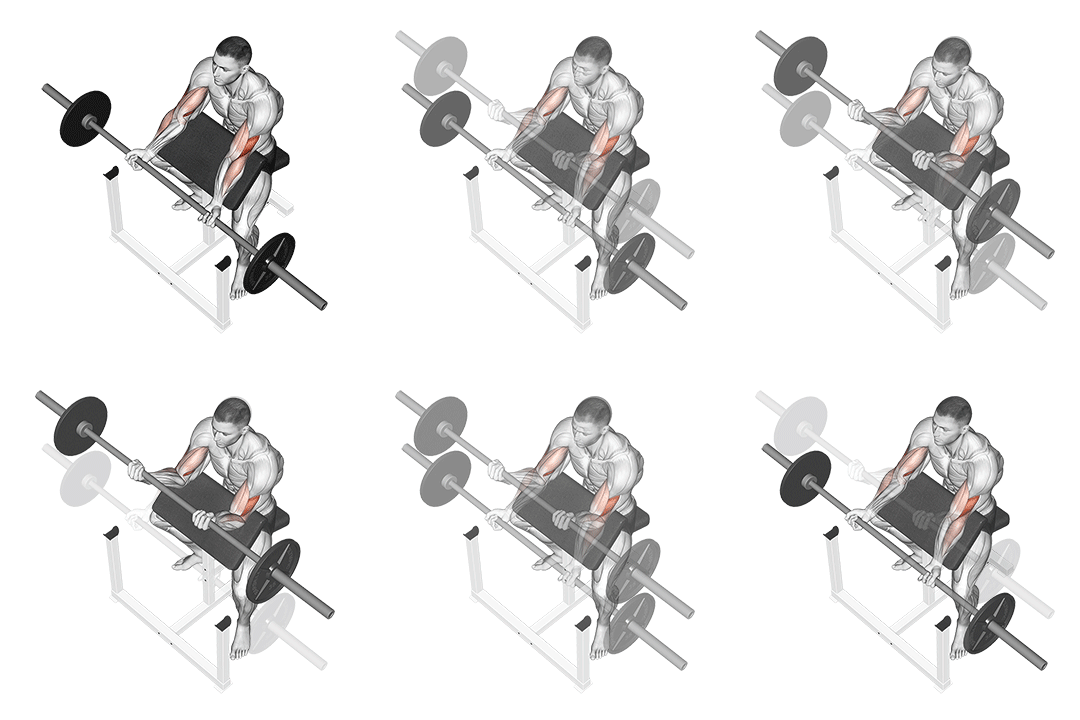
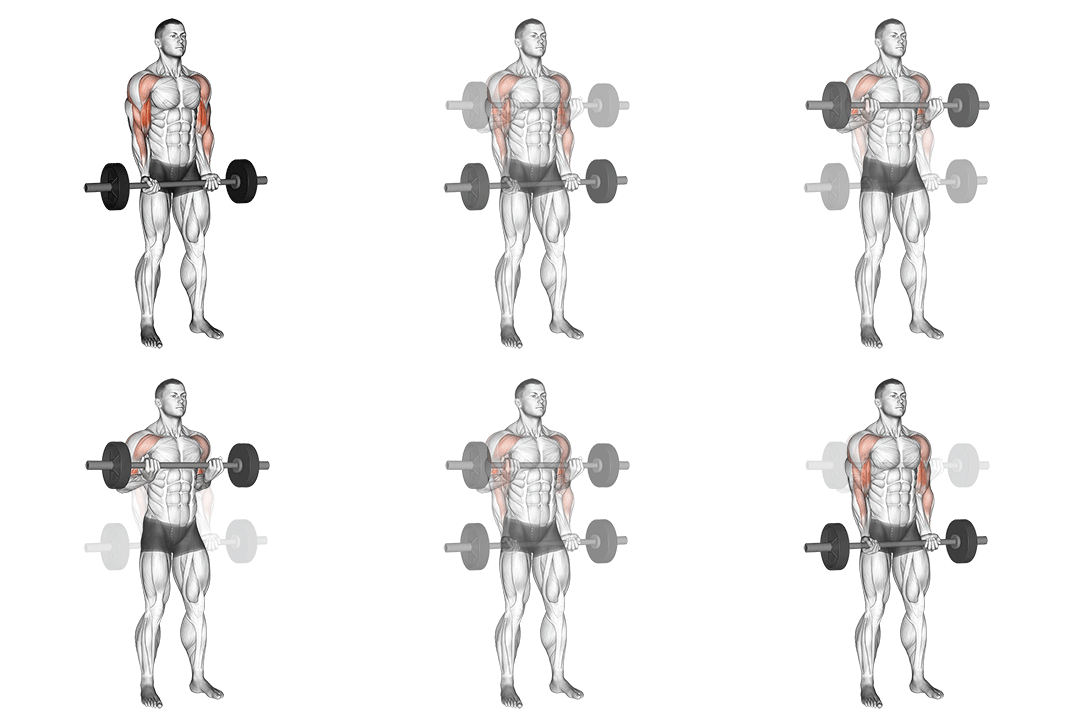
Barbell Preacher Curl
Head-to-Head Comparison
| Attribute | Barbell Lying Preacher Curl | Barbell Preacher Curl |
|---|---|---|
| Target Muscle |
Biceps
|
Biceps
|
| Body Part |
Upper-arms
|
Upper-arms
|
| Equipment |
Barbell
|
Barbell
|
| Difficulty |
Beginner
|
Beginner
|
| Movement Type |
Isolation
|
Isolation
|
| Secondary Muscles |
1
|
1
|
Secondary Muscles Activated
Barbell Lying Preacher Curl
Barbell Preacher Curl
Visual Comparison
Overview
Barbell Lying Preacher Curl vs Barbell Preacher Curl — both isolate the biceps and trim out cheating from the shoulders, but they load the muscle differently. In this comparison you’ll see how each variation changes biceps length-tension, force vector, and range of motion. I’ll cover primary and secondary muscle activation, exact technique cues (arm and elbow angles, tempo), equipment needs, safety, and which one to pick for hypertrophy, strength, beginners, or home use. Read on and you’ll know exactly when to use each curl and how to set reps, tempo, and progression.
Key Differences
- Both exercises target the Biceps using Barbell. The main differences are in their movement patterns and muscle activation angles.
Pros & Cons
Barbell Lying Preacher Curl
+ Pros
- Greater initial stretch on the long head for stretch-mediated hypertrophy responses
- Can be performed with an adjustable bench if you lack a preacher bench
- Good for controlled eccentrics and paused reps at full stretch
- Reduces lower-back involvement compared to standing curls
− Cons
- Slightly harder to set up and dial in the exact arm path
- May increase passive strain on the biceps tendon at full stretch
- Less gym-standard equipment availability compared to a preacher bench
Barbell Preacher Curl
+ Pros
- Excellent upper-arm stabilization—easy to maintain strict form
- Clear progressive overload with small weight increments
- Common gym equipment (preacher bench) makes it accessible
- Minimizes cheating and shoulder involvement for isolated loading
− Cons
- Can limit peak long-head stretch compared with lying variation
- Repetitive loading at the fixed pad angle can irritate the elbow in sensitive lifters
- Less variation in force vector—may plateau without programming changes
When Each Exercise Wins
For most lifters the seated preacher gives better mid-range tension, easier progressive overload, and consistent time under tension in the 8–12 rep range. Use slow eccentrics (2–3s) and full ROM to maximize hypertrophy.
Strength in an isolation curl benefits from the stability the preacher pad provides, allowing you to add heavier loads in 4–6 rep ranges with safer bar path and less momentum.
The preacher pad enforces upper-arm position and reduces compensatory movement, making it easier for new trainees to learn strict elbow flexion mechanics and maintain safe form.
If you don’t own a preacher bench but have an adjustable bench or sturdy surface, the lying variation can be set up more easily at home while still isolating the biceps.
Frequently Asked Questions
Can I do both Barbell Lying Preacher Curl and Barbell Preacher Curl in the same workout?
Yes — pair them as a compound accessory pairing: start with the seated Barbell Preacher Curl for heavy sets (4–8 reps) to load the muscle, then follow with the lying variation for 8–12 reps with slow eccentrics to increase time under tension and stretch stimulus.
Which exercise is better for beginners?
Barbell Preacher Curl is better for beginners because the pad stabilizes the humerus and limits swinging. That makes it easier to learn strict elbow flexion and safely add weight in small increments.
How do the muscle activation patterns differ?
The lying variation increases passive stretch at the start, elevating eccentric activation of the long head, while the seated preacher focuses activation around mid-range concentric peaks. Both hit the biceps strongly, but the lying curl biases stretch-mediated tension and the preacher curl biases peak-isometric contraction.
Can Barbell Preacher Curl replace Barbell Lying Preacher Curl?
Yes — for most training goals the seated preacher covers the same biceps function and is easier to overload. Use the lying curl as a complementary exercise when you want extra stretch emphasis or lack a preacher bench.
Expert Verdict
Use the Barbell Preacher Curl as your default biceps isolation move: it provides reliable mid-range tension, easy progressive overload, and strong form enforcement—ideal for hypertrophy and strength work in 6–12 rep ranges. Add Barbell Lying Preacher Curls as an accessory to increase stretch-mediated tension and to emphasize the long head with slow eccentrics (3–5s) and paused stretches. For beginners, prioritize the seated preacher to learn strict elbow flexion. For home lifters who lack a preacher bench, the lying variation is a practical substitute to retain isolation and control.
Also Compare
More comparisons with Barbell Lying Preacher Curl
More comparisons with Barbell Preacher Curl
Compare More Exercises
Use our free comparison tool to analyze any two exercises head-to-head.
Compare Exercises