

Basic Toe Touch (male) vs Bench Hip Extension: Complete Comparison Guide
Basic Toe Touch (male) vs Bench Hip Extension — if you want stronger, fuller glutes you need a clear comparison. You’ll get chapter-style guidance on how each move loads the glutes, the exact biomechanics behind activation, and step-by-step technique cues (hip hinge, 0–30° knee bend, pelvis neutral). I’ll cover rep ranges for hypertrophy (8–12) and endurance (12–20), risk signals to watch for, and when to use the toe touch as an activation drill versus the bench hip extension as a progressive loading exercise. Use this to pick or program both intelligently.
Exercise Comparison
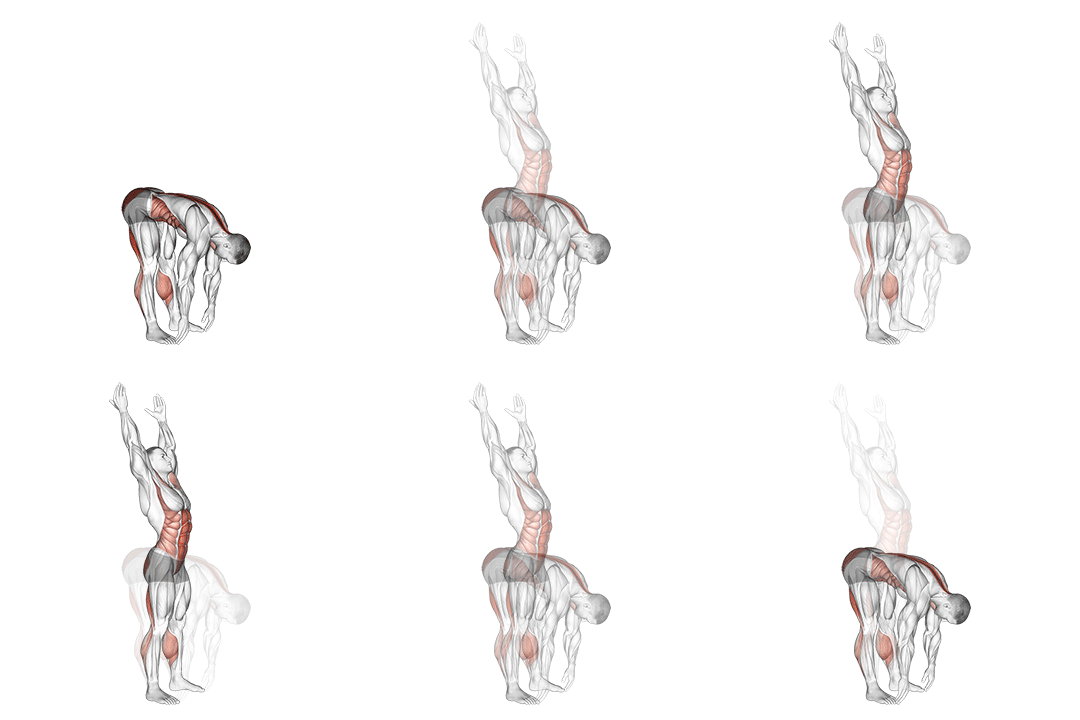
Basic Toe Touch (male)
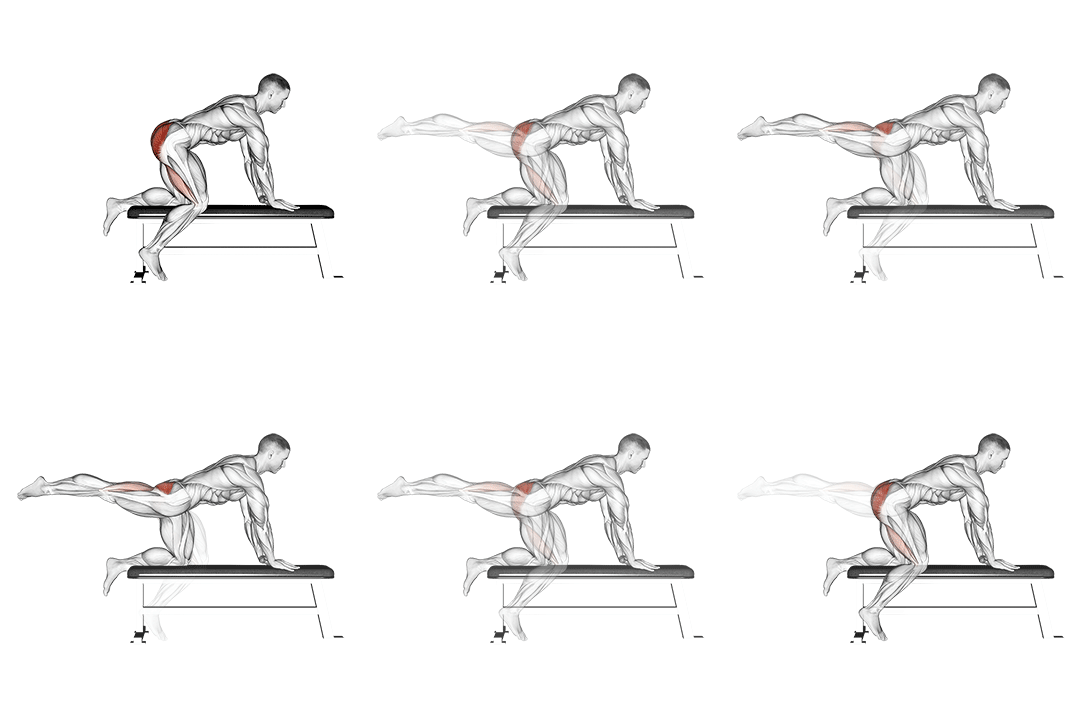
Bench Hip Extension
Head-to-Head Comparison
| Attribute | Basic Toe Touch (male) | Bench Hip Extension |
|---|---|---|
| Target Muscle |
Glutes
|
Glutes
|
| Body Part |
Upper-legs
|
Upper-legs
|
| Equipment |
Body-weight
|
Body-weight
|
| Difficulty |
Beginner
|
Beginner
|
| Movement Type |
Isolation
|
Compound
|
| Secondary Muscles |
2
|
1
|
Secondary Muscles Activated
Basic Toe Touch (male)
Bench Hip Extension
Visual Comparison
Overview
Basic Toe Touch (male) vs Bench Hip Extension — if you want stronger, fuller glutes you need a clear comparison. You’ll get chapter-style guidance on how each move loads the glutes, the exact biomechanics behind activation, and step-by-step technique cues (hip hinge, 0–30° knee bend, pelvis neutral). I’ll cover rep ranges for hypertrophy (8–12) and endurance (12–20), risk signals to watch for, and when to use the toe touch as an activation drill versus the bench hip extension as a progressive loading exercise. Use this to pick or program both intelligently.
Key Differences
- Basic Toe Touch (male) is an isolation exercise, while Bench Hip Extension is a compound movement.
- Both exercises target the Glutes using Body-weight. The main differences are in their movement patterns and muscle activation angles.
Pros & Cons
Basic Toe Touch (male)
+ Pros
- Requires no equipment — perfect for home or travel
- Easy to learn; low technical demand
- Great as an activation drill to prime the glutes before heavier lifts
- Lower spinal loading compared with loaded hip extension
− Cons
- Limited progressive overload options for long-term hypertrophy
- Less concentric ROM and mechanical work on the glutes
- Can overstretch hamstrings or cause strain if performed with poor control
Bench Hip Extension
+ Pros
- Larger hip ROM produces more mechanical work and time under tension
- Better progression options — add load or change elevation
- Stronger hamstring-glute engagement throughout concentric phase
- Transfers well to heavier compound lifts because of similar hip mechanics
− Cons
- Requires a bench or elevated surface
- Higher technical demand to protect the lumbar spine
- Slightly greater injury risk if you hyperextend at the top or use excessive load
When Each Exercise Wins
Bench Hip Extension wins because it provides greater hip ROM, higher mechanical tension, and easy ways to add external load. Aim for 3–5 sets of 8–12 reps with a 2–3 second eccentric and 1–2 second concentric to maximize hypertrophy.
The bench variation allows heavier loading and a longer lever arm, producing larger hip extension moments that stimulate neural adaptations and strength. Use 4–6 sets of 3–6 reps with progressive loading and full hip extension control.
Basic Toe Touch (male) is simpler to teach and perform safely; it’s ideal for learning hip hinge cues and activating the glutes with minimal risk. Start with 2–3 sets of 12–20 reps to build control and endurance.
No equipment and a minimal footprint make the toe touch the clear home workout winner. It serves as an activation exercise or a conditioning tool when you can’t access a bench.
Frequently Asked Questions
Can I do both Basic Toe Touch (male) and Bench Hip Extension in the same workout?
Yes. Use the Basic Toe Touch (male) as a warm-up/activation (2–3 sets of 12–15 reps) to establish motor patterns, then perform Bench Hip Extension as your heavier or higher-tension set (3–5 sets of 6–12 reps). That sequencing improves recruitment and reduces compensatory lumbar extension.
Which exercise is better for beginners?
Basic Toe Touch (male) is better for absolute beginners because it’s easier to cue and carries lower spinal load. Once you demonstrate consistent hip hinge control, progress to Bench Hip Extension for increased loading and muscle stimulus.
How do the muscle activation patterns differ?
Toe touch emphasizes end-range glute tension and passive hamstring stretch, producing shorter concentric activation pulses. Bench Hip Extension creates a longer concentric phase with greater hamstring and gluteal recruitment through a larger hip moment arm, increasing time under tension and motor unit recruitment.
Can Bench Hip Extension replace Basic Toe Touch (male)?
Bench Hip Extension can replace the toe touch for main glute work, but not for activation. Keep the toe touch as a low-load primer to reinforce pelvic control and hamstring flexibility before progressing to bench variations for heavy or high-tension sets.
Expert Verdict
Use Basic Toe Touch (male) when your goal is to learn hip hinge mechanics, activate the glutes, or train at home with zero equipment — 2–3 sets of 12–20 reps works well. Choose Bench Hip Extension when you want measurable progression and stronger mechanical loading of the glutes and hamstrings: perform 3–5 sets of 6–12 reps, adding load once your form is stable. Biomechanically, bench work increases the hip extension moment arm and time under tension, making it the better option for muscle growth and strength. Combine them: start sessions with toe-touch activation, then load the bench hip extension for main work.
Also Compare
More comparisons with Basic Toe Touch (male)
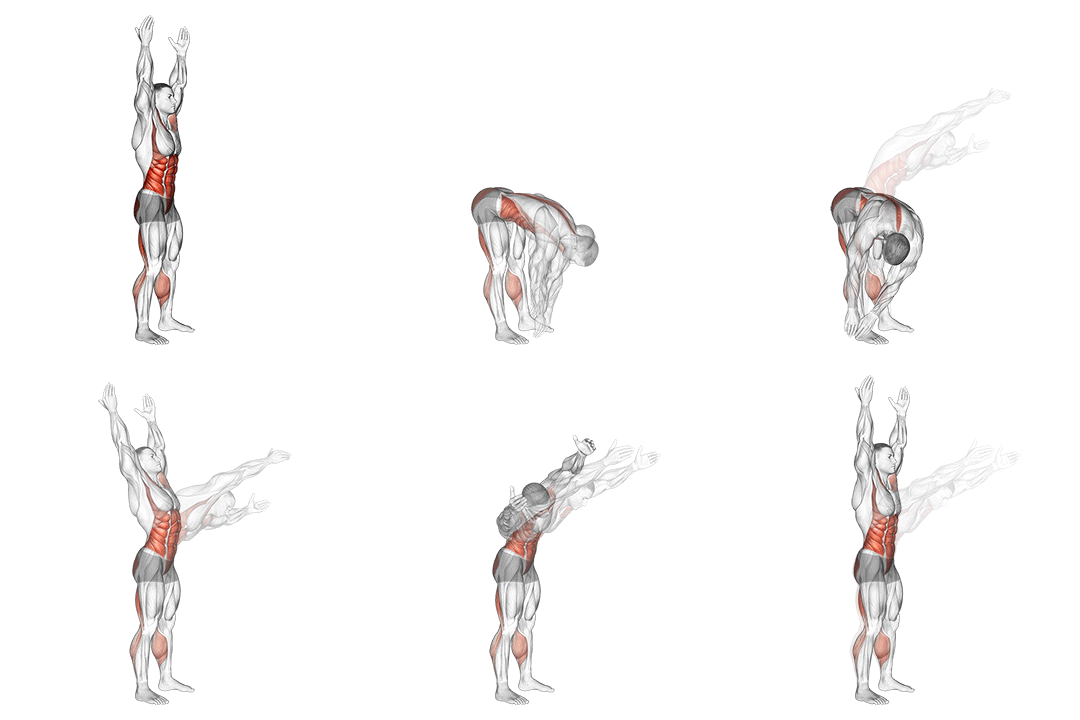
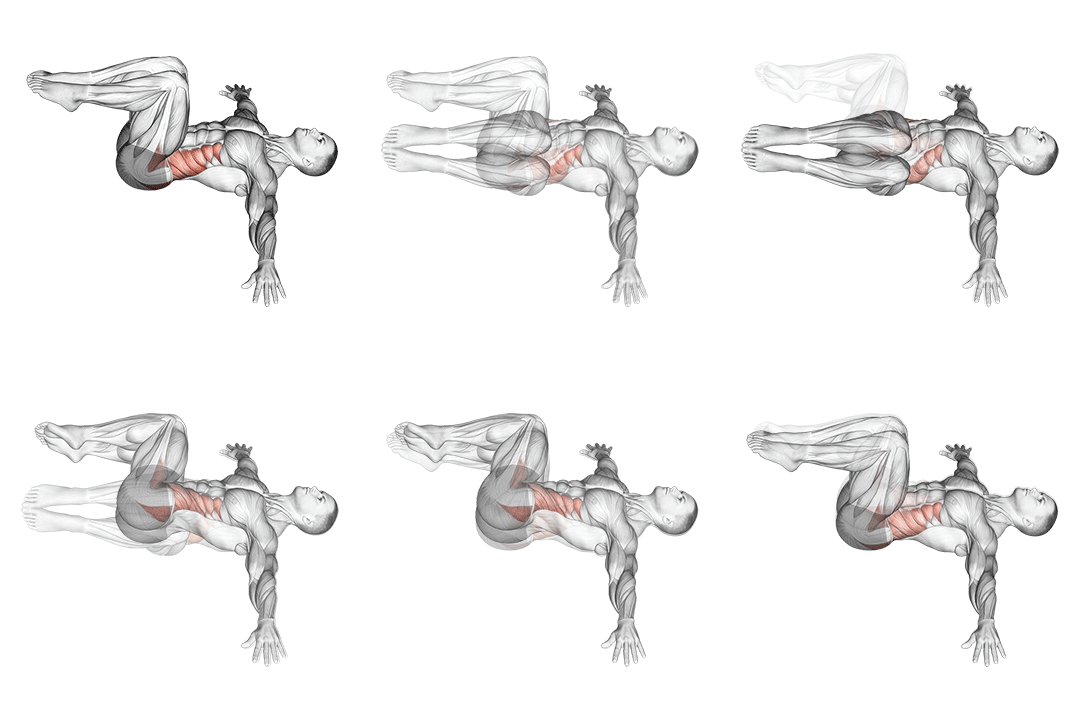
More comparisons with Bench Hip Extension
Compare More Exercises
Use our free comparison tool to analyze any two exercises head-to-head.
Compare Exercises