

Bench Jump vs Chair Leg Extended Stretch: Complete Comparison Guide
Bench Jump vs Chair Leg Extended Stretch puts an explosive compound move against a slow, isolated quad exercise. You’ll get clear comparisons of muscle activation, technique cues, equipment needs, injury risk, and when to pick each for power, muscle growth, or rehab. I’ll show how the bench jump uses triple extension and stretch–shortening mechanics to produce high force and rate-of-force development, while the chair leg extended stretch isolates the knee extensors with controlled knee extension and length–tension emphasis. Use this guide to choose the right option for your goals and set-up.
Exercise Comparison
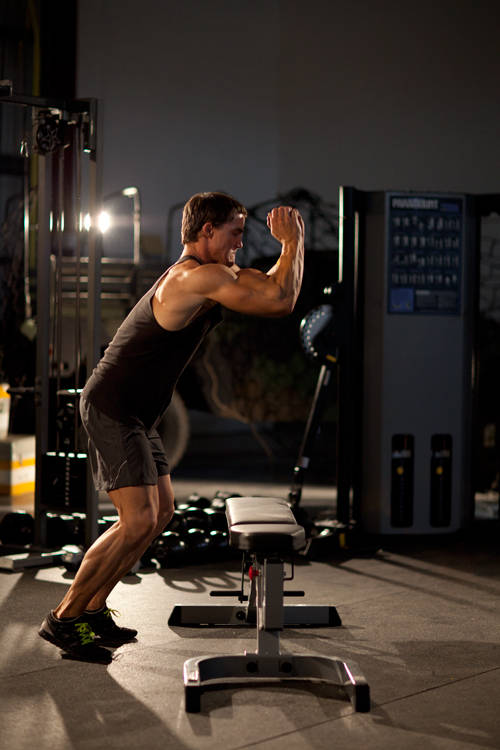
Bench Jump
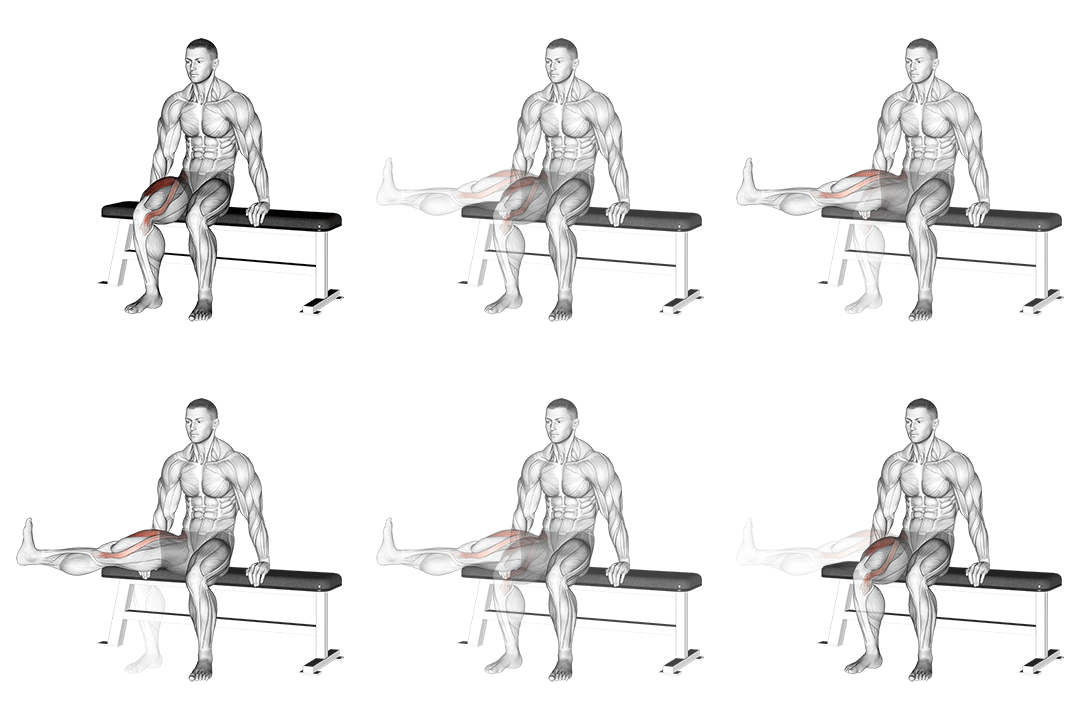
Chair Leg Extended Stretch
Head-to-Head Comparison
| Attribute | Bench Jump | Chair Leg Extended Stretch |
|---|---|---|
| Target Muscle |
Quads
|
Quads
|
| Body Part |
Upper-legs
|
Upper-legs
|
| Equipment |
Body-weight
|
Body-weight
|
| Difficulty |
Intermediate
|
Beginner
|
| Movement Type |
Compound
|
Isolation
|
| Secondary Muscles |
3
|
2
|
Secondary Muscles Activated
Bench Jump
Chair Leg Extended Stretch
Visual Comparison
Overview
Bench Jump vs Chair Leg Extended Stretch puts an explosive compound move against a slow, isolated quad exercise. You’ll get clear comparisons of muscle activation, technique cues, equipment needs, injury risk, and when to pick each for power, muscle growth, or rehab. I’ll show how the bench jump uses triple extension and stretch–shortening mechanics to produce high force and rate-of-force development, while the chair leg extended stretch isolates the knee extensors with controlled knee extension and length–tension emphasis. Use this guide to choose the right option for your goals and set-up.
Key Differences
- Bench Jump is a compound movement, while Chair Leg Extended Stretch is an isolation exercise.
- Difficulty levels differ: Bench Jump is intermediate, while Chair Leg Extended Stretch is beginner.
- Both exercises target the Quads using Body-weight. The main differences are in their movement patterns and muscle activation angles.
Pros & Cons
Bench Jump
+ Pros
- Develops explosive quad power and rate of force development via stretch–shortening cycle
- Recruits glutes, hamstrings, and calves—efficient compound movement for athleticism
- High transfer to sprinting, jumping, and sport-specific tasks
- Simple equipment: bench or box and a safe landing area
− Cons
- Higher impact and joint stress—greater risk for knees, ankles, and spine
- Requires good landing mechanics and balance
- Less isolated quad time under tension for hypertrophy-focused work
Chair Leg Extended Stretch
+ Pros
- Low-impact, easy-to-teach isolation for targeting quadriceps
- Very accessible—works in small spaces with minimal equipment
- Useful for rehabilitation and dialed-in muscle-length work (hip at ~90°)
- Easy to control tempo for eccentrics and isometrics to increase time under tension
− Cons
- Limited transfer to explosive performance and multi-joint strength
- Lower peak force and slower rate of force development
- May not provide sufficient stimulus for advanced trainees without added resistance
When Each Exercise Wins
The Chair Leg Extended Stretch isolates the quads and lets you manipulate time under tension—use 3–4 sets of 8–15 slow reps or 3 x 30–60s holds to emphasize hypertrophy via prolonged mechanical tension and controlled eccentrics.
Bench Jumps develop high-rate force production and recruit multiple lower‑body muscles; integrate them as dynamic work alongside heavier resistance training to improve overall lower‑body force output and functional strength.
The Chair Leg Extended Stretch is single-joint, low-impact, and easier to coach. It teaches knee-extension mechanics and builds quad endurance before introducing high-impact plyometrics.
Most homes lack safe elevated platforms and landing space. The Chair Leg Extended Stretch requires just a chair and delivers focused quad work with minimal risk.
Frequently Asked Questions
Can I do both Bench Jump and Chair Leg Extended Stretch in the same workout?
Yes. Pair them intelligently: use Chair Leg Extended Stretch as an activation or post‑workout quad isolation (3×10–15 slow reps) and Bench Jumps earlier for power work (3–6 reps, 3–5 sets) when you’re fresh to protect technique and maximize rate-of-force development.
Which exercise is better for beginners?
For most beginners the Chair Leg Extended Stretch is better because it isolates the knee extensors, has low impact, and is easier to perform correctly. Build quad strength and control first, then add low-box jumps when landing mechanics are solid.
How do the muscle activation patterns differ?
Bench Jumps produce a rapid eccentric stretch followed by explosive concentric activation—high peak activation and high rate of force development. Chair Leg Extended Stretch yields sustained, lower‑velocity activation and greater time under tension, emphasizing controlled concentric and isometric quad work rather than ballistic output.
Can Chair Leg Extended Stretch replace Bench Jump?
Not if your goal is power or athletic transfer: the Chair Leg Extended Stretch won’t reproduce the high landing forces or stretch–shortening mechanics of bench jumps. It can replace jumps for hypertrophy, rehab, or low-impact programming, but substitute with progressive overload to match training goals.
Expert Verdict
Choose Bench Jump when your goal is power, athletic transfer, and multi-joint lower‑body coordination. Use a bench height appropriate to your ability (start 30 cm / 12 in), emphasize soft landings, and program short sets (3–6 reps, 3–6 sets) with full recovery. Choose Chair Leg Extended Stretch when you need targeted quad work, rehab, or low-impact sessions—perform 3–4 sets of 8–15 controlled reps or 3 x 30–60s holds, focus on slow eccentrics (3–5 s) and neutral pelvis to optimize length–tension. Be decisive: use jumps for rate-of-force and sport tasks, and isolation stretches for hypertrophy, control, and accessibility.
Also Compare
More comparisons with Bench Jump
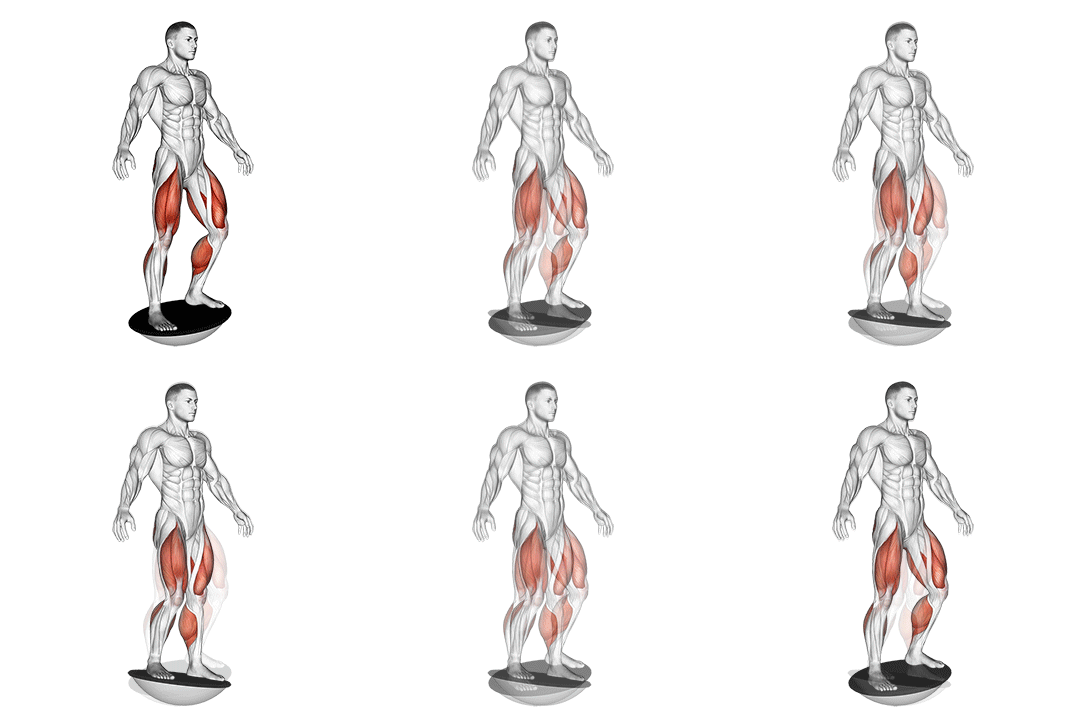
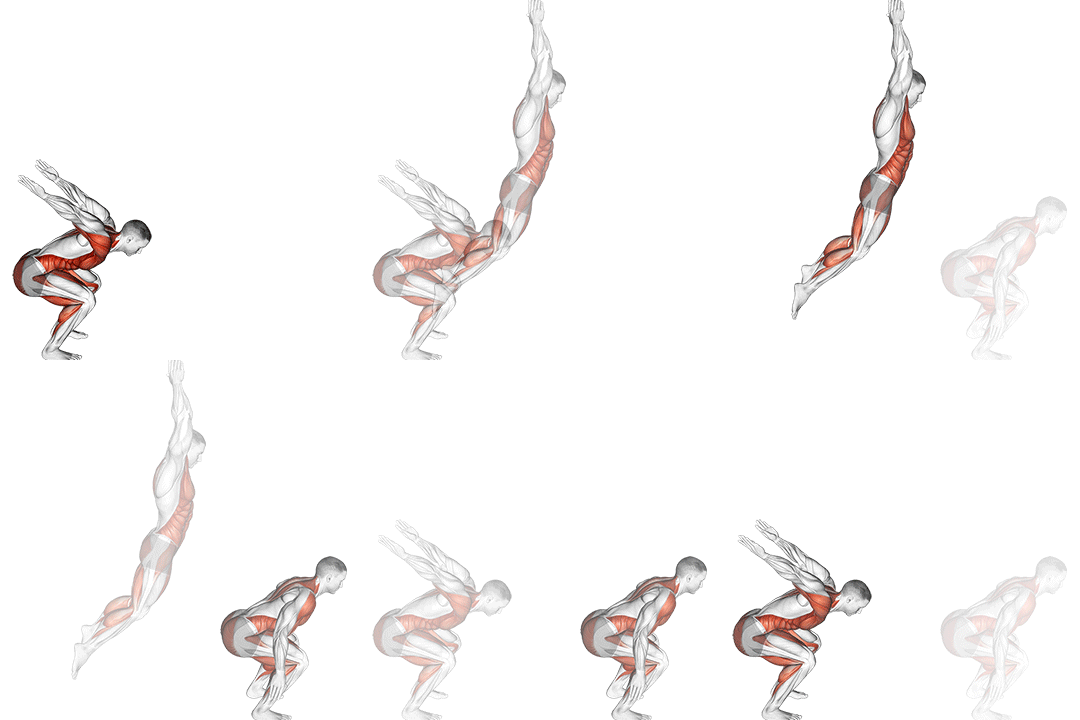
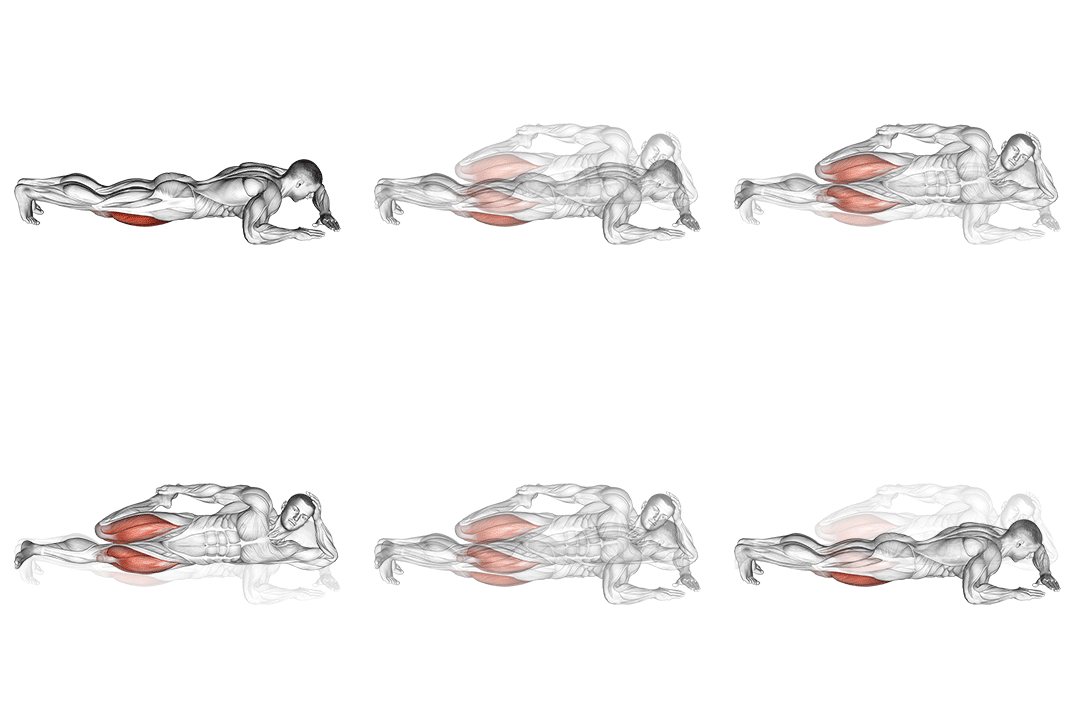
More comparisons with Chair Leg Extended Stretch
Compare More Exercises
Use our free comparison tool to analyze any two exercises head-to-head.
Compare Exercises