

Bent Knee Lying Twist (male) vs Bodyweight Drop Jump Squat: Complete Comparison Guide
Bent Knee Lying Twist (male) vs Bodyweight Drop Jump Squat are two bodyweight moves that both target the glutes but use very different mechanics. If you want clear guidance on which to pick, this guide walks you through primary muscle activation, secondary recruitment, equipment needs, learning curve, and injury risk. You’ll get technique cues, rep ranges (for hypertrophy and power), and scenario-based winners so you can choose the exercise that matches your goals and training environment.
Exercise Comparison
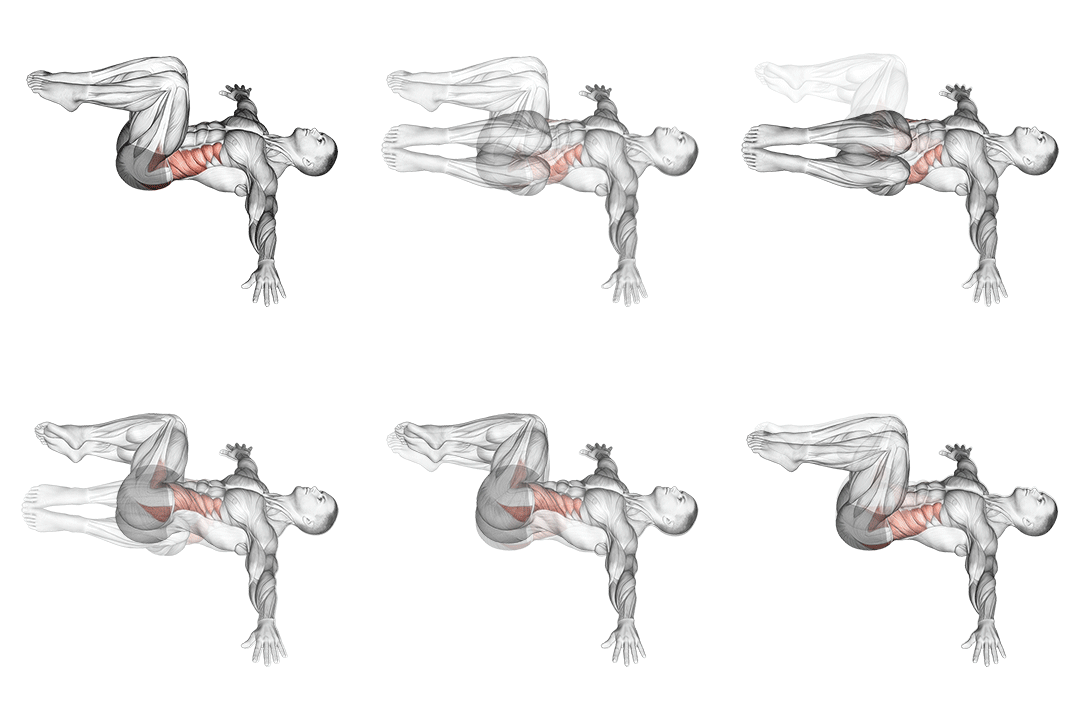
Bent Knee Lying Twist (male)
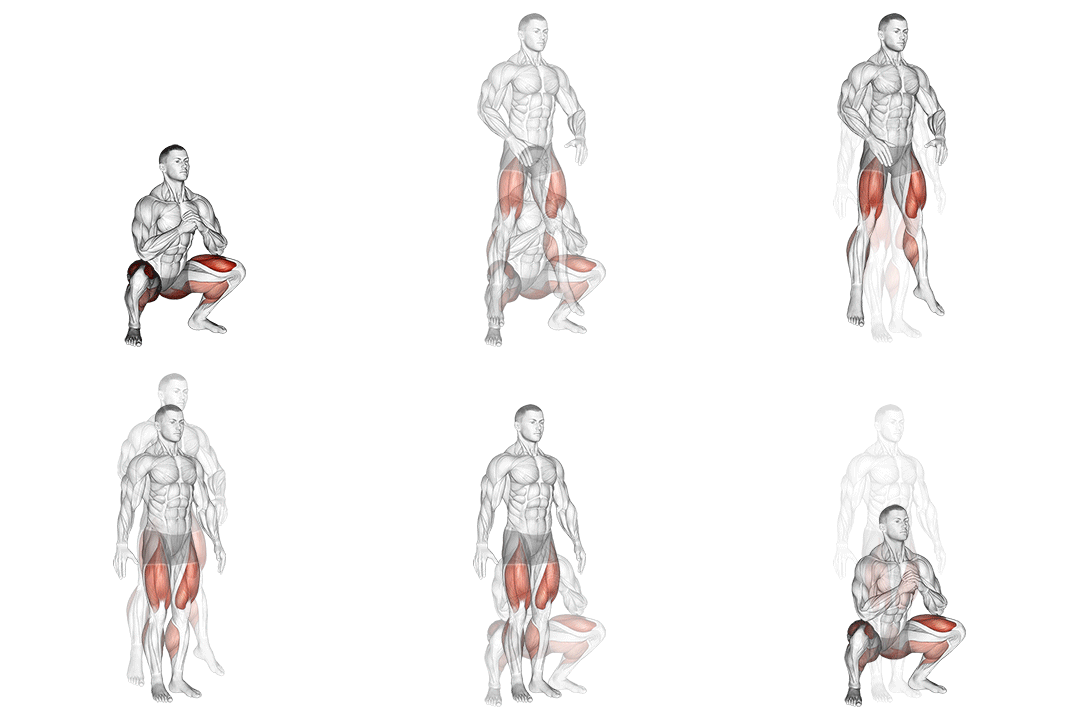
Bodyweight Drop Jump Squat
Head-to-Head Comparison
| Attribute | Bent Knee Lying Twist (male) | Bodyweight Drop Jump Squat |
|---|---|---|
| Target Muscle |
Glutes
|
Glutes
|
| Body Part |
Upper-legs
|
Upper-legs
|
| Equipment |
Body-weight
|
Body-weight
|
| Difficulty |
Beginner
|
Intermediate
|
| Movement Type |
Isolation
|
Compound
|
| Secondary Muscles |
2
|
3
|
Secondary Muscles Activated
Bent Knee Lying Twist (male)
Bodyweight Drop Jump Squat
Visual Comparison
Overview
Bent Knee Lying Twist (male) vs Bodyweight Drop Jump Squat are two bodyweight moves that both target the glutes but use very different mechanics. If you want clear guidance on which to pick, this guide walks you through primary muscle activation, secondary recruitment, equipment needs, learning curve, and injury risk. You’ll get technique cues, rep ranges (for hypertrophy and power), and scenario-based winners so you can choose the exercise that matches your goals and training environment.
Key Differences
- Bent Knee Lying Twist (male) is an isolation exercise, while Bodyweight Drop Jump Squat is a compound movement.
- Difficulty levels differ: Bent Knee Lying Twist (male) is beginner, while Bodyweight Drop Jump Squat is intermediate.
- Both exercises target the Glutes using Body-weight. The main differences are in their movement patterns and muscle activation angles.
Pros & Cons
Bent Knee Lying Twist (male)
+ Pros
- Very low impact and beginner-friendly; minimal space and no equipment
- Targets glute medius and stabilizers with precise isolation
- Easy to cue: pelvis neutral, knees together, squeeze glute at end-range
- Good for rehab, activation, and pre-workout priming
− Cons
- Limited absolute mechanical tension for muscle growth without added resistance
- Low carryover to explosive power or multi-joint strength
- Can underload quadriceps and hamstrings compared to compound moves
Bodyweight Drop Jump Squat
+ Pros
- High-power, compound pattern that recruits glutes, quads, hamstrings, and calves
- Uses stretch–shortening cycle to produce greater peak force and metabolic demand
- Scalable by adjusting drop height, reps, or adding load
- Improves reactive strength, sprint/jump transfer, and overall lower-body coordination
− Cons
- Higher impact and technical demand increases injury risk if done poorly
- Requires a stable box/step and safe landing area
- Not ideal for beginners or those with knee/ankle issues without regression
When Each Exercise Wins
The drop jump squat produces greater overall mechanical loading through eccentric–concentric cycles and recruits larger muscle groups (quads + glutes + hamstrings), increasing time under tension and metabolic stress. For hypertrophy use 3–5 sets of 6–12 reps, or pair plyometric sets with targeted glute isolation for volume.
Although bodyweight limits absolute load, the high peak ground reaction forces and rapid force production train rate of force development and functional lower-body strength. Progress by increasing drop height, adding single-leg variants, or loading to reach 3–6 reps with high intent.
It’s low-impact, easy to control, and teaches glute activation and pelvic stability without joint stress. Start with 2–4 sets of 10–20 controlled reps focusing on full glute contraction and neutral pelvis.
No equipment, minimal space, and low risk make the lying twist ideal for home training and activation work. Use it as a standalone glute session or as a warm-up before compound movements.
Frequently Asked Questions
Can I do both Bent Knee Lying Twist (male) and Bodyweight Drop Jump Squat in the same workout?
Yes. Use the lying twist first as an activation drill (2–4 sets of 10–15 controlled reps) to prime the glutes, then follow with drop jump squats to capitalize on improved neuromuscular recruitment. Keep total volume reasonable and allow full recovery between high-intensity plyo sets to protect joints.
Which exercise is better for beginners?
Bent Knee Lying Twist (male) is better for beginners because it teaches glute activation and pelvic control with low impact. Once you can maintain neutral pelvis and strong glute contraction, progress to compound or plyometric variations.
How do the muscle activation patterns differ?
The lying twist emphasizes slow, isolated glute and oblique activity via hip rotation and isometric control, while the drop jump squat produces high eccentric loading followed by explosive concentric contractions across hip, knee, and ankle. The latter uses the stretch–shortening cycle to increase power and recruit larger muscle volumes.
Can Bodyweight Drop Jump Squat replace Bent Knee Lying Twist (male)?
Not fully. Drop jump squats improve power and overall lower-body strength but may miss the targeted glute medius stabilization and low-load motor control you get from the lying twist. Combine both if you need both isolation and explosive capacity.
Expert Verdict
Use the Bent Knee Lying Twist (male) when your priority is glute isolation, activation, low impact, or rehab—it excels at recruiting the glute medius and stabilizers with minimal equipment. Choose the Bodyweight Drop Jump Squat when you want to train explosive hip extension, increase overall lower-body recruitment, and develop power or functional strength; aim for controlled drop heights (20–60 cm) and focus on soft, midfoot landings and ~90° knee flexion. For balanced development, pair the two: start sessions with lying twists to activate the glutes (2–4 sets of 10–15) then perform 3–6 sets of explosive drop jumps for power or 6–12 reps for hypertrophy-style work.
Also Compare
More comparisons with Bent Knee Lying Twist (male)
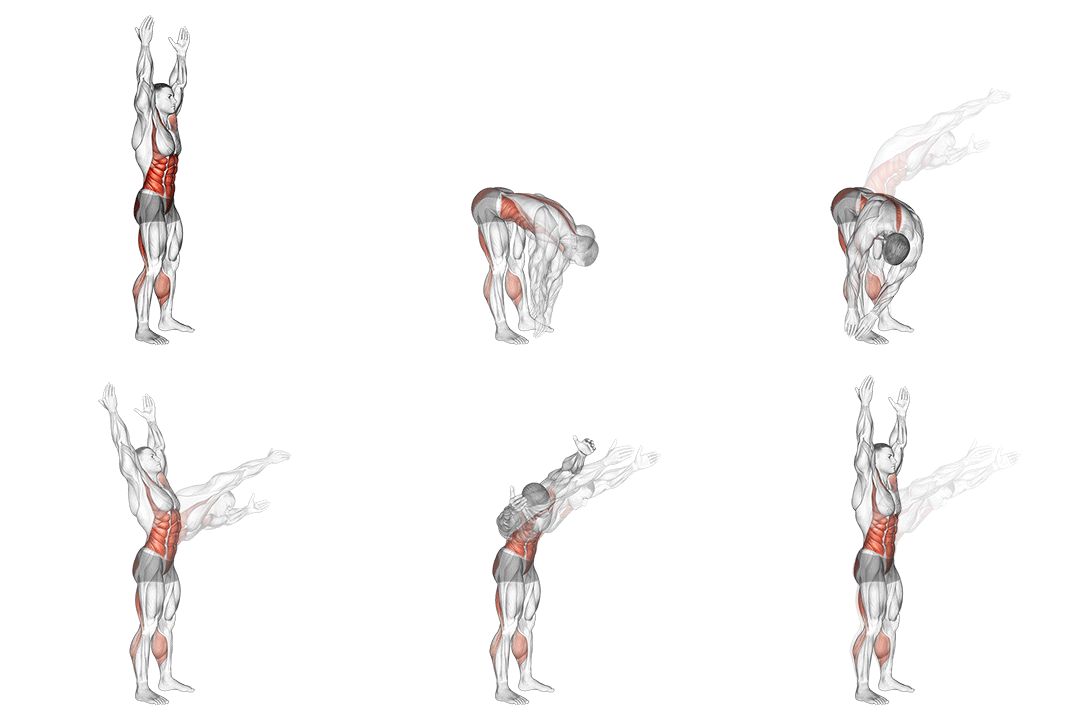
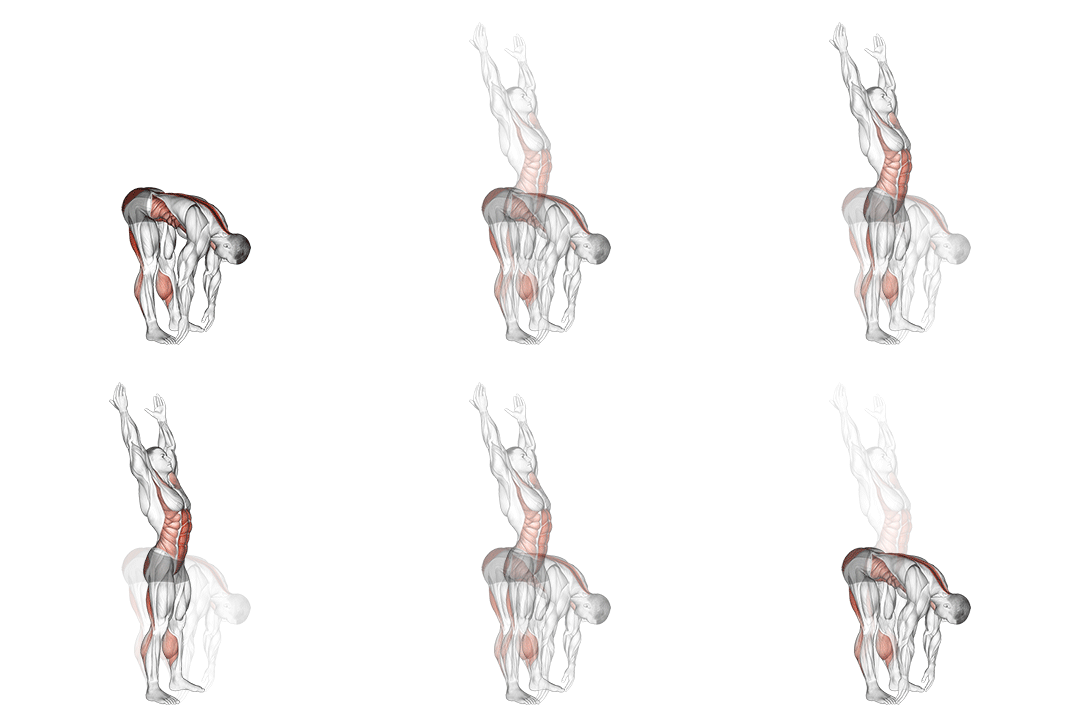
More comparisons with Bodyweight Drop Jump Squat
Compare More Exercises
Use our free comparison tool to analyze any two exercises head-to-head.
Compare Exercises