

Bent Knee Lying Twist (male) vs Curtsey Squat: Complete Comparison Guide
Bent Knee Lying Twist (male) vs Curtsey Squat — you’re choosing between a focused, low-load glute isolation and a diagonal compound lower-body move. I’ll break down how each hits the glutes, which secondary muscles pick up the load, practical technique cues, and clear rep and progression recommendations. Read on to learn which exercise fits your goal—muscle growth, strength, balance, or a simple home routine—and get biomechanical tips so you can perform each safely and effectively.
Exercise Comparison
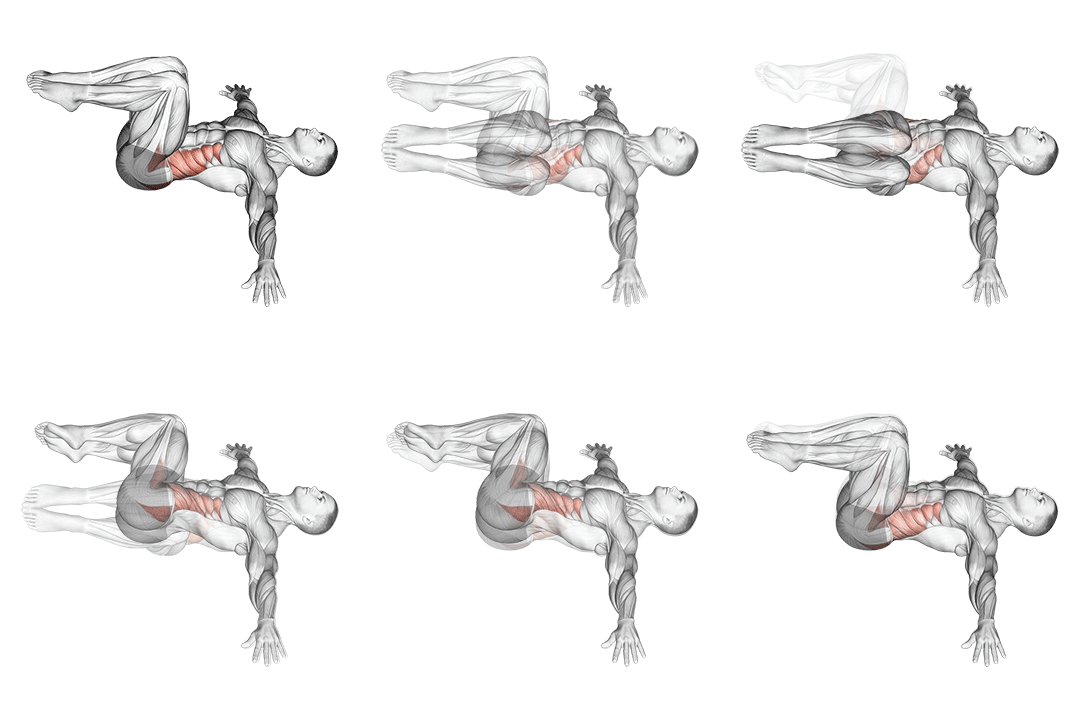
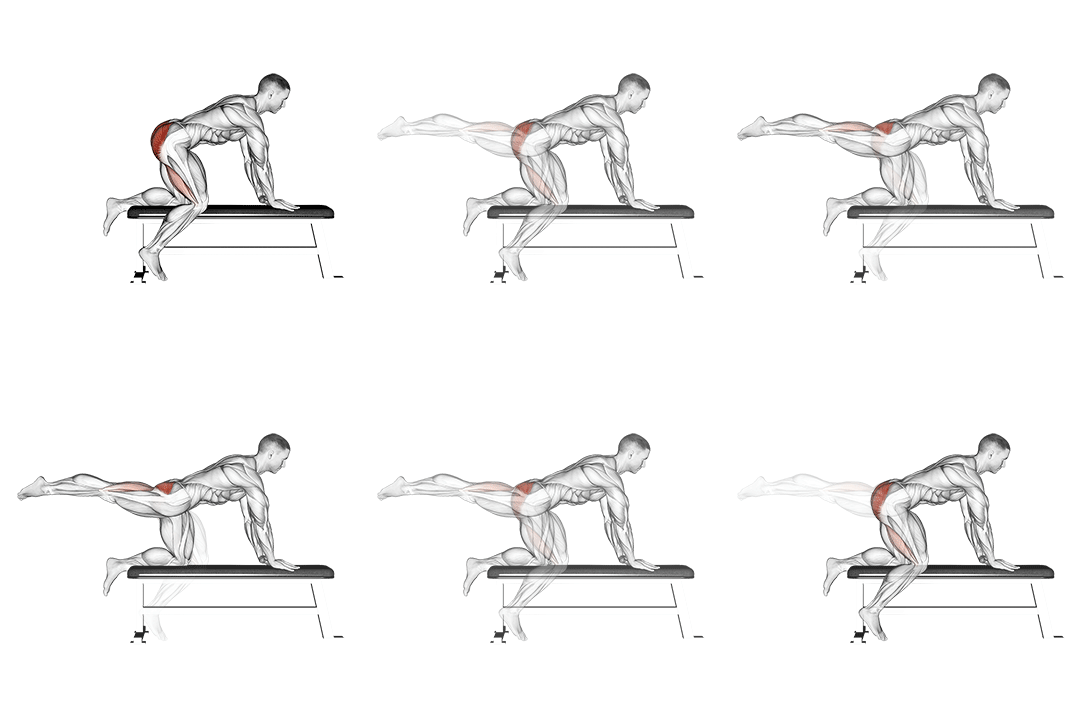
Bent Knee Lying Twist (male)
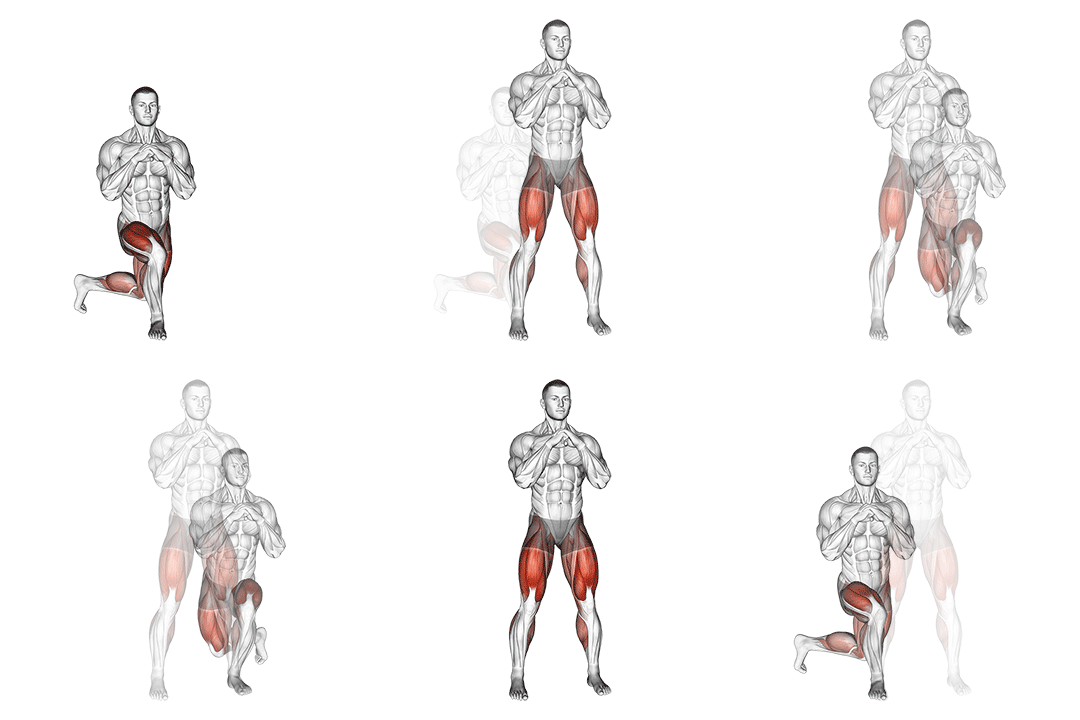
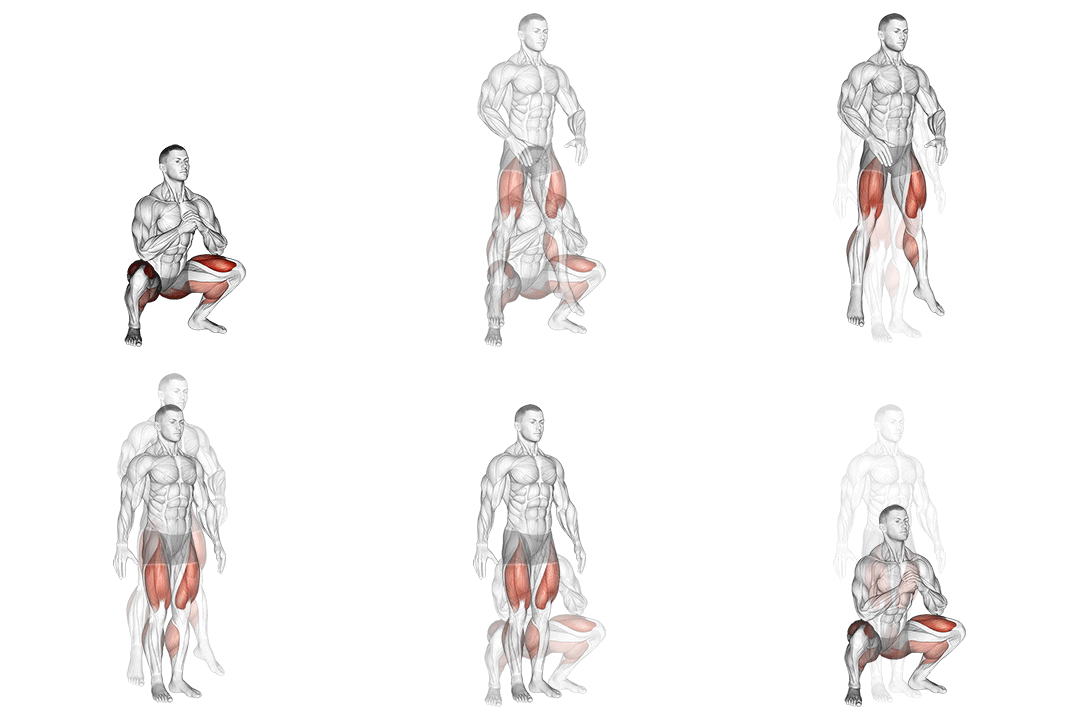
Curtsey Squat
Head-to-Head Comparison
| Attribute | Bent Knee Lying Twist (male) | Curtsey Squat |
|---|---|---|
| Target Muscle |
Glutes
|
Glutes
|
| Body Part |
Upper-legs
|
Upper-legs
|
| Equipment |
Body-weight
|
Body-weight
|
| Difficulty |
Beginner
|
Beginner
|
| Movement Type |
Isolation
|
Compound
|
| Secondary Muscles |
2
|
3
|
Secondary Muscles Activated
Bent Knee Lying Twist (male)
Curtsey Squat
Visual Comparison
Overview
Bent Knee Lying Twist (male) vs Curtsey Squat — you’re choosing between a focused, low-load glute isolation and a diagonal compound lower-body move. I’ll break down how each hits the glutes, which secondary muscles pick up the load, practical technique cues, and clear rep and progression recommendations. Read on to learn which exercise fits your goal—muscle growth, strength, balance, or a simple home routine—and get biomechanical tips so you can perform each safely and effectively.
Key Differences
- Bent Knee Lying Twist (male) is an isolation exercise, while Curtsey Squat is a compound movement.
- Both exercises target the Glutes using Body-weight. The main differences are in their movement patterns and muscle activation angles.
Pros & Cons
Bent Knee Lying Twist (male)
+ Pros
- Isolates glute medius/minimus and improves hip rotational control
- Very low equipment and space needs—perfect for home
- Low compressive load on knees and ankles
- Easy to cue and scale for beginners
− Cons
- Limited capacity to add heavy progressive overload
- Less carryover to upright compound strength movements
- Can provoke lumbar rotation issues if performed without core bracing
Curtsey Squat
+ Pros
- Loads glute max and lower-body chain effectively for hypertrophy and strength
- Easy to progressively overload with weights
- Improves balance, unilateral strength, and functional movement patterns
- Engages quads, hamstrings, and calves for a compound stimulus
− Cons
- Requires more motor control and hip-knee alignment
- Higher compressive forces on the knee if form breaks down
- Needs more space and may require equipment for maximal progress
When Each Exercise Wins
Curtsey Squats allow progressive overload and longer time under tension with weighted variations, driving glute max hypertrophy. Use 6–12 reps with added resistance or 8–15 reps for moderate load and strict eccentrics to maximize muscle fiber recruitment.
Curtsey Squats produce greater vertical and diagonal force vectors that transfer to standing strength and loaded activities. You can load them incrementally (e.g., +5–10% bodyweight increments) and train heavier sets (3–6 reps) to build force output.
The lying position reduces balance demands and isolates hip rotators and abductors, letting you learn muscle engagement quickly. Start with 12–20 reps per side and focus on pelvic bracing and 45° controlled knee rotation.
No equipment, minimal space, and low joint loading make the lying twist ideal for home sessions. You can complete 3–4 sets of 15–25 reps per side or add a light resistance band for extra challenge.
Frequently Asked Questions
Can I do both Bent Knee Lying Twist (male) and Curtsey Squat in the same workout?
Yes. Pair them as an isolation-to-compound sequence: start with 2–3 sets of Bent Knee Lying Twists (12–20 reps) to activate the glute medius, then follow with 3–4 sets of Curtsey Squats (6–12 reps) to load the glute max. This order primes motor control and improves recruitment during heavier sets.
Which exercise is better for beginners?
Bent Knee Lying Twist (male) is better for absolute beginners because it reduces balance demands and isolates hip musculature. Beginners should focus on pelvic bracing, 45° controlled knee rotations, and 12–20 reps per side before progressing to standing compound moves.
How do the muscle activation patterns differ?
The lying twist produces rotational torque that emphasizes glute medius/minimus and oblique stabilizers through ~20–45° of limb rotation. Curtsey Squats create a vertical/diagonal force vector that demands hip extension from the glute max and concurrent quadriceps activation, with peak hip torque typically between 40–80° of knee flexion.
Can Curtsey Squat replace Bent Knee Lying Twist (male)?
Curtsey Squats can replace the lying twist when your goal is overall glute development and strength because they load the glute complex more heavily. Keep the lying twist in your program when you need targeted glute med activation, rehab work, or a low-impact option.
Expert Verdict
Use the Bent Knee Lying Twist (male) when your goal is targeted glute medius work, improving hip rotational control, or when you need a low-impact home option. Prescribe 3–4 sets of 12–25 reps per side with a neutral pelvis and braced core. Choose Curtsey Squats when you want compound overload for the glute max and upright strength; perform 3–5 sets of 6–15 reps and add weight or tempo manipulation for progressive overload. Be decisive: pick the lying twist for isolation and rehab-style work, and the curtsey squat for hypertrophy and strength progression.
Also Compare
More comparisons with Bent Knee Lying Twist (male)
Compare More Exercises
Use our free comparison tool to analyze any two exercises head-to-head.
Compare Exercises