Cable Concentration Curl vs Cable Hammer Curl (With Rope)

Compare target muscles, equipment, difficulty, movement type, and secondary muscles for Cable Concentration Curl and Cable Hammer Curl (With Rope).

Change comparison Share

Get comparison link

Select the link and use your device's Copy command.

Comparison overview

AI-generated
Cable Concentration Curl vs Cable Hammer Curl (with Rope) — both isolate elbow flexion with continuous cable tension, but they load the biceps and forearms differently. You’ll get clear guidance on muscle activation, biomechanics, technique cues (elbow position, grip, tempo), equipment needs, and program placement. Read this to know which movement gives stronger peak contraction, which one recruits the brachialis and brachioradialis more, rep ranges to use (6–12 for heavy hypertrophy, 10–20 for forearm endurance), and how to pair them in your routine for steady muscle growth and progress.

Exercise Comparison

Exercise A
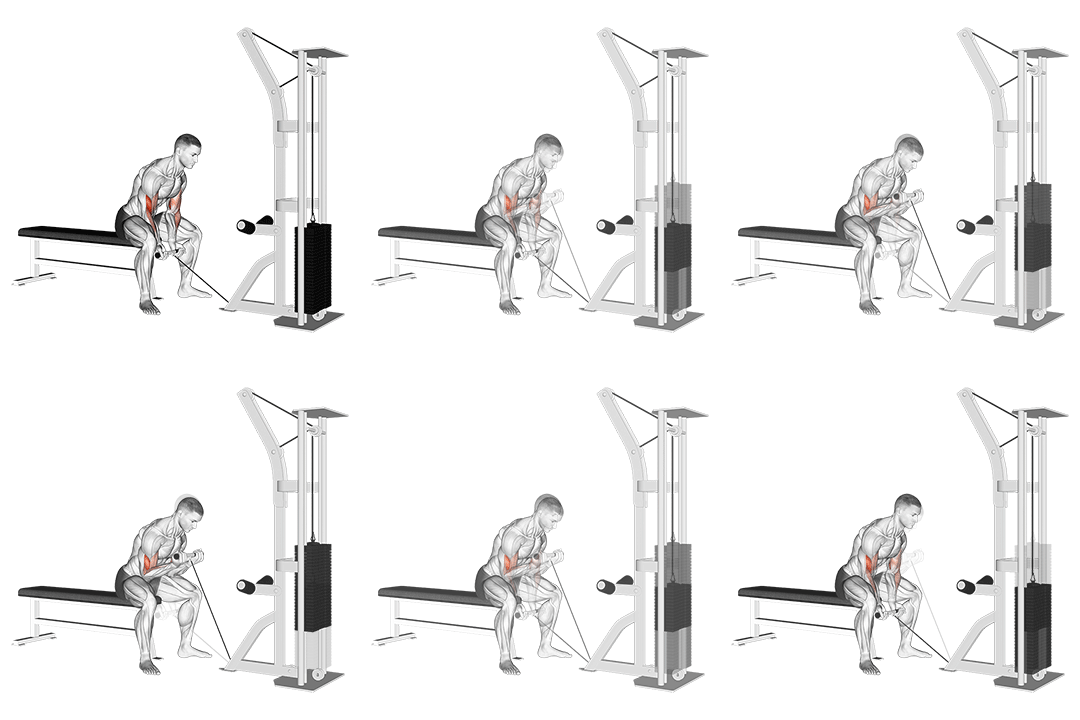
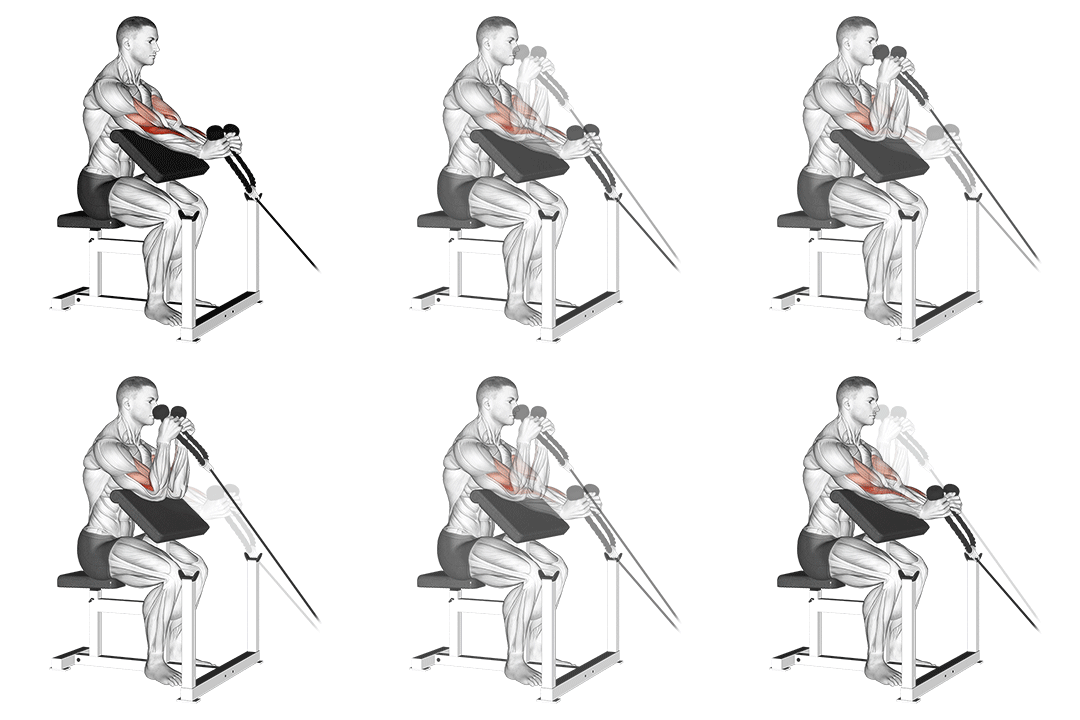
Cable Concentration Curl demonstration

Cable Concentration Curl

Target Biceps
Equipment Cable
Body Part Upper-arms
Difficulty Beginner
Movement Isolation
Secondary Muscles
Forearms
VS
Exercise B
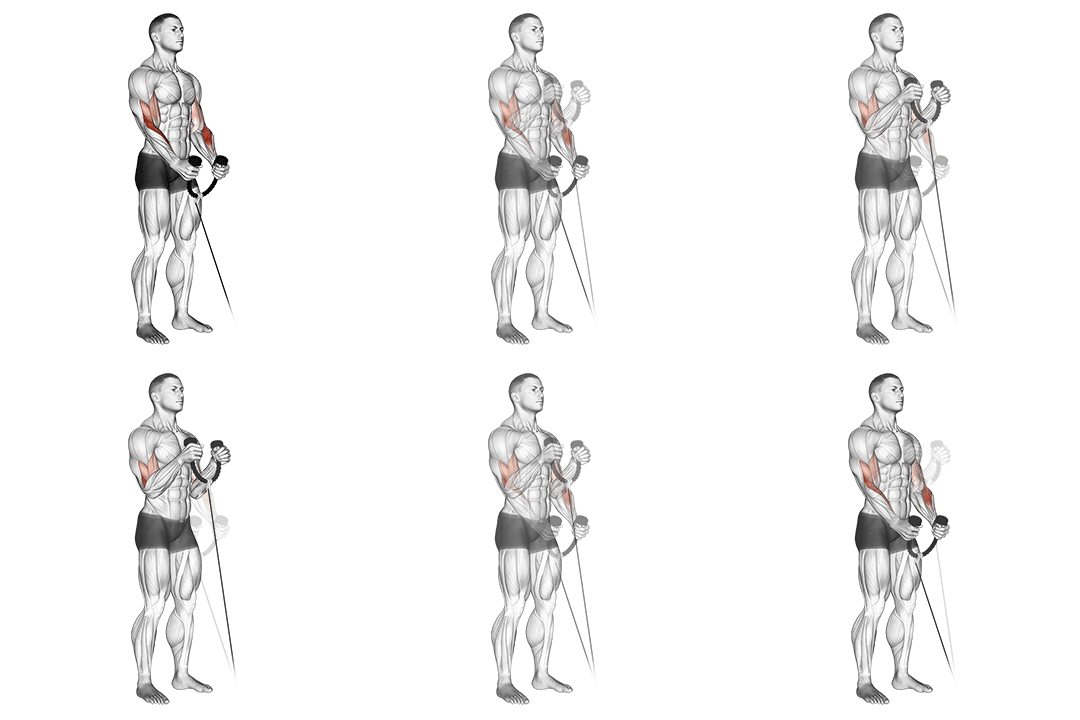
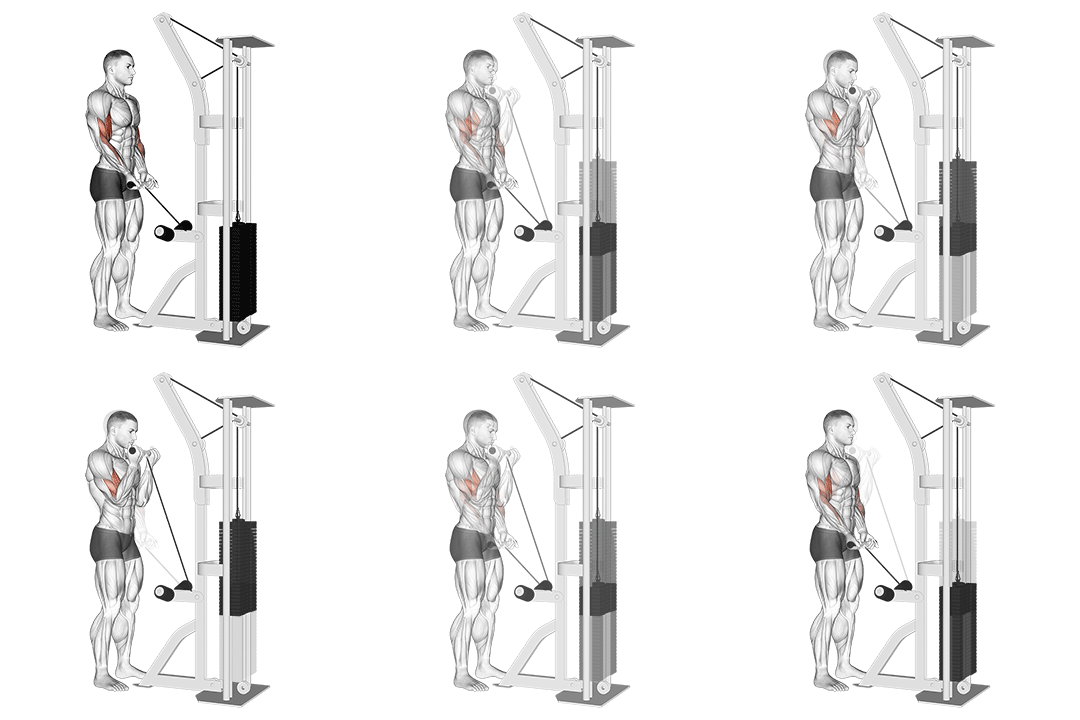
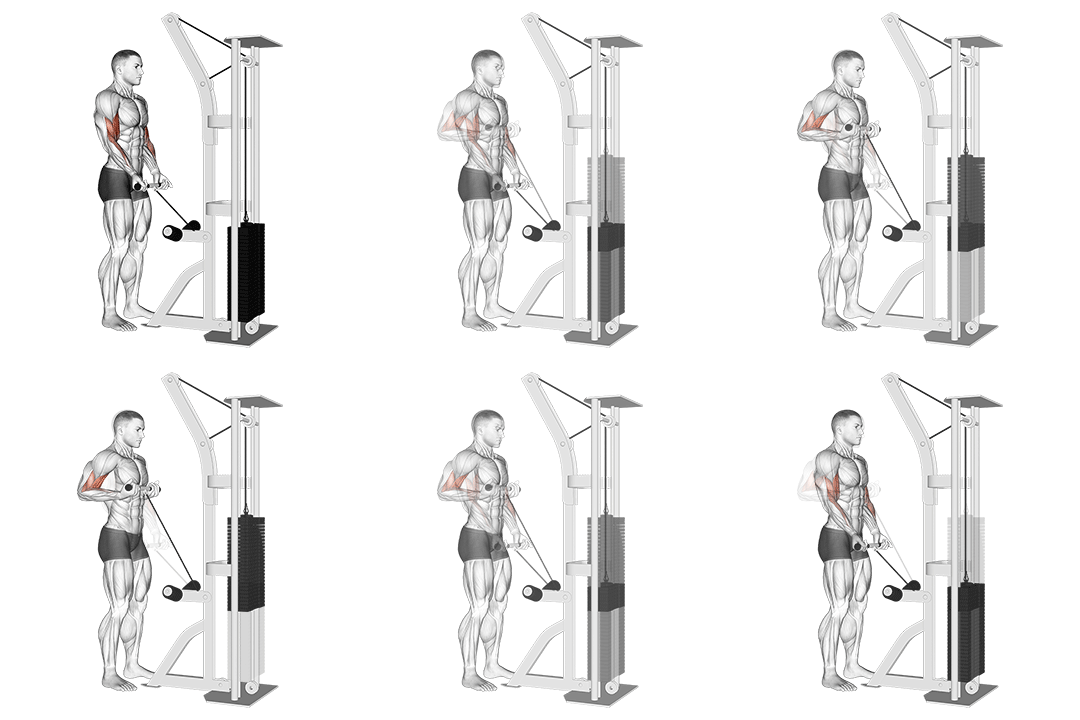
Cable Hammer Curl (With Rope) demonstration

Cable Hammer Curl (With Rope)

Target Biceps
Equipment Cable
Body Part Upper-arms
Difficulty Beginner
Movement Isolation
Secondary Muscles
Forearms

Head-to-Head Comparison

Different values are marked. These are catalogue attributes, not performance scores.

Muscles used

Listed target and secondary muscles, shown on the body. Locations, not activation or strength scores.

  • Target
  • Secondary
  • Not highlighted

Cable Concentration Curl

Front
Cable Concentration Curl: front muscle locationsSolid: listed target. Striped: listed secondary. Grey: not highlighted. Locations, not activation or strength scores. See the muscle names below.
Back
Cable Concentration Curl: back muscle locationsSolid: listed target. Striped: listed secondary. Grey: not highlighted. Locations, not activation or strength scores. See the muscle names below.
Target
Biceps
Secondary
Forearms

Cable Hammer Curl (With Rope)

Front
Cable Hammer Curl (With Rope): front muscle locationsSolid: listed target. Striped: listed secondary. Grey: not highlighted. Locations, not activation or strength scores. See the muscle names below.
Back
Cable Hammer Curl (With Rope): back muscle locationsSolid: listed target. Striped: listed secondary. Grey: not highlighted. Locations, not activation or strength scores. See the muscle names below.
Target
Biceps
Secondary
Forearms

Grey does not mean a muscle is unused. The diagrams show only the mapped catalogue labels.

Attribute Cable Concentration Curl Cable Hammer Curl (With Rope)
Target Muscle
Biceps
Biceps
Body Part
Upper-arms
Upper-arms
Equipment
Cable
Cable
Difficulty
Beginner
Beginner
Movement Type
Isolation
Isolation
Secondary Muscles
Forearms
Forearms

Visual Comparison

An illustrative 1–10 profile derived from catalog difficulty, equipment, and listed-muscle fields—not measured performance or muscle activation.

Key Differences

  • Both exercises target the Biceps using Cable. The catalogue does not establish which exercise is better for an individual goal.

Muscle comparison

Shared target muscles

Both exercises primarily load the elbow flexors — the biceps brachii works as the main mover through elbow flexion. Both maintain continuous tension via a low cable pulley, so time-under-tension is comparable when tempo is matched. The Cable Concentration Curl emphasizes a supinated/partially supinated finish, increasing long-head biceps engagement during peak contraction. The Cable Hammer Curl (with Rope) uses a neutral grip that shifts some load off the biceps and onto the brachialis and brachioradialis while still activating the biceps.

Secondary muscle differences

The Cable Hammer Curl recruits more brachialis and brachioradialis due to the neutral hand position and altered forearm rotation, which increases elbow flexion moment from those muscles. The Cable Concentration Curl gives higher isolation of the biceps short and long heads at the top of the movement because supination increases biceps contribution and optimizes its length-tension relationship at ~30–45° of elbow flexion.

Muscle involvement analysis

Concentration curls produce a sharper peak contraction: as the elbow passes ~60° to full flexion, the biceps' moment arm increases and EMG-like activation peaks. Hammer curls produce a flatter activation curve: brachialis/BR contribution raises baseline torque across the mid-range (about 30–90°), so you can often handle slightly higher loading through the range. Force vector differences (supinated finish vs neutral grip) change muscle moment arms and recruitment distribution.

Equipment and setup

Cable Concentration Curl: setup

Cable Concentration Curl: low pulley, single-hand handle or D-handle, bench or seated support to brace the torso, and space to position the working arm against your inner thigh or across a thigh pad.

Cable Hammer Curl (With Rope): setup

Cable Hammer Curl (with Rope): low pulley with a rope attachment, enough cable travel for full elbow extension, and either a standing or staggered-stance setup to prevent torso swing.

Access and practicality

Cable Hammer Curl (with Rope) — winner for accessibility. The neutral grip translates directly to dumbbell hammer curls and resistance-band variations if you lack a cable station, making it easier to replicate outside a commercial gym.

Learning and progression

Learning the movements

Both are beginner-friendly, but the Cable Concentration Curl has a shallower learning curve because the seated/supported position limits compensatory shoulder movement and lets you focus on elbow flexion and supination cues.

Progression considerations

Cable Hammer Curl (with Rope) offers more straightforward progression: you can incrementally add heavier loads and leverage bilateral or unilateral variations. The rope allows stronger carryover to heavier compound work because brachialis involvement supports increased absolute loads.

Limitations and precautions

Both are low-risk when performed with controlled tempo. Cable Concentration Curl reduces swing and spinal loading, lowering injury risk for the lower back. Hammer curls permit slightly heavier loads—if you sacrifice form (shoulder shrugging or elbow protrusion), risk to the elbow or biceps tendon increases.

Pros & Cons

Cable Concentration Curl

+ Pros

  • Maximizes peak biceps contraction via supination and fixed elbow position
  • Seated/supported setup minimizes torso swing and compensations
  • Continuous tension from the cable maintains load through the range
  • Excellent for unilateral focus and correcting left-right strength imbalances

− Cons

  • Limited ability to load very heavy compared to neutral-grip variations
  • Less brachialis and forearm recruitment
  • Requires a bench or thigh support to set up optimally

Cable Hammer Curl (With Rope)

+ Pros

  • Neutral grip increases brachialis/brachioradialis involvement for thicker arms
  • Translates easily to dumbbell or band hammer curls for home use
  • Allows slightly higher absolute loads due to stronger neutral grip leverage
  • Rope lets you flare ends for greater range and wrist comfort

− Cons

  • Slightly less peak biceps stretch/contraction than supinated curls
  • Standing setup can lead to torso swing if not braced
  • Rope attachment may limit single-arm isolation precision

When Each Exercise Wins

1
For muscle hypertrophy: Cable Concentration Curl

The concentration curl creates a sharper peak contraction and better supination at the top of the lift, increasing biceps time-under-tension and mechanical tension during the 30–45° peak range preferred for muscle growth. Use 8–12 reps with a 2–3 second eccentric and a controlled 1–2 second concentric.

2
For strength gains: Cable Hammer Curl (with Rope)

Neutral grip and greater brachialis involvement let you handle heavier absolute loads and build raw elbow flexion strength. Perform 4–8 reps with longer rest and strict form to increase force output.

3
For beginners: Cable Concentration Curl

Seated support and a focused single-arm setup limit shoulder compensation and make it easier to learn elbow-driven flexion and supination cues, helping you build clean technique before adding load.

4
For home workouts: Cable Hammer Curl (with Rope)

The neutral-grip hammer pattern maps directly to dumbbells and bands you likely have at home, so you can replicate the movement and progressive overload without a cable station.

Frequently Asked Questions

Can I do both Cable Concentration Curl and Cable Hammer Curl (with Rope) in the same workout?

Yes. Start with the heavier, compound-like stimulus — cable hammer curls — for 3–4 sets of 6–10 reps to load the brachialis and build strength, then finish with 3 sets of 8–12 Cable Concentration Curls to fatigue the biceps with strict peak contractions and focused tempo.

Which exercise is better for beginners?

Cable Concentration Curl is usually better for beginners because the seated/supported position reduces momentum and helps you learn to isolate the biceps and control supination. Keep loads light and focus on elbow position and a 2–3 second eccentric.

How do the muscle activation patterns differ?

Concentration curls spike biceps activation near full flexion due to supination increasing biceps moment arm; hammer curls produce more consistent activation across the mid-range because the neutral grip boosts brachialis and brachioradialis contribution, raising baseline torque through 30–90° of elbow flexion.

Can Cable Hammer Curl (with Rope) replace Cable Concentration Curl?

It can replace it if your goal is thicker forearms and overall elbow flexor strength, but it won’t match the concentration curl’s peak biceps contraction. If biceps peak and shape are priorities, keep concentration curls in your program at least every other week.

Comparison Summary

Use the Cable Concentration Curl when your priority is biceps-specific hypertrophy, tight peak contractions, and unilateral control — it’s ideal for 8–12 rep sets with deliberate tempo and elbow bracing. Choose the Cable Hammer Curl (with Rope) when you want more brachialis/forearm development, higher absolute loading, or an exercise that translates to dumbbells and bands for home training. For balanced arm development, rotate both: emphasize concentration curls for 4–6 weeks to refine peak contraction, then switch to rope hammer curls for 4–6 weeks to build thickness and carryover to heavier lifts.

Exercise instructions

Steps from the exercise catalogue. Read the full sequence before starting.

Cable Concentration Curl

  1. Sit on a bench or chair with your feet flat on the floor and your knees slightly bent.
  2. Hold the cable handle with an underhand grip and rest your elbow against the inside of your thigh.
  3. Keeping your upper arm stationary, exhale and curl the cable handle towards your shoulder while contracting your biceps.
Read remaining steps for Cable Concentration Curl
  1. Pause for a moment at the top of the movement, then inhale and slowly lower the cable handle back to the starting position.
  2. Repeat for the desired number of repetitions, then switch arms.

Cable Hammer Curl (With Rope)

  1. Stand upright with your feet shoulder-width apart and a slight bend in your knees.
  2. Hold the cable rope attachment with an underhand grip, palms facing each other, and your arms fully extended.
  3. Keeping your upper arms stationary, exhale and curl the weights while contracting your biceps.
Read remaining steps for Cable Hammer Curl (With Rope)
  1. Continue to raise the cable rope attachment until your biceps are fully contracted and the rope is at shoulder level.
  2. Hold the contracted position for a brief pause as you squeeze your biceps.
  3. Inhale and slowly begin to lower the cable rope attachment back to the starting position.
  4. Repeat for the desired number of repetitions.

Also Compare

Compare another pair

Choose two exercises to see their differences side by side.

Compare Exercises