

Chest And Front Of Shoulder Stretch vs Pushups: Complete Comparison Guide
Chest And Front Of Shoulder Stretch vs Pushups — you might use one to improve flexibility and the other to build chest strength. Here you'll get a clear, evidence-informed comparison that covers muscle activation, biomechanics, equipment needs, difficulty, and when to pick each move. I’ll explain how each targets the pectorals, what secondary muscles get involved, specific technique cues (angles, holds, rep ranges), and practical recommendations so you can choose the right tool for mobility, hypertrophy, or functional conditioning.
Exercise Comparison
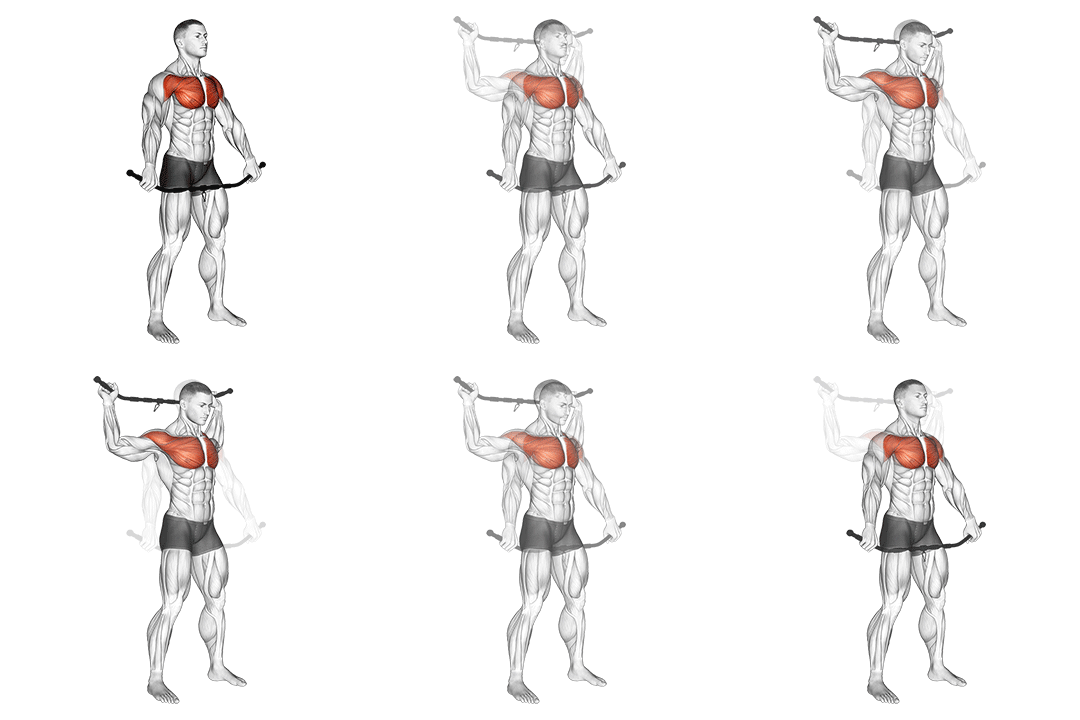
Chest And Front Of Shoulder Stretch

Pushups
Head-to-Head Comparison
| Attribute | Chest And Front Of Shoulder Stretch | Pushups |
|---|---|---|
| Target Muscle |
Pectorals
|
Pectorals
|
| Body Part |
Chest
|
Chest
|
| Equipment |
Body-weight
|
Body-weight
|
| Difficulty |
Beginner
|
Beginner
|
| Movement Type |
Isolation
|
Compound
|
| Secondary Muscles |
1
|
2
|
Secondary Muscles Activated
Chest And Front Of Shoulder Stretch
Pushups
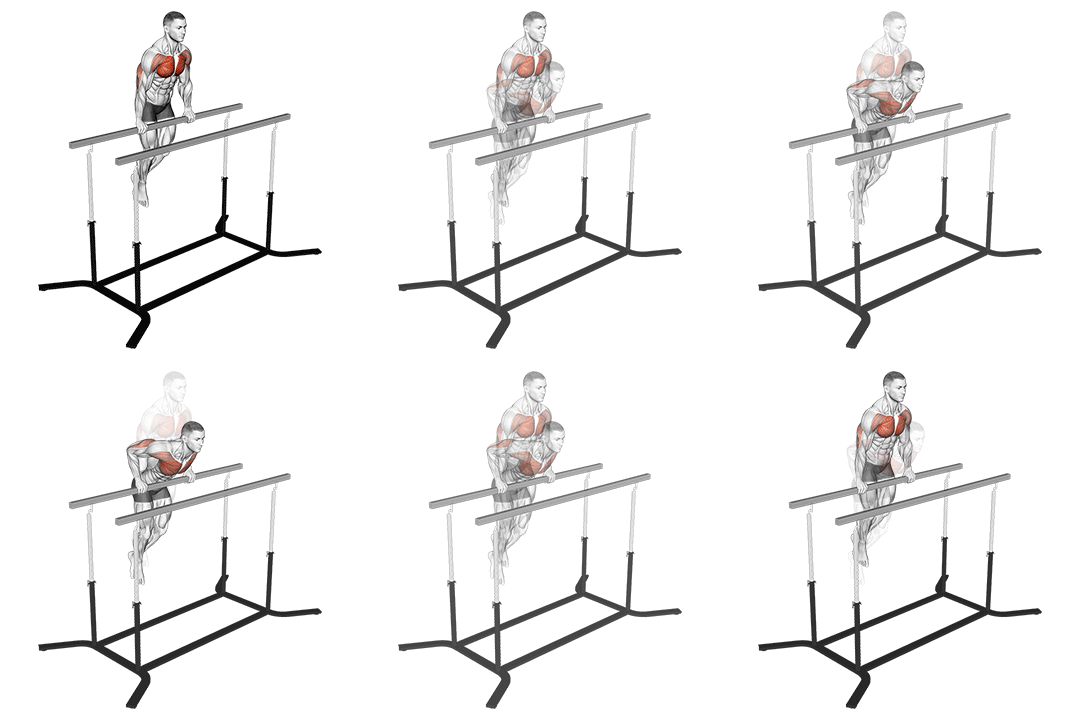
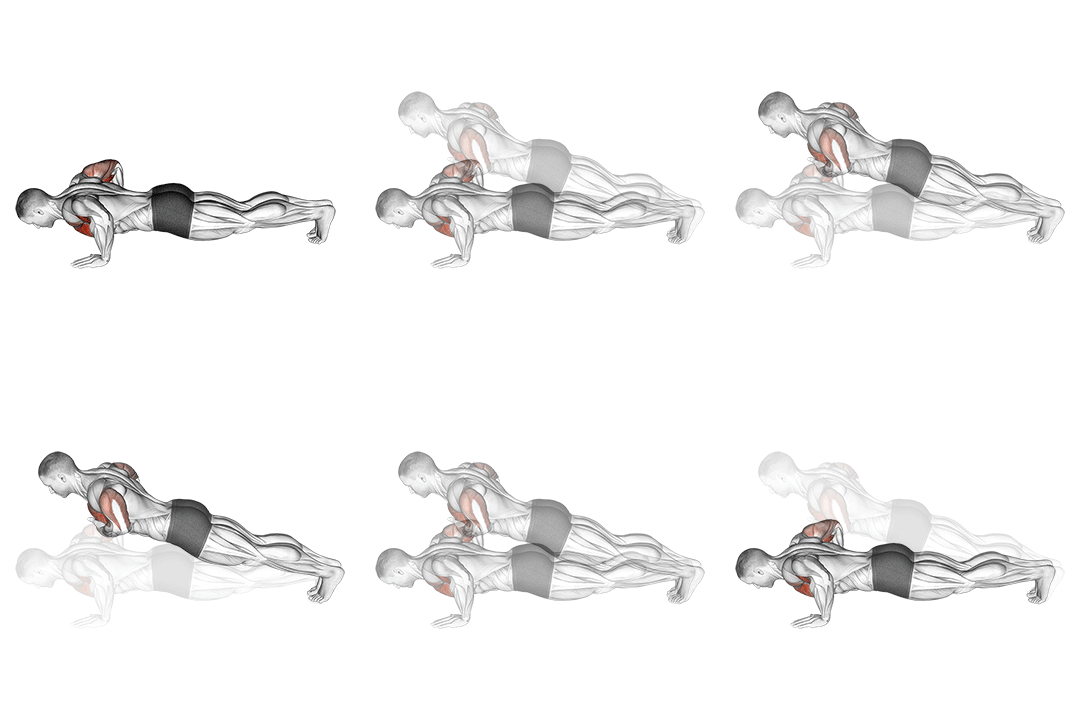
Visual Comparison
Overview
Chest And Front Of Shoulder Stretch vs Pushups — you might use one to improve flexibility and the other to build chest strength. Here you'll get a clear, evidence-informed comparison that covers muscle activation, biomechanics, equipment needs, difficulty, and when to pick each move. I’ll explain how each targets the pectorals, what secondary muscles get involved, specific technique cues (angles, holds, rep ranges), and practical recommendations so you can choose the right tool for mobility, hypertrophy, or functional conditioning.
Key Differences
- Chest And Front Of Shoulder Stretch is an isolation exercise, while Pushups is a compound movement.
- Both exercises target the Pectorals using Body-weight. The main differences are in their movement patterns and muscle activation angles.
Pros & Cons
Chest And Front Of Shoulder Stretch
+ Pros
- Improves pectoral and anterior shoulder flexibility and posture
- Very low load—safe for people lacking pressing strength
- Easy to perform anywhere with a doorframe or wall
- Helps restore scapular mobility and reduce anterior capsule tightness
− Cons
- Does not provide significant mechanical tension for muscle growth
- Limited progression options for strength
- Can overstress an unstable shoulder joint if done with poor alignment
Pushups
+ Pros
- Builds chest strength and muscle growth via active tension
- Scalable with variations (incline, decline, weighted)
- Engages shoulders, triceps, and core for functional pressing
- Improves loaded scapular control and pushing mechanics
− Cons
- Requires baseline strength and trunk stability
- Higher risk of shoulder pain if technique is poor (elbow flare, collapsed scapula)
- Less effective as a mobility tool compared with targeted stretches
When Each Exercise Wins
Pushups create active concentric/eccentric loading of the pectorals, allowing progressive overload (8–12 or 8–20 rep ranges). Variations and added resistance let you increase mechanical tension, which is the primary driver of muscle growth.
Pushups produce measurable force through the horizontal adduction vector and can be progressed to higher loads for strength. You can manipulate leverage and external load to increase peak force output and neural adaptations.
Beginners often lack the scapular stability and pressing strength for safe pushups; the stretch is easier to perform, improves tissue length, and prepares the shoulder for loaded patterns without heavy demand.
Both require minimal equipment, but pushups deliver strength, hypertrophy, and conditioning in one move. They’re versatile—perform incline, decline, or tempo variations to target different ranges and progress at home.
Frequently Asked Questions
Can I do both Chest And Front Of Shoulder Stretch and Pushups in the same workout?
Yes. Use the stretch as a warm-up or post-set mobility work to improve pec length and shoulder range, then perform pushups for active loading. If shoulders are irritable, place the stretch after work sets rather than before heavy pressing.
Which exercise is better for beginners?
For learning and safety, the Chest And Front Of Shoulder Stretch is better initially because it requires no pressing strength and improves mobility. Start with stretches, then introduce assisted or incline pushup progressions as scapular control improves.
How do the muscle activation patterns differ?
Pushups produce cyclic concentric and eccentric pectoral activation with higher EMG and mechanical tension across mid-range angles; the stretch holds the muscle at long lengths, increasing passive tension and connective tissue strain but minimal active contraction. The pushup emphasizes active force production while the stretch emphasizes passive lengthening.
Can Pushups replace Chest And Front Of Shoulder Stretch?
No—pushups cannot fully replace a targeted pectoral stretch. Pushups increase strength and active range, but they don’t provide the sustained end-range passive loading needed to improve tissue length and anterior shoulder mobility. Use both for balanced development.
Expert Verdict
Use the Chest And Front Of Shoulder Stretch when your goal is to restore pectoral length, reduce anterior shoulder tightness, or prepare the joint for loaded work—hold 20–60 seconds for 2–3 sets and avoid forcing range past a mild discomfort. Choose Pushups when you want active chest loading, progressive overload, and improved pushing mechanics; aim for 3–4 sets of 8–20 reps depending on strength and use tempo control (1–3s eccentric, 0–1s pause, 1s concentric). For most lifters, pair both: stretch to maintain mobility and perform pushup variations for muscle growth and strength.
Also Compare
More comparisons with Chest And Front Of Shoulder Stretch
Compare More Exercises
Use our free comparison tool to analyze any two exercises head-to-head.
Compare Exercises