

Dumbbell Alternate Side Press vs Dumbbell Arnold Press: Complete Comparison Guide
Dumbbell Alternate Side Press vs Dumbbell Arnold Press — if you want stronger, fuller shoulders you need to pick the right movement. This guide walks you through biomechanics, muscle activation, equipment needs, technique cues, and programming so you can choose the best press for your goals. You’ll learn which exercise favors anterior vs lateral deltoid work, how rotation changes force vectors and length-tension relationships, and practical rep ranges and progressions to use in your next shoulder workout.
Exercise Comparison
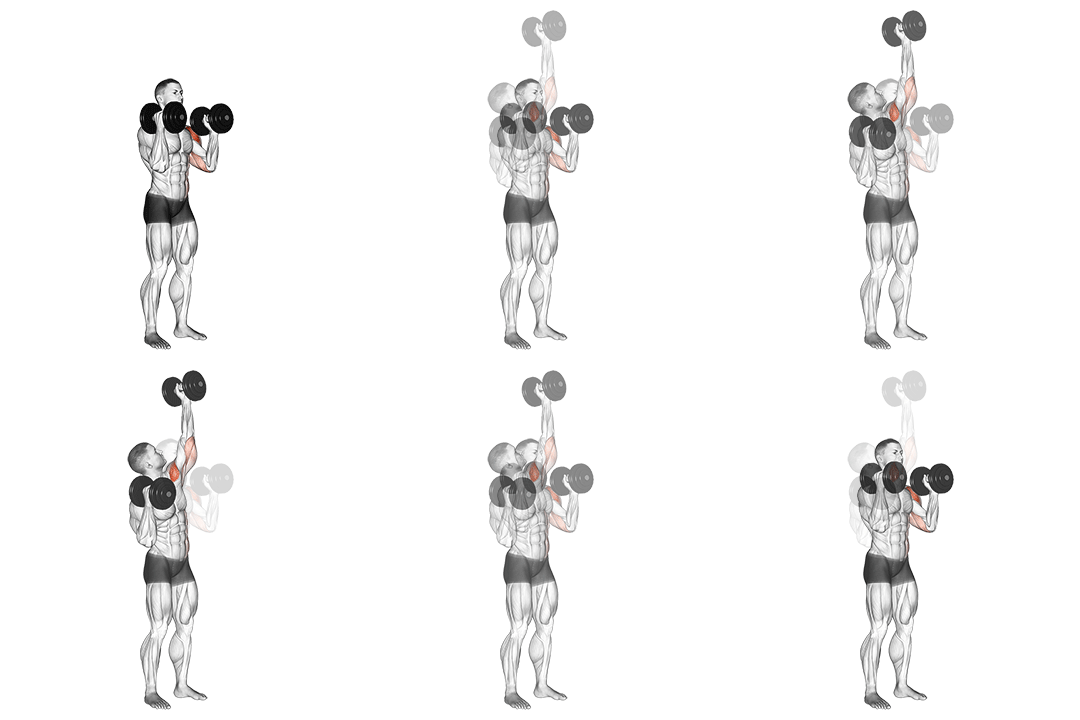
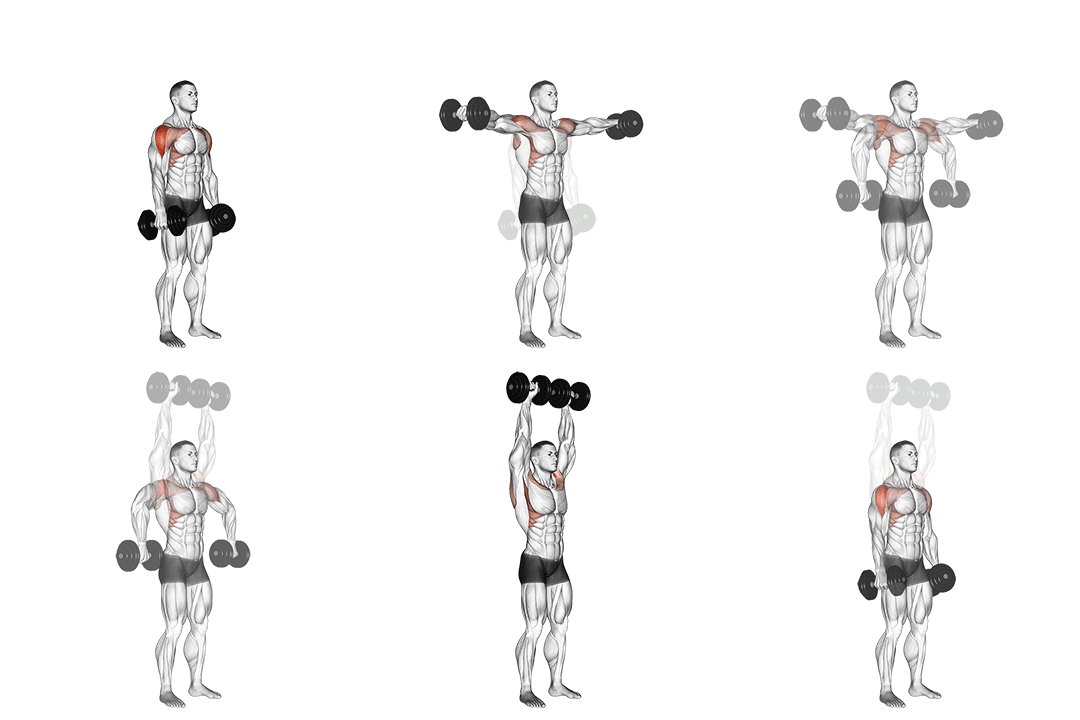
Dumbbell Alternate Side Press
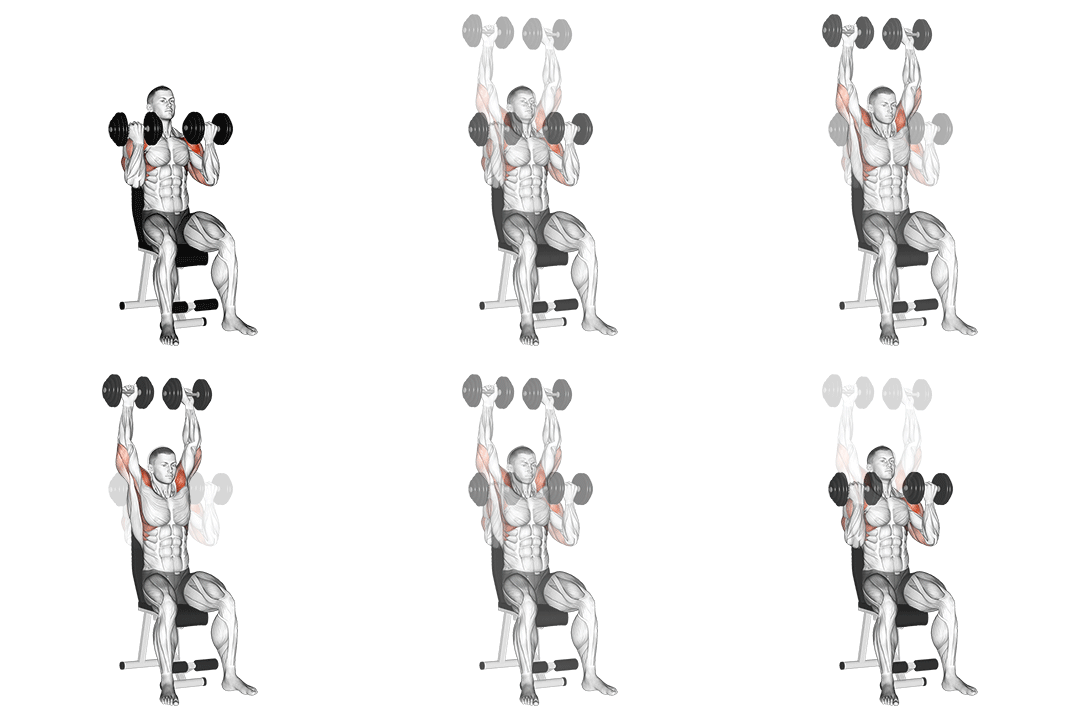
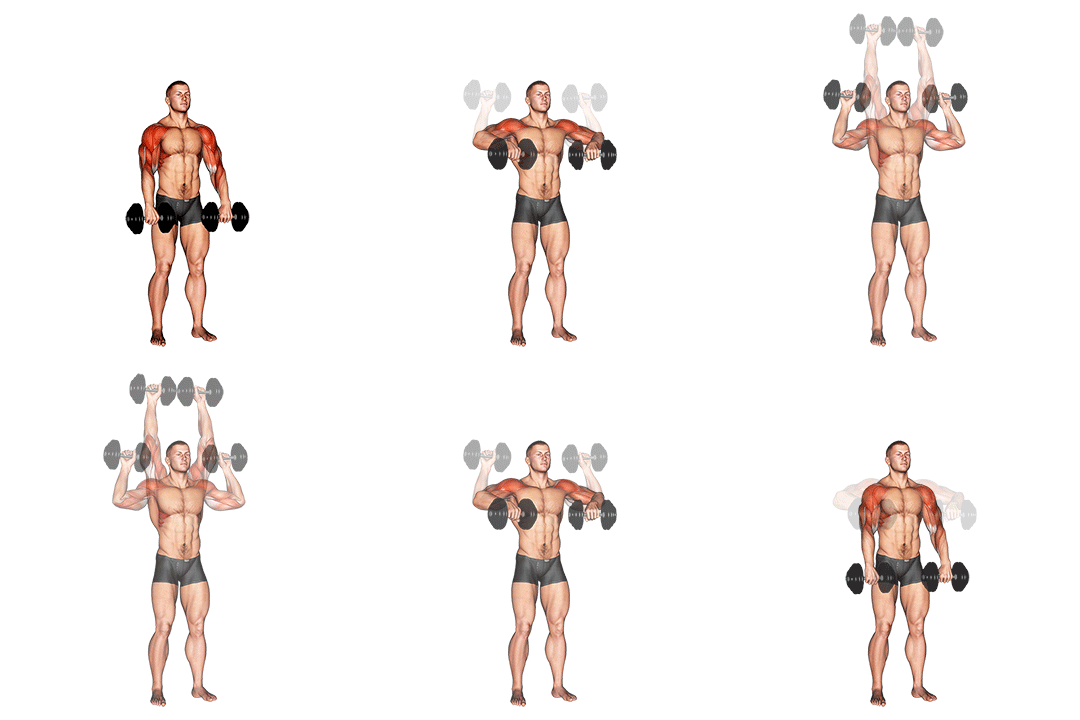
Dumbbell Arnold Press
Head-to-Head Comparison
| Attribute | Dumbbell Alternate Side Press | Dumbbell Arnold Press |
|---|---|---|
| Target Muscle |
Delts
|
Delts
|
| Body Part |
Shoulders
|
Shoulders
|
| Equipment |
Dumbbell
|
Dumbbell
|
| Difficulty |
Intermediate
|
Intermediate
|
| Movement Type |
Compound
|
Compound
|
| Secondary Muscles |
2
|
2
|
Secondary Muscles Activated
Dumbbell Alternate Side Press
Dumbbell Arnold Press
Visual Comparison
Overview
Dumbbell Alternate Side Press vs Dumbbell Arnold Press — if you want stronger, fuller shoulders you need to pick the right movement. This guide walks you through biomechanics, muscle activation, equipment needs, technique cues, and programming so you can choose the best press for your goals. You’ll learn which exercise favors anterior vs lateral deltoid work, how rotation changes force vectors and length-tension relationships, and practical rep ranges and progressions to use in your next shoulder workout.
Key Differences
- Both exercises target the Delts using Dumbbell. The main differences are in their movement patterns and muscle activation angles.
Pros & Cons
Dumbbell Alternate Side Press
+ Pros
- Strong lateral deltoid and triceps loading with a direct vertical force vector
- High core and anti-rotation demand improves unilateral stability
- Easier to learn and scale for beginners or those with limited shoulder mobility
- Can be performed with one dumbbell or in tight spaces
− Cons
- Unilateral nature limits absolute load per side compared to two-arm presses
- Less direct anterior deltoid and upper-chest stimulation than the Arnold press
- Requires good anti-rotation bracing to avoid lumbar extension
Dumbbell Arnold Press
+ Pros
- Greater anterior deltoid and upper-chest engagement due to rotational path
- Increased time under tension can enhance muscle growth in the front delt (use 8–12 rep range)
- Allows a full range-of-motion transition from front rack to overhead
- Good for advanced trainees who want varied shoulder plane loading
− Cons
- Higher technical demand and shoulder mobility requirement
- Increased risk of impingement for lifters with poor external rotation
- Harder to load very heavy safely compared to strict vertical presses
When Each Exercise Wins
The Arnold press increases time under tension and shifts force vectors to load the anterior deltoid and upper chest more—use 8–12 reps, 3–4 sets, and a 2–3 second eccentric for best hypertrophy.
The vertical pressing path lets you apply force more directly through the deltoid-triceps line and train heavier relative loads; use 4–6 reps with heavier dumbbells and strict bracing for strength-focused sets.
It has a simpler movement pattern and lower shoulder rotation demand, so new lifters can learn pressing mechanics, scapular control, and core bracing without complex coordination.
You can perform it with a single dumbbell, less space, and minimal shoulder mobility, making it practical for small home setups while still working shoulders and core effectively.
Frequently Asked Questions
Can I do both Dumbbell Alternate Side Press and Dumbbell Arnold Press in the same workout?
Yes — pair them deliberately. Use the Arnold press earlier in the session for 8–12 hypertrophy work, then finish with alternate presses for unilateral stability or heavier triples. Monitor volume to avoid overworking the anterior deltoids.
Which exercise is better for beginners?
The Dumbbell Alternate Side Press is better for beginners because it has a simpler vertical path and lower shoulder rotation demands, making it easier to learn scapular control and bracing before adding complex rotations.
How do the muscle activation patterns differ?
Activation differs by force vector and rotation: the alternate press maintains a vertical vector that emphasizes lateral delt and triceps output with strong core engagement, while the Arnold press introduces a rotational arc that increases anterior deltoid and upper-pec activation and stays under tension longer during the transitional phase.
Can Dumbbell Arnold Press replace Dumbbell Alternate Side Press?
Only if your goal is primarily anterior delt hypertrophy and you have the shoulder mobility to perform it safely. For unilateral strength, anti-rotation core work, or when mobility is limited, keep the alternate side press in your program.
Expert Verdict
Use the Dumbbell Arnold Press when your priority is anterior deltoid development and you can safely rotate under load; it increases upper-chest involvement and time under tension, so program it for 8–12 reps with controlled rotation. Choose the Dumbbell Alternate Side Press when you want straightforward vertical shoulder overload, unilateral strength, and core anti-rotation benefits — it’s ideal for heavier sets (4–6 or 6–10 reps) and for lifters with limited shoulder mobility. Both presses belong in a balanced program: rotate them across training cycles to target different force vectors and keep delts healthy.
Also Compare
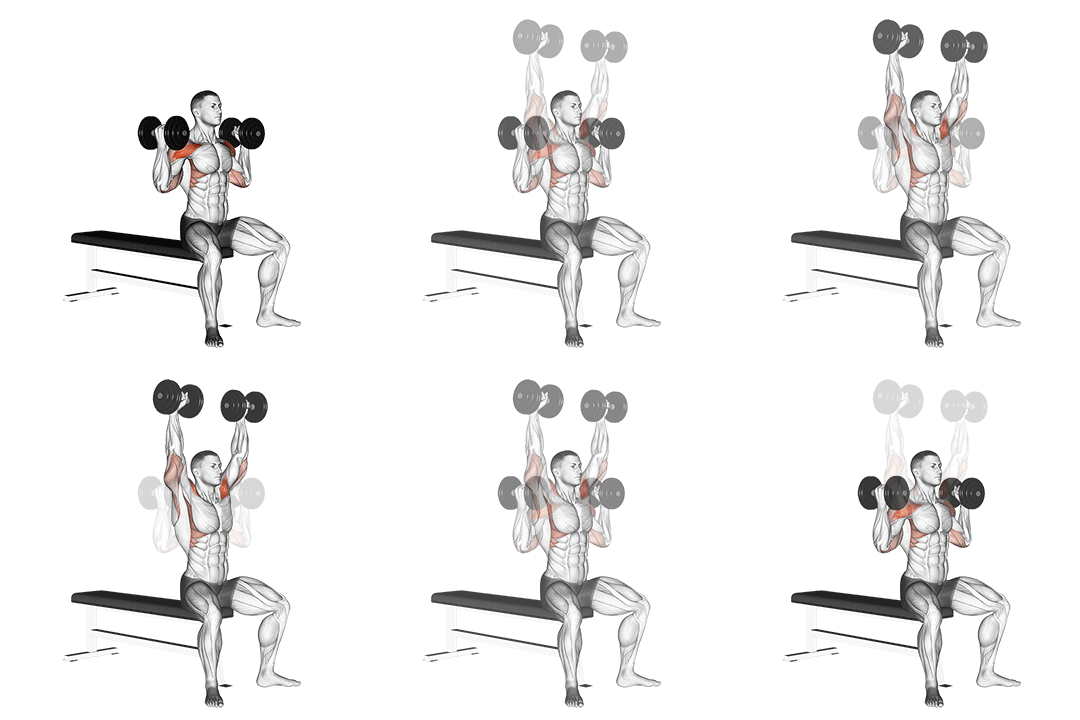
More comparisons with Dumbbell Alternate Side Press
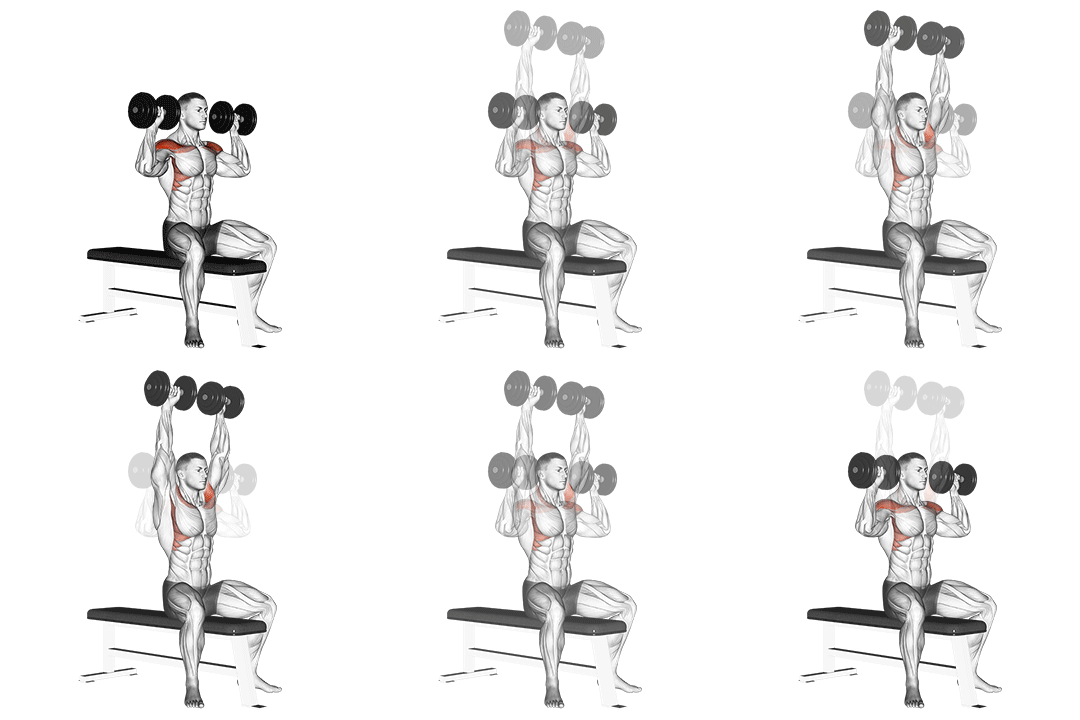
More comparisons with Dumbbell Arnold Press
Compare More Exercises
Use our free comparison tool to analyze any two exercises head-to-head.
Compare Exercises