

Dumbbell Arnold Press V. 2 vs Dumbbell Bench Seated Press: Complete Comparison Guide
Dumbbell Arnold Press V. 2 vs Dumbbell Bench Seated Press — which should you add to your shoulder day? In this head-to-head comparison you'll get direct guidance on muscle targeting, loading mechanics, equipment needs, and technique cues. You'll learn how each press loads the anterior, lateral, and posterior delts, how the chest and triceps assist, and when to prioritize rotational control versus a vertical force vector. I’ll give rep ranges (6–12 for strength-to-hypertrophy blends), tempo cues, and simple progressions so you can choose the press that best matches your goal and current setup.
Exercise Comparison
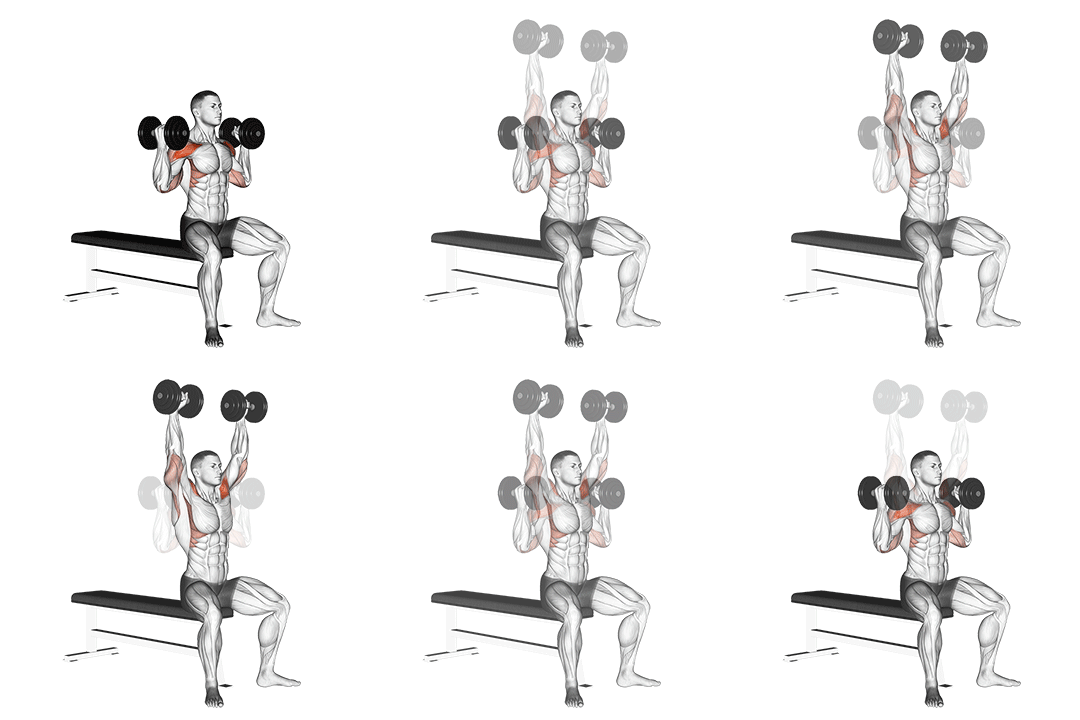
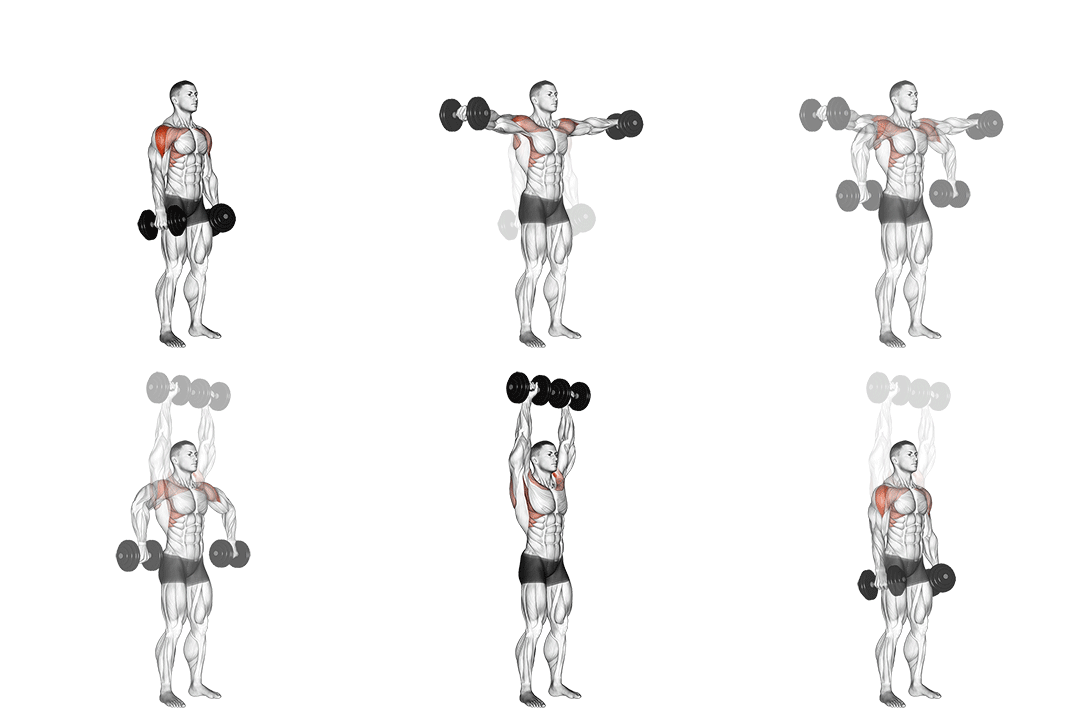
Dumbbell Arnold Press V. 2
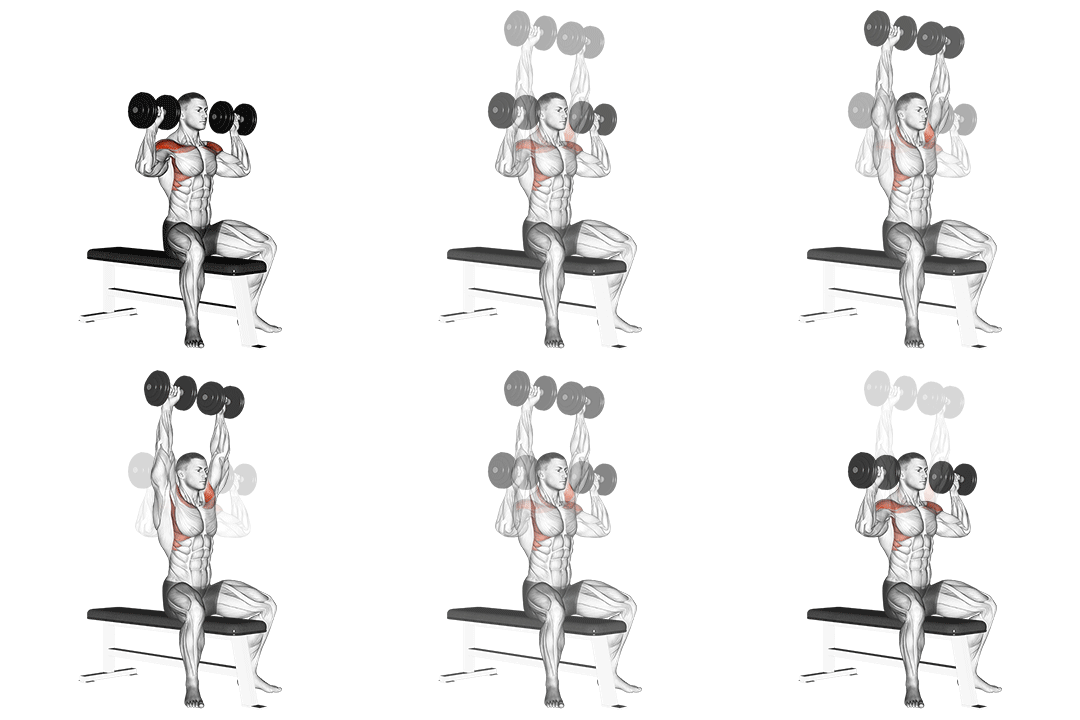
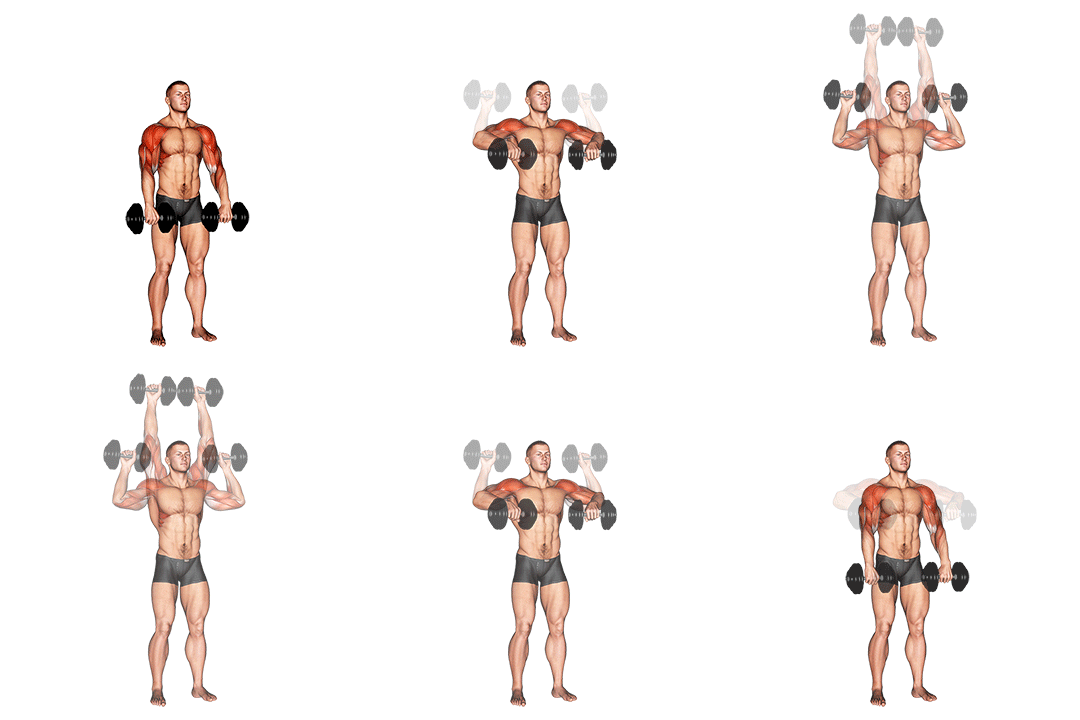
Dumbbell Bench Seated Press
Head-to-Head Comparison
| Attribute | Dumbbell Arnold Press V. 2 | Dumbbell Bench Seated Press |
|---|---|---|
| Target Muscle |
Delts
|
Delts
|
| Body Part |
Shoulders
|
Shoulders
|
| Equipment |
Dumbbell
|
Dumbbell
|
| Difficulty |
Intermediate
|
Intermediate
|
| Movement Type |
Compound
|
Compound
|
| Secondary Muscles |
2
|
2
|
Secondary Muscles Activated
Dumbbell Arnold Press V. 2
Dumbbell Bench Seated Press
Visual Comparison
Overview
Dumbbell Arnold Press V. 2 vs Dumbbell Bench Seated Press — which should you add to your shoulder day? In this head-to-head comparison you'll get direct guidance on muscle targeting, loading mechanics, equipment needs, and technique cues. You'll learn how each press loads the anterior, lateral, and posterior delts, how the chest and triceps assist, and when to prioritize rotational control versus a vertical force vector. I’ll give rep ranges (6–12 for strength-to-hypertrophy blends), tempo cues, and simple progressions so you can choose the press that best matches your goal and current setup.
Key Differences
- Both exercises target the Delts using Dumbbell. The main differences are in their movement patterns and muscle activation angles.
Pros & Cons
Dumbbell Arnold Press V. 2
+ Pros
- Built-in rotation increases anterior delt and upper-chest stimulus
- Requires only dumbbells — great for home setups
- Improves shoulder mobility and rotator cuff coordination
- Versatile—can be done standing or seated without a bench
− Cons
- More technical timing due to rotation — steeper learning curve
- Higher risk of anterior shoulder impingement with poor form
- Harder to progressively overload maximal strength compared to a bench-supported press
Dumbbell Bench Seated Press
+ Pros
- Stable seated platform lets you press heavier and safely overload
- Cleaner vertical force vector simplifies technique
- Greater pectoralis major contribution for chest and shoulder mass
- Easier for beginners to learn and for low-rep strength work
− Cons
- Requires a bench — less ideal for minimal-equipment settings
- Less rotational/transverse control work for the shoulder
- Can encourage excessive horizontal adduction if elbows flare, stressing the joint
When Each Exercise Wins
The bench-seated version allows heavier loads and steadier vertical tension, producing more overall mechanical tension on the delts and chest. Use 6–12 reps with controlled tempo and progressive overload to maximize muscle growth.
Back support reduces stabilization demands so you can use higher absolute load (3–6 rep ranges) and train heavier sets safely, which is superior for raw pressing strength development.
Its simpler vertical path and bench support reduce coordination and mobility requirements, making it easier to learn proper pressing mechanics before introducing rotation or standing variations.
Requires only dumbbells and minimal space, while delivering both deltoid stimulus and accessory rotational control—ideal when you lack a bench or want a compact routine.
Frequently Asked Questions
Can I do both Dumbbell Arnold Press V. 2 and Dumbbell Bench Seated Press in the same workout?
Yes. Pair them by prioritizing the movement aligned with your goal—do the heavy bench-seated press first for strength (3–6 reps) and finish with Arnold presses as a higher-rep accessory (8–15 reps). Keep total shoulder volume in check to avoid overtraining.
Which exercise is better for beginners?
Dumbbell Bench Seated Press is better for beginners due to the back support and simpler vertical pressing path. It helps you build load tolerance and pressing mechanics before adding rotational complexity.
How do the muscle activation patterns differ?
The Arnold V. 2 shifts the force vector anteriorly through rotation, increasing anterior delt and upper-pec engagement during lockout, while the bench-seated press produces a steadier vertical load with greater horizontal adduction moment and higher pectoralis recruitment throughout the lift.
Can Dumbbell Bench Seated Press replace Dumbbell Arnold Press V. 2?
Yes for strength and overall shoulder mass, since the bench press allows heavier loading, but it won't replicate the rotational control and upper-chest emphasis of the Arnold. If you care about transverse-plane control or have no bench, keep the Arnold in your program.
Expert Verdict
If your goal is raw shoulder and upper-body strength or you want to prioritize chest-assisted pressing, the Dumbbell Bench Seated Press is the go-to: it lets you lift heavier with reliable technique and clear progression (3–6 rep strength blocks, 6–12 for hypertrophy). If you want a shoulder-dominant press that also trains rotation, mobility, and upper-chest bias while requiring minimal equipment, pick the Dumbbell Arnold Press V. 2 and emphasize 8–15 reps with slow eccentrics. Both moves deserve a place in a balanced program; choose the bench press for maximal load and the Arnold for motor control and accessory stimulus.
Also Compare
More comparisons with Dumbbell Arnold Press V. 2
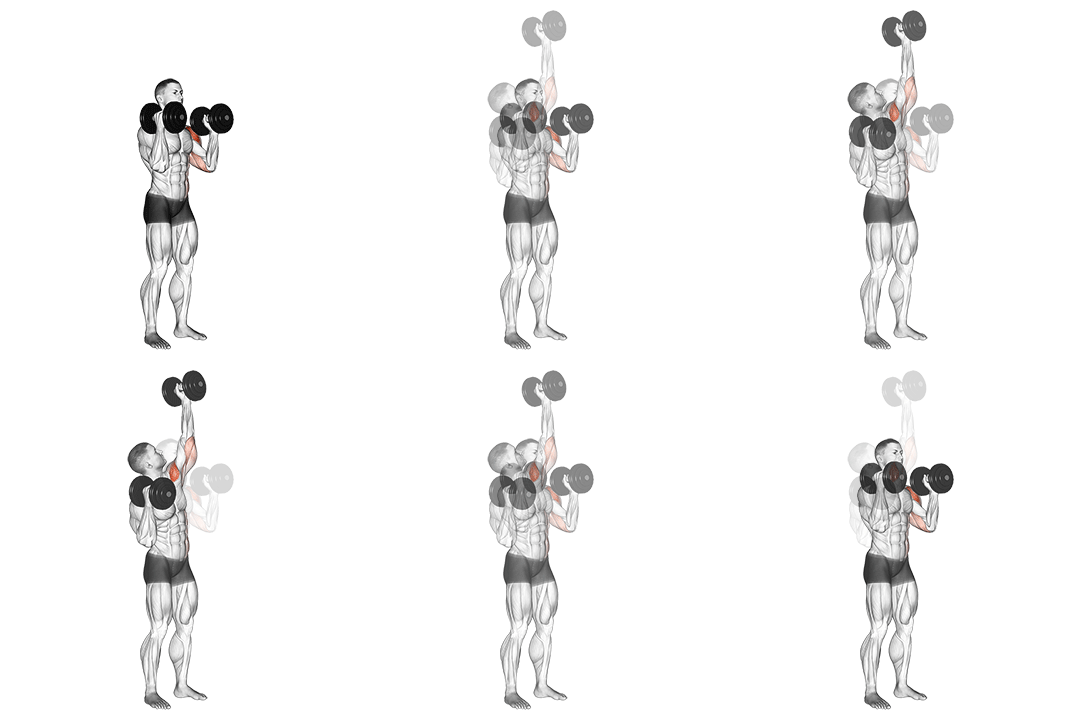
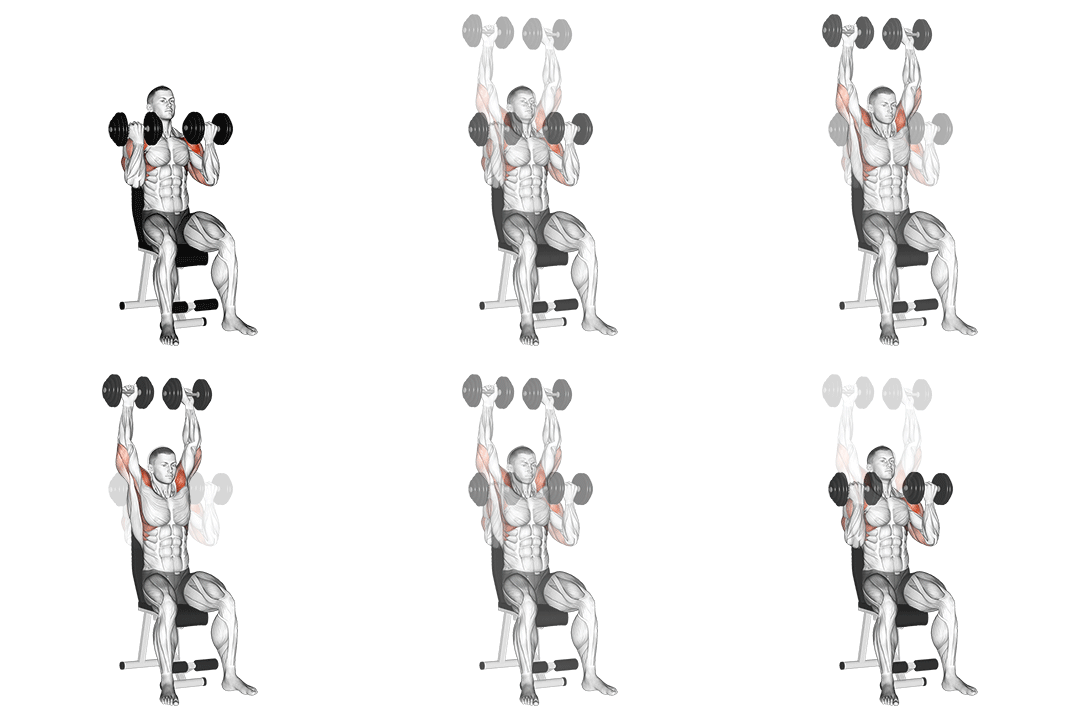
More comparisons with Dumbbell Bench Seated Press
Compare More Exercises
Use our free comparison tool to analyze any two exercises head-to-head.
Compare Exercises