

Dumbbell Arnold Press V. 2 vs Dumbbell Cuban Press: Complete Comparison Guide
Dumbbell Arnold Press V. 2 vs Dumbbell Cuban Press: you’re comparing two intermediate compound shoulder exercises that attack the delts from different angles and demand different stability. I’ll show you the primary and secondary muscle differences, clear technique cues (elbow path, rotation angles, scapular position), equipment needs, progression options, and injury-risk considerations. You’ll get actionable rep ranges (6–12 for hypertrophy, 8–15 for stability), specific angles (rotate 45–90° through the press), and programming tips so you can choose the move that matches your mobility and goals.
Exercise Comparison
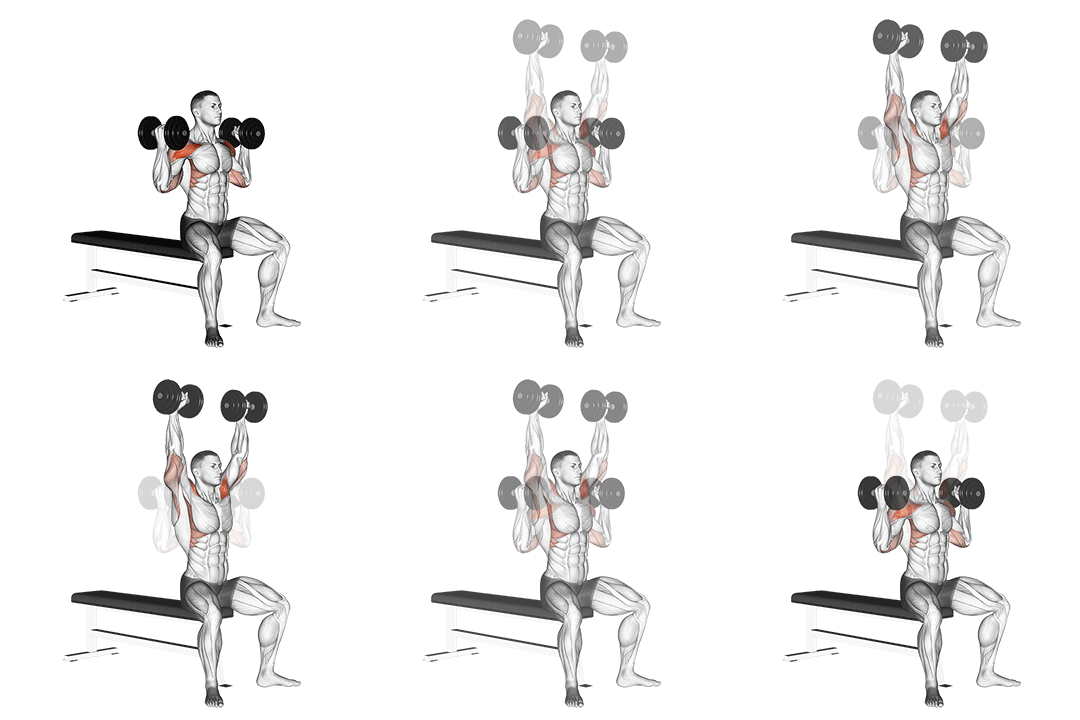
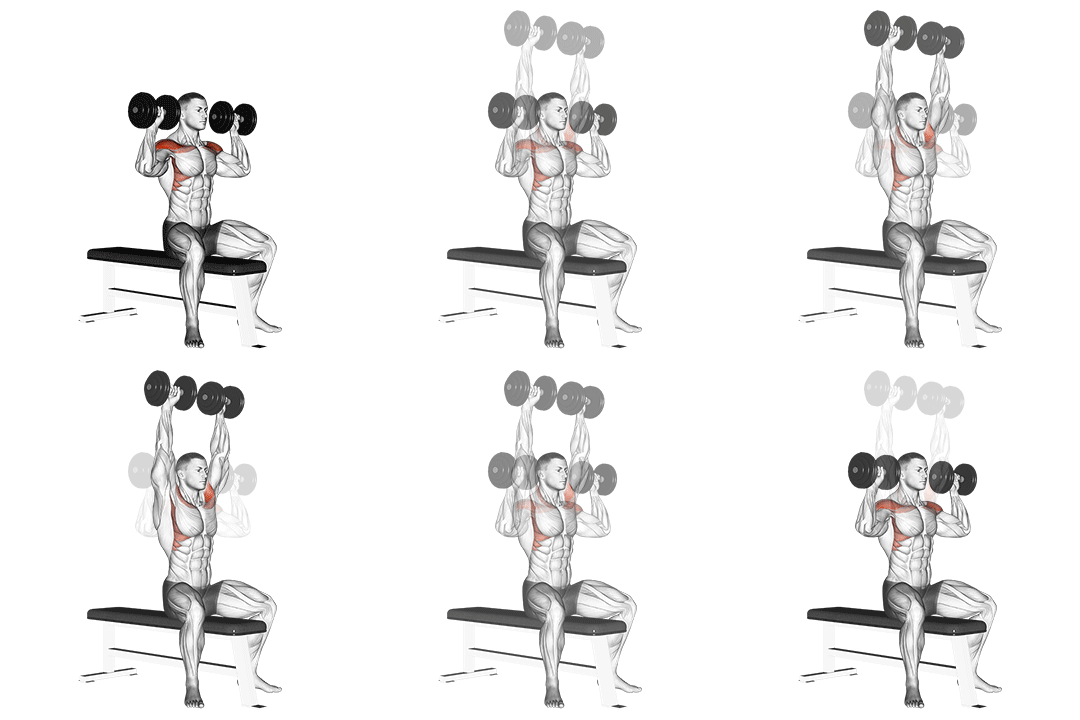
Dumbbell Arnold Press V. 2
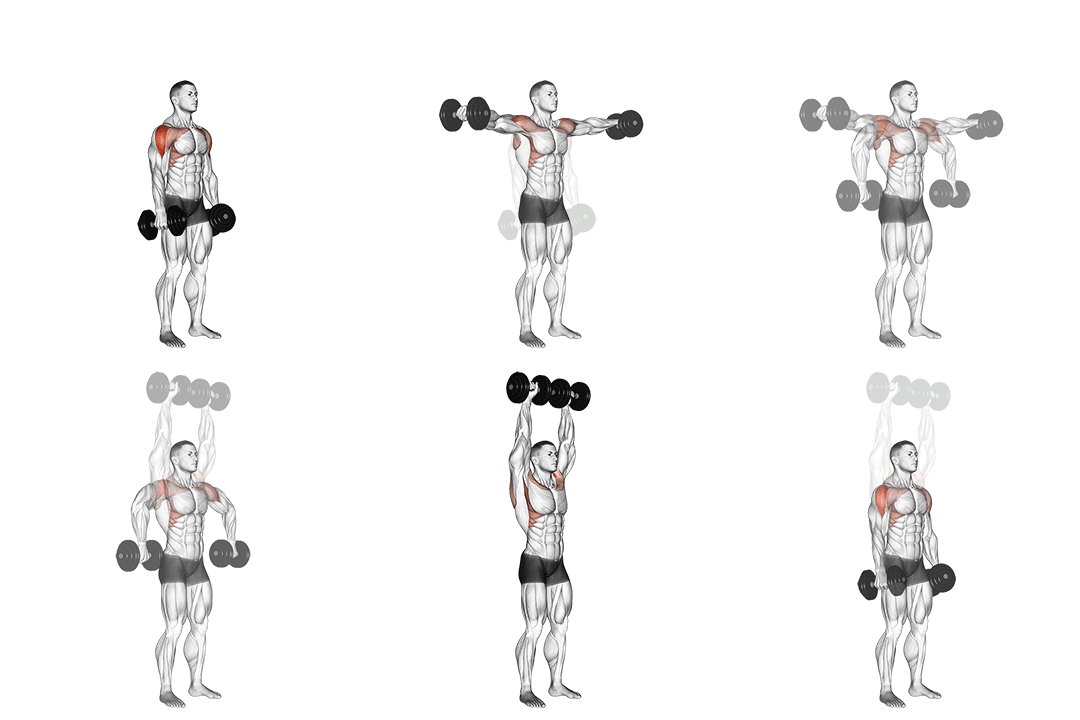
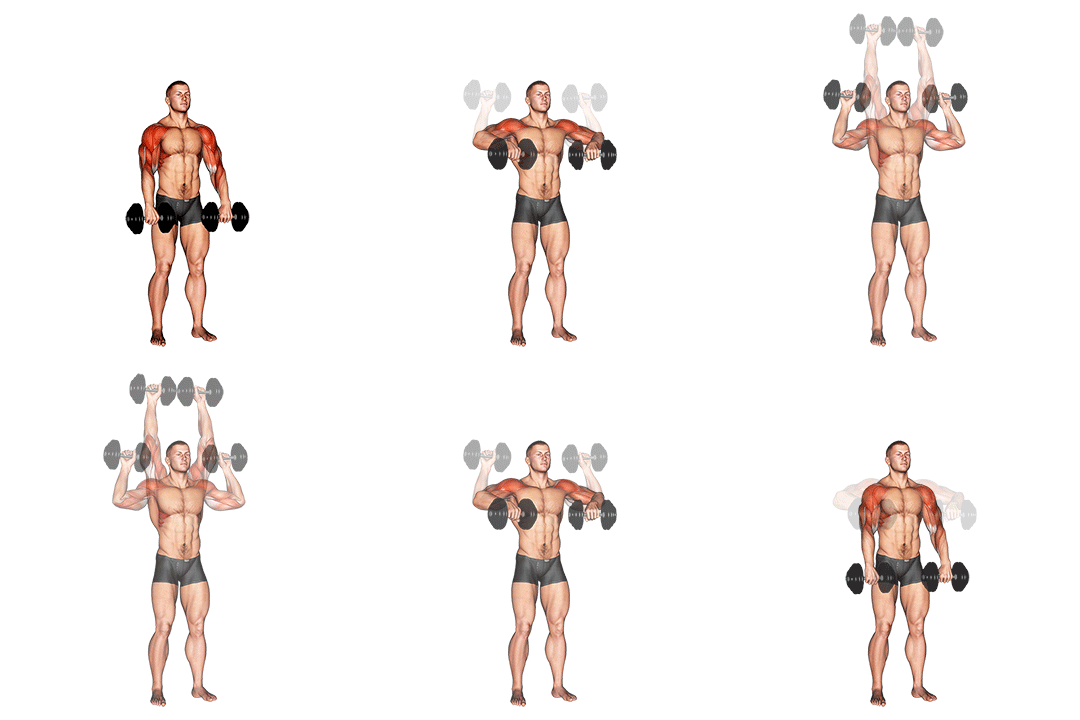
Dumbbell Cuban Press
Head-to-Head Comparison
| Attribute | Dumbbell Arnold Press V. 2 | Dumbbell Cuban Press |
|---|---|---|
| Target Muscle |
Delts
|
Delts
|
| Body Part |
Shoulders
|
Shoulders
|
| Equipment |
Dumbbell
|
Dumbbell
|
| Difficulty |
Intermediate
|
Intermediate
|
| Movement Type |
Compound
|
Compound
|
| Secondary Muscles |
2
|
2
|
Secondary Muscles Activated
Dumbbell Arnold Press V. 2
Dumbbell Cuban Press
Visual Comparison
Overview
Dumbbell Arnold Press V. 2 vs Dumbbell Cuban Press: you’re comparing two intermediate compound shoulder exercises that attack the delts from different angles and demand different stability. I’ll show you the primary and secondary muscle differences, clear technique cues (elbow path, rotation angles, scapular position), equipment needs, progression options, and injury-risk considerations. You’ll get actionable rep ranges (6–12 for hypertrophy, 8–15 for stability), specific angles (rotate 45–90° through the press), and programming tips so you can choose the move that matches your mobility and goals.
Key Differences
- Both exercises target the Delts using Dumbbell. The main differences are in their movement patterns and muscle activation angles.
Pros & Cons
Dumbbell Arnold Press V. 2
+ Pros
- Strong anterior and lateral delt recruitment through a long range of motion
- Easy to progressively overload with heavier dumbbells for strength/muscle growth
- Adaptable: seated, standing, single-arm variations for unilateral balance
- Solid transfer to vertical pushing movements because of force-vector similarity
− Cons
- Rotational component can irritate the shoulder if too heavy or rushed
- Requires decent shoulder flexion mobility to hit full overhead position
- Tends to bias anterior delt over posterior delt, so posterior work is still needed
Dumbbell Cuban Press
+ Pros
- Builds rotator-cuff strength and external-rotation control
- Improves scapular stability and upper-back engagement
- Creates sustained isometric tension useful for shoulder health and posture
- Useful as a corrective or accessory exercise within a shoulder session
− Cons
- Limited load capacity — you should use lighter weights to protect the cuff
- Technically demanding: scapular control and clean rotation are required
- Less direct overload potential for vertical pressing strength and chest
When Each Exercise Wins
Its press trajectory and internal rotation place longer time under tension on anterior and lateral delts, and you can safely increase load for 6–12 rep sets to drive muscle growth.
The movement lets you progressively overload vertical pressing strength, transfer to heavier overhead lifts, and use lower-rep ranges (4–6) with stable scapular mechanics.
It’s simpler to learn the coordinated rotation-plus-press pattern than the three-phase Cuban sequence, and beginners can scale load and practice seated variations to build competence.
Requires only dumbbells and minimal space, tolerates heavier single implements for progressive overload, and adapts to one-arm variations when equipment is limited.
Frequently Asked Questions
Can I do both Dumbbell Arnold Press V. 2 and Dumbbell Cuban Press in the same workout?
Yes. Do Arnold presses early when you’re fresh to prioritize load and hypertrophy (3–5 sets of 6–12). Add Cuban presses later as accessory work (2–3 sets of 8–15, slow tempo) to strengthen external rotators and scapular stabilizers.
Which exercise is better for beginners?
Dumbbell Arnold Press V. 2 is generally better for beginners because its movement pattern is easier to load and scale. Start with light weight, focus on a 45° elbow path and controlled rotation, and progress once you can maintain clean form.
How do the muscle activation patterns differ?
The Arnold press emphasizes anterior and lateral delts via shoulder flexion plus internal rotation, increasing concentric work early in the lift. The Cuban press splits work between an upright-row phase, an external-rotation phase (rotator-cuff focus), and a short press, producing more cuff and upper-back activation.
Can Dumbbell Cuban Press replace Dumbbell Arnold Press V. 2?
Not entirely. The Cuban press is excellent for rotator-cuff strength and stability but lacks the overload potential and anterior-dominant stimulus of the Arnold press. Use the Cuban as a complement when you need shoulder health work; keep the Arnold press for primary deltoid development.
Expert Verdict
Use the Dumbbell Arnold Press V. 2 when your priority is deltoid size and pressing strength — it allows heavier loading, a long muscle-length stimulus, and straightforward progression (6–12 reps for hypertrophy, 4–6 for strength). Choose the Dumbbell Cuban Press as a targeted accessory when your goal is rotator-cuff resilience, scapular control, and posture work; program it with lighter loads and slower tempos (8–15 reps, controlled 2–3s eccentric). Pair them intelligently: heavy Arnold-focused sets early in a session, Cuban presses later as rotator-cuff/upper-back reinforcement to improve shoulder mechanics and reduce injury risk.
Also Compare
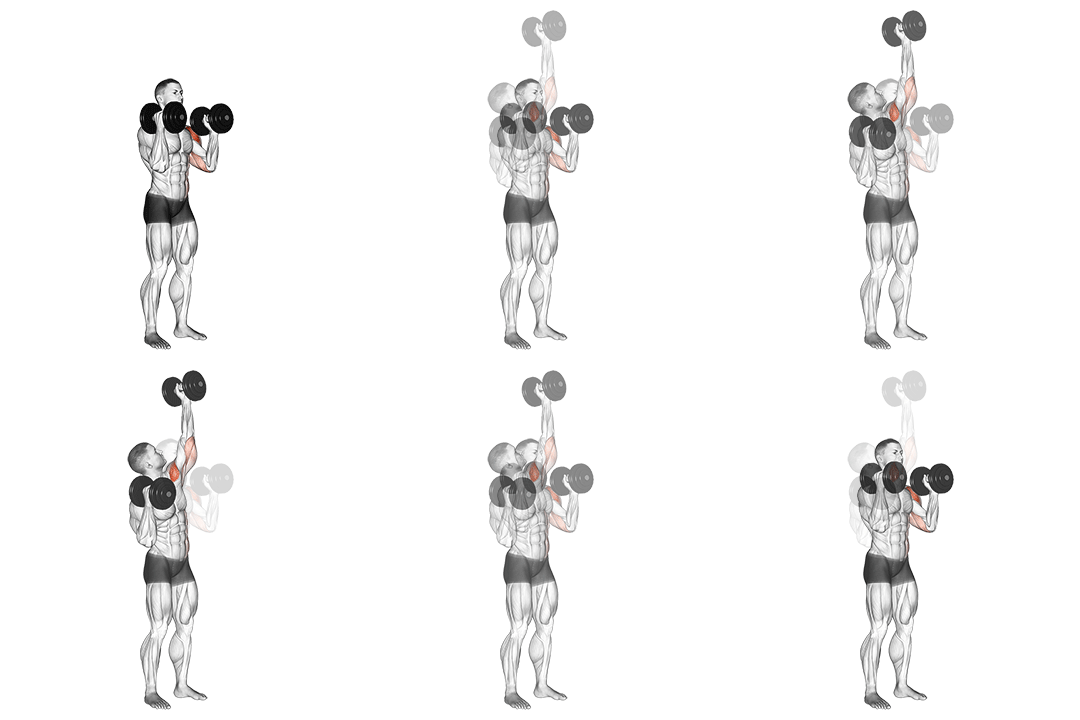
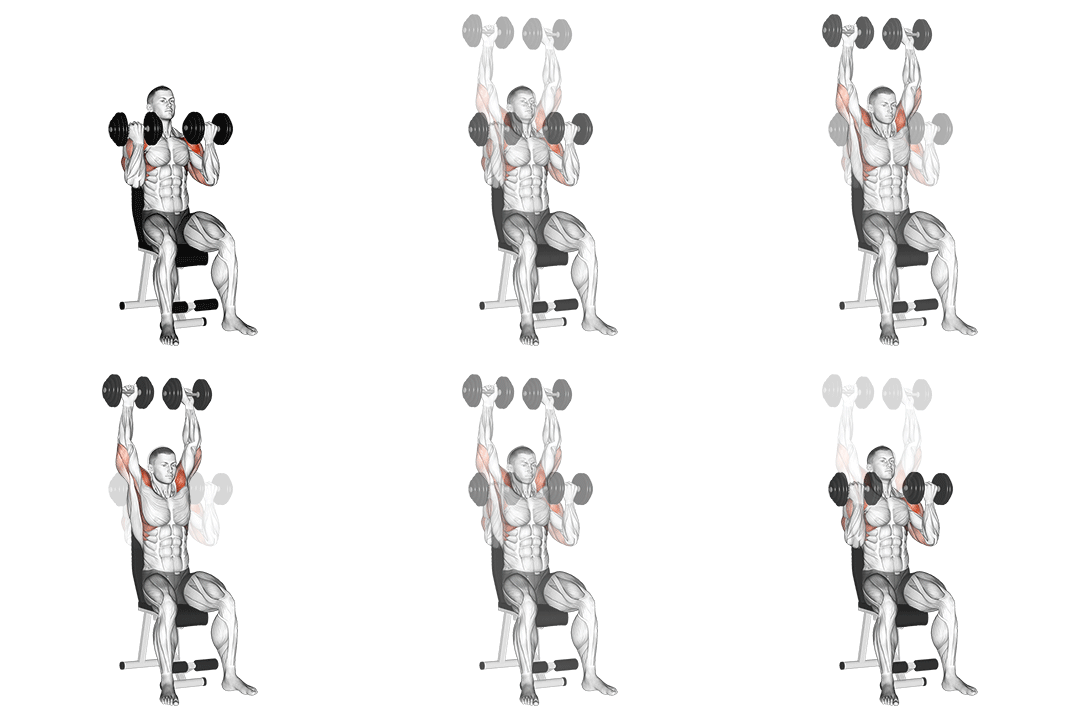
More comparisons with Dumbbell Arnold Press V. 2
More comparisons with Dumbbell Cuban Press
Compare More Exercises
Use our free comparison tool to analyze any two exercises head-to-head.
Compare Exercises