

Dumbbell Arnold Press V. 2 vs Dumbbell Cuban Press V. 2: Complete Comparison Guide
Dumbbell Arnold Press V. 2 vs Dumbbell Cuban Press V. 2 — you’re choosing between two compound shoulder presses that both hammer the delts but load them differently. In this guide you’ll get clear, practical comparisons of primary and secondary muscle activation, step-by-step technique cues, equipment needs, difficulty and injury risk, plus which exercise to pick for hypertrophy, strength, beginners, and home workouts. Read on and you’ll walk away with exact rep ranges, biomechanical reasons (force vectors and length-tension), and simple progression strategies so you can decide which move fits your program.
Exercise Comparison
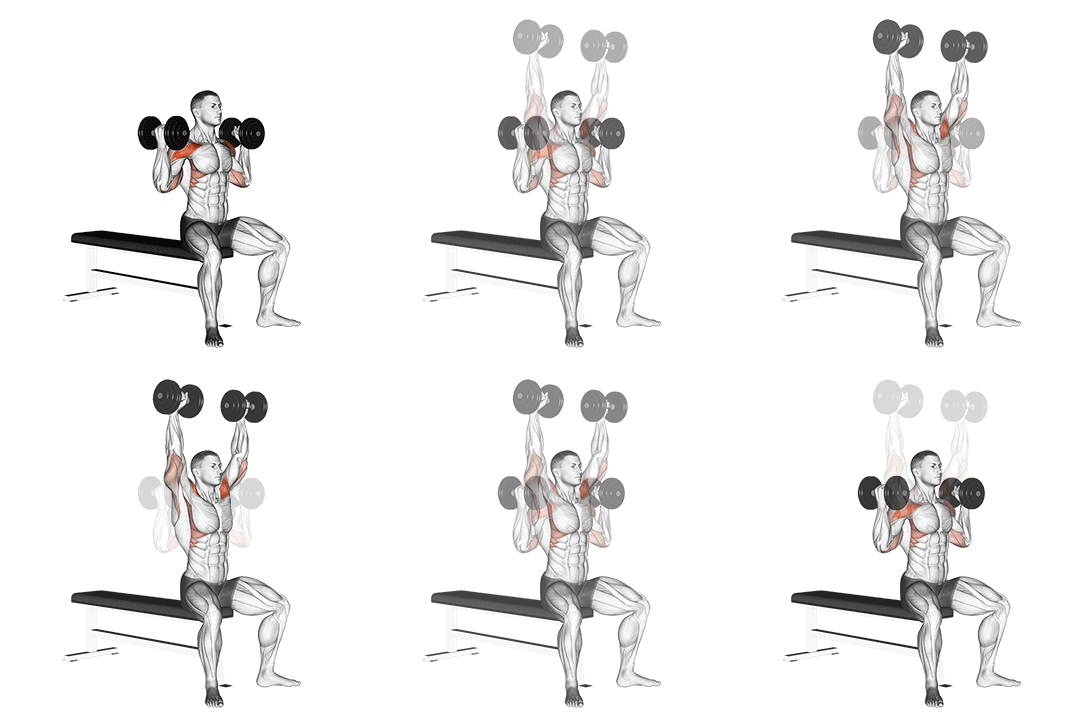
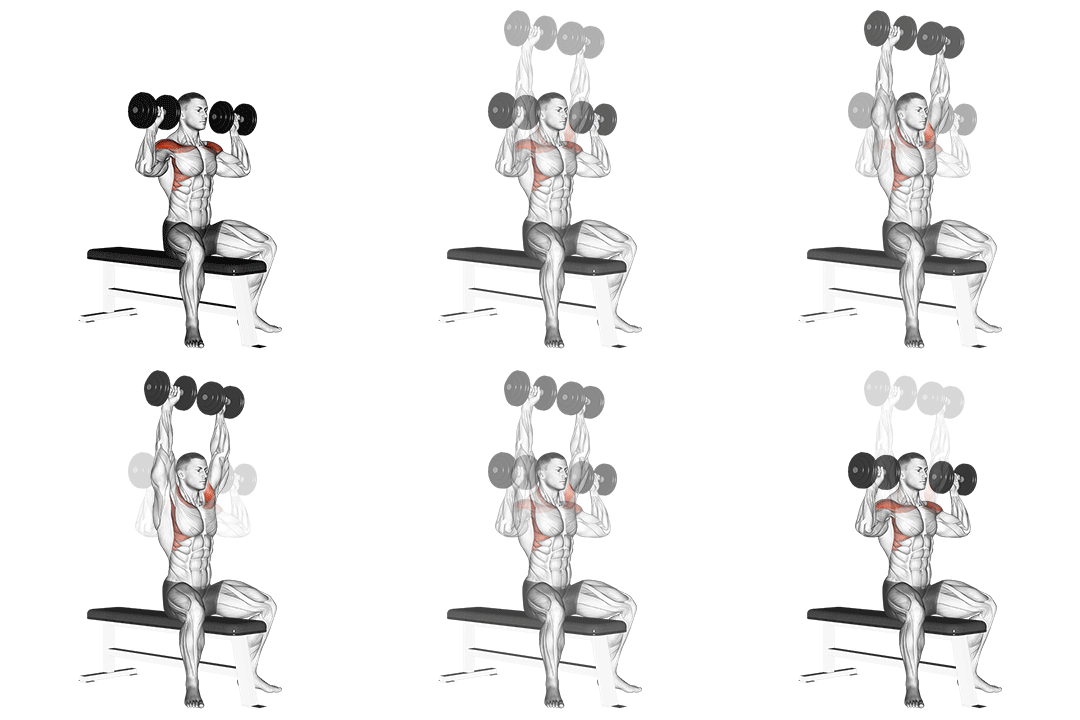
Dumbbell Arnold Press V. 2
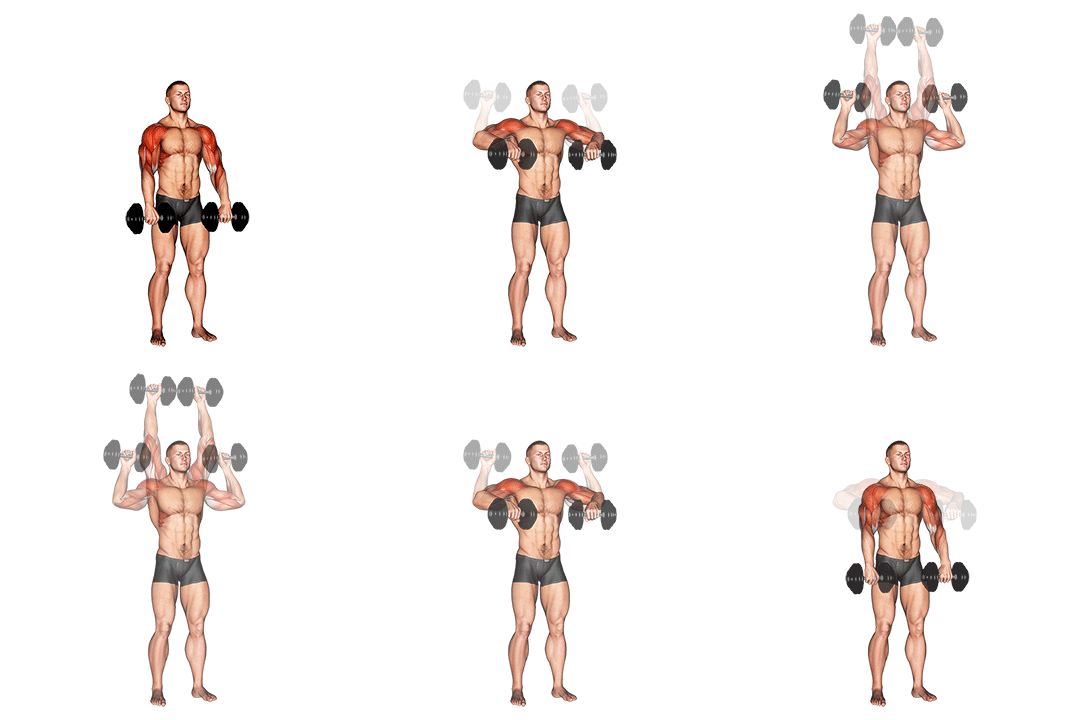
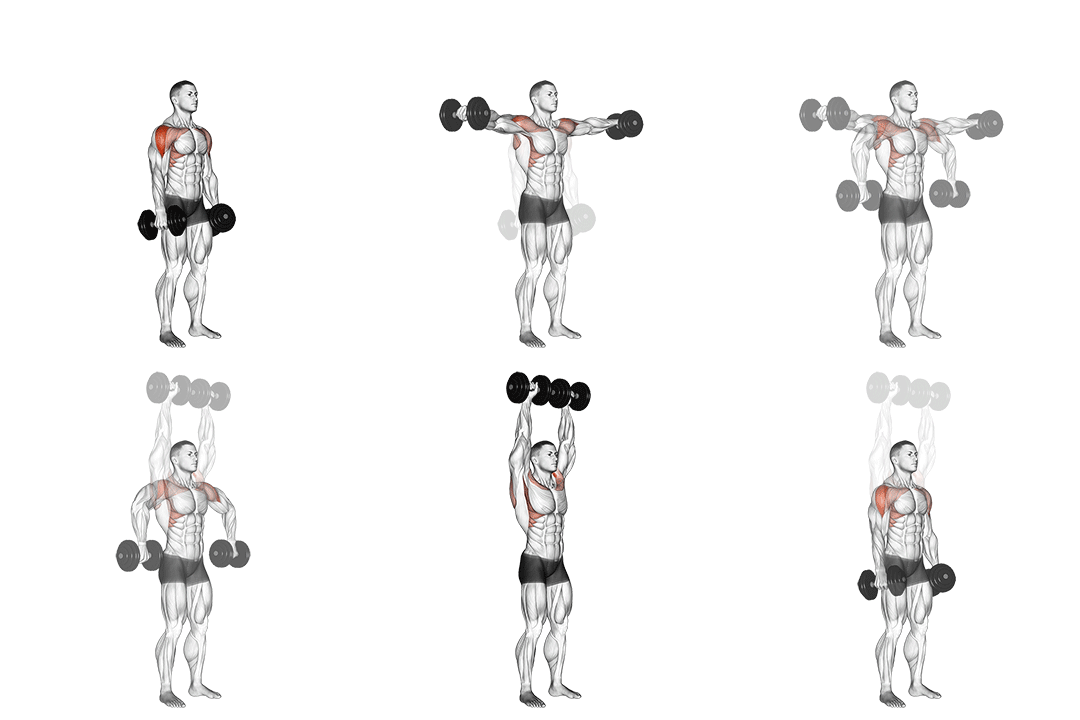
Dumbbell Cuban Press V. 2
Head-to-Head Comparison
| Attribute | Dumbbell Arnold Press V. 2 | Dumbbell Cuban Press V. 2 |
|---|---|---|
| Target Muscle |
Delts
|
Delts
|
| Body Part |
Shoulders
|
Shoulders
|
| Equipment |
Dumbbell
|
Dumbbell
|
| Difficulty |
Intermediate
|
Intermediate
|
| Movement Type |
Compound
|
Compound
|
| Secondary Muscles |
2
|
2
|
Secondary Muscles Activated
Dumbbell Arnold Press V. 2
Dumbbell Cuban Press V. 2
Visual Comparison
Overview
Dumbbell Arnold Press V. 2 vs Dumbbell Cuban Press V. 2 — you’re choosing between two compound shoulder presses that both hammer the delts but load them differently. In this guide you’ll get clear, practical comparisons of primary and secondary muscle activation, step-by-step technique cues, equipment needs, difficulty and injury risk, plus which exercise to pick for hypertrophy, strength, beginners, and home workouts. Read on and you’ll walk away with exact rep ranges, biomechanical reasons (force vectors and length-tension), and simple progression strategies so you can decide which move fits your program.
Key Differences
- Both exercises target the Delts using Dumbbell. The main differences are in their movement patterns and muscle activation angles.
Pros & Cons
Dumbbell Arnold Press V. 2
+ Pros
- Strong anterior and lateral deltoid recruitment through rotational press
- Easily progressive with heavier dumbbells; good for 6–12 rep hypertrophy sets
- Requires minimal setup—can be done seated or standing
- Also recruits triceps and upper chest at lockout for upper-body transfer
− Cons
- Rotation can stress anterior shoulder if mobility is poor
- Can encourage forward torso lean under heavy load, reducing deltoid isolation
- Less rotator cuff and upper-back conditioning compared to Cuban Press
Dumbbell Cuban Press V. 2
+ Pros
- Balances anterior and lateral deltoid loading with strong rotator cuff engagement
- Improves scapular control and upper-back activation (rhomboids, rear delts)
- Teaches external rotation strength at ~90° abduction
- Useful as a corrective/rehab-friendly pattern when loaded conservatively
− Cons
- Harder to load heavy due to rotator cuff and shoulder mobility limits
- Greater technical demand increases risk if form breaks (upright row portion)
- Less direct upper chest involvement and limited progression with high loads
When Each Exercise Wins
Arnold Press allows heavier loading and clearer progressive overload across 6–12 reps, placing greater time under tension on anterior and lateral delts and recruiting triceps at lockout for added volume.
Its press-dominant pattern transfers better to raw pressing strength and lets you use 70–85% of 1RM for lower-rep strength cycles; the Cuban Press is limited by rotator cuff capacity at heavier percentages.
Cleaner learning curve and easier progression make the Arnold Press better for novices; once basic shoulder control and strength are built, the Cuban can be introduced for balance and rotator cuff work.
Requires only dumbbells and space overhead and scales well with limited equipment; the Cuban Press is usable at home but often needs conservative weights and strong technique to be safe.
Frequently Asked Questions
Can I do both Dumbbell Arnold Press V. 2 and Dumbbell Cuban Press V. 2 in the same workout?
Yes — pair them smartly: prioritize the heavier Arnold Press early in the session for 3–4 working sets at 6–10 reps, then use 2–3 lighter sets of the Cuban Press for 8–15 reps as an accessory to load the rotator cuff and upper back without heavy weight.
Which exercise is better for beginners?
The Dumbbell Arnold Press V. 2 is better for most beginners because of its simpler press mechanics and easier load progression. Teach strict pressing technique first, then introduce the Cuban Press once external rotation and scapular control are competent.
How do the muscle activation patterns differ?
Arnold Press shifts force vectors from inward-rotated to externally rotated positions, emphasizing anterior deltoid early and lateral deltoid later; Cuban Press keeps the shoulder at higher external rotation and abduction angles, increasing rotator cuff and posterior chain activity while maintaining lateral deltoid tension.
Can Dumbbell Cuban Press V. 2 replace Dumbbell Arnold Press V. 2?
Not entirely — the Cuban Press complements but doesn’t replace the Arnold for raw pressing overload and hypertrophy. Use the Cuban as an accessory for stability and upper-back balance, while keeping a heavier press variation for primary deltoid development.
Expert Verdict
Use the Dumbbell Arnold Press V. 2 when your goal is direct deltoid hypertrophy or pressing strength: it supports heavier loads, straightforward progression (increase 2.5–5 lb per dumbbell), and fits 6–12 rep hypertrophy blocks or 3–6 rep strength cycles. Choose the Dumbbell Cuban Press V. 2 when you want to prioritize shoulder health, rotator cuff strength, scapular control, and upper-back balance — program it for higher reps (10–15) and slower tempos to build endurance and stability. For most trainees, start with the Arnold Press to build base strength, then add Cuban Press variations as accessory work for joint resilience and posture.
Also Compare
More comparisons with Dumbbell Arnold Press V. 2
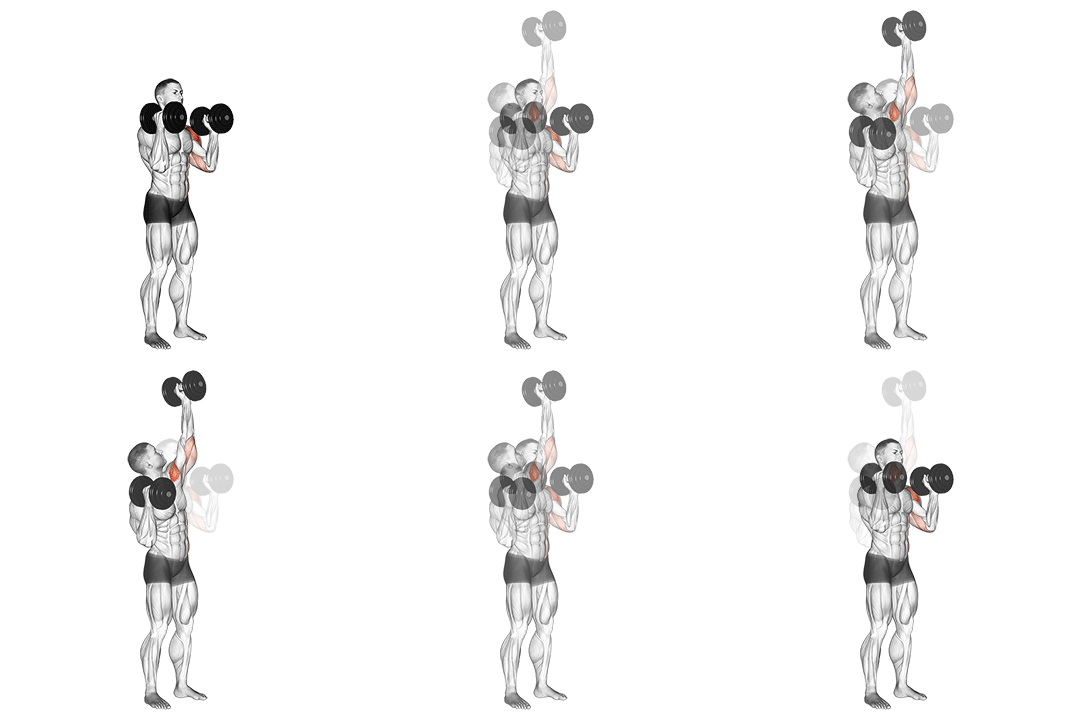
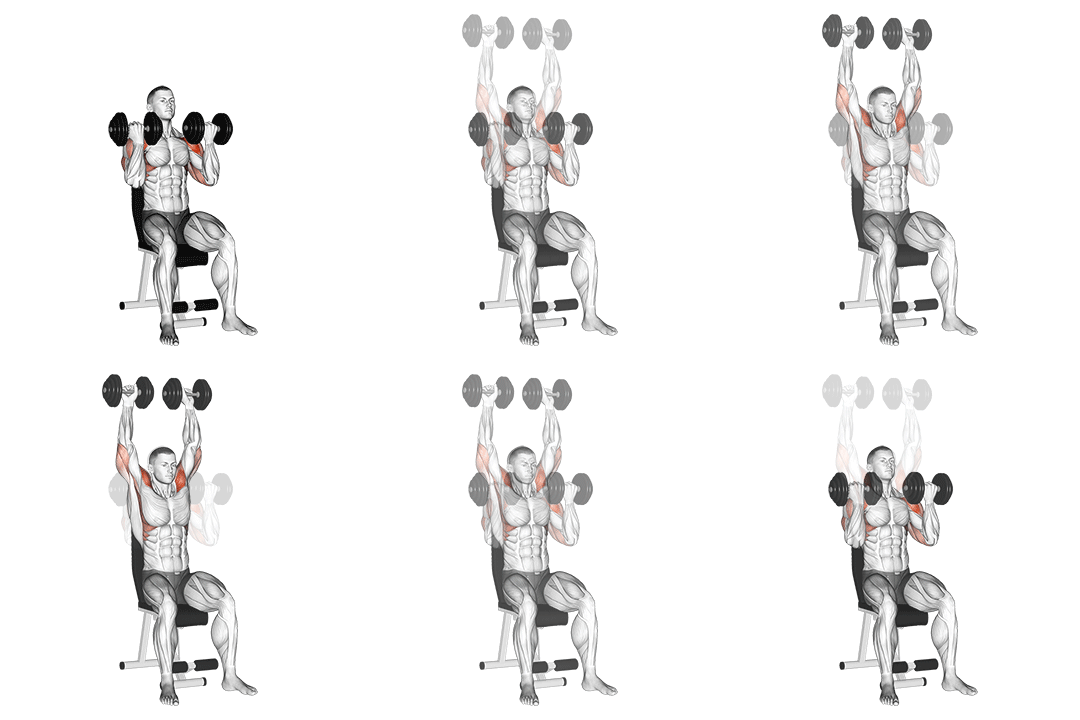
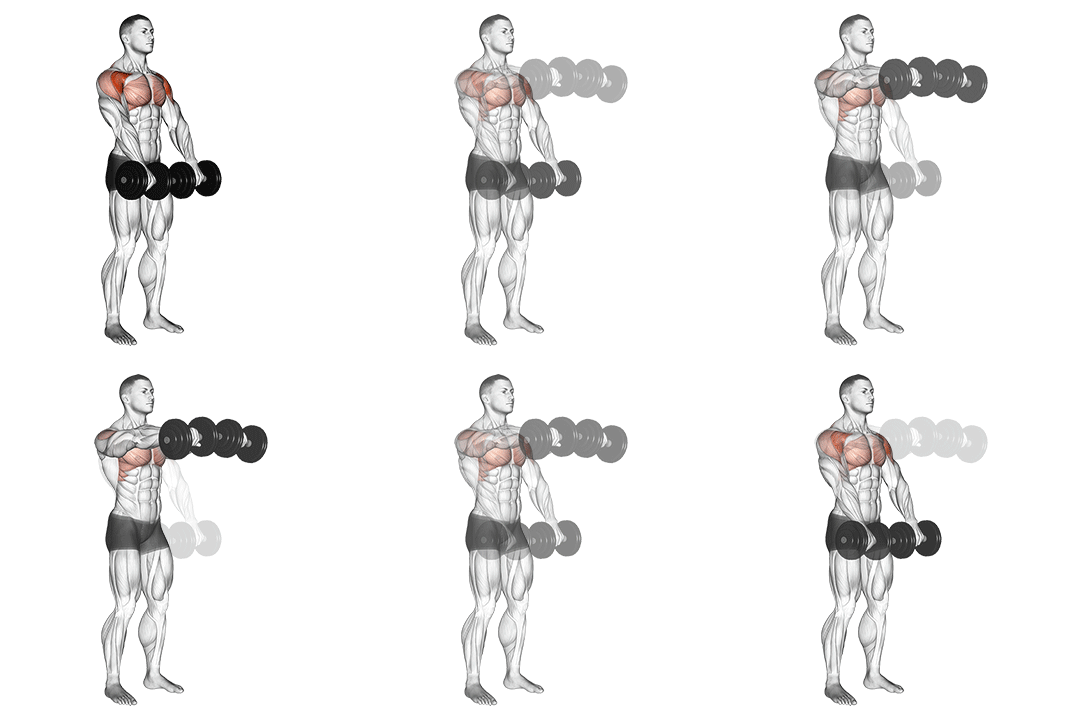
More comparisons with Dumbbell Cuban Press V. 2
Compare More Exercises
Use our free comparison tool to analyze any two exercises head-to-head.
Compare Exercises