

Dumbbell Arnold Press V. 2 vs Dumbbell Front Raise: Complete Comparison Guide
Dumbbell Arnold Press V. 2 vs Dumbbell Front Raise — two common moves that target the delts but do it very differently. If you want to know which exercise builds more overall shoulder muscle, which isolates the front delt better, and which fits your experience and equipment, you’re in the right place. I’ll break down muscle activation, technique cues, biomechanical differences (force vectors, moment arms, length–tension), progression options, and practical programming tips so you can pick the right move for your goals.
Exercise Comparison
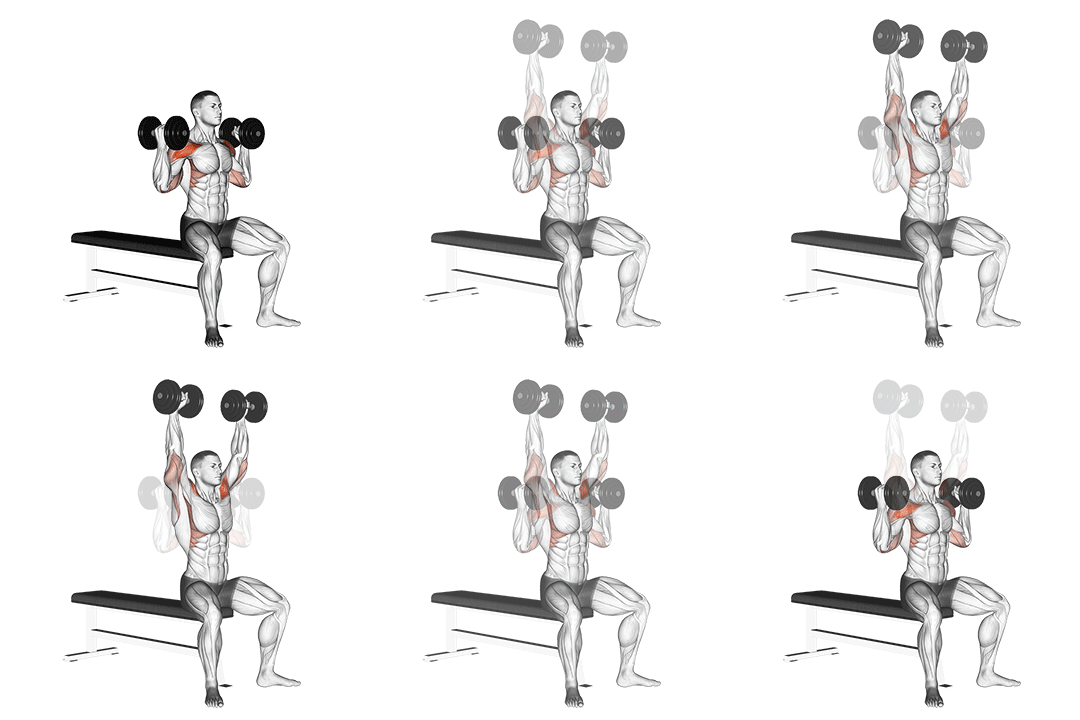
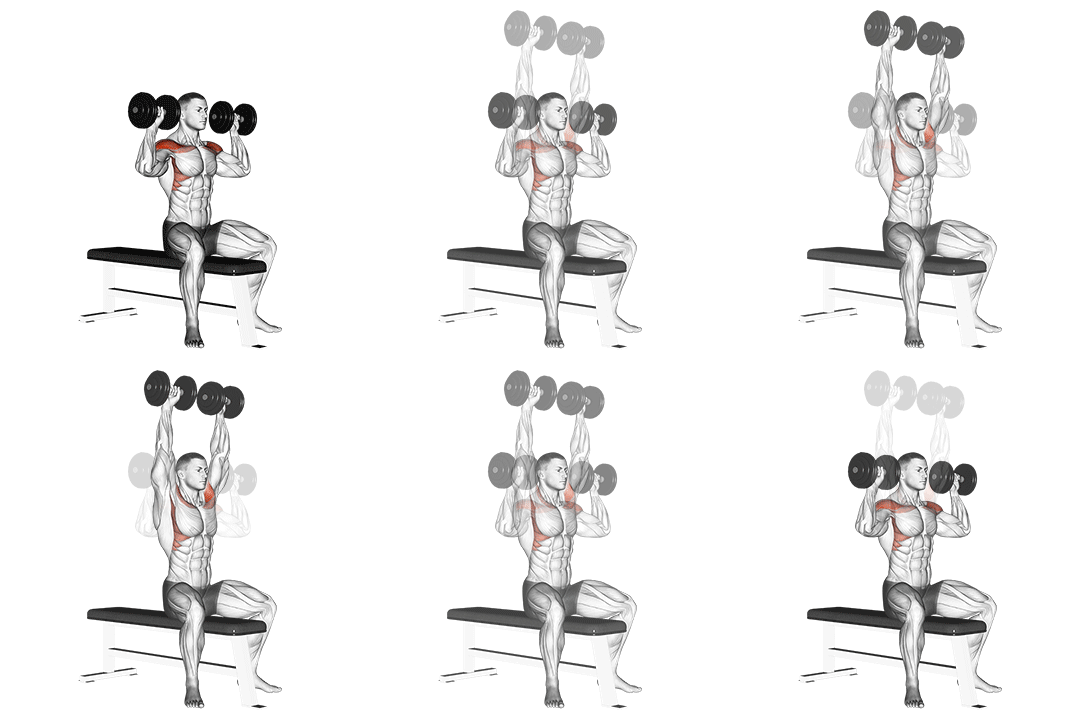
Dumbbell Arnold Press V. 2
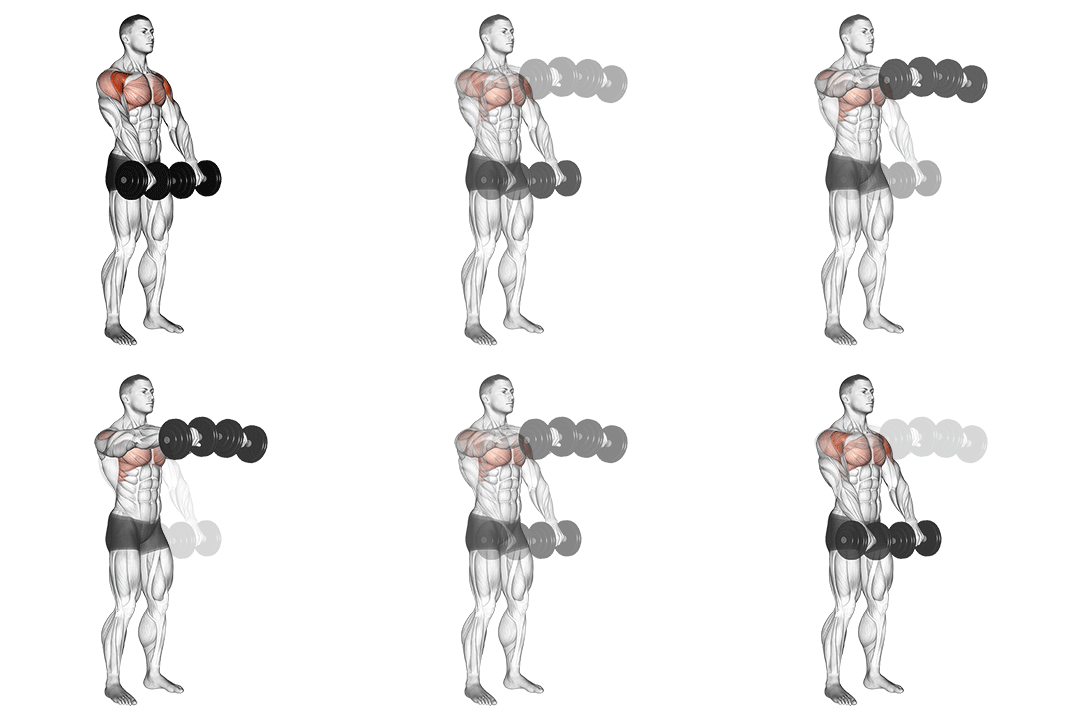
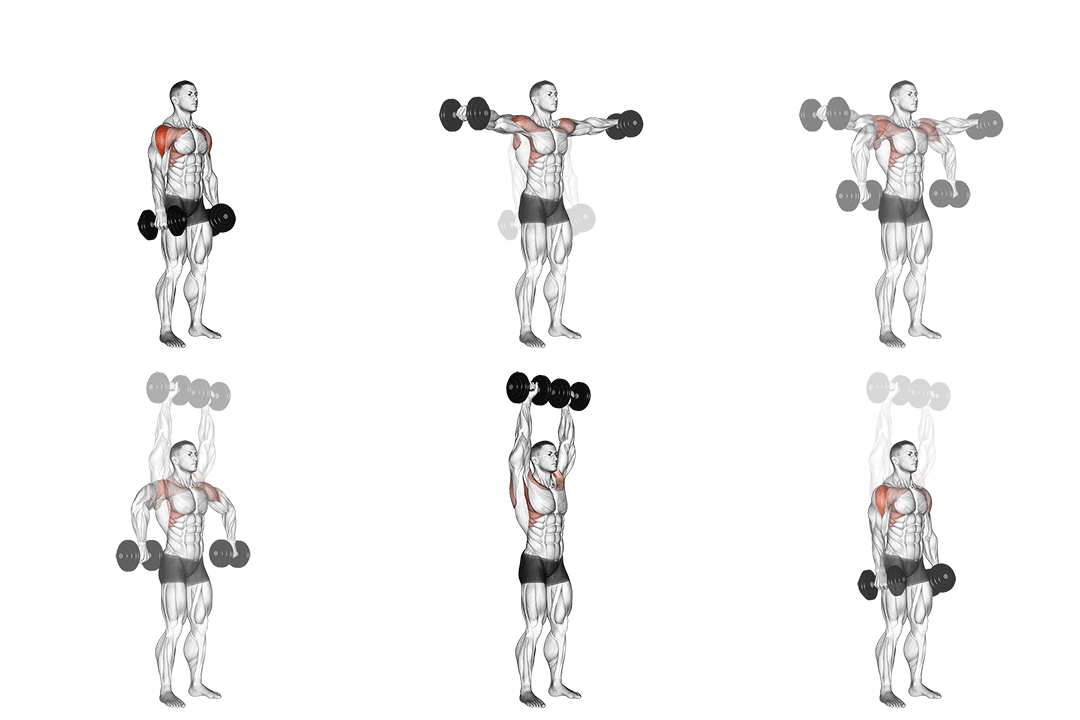
Dumbbell Front Raise
Head-to-Head Comparison
| Attribute | Dumbbell Arnold Press V. 2 | Dumbbell Front Raise |
|---|---|---|
| Target Muscle |
Delts
|
Delts
|
| Body Part |
Shoulders
|
Shoulders
|
| Equipment |
Dumbbell
|
Dumbbell
|
| Difficulty |
Intermediate
|
Beginner
|
| Movement Type |
Compound
|
Isolation
|
| Secondary Muscles |
2
|
2
|
Secondary Muscles Activated
Dumbbell Arnold Press V. 2
Dumbbell Front Raise
Visual Comparison
Overview
Dumbbell Arnold Press V. 2 vs Dumbbell Front Raise — two common moves that target the delts but do it very differently. If you want to know which exercise builds more overall shoulder muscle, which isolates the front delt better, and which fits your experience and equipment, you’re in the right place. I’ll break down muscle activation, technique cues, biomechanical differences (force vectors, moment arms, length–tension), progression options, and practical programming tips so you can pick the right move for your goals.
Key Differences
- Dumbbell Arnold Press V. 2 is a compound movement, while Dumbbell Front Raise is an isolation exercise.
- Difficulty levels differ: Dumbbell Arnold Press V. 2 is intermediate, while Dumbbell Front Raise is beginner.
- Both exercises target the Delts using Dumbbell. The main differences are in their movement patterns and muscle activation angles.
Pros & Cons
Dumbbell Arnold Press V. 2
+ Pros
- Compound pattern trains deltoids, triceps, and upper chest together for efficient sessions
- Allows heavier loads and clear progressive overload (6–12 reps recommended)
- Rotational path recruits lateral deltoid, helping round the shoulder
- Seated variation provides spinal support and safer heavy pressing
− Cons
- More technical coordination required due to rotation and press
- Higher systemic fatigue than isolation work, limiting volume elsewhere
- Potential shoulder/rotator cuff strain if mobility or scapular control is poor
Dumbbell Front Raise
+ Pros
- Simple movement that isolates the anterior deltoid effectively
- Low setup and equipment needs—good for quick finishers and home workouts
- Easy to control tempo for eccentric overload (slow lowering)
- Lower systemic fatigue lets you add higher volume without affecting compound lifts
− Cons
- Limited progression ceiling with heavy loads due to leverage and impingement risk
- Less carryover to pressing strength and functional overhead work
- Overuse risk if used too frequently without balanced posterior chain and lateral delt work
When Each Exercise Wins
The Arnold Press V. 2 lets you load the shoulder with larger absolute weights and engages multiple heads plus triceps and upper chest, producing higher overall mechanical tension—key for hypertrophy. Use 3–5 sets of 6–12 reps and controlled 2–3 second eccentrics.
Its vertical pressing vector and ability to handle heavier dumbbells makes the Arnold Press V. 2 superior for building pressing strength. Focus on lower rep ranges (4–8 reps), progressive overload, and strict core bracing.
Front Raises teach simple shoulder flexion with low coordination demands, making them easier and safer for novices. Start with 2–3 sets of 10–15 reps with light weight and emphasize slow, controlled motion.
Front Raises require minimal equipment and space and let you stimulate the anterior delts without heavy loads or complex setup. They’re ideal when you have one pair of dumbbells and limited training time.
Frequently Asked Questions
Can I do both Dumbbell Arnold Press V. 2 and Dumbbell Front Raise in the same workout?
Yes. Pair the Arnold Press V. 2 as your primary compound (3–5 sets of 6–12) and follow with Front Raises as an isolation finisher (2–3 sets of 10–15) to increase time under tension without overly fatiguing pressing strength.
Which exercise is better for beginners?
The Dumbbell Front Raise is better for beginners because it’s easier to learn and places less demand on scapular coordination and core stability. Start light and master slow eccentrics before increasing load.
How do the muscle activation patterns differ?
The Arnold Press V. 2 spreads activation across anterior and lateral deltoid heads plus triceps due to the rotational press and vertical force vector. The Front Raise concentrates activation in the anterior deltoid through pure shoulder flexion and maintains a consistent moment arm across the 0–90° range.
Can Dumbbell Front Raise replace Dumbbell Arnold Press V. 2?
Not if your goal is overall shoulder strength or multi-joint hypertrophy. Front Raises can substitute for isolation volume but won’t replicate the triceps and upper chest recruitment or the heavy-loading capacity of the Arnold Press V. 2.
Expert Verdict
Use the Dumbbell Arnold Press V. 2 when you want compound shoulder work that builds overall deltoid size and pressing strength—aim for 3–5 sets of 6–12 reps, strict form, and consider a seated variation if your lower back is a limiter. Choose the Dumbbell Front Raise when you need targeted anterior delt isolation, higher-rep volume, or a low-setup home option—2–4 sets of 8–15 slow reps works well. For balanced shoulder development, pair a compound press (Arnold Press V. 2) with isolation work (Front Raises or lateral raises) across your weekly plan to manage force vectors and muscle length–tension for optimal progress.
Also Compare
More comparisons with Dumbbell Arnold Press V. 2
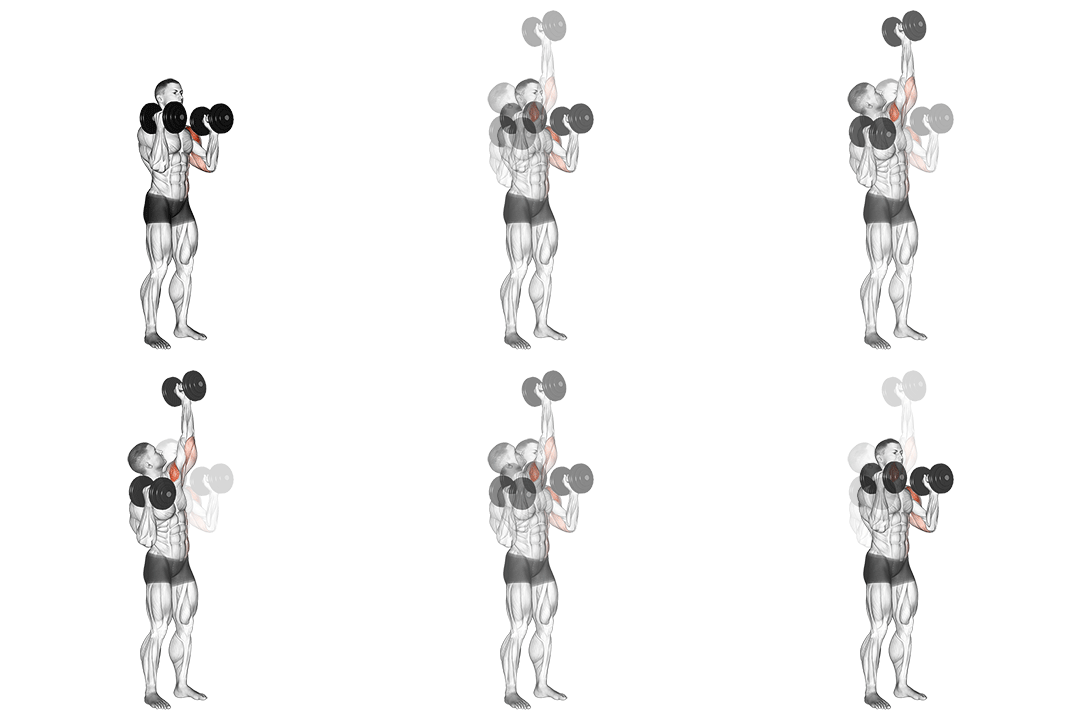
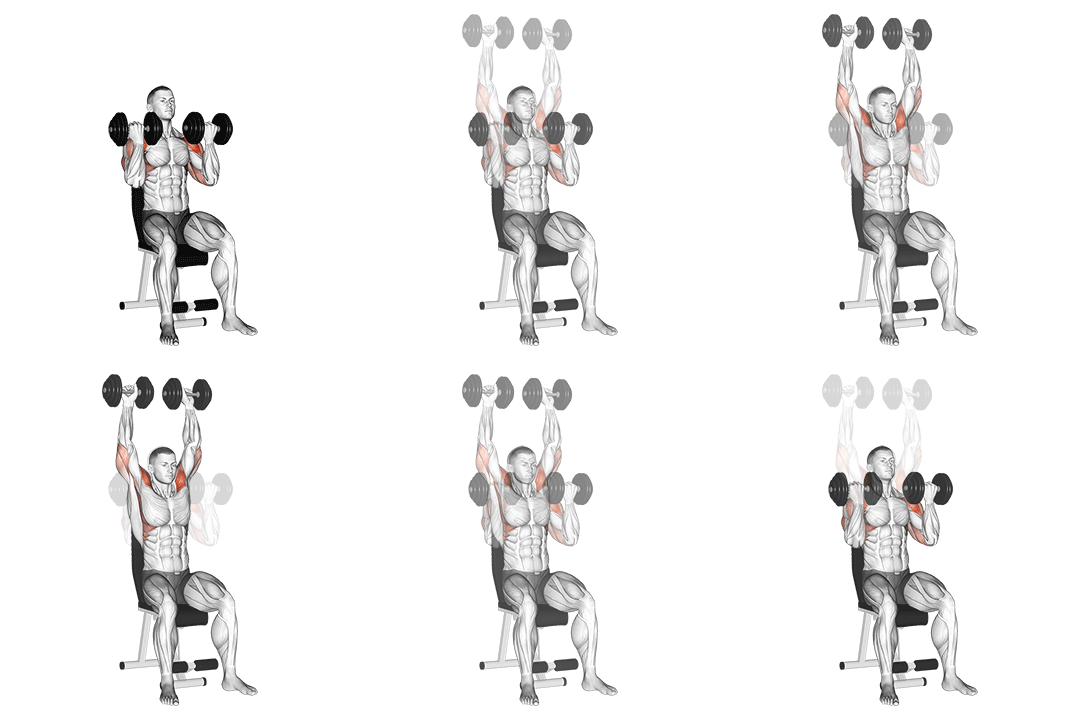
More comparisons with Dumbbell Front Raise
Compare More Exercises
Use our free comparison tool to analyze any two exercises head-to-head.
Compare Exercises