

Dumbbell Arnold Press V. 2 vs Reverse Flyes: Complete Comparison Guide
Dumbbell Arnold Press V. 2 vs Reverse Flyes — if you're dialing in shoulder work, you need to know which move delivers what. This comparison breaks down how each exercise loads the deltoid heads, which secondary muscles join the action, and the technique cues you must use to avoid shoulder pain. You’ll get clear rep ranges (strength, hypertrophy, endurance), progression tips, and real biomechanical reasons to pick one over the other based on your goals and mobility. Read on and pick the right lift for the results you want.
Exercise Comparison
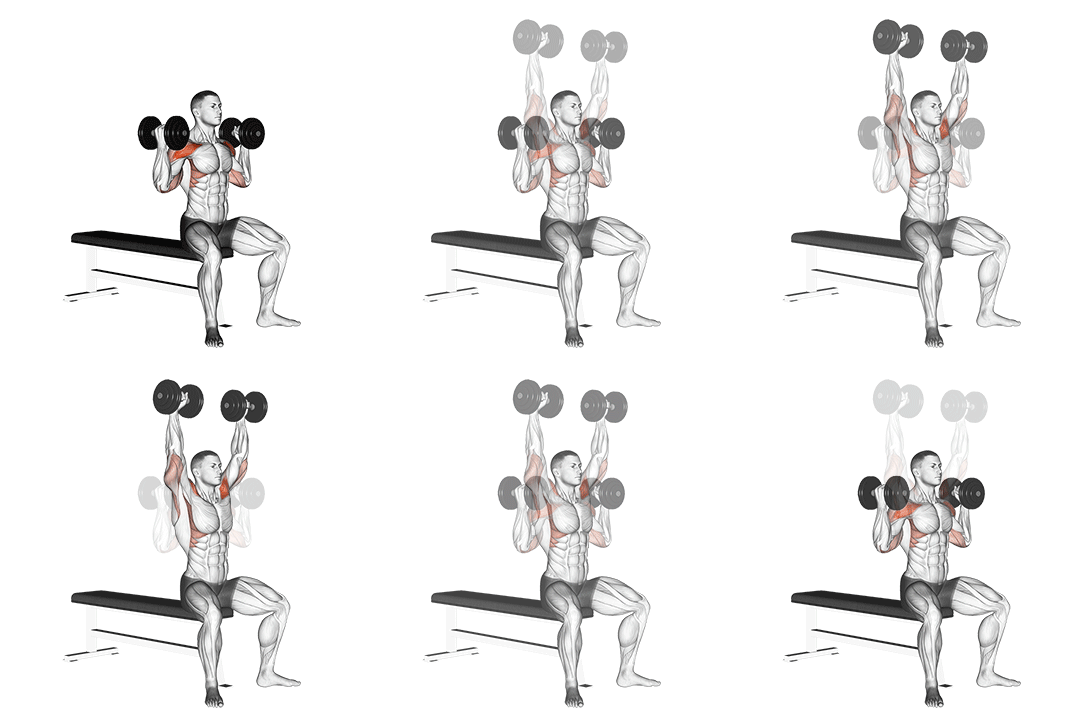
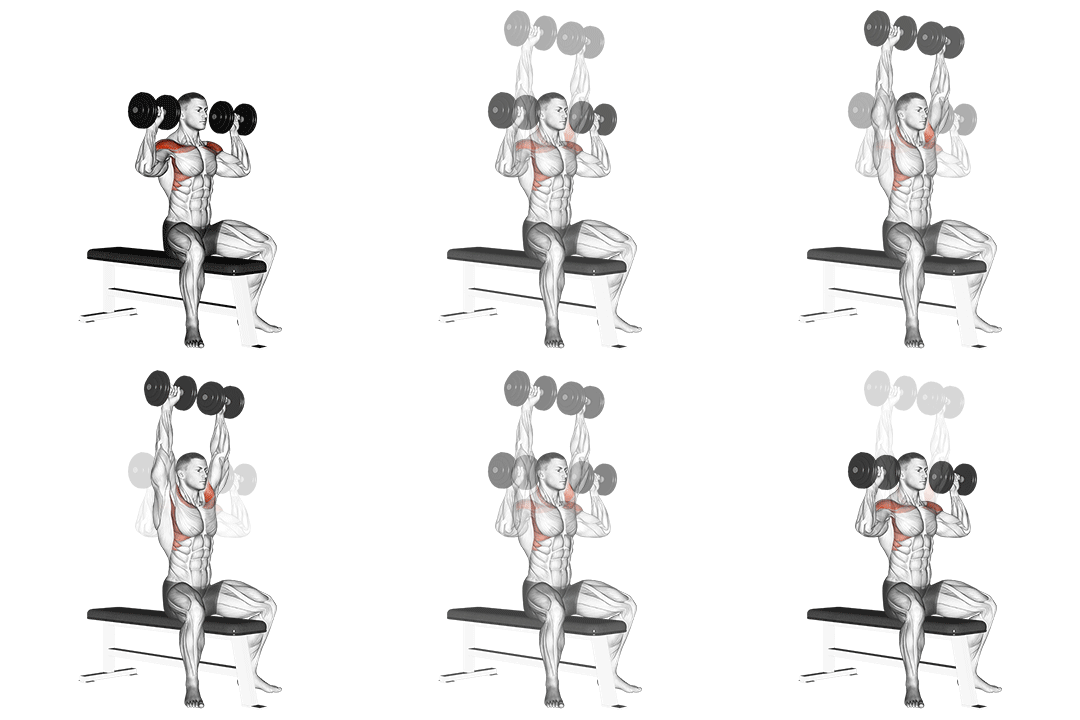
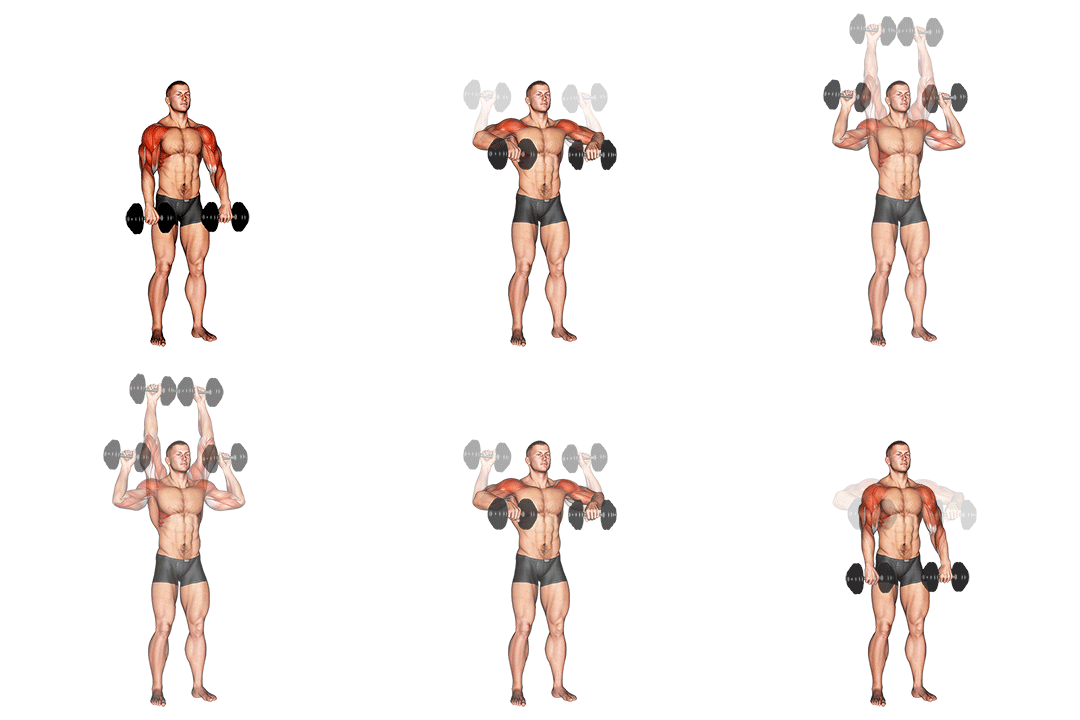
Dumbbell Arnold Press V. 2
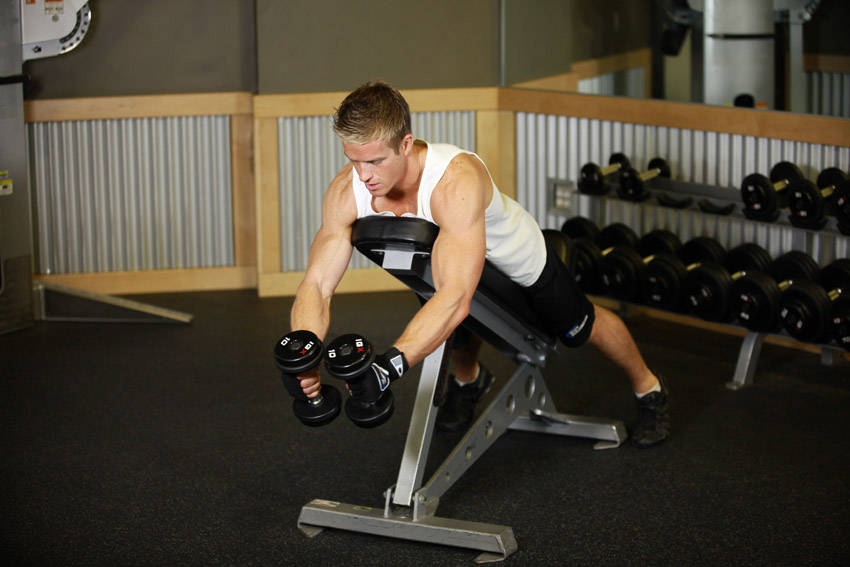
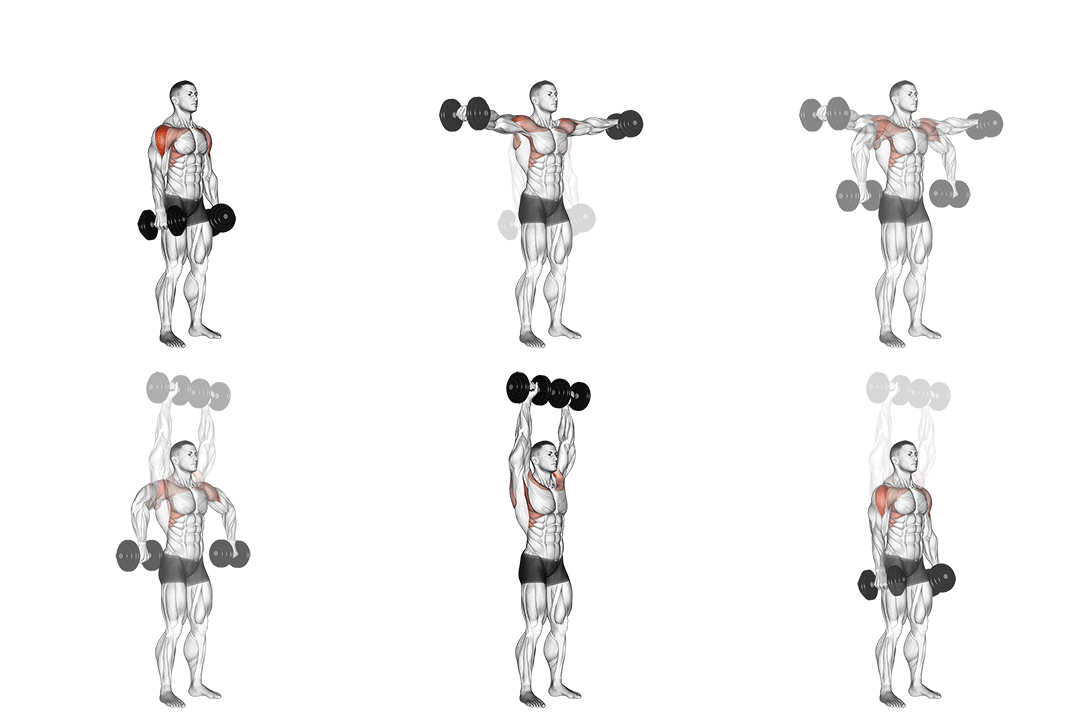
Reverse Flyes
Head-to-Head Comparison
| Attribute | Dumbbell Arnold Press V. 2 | Reverse Flyes |
|---|---|---|
| Target Muscle |
Delts
|
Delts
|
| Body Part |
Shoulders
|
Shoulders
|
| Equipment |
Dumbbell
|
Dumbbell
|
| Difficulty |
Intermediate
|
Beginner
|
| Movement Type |
Compound
|
Isolation
|
| Secondary Muscles |
2
|
0
|
Secondary Muscles Activated
Dumbbell Arnold Press V. 2
Reverse Flyes
Visual Comparison
Overview
Dumbbell Arnold Press V. 2 vs Reverse Flyes — if you're dialing in shoulder work, you need to know which move delivers what. This comparison breaks down how each exercise loads the deltoid heads, which secondary muscles join the action, and the technique cues you must use to avoid shoulder pain. You’ll get clear rep ranges (strength, hypertrophy, endurance), progression tips, and real biomechanical reasons to pick one over the other based on your goals and mobility. Read on and pick the right lift for the results you want.
Key Differences
- Dumbbell Arnold Press V. 2 is a compound movement, while Reverse Flyes is an isolation exercise.
- Difficulty levels differ: Dumbbell Arnold Press V. 2 is intermediate, while Reverse Flyes is beginner.
- Both exercises target the Delts using Dumbbell. The main differences are in their movement patterns and muscle activation angles.
Pros & Cons
Dumbbell Arnold Press V. 2
+ Pros
- Compound movement that allows heavier loading and greater overall shoulder stimulus
- Engages triceps and upper chest for efficient upper-body training
- Multiple progression options: load, tempo, single-arm, pauses
- Improves overhead strength and functional pressing patterns
− Cons
- Requires good shoulder external rotation and mobility to avoid impingement
- Higher technical demand — timing of rotation matters
- Overhead loading increases risk if form breaks down
Reverse Flyes
+ Pros
- Directly isolates the posterior deltoid for targeted development
- Lower technical barrier — easy to learn and scale with lighter weights
- Improves scapular retraction and upper-back posture
- Can be performed seated, bent-over, or on an incline for variety
− Cons
- Limited by how much weight the rear delts can handle, reducing heavy loading potential
- Easy to cheat with momentum or poor hinge, which reduces effectiveness
- Requires strict scapular control; otherwise rhomboids/traps dominate
When Each Exercise Wins
The Arnold press lets you use heavier loads and engages multiple shoulder heads plus triceps and upper chest, increasing total mechanical tension—key for hypertrophy. Aim for 6–12 reps, 3–4 sets, and use controlled 2:1 concentric:eccentric tempo.
As a compound vertical press it builds overload capacity and improves pressing mechanics. Train 3–6 reps, 4–6 sets, and focus on progressive load while maintaining scapular upward rotation and a straight wrist line.
Reverse Flyes have a simpler movement pattern and lower skill requirement; they teach scapular retraction and rear-delt activation without overhead demand. Start with 10–15 reps, light weight, and strict form to build motor control.
Reverse Flyes can be done seated or bent-over with light dumbbells and minimal space; they don’t need overhead clearance or heavy loading. Use 12–15 reps and tune tempo to increase time under tension.
Frequently Asked Questions
Can I do both Dumbbell Arnold Press V. 2 and Reverse Flyes in the same workout?
Yes — pairing them is effective: start with Dumbbell Arnold Press V. 2 as the compound lift for 3–5 sets, then use Reverse Flyes as an isolation finisher for 2–4 sets of 8–15 reps. This sequence uses heavy loading first, then targets posterior delts to balance the shoulder.
Which exercise is better for beginners?
Reverse Flyes are better for beginners because the movement is simpler and requires less overhead mobility. Begin with light weights to learn scapular retraction and a proper hip hinge or incline setup before progressing to compound overhead presses.
How do the muscle activation patterns differ?
The Arnold press shifts the deltoid moment arms via rotation and shoulder elevation, increasing anterior and middle delt activation under load. Reverse Flyes maintain a horizontal abduction vector that places the posterior deltoid at favorable length-tension while recruiting the rhomboids and mid-traps for scapular retraction.
Can Reverse Flyes replace Dumbbell Arnold Press V. 2?
Not fully — Reverse Flyes isolate the rear delts and improve posture, but they don’t provide the same overload for overall shoulder mass or pressing strength. If your goal is comprehensive shoulder development or increased pressing capacity, keep the Arnold press in your program and use reverse flyes as a supplemental exercise.
Expert Verdict
Choose Dumbbell Arnold Press V. 2 when you want compound shoulder development, heavier loading, and to build pressing strength or overall deltoid mass. Use strict rotation-to-press technique, keep elbows tracking under wrists, and prioritize shoulder external rotation mobility before adding heavy loads. Choose Reverse Flyes when your priority is targeting the posterior deltoid, improving scapular retraction, fixing posture imbalances, or when space and mobility are limited. Use a controlled hinge or incline bench, retract the scapula first, and focus on 8–15 reps to maximize posterior delt tension. Ideally, include both across a training week to cover vertical and horizontal force vectors for balanced shoulder development.
Also Compare
More comparisons with Dumbbell Arnold Press V. 2
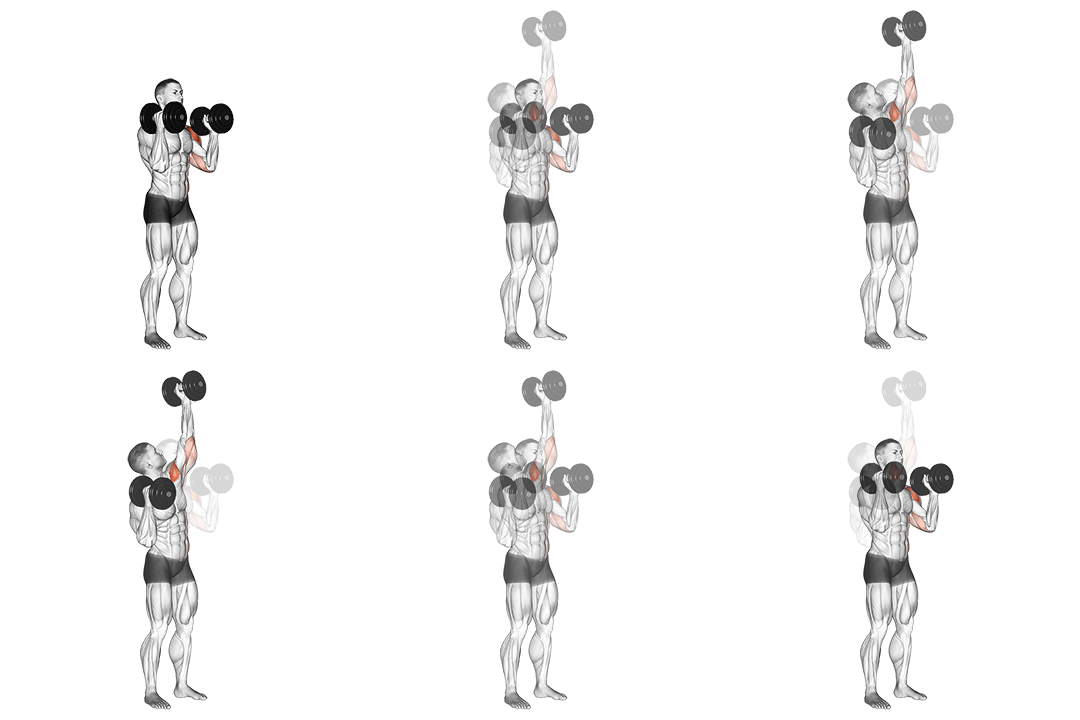
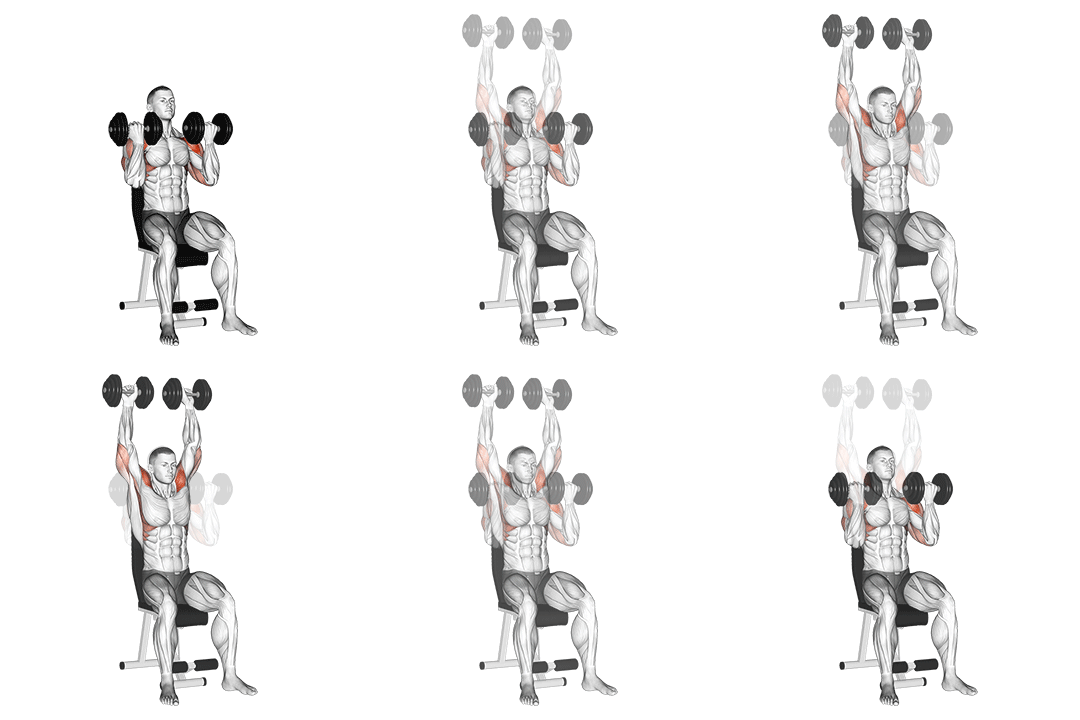
Compare More Exercises
Use our free comparison tool to analyze any two exercises head-to-head.
Compare Exercises