

Elbow Circles vs Rear Deltoid Stretch: Complete Comparison Guide
Elbow Circles vs Rear Deltoid Stretch gives you a clear side-by-side look at two beginner, body-weight shoulder isolation moves. You’ll get practical technique cues, biomechanical context (length-tension and force vectors), rep and hold ranges, and recommendations for warm-ups, mobility sessions, and posterior-delt focus. Read on so you can pick the drill that fits your goal—more dynamic activation and blood flow, or targeted posterior delt lengthening and posture work—and learn how to progress each safely.
Exercise Comparison
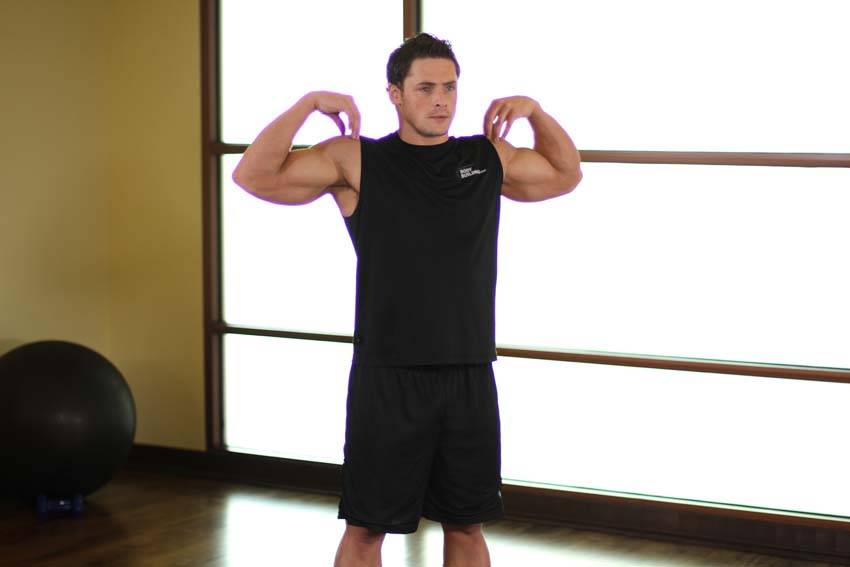
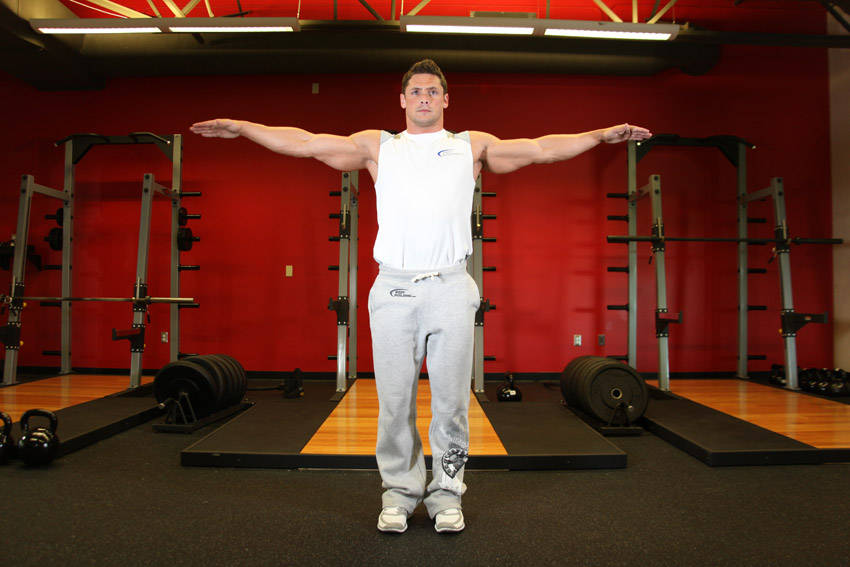
Elbow Circles
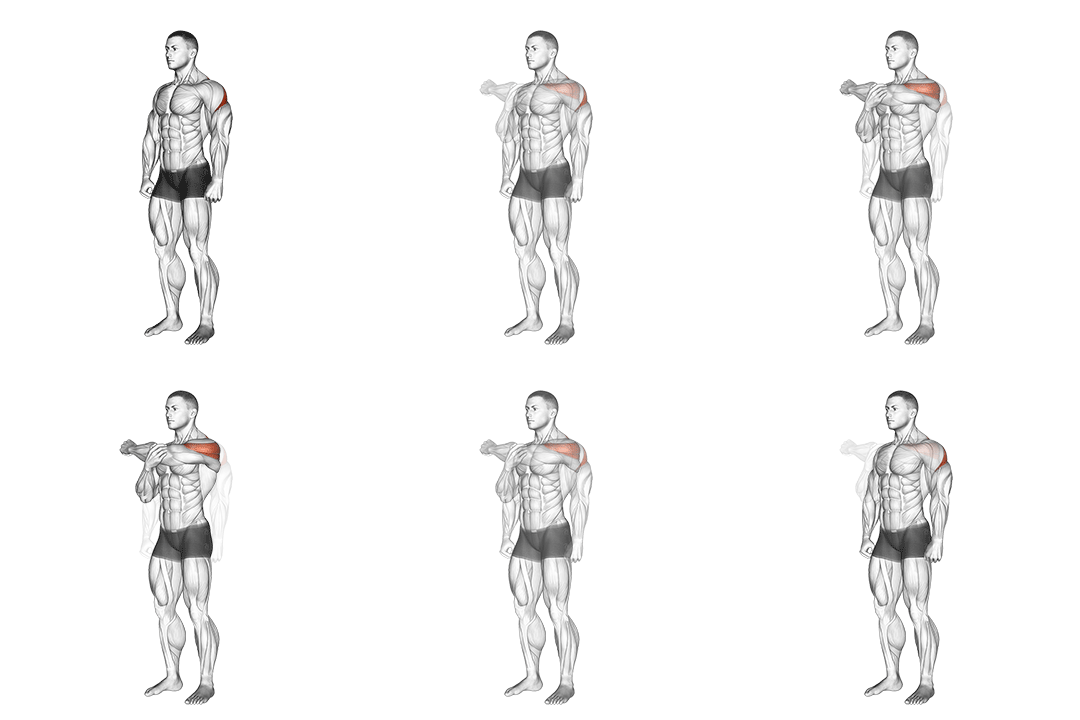
Rear Deltoid Stretch
Head-to-Head Comparison
| Attribute | Elbow Circles | Rear Deltoid Stretch |
|---|---|---|
| Target Muscle |
Delts
|
Delts
|
| Body Part |
Shoulders
|
Shoulders
|
| Equipment |
Body-weight
|
Body-weight
|
| Difficulty |
Beginner
|
Beginner
|
| Movement Type |
Isolation
|
Isolation
|
| Secondary Muscles |
1
|
2
|
Secondary Muscles Activated
Elbow Circles
Rear Deltoid Stretch
Visual Comparison
Overview
Elbow Circles vs Rear Deltoid Stretch gives you a clear side-by-side look at two beginner, body-weight shoulder isolation moves. You’ll get practical technique cues, biomechanical context (length-tension and force vectors), rep and hold ranges, and recommendations for warm-ups, mobility sessions, and posterior-delt focus. Read on so you can pick the drill that fits your goal—more dynamic activation and blood flow, or targeted posterior delt lengthening and posture work—and learn how to progress each safely.
Key Differences
- Both exercises target the Delts using Body-weight. The main differences are in their movement patterns and muscle activation angles.
Pros & Cons
Elbow Circles
+ Pros
- Dynamic activation across deltoid heads—good for warm-ups and blood flow
- Easy to scale with tempo or resistance bands for progressive overload
- Improves scapulohumeral rhythm and coordination
- Can be done in short sets (20–30 reps per direction) for endurance
− Cons
- Higher chance of impingement if performed with poor mechanics or too large circles
- Limited pure posterior deltoid isolation compared with targeted stretches
- Less effective at improving static shoulder length and posture on its own
Rear Deltoid Stretch
+ Pros
- Directly targets posterior deltoid length and posture-related tightness
- Very low equipment and space demands—can be seated
- Low coordination requirement—good for cool-down and mobility work
- Engages rhomboids and trapezius through scapular retraction cues
− Cons
- Primarily passive; minimal concentric loading for muscle strengthening
- Limited progression options without adding strengthening exercises
- Won’t significantly improve dynamic scapular rhythm or muscular endurance
When Each Exercise Wins
Elbow Circles produce repeated concentric-eccentric cycles that raise blood flow and metabolic stress when done for 15–30 reps; adding bands or light weights increases mechanical tension needed for muscle growth. The Rear Deltoid Stretch is passive and won’t provide the same hypertrophic stimulus without supplemental resistance work.
While neither is ideal for maximal strength, Elbow Circles can be loaded with bands or small dumbbells to produce higher force outputs and improve muscular endurance and movement control. Rear Deltoid Stretch lacks concentric loading, so it won’t drive meaningful increases in force production.
Rear Deltoid Stretch is simple to teach and perform, with low coordination demands and clear tactile feedback when you hold the posterior deltoid at end range. It’s an excellent first-line mobility tool before introducing dynamic patterns like elbow circles.
Elbow Circles are efficient at home because they combine dynamic warm-up, light posterior/medial delt work, and can be progressed with bands you likely already have. They also require only a small standing area and no bench or rack.
Frequently Asked Questions
Can I do both Elbow Circles and Rear Deltoid Stretch in the same workout?
Yes. Start with Elbow Circles as a dynamic warm-up (2–3 sets of 20 reps per direction) to activate the delts and scapular stabilizers, then use the Rear Deltoid Stretch as a cool-down or mobility drill with 20–30 second holds to restore length-tension balance.
Which exercise is better for beginners?
Rear Deltoid Stretch is better for absolute beginners because it’s easier to learn and focuses on passive lengthening and posture. Teach elbow circles after they demonstrate basic scapular control and pain-free overhead motion.
How do the muscle activation patterns differ?
Elbow Circles produce cyclic concentric and eccentric activation across anterior, medial, and posterior deltoids plus accessory trap recruitment for scapular motion. Rear Deltoid Stretch creates passive lengthening of the posterior deltoid and increases scapular retraction tension in trapezius and rhomboids with minimal concentric work.
Can Rear Deltoid Stretch replace Elbow Circles?
Not completely. Rear Deltoid Stretch is excellent for mobility and posture but won’t replace the dynamic activation and progressive loading potential of Elbow Circles. Use the stretch when mobility is the priority and elbow circles when you need movement prep or light posterior-delt conditioning.
Expert Verdict
Use Elbow Circles when you want dynamic activation, improved scapulohumeral rhythm, and a platform that can be progressed with bands or light weights; perform 2–3 sets of 20–30 reps per direction as a warm-up or light posterior-delt stimulus. Use Rear Deltoid Stretch when your goal is posterior deltoid lengthening, scapular retraction practice, or postural mobility—hold for 20–30 seconds, 2–3 sets. If you want measurable strength or hypertrophy, pair either drill with loaded horizontal-extension or rowing variations. Choose the drill that complements your session: elbow circles for activation and progression, rear deltoid stretch for mobility and recovery.
Also Compare
More comparisons with Elbow Circles
Compare More Exercises
Use our free comparison tool to analyze any two exercises head-to-head.
Compare Exercises