

Ez Barbell Curl vs Ez Barbell Reverse Grip Curl: Complete Comparison Guide
Ez Barbell Curl vs Ez Barbell Reverse Grip Curl — you’re choosing between two isolation moves that use the same tool but load your biceps and forearms differently. I’ll walk you through muscle activation, biomechanics, equipment needs, learning curve, and smart progressions so you can pick the better option for hypertrophy, strength, or a home routine. Expect clear technique cues (wrist position, elbow path, tempo), rep ranges to prioritize, and when to pair or substitute one for the other.
Exercise Comparison
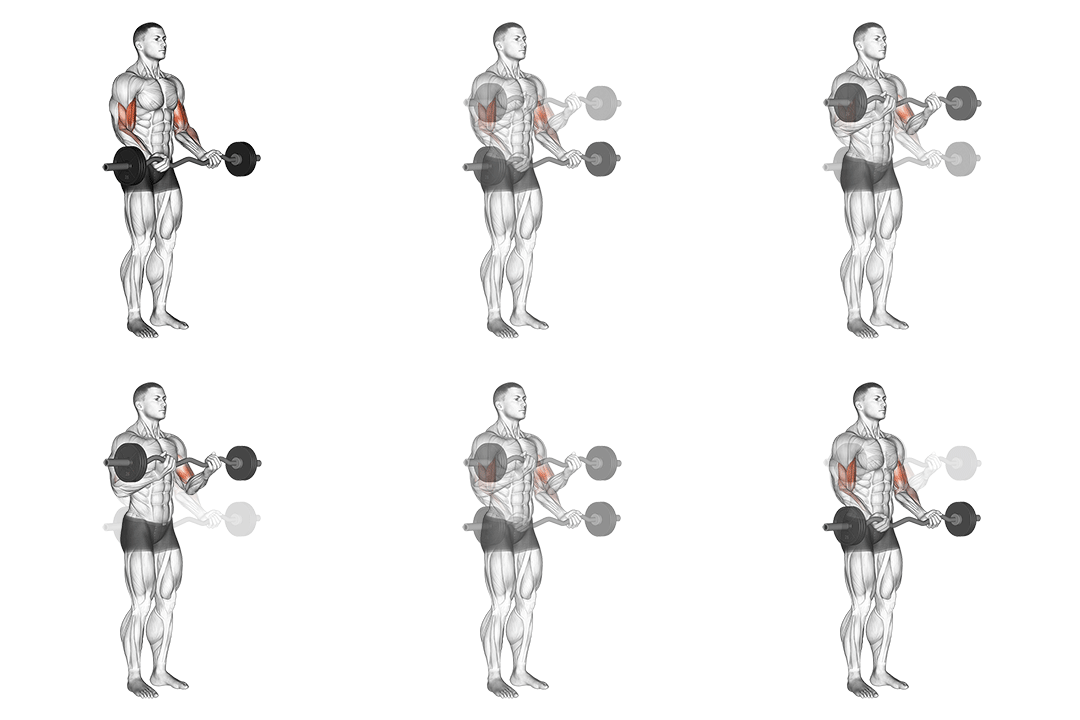
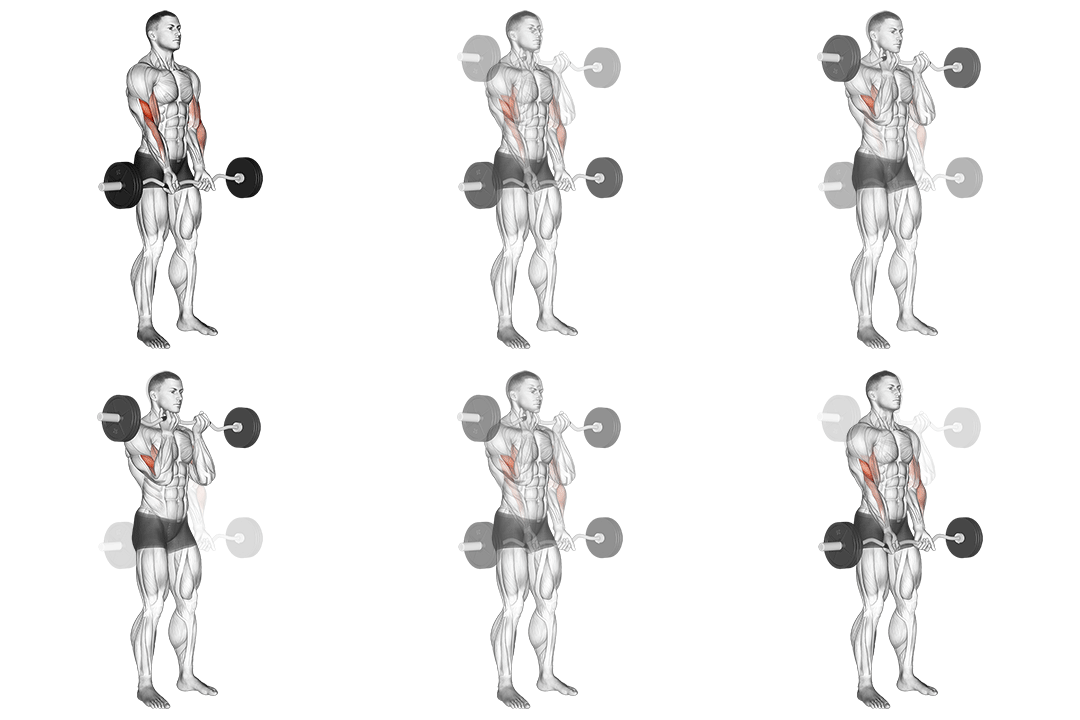
EZ Barbell Curl
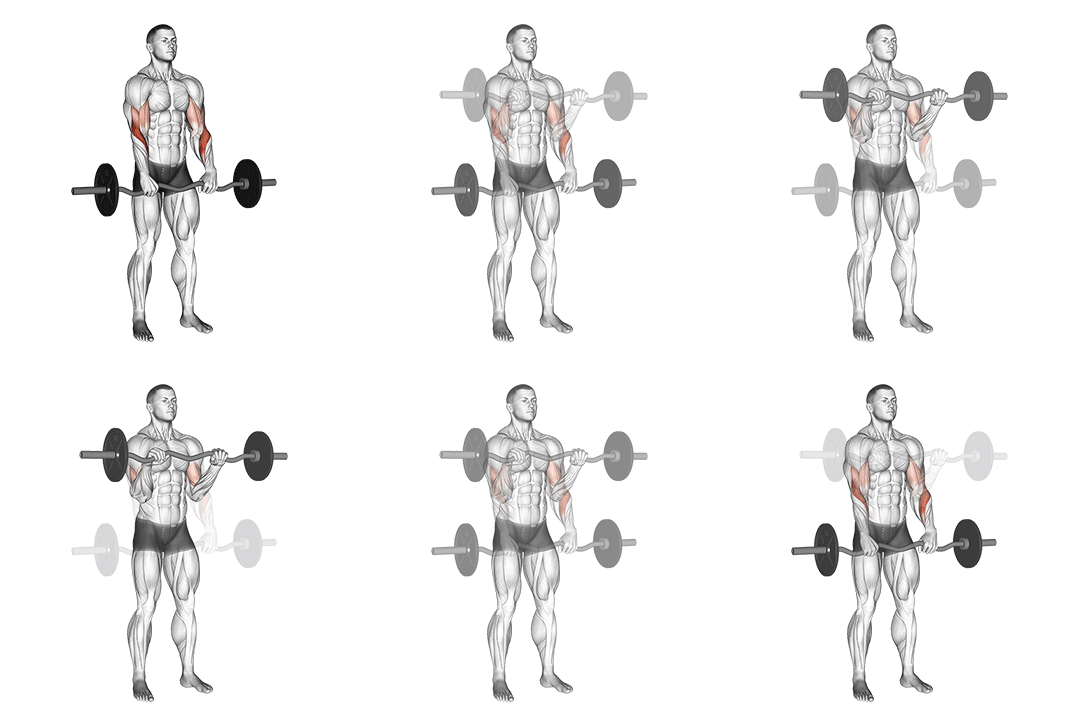
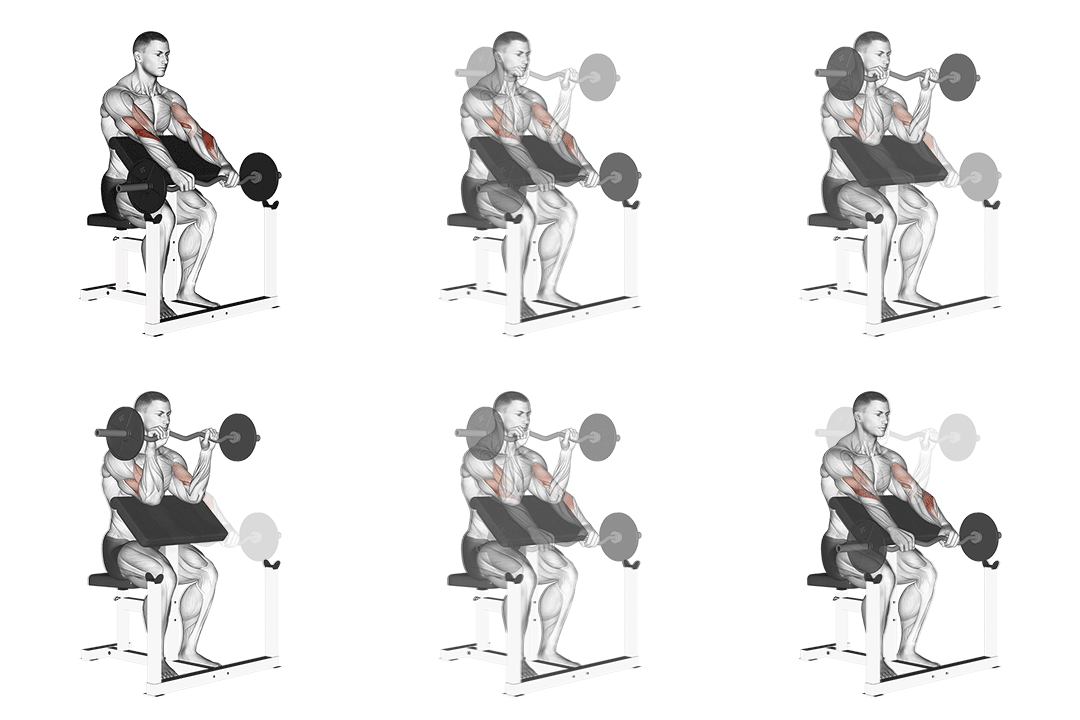
EZ Barbell Reverse Grip Curl
Head-to-Head Comparison
| Attribute | EZ Barbell Curl | EZ Barbell Reverse Grip Curl |
|---|---|---|
| Target Muscle |
Biceps
|
Biceps
|
| Body Part |
Upper-arms
|
Upper-arms
|
| Equipment |
Ez-barbell
|
Ez-barbell
|
| Difficulty |
Intermediate
|
Intermediate
|
| Movement Type |
Isolation
|
Isolation
|
| Secondary Muscles |
1
|
1
|
Secondary Muscles Activated
EZ Barbell Curl
EZ Barbell Reverse Grip Curl
Visual Comparison
Overview
Ez Barbell Curl vs Ez Barbell Reverse Grip Curl — you’re choosing between two isolation moves that use the same tool but load your biceps and forearms differently. I’ll walk you through muscle activation, biomechanics, equipment needs, learning curve, and smart progressions so you can pick the better option for hypertrophy, strength, or a home routine. Expect clear technique cues (wrist position, elbow path, tempo), rep ranges to prioritize, and when to pair or substitute one for the other.
Key Differences
- Both exercises target the Biceps using Ez-barbell. The main differences are in their movement patterns and muscle activation angles.
Pros & Cons
EZ Barbell Curl
+ Pros
- Direct biceps emphasis with strong supination torque
- EZ-bar eases wrist strain versus straight bar
- Allows heavier loads for progressive overload (typically 5–20% more)
- Clear mid-range peak tension around 60–90° for hypertrophy
− Cons
- Less emphasis on brachialis and forearms
- Can encourage swinging if hips and torso stabilize poorly
- May irritate supination-sensitive wrists at very heavy loads
EZ Barbell Reverse Grip Curl
+ Pros
- Greater brachialis and brachioradialis recruitment
- Improves forearm thickness and grip transfer
- Useful to break biceps strength plateaus by changing force vector
- EZ-bar reduces wrist discomfort compared with straight-bar reverse grip
− Cons
- Typically requires lighter loads due to forearm fatigue
- Higher wrist/elbow strain risk if mobility is limited
- Less supination work reduces long-head biceps isolation
When Each Exercise Wins
Standard EZ curls let you use heavier loads with stronger supination torque and peak mid-range biceps tension (60–90°), making it the superior choice for focused biceps hypertrophy when paired with 6–12 rep sets and controlled 2–3 second eccentrics.
Because you can typically load the standard EZ curl 5–20% heavier, it transfers better to raw elbow-flexion strength. Use lower rep ranges (3–6) and longer rest (2–3 minutes) to build maximal strength.
Beginners gain cleaner motor patterns from the standard grip since natural supination assists the lift and the movement is easier to control. Start with 8–12 reps focusing on strict elbows and a 2–3 second eccentric.
Both need only an EZ-bar and plates, so accessibility is equal. Choose standard EZ curl for easier progression; choose reverse grip if you want to prioritize forearm development without extra equipment.
Frequently Asked Questions
Can I do both Ez Barbell Curl and Ez Barbell Reverse Grip Curl in the same workout?
Yes. Do the Ez Barbell Curl first as a heavy primary move (3–6 for strength or 6–12 for hypertrophy), then use the reverse-grip as a secondary exercise for 8–15 reps to target brachialis and forearms. Keep total weekly volume in check to avoid forearm overuse.
Which exercise is better for beginners?
Ez Barbell Curl is better for beginners because natural supination makes it easier to learn strict elbow flexion and handle heavier loads safely. Start with 8–12 reps and focus on a 2–3 second eccentric and locked elbow position.
How do the muscle activation patterns differ?
Standard EZ curl combines elbow flexion with supination torque, accentuating biceps long- and short-head activity especially in the mid-range (60–90°). Reverse-grip removes much supination, shifting the force vector anteriorly and increasing brachialis and brachioradialis activation, especially near full extension and early concentric.
Can Ez Barbell Reverse Grip Curl replace Ez Barbell Curl?
It can replace standard curls when your goal is forearm and brachialis emphasis or to vary stimulus, but it’s not a full substitute for biceps-focused overload because you’ll usually handle less weight and lose some supination-driven biceps tension.
Expert Verdict
Use the Ez Barbell Curl as your primary biceps developer: it produces higher supination torque, allows heavier loading (commonly 5–20% more), and places peak tension in the mid-range that favors hypertrophy when trained with 6–12 reps and controlled eccentrics. Add the Ez Barbell Reverse Grip Curl as a secondary movement to target the brachialis and brachioradialis, improve forearm thickness, and vary the force vector; use lighter loads and higher volume (8–15 reps) while prioritizing wrist control. For strength and beginner programming, prioritize the standard EZ curl; for balanced arm development or to overcome plateaus, cycle in reverse-grip work.
Also Compare
More comparisons with EZ Barbell Curl
More comparisons with EZ Barbell Reverse Grip Curl
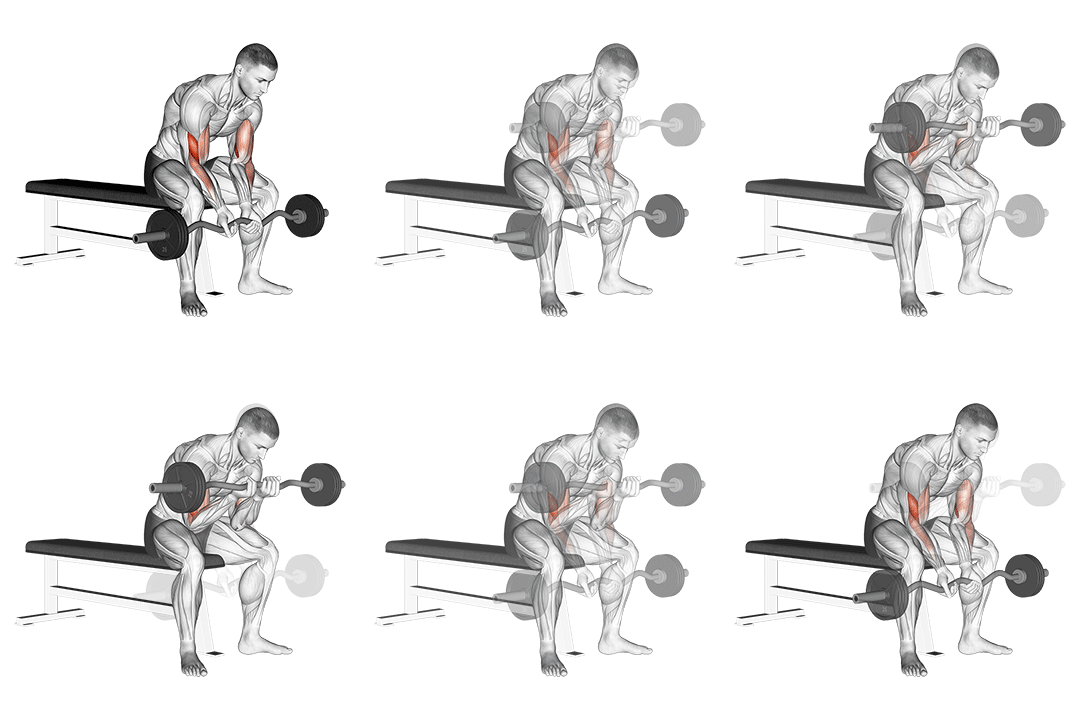
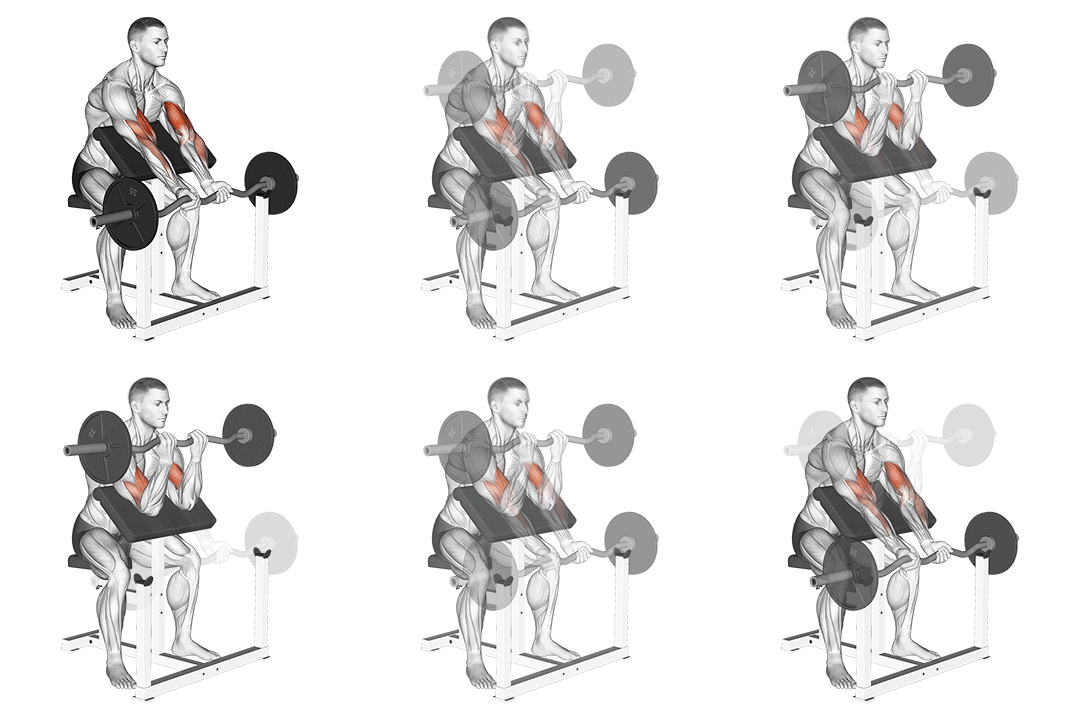
Compare More Exercises
Use our free comparison tool to analyze any two exercises head-to-head.
Compare Exercises