

Handstand Push-Ups vs Left Hook. Boxing: Complete Comparison Guide
Handstand Push-Ups vs Left Hook. Boxing — if you want stronger, more developed shoulders you can pick two very different routes. I’ll walk you through how each exercise loads the delts, which secondary muscles assist, the movement patterns and injury considerations, and which one fits specific goals like muscle growth, strength, or sport transfer. You’ll get clear technique cues, rep ranges, and biomechanical reasons to choose one over the other so you can pick the right move for your program and progress safely.
Exercise Comparison
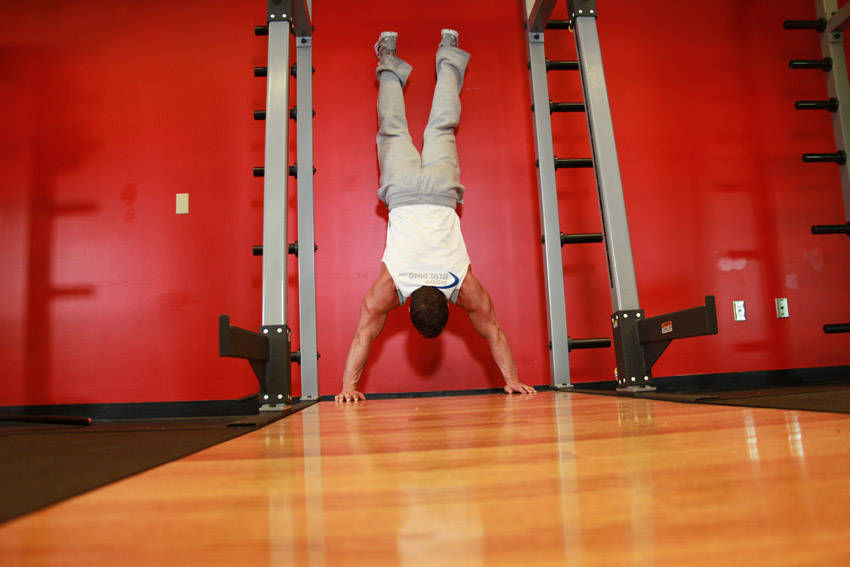
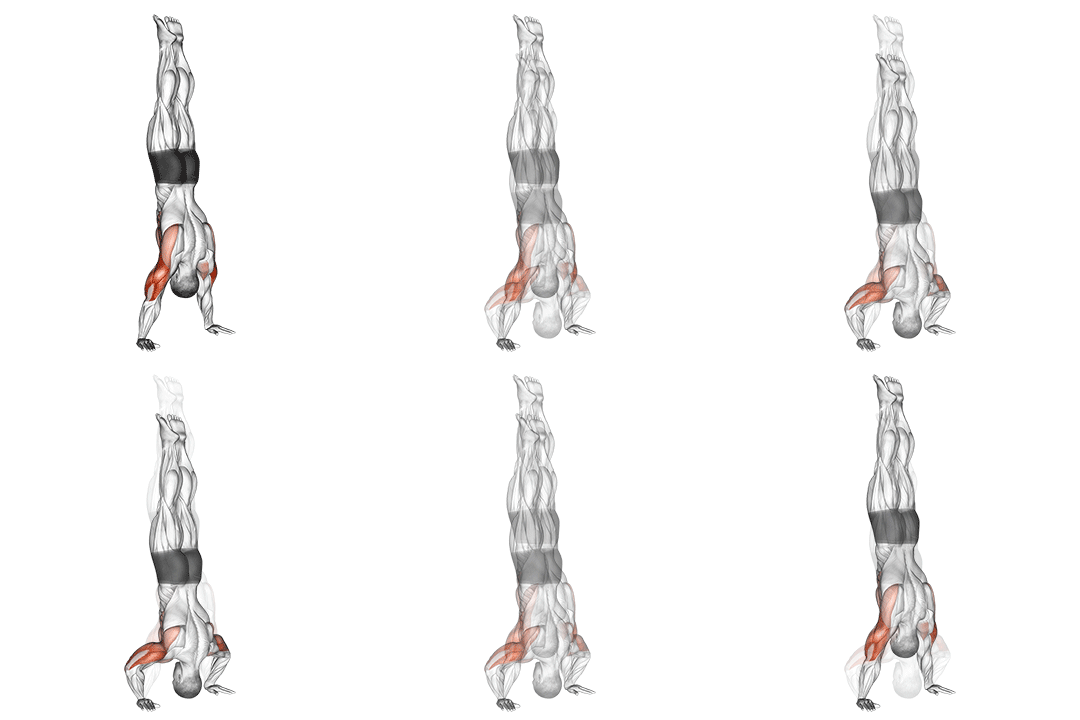
Handstand Push-ups
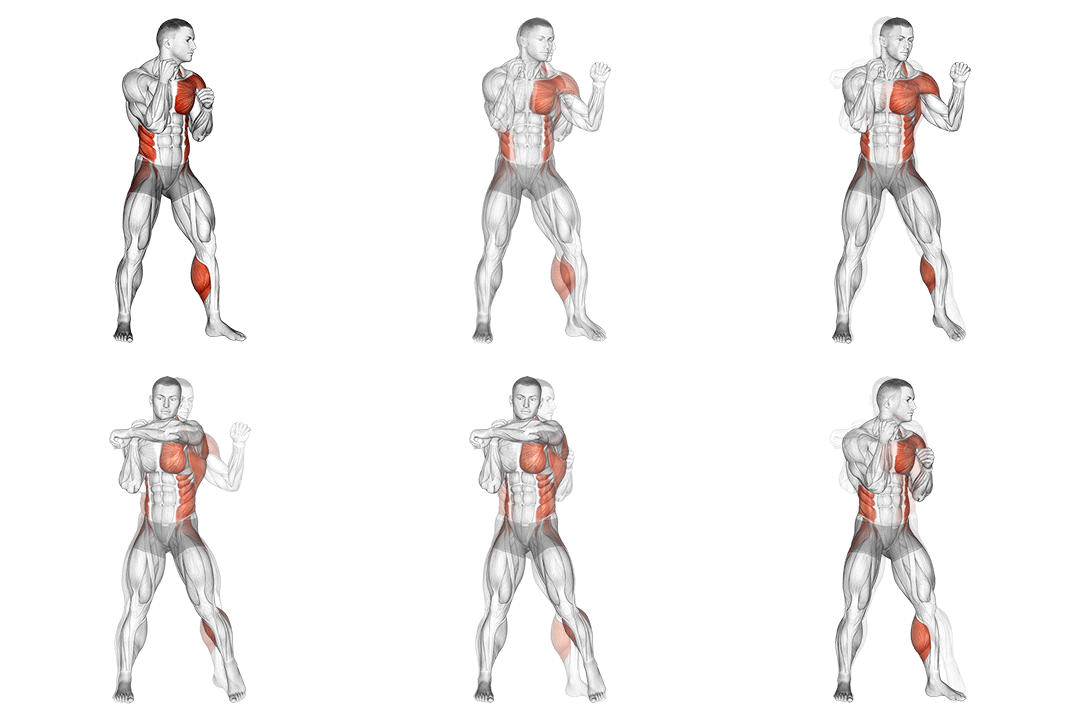
Left Hook. Boxing
Head-to-Head Comparison
| Attribute | Handstand Push-ups | Left Hook. Boxing |
|---|---|---|
| Target Muscle |
Delts
|
Delts
|
| Body Part |
Shoulders
|
Shoulders
|
| Equipment |
Body-weight
|
Body-weight
|
| Difficulty |
Advanced
|
Intermediate
|
| Movement Type |
Compound
|
Compound
|
| Secondary Muscles |
1
|
3
|
Secondary Muscles Activated
Handstand Push-ups
Left Hook. Boxing
Visual Comparison
Overview
Handstand Push-Ups vs Left Hook. Boxing — if you want stronger, more developed shoulders you can pick two very different routes. I’ll walk you through how each exercise loads the delts, which secondary muscles assist, the movement patterns and injury considerations, and which one fits specific goals like muscle growth, strength, or sport transfer. You’ll get clear technique cues, rep ranges, and biomechanical reasons to choose one over the other so you can pick the right move for your program and progress safely.
Key Differences
- Difficulty levels differ: Handstand Push-ups is advanced, while Left Hook. Boxing is intermediate.
- Both exercises target the Delts using Body-weight. The main differences are in their movement patterns and muscle activation angles.
Pros & Cons
Handstand Push-ups
+ Pros
- High vertical overload on delts and triceps for strength and hypertrophy
- Clear progression ladder from pikes to weighted handstand work
- Improves scapular control and overhead stability
- Time under tension supports muscle growth with slow eccentrics
− Cons
- Requires significant balance, wrist mobility, and overhead space
- Higher risk to neck and wrists if technique breaks down
- Harder for beginners to load progressively without regressions
Left Hook. Boxing
+ Pros
- Highly accessible and easy to practice anywhere
- Develops power, rate of force development, and rotational transfer
- Improves coordination, timing, and sport-specific shoulder use
- Low setup requirements; scales with bag work or resistance bands
− Cons
- Lower sustained mechanical load on the delts for hypertrophy
- Technique-dependent; poor form stresses the shoulder and wrist
- Limited maximal overload for raw shoulder strength compared to weighted presses
When Each Exercise Wins
Handstand Push-Ups create sustained mechanical tension and long eccentrics under a vertical load, which better stimulates deltoid muscle growth. Use 6–12 reps with slow eccentrics or progressions (deficit or weighted) to maximize hypertrophy.
The vertical force vector and ability to add load (weighted vests, deficits) provide greater mechanical overload for pure shoulder pressing strength. Work at lower reps (3–6) with harder variations to increase maximal pressing force.
Left Hook. Boxing requires less balance and can be drilled immediately to build shoulder control and coordination. Start with technique work and 3–5 sets of 10–20 reps per side before adding resistance or bag work.
Left Hook. Boxing needs almost no space or setup and trains power and conditioning efficiently at home. If you have a wall and sufficient mobility, simple handstand progressions can be done, but they demand more coaching and safety precautions.
Frequently Asked Questions
Can I do both Handstand Push-Ups and Left Hook. Boxing in the same workout?
Yes. Pair them intelligently: perform heavy handstand push-up sets early when fresh for strength (3–6 sets of 3–8 reps), then add Left Hook. Boxing drills or bag rounds later for speed and conditioning. Monitor shoulder volume to avoid overuse.
Which exercise is better for beginners?
Left Hook. Boxing is better for absolute beginners because it requires less balance and allows immediate practice of coordination. Beginners can gradually add handstand regressions like pike push-ups once they build wrist strength and overhead tolerance.
How do the muscle activation patterns differ?
Handstand Push-Ups produce sustained deltoid and triceps activation with long eccentrics and high compressive load (overhead flexion near 180°). Left Hook. Boxing produces short, high-amplitude activations focused on concentric power, recruiting forearms and rotators via transverse-plane torque and hip-to-shoulder kinetic linking.
Can Left Hook. Boxing replace Handstand Push-Ups?
Not fully. Left Hook. Boxing can improve shoulder power and coordination but lacks the sustained vertical overload and eccentric control that drive maximal deltoid strength and hypertrophy. Use boxing as a complement or when handstand training isn’t feasible.
Expert Verdict
Choose Handstand Push-Ups when your priority is building shoulder strength and hypertrophy through high mechanical load and controlled eccentrics. They excel when you can safely progress pike→wall→freestanding and add external load or deficits. Choose Left Hook. Boxing when you want power, shoulder coordination, sport transfer, or a highly accessible option for home or conditioning. Left Hook trains high-rate-of-force development and rotational torque that handstand work doesn’t reproduce. For most lifters, combine both across a training cycle: use handstand work for heavy vertical overload blocks and boxing drills for speed, conditioning, and joint resilience.
Also Compare
More comparisons with Handstand Push-ups
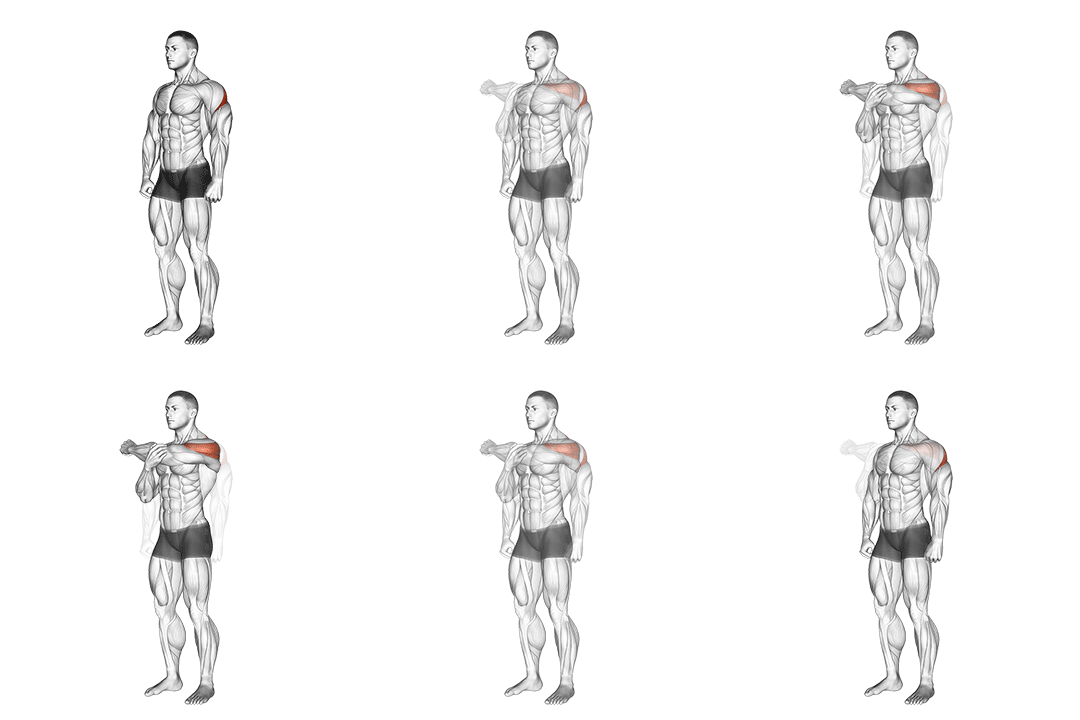
Compare More Exercises
Use our free comparison tool to analyze any two exercises head-to-head.
Compare Exercises