

L-pull-up vs Pull-up: Complete Comparison Guide
L-pull-up vs Pull-up — you want the strongest, most effective back workout for your goals. This comparison walks you through how each move loads the lats, which secondary muscles light up, the equipment and space you need, and clear programming tips (rep ranges, progressions, and technique cues). I’ll explain the biomechanics behind each lift — hip angle, scapular mechanics, and the force vectors that determine muscle emphasis — so you can pick the right exercise or combine both in a structured plan.
Exercise Comparison
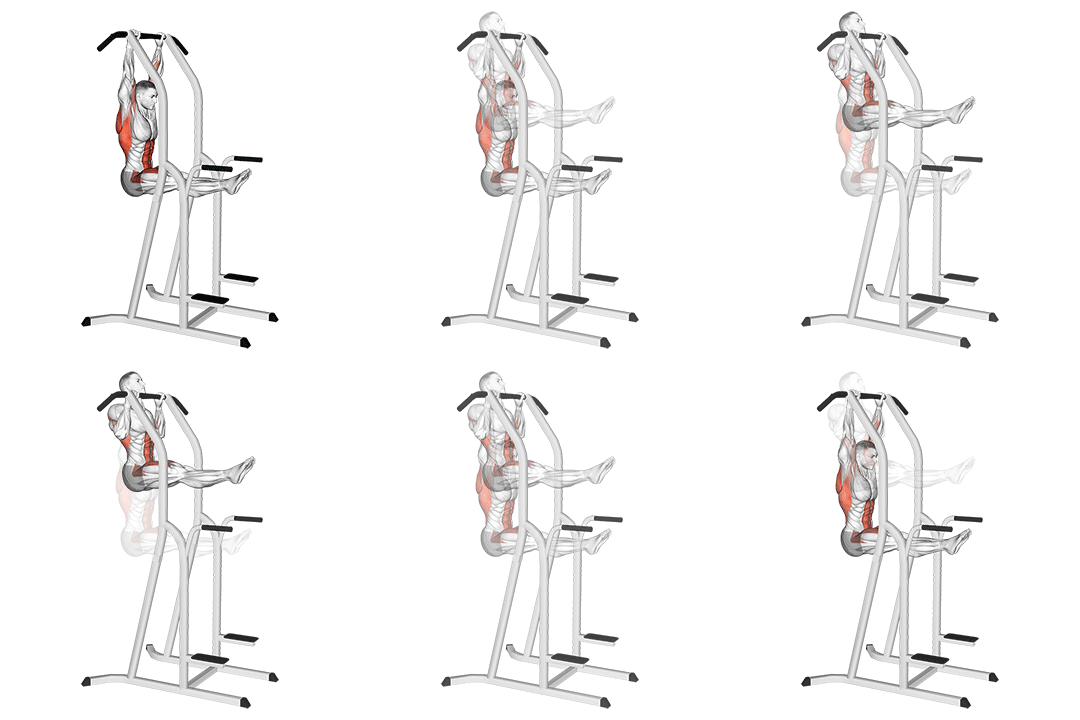
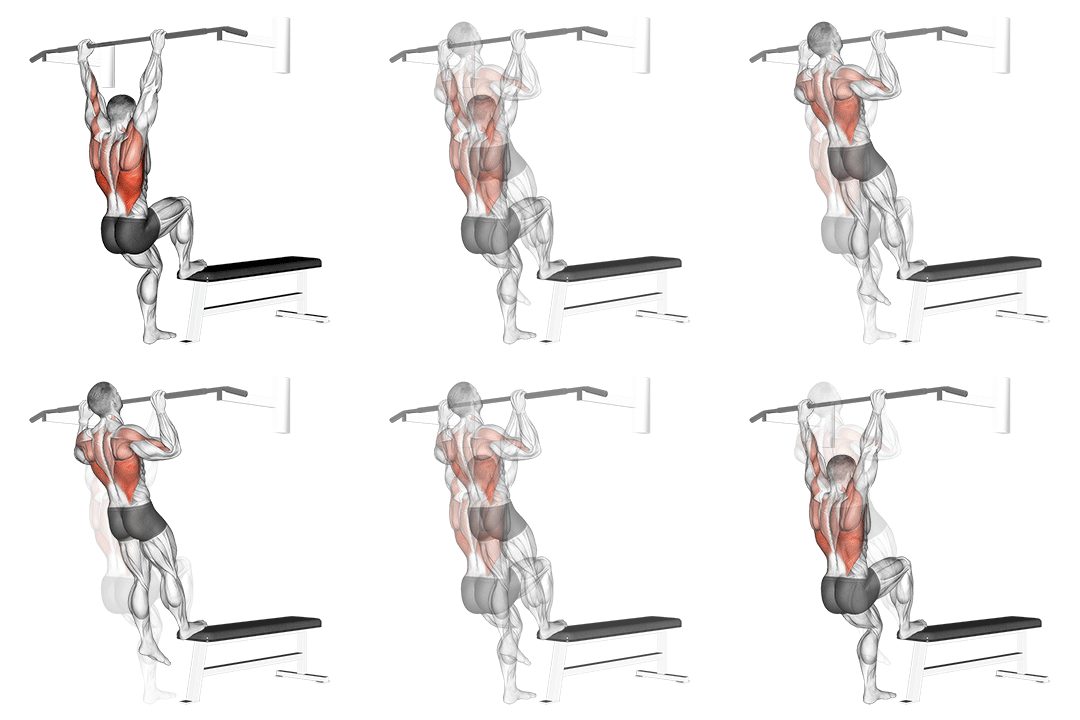
L-pull-up
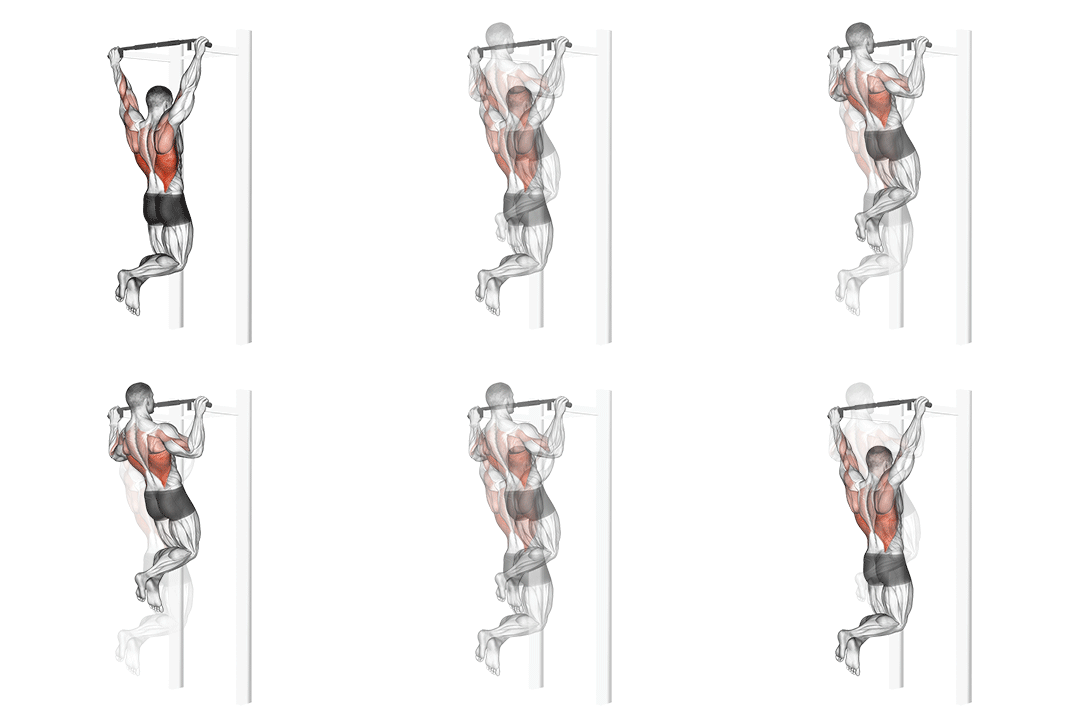
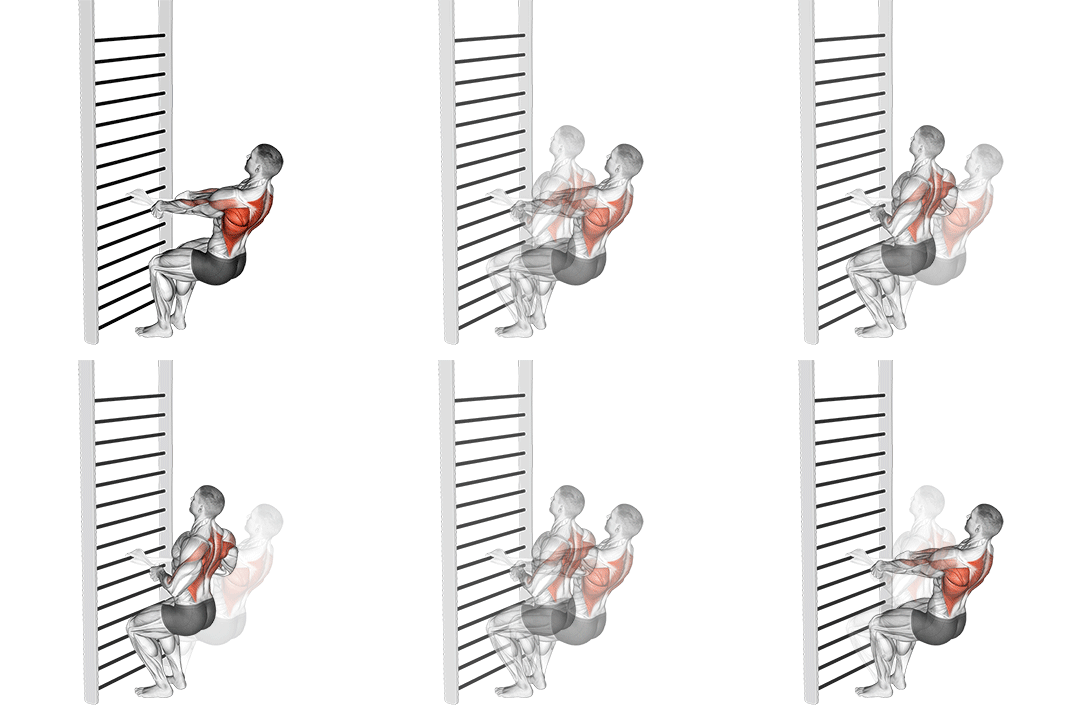
Pull-up
Head-to-Head Comparison
| Attribute | L-pull-up | Pull-up |
|---|---|---|
| Target Muscle |
Lats
|
Lats
|
| Body Part |
Back
|
Back
|
| Equipment |
Body-weight
|
Body-weight
|
| Difficulty |
Intermediate
|
Advanced
|
| Movement Type |
Compound
|
Compound
|
| Secondary Muscles |
2
|
2
|
Secondary Muscles Activated
L-pull-up
Pull-up
Visual Comparison
Overview
L-pull-up vs Pull-up — you want the strongest, most effective back workout for your goals. This comparison walks you through how each move loads the lats, which secondary muscles light up, the equipment and space you need, and clear programming tips (rep ranges, progressions, and technique cues). I’ll explain the biomechanics behind each lift — hip angle, scapular mechanics, and the force vectors that determine muscle emphasis — so you can pick the right exercise or combine both in a structured plan.
Key Differences
- Difficulty levels differ: L-pull-up is intermediate, while Pull-up is advanced.
- Both exercises target the Lats using Body-weight. The main differences are in their movement patterns and muscle activation angles.
Pros & Cons
L-pull-up
+ Pros
- Combines lat development with significant anterior core and hip-flexor strength
- Reduces lower-body swing, forcing strict pulling mechanics and better motor control
- Teaches anti-extension stability useful for gymnastics-style control
- No equipment beyond a high bar; ideal for core-integrated back training
− Cons
- Requires good hip flexor/core baseline and bar clearance
- Hard to add heavy external load while maintaining L position
- Can strain lower back or hip flexors if attempted without progressions
Pull-up
+ Pros
- Superior for pure pulling strength and progressive overload (weighted variations)
- Easily scalable with bands, negatives, and different grips
- Allows full ROM and higher peak lat force production
- More practical for programming strength (low-rep sets) and hypertrophy (6–12 reps)
− Cons
- Advanced for beginners; often requires months of assistance work
- Kipping or poor technique can increase shoulder stress
- Less core demand unless intentionally paired with L-sit or leg raise variations
When Each Exercise Wins
Pull-ups allow progressive overload (weighted reps) and consistent full ROM, which are key for muscle growth. Program 6–12 reps per set with 3–4 sets and controlled tempo to maximize time under tension for the lats and biceps.
You can add external load and focus on low-rep, high-intensity sets (1–5 reps) with pull-ups to increase maximal pulling force. The vertical pull vector and ability to overload make it superior for improving raw pulling strength.
Relative to a strict unassisted pull-up, the L-pull-up can be easier to scale as you build core control and anti-extension strength via progressions (tuck-L, single-leg L). It teaches body tension and control before you add heavy pulling strength work.
Pull-ups are more adaptable to home setups with bands, doorway bars, or negative reps. They require less vertical clearance than a full L-sit hold and are simpler to regress or progress in confined spaces.
Frequently Asked Questions
Can I do both L-pull-up and Pull-up in the same workout?
Yes. Use L-pull-ups early to reinforce body tension and core control, then follow with weighted or high-volume pull-ups for hypertrophy. Keep total pulling volume reasonable (10–20 working sets per week per muscle) to avoid overtraining.
Which exercise is better for beginners?
For many beginners the L-pull-up is a more approachable skill to build body tension, but you should still use regressions like band-assisted pull-ups, negatives, and tuck-L progressions. If you lack pulling strength, prioritize assisted pull-ups and horizontal rows first.
How do the muscle activation patterns differ?
The L-pull-up increases anterior core and hip-flexor co-contraction due to the 90° hip angle, shifting stabilization demand away from lower-body momentum. The standard pull-up produces a purer vertical pull with greater concentric force through the lats and biceps, allowing higher peak lat recruitment when overloaded.
Can Pull-up replace L-pull-up?
Yes if your goal is pure strength or hypertrophy; pull-ups are easier to overload and program. Keep L-pull-up variations in your plan if you want to improve core integration, anti-extension strength, and stricter body control alongside your pulling work.
Expert Verdict
Choose the L-pull-up when your goal is to develop integrated core stability with lat strength and improve body control — it forces anti-extension and builds hip-flexor and rectus abdominis endurance while training the lats. Use it for 3–5 sets of 4–8 strict reps or timed holds (10–30 seconds) after core prep. Choose the pull-up when you need raw pulling strength or hypertrophy: it’s easier to overload progressively and hit 3–5 heavy sets in the 1–5 rep range or 3–4 sets of 6–12 for muscle growth. Ideally, cycle both: use L-pull-ups for control phases and pull-ups for strength/hypertrophy blocks to get balanced back development.
Also Compare
More comparisons with L-pull-up

Compare More Exercises
Use our free comparison tool to analyze any two exercises head-to-head.
Compare Exercises