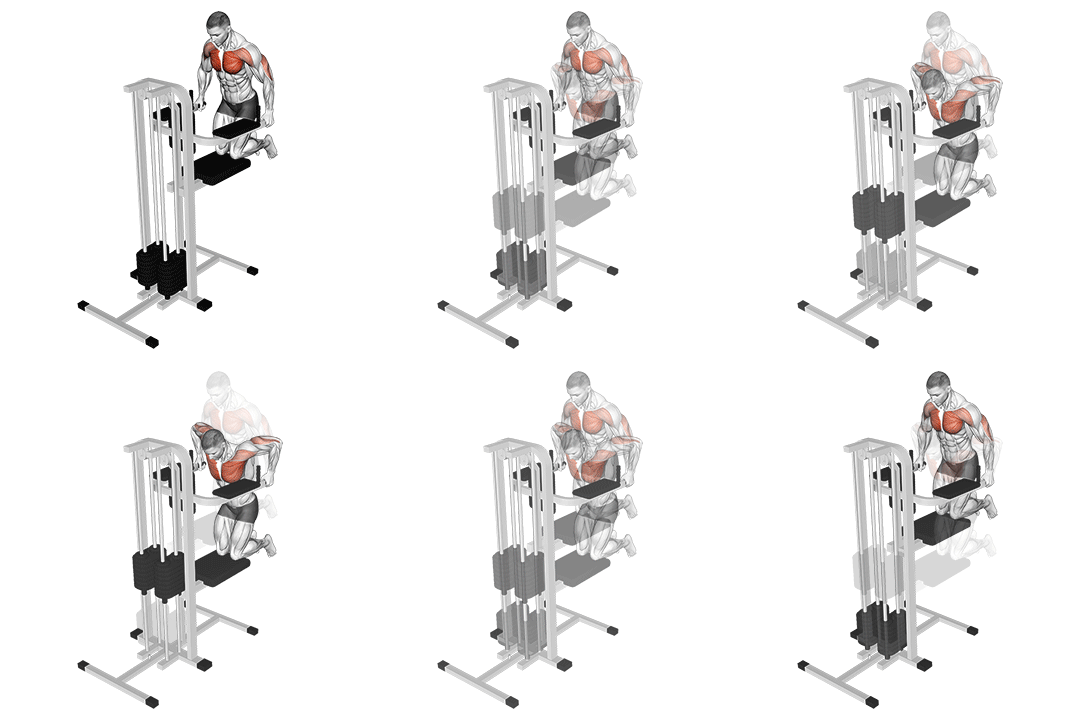
Lever Chest Press vs Lever Incline Chest Press V. 2

Compare target muscles, equipment, difficulty, movement type, and secondary muscles for Lever Chest Press and Lever Incline Chest Press V. 2.

Change comparison Share

Get comparison link

Select the link and use your device's Copy command.

Comparison overview

AI-generated
Lever Chest Press vs Lever Incline Chest Press V. 2 — if you want a stronger, fuller chest you need to pick the right lever variation. In this guide you’ll learn how each machine changes force vectors, which part of the pectorals lights up more, the technique cues you should use, and clear rep ranges for strength and hypertrophy. I’ll compare muscle activation, equipment needs, learning curve, and injury risk so you can choose the right press for your goals and weak points.

Exercise Comparison

Exercise A
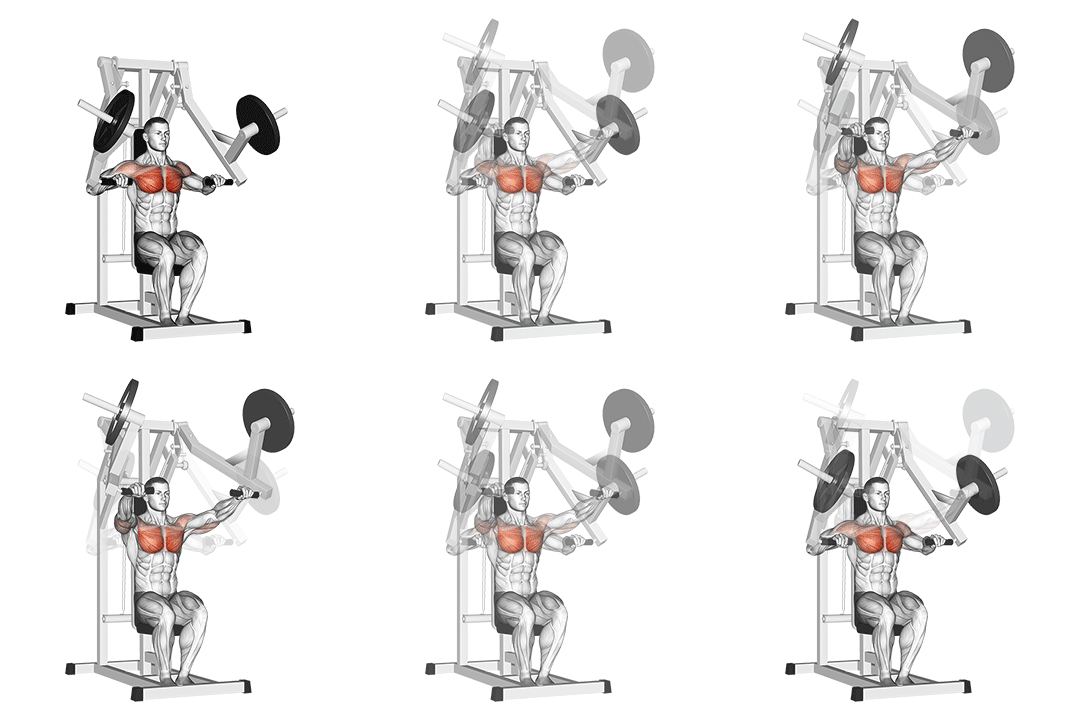
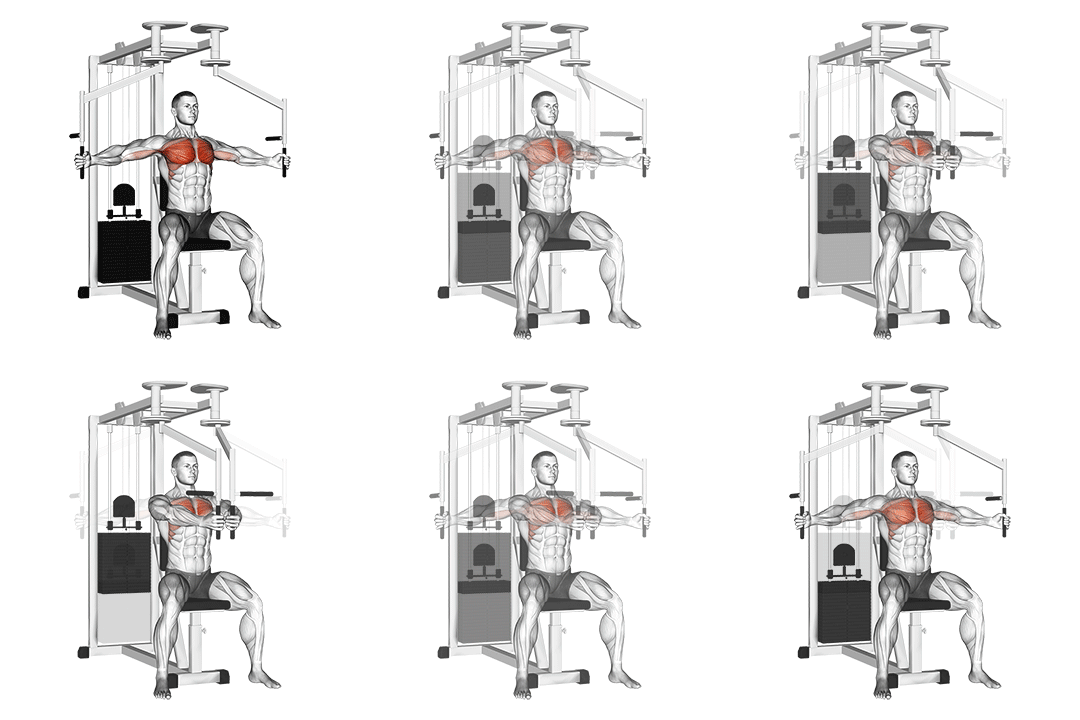
Lever Chest Press demonstration

Lever Chest Press

Target Pectorals
Equipment Lever
Body Part Chest
Difficulty Beginner
Movement Compound
Secondary Muscles
Triceps Shoulders
VS
Exercise B
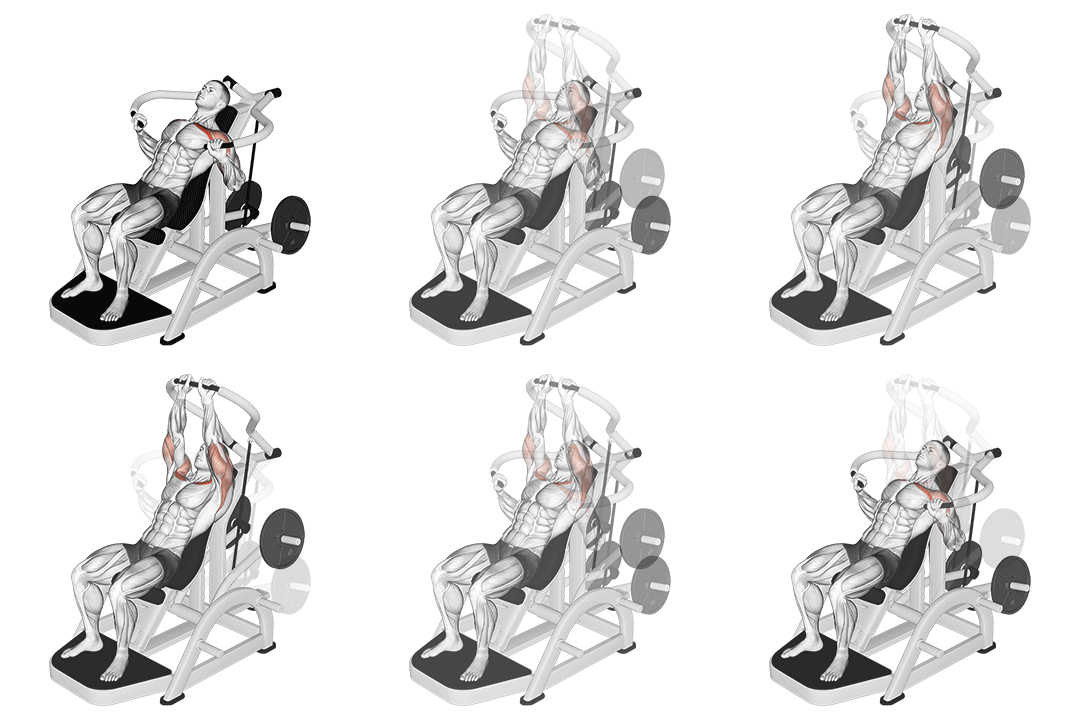
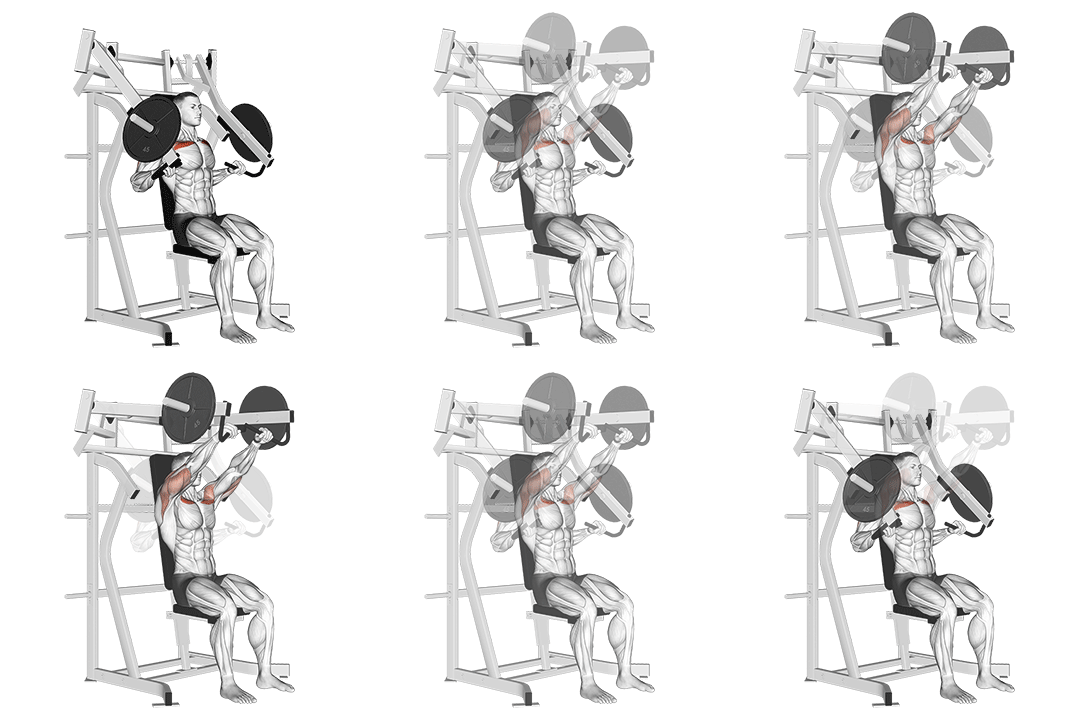
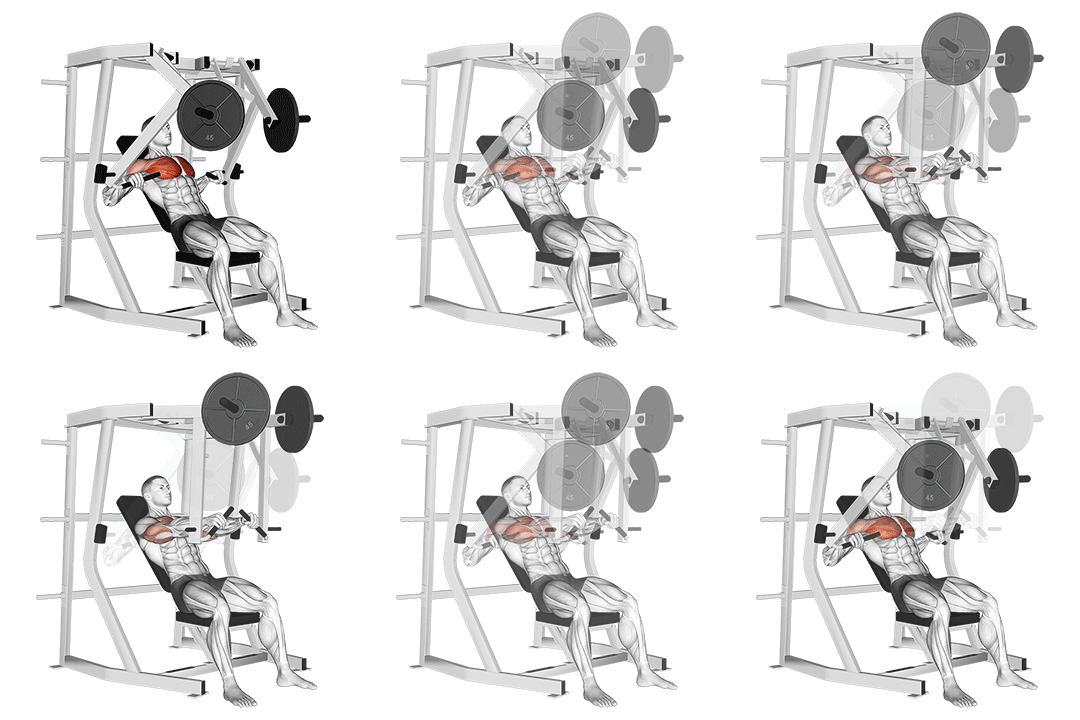
Lever Incline Chest Press V. 2 demonstration

Lever Incline Chest Press V. 2

Target Pectorals
Equipment Lever
Body Part Chest
Difficulty Intermediate
Movement Compound
Secondary Muscles
Triceps Shoulders

Head-to-Head Comparison

Different values are marked. These are catalogue attributes, not performance scores.

Muscles used

Listed target and secondary muscles, shown on the body. Locations, not activation or strength scores.

  • Target
  • Secondary
  • Not highlighted

Lever Chest Press

Front
Lever Chest Press: front muscle locationsSolid: listed target. Striped: listed secondary. Grey: not highlighted. Locations, not activation or strength scores. See the muscle names below.
Back
Lever Chest Press: back muscle locationsSolid: listed target. Striped: listed secondary. Grey: not highlighted. Locations, not activation or strength scores. See the muscle names below.
Target
Pectorals
Secondary
Triceps, Shoulders

Not shown on diagram: Shoulders. These labels do not identify a precise region on this map.

Lever Incline Chest Press V. 2

Front
Lever Incline Chest Press V. 2: front muscle locationsSolid: listed target. Striped: listed secondary. Grey: not highlighted. Locations, not activation or strength scores. See the muscle names below.
Back
Lever Incline Chest Press V. 2: back muscle locationsSolid: listed target. Striped: listed secondary. Grey: not highlighted. Locations, not activation or strength scores. See the muscle names below.
Target
Pectorals
Secondary
Triceps, Shoulders

Not shown on diagram: Shoulders. These labels do not identify a precise region on this map.

Grey does not mean a muscle is unused. The diagrams show only the mapped catalogue labels.

Attribute Lever Chest Press Lever Incline Chest Press V. 2
Target Muscle
Pectorals
Pectorals
Body Part
Chest
Chest
Equipment
Lever
Lever
Difficulty Different
Beginner
Intermediate
Movement Type
Compound
Compound
Secondary Muscles
Triceps, Shoulders
Triceps, Shoulders

Visual Comparison

An illustrative 1–10 profile derived from catalog difficulty, equipment, and listed-muscle fields—not measured performance or muscle activation.

Key Differences

  • Difficulty levels differ: Lever Chest Press is beginner, while Lever Incline Chest Press V. 2 is intermediate.
  • Both exercises target the Pectorals using Lever. The catalogue does not establish which exercise is better for an individual goal.

Muscle comparison

Shared target muscles

Both presses target the pectoralis major as the prime mover and produce horizontal adduction at the shoulder. The flat Lever Chest Press drives force more horizontally across the sternocostal fibers, maximizing mid-pec stress. The Lever Incline Chest Press V. 2 shifts the line of pull upward (usually a 30–45° bench angle), biasing the clavicular head and increasing upper-pec recruitment relative to flat pressing.

Secondary muscle differences

Secondary recruitment differs by vector: the flat lever press loads the sternal pecs and the anterior deltoid less aggressively, letting the triceps contribute strongly on lockout. The incline version increases anterior deltoid involvement and can raise shoulder (rotator cuff) demand by ~10–20% due to the steeper humeral elevation, while triceps contribution may fall slightly because of the altered length-tension across the pecs.

Muscle involvement analysis

During the flat press the pecs operate at a more favorable length-tension for producing peak force at mid-range; EMG-style patterns show high mid-pec activation during concentric drive. On a 30–45° incline the clavicular fibers are pre-stretched and active earlier in the ROM, shifting peak activation toward the top half of the lift and changing torque around the glenohumeral joint. Force vectors rotate superiorly, so shoulder torque increases while horizontal adduction torque decreases.

Equipment and setup

Lever Chest Press: setup

Lever Chest Press requires a lever machine with a horizontal or near-horizontal pressing path, an adjustable seat for proper grasp alignment, and enough load stacks to hit progressive resistance.

Lever Incline Chest Press V. 2: setup

Lever Incline Chest Press V. 2 needs the same lever station but with an adjustable incline arm path or a fixed 30–45° incline attachment, plus seat adjustment to set the shoulder line under the handles.

Access and practicality

Lever Chest Press — most gyms have a flat lever press and it’s easier to set up. The incline variant depends on a machine with an incline path; if your gym lacks that attachment you can’t perform V. 2.

Learning and progression

Learning the movements

Lever Chest Press is easier to learn — it’s beginner friendly because the path is fixed, stability demands are lower, and setup is straightforward. Lever Incline Chest Press V. 2 has an intermediate learning curve due to seat/angle setup and greater shoulder stabilization requirements.

Progression considerations

Lever Incline Chest Press V. 2 offers nuanced progression for upper-chest development by manipulating angle (30° vs 45°) and range of motion, but the flat Lever Chest Press allows faster linear load progression and heavier absolute loads for overall chest strength.

Limitations and precautions

Incline variant has a slightly higher shoulder strain risk when performed at steep angles (>45°) or with poor scapular control. Flat lever pressing has lower acute injury risk for most lifters, but heavy loading without scapular stability can still stress the sternoclavicular joint and triceps tendons.

Pros & Cons

Lever Chest Press

+ Pros

  • Simple setup and body alignment for beginners
  • Allows heavier absolute loads due to a more favorable force vector
  • Strong mid-pectoralis activation for mass (good for overall chest thickness)
  • Fixed path reduces stabilization requirements and technique variability

Cons

  • Less emphasis on upper chest (clavicular head)
  • Limited shoulder flexion ROM compared with incline
  • Can under-develop upper pecs if used exclusively

Lever Incline Chest Press V. 2

+ Pros

  • Biases the clavicular head for upper-chest development
  • Alters force vector to improve chest shape and balance
  • Useful for correcting a low or droopy chest shelf by raising the insertion line
  • Allows angle manipulation (30–45°) to fine-tune activation

Cons

  • Higher shoulder demand and greater need for scapular control
  • Generally allows lower absolute loads than flat press
  • Steeper learning curve; setup errors change muscle targeting

When Each Exercise Wins

1
For muscle hypertrophy: Lever Chest Press

For broad pectoral mass the flat lever press lets you use heavier loads and maintain favorable length-tension through the mid-range. Pair it with incline variations for upper-pec detail, but flat pressing drives overall cross-sectional growth efficiently in the 6–12 rep range.

2
For strength gains: Lever Chest Press

The horizontal force vector and more stable setup let you progressively overload with heavier weight and lower reps (3–5), improving maximal pressing strength and triceps lockout.

3
For beginners: Lever Chest Press

Beginners benefit from the fixed path, easier setup, and lower shoulder demand of the flat lever press, which lets you learn pressing mechanics and build baseline strength safely.

4
For home workouts: Lever Chest Press

Most home gyms that include a single lever station will have a flat press path rather than an incline attachment. If you have to pick one machine for limited space, the flat lever chest press covers the most bases.

Frequently Asked Questions

Can I do both Lever Chest Press and Lever Incline Chest Press V. 2 in the same workout?

Yes — pairing them works well. Start with the heavier flat Lever Chest Press for 3–5 sets of 4–8 reps, then follow with 2–3 sets of 8–12 reps on the Lever Incline Chest Press V. 2 to target the upper pecs and increase time under tension.

Which exercise is better for beginners?

Beginners should start with the Lever Chest Press because the fixed path simplifies technique and reduces shoulder demand. Once you have stable pressing mechanics and scapular control, add the incline V. 2 to target the upper chest.

How do the muscle activation patterns differ?

Flat lever pressing produces peak activation in the mid-pectoral fibers at mid-range due to a more horizontal force vector and favorable length-tension. The incline (30–45°) shifts peak activation upward, recruiting more clavicular fibers earlier in the ROM and increasing anterior deltoid torque.

Can Lever Incline Chest Press V. 2 replace Lever Chest Press?

Not entirely — the incline version is great for upper-pec focus but typically limits absolute load and increases shoulder demand. If your goal is maximal strength or overall mass, keep the flat Lever Chest Press as a staple and use incline as a complementary variation.

Comparison Summary

Use the Lever Chest Press as your foundation if you want raw pressing strength and broad pectoral mass — it’s beginner friendly, allows heavier loads, and produces strong mid-pec activation. Add Lever Incline Chest Press V. 2 when you need to prioritize the clavicular head, improve upper-chest shape, or correct a weak top-end range; set the bench angle to 30°–45° and target 8–12 reps to maximize upper-pec stimulus. For balanced development, rotate both: prioritize flat pressing for 6–8 weeks, then cycle 4–6 weeks of incline emphasis to manage adaptation and shoulder health.

Exercise instructions

Steps from the exercise catalogue. Read the full sequence before starting.

Lever Chest Press

  1. Adjust the seat height and position yourself on the machine with your back flat against the pad.
  2. Grasp the handles with an overhand grip and position your elbows at a 90-degree angle.
  3. Push the handles forward until your arms are fully extended, exhaling during the movement.
Read remaining steps for Lever Chest Press
  1. Pause briefly at the end of the movement, then slowly return to the starting position, inhaling as you do so.
  2. Repeat for the desired number of repetitions.

Lever Incline Chest Press V. 2

  1. Adjust the seat height and backrest angle on the leverage machine to a comfortable position.
  2. Sit on the machine with your back against the backrest and your feet flat on the floor.
  3. Grasp the handles with an overhand grip and position your hands slightly wider than shoulder-width apart.
Read remaining steps for Lever Incline Chest Press V. 2
  1. Push the handles forward and away from your body until your arms are fully extended, but without locking your elbows.
  2. Pause for a moment at the fully extended position, then slowly bend your elbows and lower the handles back towards your chest.
  3. Repeat for the desired number of repetitions.

Also Compare
Compare another pair

Choose two exercises to see their differences side by side.

Compare Exercises