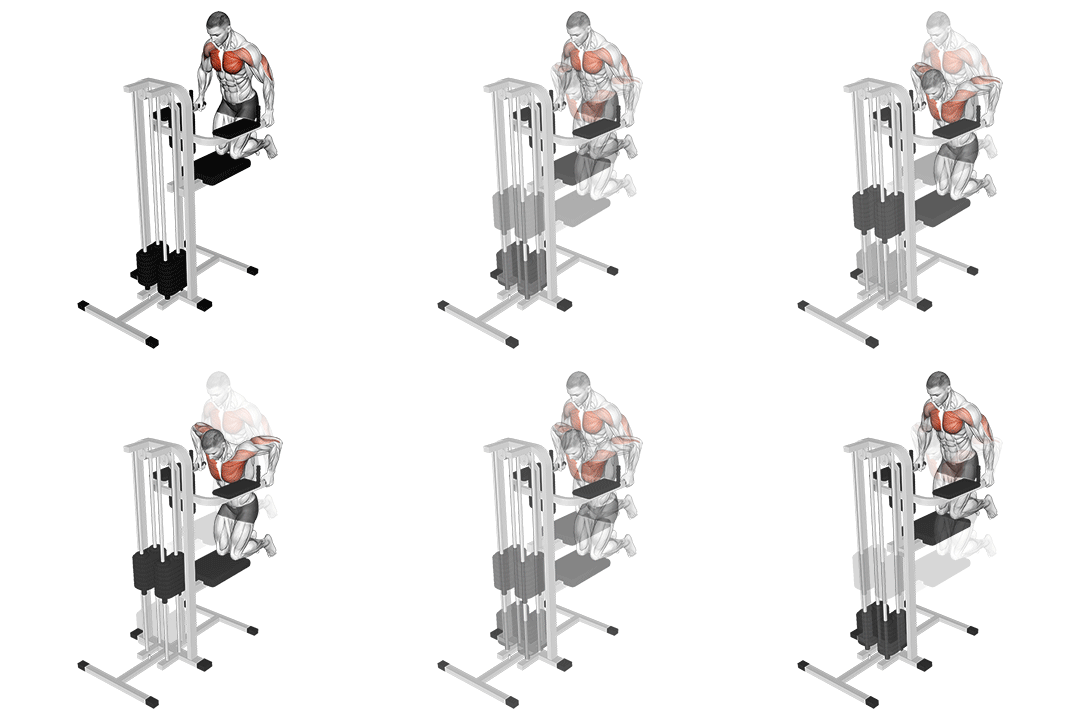
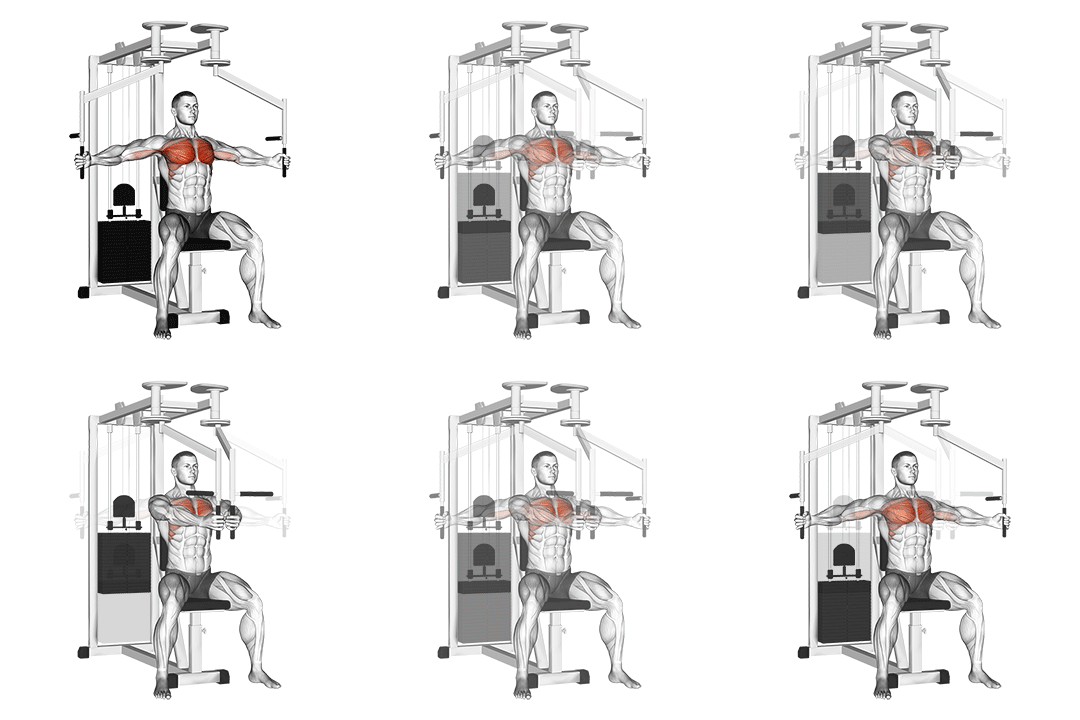
Lever Decline Chest Press vs Lever Incline Chest Press V. 2

Compare target muscles, equipment, difficulty, movement type, and secondary muscles for Lever Decline Chest Press and Lever Incline Chest Press V. 2.

Change comparison Share

Get comparison link

Select the link and use your device's Copy command.

Comparison overview

AI-generated
Lever Decline Chest Press vs Lever Incline Chest Press V. 2 — if you're choosing which lever press to prioritize in your program, this guide has your back. I'll walk you through how each variation shifts load across the pectorals, how joint angles change muscle recruitment, practical technique cues, rep-range recommendations (6–12 for size, 3–6 for strength), and when to pick one over the other based on your goals and shoulder health. Read on for biomechanical explanations, actionable coaching tips, and clear programming advice so you can pick the right press for steady muscle growth and strength progress.

Exercise Comparison

Exercise A
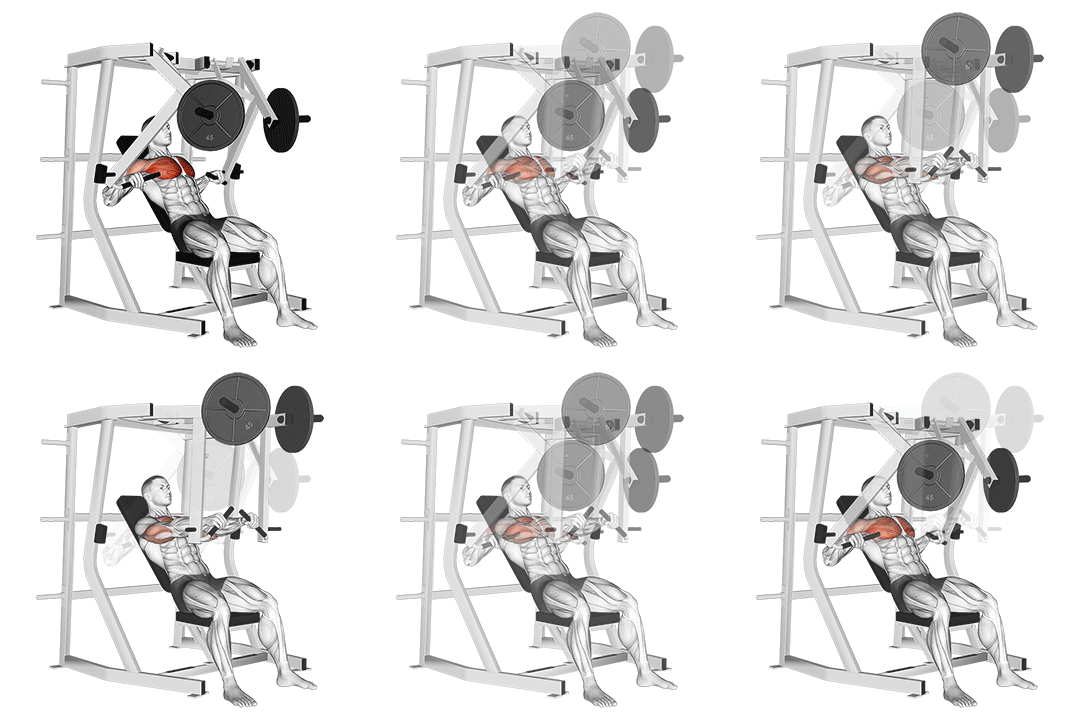
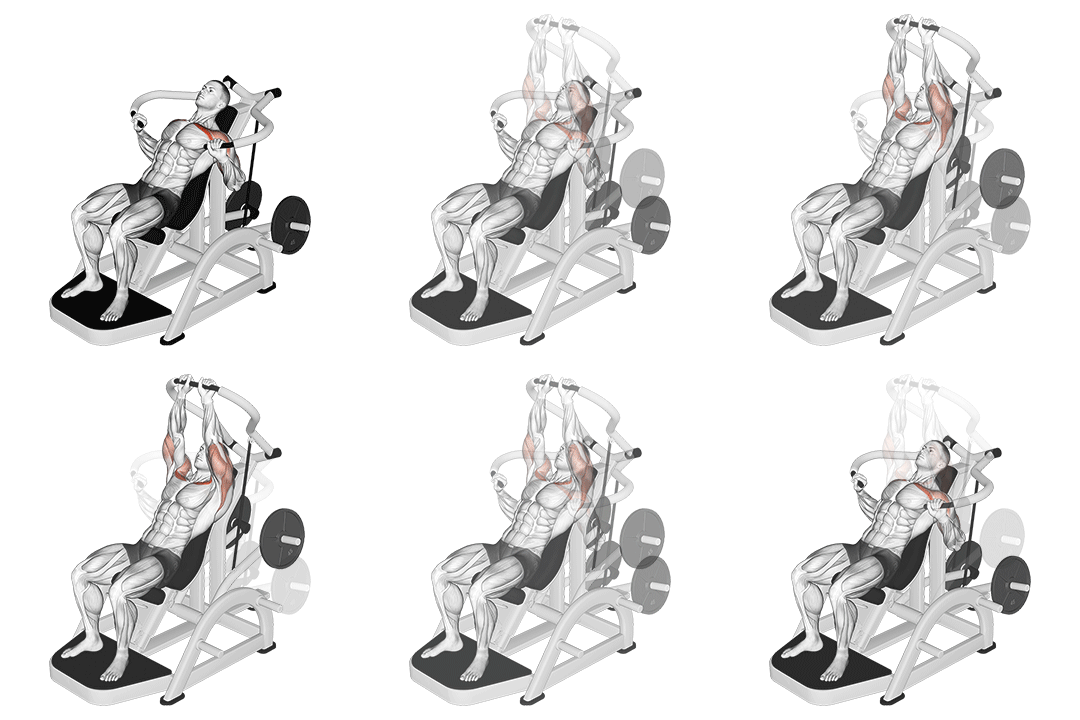
Lever Decline Chest Press demonstration

Lever Decline Chest Press

Target Pectorals
Equipment Lever
Body Part Chest
Difficulty Intermediate
Movement Compound
Secondary Muscles
Triceps Shoulders
VS
Exercise B
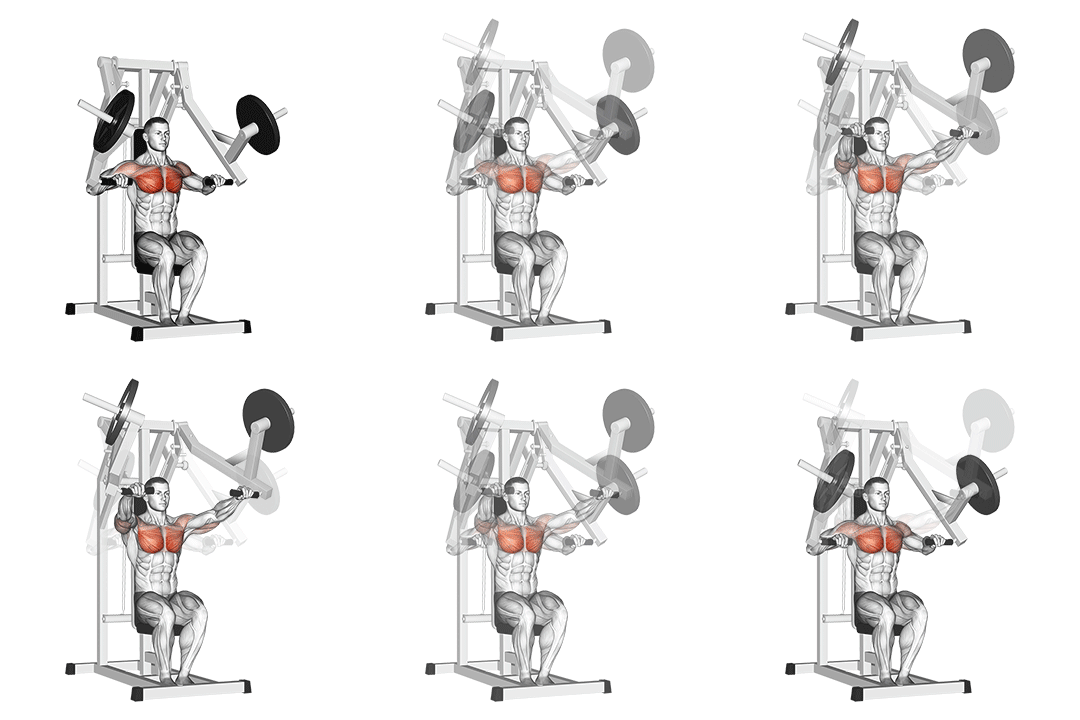
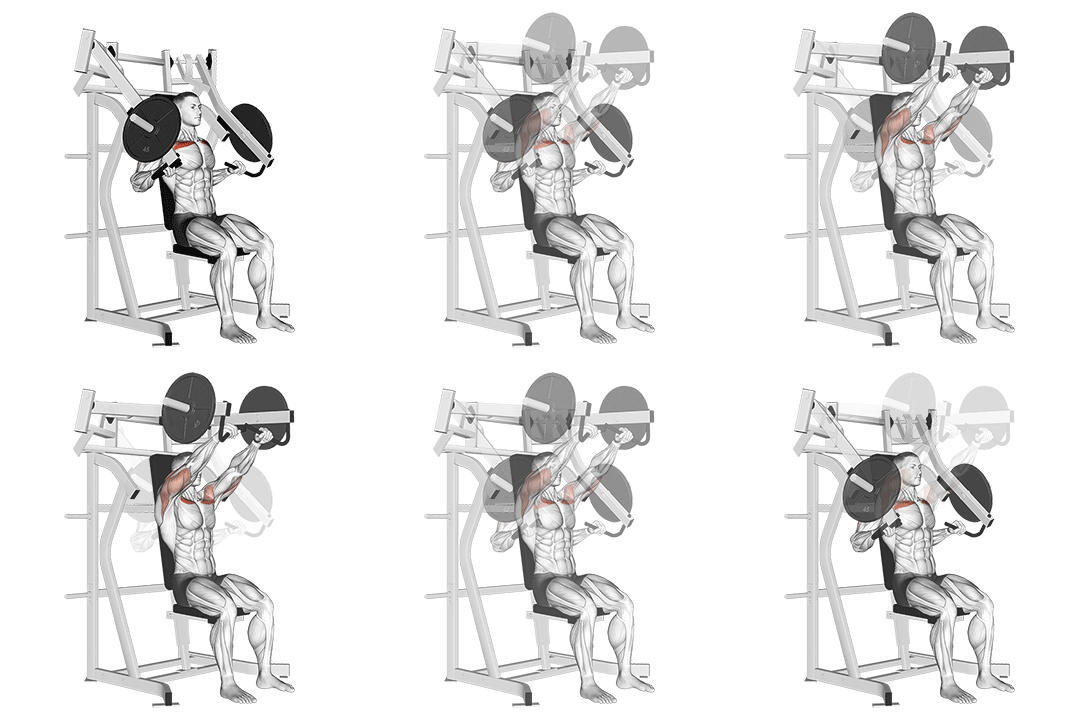
Lever Incline Chest Press V. 2 demonstration

Lever Incline Chest Press V. 2

Target Pectorals
Equipment Lever
Body Part Chest
Difficulty Intermediate
Movement Compound
Secondary Muscles
Triceps Shoulders

Head-to-Head Comparison

Different values are marked. These are catalogue attributes, not performance scores.

Muscles used

Listed target and secondary muscles, shown on the body. Locations, not activation or strength scores.

  • Target
  • Secondary
  • Not highlighted

Lever Decline Chest Press

Front
Lever Decline Chest Press: front muscle locationsSolid: listed target. Striped: listed secondary. Grey: not highlighted. Locations, not activation or strength scores. See the muscle names below.
Back
Lever Decline Chest Press: back muscle locationsSolid: listed target. Striped: listed secondary. Grey: not highlighted. Locations, not activation or strength scores. See the muscle names below.
Target
Pectorals
Secondary
Triceps, Shoulders

Not shown on diagram: Shoulders. These labels do not identify a precise region on this map.

Lever Incline Chest Press V. 2

Front
Lever Incline Chest Press V. 2: front muscle locationsSolid: listed target. Striped: listed secondary. Grey: not highlighted. Locations, not activation or strength scores. See the muscle names below.
Back
Lever Incline Chest Press V. 2: back muscle locationsSolid: listed target. Striped: listed secondary. Grey: not highlighted. Locations, not activation or strength scores. See the muscle names below.
Target
Pectorals
Secondary
Triceps, Shoulders

Not shown on diagram: Shoulders. These labels do not identify a precise region on this map.

Grey does not mean a muscle is unused. The diagrams show only the mapped catalogue labels.

Attribute Lever Decline Chest Press Lever Incline Chest Press V. 2
Target Muscle
Pectorals
Pectorals
Body Part
Chest
Chest
Equipment
Lever
Lever
Difficulty
Intermediate
Intermediate
Movement Type
Compound
Compound
Secondary Muscles
Triceps, Shoulders
Triceps, Shoulders

Visual Comparison

An illustrative 1–10 profile derived from catalog difficulty, equipment, and listed-muscle fields—not measured performance or muscle activation.

Key Differences

  • Both exercises target the Pectorals using Lever. The catalogue does not establish which exercise is better for an individual goal.

Muscle comparison

Shared target muscles

Both presses primarily load the pectoralis major, driving horizontal adduction and shoulder flexion. The difference comes from torso angle: decline puts the force vector more horizontal and slightly downward (decline ~15–30°), biasing the sternal/lower pec fibers; incline shifts the vector upward (incline ~30–45°), increasing emphasis on the clavicular/upper fibers. In practical terms, both move the same joint actions, but the proportion of work between upper and lower chest changes with the bench angle and lever arm path.

Secondary muscle differences

Triceps involvement rises in both, but the decline press often allows greater triceps contribution because the pressing path shortens and allows heavier loads. The incline press recruits the anterior deltoid more due to increased shoulder flexion; expect roughly higher deltoid load at steeper incline angles. Scapular stabilizers and rotator cuff muscles work in both, but the incline increases demands on shoulder flexion control and scapular upward rotation.

Muscle involvement analysis

During decline pressing the pec fibers operate at a slightly shorter muscle length at lockout and a larger stretch at the bottom—this changes length-tension to favor strong horizontal force production. Incline pressing lengthens the clavicular head more and increases torque around the glenohumeral joint, shifting peak EMG toward upper pec and anterior deltoid. Expect peak pectoral activation to occur near mid-range on both, but the specific fiber subset (upper vs lower) varies with angle and hand path.

Equipment and setup

Lever Decline Chest Press: setup

Lever Decline Chest Press requires a decline-capable lever machine or a plate-loaded decline setup, a stable foot platform to prevent sliding, and an adjustable back pad set to ~15–30° decline. The lever arm should allow a smooth arc that keeps the wrist, elbow, and shoulder in line.

Lever Incline Chest Press V. 2: setup

Lever Incline Chest Press V. 2 requires an adjustable lever machine set to an incline of ~30–45°, a supportive back pad to maintain a braced torso, and handles that permit a slightly upward force vector. Proper seat height is critical so the handles track near the mid-chest/clavicle line.

Access and practicality

Lever Incline Chest Press V. 2 — incline lever machines and multi-gyms with incline settings are more common in commercial and home multi-station setups, making the incline version slightly more accessible for most lifters.

Learning and progression

Learning the movements

Incline press is marginally easier to learn because the upward angle encourages a natural pressing arc and clearer shoulder alignment; beginners can find a neutral grip at 30–45° more comfortable. Decline requires attention to foot bracing and torso position to avoid sliding and to maintain safe shoulder mechanics.

Progression considerations

Decline offers greater raw loading potential thanks to a stronger mechanical advantage; that makes it excellent for progressive overload in 3–6 rep strength blocks or heavy 6–8 rep hypertrophy work. Incline still scales well with microloading and higher rep ranges (8–12) and is better for isolating upper-chest development and balanced muscle shaping.

Limitations and precautions

Relative injury risk is slightly higher with incline for lifters with anterior shoulder pain because steeper shoulder flexion increases stress on the rotator cuff. Decline can be safer for the shoulder joint but raises risk of poor bracing and lumbar/hip instability if foot position or pad angle is incorrect.

Pros & Cons

Lever Decline Chest Press

+ Pros

  • Allows heavier loading due to favorable force vector and braced torso
  • Biases sternal/lower pectoralis for fuller mid-lower chest development
  • Reduces anterior deltoid dominance compared with high incline
  • Good transfer to flat pressing strength because of horizontal vector

Cons

  • Requires secure foot bracing to prevent sliding
  • Less emphasis on upper chest/clavicular fibers
  • Decline machines are less common in some gyms

Lever Incline Chest Press V. 2

+ Pros

  • Targets upper (clavicular) pectoralis more effectively
  • Generally easier to learn and more ergonomic for many lifters
  • More common on commercial lever and selectorized machines
  • Better for balancing chest development and shoulder-line aesthetics

Cons

  • Places more demand on anterior deltoids and rotator cuff
  • May limit absolute loading compared with decline or flat presses
  • Steeper incline angles can aggravate shoulder impingement in some lifters

When Each Exercise Wins

1
For muscle hypertrophy: Lever Decline Chest Press

Decline lets you load the sternal pecs heavier and creates a favorable length-tension relationship for the larger lower chest fibers. Use 6–12 reps with full range and controlled eccentric tempo to maximize mechanical tension and time under load.

2
For strength gains: Lever Decline Chest Press

The more horizontal force vector and stronger mechanical advantage let you handle heavier weights, making decline presses ideal for low-rep strength cycles (3–6 reps). The similar bar path to competition pressing helps carry over to other heavy horizontal presses.

3
For beginners: Lever Incline Chest Press V. 2

Incline pressing at 30–45° is more intuitive, reduces unwanted shoulder extension, and helps learners find a stable pressing path. It also balances upper chest work and encourages safer shoulder mechanics while you build technique.

4
For home workouts: Lever Incline Chest Press V. 2

Incline-capable lever or multi-gyms are more commonly available in compact home setups than dedicated decline stations. An incline machine covers more pressing angles in a smaller footprint, giving better utility for limited space.

Frequently Asked Questions

Can I do both Lever Decline Chest Press and Lever Incline Chest Press V. 2 in the same workout?

Yes — pairing them works well if you split volume: use a heavy decline set first for strength (3–6 reps) then add incline sets for upper-chest hypertrophy (8–12 reps). Monitor total volume to avoid overworking the pecs and triceps in one session.

Which exercise is better for beginners?

Lever Incline Chest Press V. 2 is generally better for beginners because the 30–45° incline encourages a safer shoulder position and an easier-to-learn pressing arc. It helps establish control before adding heavy decline loading.

How do the muscle activation patterns differ?

Decline shifting the bench 15–30° moves the force vector more horizontally, increasing sternal/lower-pec recruitment and allowing higher absolute loads. Incline at 30–45° increases clavicular-head and anterior deltoid activation by placing the shoulder in greater flexion and lengthening the upper pec fibers during the eccentric.

Can Lever Incline Chest Press V. 2 replace Lever Decline Chest Press?

It can replace decline if your goal is upper-chest development or you lack decline equipment, but it won't match the same heavy loading profile for lower-pec emphasis. Use incline to balance your chest routine, but keep decline in rotation when you want maximal horizontal force and sternal hypertrophy.

Comparison Summary

Choose the Lever Decline Chest Press when your priority is maximal loading of the sternal/lower pectoralis and raw strength progress; its horizontal vector and braced position let you handle heavier weights and stimulate a large portion of the chest effectively. Pick the Lever Incline Chest Press V. 2 when you need more upper-chest focus, a gentler learning curve, or better machine availability—use 8–12 reps to emphasize hypertrophy of the clavicular head. For smart programming, cycle both: include decline-focused blocks for heavy loading and incline-focused phases for balanced chest shape and shoulder health.

Exercise instructions

Steps from the exercise catalogue. Read the full sequence before starting.

Lever Decline Chest Press

  1. Adjust the seat height and backrest of the leverage machine to a comfortable position.
  2. Sit on the machine with your back against the backrest and your feet flat on the floor.
  3. Grasp the handles with an overhand grip and position your hands slightly wider than shoulder-width apart.
Read remaining steps for Lever Decline Chest Press
  1. Push the handles forward and away from your body until your arms are fully extended.
  2. Slowly lower the handles back towards your chest, keeping your elbows slightly bent.
  3. Pause for a moment at the bottom, then push the handles back to the starting position.
  4. Repeat for the desired number of repetitions.

Lever Incline Chest Press V. 2

  1. Adjust the seat height and backrest angle on the leverage machine to a comfortable position.
  2. Sit on the machine with your back against the backrest and your feet flat on the floor.
  3. Grasp the handles with an overhand grip and position your hands slightly wider than shoulder-width apart.
Read remaining steps for Lever Incline Chest Press V. 2
  1. Push the handles forward and away from your body until your arms are fully extended, but without locking your elbows.
  2. Pause for a moment at the fully extended position, then slowly bend your elbows and lower the handles back towards your chest.
  3. Repeat for the desired number of repetitions.

Also Compare

Compare another pair

Choose two exercises to see their differences side by side.

Compare Exercises