Leverage Decline Chest Press vs Smith Machine Incline Bench Press

Compare target muscles, equipment, difficulty, movement type, and secondary muscles for Leverage Decline Chest Press and Smith Machine Incline Bench Press.

Change comparison Share

Get comparison link

Select the link and use your device's Copy command.

Comparison overview

AI-generated
Leverage Decline Chest Press vs Smith Machine Incline Bench Press — you’re choosing between two machine-based chest builders. If you want clear choices, this guide lays out which exercise hits the pectorals differently, how the shoulders and triceps assist, and which option fits beginners, strength work, or hypertrophy phases. You’ll get technique cues, angle and force-vector details, rep ranges (3–6 for strength, 6–12 for hypertrophy), and actionable recommendations so you can pick the best movement for your routine and avoid common setup and form mistakes.

Exercise Comparison

Exercise A
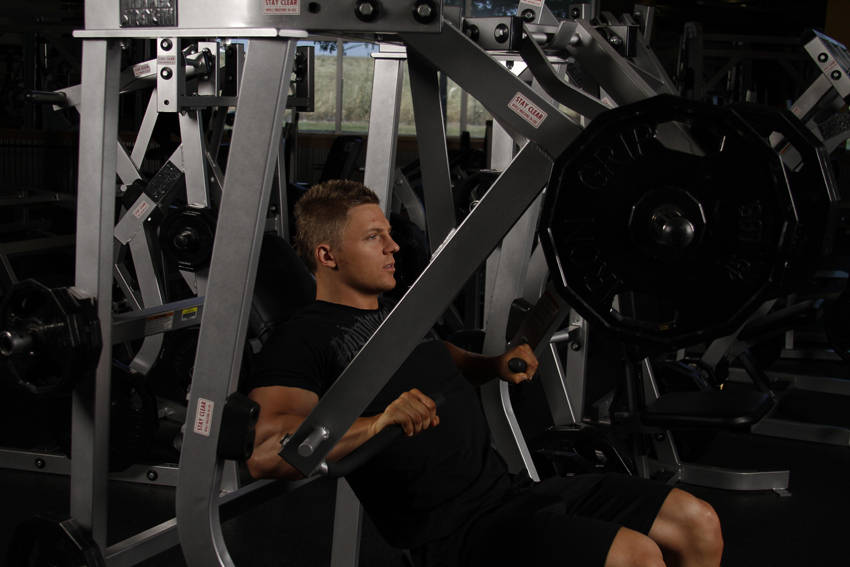
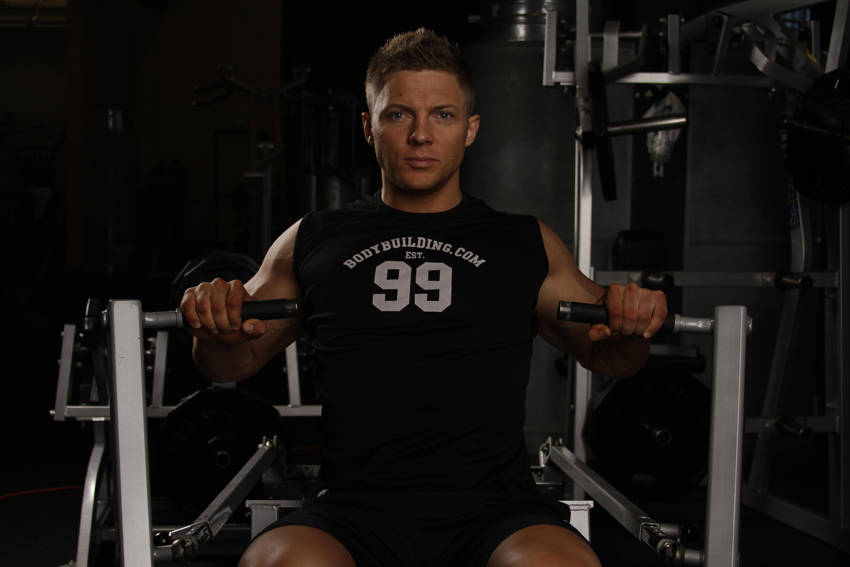
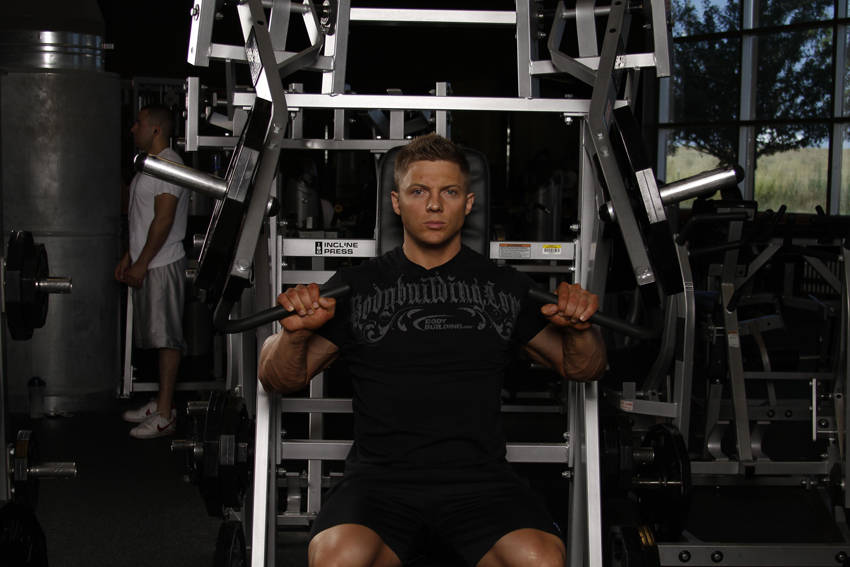
Leverage Decline Chest Press demonstration

Leverage Decline Chest Press

Target Pectorals
Equipment Machine
Body Part Chest
Difficulty Beginner
Movement Compound
Secondary Muscles
Shoulders Triceps
VS
Exercise B
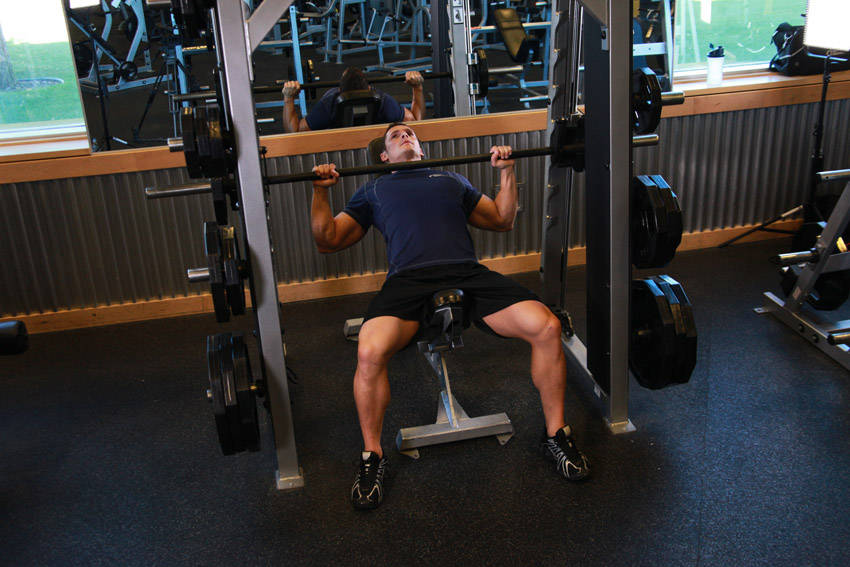
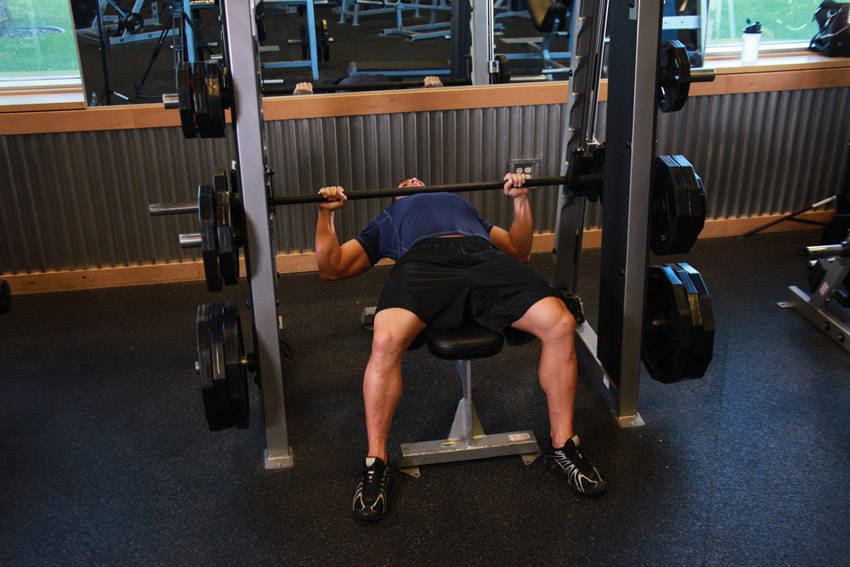
Smith Machine Incline Bench Press demonstration

Smith Machine Incline Bench Press

Target Pectorals
Equipment Machine
Body Part Chest
Difficulty Intermediate
Movement Compound
Secondary Muscles
Shoulders Triceps

Head-to-Head Comparison

Different values are marked. These are catalogue attributes, not performance scores.

Muscles used

Listed target and secondary muscles, shown on the body. Locations, not activation or strength scores.

  • Target
  • Secondary
  • Not highlighted

Leverage Decline Chest Press

Front
Leverage Decline Chest Press: front muscle locationsSolid: listed target. Striped: listed secondary. Grey: not highlighted. Locations, not activation or strength scores. See the muscle names below.
Back
Leverage Decline Chest Press: back muscle locationsSolid: listed target. Striped: listed secondary. Grey: not highlighted. Locations, not activation or strength scores. See the muscle names below.
Target
Pectorals
Secondary
Shoulders, Triceps

Not shown on diagram: Shoulders. These labels do not identify a precise region on this map.

Smith Machine Incline Bench Press

Front
Smith Machine Incline Bench Press: front muscle locationsSolid: listed target. Striped: listed secondary. Grey: not highlighted. Locations, not activation or strength scores. See the muscle names below.
Back
Smith Machine Incline Bench Press: back muscle locationsSolid: listed target. Striped: listed secondary. Grey: not highlighted. Locations, not activation or strength scores. See the muscle names below.
Target
Pectorals
Secondary
Shoulders, Triceps

Not shown on diagram: Shoulders. These labels do not identify a precise region on this map.

Grey does not mean a muscle is unused. The diagrams show only the mapped catalogue labels.

Attribute Leverage Decline Chest Press Smith Machine Incline Bench Press
Target Muscle
Pectorals
Pectorals
Body Part
Chest
Chest
Equipment
Machine
Machine
Difficulty Different
Beginner
Intermediate
Movement Type
Compound
Compound
Secondary Muscles
Shoulders, Triceps
Shoulders, Triceps

Visual Comparison

An illustrative 1–10 profile derived from catalog difficulty, equipment, and listed-muscle fields—not measured performance or muscle activation.

Key Differences

  • Difficulty levels differ: Leverage Decline Chest Press is beginner, while Smith Machine Incline Bench Press is intermediate.
  • Both exercises target the Pectorals using Machine. The catalogue does not establish which exercise is better for an individual goal.

Muscle comparison

Shared target muscles

Both exercises load the pectoralis major as the primary mover. The decline press places the long head fibers of the lower pectoral under a more favorable length-tension relationship at a -15° to -30° decline, emphasizing sternocostal fibers. The Smith machine incline (typically set at 30°–45°) shifts the force vector upward, increasing activation of the clavicular (upper) pectoral region. Expect broadly comparable total chest work but with a regional bias: decline favors lower pec emphasis while incline favors upper pec emphasis.

Secondary muscle differences

Secondary muscles differ because of bar path and torso angle. The decline chest press reduces anterior deltoid elevation demands by about 10%–20% compared with a 30°–45° incline, so triceps and lower pecs take more load. The Smith machine incline increases anterior deltoid contribution and scapular stabilization demand; triceps still assist strongly but the shoulder carries a larger share of the load on incline sets.

Muscle involvement analysis

During the decline press the force vector travels more horizontally relative to the clavicle, producing greater horizontal adduction and stretched lower-pec length at bottom position; concentric force peaks mid-range. On the Smith incline the vector has a superior component, increasing shear at the glenohumeral joint and shifting peak activation toward lockout. Mechanically, decline improves tension at longer pec lengths; incline raises shoulder moment arm and elevates deltoid activation, changing activation timing across the ROM.

Equipment and setup

Leverage Decline Chest Press: setup

Leverage Decline Chest Press requires a leverage/selectorized decline machine or plate-loaded decline press with adjustable seat and fixed pivot. You need access to a machine bench with a -15° to -30° decline, weight plates or stack, and an adjustable back pad to set proper chest height.

Smith Machine Incline Bench Press: setup

Smith Machine Incline Bench Press requires a Smith rack with a 30°–45° adjustable bench and the bar counterbalanced on the guided track. You need a bench that locks at the incline angle, collars/plates or machine weight stack, and space to set safety catches at an appropriate height.

Access and practicality

Leverage Decline Chest Press is often more accessible in commercial gyms because selectorized machines are common and simpler to set up for beginners. The Smith machine requires space and a compatible incline bench; some gyms may only have one Smith rack, limiting access during busy hours.

Learning and progression

Learning the movements

Leverage Decline Chest Press is easier to learn for beginners because the guided path enforces a consistent bar trajectory, reduces balance demands, and simplifies seat and handle positioning. Setup cues are straightforward: align handles with mid-chest and keep feet on platform.

Progression considerations

Smith Machine Incline Bench Press offers broader progression for intermediate trainees: you can manipulate incline angle (30°–45°), tempo, paused reps, and bar path, and safely load heavier weights for strength phases (3–6 reps). The decline machine is excellent for steady progressive overload with micro-plate increases but is less versatile in bar path variation.

Limitations and precautions

Relative injury risk is lower on the leverage decline press for most users due to a fixed path and reduced shoulder shear. The Smith machine incline raises shoulder stress because of steeper angles and fixed vertical track; improper bench setup or too-steep an incline (>45°) can increase impingement risk. Use controlled ROM and avoid excessive shoulder elevation to mitigate risk.

Pros & Cons

Leverage Decline Chest Press

+ Pros

  • Strong emphasis on lower pectoral fibers and horizontal adduction
  • Fixed pivot reduces stabilization demands—easy setup for beginners
  • Consistent bar path helps reproducible loading and progressive overload
  • Lower shoulder strain compared with steep inclines

Cons

  • Limited to a decline angle—less carryover to upper chest development
  • Less versatile for tempo and bar path variations
  • Machine availability can be limited in some gyms

Smith Machine Incline Bench Press

+ Pros

  • Targets upper pectorals and anterior deltoids effectively at 30°–45°
  • Highly adjustable for progressive overload and angle manipulation
  • Useful for heavy compound pressing while keeping a safer spot
  • Easily combined with paused reps and tempo work for hypertrophy

Cons

  • Fixed vertical track can increase shoulder shear and impingement risk
  • Requires careful bench positioning to avoid poor bar path
  • Steeper angles reduce focus on lower pec fibers

When Each Exercise Wins

1
For muscle hypertrophy: Smith Machine Incline Bench Press

The Smith incline gives better upper-pec stimulus at 30°–45° and allows for tempo, paused reps, and varied rep ranges (6–12) to maximize time under tension and regional hypertrophy. Use incline sets to fill upper-chest weakness and combine with decline presses for full chest development.

2
For strength gains: Smith Machine Incline Bench Press

The Smith setup allows heavier, consistent loading and angle adjustments that suit low-rep strength work (3–6 reps) and progressive overload. Its guided bar makes handling near-max loads safer for intermediate lifters when paired with proper bench setup and safety stops.

3
For beginners: Leverage Decline Chest Press

The leverage decline machine has a shallow learning curve thanks to a controlled path and simpler setup, reducing balance and technique demands while still delivering solid pectoral stimulus for early-phase hypertrophy (8–12 reps).

4
For home workouts: Smith Machine Incline Bench Press

If you have a Smith rack at home, the incline bench is more versatile for pressing variations and upper-chest work. However, many home setups lack a decline machine, so the Smith incline is the more practical multi-use option.

Frequently Asked Questions

Can I do both Leverage Decline Chest Press and Smith Machine Incline Bench Press in the same workout?

Yes. Pairing them lets you hit both upper and lower pec regions: start with the primary compound that matches your goal (heavy incline for upper strength or decline for lower-pec volume), then follow with the other for 8–12 reps to finish. Manage total volume to avoid shoulder fatigue—limit to 3–6 sets combined per session.

Which exercise is better for beginners?

Leverage Decline Chest Press is better for beginners because the fixed pivot simplifies technique and reduces stabilization demands. It helps you build pressing strength and consistent loading patterns before progressing to incline Smith variations.

How do the muscle activation patterns differ?

Decline presses bias horizontal adduction and lengthen lower pectoral fibers at the bottom, producing peak force mid-range. Incline presses shift the force vector upward, increase anterior deltoid recruitment, and move peak activation slightly closer to lockout, favoring the clavicular head.

Can Smith Machine Incline Bench Press replace Leverage Decline Chest Press?

It can substitute when you lack a decline machine, but it won't replicate lower-pec emphasis exactly. If your goal is balanced chest development, use the Smith incline for upper-pec work and include other horizontal adduction variations (dips or low-cable presses) to mimic decline effects.

Comparison Summary

Choose the Leverage Decline Chest Press when you want a beginner-friendly, lower-pec focused movement with lower shoulder stress and repeatable loading—ideal for adding volume and targeting the sternocostal fibers. Pick the Smith Machine Incline Bench Press when your goal is upper-chest development, heavy compound strength sets, or adjustable angle work; set the bench at 30°–45°, control the descent, and avoid overly steep inclines. For balanced chest development, alternate or pair both: use incline sets for upper-pec emphasis and decline sets to round out lower-pec thickness while staying within recommended rep ranges (3–6 strength, 6–12 hypertrophy).

Exercise instructions

Steps from the exercise catalogue. Read the full sequence before starting.

Leverage Decline Chest Press

  1. Load an appropriate weight onto the pins and adjust the seat for your height. The handles should be near the bottom of the pectorals at the beginning of the motion. Your chest and head should be up and your shoulder blades retracted. This will be your starting position.
  2. Press the handles forward by extending through the elbow.
  3. After a brief pause at the top, return the weight just above the start position, keeping tension on the muscles by not returning the weight to the stops until the set is complete.

Smith Machine Incline Bench Press

  1. Place an incline bench underneath the smith machine. Place the barbell at a height that you can reach when lying down and your arms are almost fully extended. Once the weight you need is selected, lie down on the incline bench and make sure your upper chest is aligned with the barbell. Using a pronated grip (palms facing forward) that is wider than shoulder width, unlock the bar from the rack and hold it straight over you with your arms locked. This will be your starting position.
  2. As you breathe in, come down slowly until you feel the bar on your upper chest.
  3. After a second pause, bring the bar back to the starting position as you breathe out and push the bar using your chest muscles. Lock your arms in the contracted position, hold for a second and then start coming down slowly again. Tip: It should take at least twice as long to go down than to come up.
Read remaining steps for Smith Machine Incline Bench Press
  1. Repeat the movement for the prescribed amount of repetitions.
  2. When you are done, place the bar back in the rack.

Also Compare

Compare another pair

Choose two exercises to see their differences side by side.

Compare Exercises