Hands Bike vs Leverage Decline Chest Press

Compare target muscles, equipment, difficulty, movement type, and secondary muscles for Hands Bike and Leverage Decline Chest Press.

Change comparison Share

Get comparison link

Select the link and use your device's Copy command.

Comparison overview

AI-generated
Hands Bike vs Leverage Decline Chest Press is a practical matchup if you're choosing chest work. You want exercises that target the pectorals, fit your skill level, and match your equipment access. I'll compare primary and secondary muscle activation, movement biomechanics (force vectors and joint angles), ease of learning, progression options, and injury risk. By the end you'll know which movement to use for muscle growth, strength, or beginner programming, and I’ll give clear rep ranges and technique cues so you can apply the choice immediately.

Exercise Comparison

Exercise A
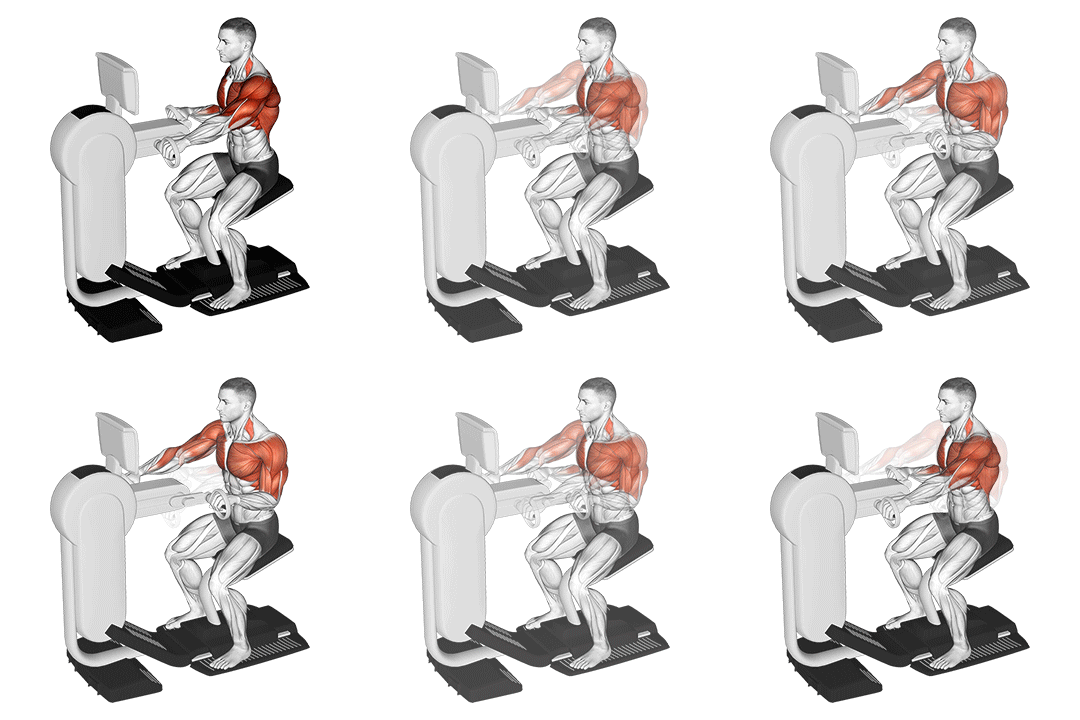
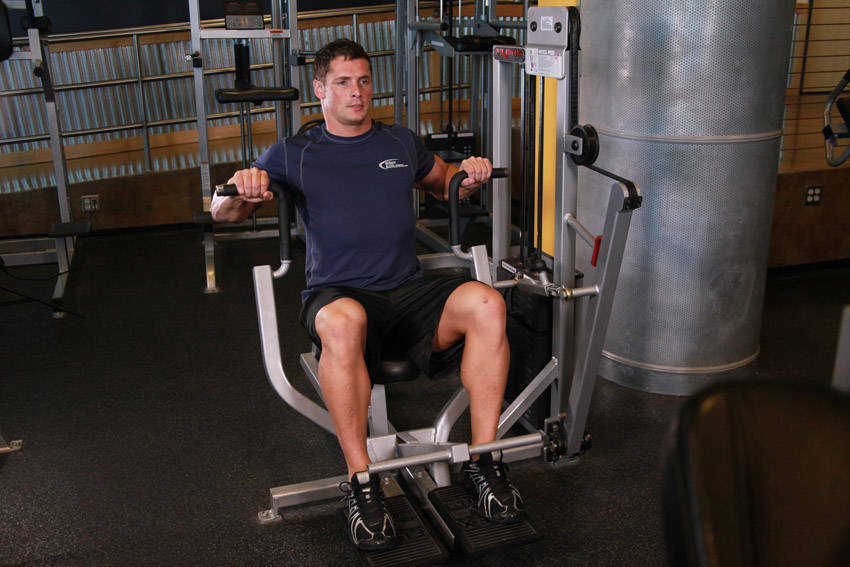
Hands Bike demonstration

Hands Bike

Target Pectorals
Equipment Machine
Body Part Chest
Difficulty Beginner
Movement Isolation
Secondary Muscles
Triceps Shoulders
VS
Exercise B
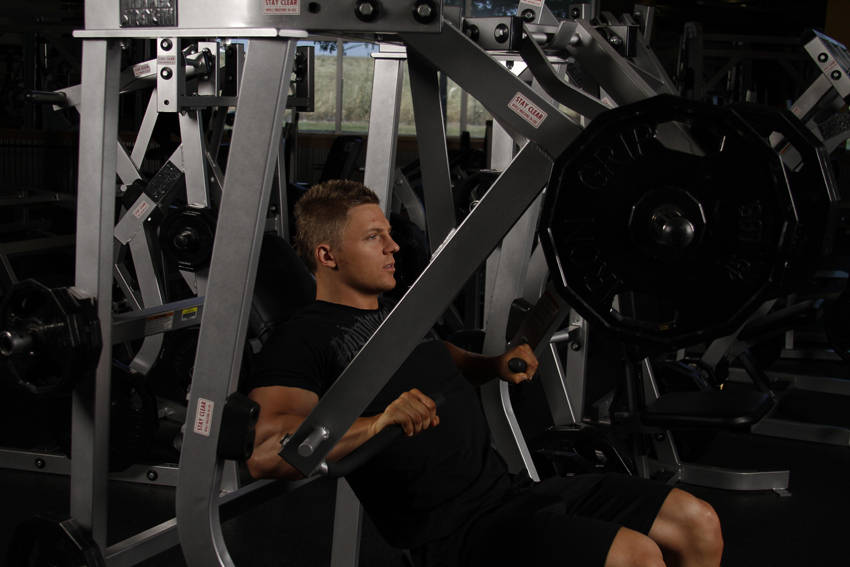
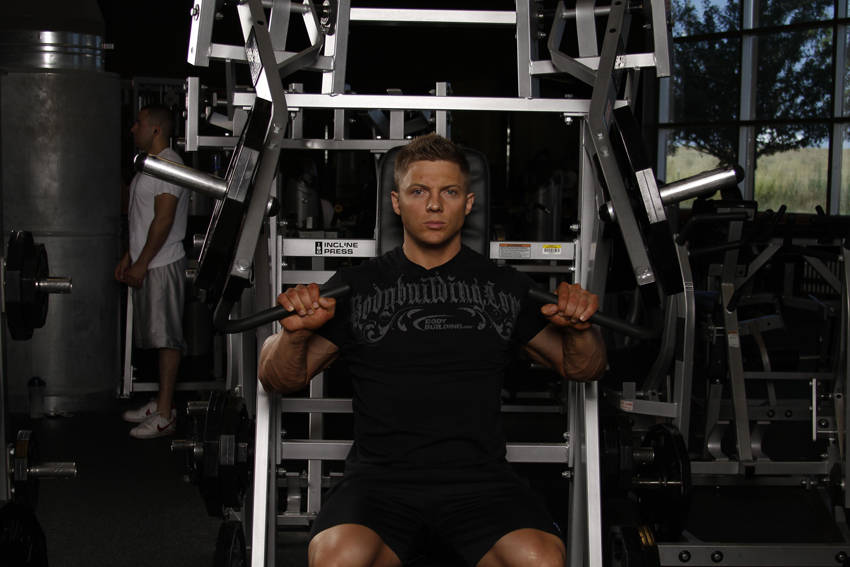
Leverage Decline Chest Press demonstration

Leverage Decline Chest Press

Target Pectorals
Equipment Machine
Body Part Chest
Difficulty Beginner
Movement Compound
Secondary Muscles
Shoulders Triceps

Head-to-Head Comparison

Different values are marked. These are catalogue attributes, not performance scores.

Muscles used

Listed target and secondary muscles, shown on the body. Locations, not activation or strength scores.

  • Target
  • Secondary
  • Not highlighted

Hands Bike

Front
Hands Bike: front muscle locationsSolid: listed target. Striped: listed secondary. Grey: not highlighted. Locations, not activation or strength scores. See the muscle names below.
Back
Hands Bike: back muscle locationsSolid: listed target. Striped: listed secondary. Grey: not highlighted. Locations, not activation or strength scores. See the muscle names below.
Target
Pectorals
Secondary
Triceps, Shoulders

Not shown on diagram: Shoulders. These labels do not identify a precise region on this map.

Leverage Decline Chest Press

Front
Leverage Decline Chest Press: front muscle locationsSolid: listed target. Striped: listed secondary. Grey: not highlighted. Locations, not activation or strength scores. See the muscle names below.
Back
Leverage Decline Chest Press: back muscle locationsSolid: listed target. Striped: listed secondary. Grey: not highlighted. Locations, not activation or strength scores. See the muscle names below.
Target
Pectorals
Secondary
Shoulders, Triceps

Not shown on diagram: Shoulders. These labels do not identify a precise region on this map.

Grey does not mean a muscle is unused. The diagrams show only the mapped catalogue labels.

Attribute Hands Bike Leverage Decline Chest Press
Target Muscle
Pectorals
Pectorals
Body Part
Chest
Chest
Equipment
Machine
Machine
Difficulty
Beginner
Beginner
Movement Type Different
Isolation
Compound
Secondary Muscles
Triceps, Shoulders
Shoulders, Triceps

Visual Comparison

An illustrative 1–10 profile derived from catalog difficulty, equipment, and listed-muscle fields—not measured performance or muscle activation.

Key Differences

  • Hands Bike is an isolation exercise, while Leverage Decline Chest Press is a compound movement.
  • Both exercises target the Pectorals using Machine. The catalogue does not establish which exercise is better for an individual goal.

Muscle comparison

Shared target muscles

Both exercises target the pectorals via horizontal adduction of the humerus, so they overlap strongly in stimulating chest fibers. The Hands Bike is an isolation movement that emphasizes peak contraction and medial-lateral compression of the pecs across a short range of motion, producing high time under tension on the chest. The Leverage Decline Chest Press is a compound press that places the pectorals under a decline force vector (typically 15–30° decline), shifting more load onto the lower pec fibers while allowing higher total load.

Secondary muscle differences

Hands Bike limits elbow extension torque, so triceps and anterior deltoids contribute less — typically 10–25% of the load — than in a pressing movement. The Leverage Decline Chest Press recruits the triceps and anterior deltoids more substantially (roughly 30–45% of effort), because elbow extension and shoulder stabilization produce higher joint moments during the press.

Muscle involvement analysis

Hands Bike emphasizes peak contraction near mid-range and end-range horizontal adduction, benefiting from muscle length-tension at near-shortened pec lengths; EMG-style patterns show sustained pectoral activation with minimal triceps spikes. The Leverage Decline Chest Press shows a rising force requirement through the concentric phase as the pecs and triceps work together; the decline angle biases lower pec fibers and produces greater mechanical work per rep, especially at 6–12 RM loads.

Equipment and setup

Hands Bike: setup

Hands Bike requires a dedicated machine or selectorized unit that allows seated or standing horizontal hand motion, a stable pad for chest support, and a weight stack or plate-loaded resistance. Footing and chest contact points matter for isolation.

Leverage Decline Chest Press: setup

Leverage Decline Chest Press needs a decline leverage machine (plate-loaded or selectorized) with an adjustable seat and a fixed decline angle (commonly 15–30°). It requires more machine footprint and sometimes heavier loading capacity for progressive overload.

Access and practicality

Hands Bike — The Hands Bike is more accessible in commercial gyms and rehab settings because it’s smaller, easier to set up, and suited to isolation work with lighter loads; the leverage decline machine is bulkier and less common outside larger gyms.

Learning and progression

Learning the movements

Hands Bike is easier to learn: it isolates horizontal adduction with simple, short-range movement so beginners can maintain proper form quickly. The Leverage Decline Chest Press has a slightly steeper learning curve for optimal seat positioning, decline angle setup, and coordinated pressing mechanics.

Progression considerations

Leverage Decline Chest Press offers more straightforward progressive overload — you can increase plates or stack weight and use heavy 3–6 RM work for strength. Hands Bike allows micro-loading and tempo control for hypertrophy (8–15+ reps) but has a lower absolute load ceiling.

Limitations and precautions

Hands Bike carries lower injury risk because it limits shoulder torque and isolates the pecs; poor technique usually results in less joint stress. Leverage Decline Chest Press imposes higher shoulder and sternoclavicular loading at heavy weights, raising risk if seat angle or handle path is set poorly; risk increases when using very low reps with excessive momentum.

Pros & Cons

Hands Bike

+ Pros

  • High chest isolation and peak contraction for hypertrophy
  • Low shoulder and elbow torque — beginner friendly
  • Compact machine, easy to set up and use
  • Allows tempo and rep-range control for time under tension

Cons

  • Limited absolute loading — less effective for maximal strength
  • Less triceps and deltoid recruitment — not a compound builder
  • Machine specificity — carryover to free-weight presses is limited

Leverage Decline Chest Press

+ Pros

  • Compound press that builds strength and loads the pecs heavily
  • Decline angle emphasizes lower pec fibers and fuller chest activation
  • Clear progressive overload path with heavier plate or stack loading
  • Engages triceps and deltoids for more functional pressing strength

Cons

  • Bulkier equipment, less common in small gyms
  • Higher shoulder and sternum loading if setup is incorrect
  • Requires careful seat/angle adjustments to avoid poor mechanics

When Each Exercise Wins

1
For muscle hypertrophy: Hands Bike

Hands Bike wins for targeted hypertrophy because it isolates the pectorals, maximizes time under tension, and lets you use higher rep ranges (8–15+) with strict tempo to fatigue chest fibers without heavy triceps involvement.

2
For strength gains: Leverage Decline Chest Press

Leverage Decline Chest Press wins for strength because its compound action and decline force vector allow heavier loads (3–6 RM) and consistent progressive overload, engaging triceps and deltoids to handle greater total force.

3
For beginners: Hands Bike

Hands Bike is more beginner friendly: simpler setup, lower joint torque, and an easier motor pattern let new lifters learn chest activation and control in the 8–15 rep range.

4
For home workouts: Hands Bike

Hands Bike is the better home option if you have limited space and lighter equipment needs; the leverage decline machine is large and typically unavailable outside well-equipped gyms.

Frequently Asked Questions

Can I do both Hands Bike and Leverage Decline Chest Press in the same workout?

Yes — program the Leverage Decline Chest Press early as your heavy compound movement (3–6 or 6–8 RM), then follow with Hands Bike for 8–15 reps to target hypertrophy and finish the pecs with high time under tension.

Which exercise is better for beginners?

Hands Bike is better for beginners because it isolates the chest, has a simpler movement pattern, and imposes lower shoulder torque, making it easier to learn proper pec activation and control.

How do the muscle activation patterns differ?

Hands Bike emphasizes mid-range peak contraction and sustained pectoral activation with minimal triceps spikes; Leverage Decline Chest Press shows cooperative activation of pecs, triceps, and deltoids, with increasing force demand through the concentric phase and greater lower-pec recruitment due to the decline angle.

Can Leverage Decline Chest Press replace Hands Bike?

Leverage Decline Chest Press can substitute if your goal is compound strength and you need less isolation, but it won’t match the Hands Bike for peak contraction and time under tension. Use the decline press for load and the Hands Bike for targeted hypertrophy.

Comparison Summary

If your goal is targeted chest development and safe, easy-to-teach technique, prioritize the Hands Bike for isolation work, tempo training, and higher rep hypertrophy blocks (8–15 reps). If you want raw pressing strength and greater overall mechanical work on the chest and triceps, use the Leverage Decline Chest Press with heavier sets (3–6 for strength, 6–12 for mixed hypertrophy), ensuring seat and angle are correct (15–30° decline). For most programs, pair them: use the decline press as a heavy compound main lift and finish with the Hands Bike to flush the pecs and increase time under tension.

Exercise instructions

Steps from the exercise catalogue. Read the full sequence before starting.

Hands Bike

  1. Adjust the seat height and handlebar position to a comfortable level.
  2. Sit on the ergometer with your back straight and feet on the pedals.
  3. Grasp the handles with your hands and position your arms at a 90-degree angle.
Read remaining steps for Hands Bike
  1. Start pedaling with your hands, pushing and pulling the handles in a controlled motion.
  2. Continue pedaling for the desired duration or number of repetitions.

Leverage Decline Chest Press

  1. Load an appropriate weight onto the pins and adjust the seat for your height. The handles should be near the bottom of the pectorals at the beginning of the motion. Your chest and head should be up and your shoulder blades retracted. This will be your starting position.
  2. Press the handles forward by extending through the elbow.
  3. After a brief pause at the top, return the weight just above the start position, keeping tension on the muscles by not returning the weight to the stops until the set is complete.

Also Compare

Compare another pair

Choose two exercises to see their differences side by side.

Compare Exercises