
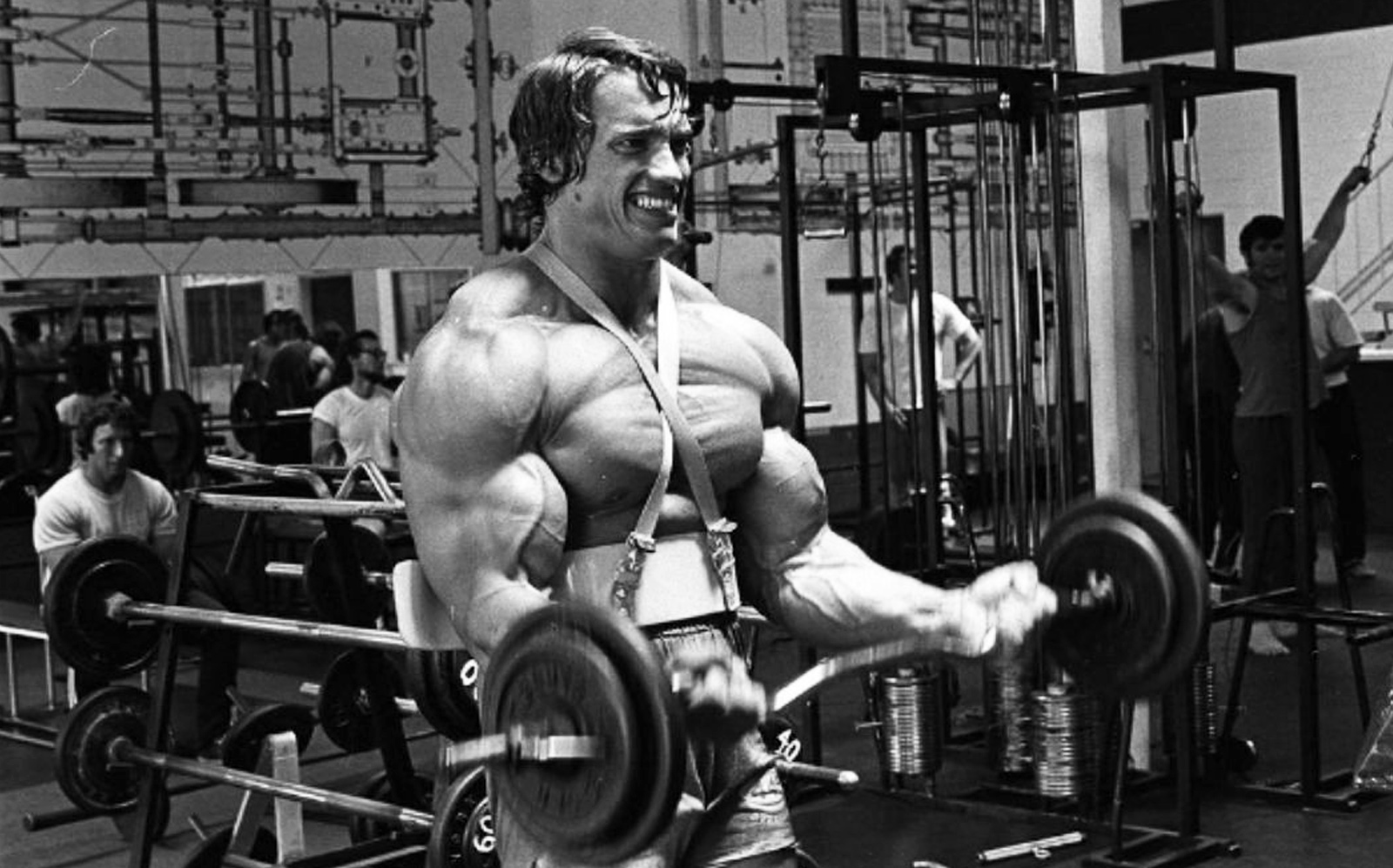
Five sets of five reps is a classic training protocol that’s been around for at least a century. While it’s impossible to say who first used this set and rep scheme, well-known advocates include:
- Arnold Schwarzenegger – 7-time Mr. Olympia winner
- Reg Park – Bodybuilding legend and mentor to Arnold Schwarzenegger
- Doug Hepburn – Canadian strongman and Olympic lifter
- Chuck Sipes – 1960s bodybuilder with a powerlifting mindset
- Steve Goggins – First man to total 1,100 pounds in powerlifting
The five sets of five method, usually just called 5 x 5, has also been incorporated into several popular training routines, such as:
- StrongLifts 5 x 5 (Created by Mehdi Hadim)
- The Texas Method/Starting Strength (Created by Mark Rippetoe)
- Ice Cream Fitness 5 x 5 (Created by Jason Blaha)
- The Strongest Shall Survive Program (Created by Bill Starr)
- Madcow 5 x 5 (Created by “Madcow,” based on Bill Starr’s methods)
While each program differs slightly, the basic principles are the same: do five sets of five reps of a select handful of big compound lifts while attempting to add weight week by week.
5 x 5 is brutally effective for building muscle and strength. However, training volume and frequency are relatively low, and rest periods between sets are usually quite long, with 2 to 3 minutes being the norm.
As such, 5 x 5 is not so good for fat loss and weight control. Until now, that is!
For this article, I put my 30-plus years of personal training experience to good use and created a 5 x 5 program designed for fat loss, and it delivered results beyond my wildest dreams!
What’s so Great About 5 x 5, Anyway?
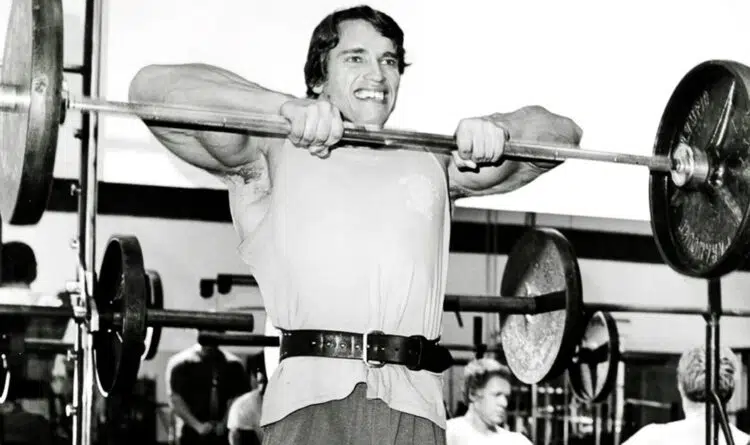
5 x 5 workouts have been popular for a long time, and most lifters see them as an old-school rite of passage. They’re normally associated with bulking and rapid strength gains, and given their continued popularity, it’s clear to see that programs like StrongLifts 5 x 5, the Texas method, and Bill Starr’s 5 x 5 routine work.
But what makes them so great? Let’s take a look!
Emphasis on Compound Lifts
Without exception, 5 x 5 routines are built around compound lifts such as squats, deadlifts, overhead presses, and bench presses. These exercises are valued for their ability to build slabs of muscle and massive levels of strength. Any isolation exercises, if included at all, help fill in the gaps left by compound lifting.
Focus on Heavy Weights
5 x 5 workouts use heavy weights—typically 80% or more of your one-repetition maximum. This is arguably the best way to build strength and also produces huge amounts of muscle tension, a proven trigger for muscle growth (1). That’s why 5 x 5 workouts build both muscle size and strength.
Simple, Repeatable Workouts
It doesn’t matter how well-designed a training program is; it’ll only work if you do it consistently. Complicated programs are often hard to follow, being either time-consuming or requiring sophisticated equipment. 5 x 5 workouts are simple and mostly use barbells and dumbbells. As such, they’re straightforward to follow and perfect for consistent training.
Structured Progressive Overload
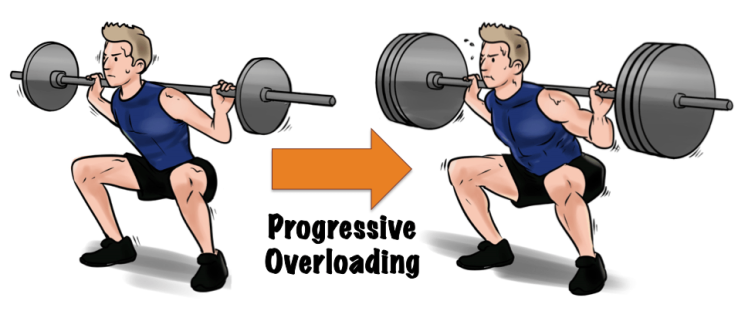
Most 5 x 5 programs start relatively light, and lifters are encouraged to add weight every workout or week—usually just a few pounds at a time. This is called progressive overload and is one of the key drivers of progress. 5 x 5 programs take the guesswork out of progressive overload, and getting stronger is almost inevitable with this training method.
Manageable Training Volume
Traditional 5 x 5 workouts typically involve 3-4 workouts per week. This training volume is ideal for “hard gainers” who find it difficult to recover from more frequent workouts, older lifters, and anyone who doesn’t have a lot of time to dedicate to training.
But…
5 x 5 workouts are not usually associated with fat loss. Rather, they’re mostly used as bulking programs, which invariably means you gain muscle and strength plus a little extra body fat.
That doesn’t have to be the case, though, and in the next section, I share how to combine finishers with 5 x 5 training to build muscle and lose fat simultaneously.
My 5 x 5 + HIIT Program: The Full Breakdown
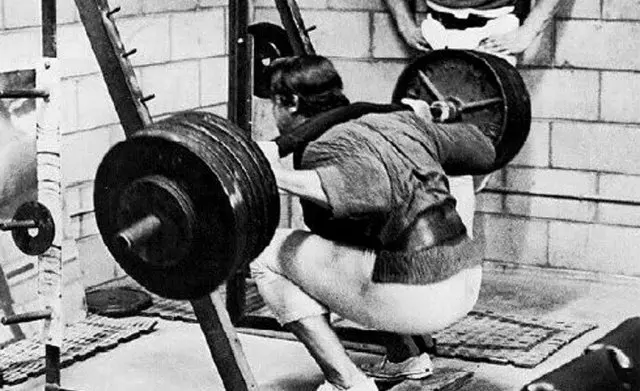
Workout 1
| Exercise | Sets | Reps | Recovery | |
| 1 | Back squat | 5 | 5 | 2-3 minutes |
| 2 | Bench Press | 5 | 5 | 2-3 minutes |
| 3 | Pendlay Row | 5 | 5 | 2-3 minutes |
| 4 | Barbell Curl | 3 | 8-12 | 60-90 seconds |
| 5 | Standing Calf Raise | 3 | 8-12 | 60-90 seconds |
| 6 | Kneeling Cable Crunch | 3 | 8-12 | 60-90 seconds |
Finisher: Sprint Intervals
Sprints are a great way to end any workout, but you don’t need to head to the track to do them. Just use your favorite cardio machine and leave nothing in the tank.
Do 10 to 12 sets of the following:
- 20 seconds all-out sprint (treadmill, rower, bike, etc.)
- 40 seconds recovery
Workout 2
| Exercise | Sets | Reps | Recovery | |
| 1 | Deadlift | 5 | 5 | 2-3 minutes |
| 2 | Barbell Overhead Press | 5 | 5 | 2-3 minutes |
| 3 | Pull-ups/Chin-Ups | 5 | 5 | 2-3 minutes |
| 4 | Triceps Pushdowns | 3 | 8-12 | 60-90 seconds |
| 5 | Pallof Press | 3 | 8-12 | 60-90 seconds |
Finisher: Bodyweight Met-Con Circuit
Complete four rounds of the following exercises. For each move, work for 45 seconds, then rest for 15 seconds before transitioning to the next. Take a 90-second rest between laps.
- Jump Squats
- Push-ups
- Jumping Jacks
- Burpees
- High Knee Sprints
Workout 3
| Exercise | Sets | Reps | Recovery | |
| 1 | Front Squat | 5 | 5 | 2-3 minutes |
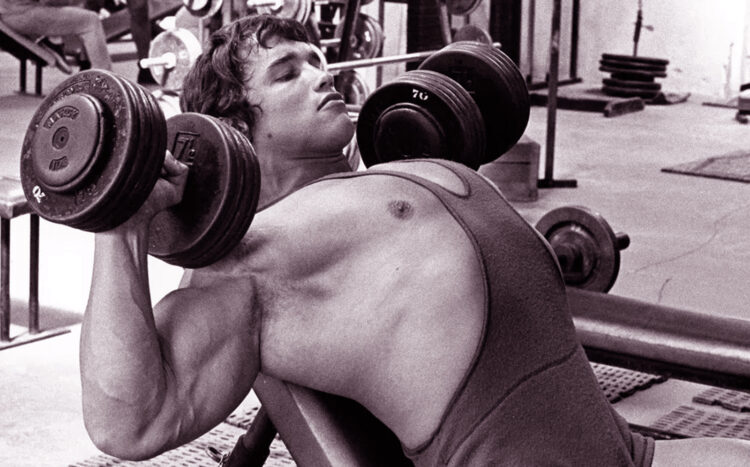
| 2 | Incline Dumbbell Bench Press | 5 | 5 | 2-3 minutes |
| 3 | One-Arm Dumbbell Row | 3 | 8-12 | 60-90 seconds |
| 4 | Dumbbell Lateral Raise | 3 | 8-12 | 60-90 seconds |
| 5 | Hanging Knee Raise | 3 | 8-12 | 60-90 seconds |
| 6 | Seated Calf Raise | 3 | 8-12 | 60-90 seconds |
Finisher: Tabata Supersets
This finisher consists of two exercises performed as Tabata-style supersets. Complete 8 to 10 sets total, alternating between the two exercises with brief rests in between.
- Kettlebell Swings 20 seconds
- 10 seconds rest
- Medicine Ball Slams 20 seconds
- 10 seconds rest
Results From One Month of 5 x 5 and HIIT Hybrid Workouts
I never ask my clients to follow a program I’ve not tried for myself. As such, I put my money where my mouth is and took this 5 x 5 and HIIT hybrid plan for a one-month spin to see how well it worked.
Here’s what happened…
Strength Increases
As a former powerlifter, I know that progressive overload is critical for getting stronger. As I tell my personal training clients, you are only as strong as your last workout. If you want to get stronger, you MUST keep putting more weight on the bar, even if it’s only a couple of extra pounds.
With that in mind, I was able to add ten pounds to all my major lifts for the first two weeks and five pounds for the last two. Strength increases tend to come thick and fast at the start of a new program and then level off later, so this was to be expected. I expect I’d have dropped to 2.5-pound increases if I’d followed the program for longer.
Muscle Gains
As a lifter in their late 50s, I find it hard to gain muscle. In fact, most of my training revolves around muscle preservation. So, I was pleasantly surprised to find that one month of 5 x 5 and HIIT hybrid training produced a small increase in muscle mass. I estimate that I gained a solid two pounds of muscle in four weeks, which is great progress for an older lifter.
Fat Loss
Using bioelectrical impedance, I estimate that I lost 2% body fat from my already relatively lean frame. I was quite surprised by this because I made no changes to my diet and actually spent less time working out than usual. I suspect the HIIT finishers had a significant impact on my post-training metabolism.
Increased Energy and Free Time
My workouts normally eat up about six hours per week, which can leave me feeling tired. This program roughly halved that, and I appreciated the extra free time. In addition, fewer workouts meant I felt more recovered and that I had more energy.
Summary:
- All major lifts increased by 20-30 pounds
- Two-pound muscle gain
- 2% decrease in body fat
- Body weight at the beginning of the month: 182 pounds
- Body weight at the end of the month: 179 pounds
So, leaner, stronger, and a little more muscular? I’d call that a great result!
Tips for Success With This Hybrid Approach

I have no hesitation in recommending this combined 5 x 5 and HIIT program to anyone who wants to build muscle and lose fat but doesn’t want to train more than three times a week. That said, there is more to your success than your training routine.
Make sure you consider the following before embarking on this workout program—your results depend on it!
Never Sacrifice Good Technique For More Weight
Weekly weight increases are what drive your progress. However, you should never add so much weight to the bar that your form starts to deteriorate. Badly performed reps, especially when you’re near your limits, can cause serious injury.
So, don’t add more weight than you can safely handle. It’s okay to use small increments or even keep your weights the same for a week or two. Remember, slow progress is still progress. In contrast, injuries can bring your progress to a screeching halt.
Make Sure Your Diet Supports Your Training
While it’s beyond the scope of this article to provide you with a diet to follow, it’s important to stress that you are what you eat, so your diet must not only fuel your workouts but also provide the energy you need to recover and grow.
Here are a few nutritional guidelines to follow:
- Consume one gram of protein per pound of lean bodyweight
- Eat lots of vegetables, whole grains, and fruit
- Consume plenty of complex carbohydrates for energy
- Avoid sugar and other highly processed foods
- Hydrate by drinking mostly water
Related: The No-Frills Bodybuilding Diet: How Legends Built Muscle Without Supplements
Get Your Sleep
Your body does most of its growing and recovering when you are asleep. Anabolic (muscle-building) hormone production increases during sleep to facilitate this. Therefore, you must get 7-9 hours of sleep per night. Not getting enough shut-eye will severely undermine your progress and hurt your workout performance.
Start Each Workout With A Warm-Up
Warm-ups are non-negotiable before any intense workout. They prepare your body and mind for what’s about to follow, maximizing workout performance. In addition, warming up may reduce your risk of injury.
An effective warm-up only takes 10 to 15 minutes but can make or break your progress. Long story short—don’t skip your warm-up!
Walk 8-10k Steps On Non-Training Days
As effective as they are, the workouts in this program may not burn enough calories to produce meaningful fat loss if you are sedentary the rest of the time. The good news is that you can maximize fat loss by walking 8,000 to 10,000 steps per day. Walking on non-training days will also do wonders for your recovery.
You don’t have to do all your steps in a single session. In fact, it’s usually best to spread them throughout your day. Regardless of when you walk, make sure you stride out briskly and with purpose.
Closing Thoughts
You don’t have to train for strength, muscle, fat loss, and fitness separately. This hybrid approach proves you can have it all without spending endless hours in the gym. By combining old-school 5 x 5 strength work with strategic HIIT finishers, you get maximum results in minimum time.
Ready to experience it for yourself? Give this program four weeks and see what it can achieve. You’ve got the plan—now it’s time to put it to work.
Related: I Tried a 5×5 Strength Split for One Month — The Results Blew My Mind
References:
1 – Schoenfeld BJ, Grgic J, Van Every DW, Plotkin DL. Loading Recommendations for Muscle Strength, Hypertrophy, and Local Endurance: A Re-Examination of the Repetition Continuum. Sports (Basel). 2021 Feb 22;9(2):32. doi: 10.3390/sports9020032. PMID: 33671664; PMCID: PMC7927075.