



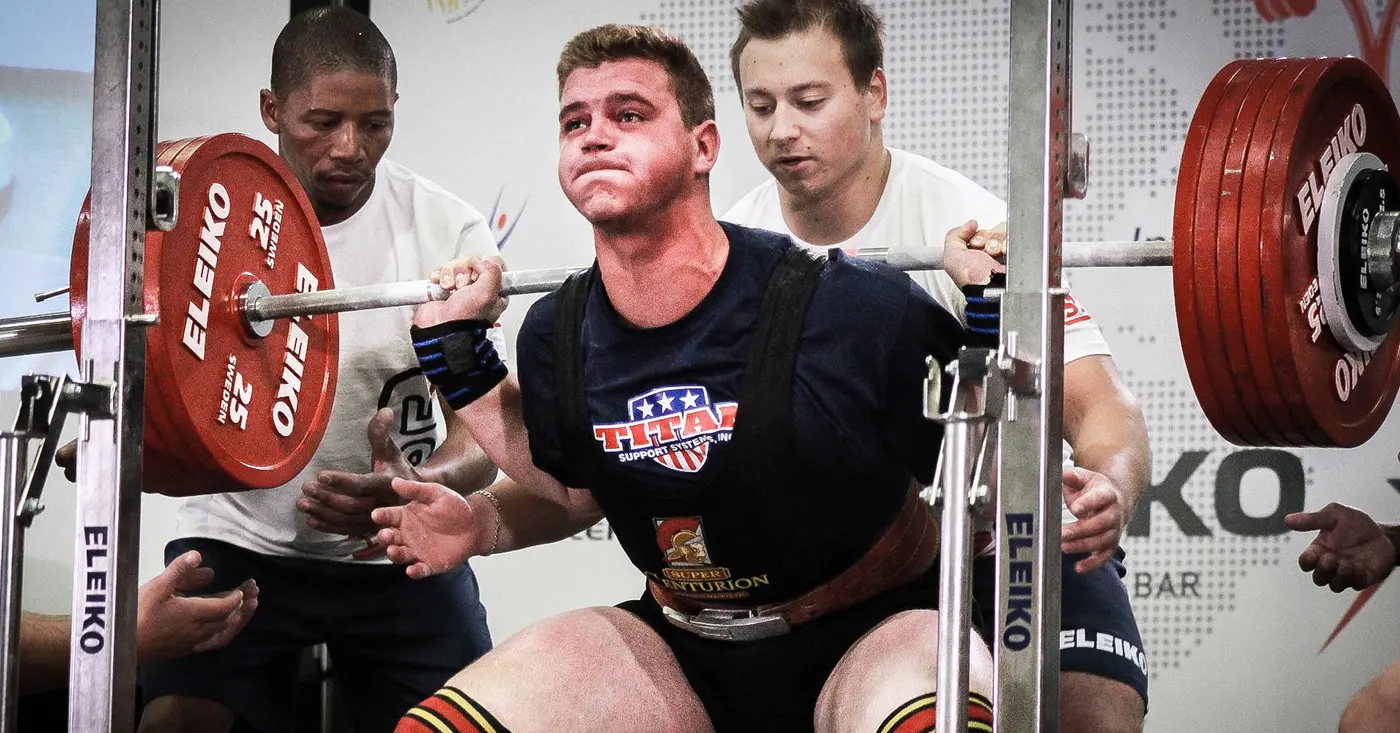
When it comes to strength training and strength sports, Russia has built itself quite a reputation.
Over the years, their athletes have greatly benefited from ground-breaking training methods devised by Russian professors and sports scientists. As a result, many top strength sport athletes are Russian.
One hugely influential professor by the name of Yuri Verkhoshansky is well renowned for his work in strength sports.
This article will review a six-week strength peaking program devised by Verkhoshansky that has helped many powerlifters set new PR’s and ultimately win competitions.
About Yuri Verkhoshansky
Yuri Verkhoshansky is mainly known for developing and implementing “shock training” (now known as plyometrics) back in the 1980s.
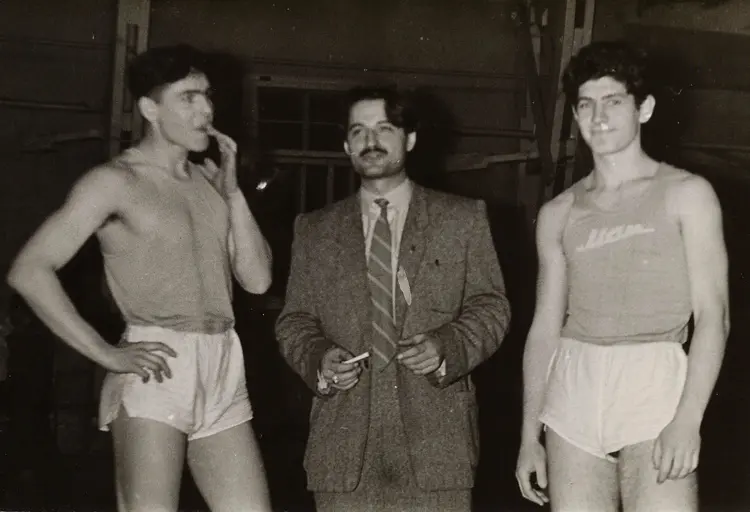
Over the years, he has worked with many world-class athletes and helped many of them excel in their chosen sport.
In addition to this, he has written a number of books on strength training and coaching (1). It is clear that his expertise is second to none.
The six-week peaking strength program explained in this article comes from an interview conducted with Verkhoshansky back in 1989.
Understanding The Six-Week Soviet Peaking Program
As the name suggests, the goal of this six-week program is to peak your performance with a number of lifts.
Therefore, this program makes a perfect choice for those who are looking to optimize their powerlifting performance.
The program involves training each lift twice per week. There are two different workouts to complete – workout one and workout two.
Workout one is a light workout while workout two is a heavy workout.
As the weeks pass, the number of sets, reps, and the percentages are cleverly manipulated to ensure that strength develops most efficiently.
By the end of the six weeks, it is expected that your one-rep max for each lift will have increased by five percent.
Make no mistake, this is an extremely demanding and intense training program.
The program has been designed for intermediate and advanced lifters. It should not be used by beginners.
The volume used in the program is simply too high for beginners and may lead to overtraining and burnout (2).
Additional Program Notes
– Before beginning this peaking program, it is recommended that you run an eight to sixteen-week pre-peaking program.
– Each lift is to be performed twice per week – one heavy session and one moderate session.
– Four to six minutes worth of rest must be taken between sets of primary exercises.
– Assistance work is not provided and therefore should be self-managed. In total, session length should not exceed ninety minutes.
– If you are competing, your PR attempts in week six should coincide with the competition.
– This program is intended to peak your performance and therefore should not be cycled.
– Once this program has been run, it is recommended to move onto a lower intensity, moderate volume training plan.
One-Rep Max Tests
Before beginning the program, it is crucial that you assess your one-rep max for all three power lifts.
If you are an experienced powerlifter, you will already be familiar with regular strength testing and the one-rep max.
For those who are less familiar, one rep max refers to the maximal amount of weight that you can lift for a single rep.
Assessing your one-rep max pre-program will allow you to tailor your workouts most closely and allow you to track your progress.
Note that it is possible to reliably estimate your one-rep max based on your performance in the gym (3). However, remember that estimations may not be a hundred percent accurate.
Program Spreadsheet
A customizable six-week program template can be found here:
Ensure to input your current one-rep max into the corresponding box. Once this has been done, the entire program will automatically update and provide you with the correct weights to use.
Weekly Workout Breakdown
Once you have completed the strength tests, it’s time to start the program.
As mentioned, each week you will perform two workouts each per lift. This section will provide detail on the weekly training structure and progressions.
Week One
| Set Number | Workout One (% of 1RM / Reps) |
Workout Two (% of 1RM / Reps) |
| 1 | 45% x 8 – 10 | 45% x 8 – 10 |
| 2 | 55% x 6 – 8 | 55% x 6 – 8 |
| 3 | 65% x 6 | 65% x 5 |
| 4 | 65 – 70% x 6 | 75% x 5 |
| 5 | 65 – 70% x 6 | 80% x 5 |
| 6 | 65 – 70% x 6 | 80% x 5 |
| 7 | – | 80% x 5 |
| 8 | – | 75% x 5 |
| 9 | – | 65% x 5 |
| 10 | – | 50-55% x 8 – 12 |
Week Two
| Set Number | Workout One (% of 1RM / Reps) |
Workout Two (% of 1RM / Reps) |
| 1 | 45% x 8 – 10 | 45% x 8 – 10 |
| 2 | 55% x 6 – 8 | 55% x 6 – 8 |
| 3 | 65% x 6 | 65% x 5 |
| 4 | 70% x 5 | 75% x 4 |
| 5 | 70 – 75% x 5 | 80% x 4 |
| 6 | 70 – 75% x 5 | 85% x 4 |
| 7 | – | 85% x 4 |
| 8 | – | 85% x 4 |
| 9 | – | 80% x 5 |
| 10 | – | 70% x 6 – 8 |
Week Three
| Set Number | Workout One (% of 1RM / Reps) |
Workout Two (% of 1RM / Reps) |
| 1 | 45% x 8 – 10 | 45% x 8 – 10 |
| 2 | 55% x 6 – 8 | 55% x 6 – 8 |
| 3 | 65% x 5 | 65% x 5 |
| 4 | 70% x 4 | 75% x 4 |
| 5 | 75% x 3 | 85% x 3 |
| 6 | 75 – 80% x 3 | 90% x 3 |
| 7 | 75 – 80% x 3 | 90% x 3 |
| 8 | – | 80% x 5 |
| 9 | – | 55 – 60% x 6 – 10 |
| 10 | – | – |
Week Four
| Set Number | Workout One (% of 1RM / Reps) |
Workout Two (% of 1RM / Reps) |
| 1 | 45% x 8 – 10 | 45% x 8 – 10 |
| 2 | 55% x 6 – 8 | 55% x 6 – 8 |
| 3 | 65% x 5 | 65% x 5 |
| 4 | 75% x 4 | 75% x 4 |
| 5 | 80 – 85% x 3 | 85% x 2 |
| 6 | 80 – 85% x 3 | 90% x 2 |
| 7 | – | 95% x 2 |
| 8 | – | 75% x 4 – 6 |
| 9 | – | – |
| 10 | – | – |
Week Five
| Set Number | Workout One (% of 1RM / Reps) |
Workout Two (% of 1RM / Reps) |
| 1 | 45% x 8 – 10 | 45% x 8 – 10 |
| 2 | 55% x 6 – 8 | 55% x 6 – 8 |
| 3 | 65% x 5 | 65% x 5 |
| 4 | 75% x 5 | 75% x 3 |
| 5 | 75% x 5 | 80% x 3 |
| 6 | – | 85% x 2 |
| 7 | – | – |
| 8 | – | – |
| 9 | – | – |
| 10 | – | – |
Week Six
| Set Number | Workout One (% of 1RM / Reps) |
Workout Two (% of 1RM / Reps) |
| 1 | 45% x 8 – 10 | 45% x 8 – 10 |
| 2 | 55% x 6 – 8 | 55% x 6 – 8 |
| 3 | 65% x 5 | 65% x 5 |
| 4 | 75% x 3 | 75% x 3 |
| 5 | 80% x 2 | 85% x 2 |
| 6 | 80% x 2 | 90% x 1 |
| 7 | – | 95% x 1 |
| 8 | – | 100% x 1 |
| 9 | – | 102% x 1 (New PR) |
| 10 | – | 105% x 1 (New PR) |
Example Six-Week Powerlifting Peaking Program
Due to the fact this program is more of a training structure than a concrete plan, it can be customized to suit your own needs, goals, and limitations.
This section will provide an example of what a powerlifting peaking program may look like.
Training Split
There is no simple way to program in the three power lifts twice a week. That said, the following training structure is recommended:
| Day: | Workout: |
| 1 | Squat and Deadlift (1) |
| 2 | Bench (1) |
| 3 | Rest |
| 4 | Squat (2) |
| 5 | Bench (2) |
| 6 | Deadlift (2) |
| 7 | Rest |
By following this split, you can maximize the amount of rest between the heavy sessions thus enhancing recovery and consequent strength development.
Undoubtedly, the biggest challenge associated with this split is performing the heavy deadlift session two days after the heavy squat session.
However, the only other viable option would be to perform heavy squats and deadlifts on the same day which is certainly not advisable.
Example Program Workouts
Day 1: Squat and Deadlift (1)
| Exercise: | Volume: |
| Squats | Workout 1 |
| Deadlift | Workout 1 |
| Seated Cable Rows | 4 x 10 – 15 |
| Leg Press | 3 x 10 – 15 |
| Seated Dumbbell Curls | 3 x 10 – 12 |
Day 2: Bench (1)
| Exercise: | Volume: |
| Bench Press | Workout 1 |
| Seated Dumbbell Overhead Press | 3 x 10 |
| Push-Ups | 2 x max reps |
| Cable Tricep Extensions | 3 x 10 – 15 |
| Face Pulls | 3 x 10 – 15 |
Day 3: Rest
Day 4: Squat (2)
| Exercise: | Volume: |
| Squats | Workout 2 |
| Leg Extensions | 4 x 10 – 12 |
| Planks | 2 x max time |
Day 5: Bench (2)
| Exercise: | Volume: |
| Bench Press | Workout 2 |
| Dumbbell Bench Press | 2 x 10 – 12 |
| Bulldozer Laterals | 3 x 10 – 12 |
| Close Grip Bench Press | 3 x 10 |
Day 6: Deadlift (2)
| Exercise: | Volume: |
| Deadlifts | Workout 2 |
| Leg Curls | 3 x 10 – 12 |
| Ab Wheel Rollouts | 2 x 10 – 15 |
| Lat Pulldowns / Pull-Ups | 3 x 10 – 15 |
| EZ Bar Cable Curls | 3 x 10 – 12 |
Day 7: Rest
Final Word
If you are serious about powerlifting and want to prepare most optimally for competition, it is crucial that you run a peaking program.
Verkhoshansky’s six-week peaking program is a tried and tested program that has consistently improved strength performance.
Therefore, it is highly recommended for all intermediate and advanced powerlifters.
References:
1 – http://nuke.verkhoshansky.com/Portals/0/Book/Supertraining%20index.pdf
2 – Ralston, Grant W.; Kilgore, Lon; Wyatt, Frank B.; Buchan, Duncan; Baker, Julien S. (2018-08-03). “Weekly Training Frequency Effects on Strength Gain: A Meta-Analysis”. Sports Medicine – Open. 4. doi:10.1186/s40798-018-0149-9. ISSN 2199-1170. PMC 6081873. PMID 30076500.
3 – Eston, Roger; Evans, Harrison James Llewelyn (2009-12-01). “The Validity of Submaximal Ratings of Perceived Exertion to Predict One Repetition Maximum”. Journal of Sports Science & Medicine. 8 (4): 567–573. ISSN 1303-2968. PMC 3761544. PMID 24149599.






Do you have workout program information on how to gain muscle mass weight
Need workout programs on peaking and mass gaining powerlifting