What is a good Chin Ups?
The Intermediate Chin Ups standard is about 13 reps for a 180 lb man and 6 reps for a 140 lb woman. Advanced starts around 22 reps for men and 11 reps for women. Enter your bodyweight below for your exact standard. These are estimates from the FitnessVolt standards model, not averages of what people lift in the gym.
How Many Chin Ups Should You Be Able to Do?
Chin Ups rep targets for a 180 lb man, by training level:
Chin Ups Standards by Bodyweight
Estimates from the FitnessVolt standards model. Gym data has its own section below. Updated March 29, 2026. Find the row closest to your bodyweight. Beginner is a first target for a new lifter, Novice a few months in, Intermediate about one to two years of structured training, Advanced several years, Elite the top of the table.
| BW (lbs) | Beginner | Novice | Intermediate | Advanced | Elite |
|---|---|---|---|---|---|
| 110 | < 1 | 6 | 15 | 26 | 37 |
| 120 | < 1 | 7 | 15 | 25 | 36 |
| 130 | < 1 | 7 | 15 | 25 | 35 |
| 140 | < 1 | 7 | 15 | 24 | 34 |
| 150 | < 1 | 7 | 15 | 24 | 33 |
| 160 | < 1 | 7 | 14 | 23 | 32 |
| 170 | < 1 | 7 | 14 | 22 | 31 |
| 180 | < 1 | 7 | 13 | 22 | 30 |
| 190 | < 1 | 7 | 13 | 21 | 29 |
| 200 | < 1 | 7 | 13 | 20 | 28 |
| 210 | < 1 | 6 | 12 | 20 | 27 |
| 220 | < 1 | 6 | 12 | 19 | 26 |
| 230 | < 1 | 6 | 11 | 18 | 26 |
| 240 | < 1 | 6 | 11 | 18 | 25 |
| 250 | < 1 | 5 | 10 | 17 | 24 |
| 260 | < 1 | 5 | 10 | 16 | 23 |
| 270 | < 1 | 5 | 10 | 16 | 22 |
| 280 | < 1 | 5 | 9 | 15 | 22 |
| 290 | < 1 | 4 | 9 | 15 | 21 |
| 300 | < 1 | 4 | 9 | 14 | 20 |
| 310 | < 1 | 4 | 9 | 14 | 20 |
| 90 | < 1 | < 1 | 6 | 12 | 20 |
| 100 | < 1 | < 1 | 6 | 12 | 20 |
| 110 | < 1 | < 1 | 6 | 12 | 19 |
| 120 | < 1 | < 1 | 7 | 12 | 19 |
| 130 | < 1 | < 1 | 6 | 12 | 18 |
| 140 | < 1 | < 1 | 6 | 11 | 18 |
| 150 | < 1 | < 1 | 6 | 11 | 17 |
| 160 | < 1 | < 1 | 6 | 10 | 16 |
| 170 | < 1 | < 1 | 6 | 10 | 15 |
| 180 | < 1 | < 1 | 5 | 10 | 15 |
| 190 | < 1 | < 1 | 5 | 9 | 14 |
| 200 | < 1 | < 1 | 5 | 9 | 14 |
| 210 | < 1 | < 1 | 5 | 9 | 13 |
| 220 | < 1 | < 1 | 4 | 8 | 12 |
| 230 | < 1 | < 1 | 4 | 8 | 12 |
| 240 | < 1 | < 1 | 3 | 8 | 11 |
| 250 | < 1 | < 1 | 3 | 7 | 11 |
| 260 | < 1 | < 1 | 3 | 7 | 10 |
The Chin Ups standard at each level as bodyweight rises, for the sex selected above. Exact numbers in the table above.
Chin Ups Standards by Age
How the Chin Ups standards change with age, in reps. This table is not tied to one bodyweight, so read it for the trend and use the bodyweight table above for your own number.
| Age | Beginner | Novice | Intermediate | Advanced | Elite |
|---|---|---|---|---|---|
| 15 | < 1 | < 1 | 8 | 16 | 26 |
| 20 | < 1 | 5 | 13 | 23 | 34 |
| 25 | < 1 | 6 | 14 | 24 | 35 |
| 30 | < 1 | 6 | 14 | 24 | 35 |
| 35 | < 1 | 6 | 14 | 24 | 35 |
| 40 | < 1 | 6 | 14 | 24 | 35 |
| 45 | < 1 | 4 | 12 | 22 | 32 |
| 50 | < 1 | 2 | 10 | 18 | 28 |
| 55 | < 1 | < 1 | 7 | 15 | 24 |
| 60 | < 1 | < 1 | 4 | 11 | 19 |
| 65 | < 1 | < 1 | 1 | 8 | 15 |
| 70 | < 1 | < 1 | < 1 | 5 | 10 |
| 75 | < 1 | < 1 | < 1 | 1 | 7 |
| 80 | < 1 | < 1 | < 1 | < 1 | 3 |
| 85 | < 1 | < 1 | < 1 | < 1 | < 1 |
| 90 | < 1 | < 1 | < 1 | < 1 | < 1 |
| 15 | < 1 | < 1 | 1 | 8 | 14 |
| 20 | < 1 | < 1 | 6 | 12 | 20 |
| 25 | < 1 | < 1 | 6 | 13 | 22 |
| 30 | < 1 | < 1 | 6 | 13 | 22 |
| 35 | < 1 | < 1 | 6 | 13 | 22 |
| 40 | < 1 | < 1 | 6 | 13 | 22 |
| 45 | < 1 | < 1 | 5 | 11 | 19 |
| 50 | < 1 | < 1 | 3 | 9 | 16 |
| 55 | < 1 | < 1 | < 1 | 7 | 13 |
| 60 | < 1 | < 1 | < 1 | 4 | 9 |
| 65 | < 1 | < 1 | < 1 | < 1 | 6 |
| 70 | < 1 | < 1 | < 1 | < 1 | 3 |
| 75 | < 1 | < 1 | < 1 | < 1 | < 1 |
| 80 | < 1 | < 1 | < 1 | < 1 | < 1 |
| 85 | < 1 | < 1 | < 1 | < 1 | < 1 |
| 90 | < 1 | < 1 | < 1 | < 1 | < 1 |
The Chin Ups standard at each level as age rises, for the sex selected above. Exact numbers in the table above.
Chin Ups in the Gym
Self-reported lifts from the Symmetric Strength gym dataset, n=192,636, updated June 5, 2026. Symmetric Strength records this lift as total load: bodyweight plus any added weight, shown as an estimated 1RM in pounds (kilograms in brackets). These numbers do not convert to the rep targets above. Bodyweight classes with fewer than 100 entries are not shown.
| Bodyweight class | Sample size | 25th %ile | Median | 75th %ile | 90th %ile | Median × BW |
|---|---|---|---|---|---|---|
| 59kg | 3,217 | 153 lb (69.6 kg) | 168 lb (76.0 kg) | 190 lb (86.2 kg) | 212 lb (96.1 kg) | 1.29x |
| 66kg | 14,977 | 179 lb (81.1 kg) | 193 lb (87.3 kg) | 214 lb (96.8 kg) | 234 lb (106.4 kg) | 1.32x |
| 74kg | 36,362 | 198 lb (89.7 kg) | 213 lb (96.8 kg) | 235 lb (106.4 kg) | 257 lb (116.6 kg) | 1.31x |
| 83kg | 56,652 | 218 lb (98.7 kg) | 234 lb (106.3 kg) | 257 lb (116.7 kg) | 280 lb (127.0 kg) | 1.28x |
| 93kg | 46,954 | 234 lb (105.9 kg) | 252 lb (114.1 kg) | 275 lb (124.8 kg) | 301 lb (136.4 kg) | 1.23x |
| 105kg | 18,319 | 251 lb (113.8 kg) | 273 lb (123.7 kg) | 297 lb (134.7 kg) | 323 lb (146.6 kg) | 1.18x |
| 120kg | 5,416 | 266 lb (120.8 kg) | 291 lb (132.0 kg) | 320 lb (145.1 kg) | 349 lb (158.5 kg) | 1.10x |
| 120+kg | 1,120 | 283 lb (128.2 kg) | 308 lb (139.8 kg) | 350 lb (158.7 kg) | 377 lb (171.1 kg) | 1.10x |
Chin Ups in the Gym by Age
The same Symmetric Strength gym lifts, grouped by age bracket across all bodyweights. Age brackets with fewer than 100 entries are not shown.
| Age bracket | Sample size | 25th %ile | Median | 75th %ile | 90th %ile |
|---|---|---|---|---|---|
| <20 | 26,759 | 197 lb (89.5 kg) | 223 lb (101.2 kg) | 251 lb (113.7 kg) | 277 lb (125.6 kg) |
| 20-29 | 92,841 | 212 lb (96.0 kg) | 237 lb (107.7 kg) | 265 lb (120.2 kg) | 294 lb (133.3 kg) |
| 30-39 | 39,216 | 218 lb (99.1 kg) | 245 lb (111.0 kg) | 274 lb (124.1 kg) | 299 lb (135.7 kg) |
| 40-49 | 11,518 | 216 lb (97.9 kg) | 238 lb (107.9 kg) | 265 lb (120.2 kg) | 293 lb (132.8 kg) |
| 50-59 | 3,365 | 212 lb (96.0 kg) | 237 lb (107.5 kg) | 263 lb (119.2 kg) | 286 lb (129.6 kg) |
| 60+ | 770 | 184 lb (83.6 kg) | 204 lb (92.3 kg) | 246 lb (111.5 kg) | 280 lb (127.0 kg) |
Check Your Chin Ups Level
What the Chin Ups Strength Levels Mean
You are working toward your first full-range reps. Dead hangs, slow negatives and band-assisted reps are the normal starting tools.
You can do a few full-range reps in a row with control. Adding one rep to your best set every week or two is steady progress here.
You can do a solid set of clean reps without swinging, bouncing or cutting the range short. Two or three sessions a week with planned sets keep the number climbing.
Long sets with strict form are routine for you. Many lifters at this level add load with a weight belt or vest to keep progressing.
Rep counts this high for your bodyweight take years of focused training. Weighted or harder variations are usually the next challenge.
How to Progress Your Chin Ups
Tier-specific training recommendations to move your Chin Ups to the next level.
- Practice dead hangs and slow negatives: start at the top and lower yourself over 3 to 5 seconds.
- Use a band or an assisted machine for full-range reps, and reduce the help over time.
- End each set one or two reps before your form breaks.
- Train the movement 2 to 3 times a week with several sets, not one all-out set.
- Add one rep to one set each session, and keep the full range.
- Test your max reps every 3 to 4 weeks, not every session.
- Once you can do 12 to 15 strict reps, add weight and train in the 5 to 8 rep range.
- Slow the lowering phase or pause with your chin over the bar.
- Keep one high-rep day a week so your max set keeps growing.
- Run 4 to 6 week blocks that build volume, then ease off the week before a max test.
- Track your best set and your weighted reps: both show progress.
- Your bodyweight changes your rep count directly, so compare tests at a similar weight.
How to Perform Chin Ups
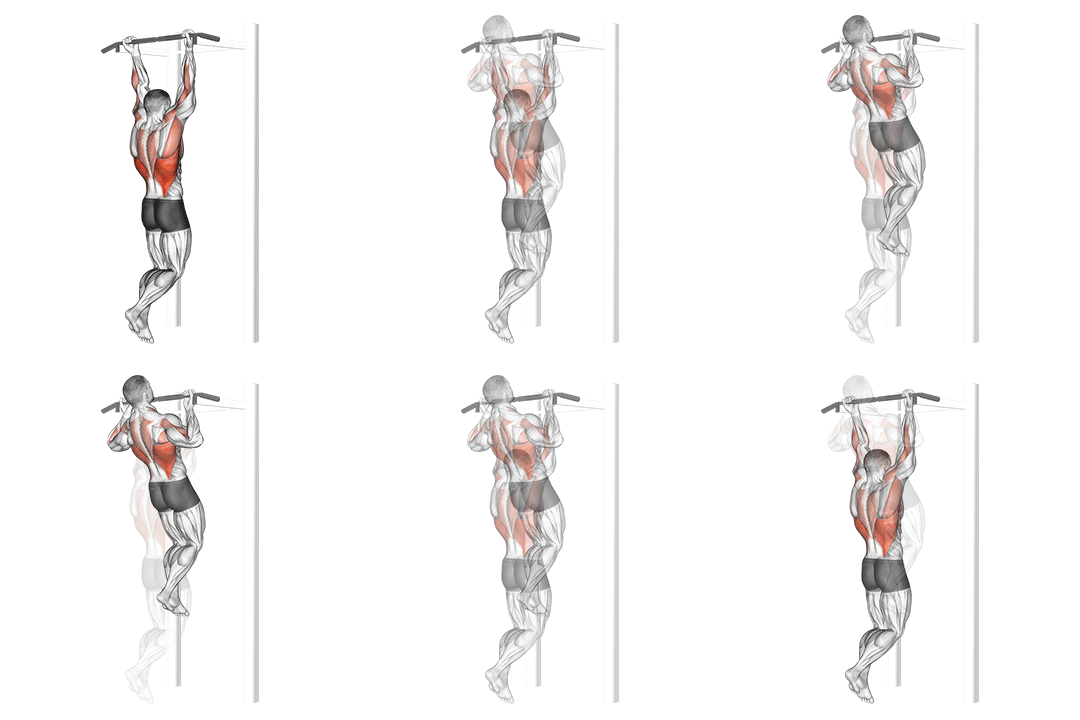
- Start by standing under a pull-up bar and reach up to grasp it with an underhand (supinated) grip, hands shoulder-width apart.
- Hang from the bar with your arms fully extended and your body straight. This is your starting position.
- Engage your core and pull your body upward by bending your elbows and driving them down towards your sides.
- Continue pulling until your chin is above the bar.
- Pause briefly at the top, then slowly lower yourself back to the starting position with control.
- Repeat for the desired number of repetitions.
Tips
- Ensure your grip is secure before beginning each repetition.
- Keep your body as straight as possible to avoid swinging.
- Engage your core to maintain stability throughout the movement.
- Avoid using momentum to pull yourself up; focus on controlled, deliberate movements.
- If you're a beginner, use resistance bands for assistance or perform negative chin-ups to build strength.
Where Do These Chin Ups Standards Come From?
The levels on this page are estimates from the FitnessVolt strength standards model. The Chin Ups table is an editorial FitnessVolt table, not a measured population. The Chin Ups in the Gym section uses self-reported Symmetric Strength data and is kept separate. Reader-submitted benchmarks appear only after enough entries are logged for this lift.
Standards data last refreshed: March 29, 2026
Frequently Asked Questions
Related Exercise Standards