What is a good Decline Crunch?
For a 180 lb male, an Intermediate Decline Crunch is about 27 reps. Advanced starts around 45 reps. Enter your own bodyweight below to get the exact standard and FVCP rank.
How Many Decline Crunch Should You Be Able to Do?
Decline Crunch rep targets for a 180 lb man, by training level:
Decline Crunch Standards by Bodyweight
Estimates from the FitnessVolt standards model. Updated March 29, 2026. Find the row closest to your bodyweight. Beginner is a first target for a new lifter, Novice a few months in, Intermediate about one to two years of structured training, Advanced several years, Elite the top of the table.
| BW (lbs) | Beginner | Novice | Intermediate | Advanced | Elite |
|---|---|---|---|---|---|
| 110 | < 1 | 17 | 39 | 65 | 94 |
| 120 | < 1 | 16 | 37 | 61 | 88 |
| 130 | < 1 | 15 | 35 | 58 | 84 |
| 140 | < 1 | 14 | 33 | 55 | 79 |
| 150 | < 1 | 13 | 31 | 52 | 75 |
| 160 | < 1 | 13 | 30 | 50 | 72 |
| 170 | < 1 | 12 | 28 | 47 | 68 |
| 180 | < 1 | 11 | 27 | 45 | 65 |
| 190 | < 1 | 10 | 26 | 43 | 62 |
| 200 | < 1 | 10 | 24 | 41 | 60 |
| 210 | < 1 | 9 | 23 | 40 | 57 |
| 220 | < 1 | 9 | 22 | 38 | 55 |
| 230 | < 1 | 8 | 21 | 36 | 53 |
| 240 | < 1 | 8 | 20 | 35 | 51 |
| 250 | < 1 | 7 | 19 | 33 | 49 |
| 260 | < 1 | 7 | 18 | 32 | 47 |
| 270 | < 1 | 7 | 17 | 31 | 45 |
| 280 | < 1 | 6 | 16 | 30 | 44 |
| 290 | < 1 | 6 | 16 | 29 | 42 |
| 300 | < 1 | 5 | 15 | 27 | 41 |
| 310 | < 1 | 5 | 14 | 26 | 39 |
| 90 | < 1 | 9 | 36 | 70 | 109 |
| 100 | < 1 | 10 | 35 | 67 | 104 |
| 110 | < 1 | 10 | 35 | 65 | 99 |
| 120 | < 1 | 10 | 34 | 63 | 95 |
| 130 | < 1 | 11 | 33 | 60 | 91 |
| 140 | < 1 | 11 | 32 | 58 | 88 |
| 150 | < 1 | 11 | 31 | 56 | 84 |
| 160 | < 1 | 10 | 30 | 54 | 81 |
| 170 | < 1 | 10 | 30 | 53 | 78 |
| 180 | < 1 | 10 | 29 | 51 | 75 |
| 190 | < 1 | 10 | 28 | 49 | 73 |
| 200 | < 1 | 10 | 27 | 48 | 70 |
| 210 | < 1 | 10 | 26 | 46 | 68 |
| 220 | < 1 | 9 | 25 | 45 | 66 |
| 230 | < 1 | 9 | 24 | 43 | 64 |
| 240 | < 1 | 9 | 24 | 42 | 62 |
| 250 | < 1 | 9 | 23 | 41 | 60 |
| 260 | < 1 | 8 | 22 | 40 | 58 |
The Decline Crunch standard at each level as bodyweight rises, for the sex selected above. Exact numbers in the table above.
Decline Crunch Standards by Age
How the Decline Crunch standards change with age, in reps. This table is not tied to one bodyweight, so read it for the trend and use the bodyweight table above for your own number.
| Age | Beginner | Novice | Intermediate | Advanced | Elite |
|---|---|---|---|---|---|
| 15 | < 1 | 7 | 20 | 37 | 56 |
| 20 | < 1 | 10 | 27 | 47 | 69 |
| 25 | < 1 | 11 | 29 | 49 | 71 |
| 30 | < 1 | 11 | 29 | 49 | 71 |
| 35 | < 1 | 11 | 29 | 49 | 71 |
| 40 | < 1 | 11 | 29 | 49 | 71 |
| 45 | < 1 | 10 | 26 | 45 | 66 |
| 50 | < 1 | 8 | 22 | 40 | 60 |
| 55 | < 1 | 6 | 18 | 35 | 54 |
| 60 | < 1 | 2 | 14 | 30 | 46 |
| 65 | < 1 | < 1 | 10 | 24 | 39 |
| 70 | < 1 | < 1 | 7 | 18 | 32 |
| 75 | < 1 | < 1 | 3 | 13 | 25 |
| 80 | < 1 | < 1 | < 1 | 9 | 20 |
| 85 | < 1 | < 1 | < 1 | 6 | 15 |
| 90 | < 1 | < 1 | < 1 | 3 | 10 |
| 15 | < 1 | 5 | 23 | 48 | 75 |
| 20 | < 1 | 9 | 31 | 59 | 90 |
| 25 | < 1 | 10 | 33 | 61 | 93 |
| 30 | < 1 | 10 | 33 | 61 | 93 |
| 35 | < 1 | 10 | 33 | 61 | 93 |
| 40 | < 1 | 10 | 33 | 61 | 93 |
| 45 | < 1 | 8 | 29 | 56 | 87 |
| 50 | < 1 | 6 | 26 | 51 | 80 |
| 55 | < 1 | 4 | 22 | 45 | 71 |
| 60 | < 1 | 1 | 17 | 38 | 63 |
| 65 | < 1 | < 1 | 13 | 32 | 54 |
| 70 | < 1 | < 1 | 9 | 26 | 45 |
| 75 | < 1 | < 1 | 6 | 20 | 37 |
| 80 | < 1 | < 1 | 2 | 15 | 30 |
| 85 | < 1 | < 1 | < 1 | 10 | 24 |
| 90 | < 1 | < 1 | < 1 | 7 | 19 |
The Decline Crunch standard at each level as age rises, for the sex selected above. Exact numbers in the table above.
Check Your Decline Crunch Level
What the Decline Crunch Strength Levels Mean
You are working toward your first full-range reps. An easier version or a shorter range is the normal starting point.
You can do a few full-range reps in a row with control. Adding one rep to your best set every week or two is steady progress here.
You can do a solid set of clean reps without swinging, bouncing or cutting the range short. Two or three sessions a week with planned sets keep the number climbing.
Long sets with strict form are routine for you. Many lifters at this level add load with harder variations to keep progressing.
Rep counts this high for your bodyweight take years of focused training. Weighted or harder variations are usually the next challenge.
How to Progress Your Decline Crunch
Tier-specific training recommendations to move your Decline Crunch to the next level.
- Start with an easier version you can do for 8 to 12 clean reps.
- Move to the full version once 12 clean reps feel easy.
- End each set one or two reps before your form breaks.
- Train the movement 2 to 3 times a week with several sets, not one all-out set.
- Add one rep to one set each session, and keep the full range.
- Test your max reps every 3 to 4 weeks, not every session.
- Once you can do 12 to 15 strict reps, add weight and train in the 5 to 8 rep range.
- Slow the lowering phase or pause at the hardest point.
- Keep one high-rep day a week so your max set keeps growing.
- Run 4 to 6 week blocks that build volume, then ease off the week before a max test.
- Track your best set and your weighted reps: both show progress.
- Your bodyweight changes your rep count directly, so compare tests at a similar weight.
How to Perform Decline Crunch
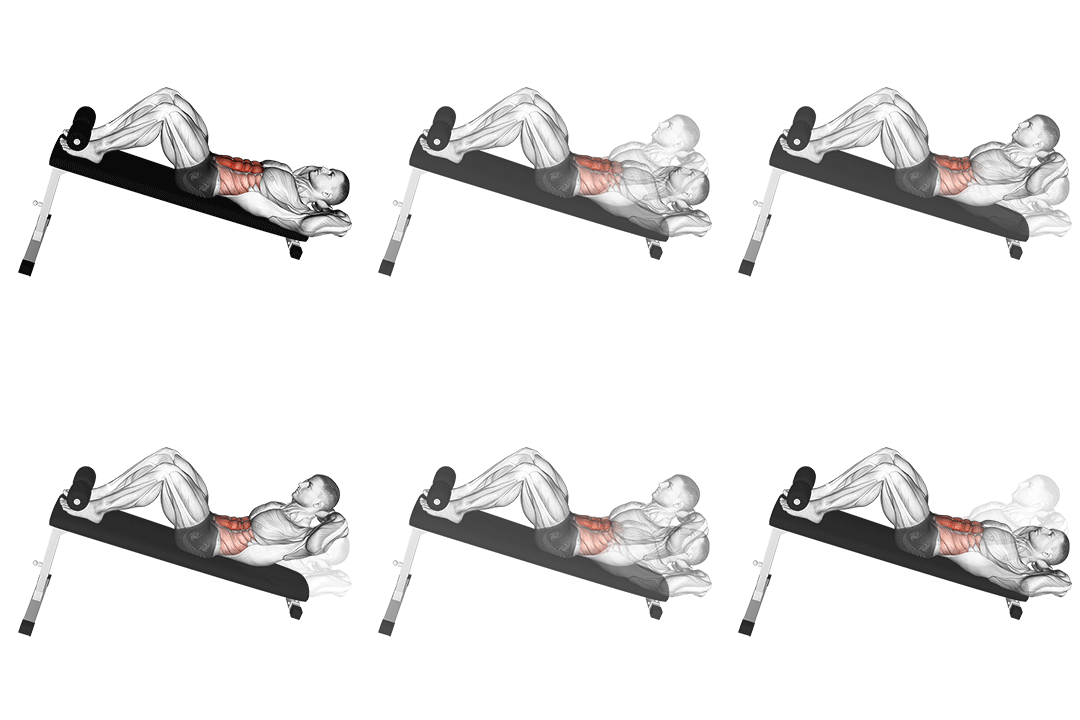
- Set a decline bench to a comfortable angle, typically between 30-45 degrees, and secure your feet under the foot pads.
- Lie back on the bench with your head at the lower end and hands either across your chest or behind your head for support.
- Engage your core and lift your upper body towards your knees in a controlled motion, exhaling as you crunch up.
- Pause briefly at the top of the movement, ensuring you feel a strong contraction in your abs.
- Slowly lower your upper body back to the starting position, inhaling as you descend.
- Repeat for the desired number of repetitions, maintaining proper form and avoiding pulling on your neck.
Tips
- Keep your movements slow and controlled to maximize muscle engagement.
- Avoid using momentum; focus on using your core to lift your body.
- Do not pull on your neck with your hands; keep your elbows wide and focus on the contraction in your abs.
- Adjust the decline angle to match your fitness level and increase intensity gradually.
Where Do These Decline Crunch Standards Come From?
The levels on this page are estimates from the FitnessVolt strength standards model. The Decline Crunch table is an editorial FitnessVolt table, not a measured population. There is no competition or gym dataset for the Decline Crunch itself. Reader-submitted benchmarks appear only after enough entries are logged for this lift.
Standards data last refreshed: March 29, 2026
Frequently Asked Questions
Related Exercise Standards