What is a good Pull Ups?
The Intermediate Pull Ups standard is about 13 reps for a 180 lb man and 6 reps for a 140 lb woman. Advanced starts around 23 reps for men and 13 reps for women. Enter your bodyweight below for your exact standard. These are estimates from the FitnessVolt standards model, not averages of what people lift in the gym.
How Many Pull Ups Should You Be Able to Do?
Pull Ups rep targets for a 180 lb man, by training level:
Pull Ups Standards by Bodyweight
Estimates from the FitnessVolt standards model. Gym data has its own section below. Updated March 29, 2026. Find the row closest to your bodyweight. Beginner is a first target for a new lifter, Novice a few months in, Intermediate about one to two years of structured training, Advanced several years, Elite the top of the table.
| BW (lbs) | Beginner | Novice | Intermediate | Advanced | Elite |
|---|---|---|---|---|---|
| 110 | < 1 | 5 | 15 | 27 | 40 |
| 120 | < 1 | 6 | 15 | 26 | 39 |
| 130 | < 1 | 6 | 15 | 26 | 38 |
| 140 | < 1 | 6 | 15 | 25 | 37 |
| 150 | < 1 | 6 | 14 | 25 | 36 |
| 160 | < 1 | 6 | 14 | 24 | 34 |
| 170 | < 1 | 6 | 14 | 23 | 33 |
| 180 | < 1 | 6 | 13 | 23 | 32 |
| 190 | < 1 | 6 | 13 | 22 | 31 |
| 200 | < 1 | 6 | 13 | 21 | 30 |
| 210 | < 1 | 6 | 12 | 21 | 29 |
| 220 | < 1 | 6 | 12 | 20 | 28 |
| 230 | < 1 | 5 | 11 | 19 | 27 |
| 240 | < 1 | 5 | 11 | 19 | 27 |
| 250 | < 1 | 5 | 10 | 18 | 26 |
| 260 | < 1 | 5 | 10 | 17 | 25 |
| 270 | < 1 | 4 | 10 | 17 | 24 |
| 280 | < 1 | 4 | 10 | 16 | 23 |
| 290 | < 1 | 4 | 9 | 16 | 23 |
| 300 | < 1 | 3 | 9 | 15 | 22 |
| 310 | < 1 | 3 | 9 | 15 | 21 |
| 90 | < 1 | < 1 | 6 | 14 | 25 |
| 100 | < 1 | < 1 | 6 | 14 | 24 |
| 110 | < 1 | < 1 | 6 | 14 | 24 |
| 120 | < 1 | < 1 | 7 | 14 | 23 |
| 130 | < 1 | < 1 | 7 | 14 | 22 |
| 140 | < 1 | < 1 | 6 | 13 | 21 |
| 150 | < 1 | < 1 | 6 | 13 | 21 |
| 160 | < 1 | < 1 | 6 | 12 | 20 |
| 170 | < 1 | < 1 | 6 | 12 | 19 |
| 180 | < 1 | < 1 | 6 | 11 | 18 |
| 190 | < 1 | < 1 | 5 | 11 | 17 |
| 200 | < 1 | < 1 | 5 | 10 | 17 |
| 210 | < 1 | < 1 | 5 | 10 | 16 |
| 220 | < 1 | < 1 | 4 | 9 | 15 |
| 230 | < 1 | < 1 | 4 | 9 | 15 |
| 240 | < 1 | < 1 | 4 | 9 | 14 |
| 250 | < 1 | < 1 | 3 | 8 | 13 |
| 260 | < 1 | < 1 | 3 | 8 | 13 |
The Pull Ups standard at each level as bodyweight rises, for the sex selected above. Exact numbers in the table above.
Pull Ups Standards by Age
How the Pull Ups standards change with age, in reps. This table is not tied to one bodyweight, so read it for the trend and use the bodyweight table above for your own number.
| Age | Beginner | Novice | Intermediate | Advanced | Elite |
|---|---|---|---|---|---|
| 15 | < 1 | < 1 | 8 | 17 | 27 |
| 20 | < 1 | 4 | 13 | 24 | 36 |
| 25 | < 1 | 5 | 14 | 25 | 37 |
| 30 | < 1 | 5 | 14 | 25 | 37 |
| 35 | < 1 | 5 | 14 | 25 | 37 |
| 40 | < 1 | 5 | 14 | 25 | 37 |
| 45 | < 1 | 3 | 12 | 22 | 34 |
| 50 | < 1 | 1 | 9 | 19 | 30 |
| 55 | < 1 | < 1 | 7 | 16 | 26 |
| 60 | < 1 | < 1 | 4 | 12 | 21 |
| 65 | < 1 | < 1 | 1 | 8 | 16 |
| 70 | < 1 | < 1 | < 1 | 5 | 11 |
| 75 | < 1 | < 1 | < 1 | 1 | 8 |
| 80 | < 1 | < 1 | < 1 | < 1 | 4 |
| 85 | < 1 | < 1 | < 1 | < 1 | < 1 |
| 90 | < 1 | < 1 | < 1 | < 1 | < 1 |
| 15 | < 1 | < 1 | 1 | 9 | 17 |
| 20 | < 1 | < 1 | 6 | 14 | 24 |
| 25 | < 1 | < 1 | 6 | 15 | 26 |
| 30 | < 1 | < 1 | 6 | 15 | 26 |
| 35 | < 1 | < 1 | 6 | 15 | 26 |
| 40 | < 1 | < 1 | 6 | 15 | 26 |
| 45 | < 1 | < 1 | 5 | 13 | 23 |
| 50 | < 1 | < 1 | 3 | 10 | 19 |
| 55 | < 1 | < 1 | < 1 | 8 | 16 |
| 60 | < 1 | < 1 | < 1 | 5 | 12 |
| 65 | < 1 | < 1 | < 1 | 2 | 9 |
| 70 | < 1 | < 1 | < 1 | < 1 | 5 |
| 75 | < 1 | < 1 | < 1 | < 1 | 1 |
| 80 | < 1 | < 1 | < 1 | < 1 | < 1 |
| 85 | < 1 | < 1 | < 1 | < 1 | < 1 |
| 90 | < 1 | < 1 | < 1 | < 1 | < 1 |
The Pull Ups standard at each level as age rises, for the sex selected above. Exact numbers in the table above.
Pull Ups in the Gym
Self-reported lifts from the Symmetric Strength gym dataset, n=202,152, updated June 5, 2026. Symmetric Strength records this lift as total load: bodyweight plus any added weight, shown as an estimated 1RM in pounds (kilograms in brackets). These numbers do not convert to the rep targets above. Bodyweight classes with fewer than 100 entries are not shown.
| Bodyweight class | Sample size | 25th %ile | Median | 75th %ile | 90th %ile | Median × BW |
|---|---|---|---|---|---|---|
| 59kg | 4,203 | 150 lb (68.0 kg) | 165 lb (74.7 kg) | 187 lb (85.0 kg) | 220 lb (99.7 kg) | 1.27x |
| 66kg | 15,501 | 176 lb (79.8 kg) | 189 lb (85.9 kg) | 210 lb (95.3 kg) | 230 lb (104.5 kg) | 1.30x |
| 74kg | 39,138 | 196 lb (88.8 kg) | 212 lb (96.0 kg) | 231 lb (104.9 kg) | 251 lb (113.7 kg) | 1.30x |
| 83kg | 60,622 | 215 lb (97.5 kg) | 231 lb (105.0 kg) | 253 lb (114.6 kg) | 274 lb (124.2 kg) | 1.27x |
| 93kg | 47,757 | 232 lb (105.4 kg) | 252 lb (114.1 kg) | 274 lb (124.1 kg) | 298 lb (135.3 kg) | 1.23x |
| 105kg | 18,425 | 248 lb (112.3 kg) | 273 lb (123.7 kg) | 296 lb (134.4 kg) | 321 lb (145.5 kg) | 1.18x |
| 120kg | 5,403 | 260 lb (117.8 kg) | 286 lb (129.8 kg) | 314 lb (142.5 kg) | 339 lb (153.7 kg) | 1.08x |
| 120+kg | 1,534 | 164 lb (74.2 kg) | 277 lb (125.6 kg) | 330 lb (149.8 kg) | 367 lb (166.6 kg) | 0.98x |
Pull Ups in the Gym by Age
The same Symmetric Strength gym lifts, grouped by age bracket across all bodyweights. Age brackets with fewer than 100 entries are not shown.
| Age bracket | Sample size | 25th %ile | Median | 75th %ile | 90th %ile |
|---|---|---|---|---|---|
| <20 | 29,591 | 193 lb (87.4 kg) | 220 lb (99.8 kg) | 246 lb (111.6 kg) | 272 lb (123.3 kg) |
| 20-29 | 100,594 | 209 lb (94.9 kg) | 234 lb (106.0 kg) | 263 lb (119.1 kg) | 292 lb (132.5 kg) |
| 30-39 | 39,479 | 214 lb (97.2 kg) | 239 lb (108.5 kg) | 268 lb (121.6 kg) | 295 lb (134.0 kg) |
| 40-49 | 10,226 | 211 lb (95.6 kg) | 238 lb (108.2 kg) | 268 lb (121.6 kg) | 291 lb (132.1 kg) |
| 50-59 | 2,845 | 204 lb (92.5 kg) | 232 lb (105.3 kg) | 262 lb (118.8 kg) | 278 lb (126.1 kg) |
| 60+ | 1,189 | 190 lb (86.3 kg) | 232 lb (105.4 kg) | 248 lb (112.3 kg) | 266 lb (120.4 kg) |
Check Your Pull Ups Level
What the Pull Ups Strength Levels Mean
You are working toward your first full-range reps. Dead hangs, slow negatives and band-assisted reps are the normal starting tools.
You can do a few full-range reps in a row with control. Adding one rep to your best set every week or two is steady progress here.
You can do a solid set of clean reps without swinging, bouncing or cutting the range short. Two or three sessions a week with planned sets keep the number climbing.
Long sets with strict form are routine for you. Many lifters at this level add load with a weight belt or vest to keep progressing.
Rep counts this high for your bodyweight take years of focused training. Weighted or harder variations are usually the next challenge.
How to Progress Your Pull Ups
Tier-specific training recommendations to move your Pull Ups to the next level.
- Practice dead hangs and slow negatives: start at the top and lower yourself over 3 to 5 seconds.
- Use a band or an assisted machine for full-range reps, and reduce the help over time.
- End each set one or two reps before your form breaks.
- Train the movement 2 to 3 times a week with several sets, not one all-out set.
- Add one rep to one set each session, and keep the full range.
- Test your max reps every 3 to 4 weeks, not every session.
- Once you can do 12 to 15 strict reps, add weight and train in the 5 to 8 rep range.
- Slow the lowering phase or pause with your chin over the bar.
- Keep one high-rep day a week so your max set keeps growing.
- Run 4 to 6 week blocks that build volume, then ease off the week before a max test.
- Track your best set and your weighted reps: both show progress.
- Your bodyweight changes your rep count directly, so compare tests at a similar weight.
How to Perform Pull Ups
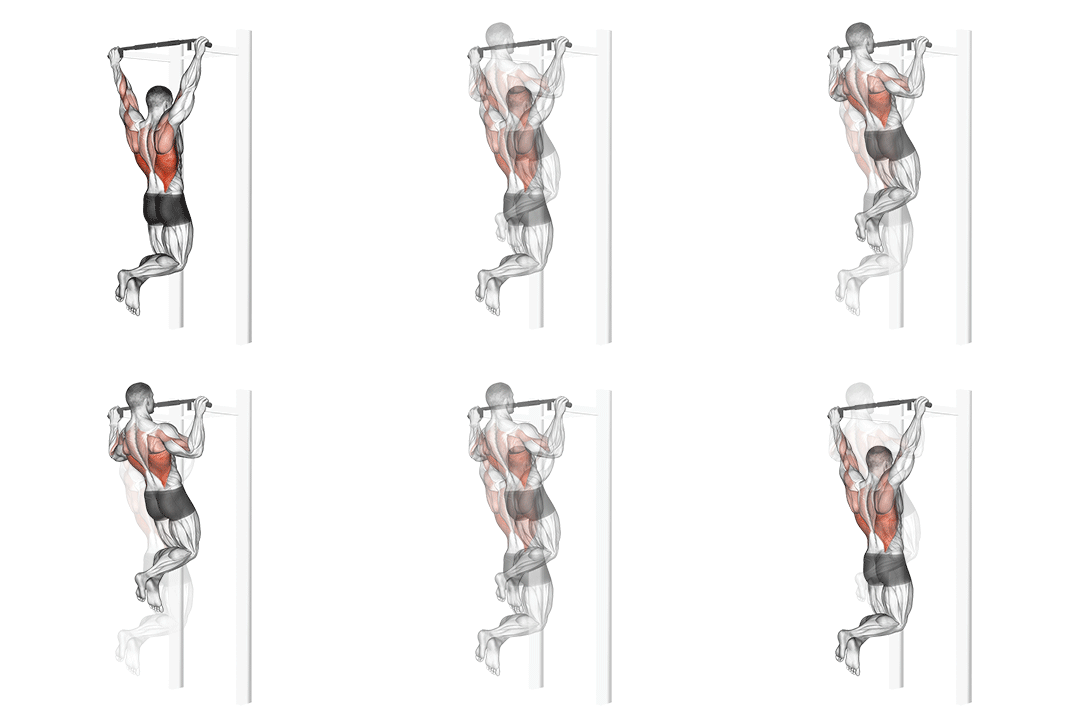
- Start by hanging from a pull-up bar with your palms facing away from you (overhand grip) and hands shoulder-width apart.
- Engage your core and pull your shoulder blades down and back.
- Begin the movement by pulling your body upward, focusing on driving your elbows down towards your hips.
- Continue to pull until your chin is above the bar.
- Pause briefly at the top, then slowly lower yourself back to the starting position with control.
- Repeat for the desired number of repetitions.
Tips
- Ensure a full range of motion by fully extending your arms at the bottom.
- Avoid swinging or using momentum; keep the movement controlled.
- If you're a beginner, use resistance bands for assistance or perform negative pull-ups.
- Engage your core throughout the exercise to maintain stability.
- Warm up your shoulders and wrists before starting to prevent injury.
Where Do These Pull Ups Standards Come From?
The levels on this page are estimates from the FitnessVolt strength standards model. The Pull Ups table is an editorial FitnessVolt table, not a measured population. The Pull Ups in the Gym section uses self-reported Symmetric Strength data and is kept separate. Reader-submitted benchmarks appear only after enough entries are logged for this lift.
Standards data last refreshed: March 29, 2026
Frequently Asked Questions
Related Exercise Standards