
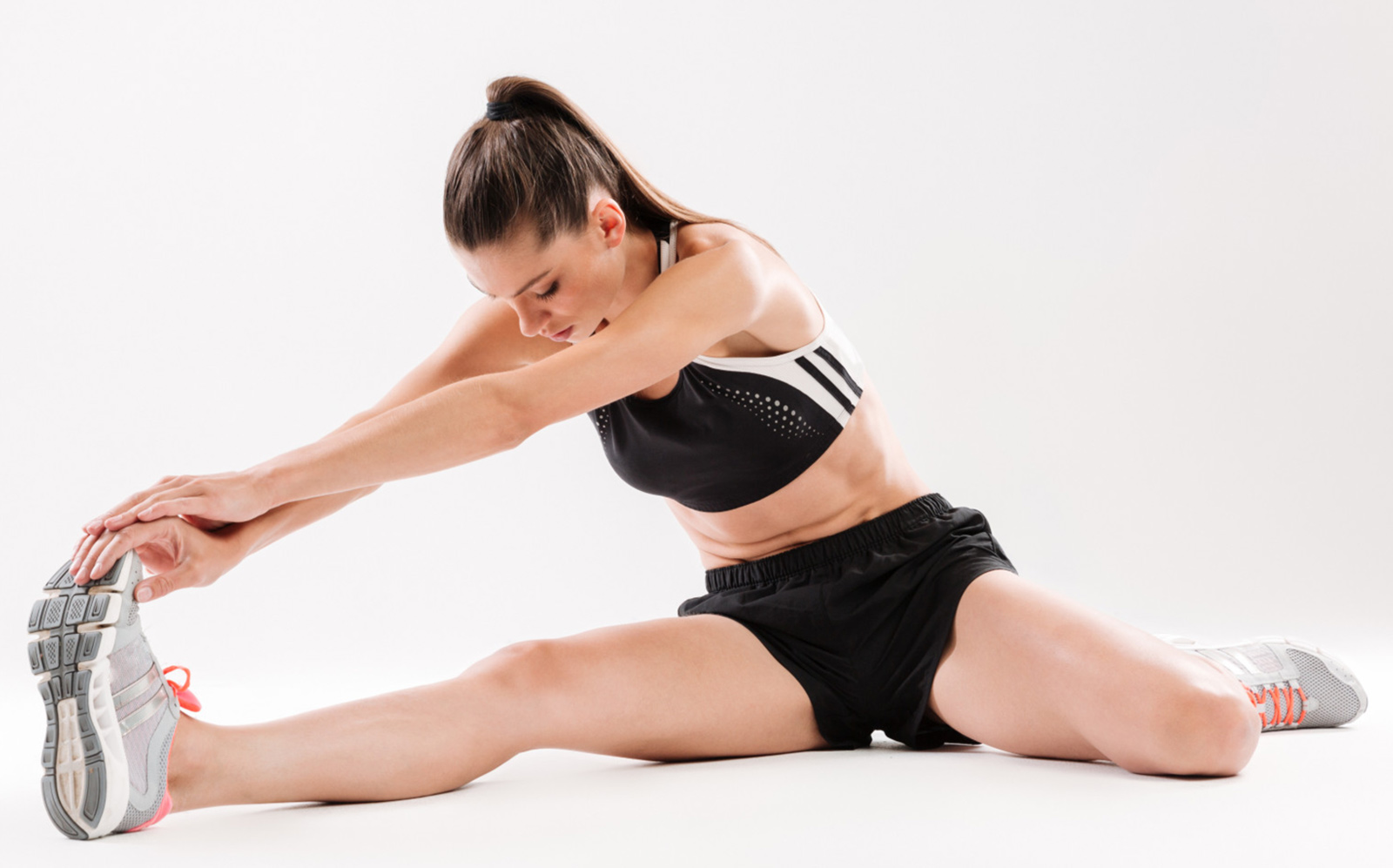
Stretching is arguably the most underrepresented component of fitness. In my experience as a 30-year veteran personal trainer, most exercisers are more than happy to put time into cardio, strength, and core training. But, when it comes to stretching, corners are often cut.
Common reasons for doing little or no stretching include:
- Lack of time
- No instant gratification
- It feels too easy to be beneficial
- Not knowing the benefits of stretching
- Find stretching boring
- Poor results from stretching
- Find stretching painful
While some of these reasons are understandable, I believe that stretching is good for everybody’s body. It can enhance every aspect of your fitness journey, profoundly affecting how you look, feel, and perform.
That’s not to say you need to develop the flexibility of an Olympic gymnast or sideshow contortionist for stretching to do you good. However, most people should stretch regularly if they want to stay fit, healthy, and injury-free.
Maintaining reasonable flexibility through stretching enhances your range of motion, prevents unwanted stiffness, enhances posture, and eases tension and stress (1). Consequently, I like to think of stretching as the “physiological hygiene” that keeps your muscles functioning as they should.
Unfortunately, there are several mistakes you can make that will make stretching less rewarding. In this article, I address the seven most common stretching errors and how to avoid them.
7 Common Stretching Mistakes to Avoid

I’ve been helping people stretch for over 30 years, and in my experience, these are the most common stretching mistakes. Avoid these errors and get much better results from your flexibility training.
1. Trying to Stretch Cold Muscles
Every good workout should start with a thorough warm-up, and that includes stretching. Warming up increases tissue temperature and blood flow, which makes muscles more pliable and elastic. Stretching cold muscles is more likely to result in injury and also makes your stretches less effective, as your muscles will feel tighter.
Broadly speaking, there are two ways to warm up before stretching: actively and passively.
Active warm-ups involve movement, e.g., a few minutes on a stationary bike. In contrast, passive warm-ups include things like putting on extra clothing, massage, or sitting in a sauna.
Both active and passive warm-ups enhance blood flow and increase tissue temperature, preparing your muscles for stretching. These methods can also be combined, e.g., warming up initially by jogging but then using a foam roller to massage away muscle tension.
Solution: Avoid stretching cold muscles. Instead, prepare them with a few minutes of easy cardio or a passive warming activity, e.g., a light massage. Alternatively, do the bulk of your stretches toward the end of a workout. This is a great time to stretch as a) you are already warm, and b) it helps with the transition from intense training to relaxation and recovery (2).
2. Not Stretching Often Enough
Many exercisers stretch briefly after working out, i.e., as part of their cool-down. However, this is probably not often or long enough to improve flexibility. That’s because the average person spends many hours locked into fixed postures, and it’ll take more than a few minutes of stretching a week to undo the muscle-tightening effects of prolonged immobility.
For example, most people spend hours each day sitting in chairs. This puts multiple muscles into a flexed or shortened position, including the hip flexors, hamstrings, and rectus abdominis.
So, while a few minutes of stretching each week is better than nothing, it probably won’t offset all that time when your muscles are held in a shortened position. Consequently, it’ll take a more concerted effort to improve your flexibility.
Animals instinctively understand the importance of stretching little and often. Cats and dogs are a perfect example, and even the laziest pets stretch many times a day, even if it’s only as they move from one resting position to another.
Solution: While stretching as part of your workouts is a step in the right direction, you must stretch more often to optimize flexibility (3). One way to do this is by breaking up long periods of sitting with hourly stretches. This will not only enhance your flexibility but will also help reduce the damaging effect of prolonged sitting.
3. Stretching All Muscles Equally

Stretching can be very time-consuming. After all, even if you focus on just the major muscles, a full-body stretch can take 10-15 minutes to complete. Needless to say, this is much longer than most people want to spend on their flexibility.
However, there is no need to stretch all your muscles equally. In fact, several muscles don’t really need stretching at all. Subsequently, it’s possible to reduce your flexibility training down to just a handful of stretches, making working on your flexibility more convenient.
In my experience, the muscles that tend to be the tightest and, therefore, need the most attention are:
Stretching these muscles will fix many of the most common flexibility issues and should only take a few minutes to complete. As such, you can work on these muscles several times per day, which will produce noticeable results in a few short weeks.
Solution: Do a flexibility audit to determine which of your muscles are the tightest. If you spend a lot of time sitting, this will probably be those listed above. Spend most of your time stretching these muscles, attending to them a couple of times a day. This is arguably the most effective and efficient way to improve flexibility.
4. Holding Your Breath While Stretching
Muscles stretch best when you are relaxed, and relaxation is a function of the parasympathetic nervous system (PNS). The parasympathetic nervous system helps reduce muscle tension, allowing for the deepest stretch.
Holding your breath causes stress, triggering the sympathetic nervous system (SNS). This increases muscle tension, making it harder to stretch as effectively. In contrast, slow, rhythmic breathing creates a parasympathetic nervous response, which is more compatible with flexibility training (2).
Stretching too aggressively, working in an awkward or uncomfortable position, or a simple lack of mindfulness can all result in breath holding, potentially undermining your stretching experience.
Solution: Focus on your breath when you are stretching. Inhale and exhale slowly through your nose to maximize relaxation. Time the length of your stretches by counting breaths, e.g., ten relaxed breaths will take about 60-70 seconds, which is perfect for developing your flexibility.
5. Stretching Too Aggressively
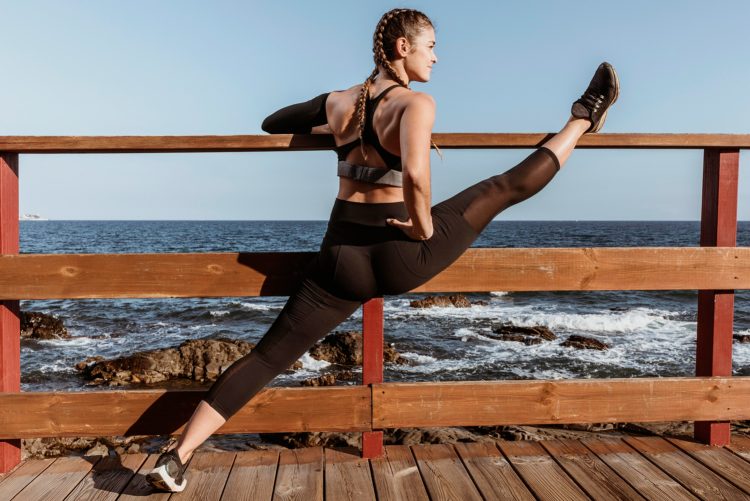
“No pain, no gain” is a common fitness mantra. This makes a certain amount of sense, given how effective intense, uncomfortable workouts usually are. However, stretching too intensely can cause severe muscle, tendon, and joint injuries, so it’s best to dial things back and stretch more gently.
When stretching, you should take your muscles to the so-called point of bind, or POB. This is where you feel mild tension in the target muscle. Hold this position for 10-30 seconds and, as your muscles relax, move to a new, deeper POB (3). Repeat this sequence several times before switching to another body part.
Stretching too far too fast could cause muscle fiber tears and also triggers a contraction, essentially shortening the muscle you are trying to extend. Needless to say, this is the opposite of what a good flexibility program should achieve.
You’ve probably stretched too far if you experience:
- Pain in the target muscle
- Muscle shaking
- Tingling in your extremities
- Burning down the limb being stretched
Solution: Ease into each stretch and hold at the point of mild tension and slight discomfort. Do not force your muscles to stretch further than is comfortable. Gradually increase the depth of the stretch as your muscles relax, and back off if you feel pain, burning, or shaking, which all indicate you are overstretching.
6. Only Doing One Type of Stretching
Most exercisers use a variety of workout methods to reach their fitness goals. For example, you might do squats, leg presses, leg extensions, leg curls, and lunges to develop your lower body. Similarly, there are several cardio options to choose from, including LISS, HIIT, Fartlek, threshold, Tabata, etc.
Despite this, many people limit themselves to just one type of stretching – static. With static stretching, you ease into the point of bind and then hold that position for 20-60 seconds.
While static stretching undeniably works, it’s not the only way to improve flexibility, and relying on it too much could make your flexibility training boring or less effective. Other stretching methods include:
- Partner-assisted stretching
- Dynamic stretching
- Ballistic stretching
- PNF stretching
- CRAC stretching
Solution: Match the type of stretching to your flexibility goals. While static stretching may be your go-to method, understand that things like dynamic and PNF stretching may be more effective in some situations.
7. Not Stretching Progressively
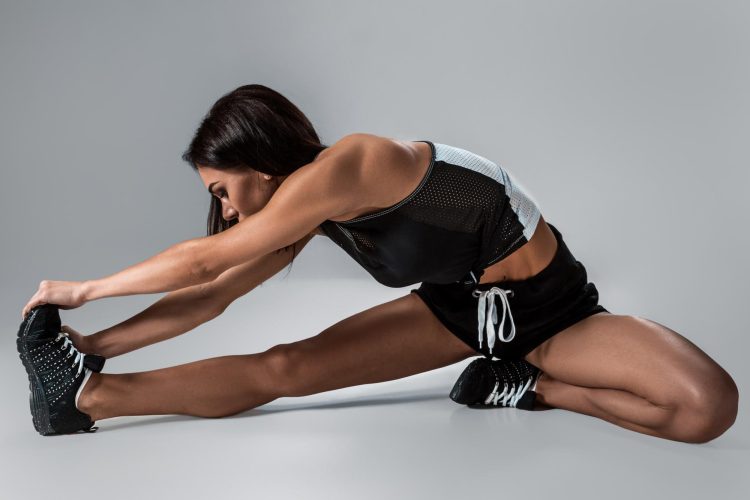
Your body adapts to the demands of your workout. For example, if you lift a 20-pound dumbbell, your muscles adapt to that workload. To get stronger, you must gradually lift more weight. Similarly, if you want to get fitter, you need to increase the intensity, duration, or frequency of your cardio workouts. This is called progressive overload.
In the same way, if you want to improve your flexibility, which we measure as the range of motion at a joint in degrees, your stretching routine must be progressive, too. Stretching to the same joint angle every time will maintain your flexibility. Gradually stretching a little further will improve it.
Solution: Don’t fall into the trap of stretching to the same point of bind. Instead, make a mental note of the position of your limbs and gradually try to increase your range of motion over several weeks. However, avoid forcing the stretch as doing so can cause injuries, as discussed back in section four.
Closing Thoughts
Whatever you are training for, stretching should be part of your program. Stretching helps maintain or improve your flexibility so you can move without stiffness or restriction. So, whether you are a budding Mr. Olympia or simply someone who wants to look and feel their best, stretching is a must.
However, despite being a relatively straightforward form of exercise, there are several mistakes you can make that’ll make your stretching less effective and could even cause injuries. As a personal trainer, I’m only too happy to help you get more from your time spent stretching.
Use the information in this article to make sure that all your stretches are as safe and beneficial as possible. And finally, as former WWE pro-wrestler Diamond Dallas Page says in his excellent book Yoga for Regular Guys, “Flexibility is Youth” so stay flexible to stay young.
Related: How Much Stretching Is Too Much? The Science Behind Overstretching and Safe Stretching Practices
References:
- Behm, D. G., Blazevich, A. J., Kay, A. D., & McHugh, M. (2016). Acute effects of muscle stretching on physical performance, range of motion, and injury incidence in healthy active individuals: a systematic review. Applied physiology, nutrition, and metabolism = Physiologie appliquee, nutrition et metabolisme, 41(1), 1–11.
- Imagawa, N., Mizuno, Y., Nakata, I., Komoto, N., Sakebayashi, H., Shigetoh, H., Kodama, T., & Miyazaki, J. (2023). The Impact of Stretching Intensities on Neural and Autonomic Responses: Implications for Relaxation. Sensors (Basel, Switzerland), 23(15), 6890.
- Nakamura, M., Sato, S., Hiraizumi, K., Kiyono, R., Fukaya, T., & Nishishita, S. (2020). Effects of static stretching programs performed at different volume-equated weekly frequencies on passive properties of muscle-tendon unit. Journal of biomechanics, 103, 109670.