

10 Best 45° Side Bend Alternatives for Lower Back Pain
If you can't perform the 45° side bend, use movements that still load the obliques without painful lumbar compression. Try side plank hip dips, standing lateral reaches, or lying windshield wipers. Cue: brace your core, keep ribs stacked, and move from the waist to emphasize external and internal oblique activation.
Original Exercise: 45° Side Bend
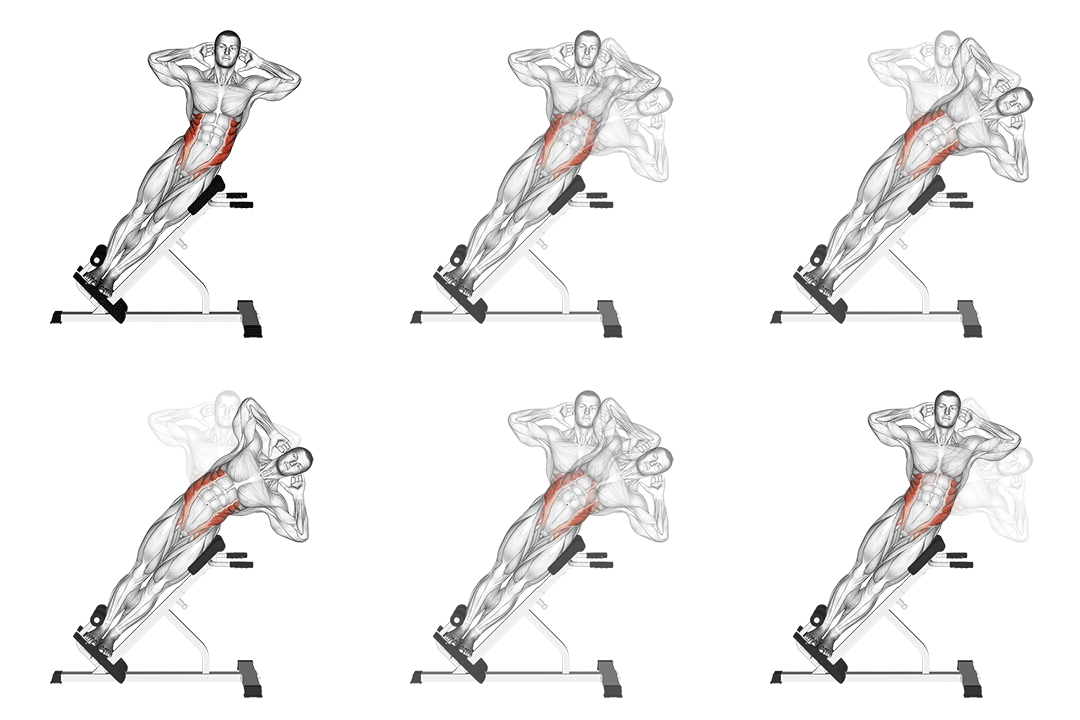
How to Perform 45° Side Bend
- Stand with your feet shoulder-width apart and your arms extended straight down by your sides.
- Keeping your back straight and your core engaged, slowly bend your torso to one side, lowering your hand towards your knee.
- Pause for a moment at the bottom, then slowly return to the starting position.
- Repeat on the other side.
- Continue alternating sides for the desired number of repetitions.
Best 45° Side Bend Alternatives
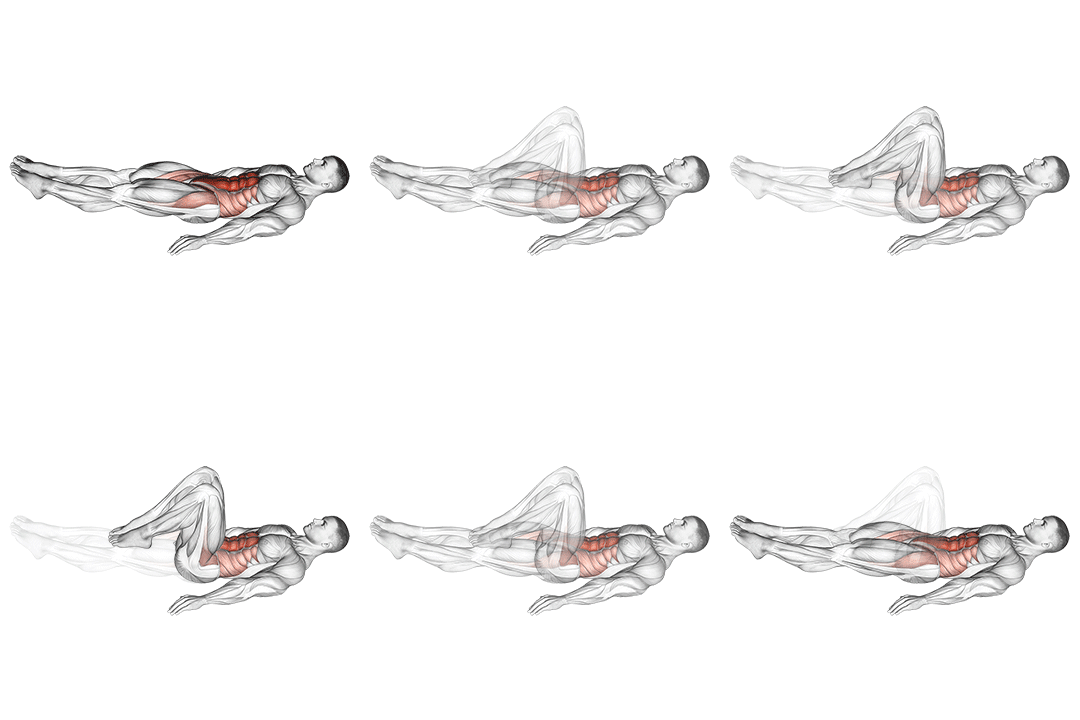
1. Bottoms-up
85.1% MatchHow to perform this exercise
- Lie flat on your back with your legs extended and your arms by your sides.
- Bend your knees and bring them towards your chest, keeping your feet off the ground.
- Engaging your abs, lift your hips off the ground, bringing your knees towards your head.
- Pause for a moment at the top, then slowly lower your hips back down to the starting position.
- Repeat for the desired number of repetitions.
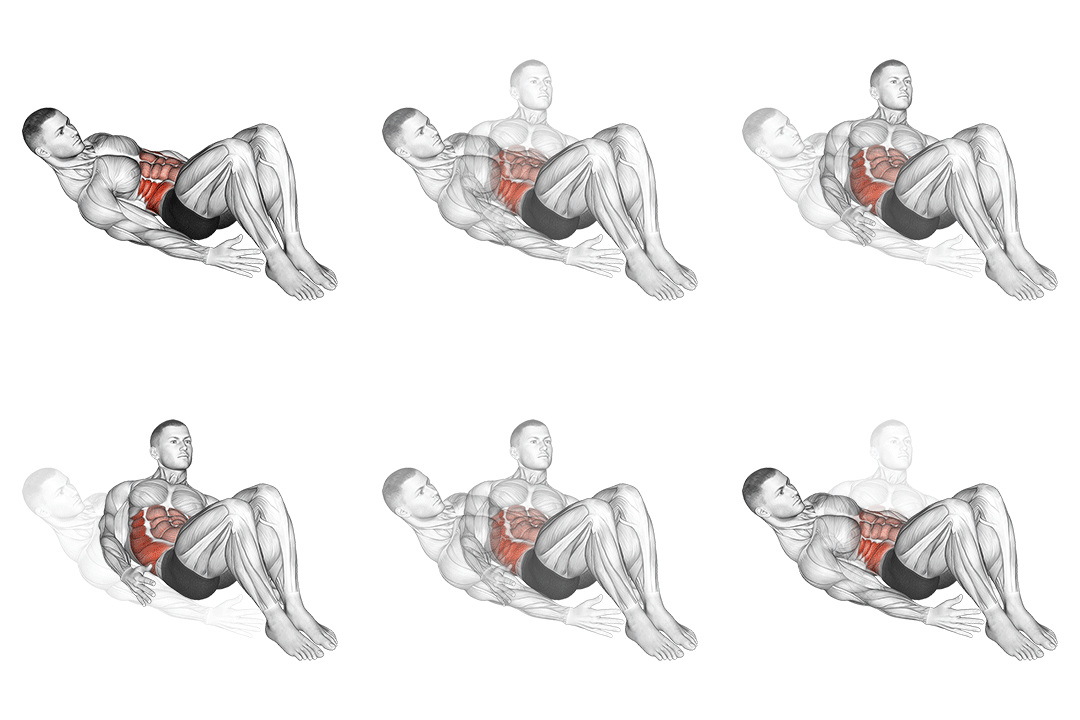
2. Alternate Heel Touchers
79.4% MatchHow to perform this exercise
- Lie flat on your back with your knees bent and feet flat on the ground.
- Extend your arms straight out to the sides, parallel to the ground.
- Engaging your abs, lift your shoulders off the ground and reach your right hand towards your right heel.
- Return to the starting position and repeat on the left side, reaching your left hand towards your left heel.
- Continue alternating sides for the desired number of repetitions.
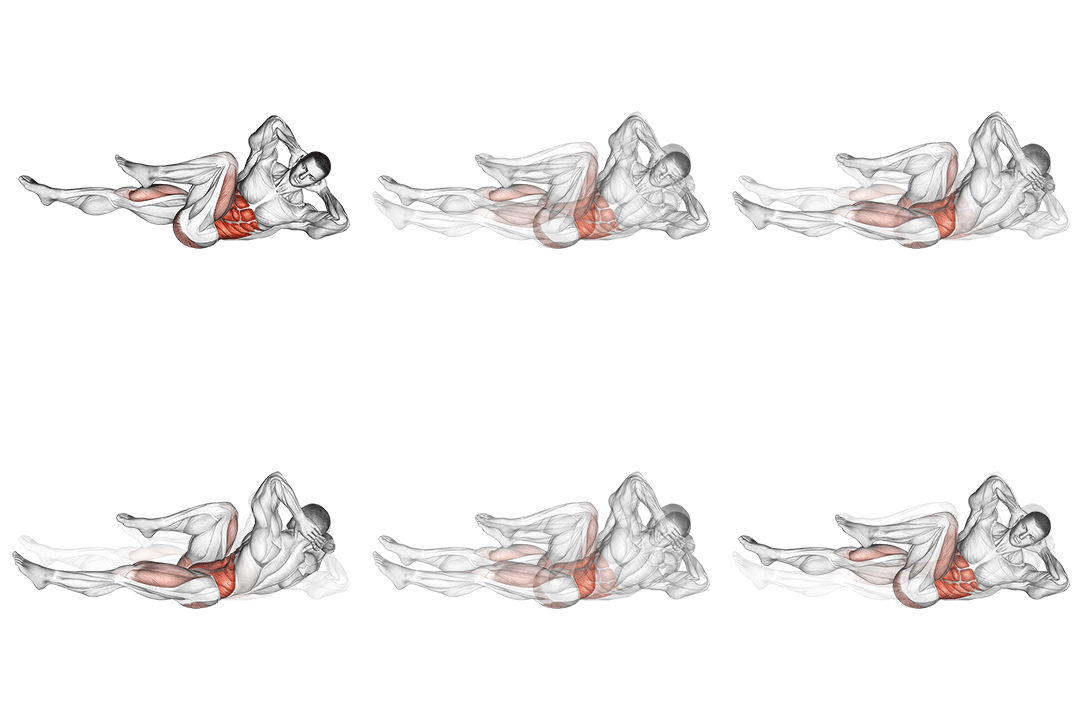
3. Elbow-to-knee
78.4% MatchHow to perform this exercise
- Start by lying flat on your back with your knees bent and feet flat on the ground.
- Place your hands behind your head with your elbows pointing outwards.
- Engage your abs and lift your upper body off the ground, bringing your right elbow towards your left knee.
- At the same time, bring your left knee towards your right elbow, creating a twisting motion.
- Pause for a moment at the top, then slowly lower your upper body and extend your legs back to the starting position.
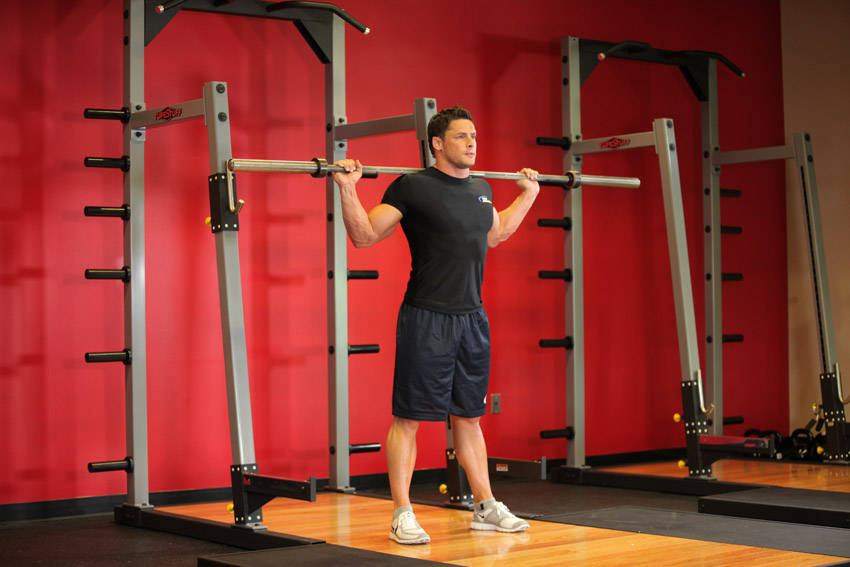
4. Barbell Side Bend
77.4% MatchHow to perform this exercise
- Stand up straight while holding a barbell placed on the back of your shoulders (slightly below the neck). Your feet should be shoulder width apart. This will be your starting position.
- While keeping your back straight and your head up, bend only at the waist to the right as far as possible. Breathe in as you bend to the side. Then hold for a second and come back up to the starting position as you exhale. Tip: Keep the rest of the body stationary.
- Now repeat the movement but bending to the left instead. Hold for a second and come back to the starting position.
- Repeat for the recommended amount of repetitions.
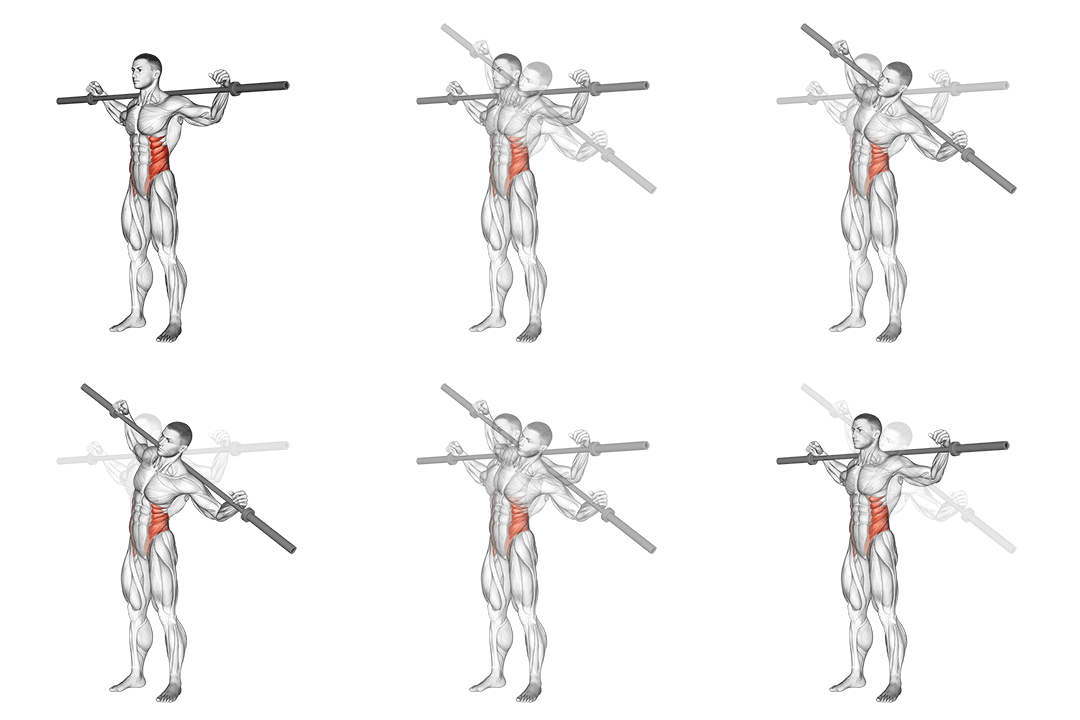
5. Barbell Side Bent V. 2
76% MatchHow to perform this exercise
- Stand with your feet shoulder-width apart and hold a barbell with both hands, palms facing down.
- Keep your back straight and core engaged throughout the exercise.
- Slowly bend your torso to the right side, lowering the barbell towards your right knee.
- Pause for a moment, then return to the starting position.
- Repeat the movement on the left side.
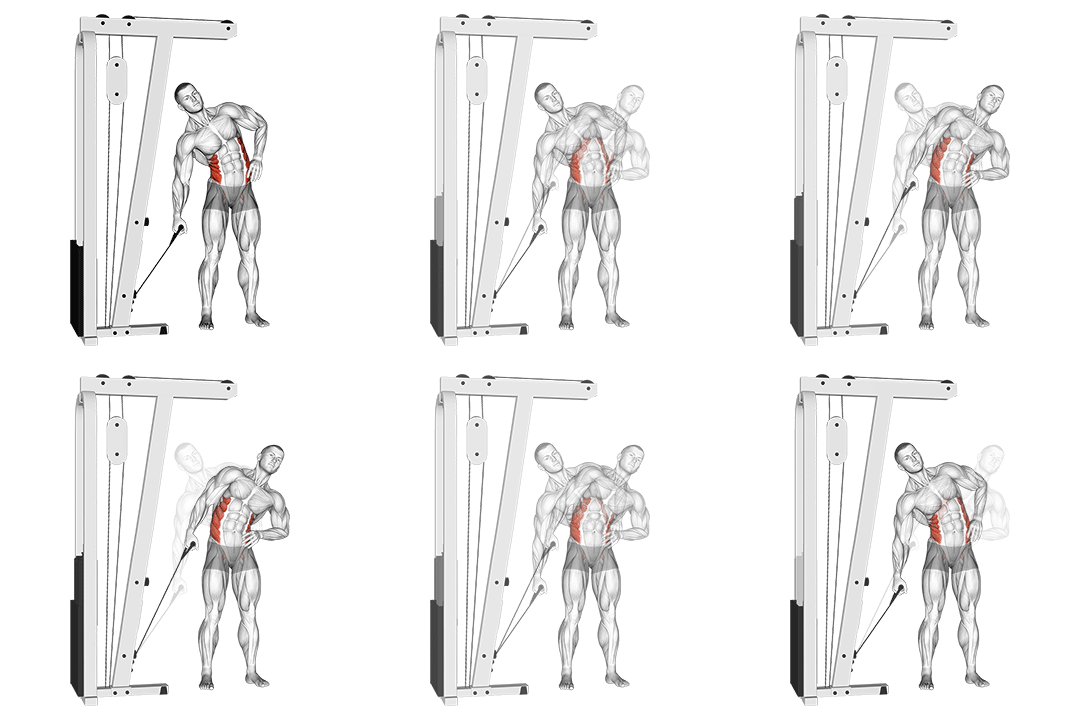
6. Cable Side Bend
75.4% MatchHow to perform this exercise
- Stand with your feet shoulder-width apart and grasp the cable handle with one hand.
- Keep your back straight and your core engaged.
- Slowly bend sideways at the waist, lowering the cable handle towards your knee.
- Pause for a moment, then return to the starting position.
- Repeat on the other side.
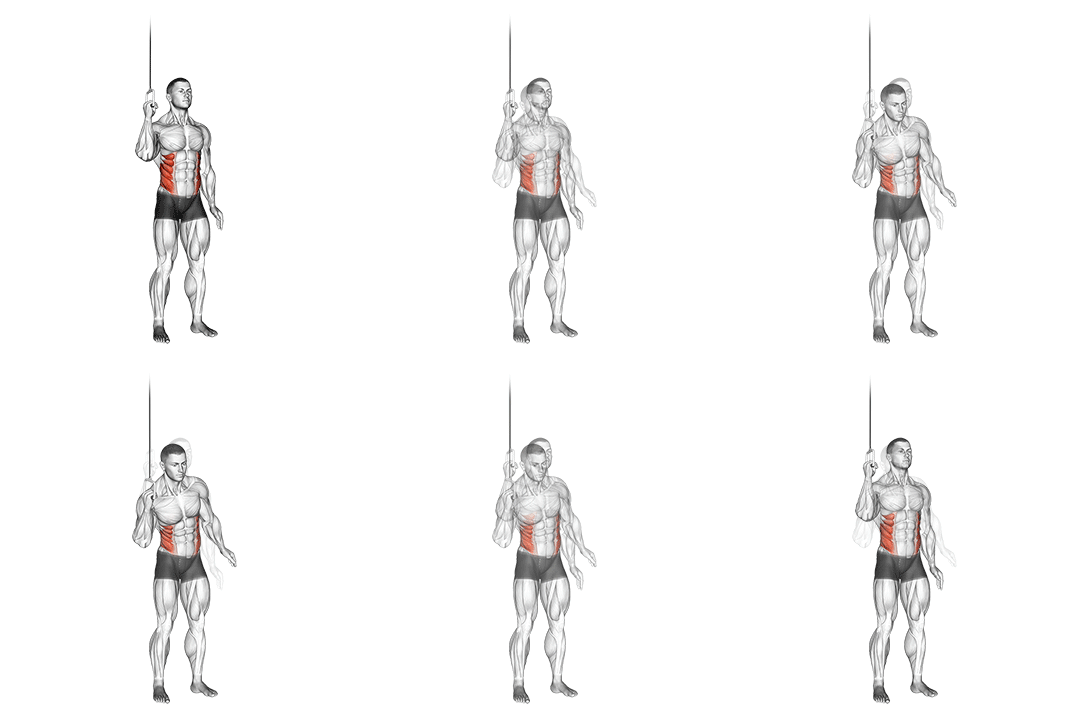
7. Cable Side Crunch
75.4% MatchHow to perform this exercise
- Attach a cable handle to a low pulley and stand sideways to the machine.
- Grasp the handle with the hand furthest from the machine and place your other hand on your hip.
- Keep your feet shoulder-width apart and your knees slightly bent.
- With your abs engaged, bend sideways at the waist, bringing your elbow down towards your hip.
- Pause for a moment at the bottom, then slowly return to the starting position.
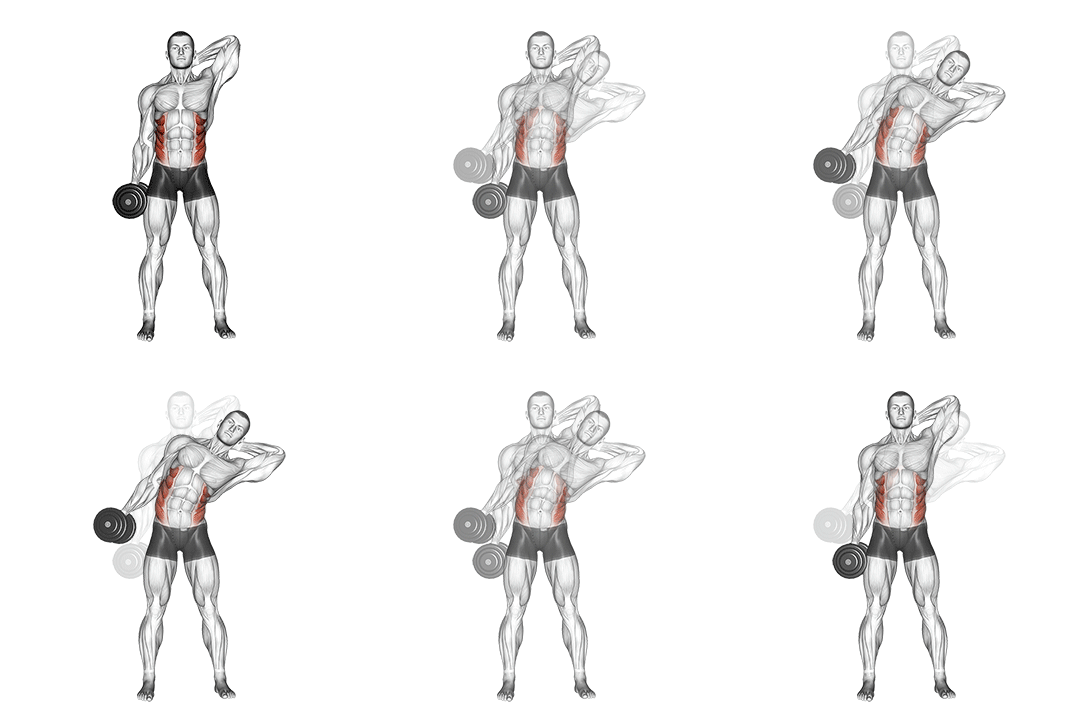
8. Dumbbell Side Bend
75.2% MatchHow to perform this exercise
- Stand up straight with your feet shoulder-width apart and hold a dumbbell in one hand, letting it hang down by your side.
- Keeping your back straight and your core engaged, slowly bend sideways at the waist towards the opposite side of the dumbbell, lowering the weight as far as you comfortably can.
- Pause for a moment, then slowly return to the starting position.
- Repeat for the desired number of repetitions, then switch sides and repeat.
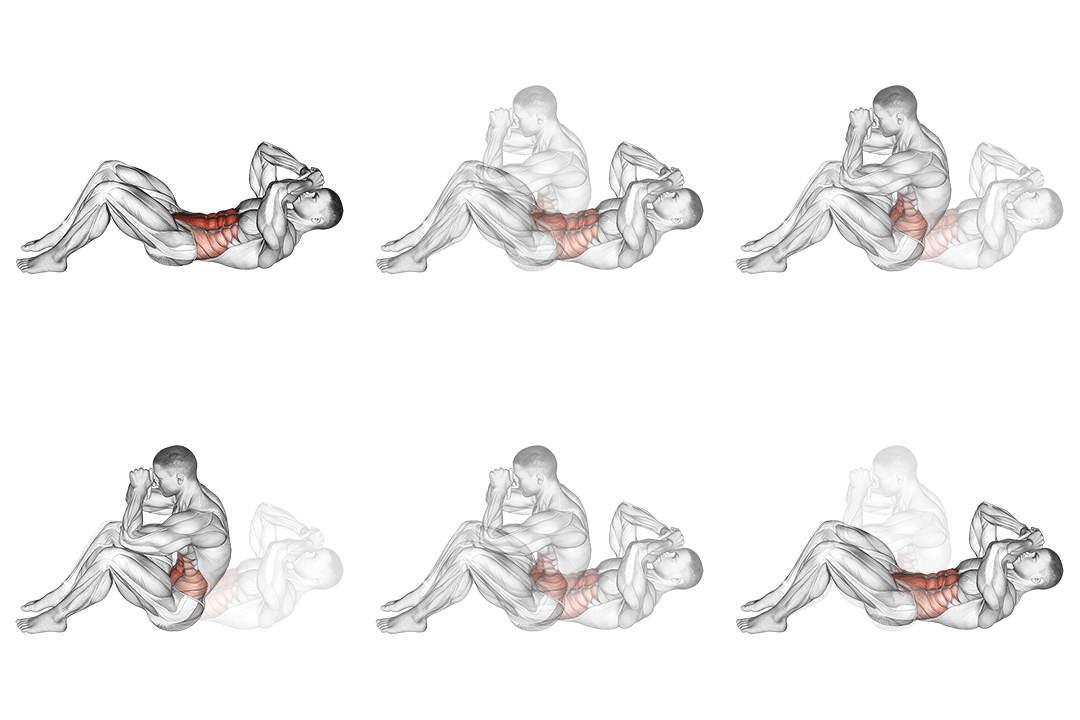
9. 3/4 Sit-up
74.4% MatchHow to perform this exercise
- Lie flat on your back with your knees bent and feet flat on the ground.
- Place your hands behind your head with your elbows pointing outwards.
- Engaging your abs, slowly lift your upper body off the ground, curling forward until your torso is at a 45-degree angle.
- Pause for a moment at the top, then slowly lower your upper body back down to the starting position.
- Repeat for the desired number of repetitions.
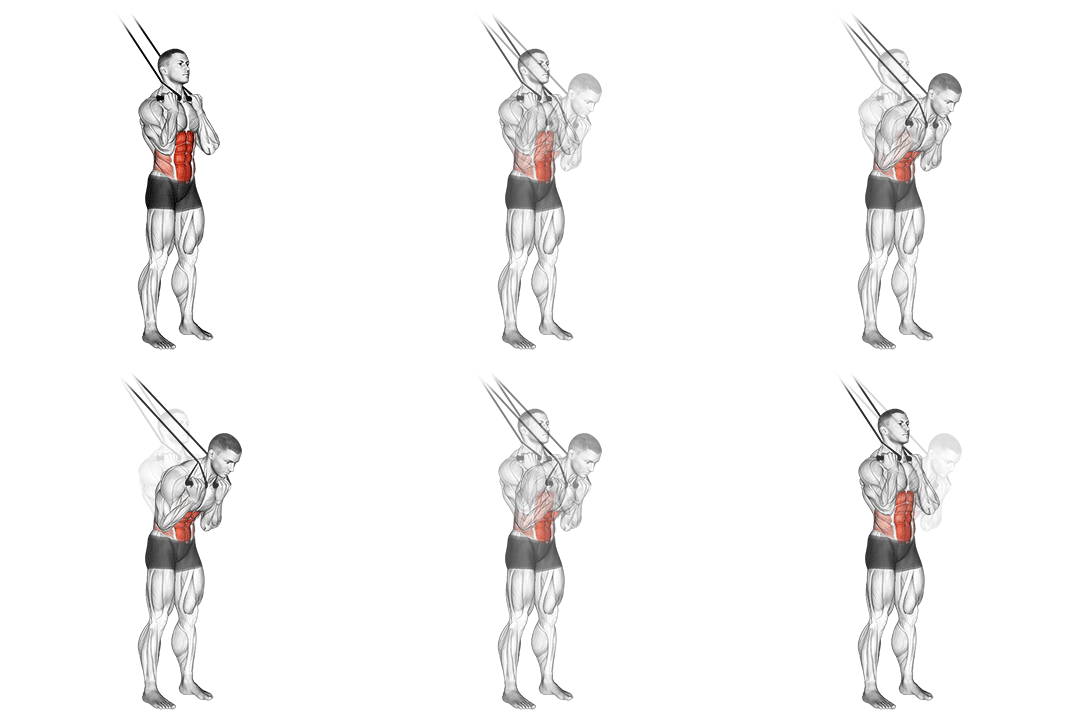
10. Band Standing Crunch
73.4% MatchHow to perform this exercise
- Attach the band to a sturdy anchor point at waist height.
- Stand facing away from the anchor point with your feet shoulder-width apart.
- Hold the band with both hands and bring it up to your chest, keeping your elbows bent and close to your body.
- Engage your abs and slowly crunch forward, bringing your chest towards your knees.
- Pause for a moment at the top of the crunch, then slowly return to the starting position.
Why You Might Need a 45° Side Bend Alternative
You may replace the 45° side bend because of low back pain, limited mobility, or a desire for anti-lateral-flexion training. Lateral bends create side-to-side lumbar compression that aggravates spondylosis or disc issues; anti-lateral-flexion holds (side planks) train obliques and transverse abdominis while reducing shear. If you lack equipment or need a safer progression, choose movements that maintain a neutral spine and emphasize controlled eccentric loading. Cue: draw the navel to the spine and avoid abrupt lateral lumbar collapse to protect the QL and erector spinae while still activating the obliques.
How to Choose the Right Substitute
Select a substitute based on pain, movement pattern, and training goal. For stability and spinal safety choose anti-lateral-flexion moves (side plank variations) that emphasize isometric oblique activation; cue: stack hips and press shoulder away from the floor. For dynamic hypertrophy pick controlled lateral flexion options (windshield wipers, standing trunk lateral raises) and progress with time under tension. For athletic carryover favor rotational-plus-lateral exercises to recruit obliques and lats. Always test range: stop if you feel sharp lumbar pain and prioritize pelvic alignment over range of motion.
Frequently Asked Questions
What muscles does 45° Side Bend work?
The 45° side bend primarily targets the external and internal obliques and secondarily stresses the rectus abdominis and quadratus lumborum. Biomechanically it produces ipsilateral lateral flexion of the spine; cue: lead the movement from the waist with ribs stacked so the obliques shorten and the QL controls descent.
What is the best bodyweight alternative to 45° Side Bend?
A side plank with slow hip dips is the best bodyweight substitute because it trains oblique strength with lower lumbar compression. Cue: stack feet, keep a straight line from shoulders to heels, and lower hips 3–5 cm with control to increase oblique activation.
Can I build muscle without doing 45° Side Bend?
Yes. You can hypertrophy the obliques with progressive overload principles using weighted carries, tempo-controlled lateral flexion movements, or higher-volume bodyweight variants like slow windshield wipers. Cue: increase time under tension and emphasize slow eccentrics while maintaining a braced core to maximize muscle recruitment.
More Exercise Alternatives
Find Alternatives for Any Exercise
Use our free tool to discover the best substitute exercises based on your available equipment and goals.
Try the Exercise Substitution Finder →