

10 Best Assisted Prone Rectus Femoris Stretch Alternatives for Quads
What can I do instead of Assisted Prone Rectus Femoris Stretch? Use standing heel-to-glute, the couch stretch, kneeling hip-flexor with knee bend, supine strap-assisted quad stretch, or seated quad mobilizations. Cue: pull your heel toward the glute while tucking the pelvis to bias the rectus femoris and avoid lumbar extension.
Original Exercise: Assisted Prone Rectus Femoris Stretch
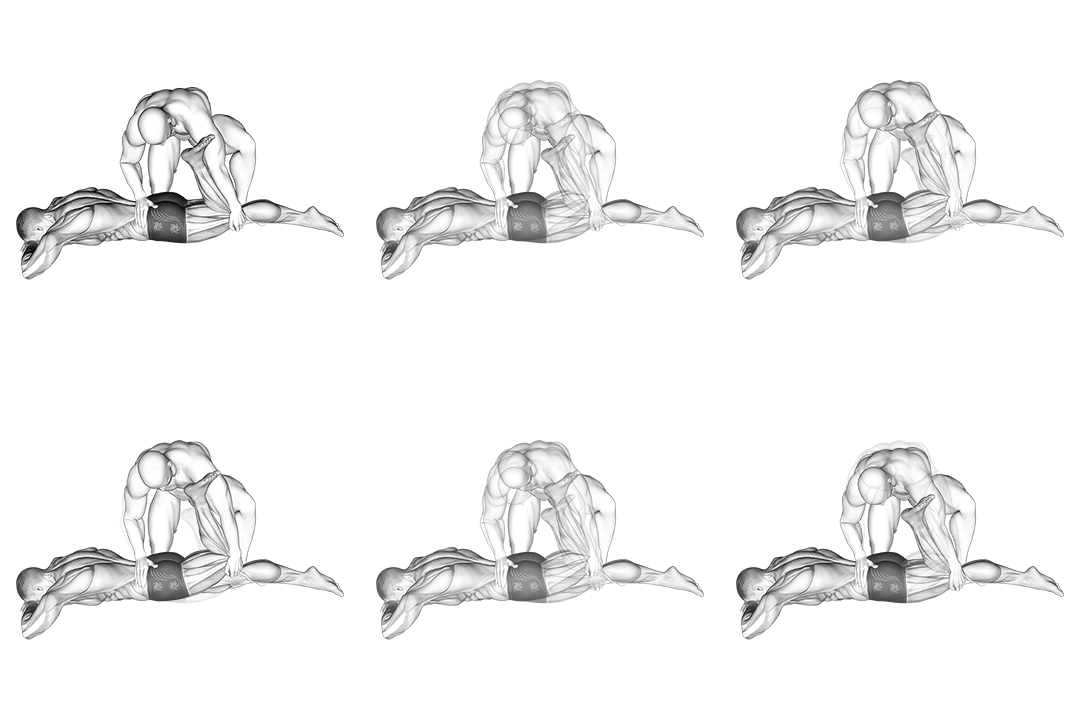
How to Perform Assisted Prone Rectus Femoris Stretch
- Lie face down on the ground with your legs straight.
- Bend your right knee and reach back with your right hand to grab your right foot or ankle.
- Gently pull your right foot or ankle towards your glutes, feeling a stretch in the front of your right thigh.
- Hold the stretch for 20-30 seconds.
- Release and repeat on the other side.
Best Assisted Prone Rectus Femoris Stretch Alternatives
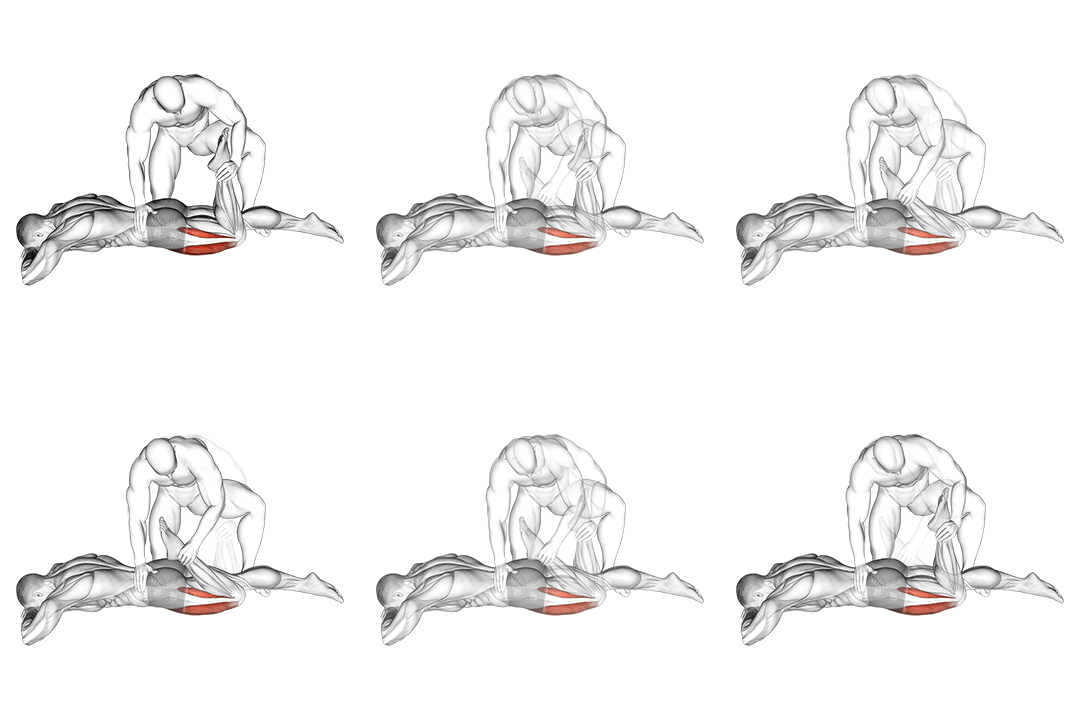
1. Assisted Prone Lying Quads Stretch
99.9% MatchHow to perform this exercise
- Lie face down on the ground with your legs extended.
- Bend your left knee and reach back with your left hand to grab your left foot or ankle.
- Gently pull your left foot towards your glutes, feeling a stretch in your left quad.
- Hold the stretch for 20-30 seconds, then release.
- Repeat with your right leg.
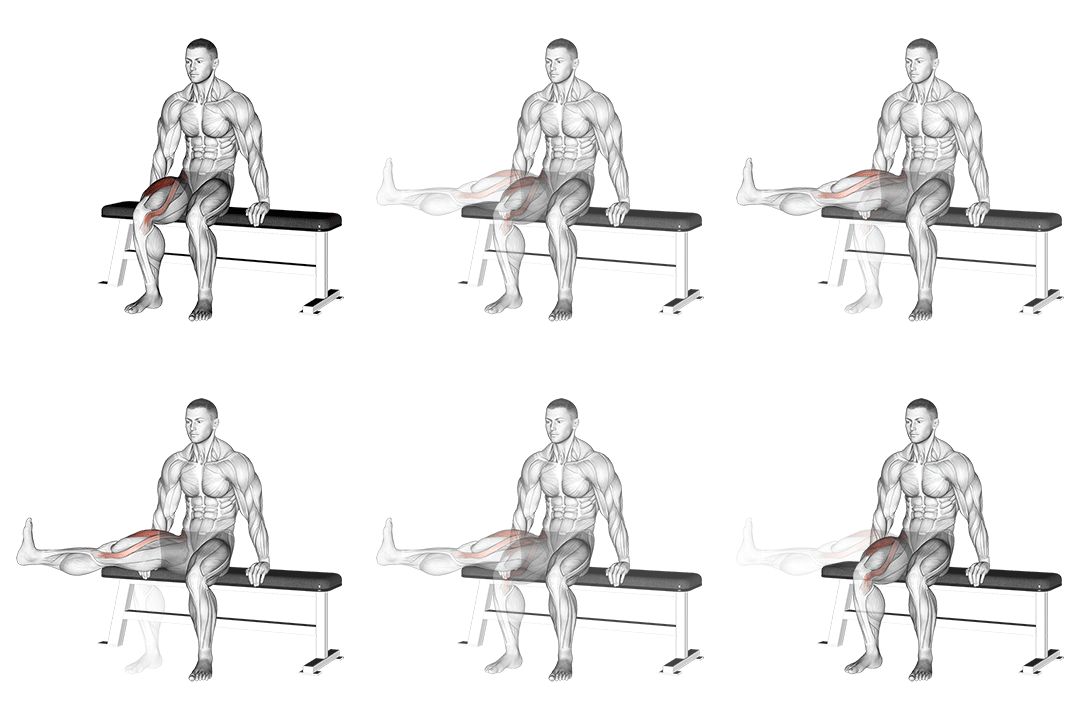
2. Chair Leg Extended Stretch
83% MatchHow to perform this exercise
- Sit on the edge of a chair with your back straight and feet flat on the ground.
- Extend one leg straight out in front of you, keeping your heel on the ground.
- Lean forward slightly, feeling a stretch in your quadriceps.
- Hold this position for 20-30 seconds.
- Switch legs and repeat the stretch.
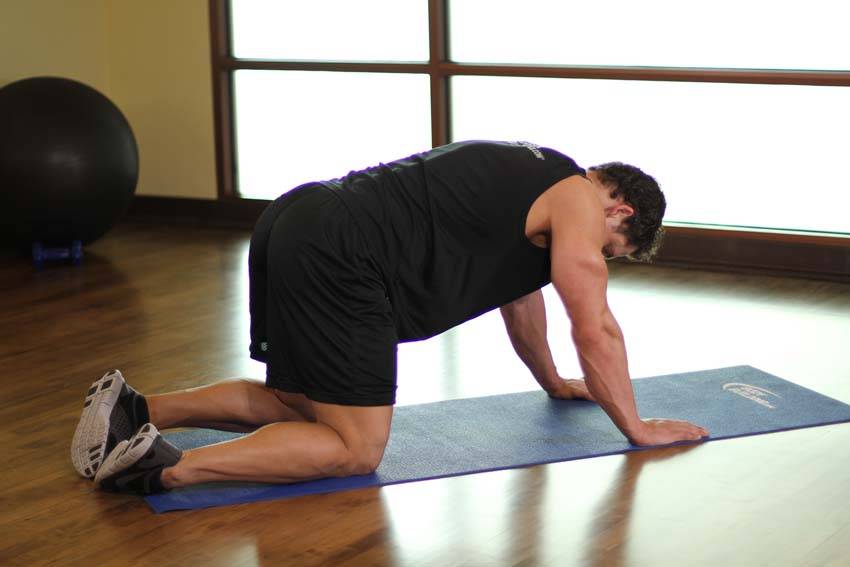
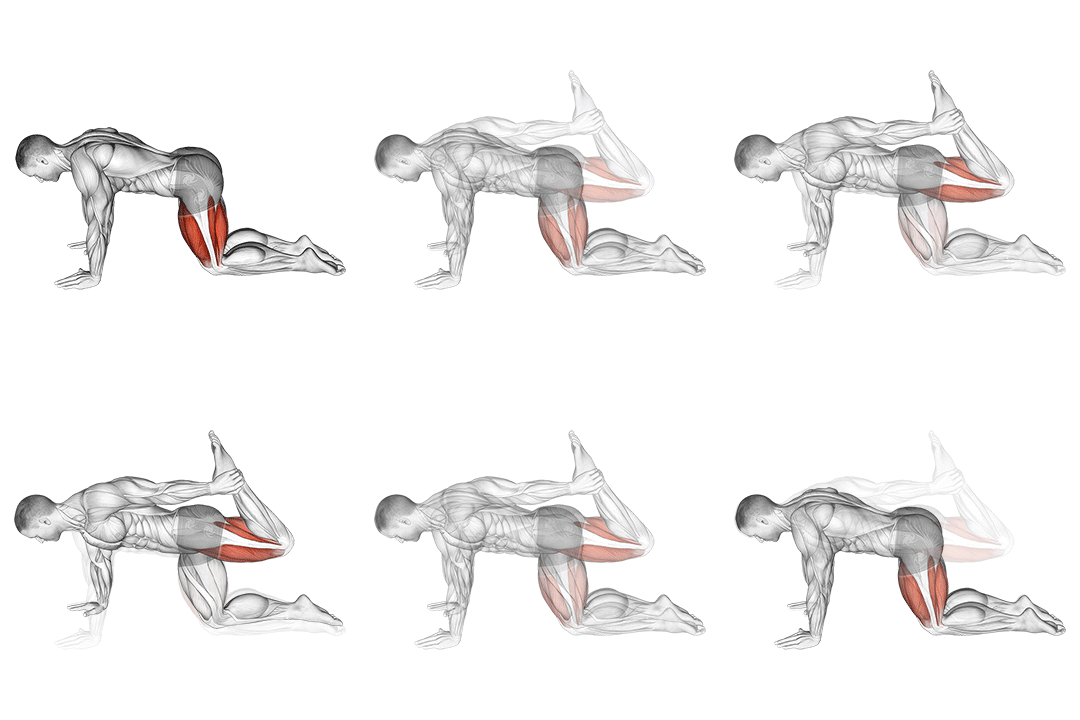
3. All Fours Quad Stretch
81% MatchHow to perform this exercise
- Start off on your hands and knees, then lift your leg off the floor and hold the foot with your hand.
- Use your hand to hold the foot or ankle, keeping the knee fully flexed, stretching the quadriceps and hip flexors.
- Focus on extending your hips, thrusting them towards the floor. Hold for 10-20 seconds and then switch sides.
4. All Fours Squad Stretch
81% MatchHow to perform this exercise
- Start on all fours with your hands directly under your shoulders and your knees directly under your hips.
- Extend one leg straight back, keeping your knee bent and your foot flexed.
- Slowly lower your hips towards the ground, feeling a stretch in your quads.
- Hold this position for 20-30 seconds.
- Switch legs and repeat the stretch on the other side.
5. Adductor
76% MatchHow to perform this exercise
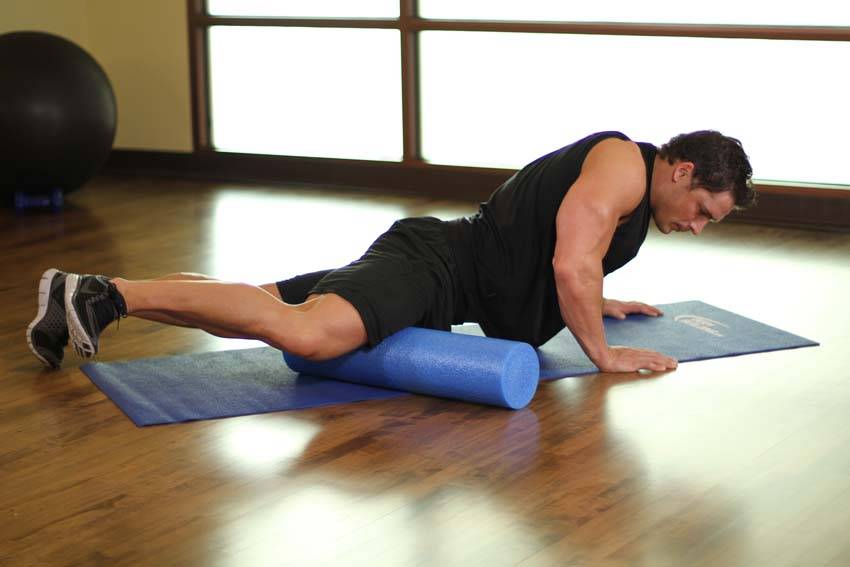
- Lie face down with one leg on a foam roll.
- Rotate the leg so that the foam roll contacts against your inner thigh. Shift as much weight onto the foam roll as can be tolerated.
- While trying to relax the muscles if the inner thigh, roll over the foam between your hip and knee, holding points of tension for 10-30 seconds. Repeat with the other leg.
6. Dancer's Stretch
73% MatchHow to perform this exercise
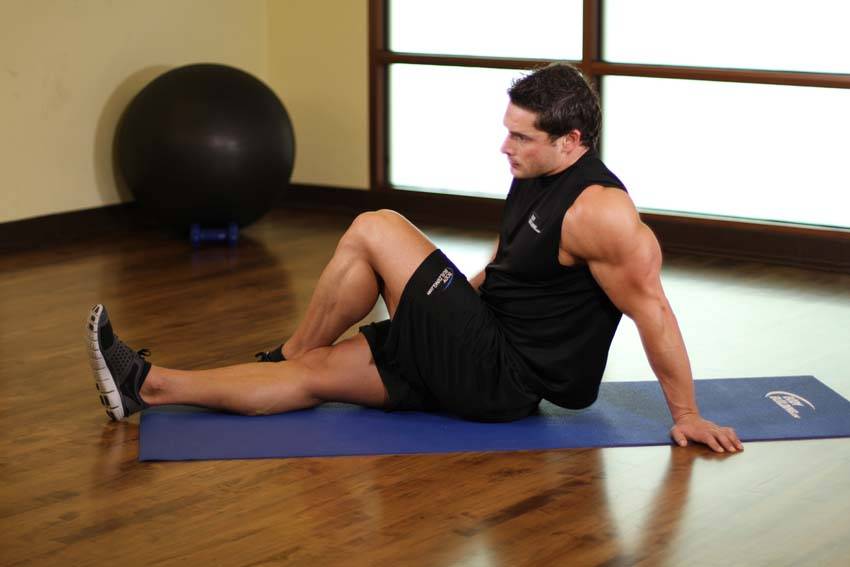
- Sit up on the floor.
- Cross your right leg over your left, keeping the knee bent. Your left leg is straight and down on the floor.
- Place your left arm on your right leg and your right hand on the floor.
- Rotate your upper body to the right, and hold for 10-20 seconds. Switch sides.
7. 90/90 Hamstring
72.4% MatchHow to perform this exercise
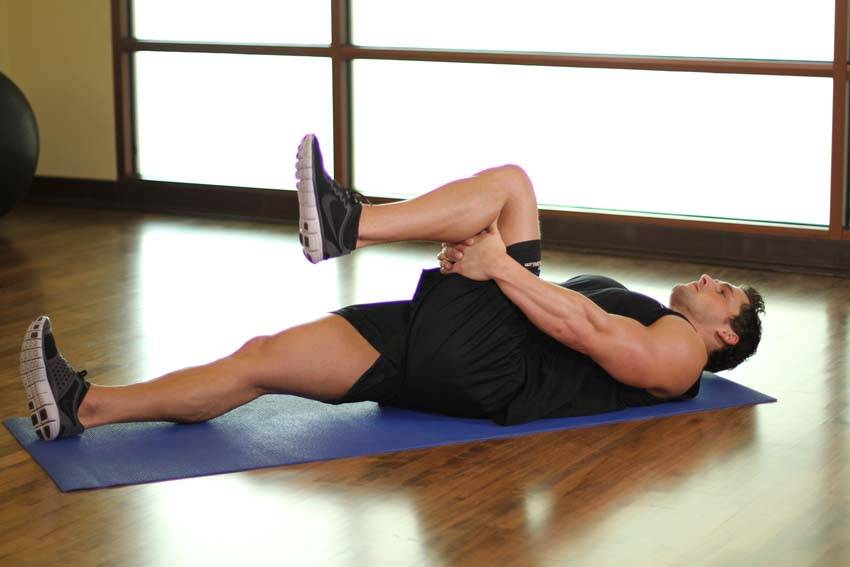
- Lie on your back, with one leg extended straight out.
- With the other leg, bend the hip and knee to 90 degrees. You may brace your leg with your hands if necessary. This will be your starting position.
- Extend your leg straight into the air, pausing briefly at the top. Return the leg to the starting position.
- Repeat for 10-20 repetitions, and then switch to the other leg.
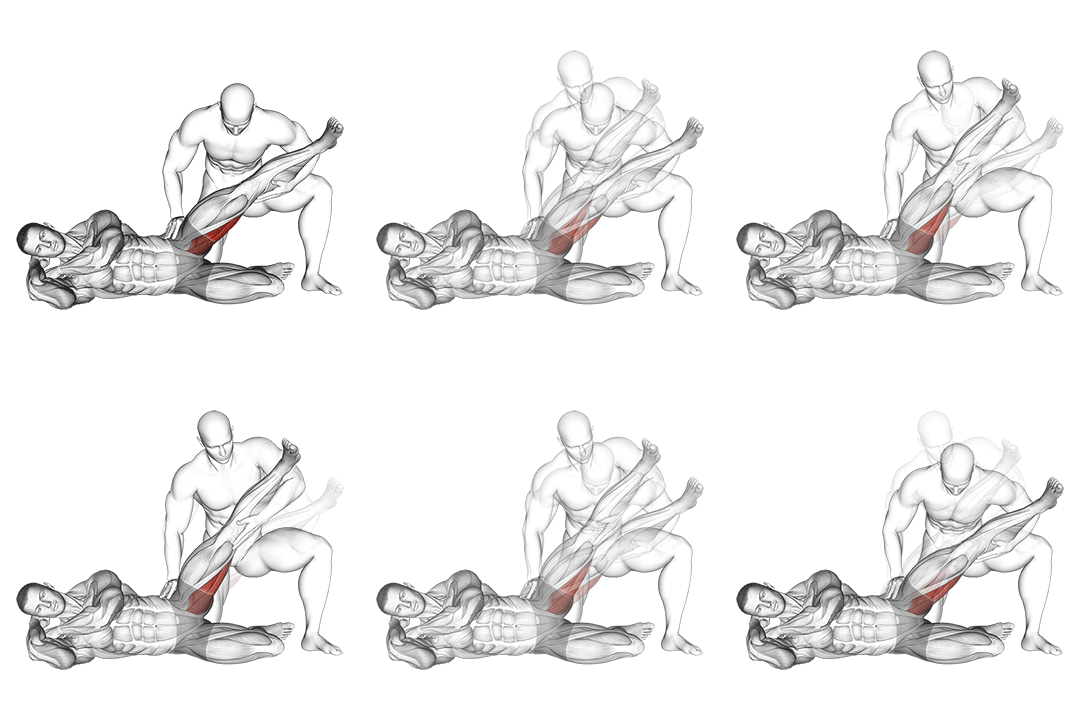
8. Assisted Side Lying Adductor Stretch
72% MatchHow to perform this exercise
- Lie on your side with your legs straight and stacked on top of each other.
- Bend your bottom leg slightly for stability.
- Place your top foot on a stable surface, such as a bench or step.
- Keeping your top leg straight, slowly lower it towards the ground, feeling a stretch in your inner thigh.
- Hold the stretch for 20-30 seconds.
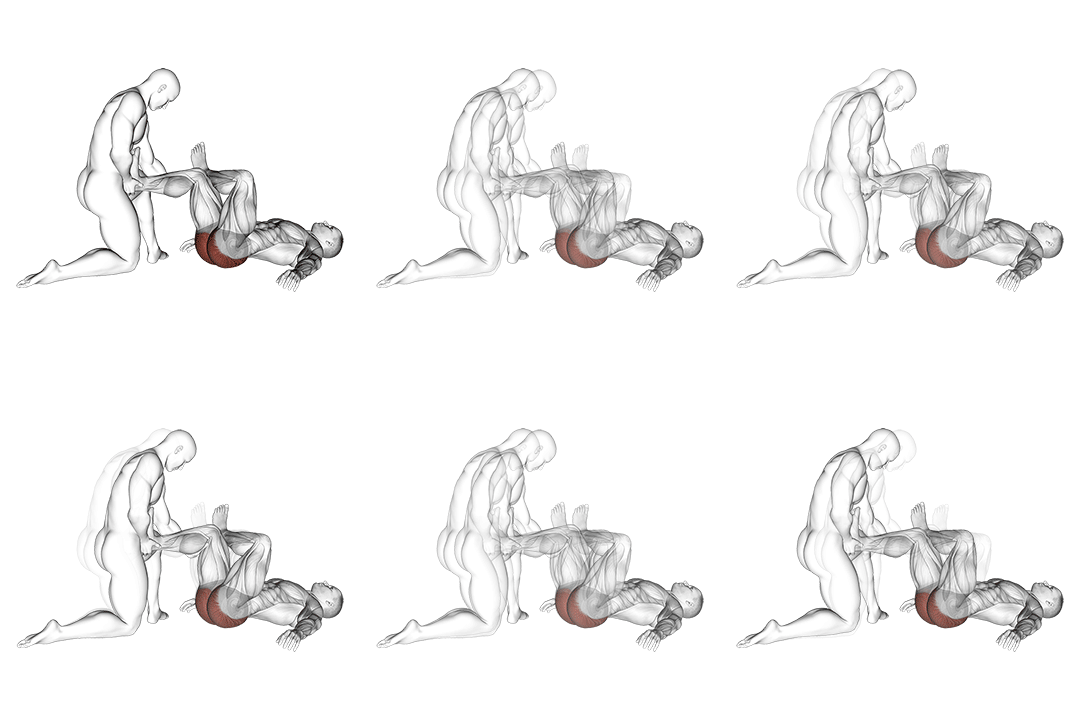
9. Assisted Lying Gluteus And Piriformis Stretch
72% MatchHow to perform this exercise
- Lie on your back with your legs extended.
- Bend your right knee and place your right ankle on your left thigh, just above the knee.
- Grasp your left thigh with both hands and gently pull it towards your chest.
- Hold the stretch for 20-30 seconds.
- Release the stretch and repeat on the other side.
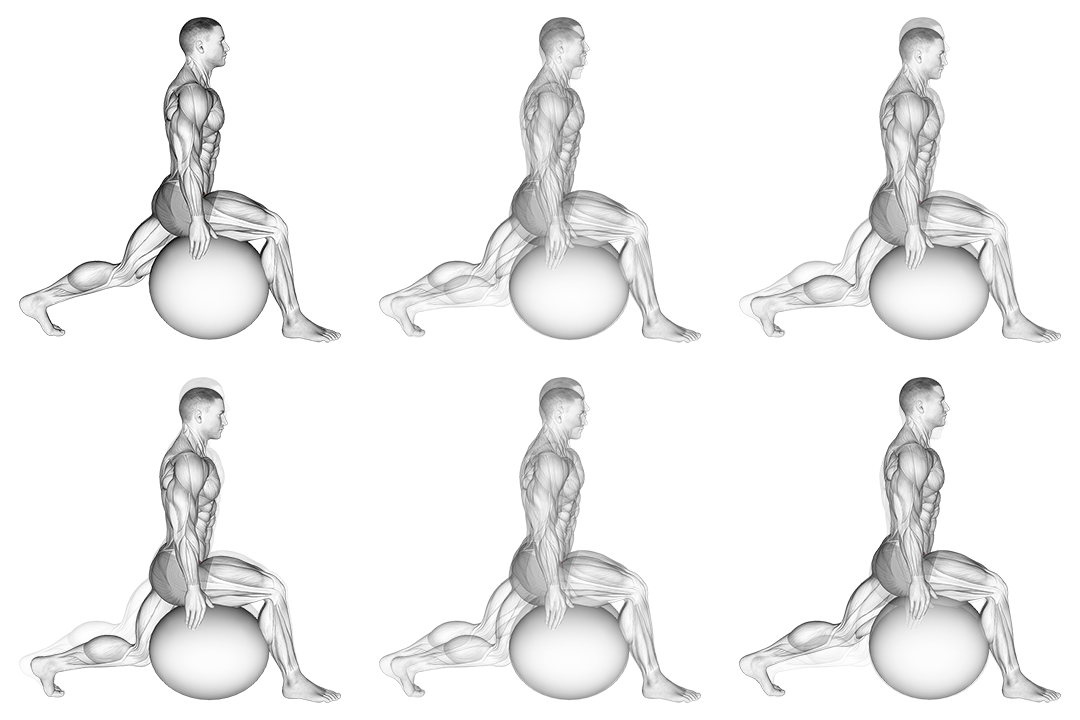
10. Exercise Ball Hip Flexor Stretch
71.7% MatchHow to perform this exercise
- Place the stability ball on the ground and kneel in front of it.
- Place your right foot on top of the stability ball, with your knee bent at a 90-degree angle.
- Extend your left leg behind you, keeping it straight.
- Lean forward, pushing your hips towards the stability ball, until you feel a stretch in your right hip flexor.
- Hold the stretch for 20-30 seconds, then switch sides and repeat.
Why You Might Need a Assisted Prone Rectus Femoris Stretch Alternative
You might need substitutes because prone positioning can aggravate anterior knee pain, spinal restrictions, or post-surgical precautions; you may lack a partner or suitable bench. Biomechanically the rectus femoris is biarticular, so an effective alternative must combine hip extension with knee flexion to place tension on the muscle rather than just the vasti or hip flexors. Choose variations that let you control pelvic tilt and lumbar spine—cue: maintain a posterior pelvic tilt and brace your core to prevent lumbar arching. For example, the couch stretch or supine strap-assisted quad stretch provides graded tension and clearer feedback on rectus femoris length without excessive patellofemoral compression.
How to Choose the Right Substitute
Match the substitute to your goal, tolerance, and available equipment. For pure mobility pick passive options that allow hip extension with knee flexion and pelvic control—cue: pull the heel to the glute while keeping the pelvis tucked and stop at a firm stretch in the anterior thigh. If you need strength or tendon remodeling, progress to loaded lengthening options like slow decline lunges or controlled eccentric split squats that load the rectus femoris through range. If weight-bearing causes pain, select supine or seated strap-assisted variants. Monitor knee alignment and hip extension and progress from passive to active-assisted to loaded movements.
Frequently Asked Questions
What muscles does Assisted Prone Rectus Femoris Stretch work?
The stretch primarily targets the rectus femoris, the quad muscle that crosses both the hip and knee. It also places some tension on the vasti and anterior hip structures; maintain knee flexion with posterior pelvic tilt to preferentially load the rectus femoris.
What is the best bodyweight alternative to Assisted Prone Rectus Femoris Stretch?
A standing heel-to-glute quad stretch is the simplest bodyweight alternative—stand tall, grab your ankle, pull the heel to the glute while tucking the pelvis and keeping knees stacked. If balance is an issue, perform the couch stretch (bracing on a wall) or use a wall for support to recreate hip extension plus knee flexion.
Can I build muscle without doing Assisted Prone Rectus Femoris Stretch?
Yes. Hypertrophy requires progressive overload via resistance exercises rather than isolated stretches. Use squats, lunges, leg press, and Bulgarian split squats and train through full range with eccentric emphasis to increase rectus femoris size and length tolerance.
More Exercise Alternatives
Find Alternatives for Any Exercise
Use our free tool to discover the best substitute exercises based on your available equipment and goals.
Try the Exercise Substitution Finder →