

10 Best Assisted Seated Pectoralis Major Stretch Alternatives
If you can’t do the Assisted Seated Pectoralis Major Stretch With Stability Ball, use targeted alternatives that lengthen the pec major and open the chest. Try a doorway pec stretch, supine foam-roll stretch, standing band pec opener, half-kneeling pec release, or corner stretch—keep the scapula retracted and chest lifted for best results.
Original Exercise: Assisted Seated Pectoralis Major Stretch With Stability Ball
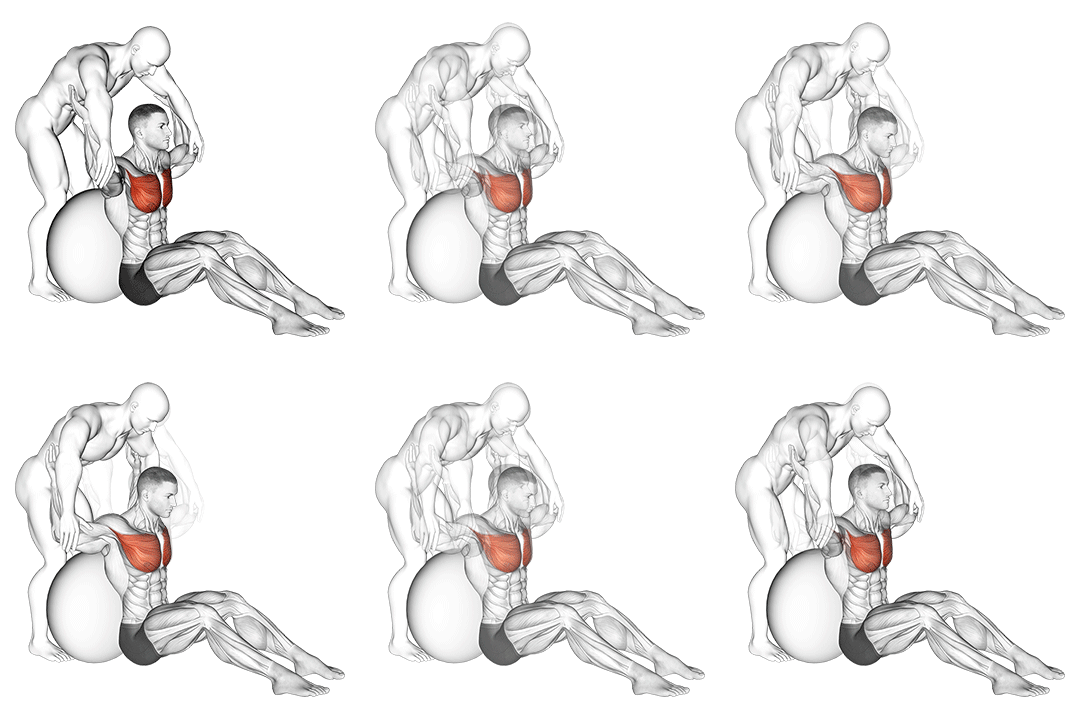
How to Perform Assisted Seated Pectoralis Major Stretch With Stability Ball
- Sit on a stability ball with your feet flat on the ground and your back straight.
- Hold a stability ball with both hands and extend your arms straight out in front of you.
- Slowly lower the stability ball towards your chest, feeling a stretch in your pectoral muscles.
- Hold the stretch for a few seconds, then slowly return to the starting position.
- Repeat for the desired number of repetitions.
Best Assisted Seated Pectoralis Major Stretch With Stability Ball Alternatives
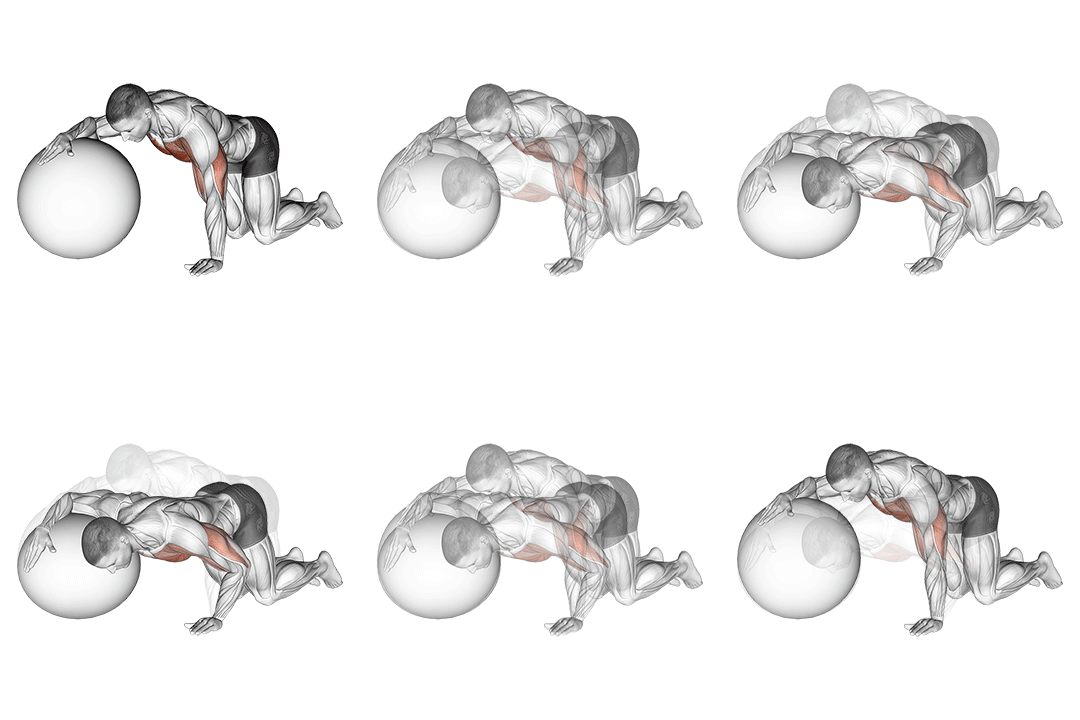
1. Chest Stretch With Exercise Ball
91.2% MatchHow to perform this exercise
- Sit on the stability ball with your feet flat on the ground and your back straight.
- Hold the exercise ball with both hands and extend your arms straight out in front of you.
- Slowly bring the exercise ball towards your chest, feeling a stretch in your chest muscles.
- Hold the stretch for a few seconds, then slowly return to the starting position.
- Repeat for the desired number of repetitions.
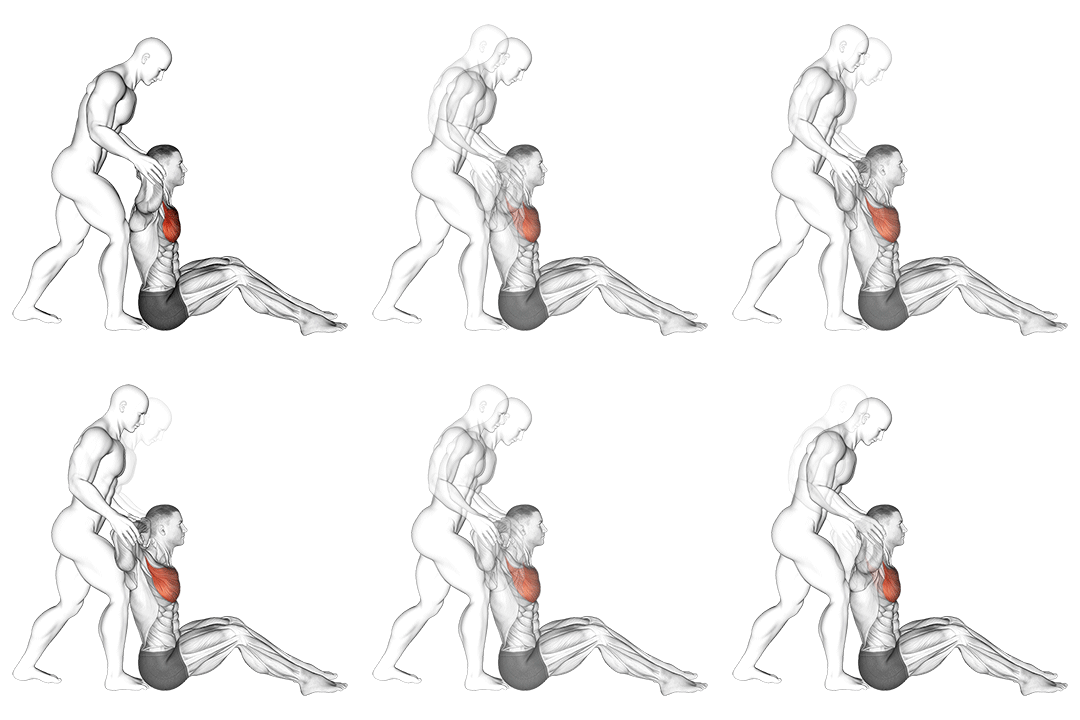
2. Behind Head Chest Stretch
88.3% MatchHow to perform this exercise
- Stand tall with your feet shoulder-width apart.
- Interlace your fingers behind your head with your elbows pointing outwards.
- Slowly squeeze your shoulder blades together and push your chest forward.
- Hold the stretch for 15-30 seconds.
- Release the stretch and repeat as desired.
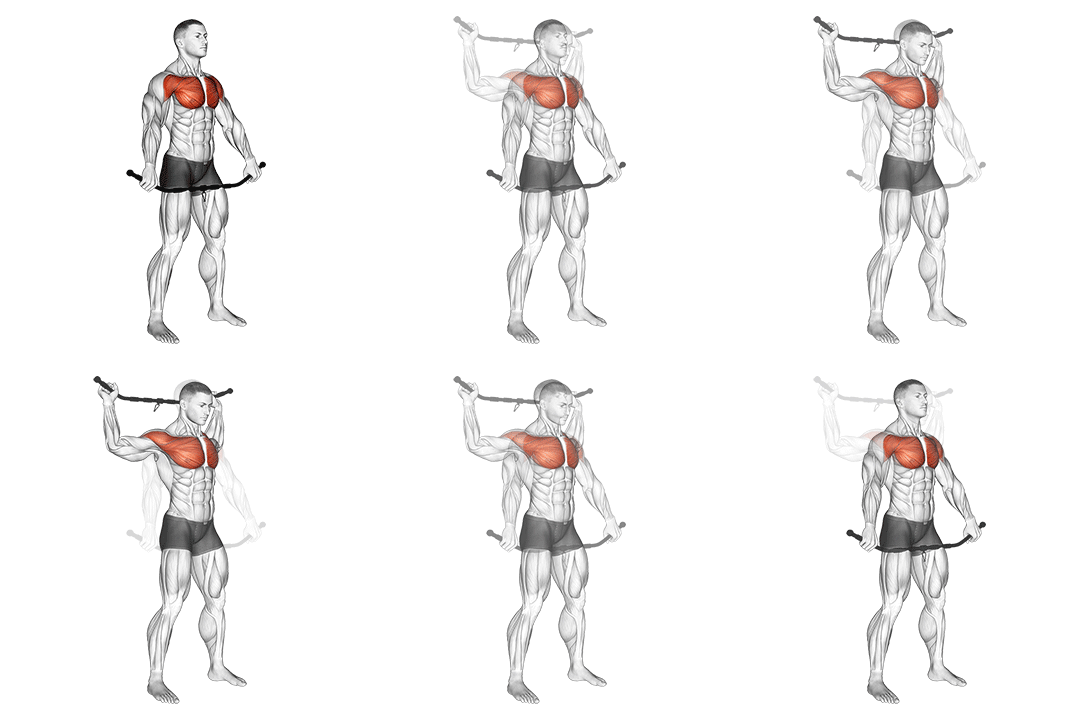
3. Chest And Front Of Shoulder Stretch
87.6% MatchHow to perform this exercise
- Stand tall with your feet shoulder-width apart.
- Extend your arms straight out in front of you at shoulder height.
- Cross your arms in front of your body, with your right arm on top of your left arm.
- Interlace your fingers and press your palms together.
- Gently squeeze your shoulder blades together and push your hands forward, feeling a stretch in your chest and front of your shoulders.
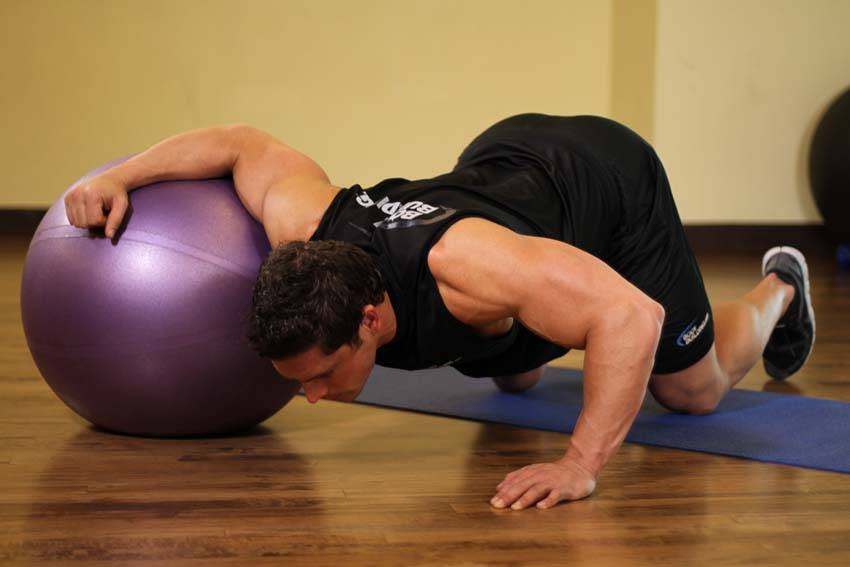
4. Chest Stretch On Stability Ball
86.4% MatchHow to perform this exercise
- Get on your hands and knees next to an exercise ball.
- Place your elbows on top of the ball, keeping your arm out to your side. This will be your starting position.
- Lower your torso towards the floor, keeping your elbow on top of the ball. Hold the stretch for 20-30 seconds, and repeat with the other arm.
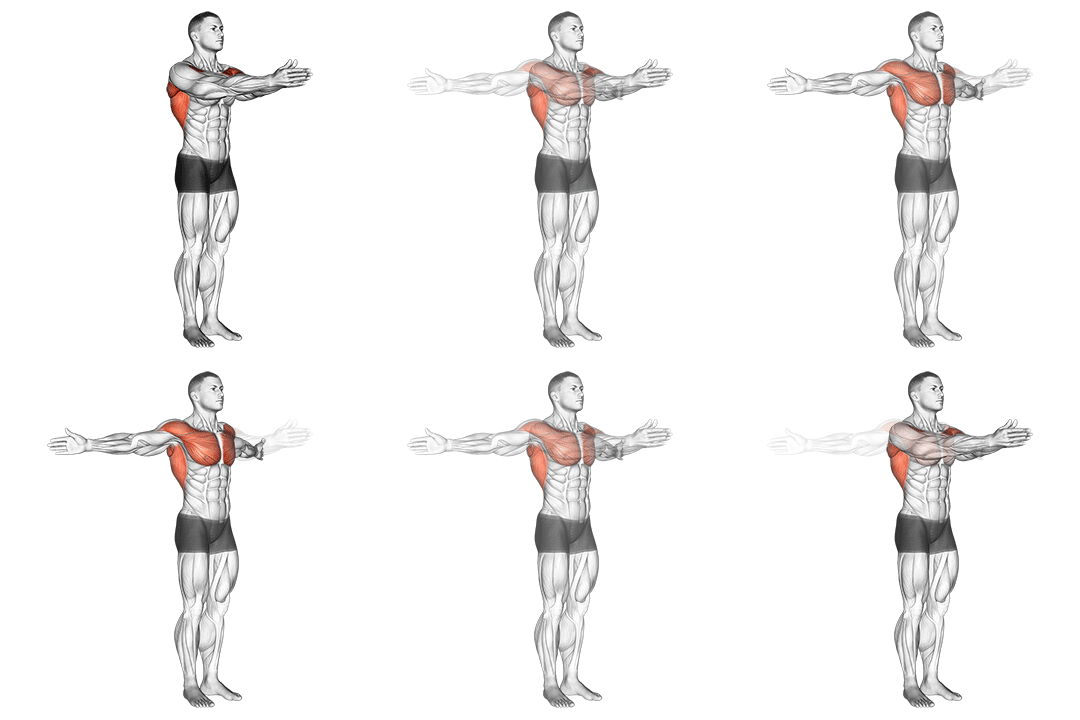
5. Dynamic Chest Stretch (male)
74.3% MatchHow to perform this exercise
- Stand tall with your feet shoulder-width apart.
- Extend your arms straight out to the sides, parallel to the ground.
- Slowly bring your arms forward, crossing them in front of your body.
- Feel the stretch in your chest muscles.
- Hold the stretch for 10-30 seconds.
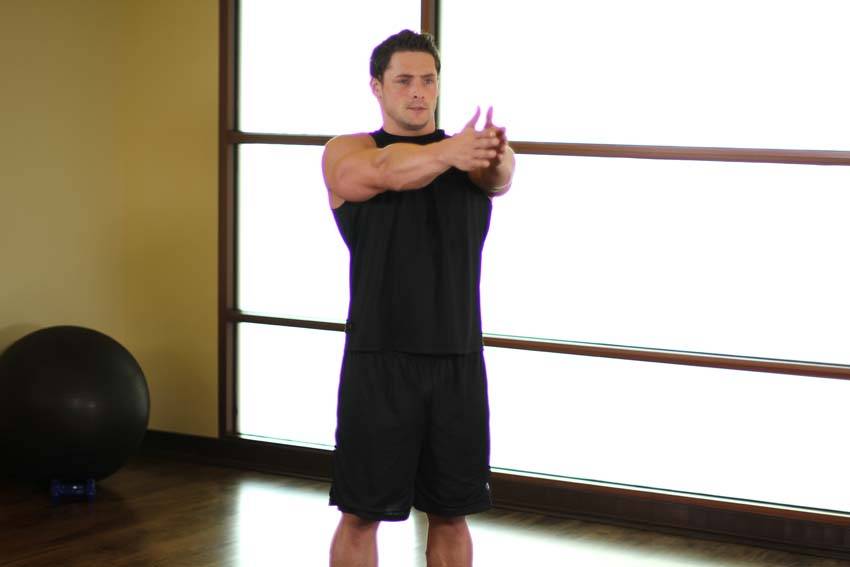
6. Dynamic Chest Stretch
73.6% MatchHow to perform this exercise
- Stand with your hands together, arms extended directly in front of you. This will be your starting position.
- Keeping your arms straight, quickly move your arms back as far as possible and back in again, similar to an exaggerated clapping motion. Repeat 5-10 times, increasing speed as you do so.
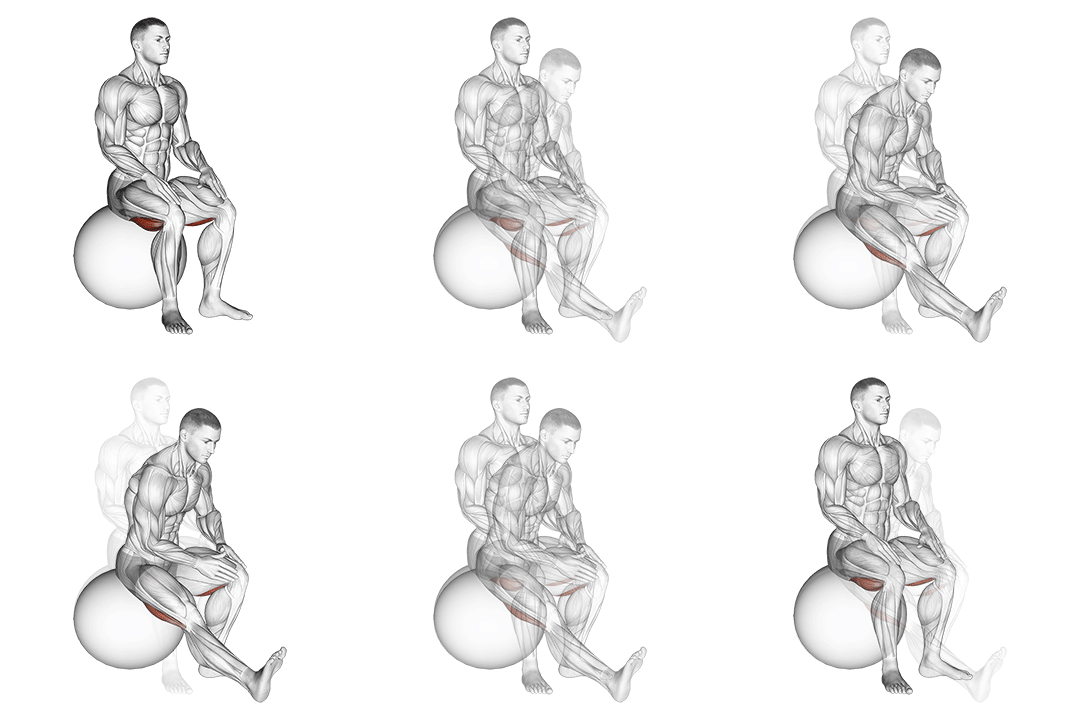
7. Exercise Ball Seated Hamstring Stretch
72.7% MatchHow to perform this exercise
- Sit on the stability ball with your feet flat on the ground and your knees bent at a 90-degree angle.
- Slowly roll the ball forward, walking your feet out until your upper back is resting on the ball and your legs are extended straight in front of you.
- Place your hands on your hips for support.
- Engage your core and slowly lower your upper body towards the ground, keeping your back straight and your chest lifted.
- Stop when you feel a stretch in your hamstrings, and hold the position for 20-30 seconds.
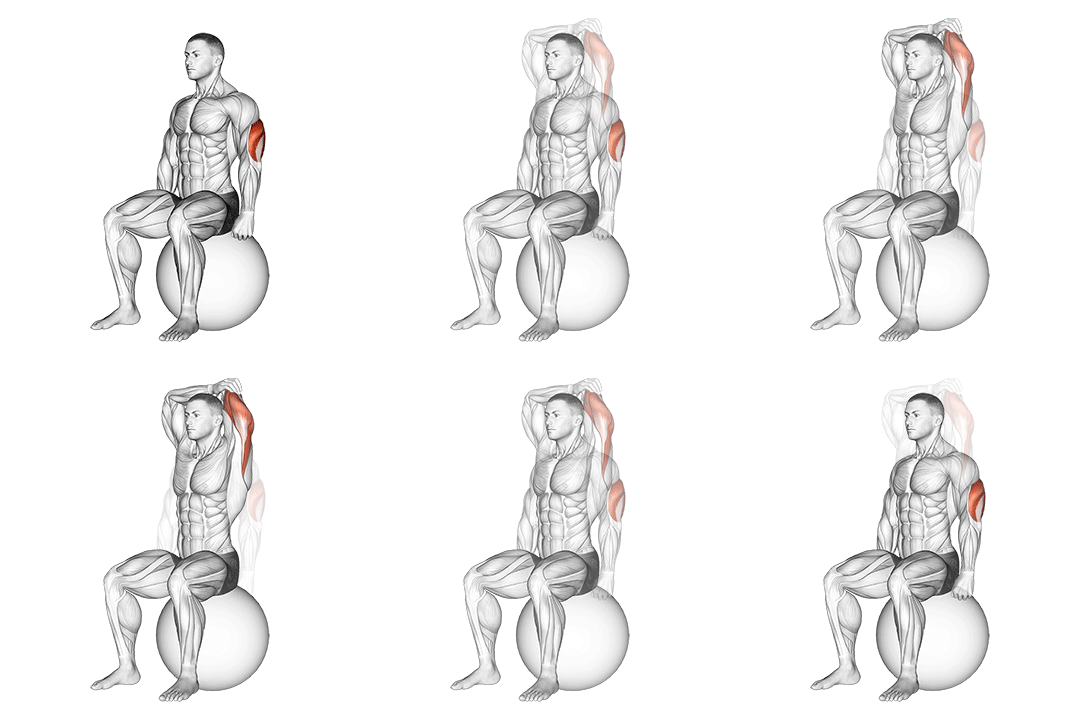
8. Exercise Ball Seated Triceps Stretch
72.1% MatchHow to perform this exercise
- Sit on a stability ball with your feet flat on the ground and your back straight.
- Hold a dumbbell in one hand and extend your arm straight up above your head.
- Bend your elbow and lower the dumbbell behind your head, keeping your upper arm close to your ear.
- Hold the stretch for a few seconds, then return to the starting position.
- Repeat with the other arm.
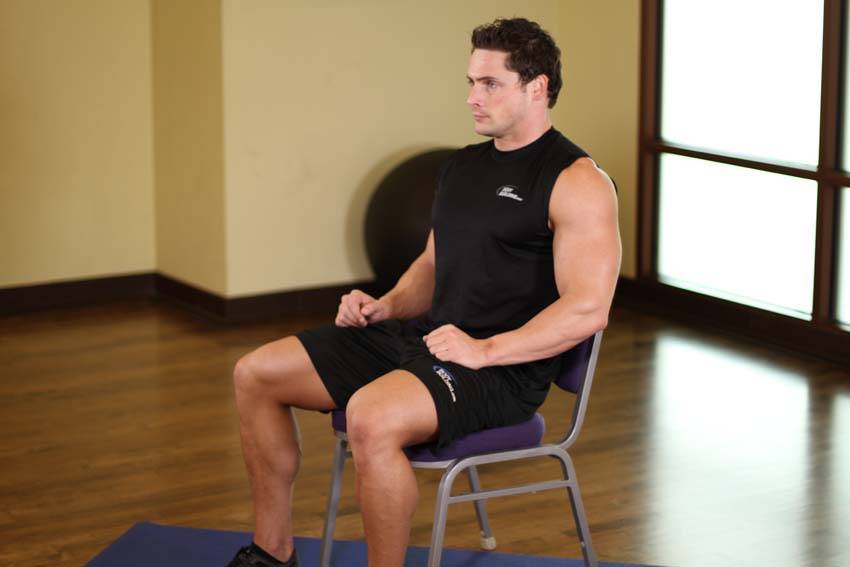
9. Chair Upper Body Stretch
68.6% MatchHow to perform this exercise
- Sit on the edge of a chair, gripping the back of it.
- Straighten your arms, keeping your back straight, and pull your upper body forward so you feel a stretch. Hold for 20-30 seconds.
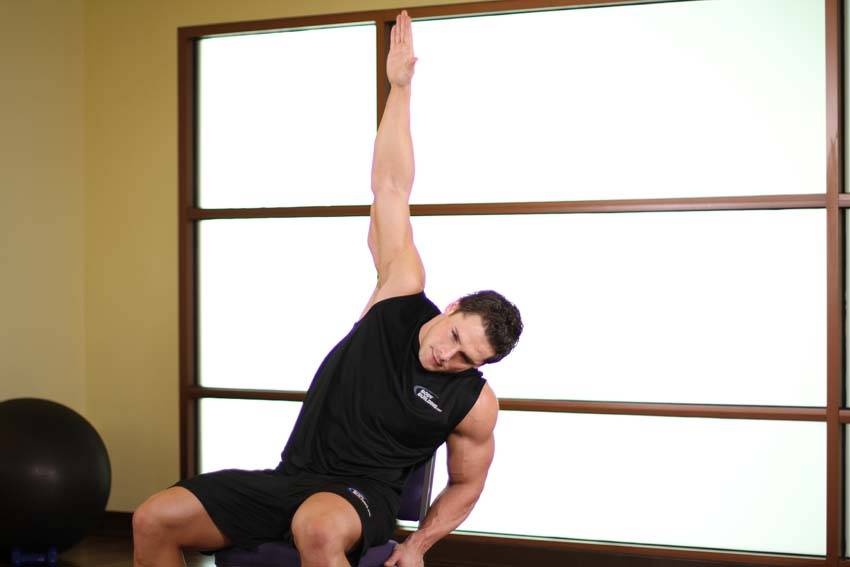
10. Chair Lower Back Stretch
67.3% MatchHow to perform this exercise
- Sit upright on a chair.
- Bend to one side with your arm over your head. You can hold onto the chair with your free hand.
- Hold for 10 seconds, and repeat for your other side.
Why You Might Need a Assisted Seated Pectoralis Major Stretch With Stability Ball Alternative
You may need substitutes because you lack a stability ball, have shoulder pain, or need a simpler option for travel. Substitutes let you maintain pec lengthening and scapular mobility without loading the anterior shoulder. For shoulder-sensitive cases choose passive options (supine foam-roll) and cue scapular retraction to reduce anterior glide. If you want active control, use a band pec opener and slow tension through horizontal abduction to train eccentric control of the pec major while limiting joint shear.
How to Choose the Right Substitute
Pick a substitute based on equipment, pain history, and desired stimulus. For mobility-only goals choose passive positions (supine foam roll or corner stretch) and maintain thoracic extension to bias pec lengthening. For active control or rehab choose standing band-openers or half-kneeling releases and focus on controlled scapular retraction and slow eccentric lengthening of the pec fibers. If you have anterior shoulder pain, avoid long-lever horizontal abduction and prefer short-range, scapula-stabilized stretches that minimize GH joint anterior translation.
Frequently Asked Questions
What muscles does Assisted Seated Pectoralis Major Stretch With Stability Ball work?
It primarily lengthens the pectoralis major and pectoralis minor while mobilizing the anterior shoulder capsule and thoracic spine. You also load the scapular stabilizers—especially the lower traps and rhomboids—when you retract your scapula to deepen the stretch.
What is the best bodyweight alternative to Assisted Seated Pectoralis Major Stretch With Stability Ball?
A doorway pec stretch is the top bodyweight option: stand in a doorway, place forearm on the frame at shoulder height, step forward and rotate your torso away until you feel a gentle pec stretch. Keep your scapula retracted and ribs down to emphasize pec major lengthening without anterior shoulder glide.
Can I build muscle without doing Assisted Seated Pectoralis Major Stretch With Stability Ball?
Yes. This stretch is for mobility and tissue length, not hypertrophy. To build chest muscle, prioritize loaded pressing and horizontal adduction movements (bench presses, push-ups) with progressive overload and full range under control.
More Exercise Alternatives
Find Alternatives for Any Exercise
Use our free tool to discover the best substitute exercises based on your available equipment and goals.
Try the Exercise Substitution Finder →