

10 Best Band Alternating V-up Alternatives for Home Workouts
What can I do instead of Band Alternating V-up? Replace it with movements that target the rectus abdominis and anti‑extension control, such as dead bugs, hollow rocks, single‑leg lowers, Pallof presses and banded crunches. Cue: brace your ribs down, exhale as you lift, and avoid hip‑flexor dominance to keep load on the abs.
Original Exercise: Band Alternating V-up
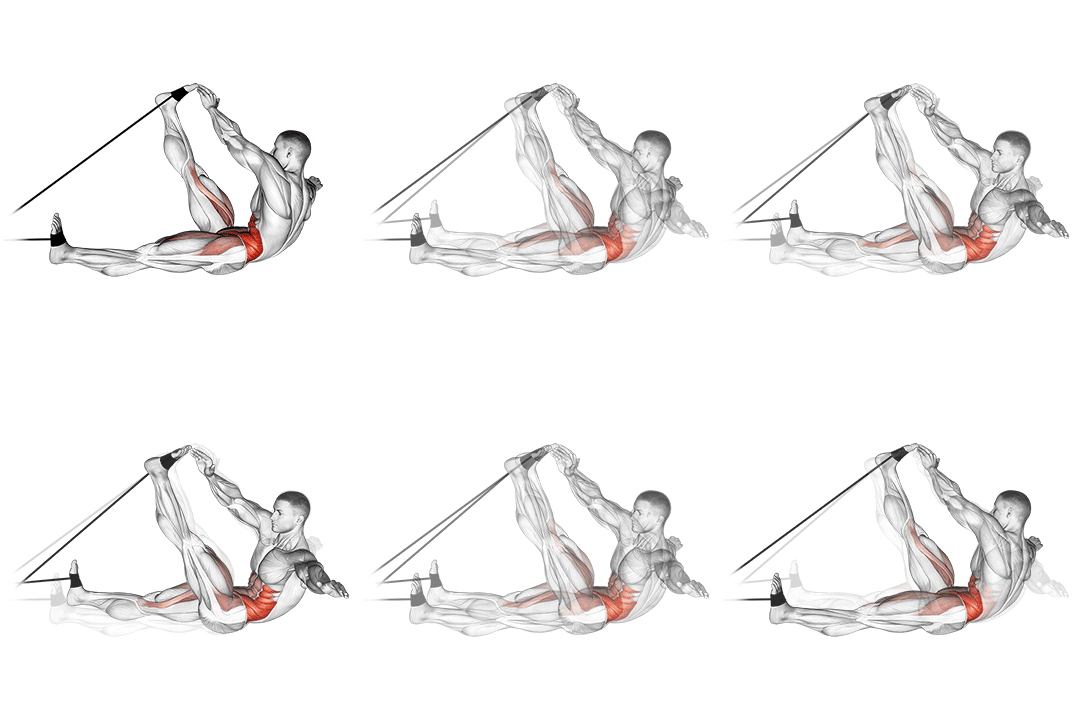
How to Perform Band Alternating V-up
- Lie flat on your back with your legs straight and your arms extended overhead, holding the band.
- Engage your abs and lift your legs and upper body off the ground simultaneously, reaching your hands towards your toes.
- As you lower your legs and upper body back down, switch the position of your legs, crossing one over the other.
- Repeat the movement, alternating the position of your legs with each repetition.
- Continue for the desired number of repetitions.
Best Band Alternating V-up Alternatives
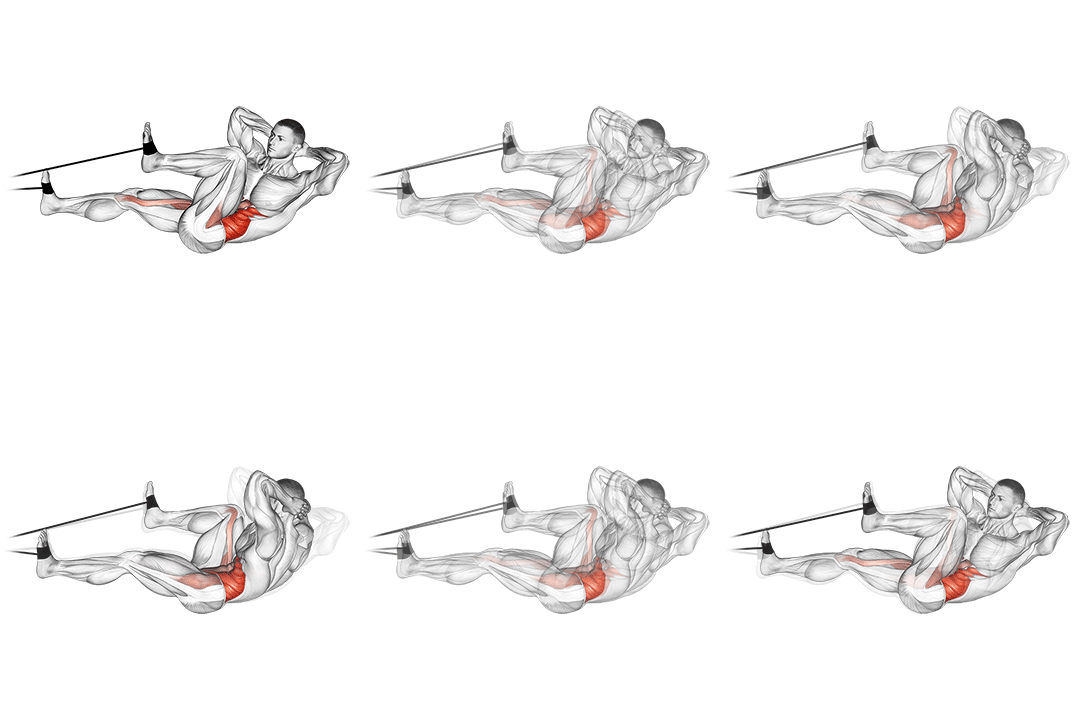
1. Band Bicycle Crunch
89.4% MatchHow to perform this exercise
- Lie flat on your back with your hands behind your head and your knees bent.
- Lift your feet off the ground and bring your right knee towards your chest while simultaneously twisting your torso to bring your left elbow towards your right knee.
- Straighten your right leg while bringing your left knee towards your chest and twisting your torso to bring your right elbow towards your left knee.
- Continue alternating the twisting motion, as if you are pedaling a bicycle, while keeping your core engaged throughout the movement.
- Repeat for the desired number of repetitions.
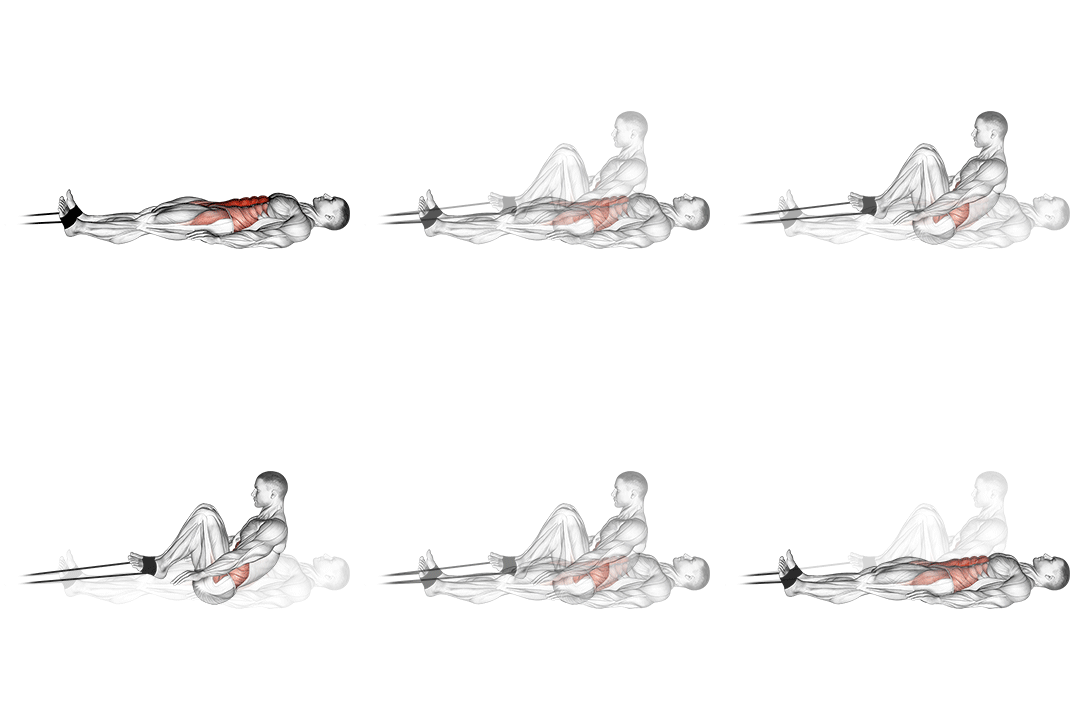
2. Band Jack Knife Sit-up
88% MatchHow to perform this exercise
- Lie flat on your back with your legs straight and your arms extended overhead, holding the band.
- Engage your abs and lift your legs and upper body simultaneously, bringing your hands towards your feet.
- Pause for a moment at the top, then slowly lower your legs and upper body back down to the starting position.
- Repeat for the desired number of repetitions.
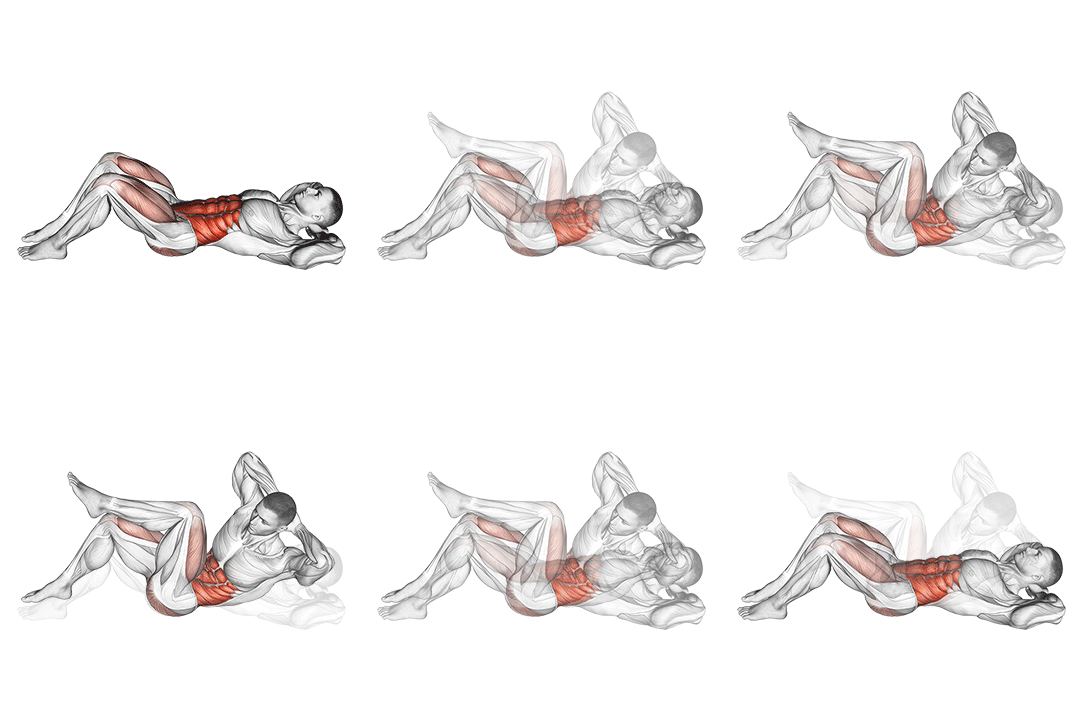
3. Cross Body Crunch
84.1% MatchHow to perform this exercise
- Lie flat on your back with your knees bent and feet flat on the ground.
- Place your hands behind your head with your elbows pointing outwards.
- Engaging your abs, lift your upper body off the ground and twist to bring your right elbow towards your left knee.
- Pause for a moment at the top, then slowly lower your upper body back down to the starting position.
- Repeat on the other side, bringing your left elbow towards your right knee.
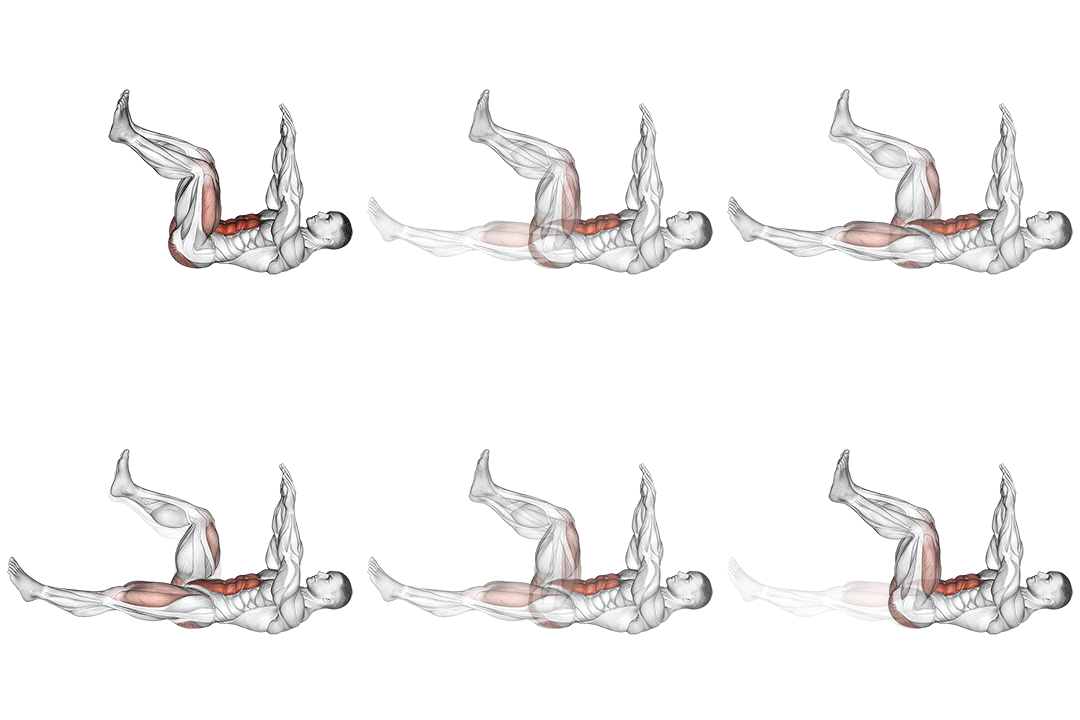
4. Dead Bug
84.1% MatchHow to perform this exercise
- Lie flat on your back with your arms extended towards the ceiling.
- Bend your knees and lift your legs off the ground, creating a 90-degree angle at your hips and knees.
- Engage your core and lower back to press your lower back into the ground.
- Slowly lower your right arm and left leg towards the ground, keeping them straight and hovering just above the floor.
- Pause for a moment, then return to the starting position.
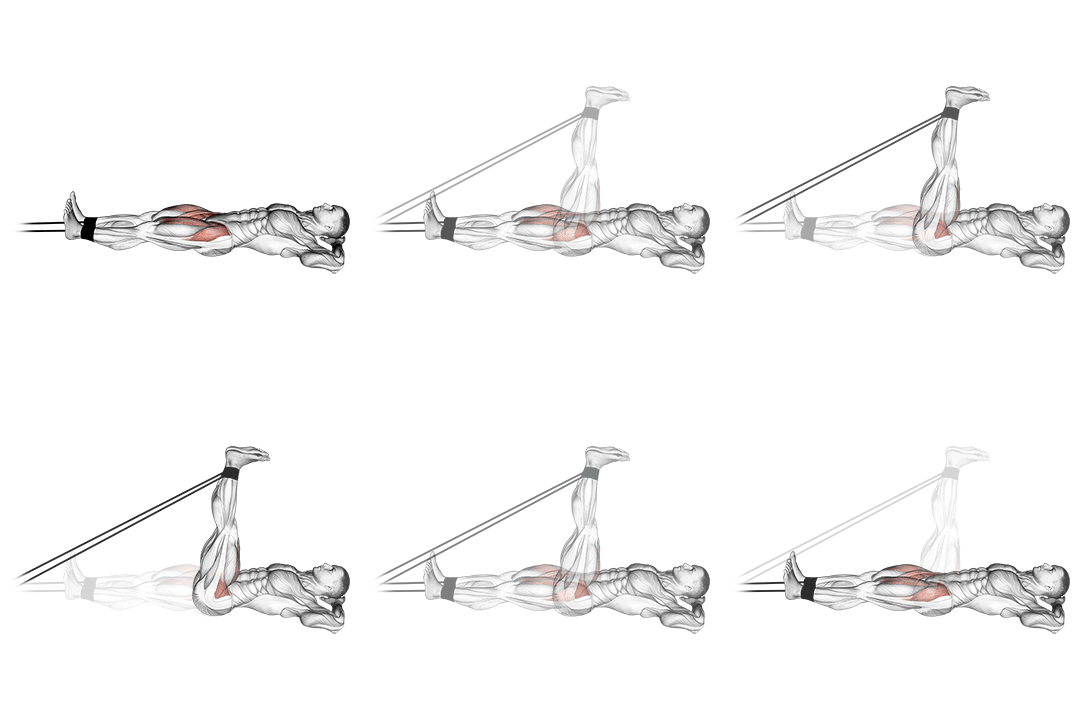
5. Band Lying Straight Leg Raise
81.3% MatchHow to perform this exercise
- Lie flat on your back with your legs straight and your feet together.
- Place the band around the arches of your feet and hold the ends of the band with your hands.
- Engaging your abs, lift both legs off the ground until they are perpendicular to the floor.
- Pause for a moment at the top, then slowly lower your legs back down to the starting position.
- Repeat for the desired number of repetitions.
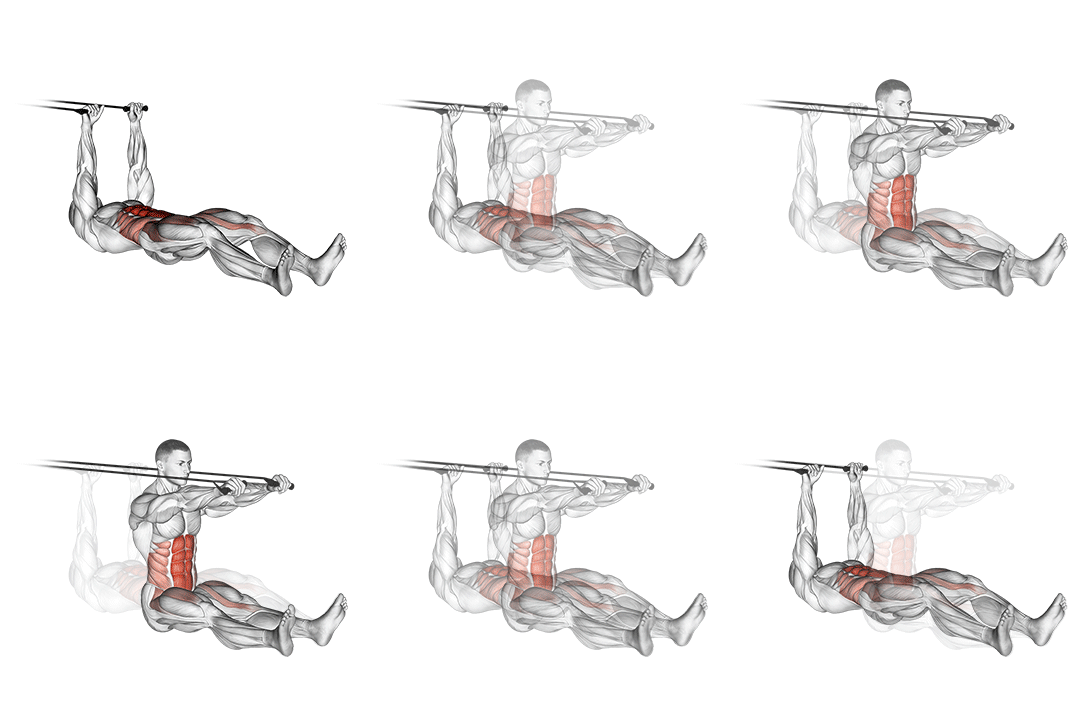
6. Band Push Sit-up
78.7% MatchHow to perform this exercise
- Attach the band securely to a stable anchor point.
- Lie flat on your back with your knees bent and feet flat on the ground.
- Hold the band with both hands and extend your arms straight up towards the ceiling.
- Engaging your abs, slowly lift your upper body off the ground, curling forward until your torso is at a 45-degree angle.
- Pause for a moment at the top, then slowly lower your upper body back down to the starting position.
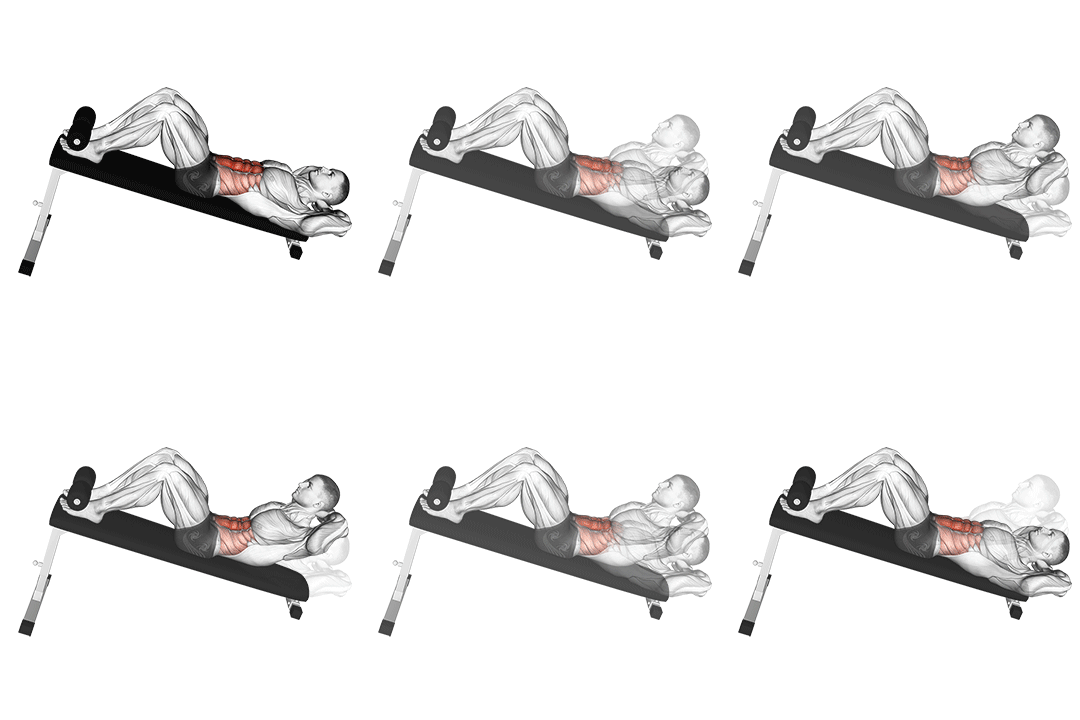
7. Decline Crunch
77.9% MatchHow to perform this exercise
- Lie on a decline bench with your feet secured and your knees bent at a 90-degree angle.
- Place your hands behind your head or across your chest.
- Engage your abs and lift your upper body towards your knees, curling your torso.
- Pause for a moment at the top, then slowly lower your upper body back down to the starting position.
- Repeat for the desired number of repetitions.
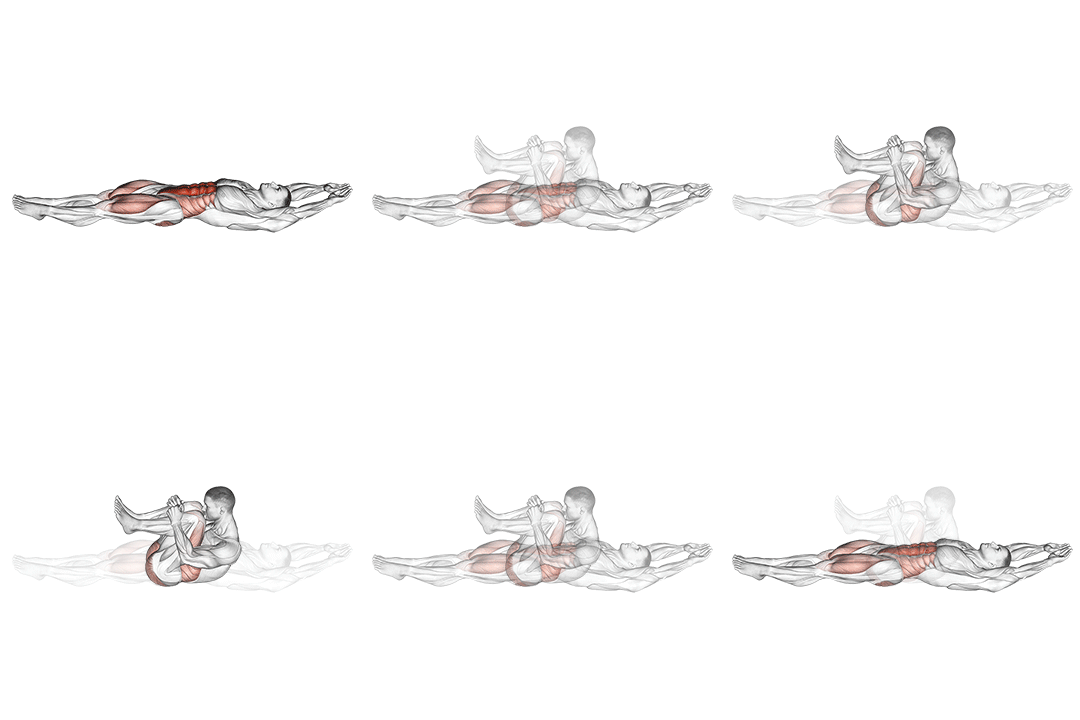
8. Cocoons
77.7% MatchHow to perform this exercise
- Lie flat on your back with your knees bent and feet flat on the ground.
- Place your hands behind your head with your elbows pointing outwards.
- Engaging your abs, slowly lift your upper body off the ground, curling forward until your torso is at a 45-degree angle.
- Pause for a moment at the top, then slowly lower your upper body back down to the starting position.
- Repeat for the desired number of repetitions.
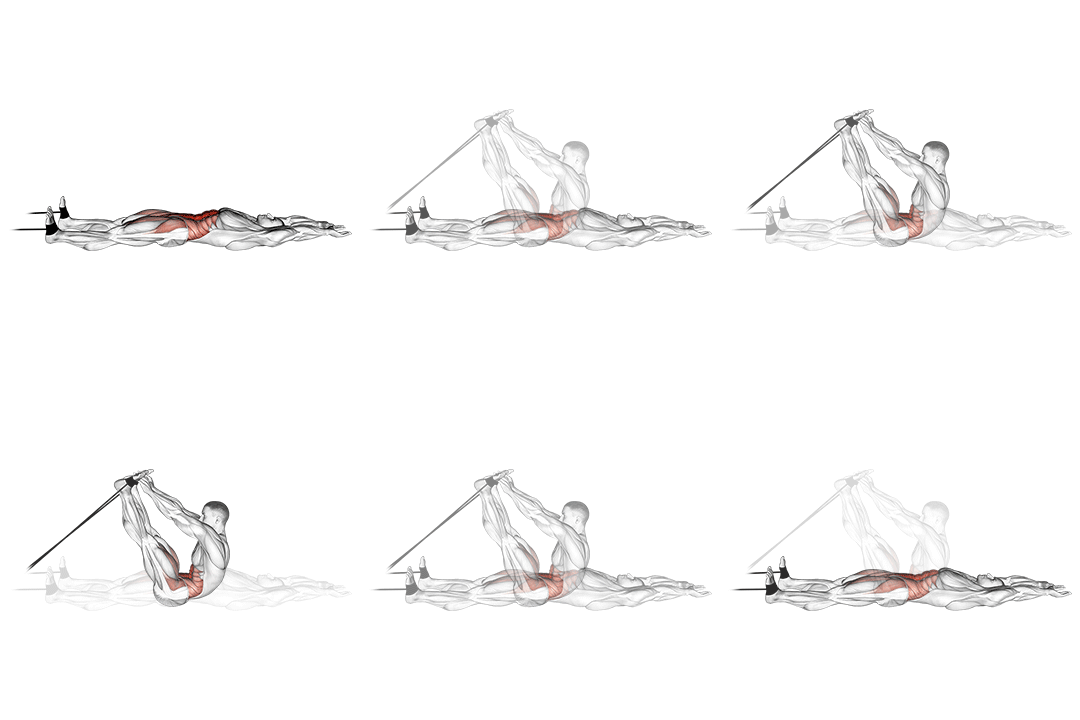
9. Band V-up
76.9% MatchHow to perform this exercise
- Lie flat on your back with your legs straight and your arms extended overhead, holding the band.
- Engaging your abs, lift your legs and upper body off the ground simultaneously, reaching your hands towards your toes.
- Pause for a moment at the top, then slowly lower your legs and upper body back down to the starting position.
- Repeat for the desired number of repetitions.
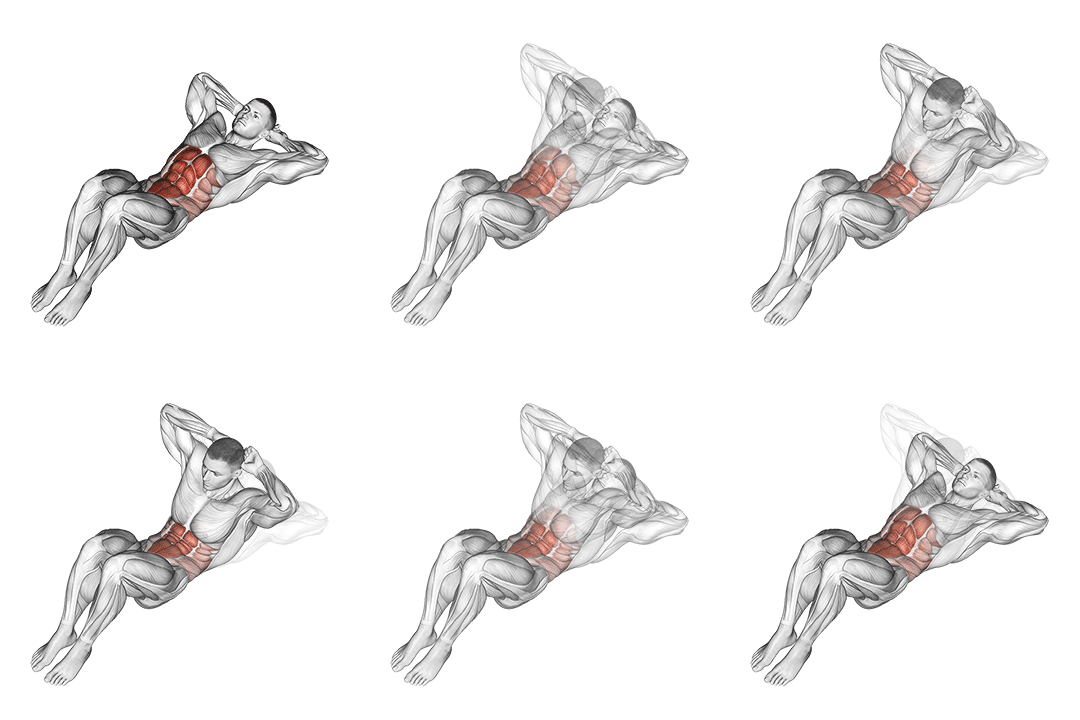
10. Crunch Floor
76.6% MatchHow to perform this exercise
- Lie flat on your back with your knees bent and feet flat on the ground.
- Place your hands behind your head with your elbows pointing outwards.
- Engage your abs and lift your shoulders off the ground, curling forward towards your knees.
- Pause for a moment at the top, then slowly lower your shoulders back down to the starting position.
- Repeat for the desired number of repetitions.
Why You Might Need a Band Alternating V-up Alternative
You may substitute the Band Alternating V‑up because of band access, persistent low‑back sensitivity, poor hip‑flexor tolerance, or a need for clearer progression. Bands can pull you into lumbar flexion or allow momentum, reducing isolated abdominal activation. Choose options that limit hip flexor contribution and preserve neutral spine mechanics. For example, perform a Pallof press to train anti‑extension with a long exhale and full midline brace, or do dead bugs with a slow contralateral reach while you press the low back to the floor. Cue: draw the ribs toward the pelvis to shift work to the rectus abdominis and reduce iliopsoas dominance.
How to Choose the Right Substitute
Match the substitute to equipment, symptom tolerance, and training goal. If you lack a band, choose bodyweight anti‑extension drills (hollow holds, dead bugs) that prioritize spinal control. If hip flexors dominate, pick supine single‑leg lowers or isometric crunches that keep the pelvis posteriorly tilted. For strength progression, increase external load (weighted crunches, cable resisted curls) or band tension rather than increasing lumbar range. Cue: initiate each rep by exhaling and contracting the midline, feeling tension across the rectus abdominis instead of pulling with the hips. Prioritize quality of contraction over high reps.
Frequently Asked Questions
What muscles does Band Alternating V-up work?
It primarily targets the rectus abdominis with secondary activation of the obliques and hip flexors. Cue: curl the sternum toward the pelvis to emphasize spinal flexion by the abs and limit iliopsoas assistance.
What is the best bodyweight alternative to Band Alternating V-up?
The dead bug is the top bodyweight substitute because it isolates anti‑extension control and minimizes hip‑flexor recruitment. Lie supine, press your low back into the floor and extend opposite arm and leg slowly while bracing; cue: keep the ribs down and exhale on the reach to maximize rectus abdominis engagement.
Can I build muscle without doing Band Alternating V-up?
Yes. You can hypertrophy the abs using progressive overload and sustained tension through exercises like weighted cable crunches, hanging knee raises, or slow hollow holds. Focus on contracting the midline on every rep; cue: shorten the distance between ribs and pelvis to increase muscle fiber recruitment.
More Exercise Alternatives
Find Alternatives for Any Exercise
Use our free tool to discover the best substitute exercises based on your available equipment and goals.
Try the Exercise Substitution Finder →