

10 Best Band Reverse Fly Alternatives for Rear Delt Strength
The Band Reverse Fly anchors a band at chest height and pulls your arms out to the sides until you squeeze your shoulder blades together, training the rear delts in one clean line. Back Flyes - With Bands is the nearest swap, running a band around a rack post for the same pull. If you would rather hold a weight in each hand, Reverse Flyes gives your arms independent control instead of a shared band.
Original Exercise: Band Reverse Fly
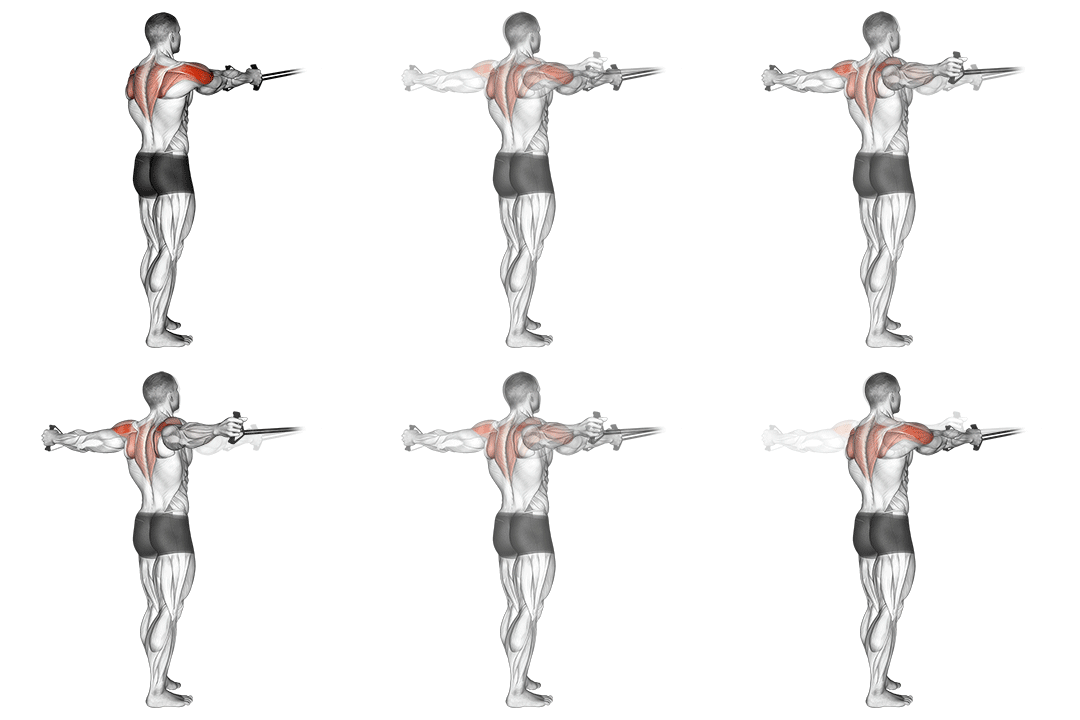
How to Perform Band Reverse Fly
- Attach the band to a stationary object at chest height.
- Stand with your feet shoulder-width apart and hold the band with both hands in front of you.
- Keep your arms straight and lift them out to the sides until they are parallel to the ground.
- Squeeze your shoulder blades together at the top of the movement.
- Slowly lower your arms back to the starting position.
- Repeat for the desired number of repetitions.
Ranked Band Reverse Fly Alternatives
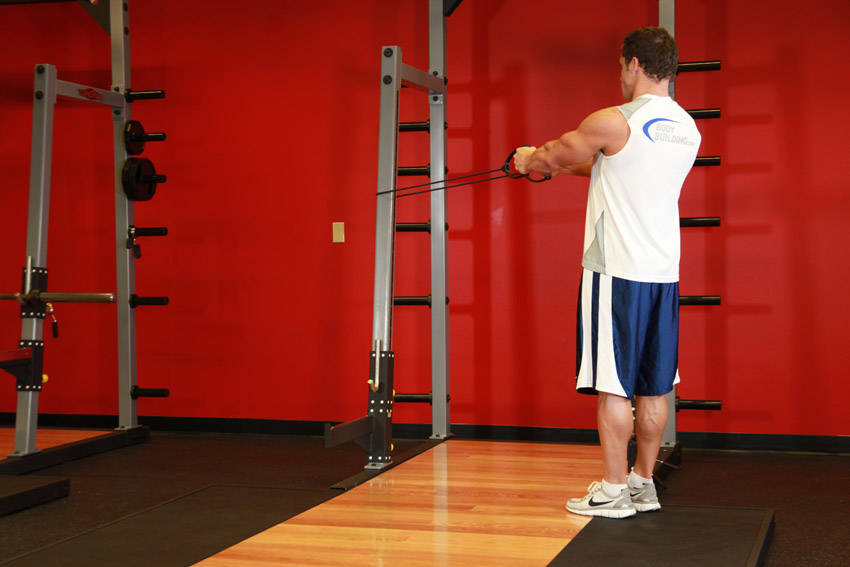
1. Back Flyes - With Bands
93.9% MatchHow to perform this exercise
- Run a band around a stationary post like that of a squat rack.
- Grab the band by the handles and stand back so that the tension in the band rises.
- Extend and lift the arms straight in front of you. Tip: Your arms should be straight and parallel to the floor while perpendicular to your torso. Your feet should be firmly planted on the floor spread at shoulder width. This will be your starting position.
- As you exhale, move your arms to the sides and back. Keep your arms extended and parallel to the floor. Continue the movement until the arms are extended to your sides.
- After a pause, go back to the original position as you inhale.
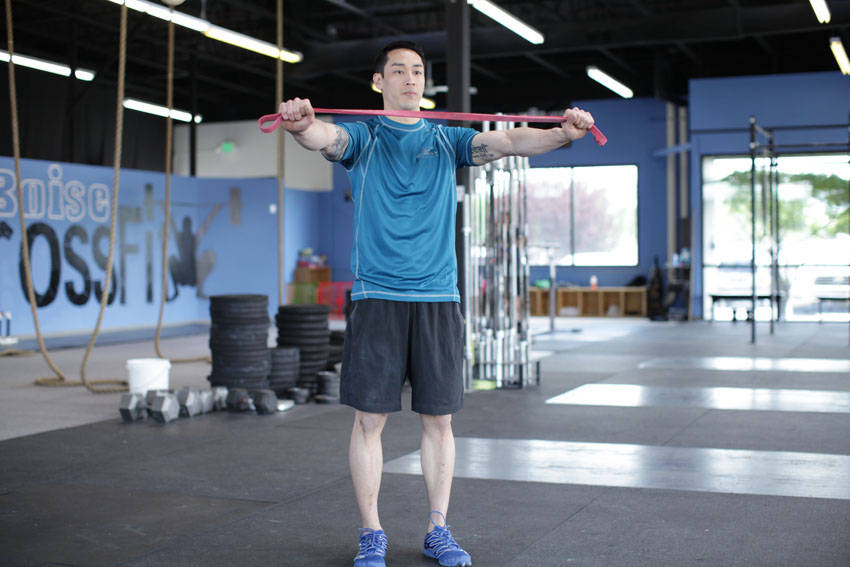
2. Band Pull Apart
93.1% MatchHow to perform this exercise
- Begin with your arms extended straight out in front of you, holding the band with both hands.
- Initiate the movement by performing a reverse fly motion, moving your hands out laterally to your sides.
- Keep your elbows extended as you perform the movement, bringing the band to your chest. Ensure that you keep your shoulders back during the exercise.
- Pause as you complete the movement, returning to the starting position under control.
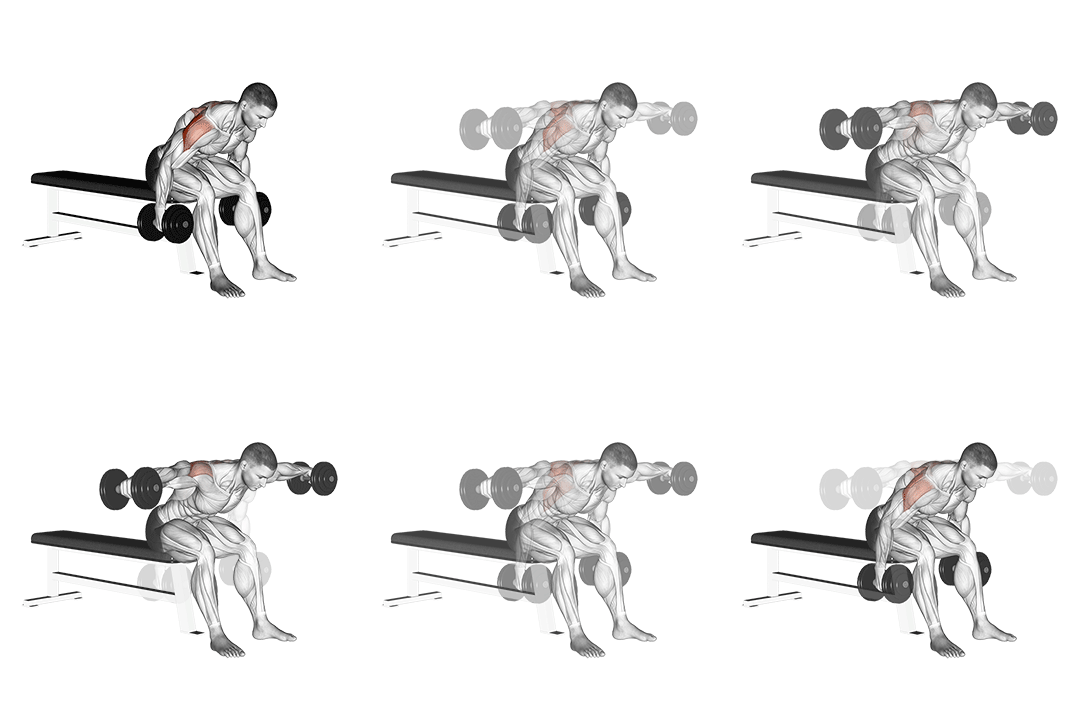
3. Dumbbell Rear Fly
90% MatchHow to perform this exercise
- Stand with your feet shoulder-width apart and hold a dumbbell in each hand.
- Bend your knees slightly and hinge forward at the hips, keeping your back straight.
- Extend your arms straight down towards the ground, palms facing each other.
- Keeping a slight bend in your elbows, lift your arms out to the sides and squeeze your shoulder blades together.
- Pause for a moment at the top, then slowly lower your arms back down to the starting position.
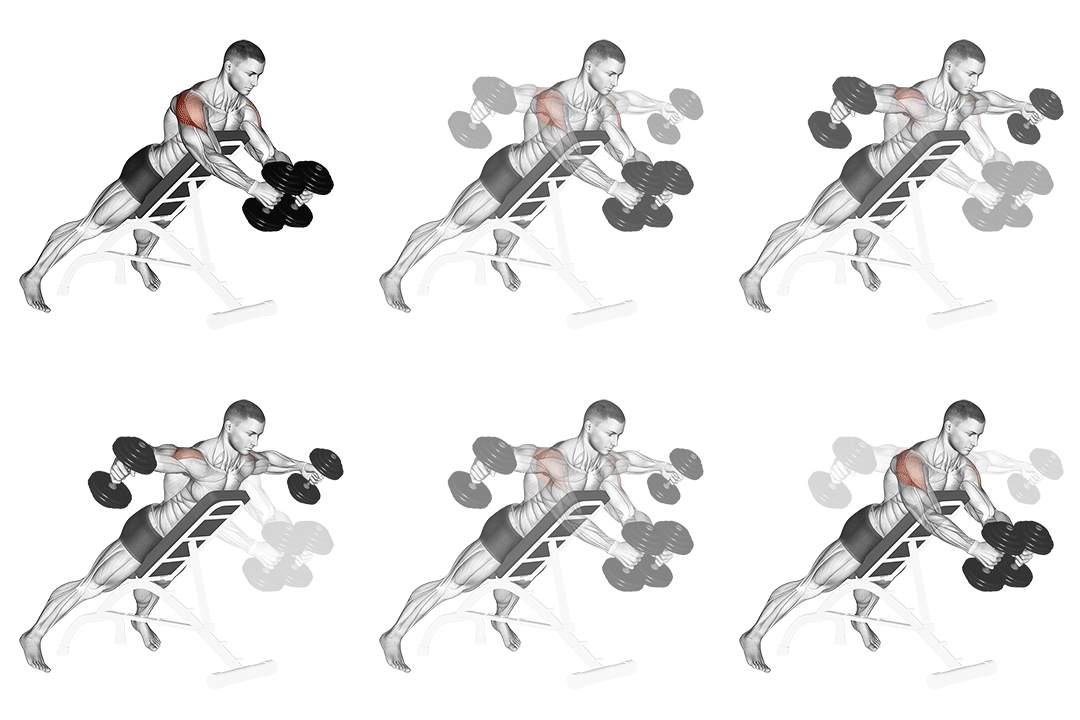
4. Dumbbell Reverse Fly
90% MatchHow to perform this exercise
- Stand with your feet shoulder-width apart and hold a dumbbell in each hand.
- Bend your knees slightly and hinge forward at the hips, keeping your back straight.
- Extend your arms straight down in front of you, palms facing each other.
- Keeping a slight bend in your elbows, raise your arms out to the sides until they are parallel to the ground.
- Pause for a moment at the top, then slowly lower your arms back down to the starting position.
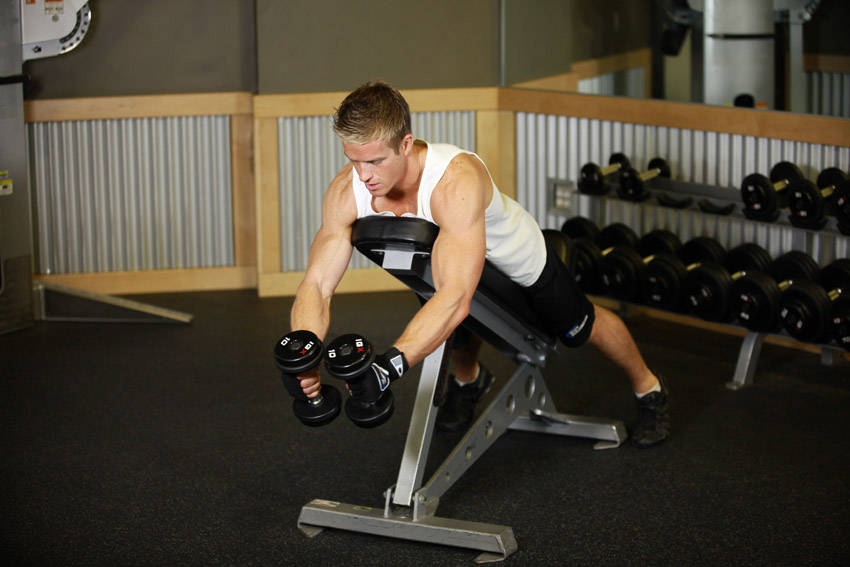
5. Reverse Flyes
90% MatchHow to perform this exercise
- To begin, lie down on an incline bench with the chest and stomach pressing against the incline. Have the dumbbells in each hand with the palms facing each other (neutral grip).
- Extend the arms in front of you so that they are perpendicular to the angle of the bench. The legs should be stationary while applying pressure with the ball of your toes. This is the starting position.
- Maintaining the slight bend of the elbows, move the weights out and away from each other (to the side) in an arc motion while exhaling. Tip: Try to squeeze your shoulder blades together to get the best results from this exercise.
- The arms should be elevated until they are parallel to the floor.
- Feel the contraction and slowly lower the weights back down to the starting position while inhaling.
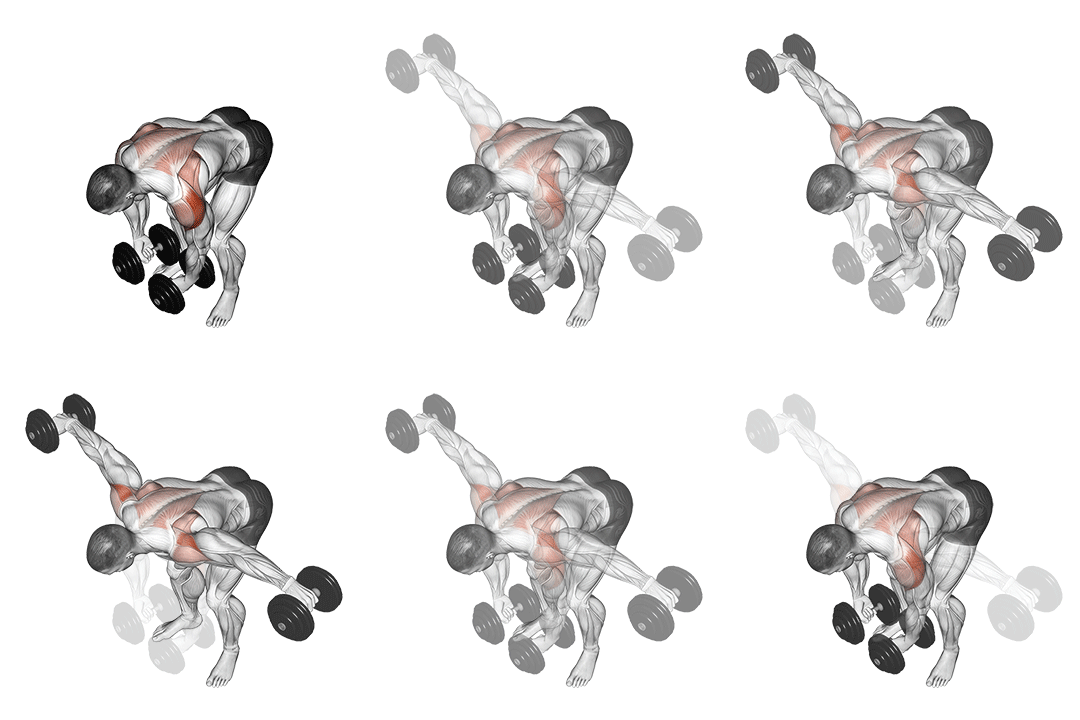
6. Dumbbell Rear Lateral Raise
89.2% MatchHow to perform this exercise
- Stand with your feet shoulder-width apart and hold a dumbbell in each hand, palms facing your body.
- Bend your knees slightly and hinge forward at the hips, keeping your back straight and core engaged.
- Raise your arms out to the sides, keeping a slight bend in your elbows, until they are parallel to the floor.
- Pause for a moment at the top, then slowly lower your arms back down to the starting position.
- Repeat for the desired number of repetitions.
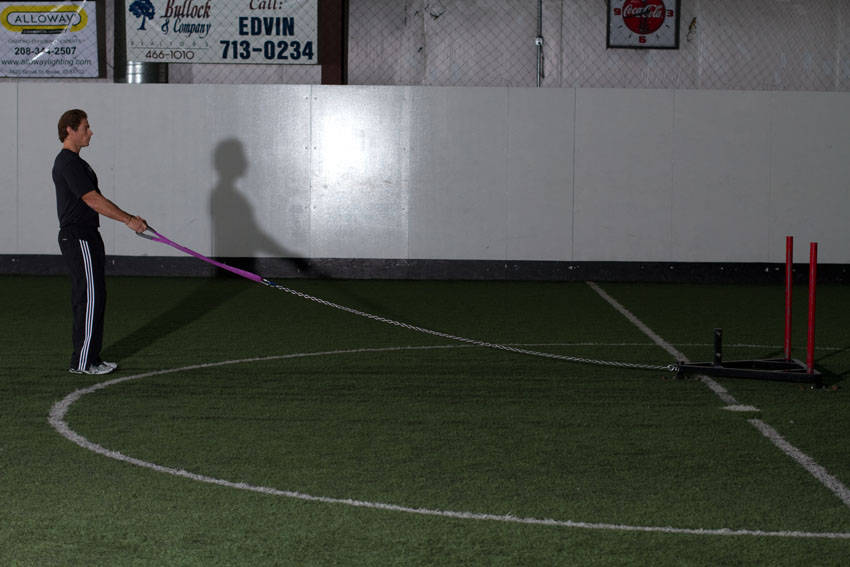
7. Sled Reverse Flye
89.2% MatchHow to perform this exercise
- Attach dual handles to a sled connected by a rope or chain. Load the sled to a light weight.
- Face the sled, backing up until there is some tension in the line. Take both handles at arms length at about waist level. Bend the knees slightly and keep your chest and head up. This will be your starting position.
- Without flexing the elbow, pull the handles upward and apart, performing a reverse fly with some external rotation. Your palms should be facing forward as you do this.
- Return to the starting position, taking a couple steps back to take the slack out of the line.
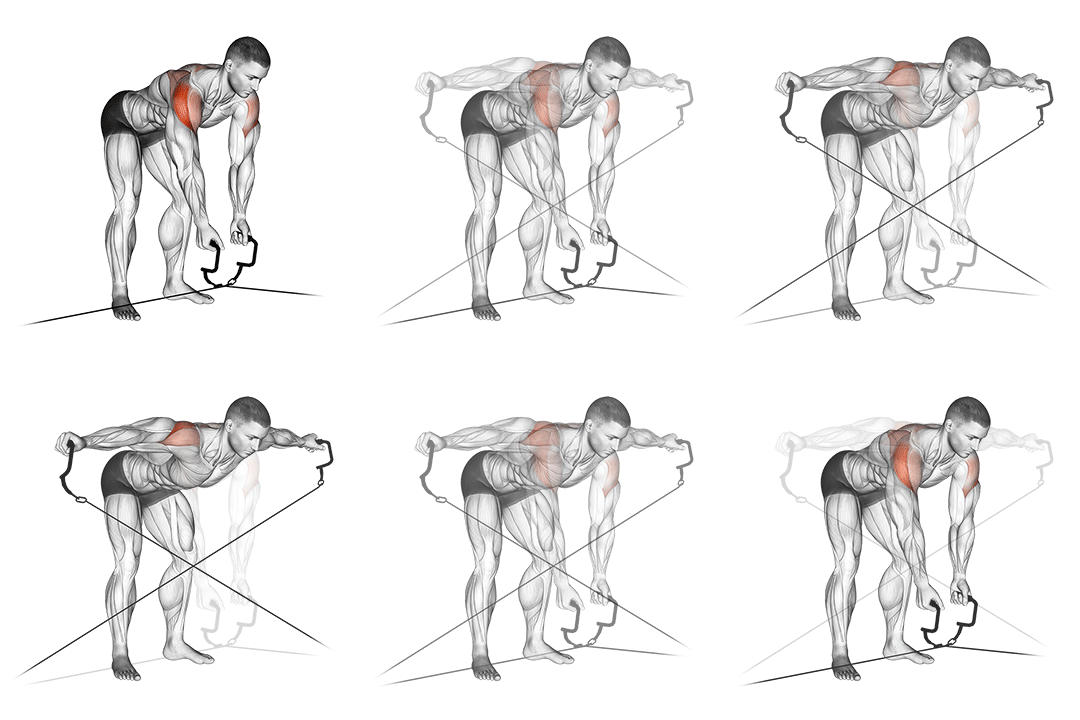
8. Cable Cross-over Revers Fly
88.7% MatchHow to perform this exercise
- Attach a D-handle to each low pulley cable and stand in the middle of the cable crossover machine.
- Grasp the handles with a pronated grip (palms facing down) and take a step forward, positioning your feet shoulder-width apart.
- Bend your knees slightly and lean forward at the waist, keeping your back straight and your abs engaged.
- With your arms extended out to the sides and slightly bent at the elbows, exhale and squeeze your shoulder blades together as you pull the cables back and upward in a reverse fly motion.
- Pause for a moment at the peak contraction, then inhale and slowly return to the starting position.
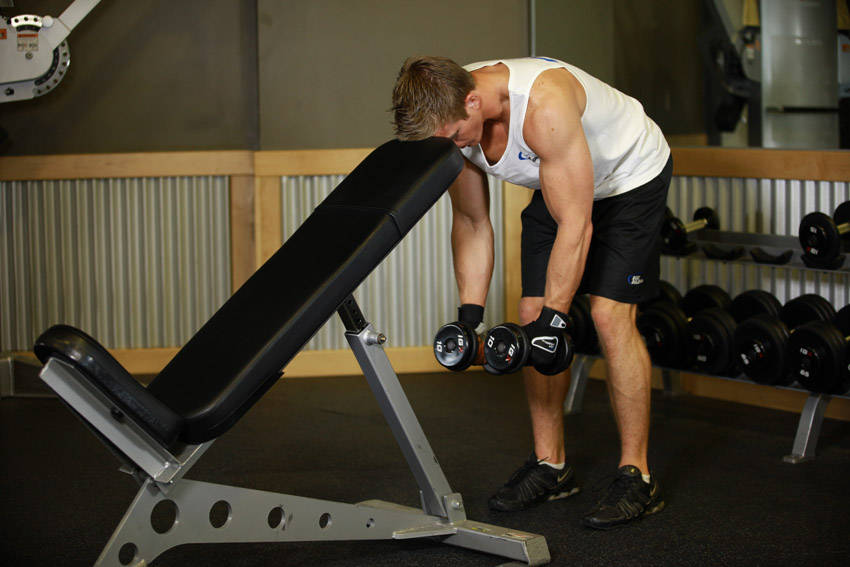
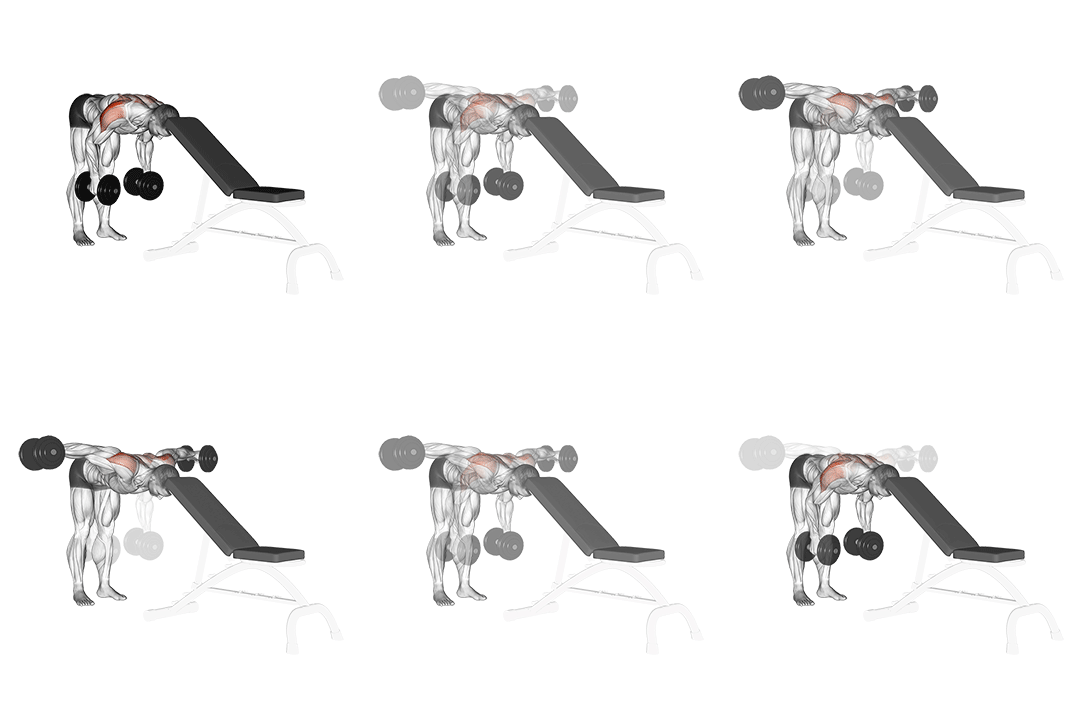
9. Bent Over Dumbbell Rear Delt Raise With Head On Bench
87.7% MatchHow to perform this exercise
- Stand up straight while holding a dumbbell in each hand and with an incline bench in front of you.
- While keeping your back straight and maintaining the natural arch of your back, lean forward until your forehead touches the bench in front of you. Let the arms hang in front of you perpendicular to the ground. The palms of your hands should be facing each other and your torso should be parallel to the floor. This will be your starting position.
- Keeping your torso forward and stationary, and the arms straight with a slight bend at the elbows, lift the dumbbells straight to the side until both arms are parallel to the floor. Exhale as you lift the weights. Caution: avoid swinging the torso or bringing the arms back as opposed to the side.
- After a one second contraction at the top, slowly lower the dumbbells back to the starting position.
- Repeat the recommended amount of repetitions.
10. Dumbbell Rear Lateral Raise (support Head)
87.7% MatchHow to perform this exercise
- Stand with your feet shoulder-width apart and hold a dumbbell in each hand.
- Bend your knees slightly and hinge forward at the hips, keeping your back straight.
- Raise your arms out to the sides, keeping a slight bend in your elbows, until they are parallel to the ground.
- Pause for a moment at the top, then slowly lower your arms back down to the starting position.
- Repeat for the desired number of repetitions.
Why You Might Need a Band Reverse Fly Alternative
A lifter reaches for a swap here for ordinary reasons: the band is worn thin, the anchor point at chest height is already taken, or dumbbells are sitting free while the bands are locked away. Band Reverse Fly asks your rear delts to pull the arms out to the sides from a band anchored at chest height. A dumbbell swap trades that band for a steady weight and lets each arm move on its own path, which suits a lifter working around one side that lags. A sled version starts from waist height with your knees bent and turns your palms to face forward as you pull the handles apart, a twist the band version does not ask for. Band Reverse Fly stays the standard when a band and an anchor point are both free.
How to Choose the Right Substitute
Back Flyes - With Bands keeps the same band and anchor point if that is what you have. Band Pull Apart needs no anchor at all: you hold the band in both hands with your arms straight out in front and pull it apart to your chest, elbows extended. If dumbbells are free, Dumbbell Rear Fly has you hinge forward at the hips and lift your arms out to the sides, while Reverse Flyes puts your chest on an incline bench for the same sweep. Cable Cross-over Revers Fly pulls two low cables back and upward from a forward lean. Sled Reverse Flye adds a small twist to the same pull, starting from waist height with bent knees and palms facing forward.
Frequently Asked Questions
What should I use if I only have dumbbells?
Reverse Flyes is the dumbbell swap: your chest and stomach press against an incline bench with a dumbbell in each hand, and you sweep the arms out to the sides, so each arm moves on its own instead of sharing one band. With no bench, Dumbbell Reverse Fly and Dumbbell Rear Lateral Raise do the same sweep standing, hinged forward at the hips with your back straight, raising the arms until they are parallel to the floor.
How do I keep my torso still during a rear delt raise?
Bent Over Dumbbell Rear Delt Raise With Head On Bench has you lean forward until your forehead touches an incline bench, torso parallel to the floor, then lift the dumbbells straight to the side without swinging. Dumbbell Rear Lateral Raise (Support Head) runs the same raise from a hinge at the hips with your back straight.
How do I make this move harder without changing bands?
Sled Reverse Flye keeps the same pulling-apart motion but starts from waist height with your knees bent, and turns your palms to face forward as you pull, a twist the band version does not need. The steps start it with a light load on the sled, and you can add plates to the sled as it gets easier, which is a kind of progression a band cannot give you.
Can I do the Band Reverse Fly at home?
Yes. Back Flyes - With Bands runs the band around any solid post, and Band Pull Apart needs no anchor at all, just the band held in both hands in front of you. Dumbbell Rear Fly and Dumbbell Reverse Fly work at home with a pair of dumbbells, and Reverse Flyes needs an incline bench to press your chest against, so count it as a home option only if you have one.
More Exercise Alternatives
Find Alternatives for Any Exercise
Use the exercise substitution finder to compare ranked alternatives for your available equipment and training preference.
Try the Exercise Substitution Finder →