

10 Best Barbell Deadlift Alternatives for When You Can't Lift Heavy
If you can't perform the barbell deadlift, use movements that preserve the hip-hinge and posterior-chain loading. Top practical substitutes are trap-bar deadlifts, Romanian deadlifts, barbell hip thrusts, kettlebell swings and single-leg RDLs. These maintain glute and hamstring activation while reducing spinal, grip, or equipment demands.
Original Exercise: Barbell Deadlift
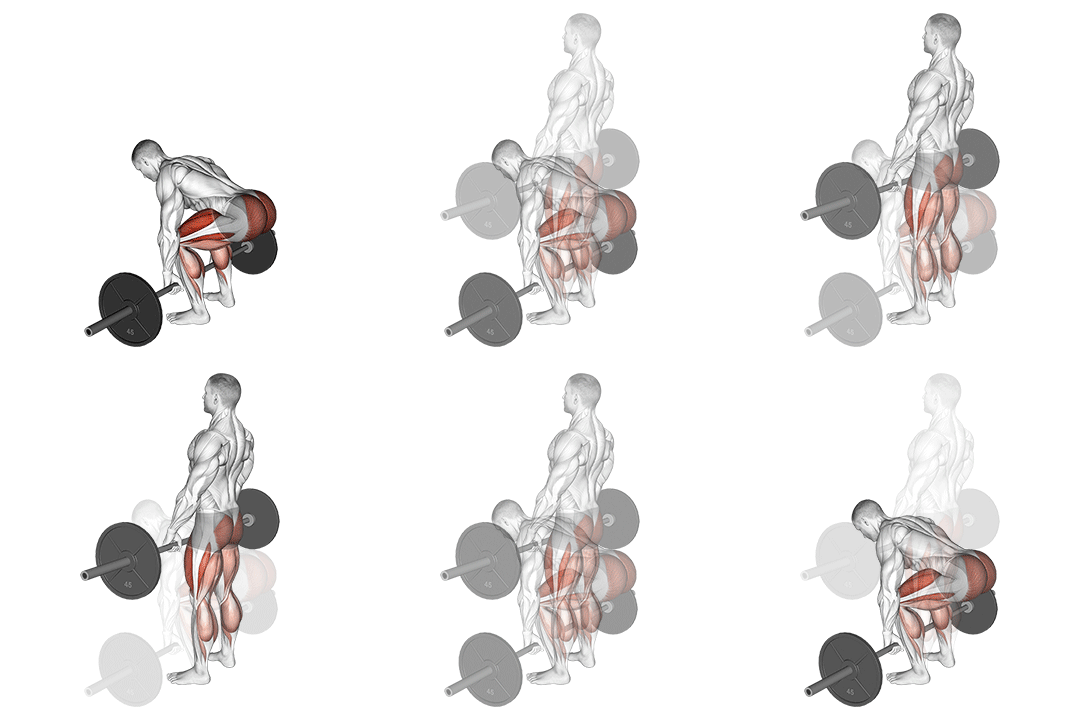
How to Perform Barbell Deadlift
- Stand with your feet shoulder-width apart and the barbell on the ground in front of you.
- Bend your knees and hinge at the hips to lower your torso and grip the barbell with an overhand grip, hands slightly wider than shoulder-width apart.
- Keep your back straight and chest lifted as you drive through your heels to lift the barbell off the ground, extending your hips and knees.
- As you stand up straight, squeeze your glutes and keep your core engaged.
- Lower the barbell back down to the ground by bending at the hips and knees, keeping your back straight.
- Repeat for the desired number of repetitions.
Best Barbell Deadlift Alternatives
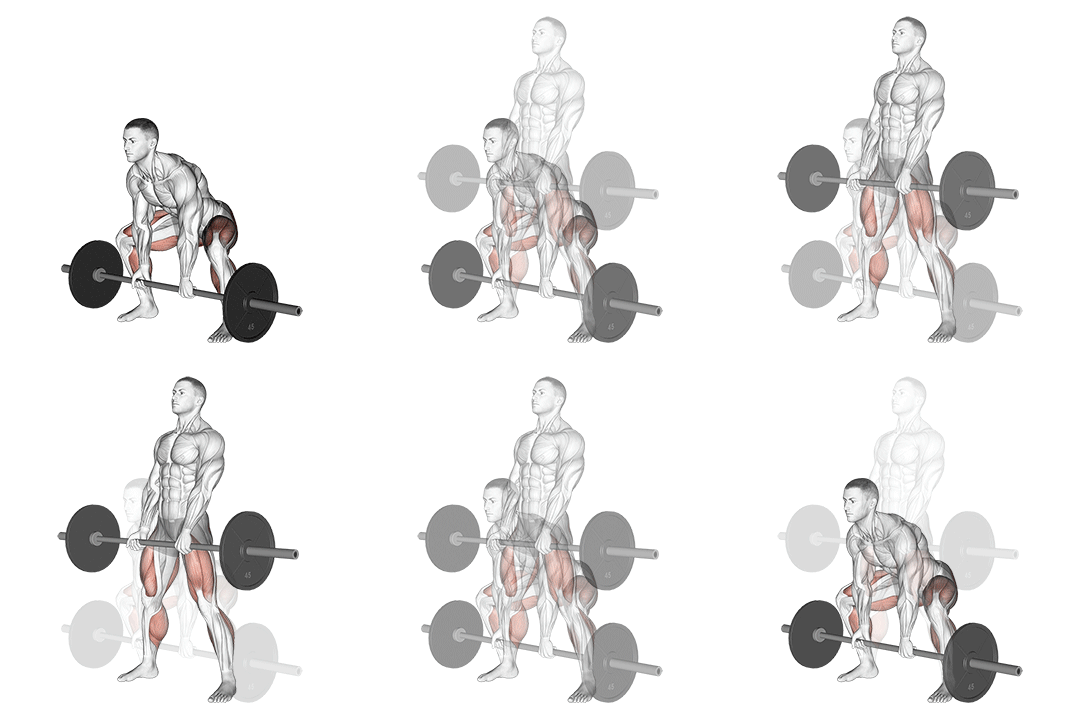
1. Barbell Sumo Deadlift
94.4% MatchHow to perform this exercise
- Stand with your feet wider than shoulder-width apart, toes pointing outwards.
- Place a barbell on the ground in front of you, centered between your feet.
- Bend your knees and lower your hips, keeping your back straight and chest up, to grip the barbell with an overhand grip.
- Engage your core and drive through your heels to lift the barbell off the ground, extending your hips and knees simultaneously.
- As you lift, keep your chest up and back straight, and push your hips forward to fully engage your glutes.
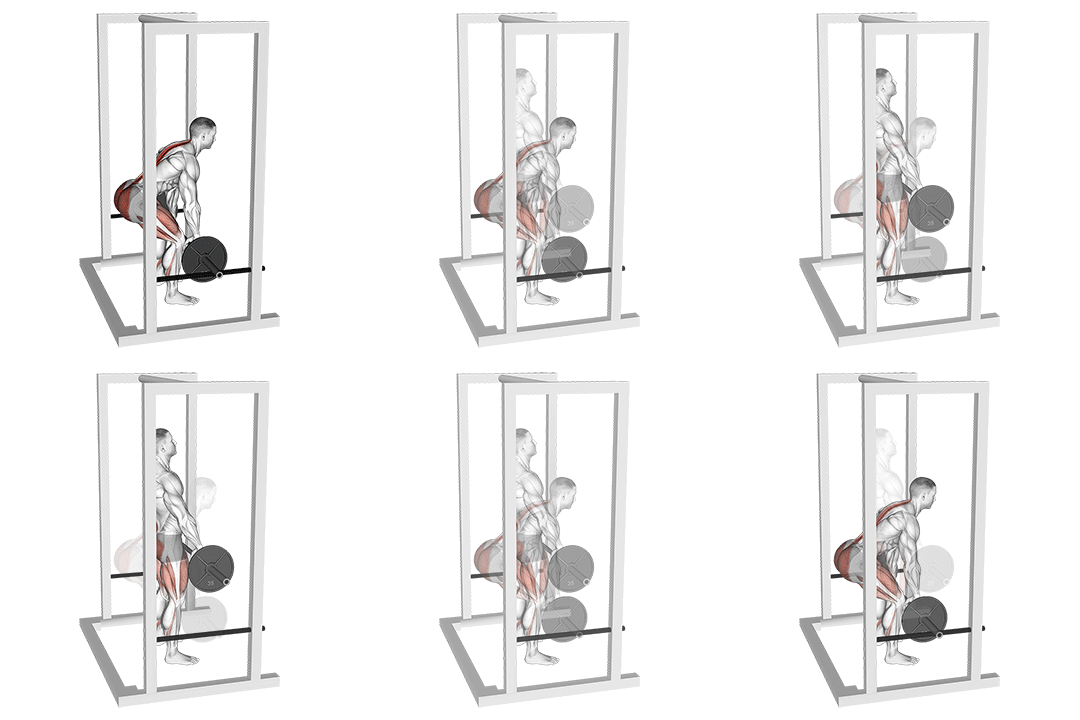
2. Barbell Rack Pull
90.4% MatchHow to perform this exercise
- Set up a barbell on a rack at knee height.
- Stand with your feet shoulder-width apart, toes pointing slightly outwards.
- Bend at the hips and knees to lower yourself down and grip the barbell with an overhand grip, hands shoulder-width apart.
- Engage your core and lift the barbell by extending your hips and knees, pulling your shoulders back and squeezing your glutes at the top.
- Lower the barbell back down to the starting position by bending at the hips and knees.
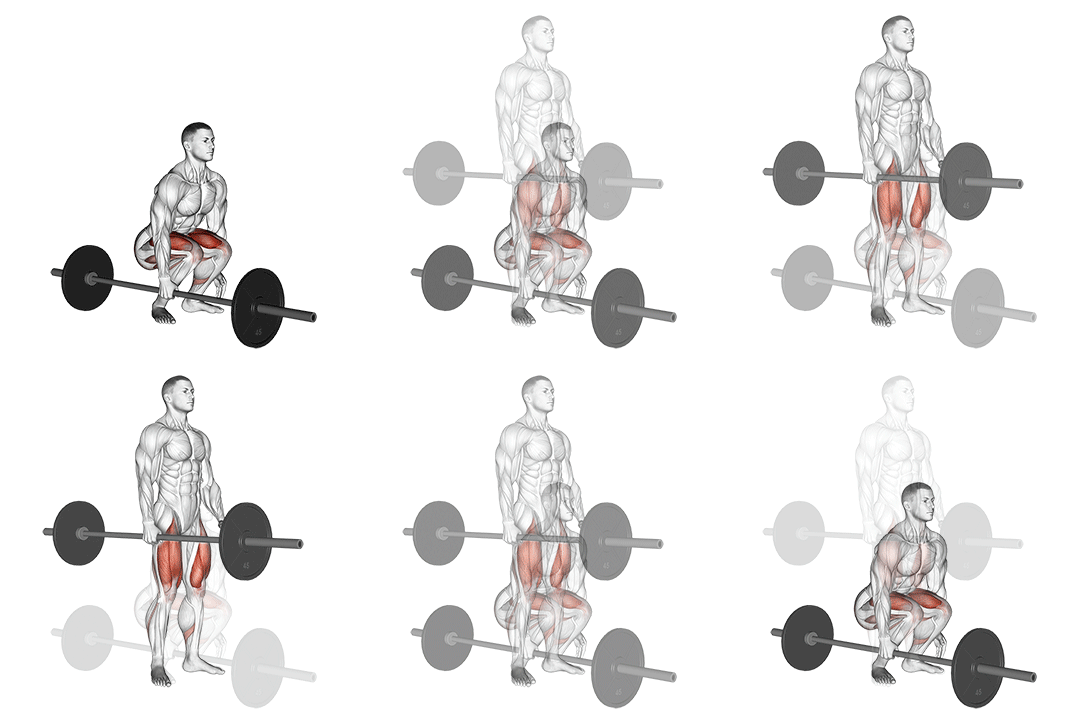
3. Barbell One Arm Side Deadlift
82.4% MatchHow to perform this exercise
- Stand with your feet shoulder-width apart, holding a barbell in one hand with an overhand grip.
- Keep your back straight and your core engaged.
- Bend at the hips and lower the barbell towards the outside of your leg, keeping your arm straight and your chest up.
- Lower the barbell as far as you can while maintaining good form.
- Pause for a moment, then slowly return to the starting position.
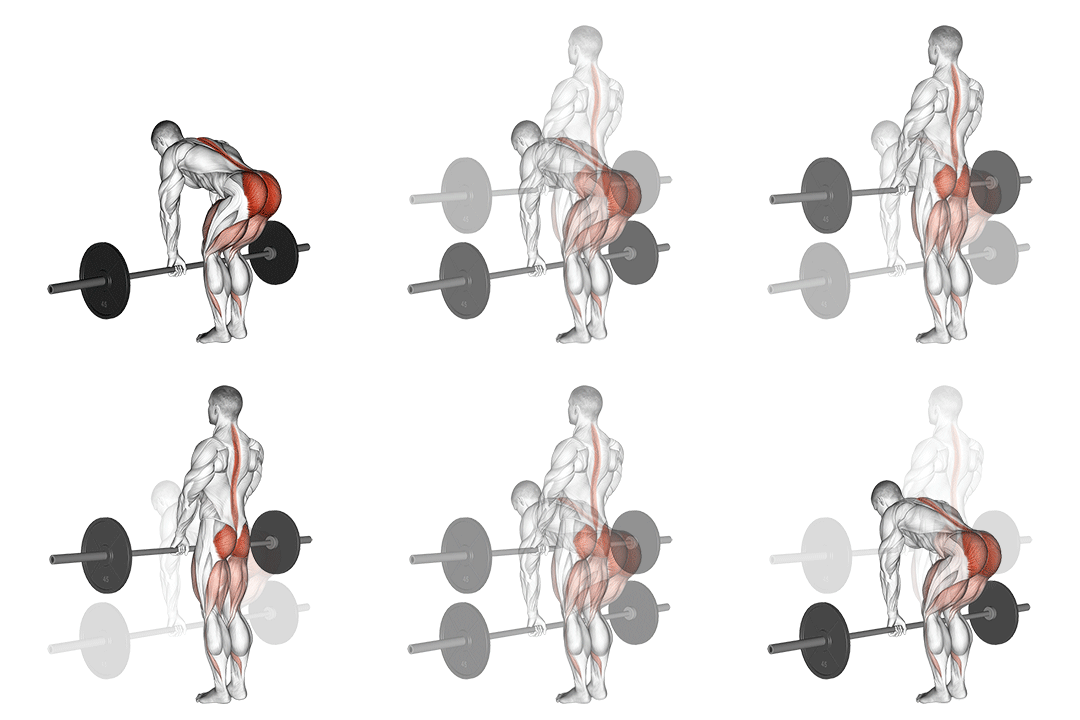
4. Barbell Romanian Deadlift
82% MatchHow to perform this exercise
- Stand with your feet shoulder-width apart and your toes pointing forward.
- Hold the barbell with an overhand grip, hands slightly wider than shoulder-width apart.
- Bend at the hips, keeping your back straight and your knees slightly bent.
- Lower the barbell towards the ground, keeping it close to your body.
- Feel the stretch in your hamstrings as you lower the barbell.
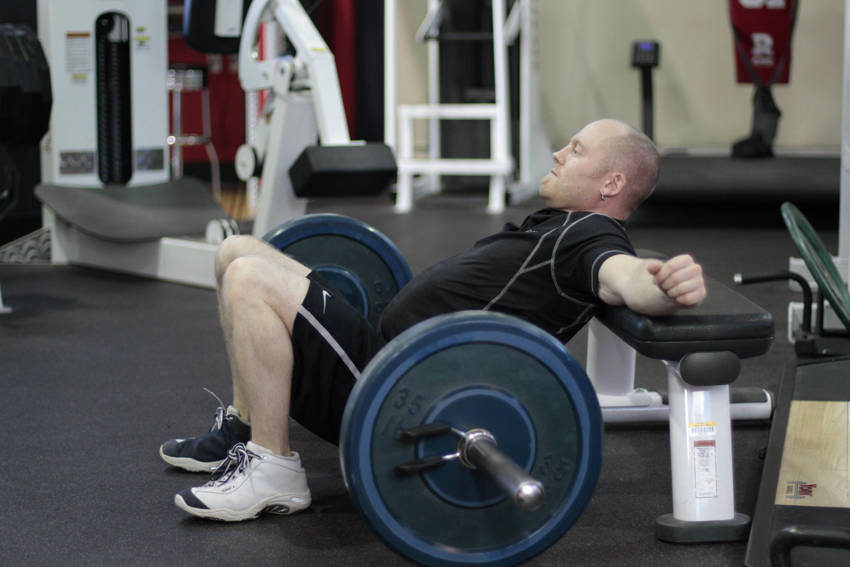
5. Barbell Hip Thrust
81.1% MatchHow to perform this exercise
- Begin seated on the ground with a bench directly behind you. Have a loaded barbell over your legs. Using a fat bar or having a pad on the bar can greatly reduce the discomfort caused by this exercise.
- Roll the bar so that it is directly above your hips, and lean back against the bench so that your shoulder blades are near the top of it.
- Begin the movement by driving through your feet, extending your hips vertically through the bar. Your weight should be supported by your shoulder blades and your feet. Extend as far as possible, then reverse the motion to return to the starting position.
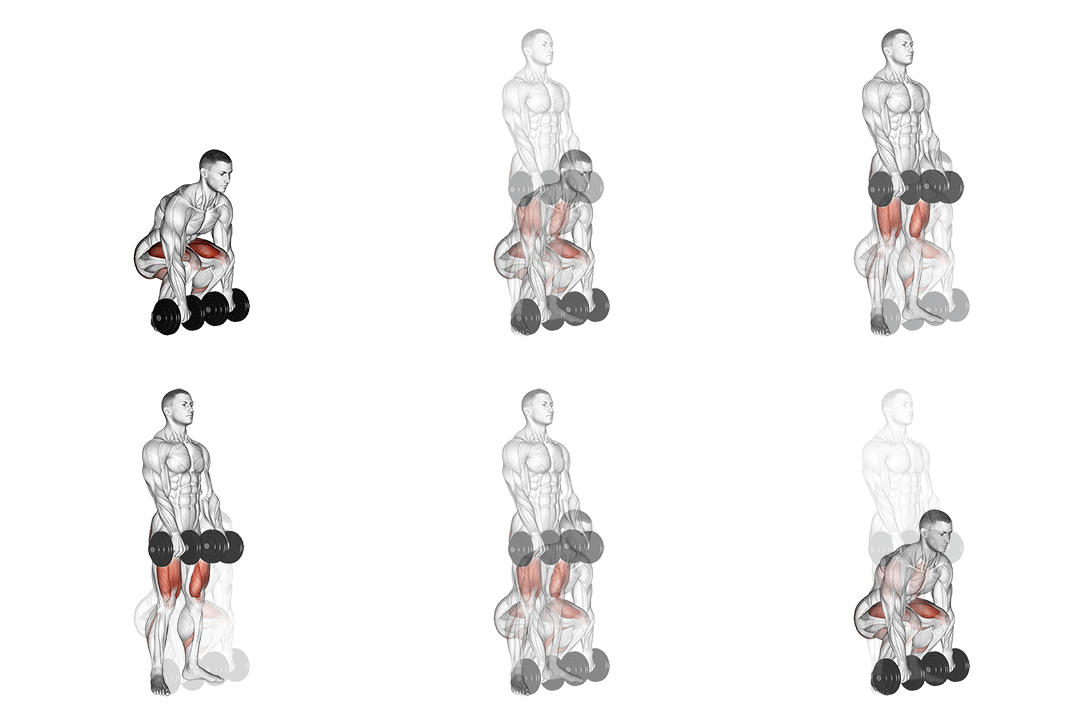
6. Dumbbell Deadlift
80.9% MatchHow to perform this exercise
- Stand with your feet shoulder-width apart, toes pointing forward.
- Hold a dumbbell in each hand, palms facing your body, arms extended downwards.
- Bend at your hips and knees, lowering the dumbbells towards the ground while keeping your back straight.
- Push through your heels and extend your hips and knees, lifting the dumbbells back up to the starting position.
- Repeat for the desired number of repetitions.
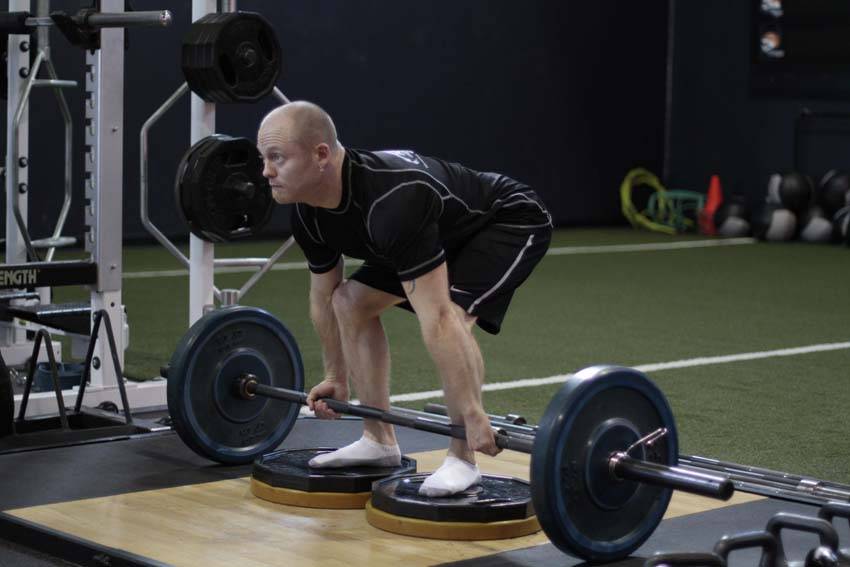
7. Deficit Deadlift
80% MatchHow to perform this exercise
- Begin by having a platform or weight plates that you can stand on, usually 1-3 inches in height. Approach the bar so that it is centered over your feet. You feet should be about hip width apart. Bend at the hip to grip the bar at shoulder width, allowing your shoulder blades to protract. Typically, you would use an overhand grip or an over/under grip on heavier sets.
- With your feet, and your grip set, take a big breath and then lower your hips and bend the knees until your shins contact the bar. Look forward with your head, keep your chest up and your back arched, and begin driving through the heels to move the weight upward. After the bar passes the knees, aggressively pull the bar back, pulling your shoulder blades together as you drive your hips forward into the bar.
- Lower the bar by bending at the hips and guiding it to the floor.
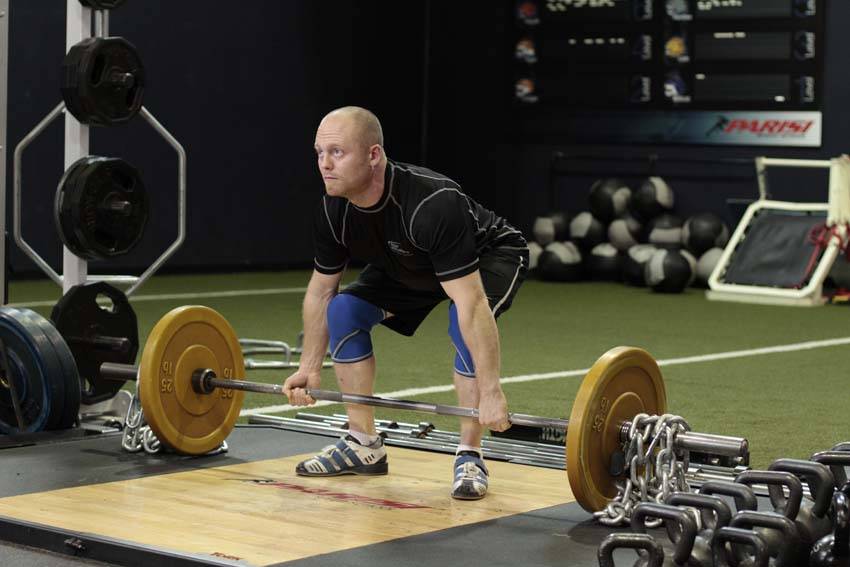
8. Deadlift With Chains
80% MatchHow to perform this exercise
- You can attach the chains to the sleeves of the bar, or just drape the middle over the bar so there is a greater weight increase as you lift.
- Approach the bar so that it is centered over your feet. You feet should be about hip width apart. Bend at the hip to grip the bar at shoulder width, allowing your shoulder blades to protract. Typically, you would use an overhand grip or an over/under grip on heavier sets. With your feet, and your grip set, take a big breath and then lower your hips and bend the knees until your shins contact the bar.
- Look forward with your head, keep your chest up and your back arched, and begin driving through the heels to move the weight upward. After the bar passes the knees, aggressively pull the bar back, pulling your shoulder blades together as you drive your hips forward into the bar.
- Lower the bar by bending at the hips and guiding it to the floor.
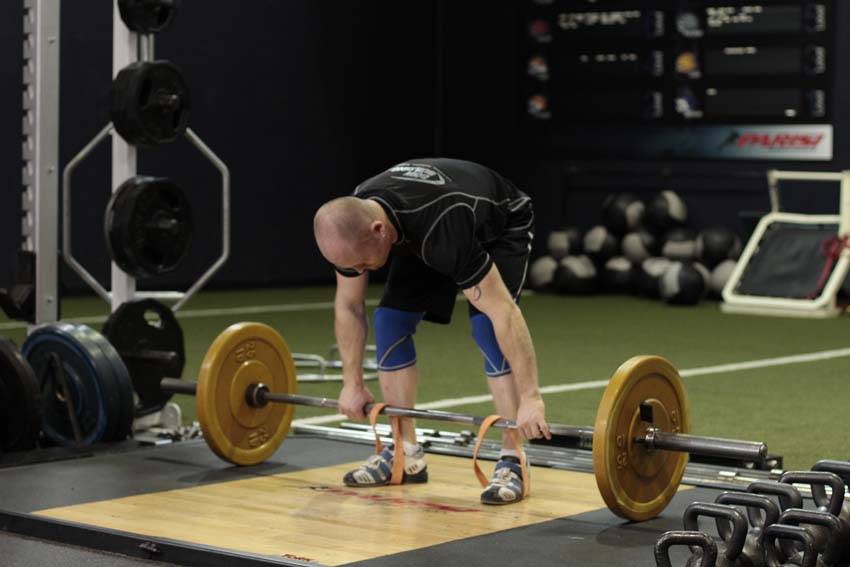
9. Deadlift With Bands
80% MatchHow to perform this exercise
- To deadlift with short bands, simply loop them over the bar before you start, and step into them to set up. For long bands, they will need to be anchored to a secure base, such as heavy dumbbells or a rack.
- With your feet, and your grip set, take a big breath and then lower your hips and bend the knees until your shins contact the bar. Look forward with your head, keep your chest up and your back arched, and begin driving through the heels to move the weight upward. After the bar passes the knees, aggressively pull the bar back, pulling your shoulder blades together as you drive your hips forward into the bar.
- Lower the bar by bending at the hips and guiding it to the floor.
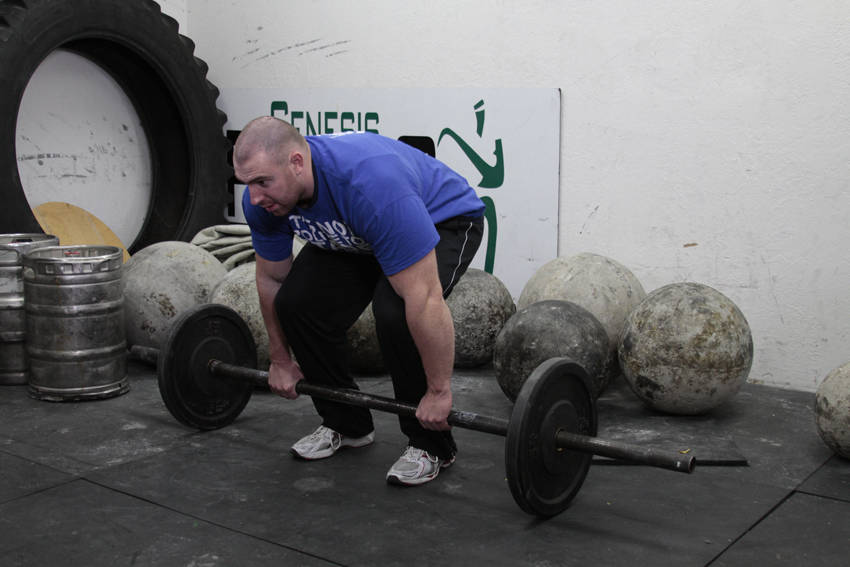
10. Axle Deadlift
79.4% MatchHow to perform this exercise
- Approach the bar so that it is centered over your feet. You feet should be about hip width apart. Bend at the hip to grip the bar at shoulder width, allowing your shoulder blades to protract. Typically, you would use an over/under grip.
- With your feet and your grip set, take a big breath and then lower your hips and flex the knees until your shins contact the bar. Look forward with your head, keep your chest up and your back arched, and begin driving through the heels to move the weight upward.
- After the bar passes the knees, aggressively pull the bar back, pulling your shoulder blades together as you drive your hips forward into the bar.
- Lower the bar by bending at the hips and guiding it to the floor.
Why You Might Need a Barbell Deadlift Alternative
You might substitute the barbell deadlift for medical, practical, or training-specific reasons. Low-back pain, limited hip mobility, poor grip, or no access to a loaded barbell often make the conventional deadlift unsafe or ineffective. Some athletes want to bias glute hypertrophy while minimizing spinal shear, or they need unilateral movements to address asymmetry. Alternatives reproduce the hip-extension pattern, allowing you to load glutes and hamstrings with different lever arms, ranges of motion and stability demands. That preserves strength and hypertrophy adaptations while reducing injury risk and accommodating equipment or coaching limitations.
How to Choose the Right Substitute
Choose a substitute by matching the deadlift's primary demands: hip-hinge mechanics, posterior-chain load, and desired loading intensity. If you need near-identical force vectors and heavy loading, use a trap-bar deadlift or conventional Romanian deadlift. For maximal glute isolation with less spinal load, pick barbell hip thrusts. For power and posterior-chain speed, select kettlebell swings. Use single-leg RDLs or Bulgarian split squats to address asymmetries and reduce absolute load. Also factor equipment availability, mobility, grip capacity and how the movement transfers to your sport or goals. Progress with load, volume, tempo and time under tension, not just heavier weight.
Frequently Asked Questions
What muscles does barbell deadlift work?
The barbell deadlift primarily targets the glutes, hamstrings and spinal erectors through the hip-hinge, with significant contribution from the quads during lockout and the lats and traps for upper-body stability. It is a full posterior-chain compound movement that also challenges grip and core stabilization.
What is the best bodyweight alternative to barbell deadlift?
A single-leg Romanian deadlift (bodyweight) is the best bodyweight hinge alternative because it replicates hip-extension mechanics and emphasizes eccentric control and glute-hamstring activation. Perform slow reps with a long reach and neutral spine to maximize posterior-chain loading and balance stimulus.
Can I build muscle without doing barbell deadlift?
Yes. You can achieve comparable hypertrophy and strength by combining trap-bar deadlifts, Romanian deadlifts, hip thrusts and unilateral hinge variations while applying progressive overload. Focus on maintaining high tension, sufficient volume, and appropriate loading across those hip-extension patterns to stimulate growth.
More Exercise Alternatives
Find Alternatives for Any Exercise
Use our free tool to discover the best substitute exercises based on your available equipment and goals.
Try the Exercise Substitution Finder →