

10 Best Dumbbell Clean Alternatives for Explosive Glute Power
The Dumbbell Clean is done standing with dumbbells. Ranked closest by our scoring: the Dumbbell Deadlift, the Barbell Rack Pull and the Barbell Sumo Deadlift.
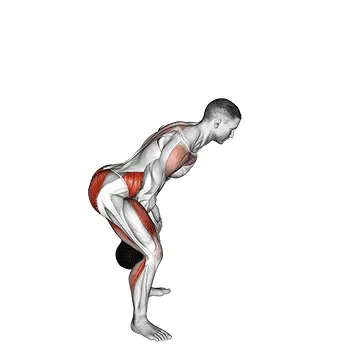
The Dumbbell Clean's real job is snapping your hips and knees straight to launch a pair of dumbbells up to your shoulders. The Dumbbell Deadlift keeps that hip and knee extension: you bend at the hips and knees with a dumbbell in each hand, then push through your heels to stand back up, with no jump and no catch. For the explosive hip snap, the Kettlebell Swing uses your hips to drive one bell up to shoulder height.
Updated Ranked by our 12-factor similarity model How it works
Original Exercise: Dumbbell Clean
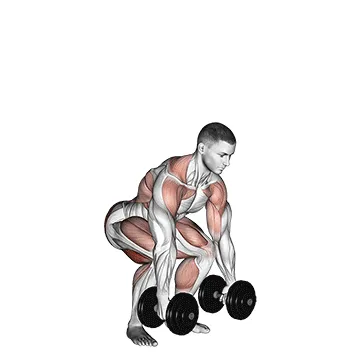
- Primary muscle
- Glutes
- Equipment
- Dumbbell
- Difficulty
- Advanced
- Type
- Compound
Secondary muscles: Hamstrings, Quadriceps, Calves
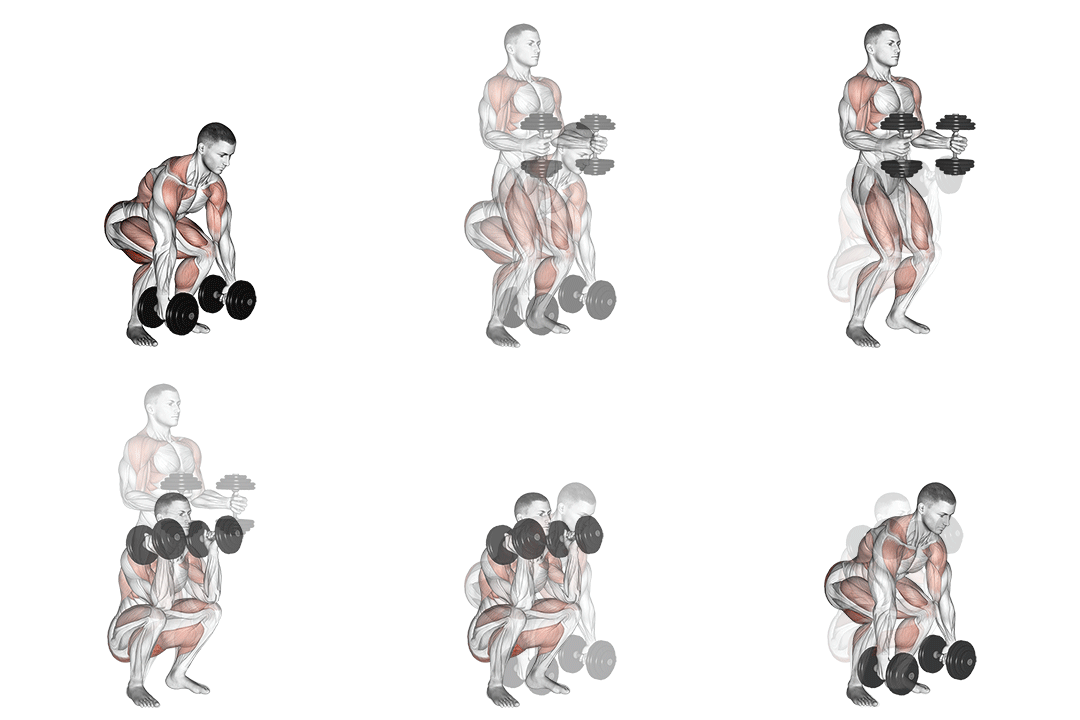
How to perform Dumbbell Clean
- Stand with your feet shoulder-width apart, holding a dumbbell in each hand with an overhand grip.
- Bend your knees and lower your hips into a squat position, keeping your back straight and chest up.
- Explosively extend your hips and knees, driving through your heels to jump off the ground.
- As you jump, shrug your shoulders and pull the dumbbells up towards your shoulders, keeping them close to your body.
- Catch the dumbbells at shoulder height, with your elbows pointing forward and your palms facing up.
- Lower the dumbbells back down to the starting position by reversing the movement.
- Repeat for the desired number of repetitions.
Ranked Dumbbell Clean Alternatives
10 substitutes, ranked by how closely each one matches the Dumbbell Clean on movement pattern, muscles worked, equipment and body position. The higher the score, the less you change. Open "How to perform this exercise" on a card for the steps; every card title links to that exercise's own alternatives page.
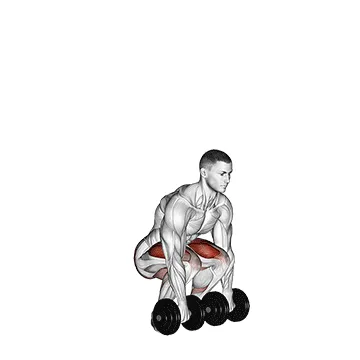
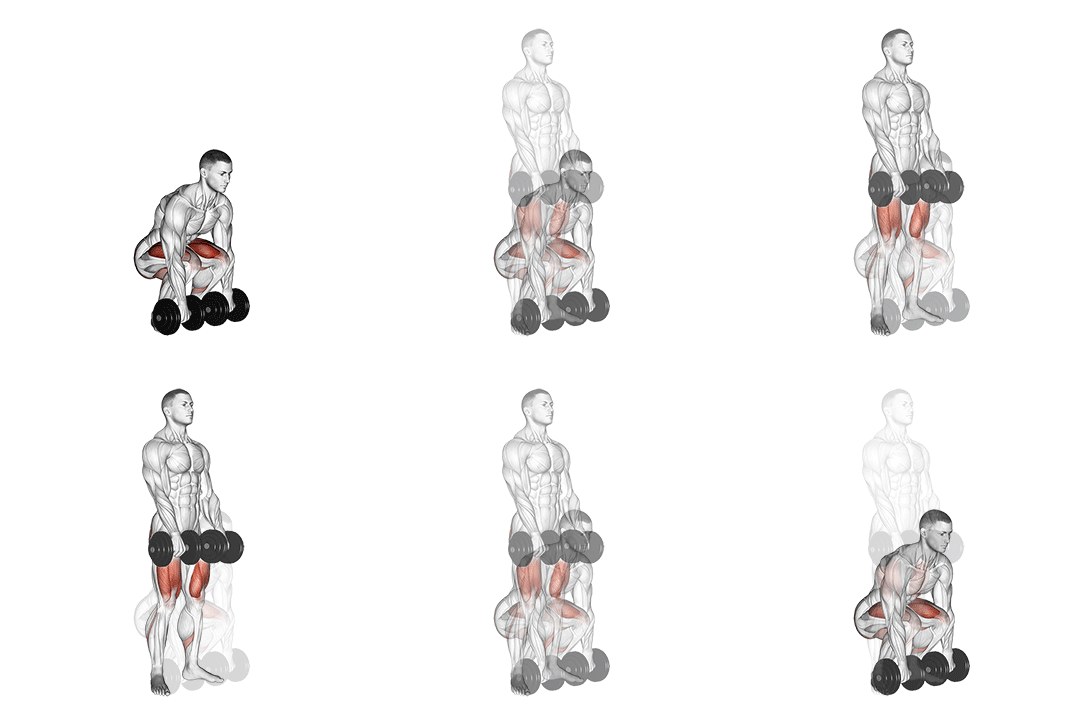
Best match 1. Dumbbell Deadlift
94% match- Glutes
- Dumbbell
- Intermediate
- Compound
Pick this when you want an easier version that still works the glutes.
How to perform this exercise
- Stand with your feet shoulder-width apart, toes pointing forward.
- Hold a dumbbell in each hand, palms facing your body, arms extended downwards.
- Bend at your hips and knees, lowering the dumbbells towards the ground while keeping your back straight.
- Push through your heels and extend your hips and knees, lifting the dumbbells back up to the starting position.
- Repeat for the desired number of repetitions.
Sets and reps: 3 or 4 sets of 6 to 10 reps.
Why this matches
- Primary muscle: glutes, the same as the Dumbbell Clean
- Equipment: free weights, the same as the Dumbbell Clean
- Body position: standing, the same as the Dumbbell Clean
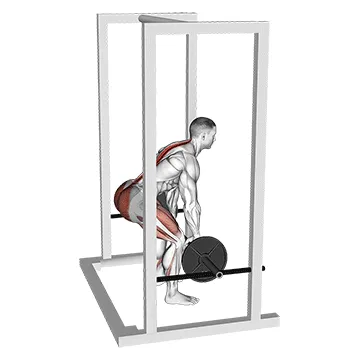
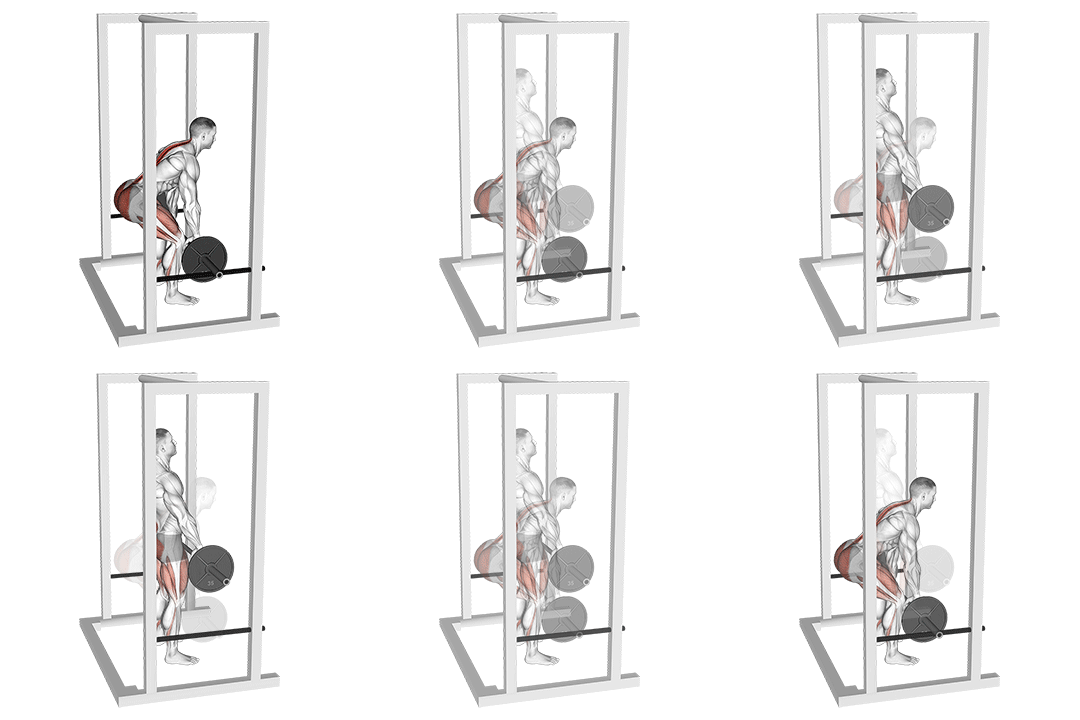
2. Barbell Rack Pull
90% match- Glutes
- Barbell
- Intermediate
- Compound
A good swap when you have a barbell to work with, and it still works the glutes.
How to perform this exercise
- Set up a barbell on a rack at knee height.
- Stand with your feet shoulder-width apart, toes pointing slightly outwards.
- Bend at the hips and knees to lower yourself down and grip the barbell with an overhand grip, hands shoulder-width apart.
- Engage your core and lift the barbell by extending your hips and knees, pulling your shoulders back and squeezing your glutes at the top.
- Lower the barbell back down to the starting position by bending at the hips and knees.
- Repeat for the desired number of repetitions.
Sets and reps: 3 to 5 sets of 5 to 8 reps.
Why this matches
- Primary muscle: glutes, the same as the Dumbbell Clean
- Equipment: free weights, the same as the Dumbbell Clean
- Body position: standing, the same as the Dumbbell Clean
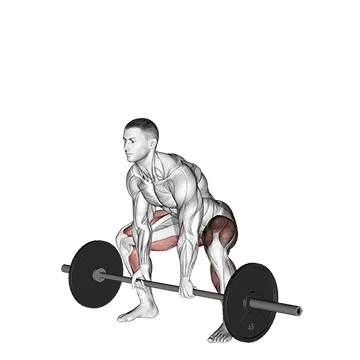
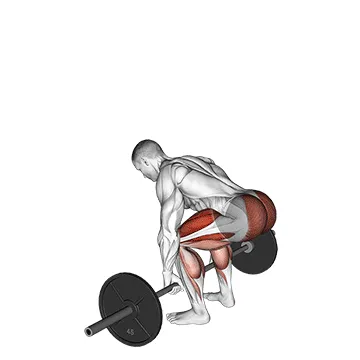
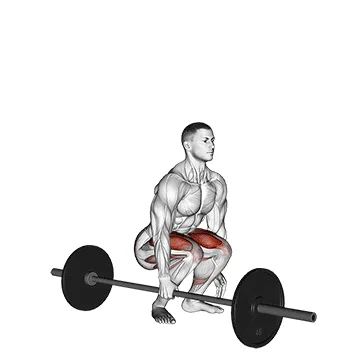
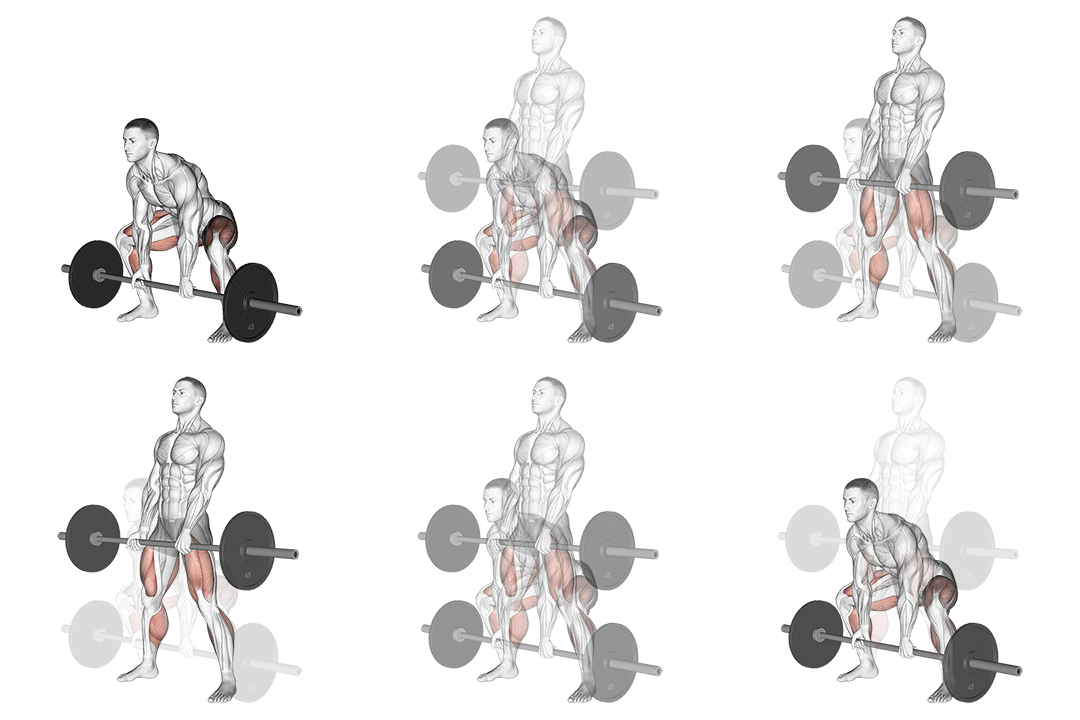
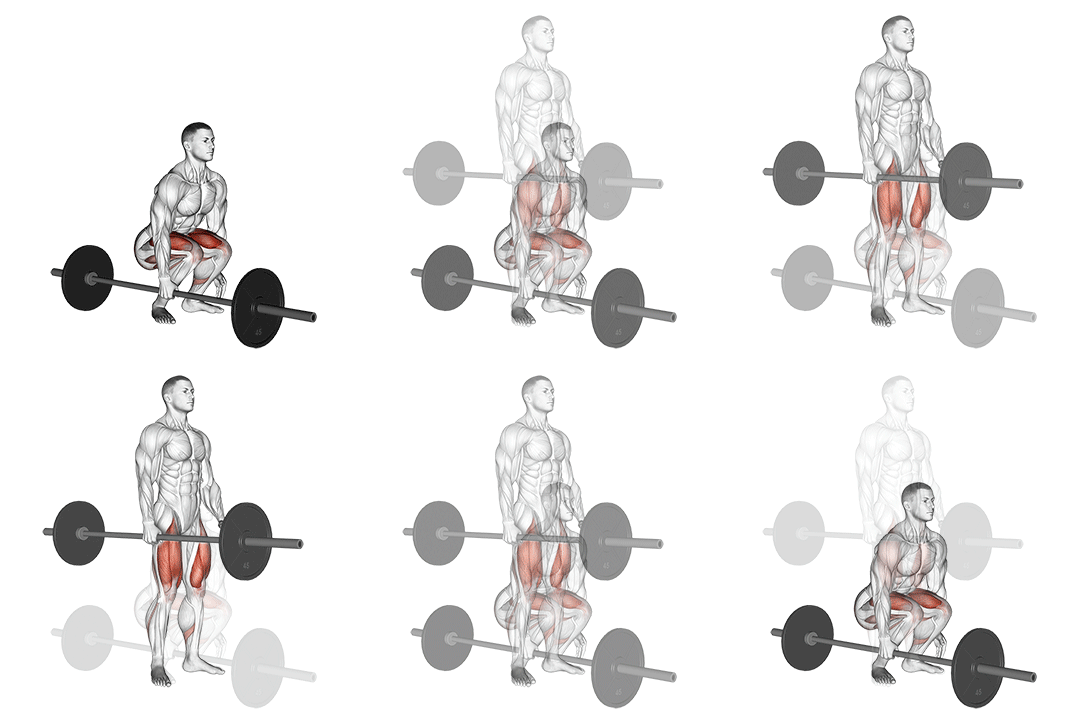
3. Barbell Sumo Deadlift
90% match- Glutes
- Barbell
- Advanced
- Compound
How to perform this exercise
- Stand with your feet wider than shoulder-width apart, toes pointing outwards.
- Place a barbell on the ground in front of you, centered between your feet.
- Bend your knees and lower your hips, keeping your back straight and chest up, to grip the barbell with an overhand grip.
- Engage your core and drive through your heels to lift the barbell off the ground, extending your hips and knees simultaneously.
- As you lift, keep your chest up and back straight, and push your hips forward to fully engage your glutes.
- Pause for a moment at the top, then slowly lower the barbell back down to the starting position, maintaining control throughout the movement.
- Repeat for the desired number of repetitions.
Sets and reps: 3 to 5 sets of 5 to 8 reps.
Why this matches
- Primary muscle: glutes, the same as the Dumbbell Clean
- Equipment: free weights, the same as the Dumbbell Clean
- Body position: standing, the same as the Dumbbell Clean
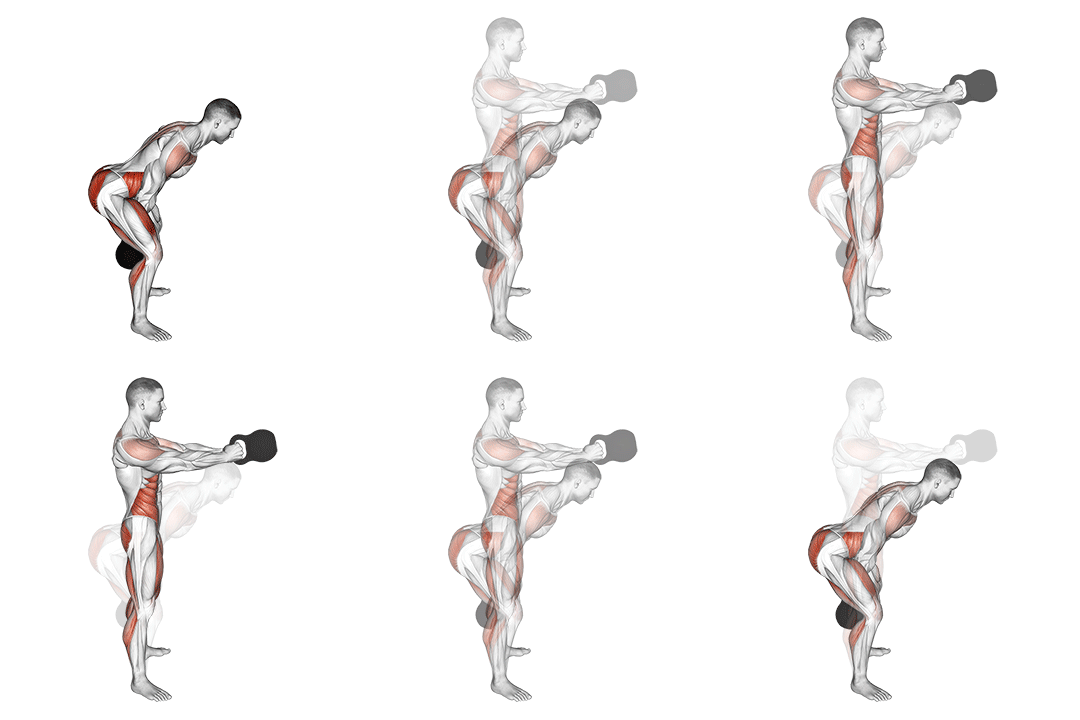
4. Kettlebell Swing
88% match- Glutes
- Kettlebell
- Intermediate
- Compound
A good swap when you have a kettlebell to work with, and it still works the glutes.
How to perform this exercise
- Stand with your feet shoulder-width apart, toes pointed slightly outward.
- Hold the kettlebell with both hands in front of your body, arms extended.
- Bend your knees slightly and hinge at the hips, pushing your butt back.
- Swing the kettlebell back between your legs, keeping your arms straight and maintaining a flat back.
- Drive your hips forward and swing the kettlebell up to shoulder height, using the momentum generated by your hips.
- Allow the kettlebell to swing back down between your legs and repeat the movement for the desired number of repetitions.
Sets and reps: 3 or 4 sets of 6 to 10 reps.
Why this matches
- Primary muscle: glutes, the same as the Dumbbell Clean
- Equipment: free weights, the same as the Dumbbell Clean
- Body position: standing, the same as the Dumbbell Clean
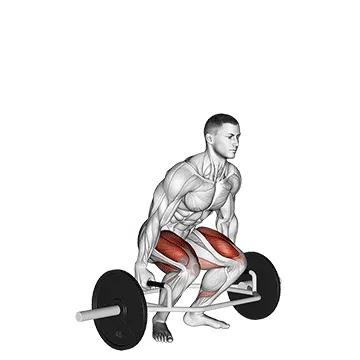
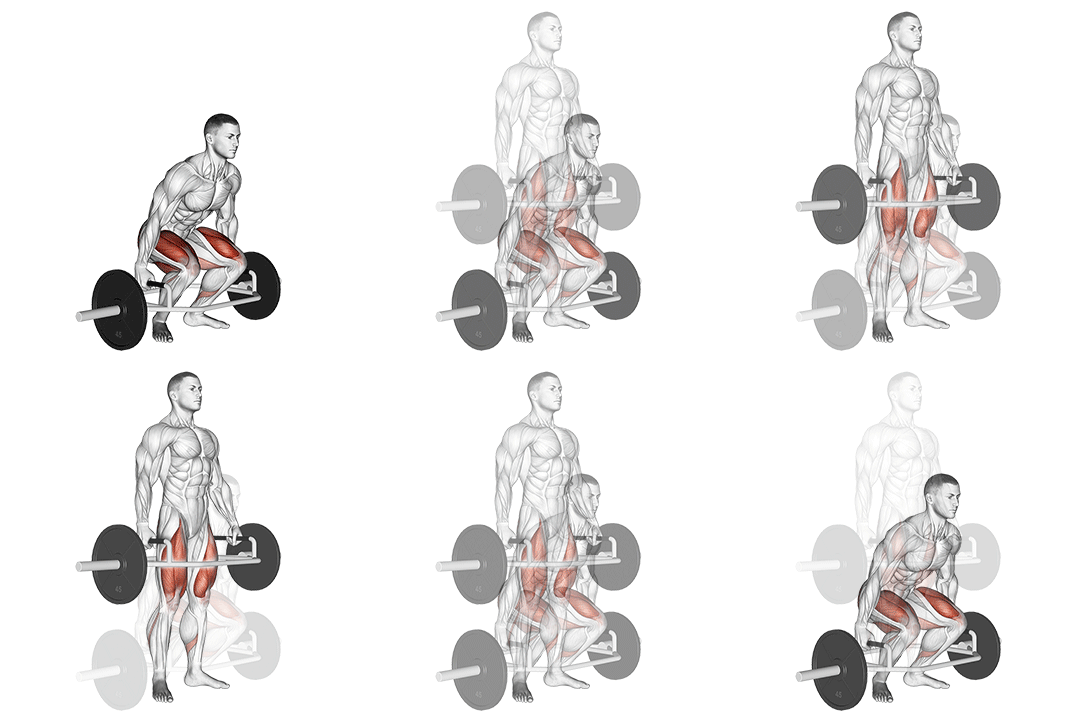
5. Trap Bar Deadlift
88% match- Glutes
- Trap-bar
- Intermediate
- Compound
A good swap when you have a trap bar to work with, and it still works the glutes.
How to perform this exercise
- Stand with your feet shoulder-width apart and the trap bar on the ground in front of you.
- Bend at the hips and knees to lower yourself down and grip the handles of the trap bar with an overhand grip.
- Keep your back straight and chest up as you begin to lift the trap bar off the ground by extending your hips and knees.
- As you lift, focus on driving through your heels and squeezing your glutes at the top of the movement.
- Lower the trap bar back down to the ground by bending at the hips and knees, keeping your back straight throughout the movement.
- Repeat for the desired number of repetitions.
Sets and reps: 3 or 4 sets of 6 to 10 reps.
Why this matches
- Primary muscle: glutes, the same as the Dumbbell Clean
- Equipment: free weights, the same as the Dumbbell Clean
- Body position: standing, the same as the Dumbbell Clean
- Balance: easier to stay steady on than the Dumbbell Clean
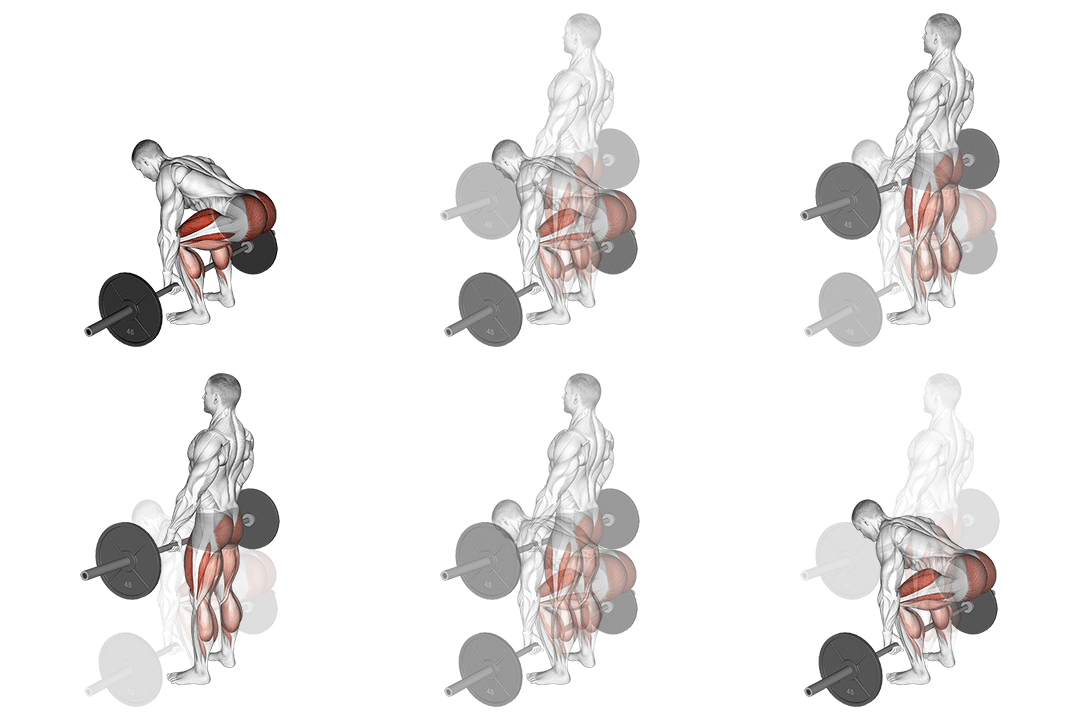
6. Barbell Deadlift
86% match- Glutes
- Barbell
- Advanced
- Compound
How to perform this exercise
- Stand with your feet shoulder-width apart and the barbell on the ground in front of you.
- Bend your knees and hinge at the hips to lower your torso and grip the barbell with an overhand grip, hands slightly wider than shoulder-width apart.
- Keep your back straight and chest lifted as you drive through your heels to lift the barbell off the ground, extending your hips and knees.
- As you stand up straight, squeeze your glutes and keep your core engaged.
- Lower the barbell back down to the ground by bending at the hips and knees, keeping your back straight.
- Repeat for the desired number of repetitions.
Sets and reps: 3 to 5 sets of 5 to 8 reps.
Why this matches
- Primary muscle: glutes, the same as the Dumbbell Clean
- Equipment: free weights, the same as the Dumbbell Clean
- Body position: standing, the same as the Dumbbell Clean
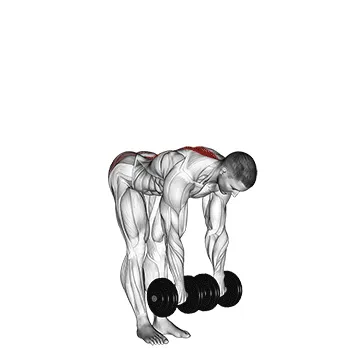
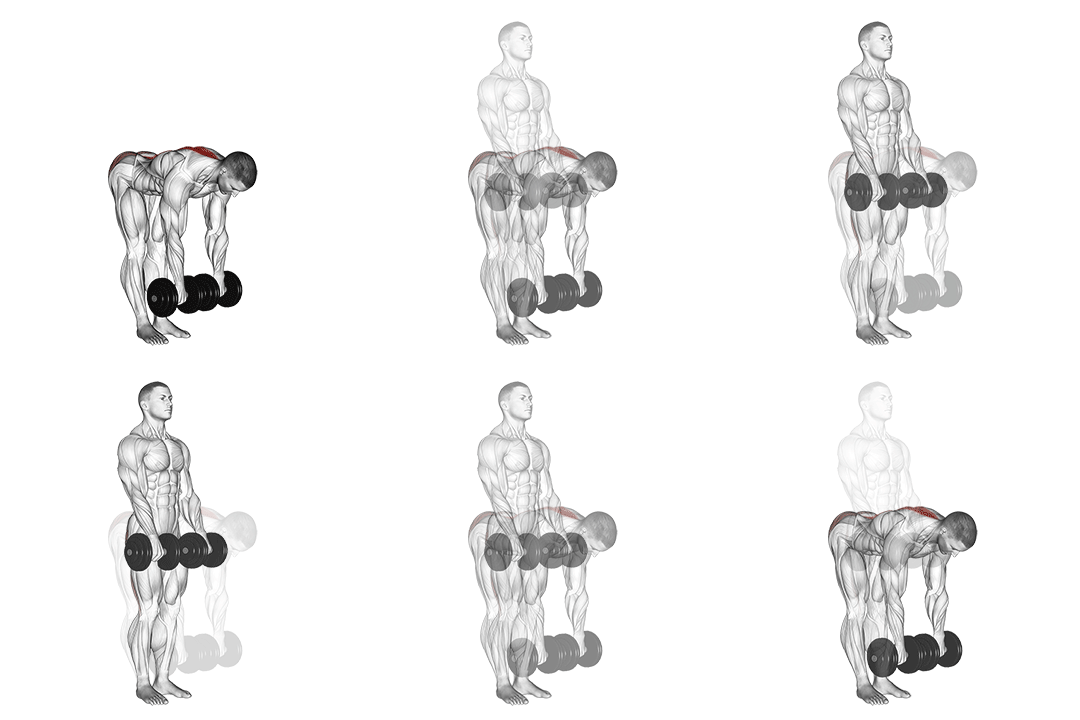
7. Dumbbell Straight Leg Deadlift
84% match- Glutes
- Dumbbell
- Intermediate
- Compound
How to perform this exercise
- Stand with your feet shoulder-width apart, holding a dumbbell in each hand with an overhand grip.
- Keeping your back straight and your core engaged, hinge at the hips and lower the dumbbells towards the ground, allowing your torso to lean forward.
- Continue lowering the dumbbells until you feel a stretch in your hamstrings, keeping your knees slightly bent.
- Pause for a moment at the bottom, then engage your glutes and hamstrings to lift your torso back up to the starting position.
- Repeat for the desired number of repetitions.
Sets and reps: 3 or 4 sets of 6 to 10 reps.
Why this matches
- Primary muscle: glutes, the same as the Dumbbell Clean
- Equipment: free weights, the same as the Dumbbell Clean
- Body position: standing, the same as the Dumbbell Clean
- Balance: easier to stay steady on than the Dumbbell Clean
8. Barbell One Arm Side Deadlift
84% match- Glutes
- Barbell
- Intermediate
- Compound
How to perform this exercise
- Stand with your feet shoulder-width apart, holding a barbell in one hand with an overhand grip.
- Keep your back straight and your core engaged.
- Bend at the hips and lower the barbell towards the outside of your leg, keeping your arm straight and your chest up.
- Lower the barbell as far as you can while maintaining good form.
- Pause for a moment, then slowly return to the starting position.
- Repeat for the desired number of repetitions, then switch sides.
Sets and reps: 3 to 5 sets of 5 to 8 reps on each side.
Why this matches
- Primary muscle: glutes, the same as the Dumbbell Clean
- Equipment: free weights, the same as the Dumbbell Clean
- Body position: standing, the same as the Dumbbell Clean
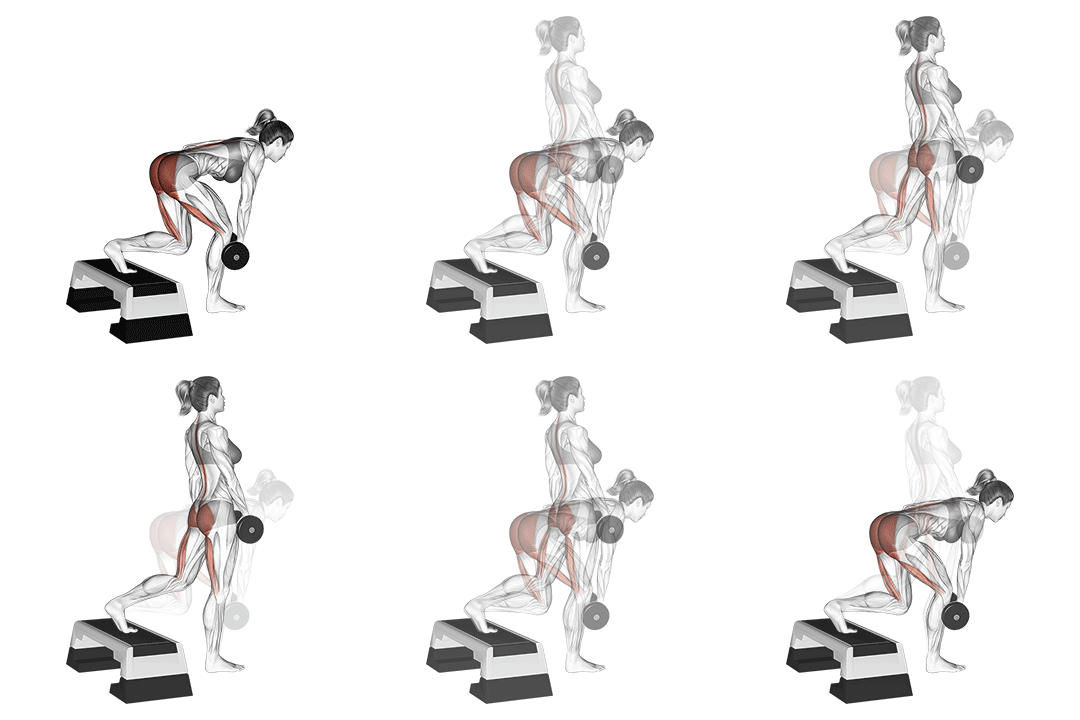
- Glutes
- Dumbbell
- Intermediate
- Compound
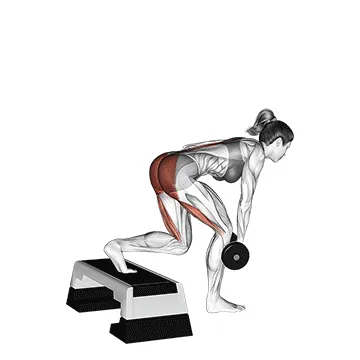
How to perform this exercise
- Stand with your feet hip-width apart, holding a dumbbell in your right hand.
- Place your left foot on a stepbox or elevated surface behind you.
- Keeping your back straight and core engaged, hinge forward at the hips, lowering the dumbbell towards the ground.
- As you lower the dumbbell, simultaneously lift your left leg behind you, maintaining a straight line from head to heel.
- Lower the dumbbell until you feel a stretch in your right hamstring, then return to the starting position.
- Repeat for the desired number of repetitions, then switch sides.
Sets and reps: 3 or 4 sets of 6 to 10 reps on each side.
Why this matches
- Primary muscle: glutes, the same as the Dumbbell Clean
- Equipment: free weights, the same as the Dumbbell Clean
- Body position: standing, the same as the Dumbbell Clean
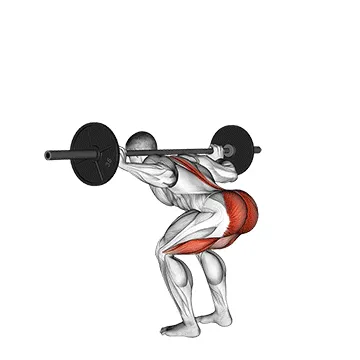
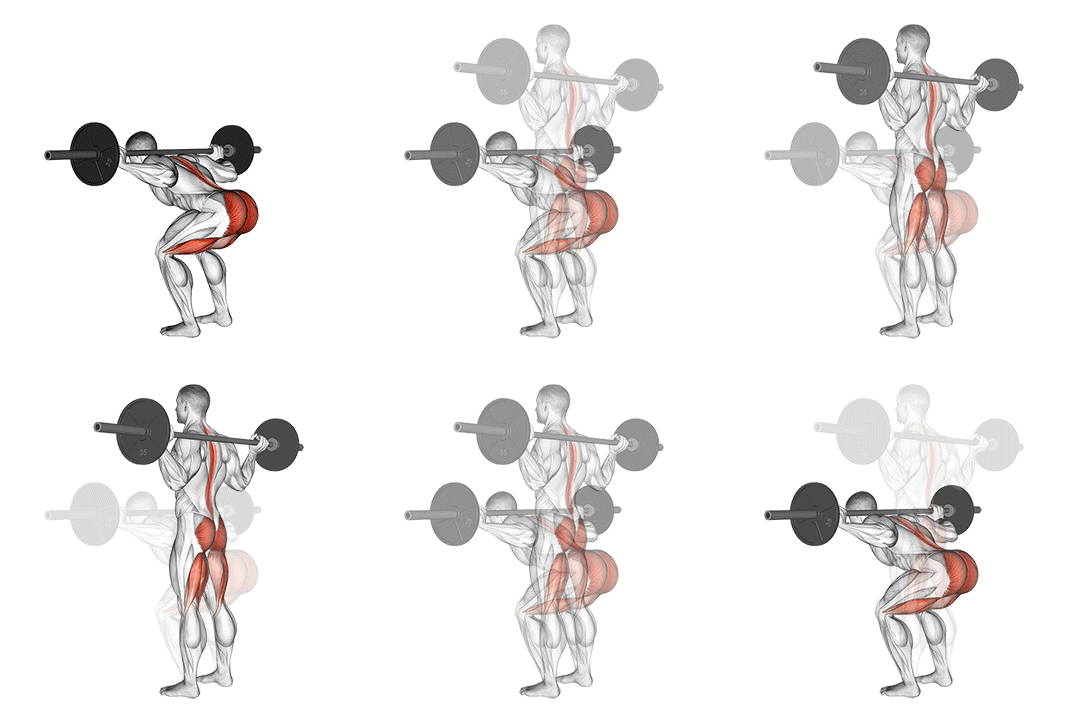
10. Barbell Stiff Leg Good Morning
81% match- Glutes
- Barbell
- Intermediate
- Compound
How to perform this exercise
- Stand with your feet shoulder-width apart and your knees slightly bent.
- Hold the barbell across your upper back, resting it on your traps.
- Keeping your back straight, hinge forward at the hips, pushing your glutes back.
- Lower your torso until it is parallel to the ground, feeling a stretch in your hamstrings.
- Engage your glutes and hamstrings to return to the starting position.
- Repeat for the desired number of repetitions.
Sets and reps: 3 to 5 sets of 5 to 8 reps.
Why this matches
- Primary muscle: glutes, the same as the Dumbbell Clean
- Equipment: free weights, the same as the Dumbbell Clean
- Body position: standing, the same as the Dumbbell Clean
Why You Might Need a Dumbbell Clean Alternative
A full dumbbell rack, open floor to jump on, and shoulders willing to catch a jumped load: the Dumbbell Clean asks for all three, so it is not always the easiest lift to reach for. Some lifters swap it because the dumbbell rack is empty, some because they would rather skip the shoulder catch, and some because a barbell, a kettlebell, or a trap bar is what their gym actually has free. The alternatives keep the hip and knee extension that powers the Dumbbell Clean but change the object you pull and drop the shoulder catch entirely, so you get the same drive from the floor or the hang with a kettlebell, a barbell, a trap bar, or a lighter pair of dumbbells.
How to Choose the Right Dumbbell Clean Substitute
If a barbell is what is free, the Barbell Rack Pull trains a short, powerful pull from knee height, while the Barbell Deadlift and Barbell Sumo Deadlift start that same pull from the floor. A Trap Bar Deadlift keeps your back straight and chest up through the same pull, gripping the trap bar's handles instead of a barbell. If you want the explosive hip snap without dumbbells, the Kettlebell Swing gives you that in one tool. If a lighter pair of dumbbells is free and you want controlled work instead of an explosive one, the Dumbbell Deadlift and Dumbbell Straight Leg Deadlift keep the same hinge at a slower pace. The Barbell Stiff Leg Good Morning puts the bar across your upper back and you hinge forward until your torso is parallel to the ground.
Dumbbell Clean FAQ
What can I do at home instead of the Dumbbell Clean?
The Dumbbell Deadlift, the Kettlebell Swing, the Dumbbell Straight Leg Deadlift, and the Dumbbell Single Leg Deadlift With Stepbox Support all work with equipment most home setups already own. The Kettlebell Swing keeps the explosive hip snap of the clean, while the other three build the same glutes and hamstrings at a steadier pace.
Which alternative trains the same explosive drive as the Dumbbell Clean?
The Kettlebell Swing keeps the explosive part: you swing the bell back between your legs, then drive your hips forward to send it up to shoulder height. The Dumbbell Deadlift trains the same hip and knee extension without the jump, so it suits slower, heavier work.
Which swap works one leg at a time?
The Dumbbell Single Leg Deadlift With Stepbox Support is the one built for a single leg: you balance on your working leg while the other rests on a stepbox behind you, and hinge forward until you feel the stretch. The Barbell One Arm Side Deadlift loads one side of your body, not one leg, since you keep both feet on the floor and lower the bar down the outside of one leg.
Do these alternatives still hit the glutes and hamstrings?
Yes. Every one of these lifts is driven by the same hip and knee extension that powers the Dumbbell Clean, so the glutes and hamstrings do the work whether the pace is explosive or controlled. What changes is the pace: the Kettlebell Swing keeps the explosive drive, while the deadlifts train the same muscles with a controlled pull.
Find Alternatives for Any Exercise
Search the exercise database and filter the ranked substitutes by the equipment you own.
Similarity scores compare exercise metadata such as movement pattern, muscles, equipment and body position. They are not a safety rating or a check that you own the equipment. Learn about our methodology