

10 Best Barbell Jump Squat Alternatives for Limited Equipment
If you can't perform the Barbell Jump Squat, choose movements that preserve hip-extension power and explosive triple extension of the hips, knees, and ankles. Try kettlebell jump squats, trap-bar jumps, Bulgarian split-squat jumps, loaded step-ups, or broad jumps. Technique cue: drive hips, explode through the heels, land softly to protect the knees.
Original Exercise: Barbell Jump Squat
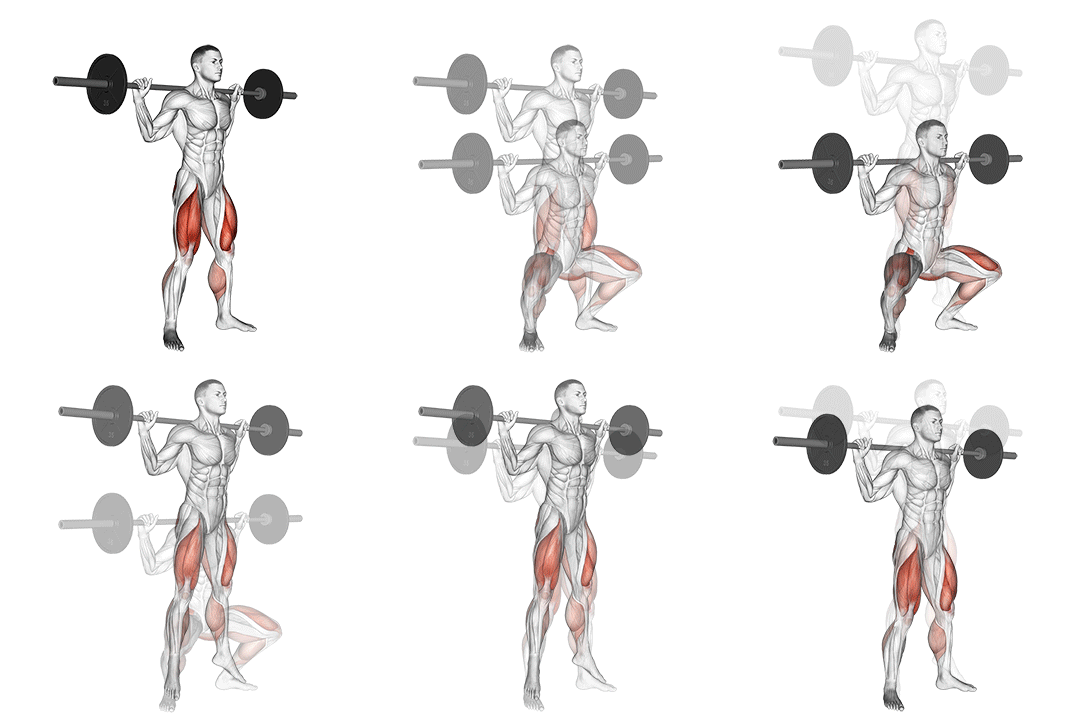
How to Perform Barbell Jump Squat
- Start by standing with your feet shoulder-width apart, holding a barbell across your upper back.
- Lower your body into a squat position by bending your knees and pushing your hips back.
- Once you reach the bottom of the squat, explode upwards by jumping off the ground.
- As you jump, extend your hips, knees, and ankles, pushing through your toes.
- Land softly back into the squat position and immediately repeat the movement for the desired number of repetitions.
Best Barbell Jump Squat Alternatives
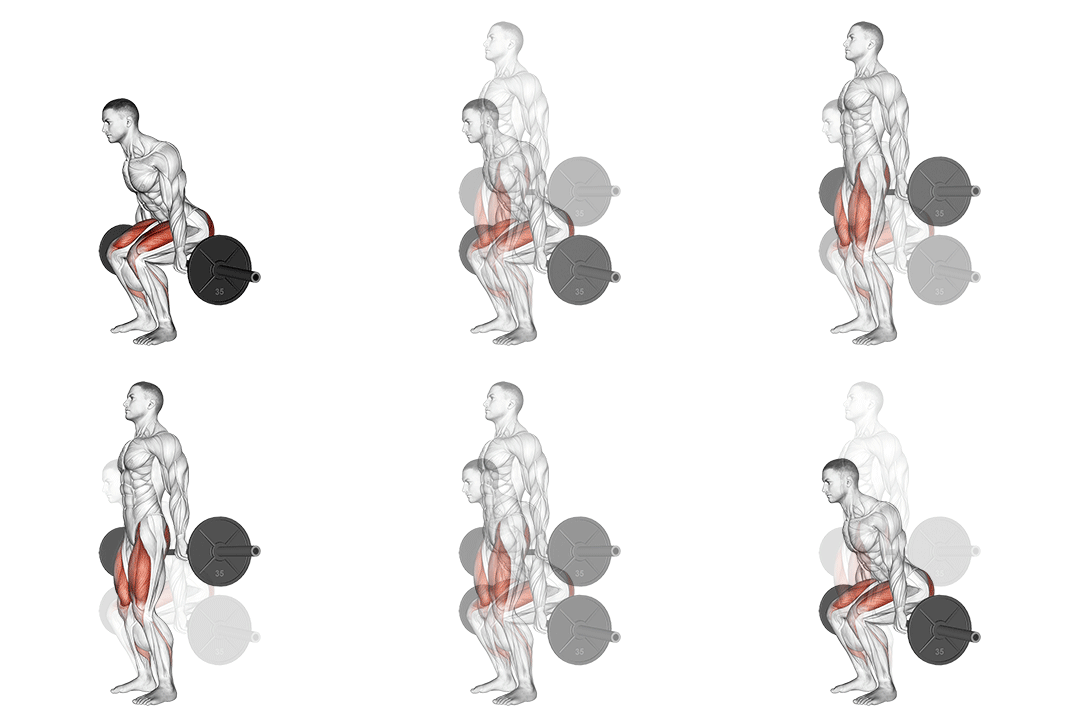
1. Barbell Hack Squat
94.7% MatchHow to perform this exercise
- Start by standing with your feet shoulder-width apart and your toes slightly turned out.
- Hold the barbell behind your legs, resting it on your upper thighs.
- Lower your body by bending at the knees and hips, keeping your back straight and your chest up.
- Continue lowering until your thighs are parallel to the ground, or as low as you can comfortably go.
- Pause for a moment, then push through your heels to return to the starting position.
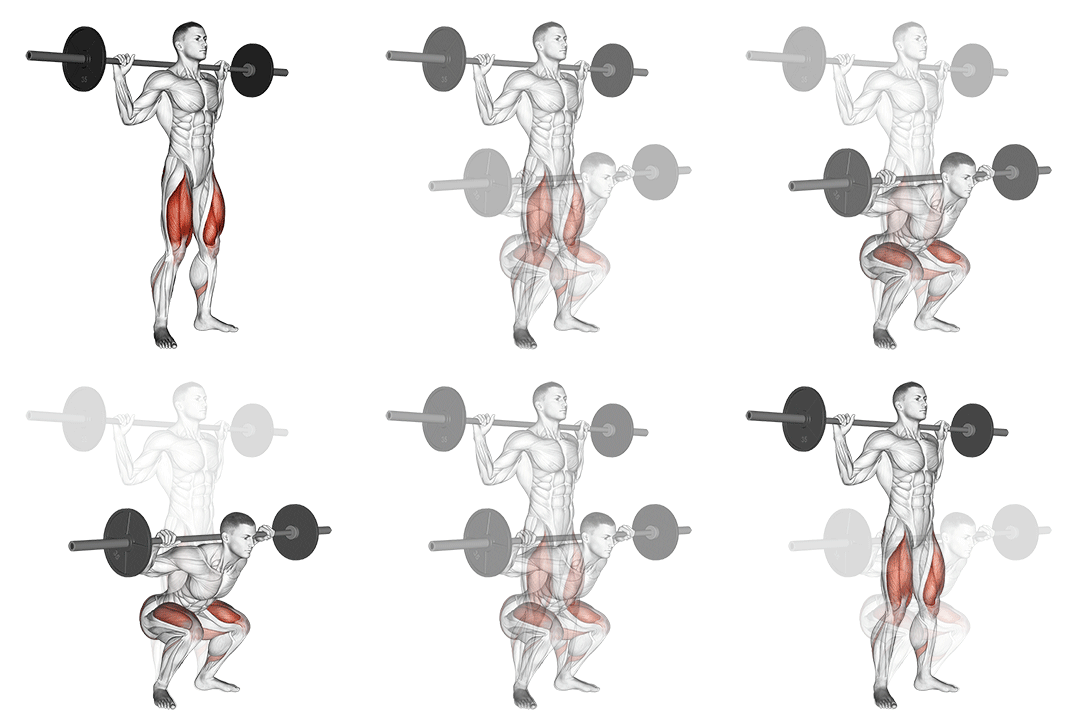
2. Barbell Full Squat
94.7% MatchHow to perform this exercise
- Stand with your feet shoulder-width apart, toes slightly turned out.
- Hold the barbell across your upper back, resting it on your traps or rear delts.
- Engage your core and keep your chest up as you begin to lower your body down.
- Bend at the knees and hips, pushing your hips back and down as if sitting into a chair.
- Lower yourself until your thighs are parallel to the ground or slightly below.
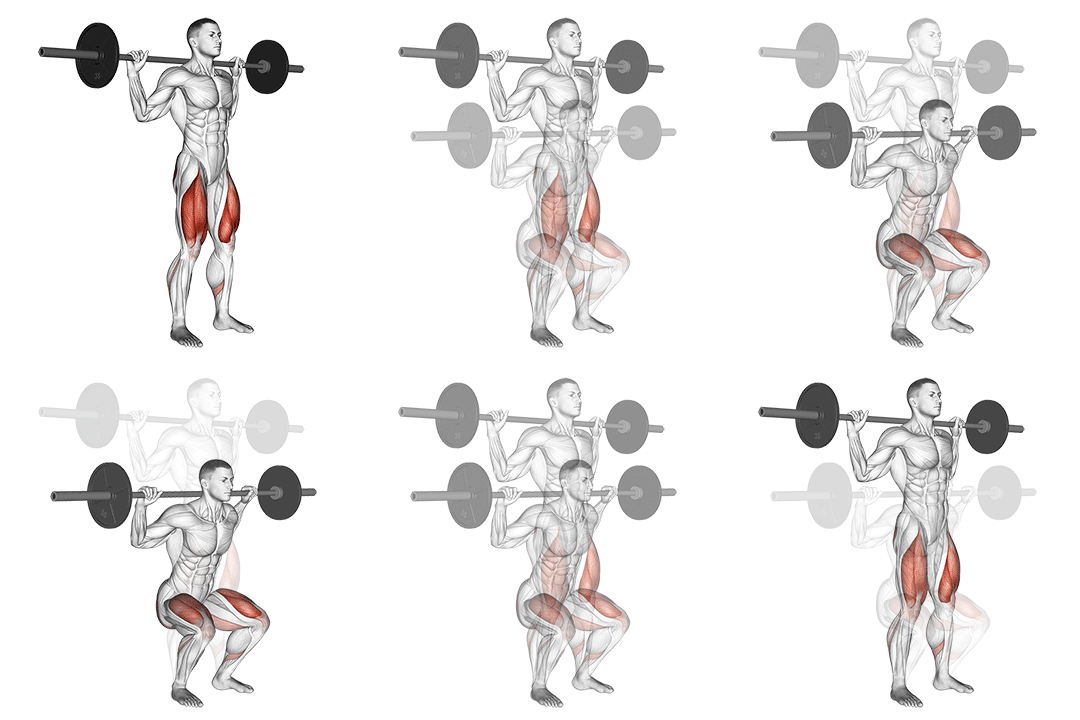
3. Barbell Narrow Stance Squat
94.1% MatchHow to perform this exercise
- Stand with your feet shoulder-width apart and toes pointing slightly outward.
- Hold the barbell across your upper back, resting it on your traps or rear delts.
- Engage your core and keep your chest up as you slowly lower your body by bending your knees and pushing your hips back.
- Continue lowering until your thighs are parallel to the ground or slightly below.
- Pause for a moment, then push through your heels to return to the starting position.
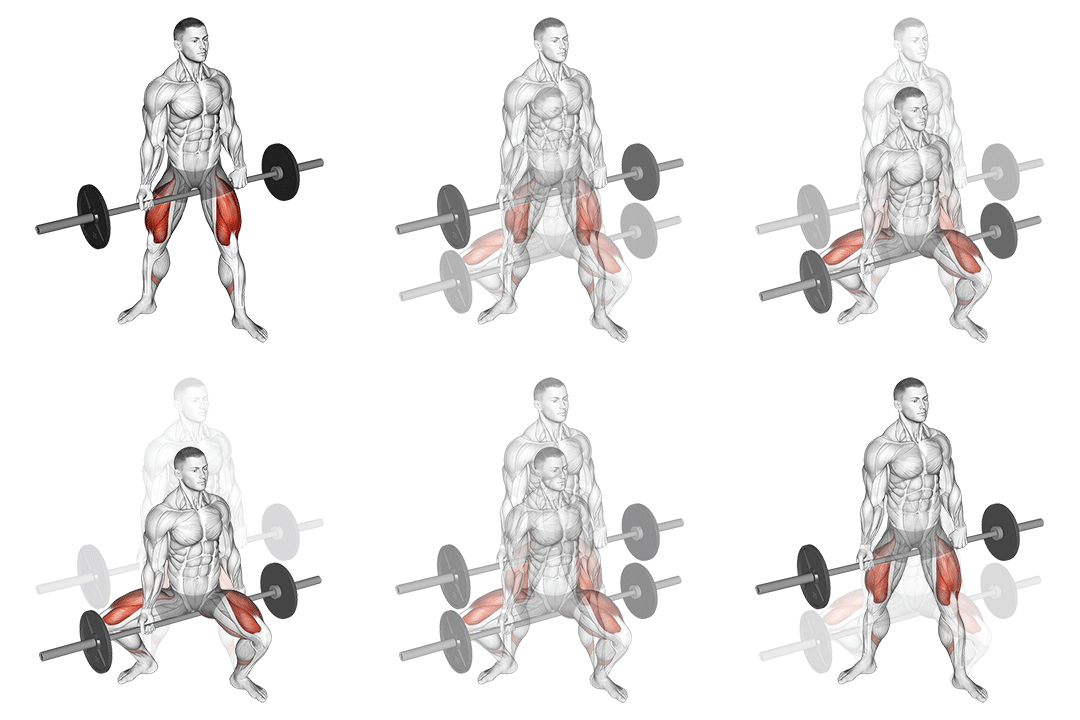
4. Barbell Jefferson Squat
92% MatchHow to perform this exercise
- Stand with your feet shoulder-width apart and toes slightly turned out.
- Hold the barbell with an overhand grip, resting it on the front of your body, just below your waist.
- Step your left foot forward and your right foot back, keeping your feet shoulder-width apart.
- Bend your knees and lower your body down into a squat position, keeping your back straight and chest up.
- Push through your heels to stand back up to the starting position.
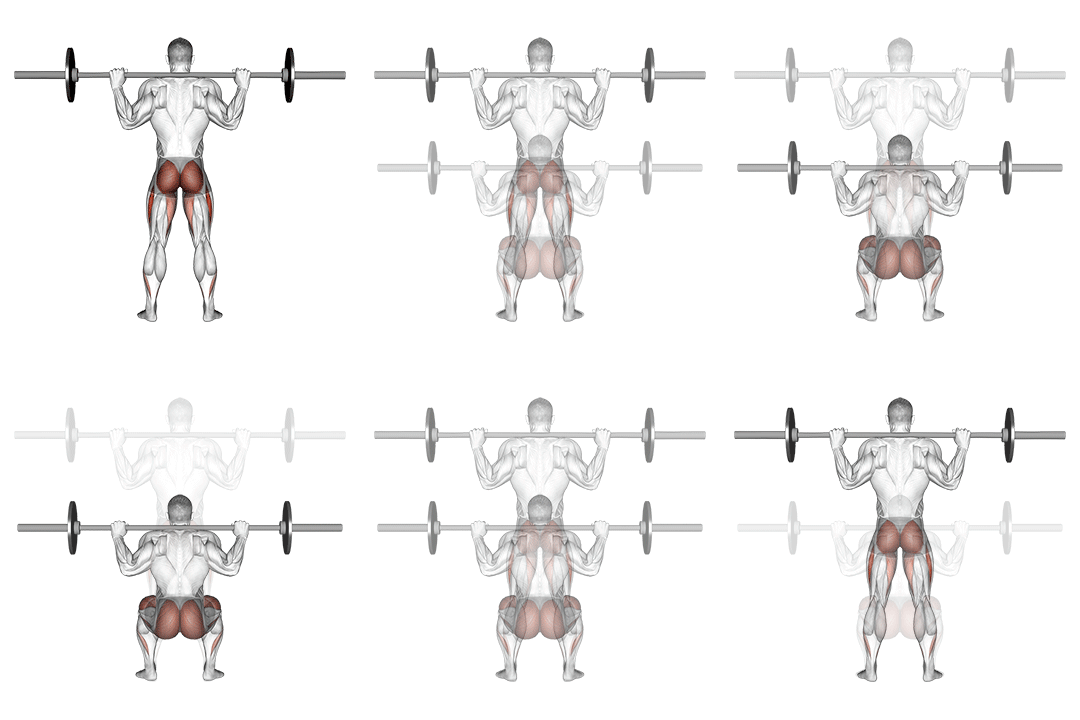
5. Barbell Full Squat (back Pov)
89.7% MatchHow to perform this exercise
- Stand with your feet shoulder-width apart, toes slightly turned out.
- Hold the barbell across your upper back, resting it on your traps or rear delts.
- Engage your core and keep your chest up as you begin to lower your body down.
- Bend at the knees and hips, pushing your hips back and down as if sitting into a chair.
- Lower your body until your thighs are parallel to the ground or slightly below.
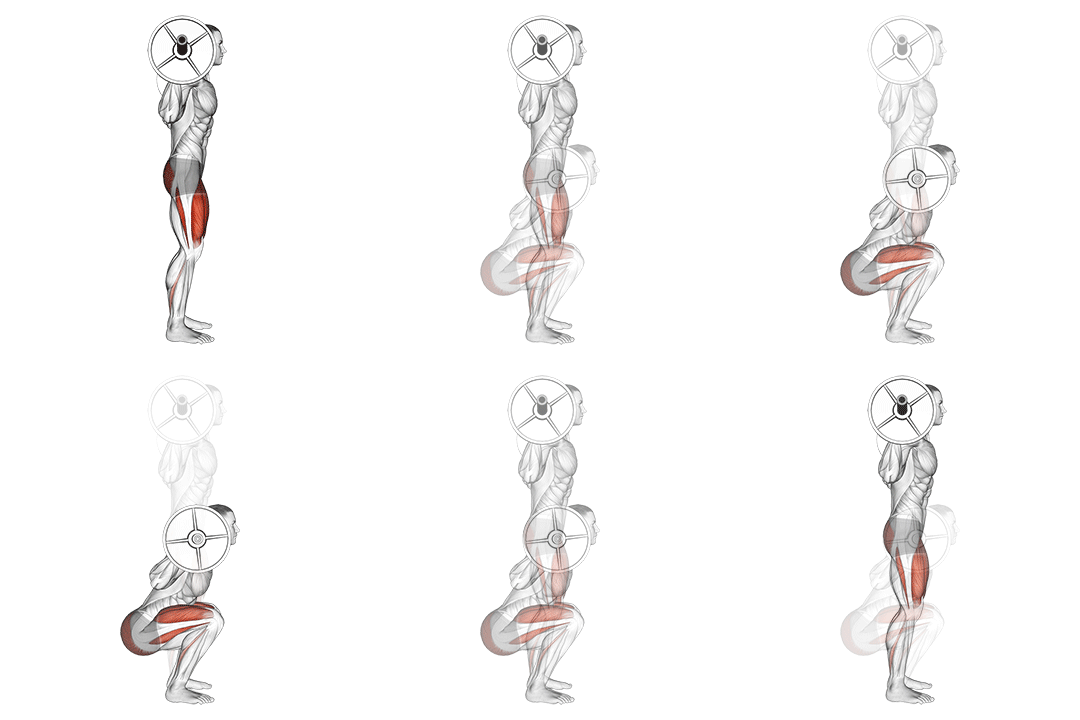
6. Barbell Full Squat (side Pov)
89.7% MatchHow to perform this exercise
- Stand with your feet shoulder-width apart, toes slightly turned out.
- Hold the barbell across your upper back, resting it on your traps or rear delts.
- Engage your core and keep your chest up as you begin to lower your body down.
- Bend at the knees and hips, pushing your hips back and down as if sitting into a chair.
- Lower your body until your thighs are parallel to the ground or slightly below.
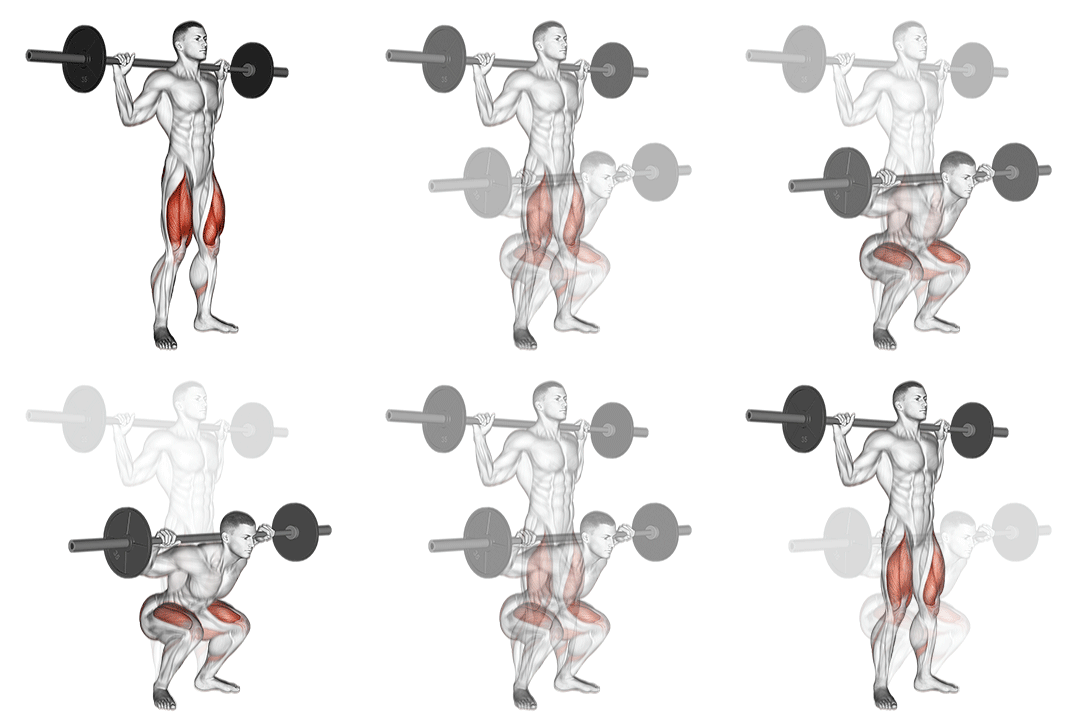
7. Barbell Speed Squat
88.3% MatchHow to perform this exercise
- Stand with your feet shoulder-width apart, toes slightly turned out.
- Hold the barbell across your upper back, resting it on your traps or rear delts.
- Engage your core and keep your chest up as you lower your hips back and down, as if sitting into a chair.
- Lower until your thighs are parallel to the ground, or as low as you can comfortably go.
- Drive through your heels to stand back up, squeezing your glutes at the top.
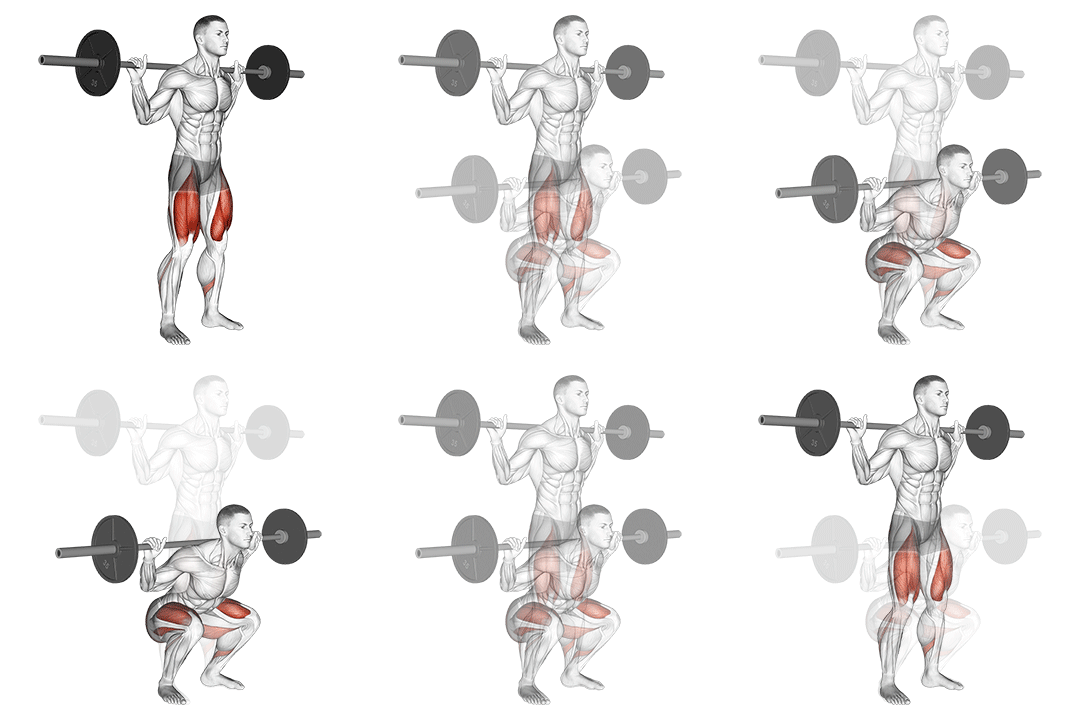
8. Barbell Low Bar Squat
88.2% MatchHow to perform this exercise
- Stand with your feet shoulder-width apart and the barbell resting on your upper back.
- Keeping your chest up and core engaged, slowly lower your body by bending your knees and pushing your hips back.
- Continue lowering until your thighs are parallel to the ground or slightly below.
- Pause for a moment, then push through your heels to return to the starting position.
- Repeat for the desired number of repetitions.
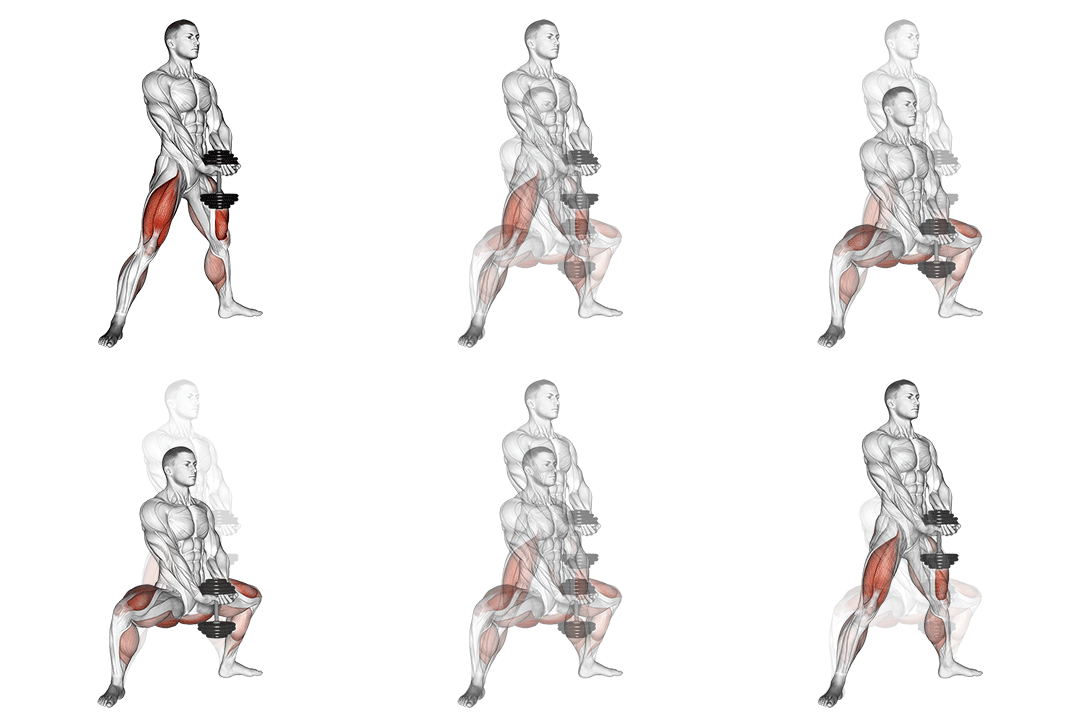
9. Dumbbell Plyo Squat
86.4% MatchHow to perform this exercise
- Stand with your feet shoulder-width apart, holding a dumbbell in each hand at your sides.
- Lower your body into a squat position by bending your knees and pushing your hips back.
- As you reach the bottom of the squat, explode upward, jumping off the ground.
- While in the air, quickly switch the position of your feet, landing with your opposite foot forward.
- Immediately lower your body back into a squat position and repeat the jump, switching your feet again.
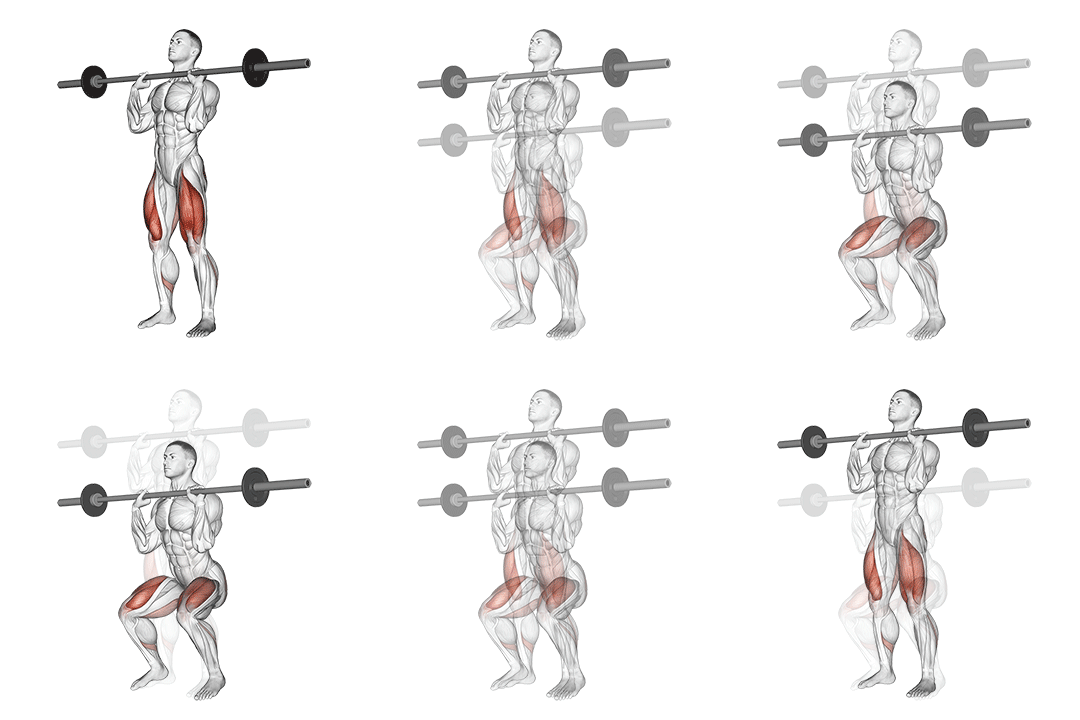
10. Barbell Front Chest Squat
86% MatchHow to perform this exercise
- Start by standing with your feet shoulder-width apart, toes slightly turned out.
- Hold the barbell in front of your chest with your hands shoulder-width apart, elbows pointing forward.
- Engage your core and keep your chest up as you lower your body down into a squat position, pushing your hips back and bending your knees.
- Lower until your thighs are parallel to the ground, or as low as you can comfortably go.
- Pause for a moment at the bottom, then push through your heels to return to the starting position.
Why You Might Need a Barbell Jump Squat Alternative
You may substitute the Barbell Jump Squat because of joint pain, lack of a barbell, training phase, or safety concerns with high-impact loading. Low-impact or unilateral options reduce knee and lumbar shear while still activating the gluteus maximus and hamstrings through hip extension. Plyometric alternatives preserve the stretch–shortening cycle for power, while loaded step-ups or trap-bar jumps let you control vertical force and eccentric demand. Use a cue such as maintaining a neutral spine, hinging at the hips, and pushing through mid-foot to maximize glute drive and limit quad-dominant loading.
How to Choose the Right Substitute
Base your substitute selection on your goal, equipment, and tolerance for impact. For power, choose plyometrics (broad jumps, trap-bar jumps) to train rate of force development; cue full triple extension and punch of the hips. For hypertrophy or strength, pick loaded unilateral moves (Bulgarian split squats, weighted step-ups) to increase time under tension and target glute activation. If you have knee or low-back issues, favor low-impact, hip-dominant patterns like Romanian deadlift variations and slow eccentric step-ups. Consider force vector, stability demands, and progressive overload when programming.
Frequently Asked Questions
What muscles does Barbell Jump Squat work?
The Barbell Jump Squat primarily targets the gluteus maximus while engaging the quadriceps, hamstrings, and calves through triple extension. It also requires core and hip-stabilizer activation to transfer force and control landing mechanics.
What is the best bodyweight alternative to Barbell Jump Squat?
A broad jump is the best bodyweight substitute to develop hip power and glute drive without external load. Cue a deep hip hinge, drive the elbows forward, explode with force through the heels, and reach with the hips to maximize glute activation.
Can I build muscle without doing Barbell Jump Squat?
Yes—you can build glute and quad muscle with heavy controlled movements like Bulgarian split squats, weighted step-ups, and Romanian deadlifts that provide mechanical tension. Use progressive overload, sufficient volume, and cues to emphasize hip extension and full range of motion for optimal hypertrophy.
More Exercise Alternatives
Find Alternatives for Any Exercise
Use our free tool to discover the best substitute exercises based on your available equipment and goals.
Try the Exercise Substitution Finder →