

10 Best Barbell Sitted Alternate Leg Raise (female) Alternatives for Home Gyms
If you can't perform the Barbell Sitted Alternate Leg Raise (female), choose movements that load the rectus abdominis while minimizing hip-flexor dominance. Good options include lying alternating leg lowers, hanging knee tucks, cable crunches, weighted reverse crunches, and stability-ball tucks. Cue: brace your core, posteriorly tilt the pelvis, and move through spine flexion rather than hip flexion.
Original Exercise: Barbell Sitted Alternate Leg Raise (female)
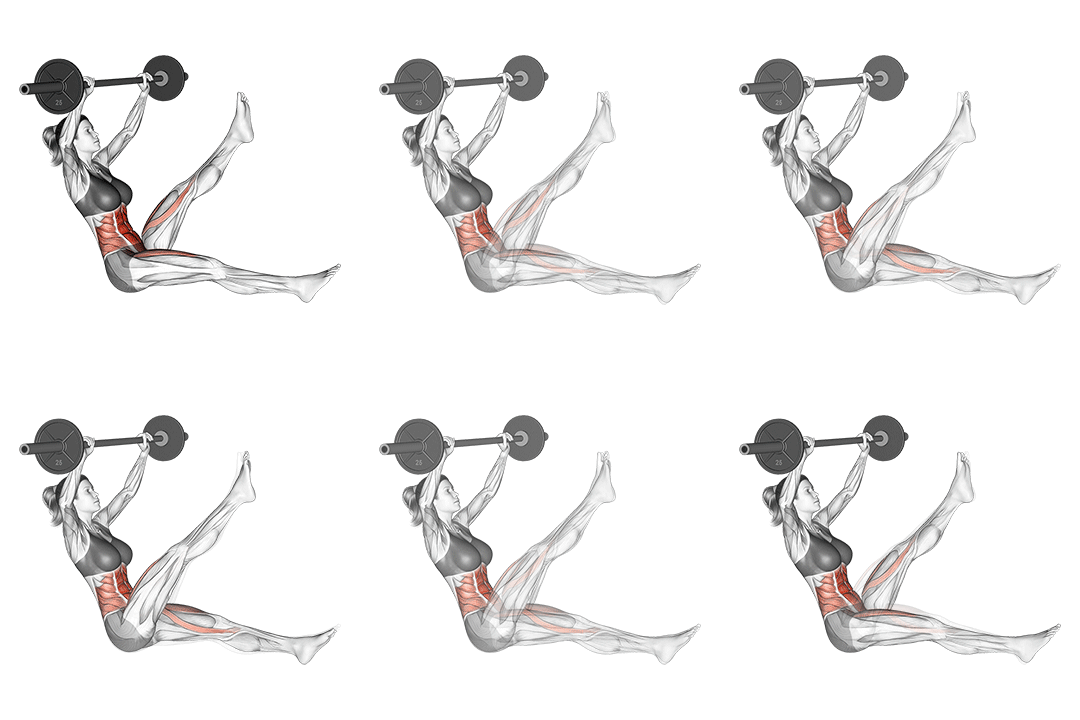
How to Perform Barbell Sitted Alternate Leg Raise (female)
- Sit on a bench with your back straight and hold a barbell across your thighs.
- Place your hands on the sides of the bench for support.
- Keeping your legs straight, lift one leg up as high as possible while keeping it parallel to the ground.
- Lower the leg back down and repeat with the other leg.
- Continue alternating legs for the desired number of repetitions.
Best Barbell Sitted Alternate Leg Raise (female) Alternatives
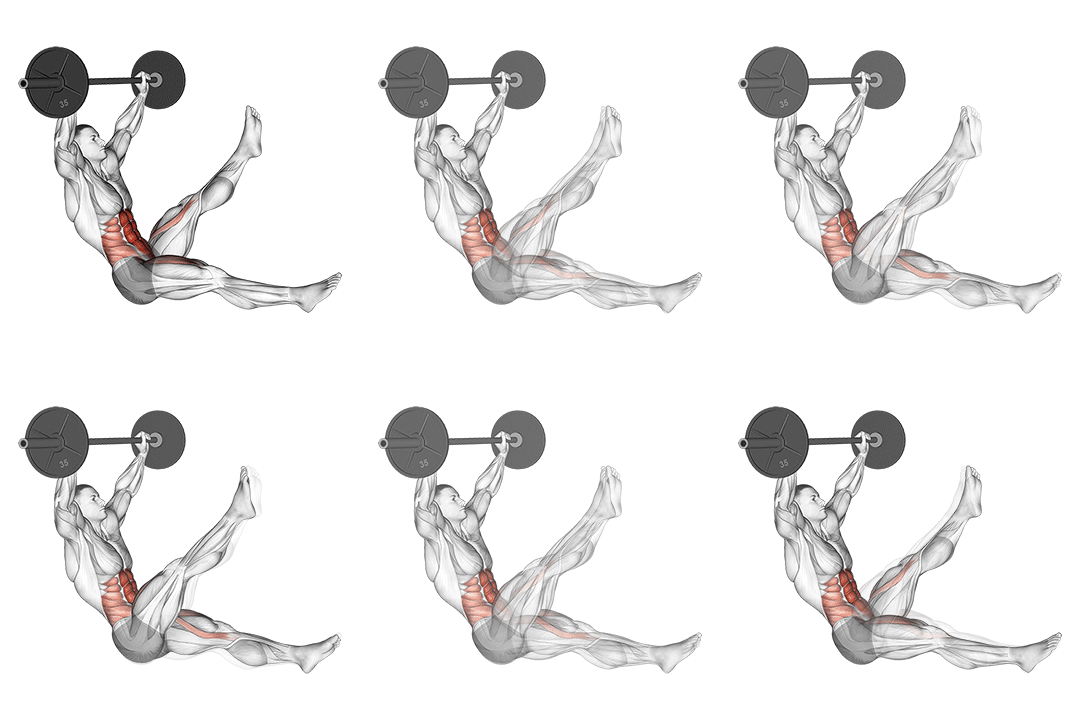
1. Barbell Sitted Alternate Leg Raise
99.9% MatchHow to perform this exercise
- Sit on a bench with your back straight and hold a barbell across your thighs.
- Keeping your legs straight, lift one leg up as high as possible while keeping the other leg on the ground.
- Lower the raised leg back down and repeat with the other leg.
- Continue alternating legs for the desired number of repetitions.
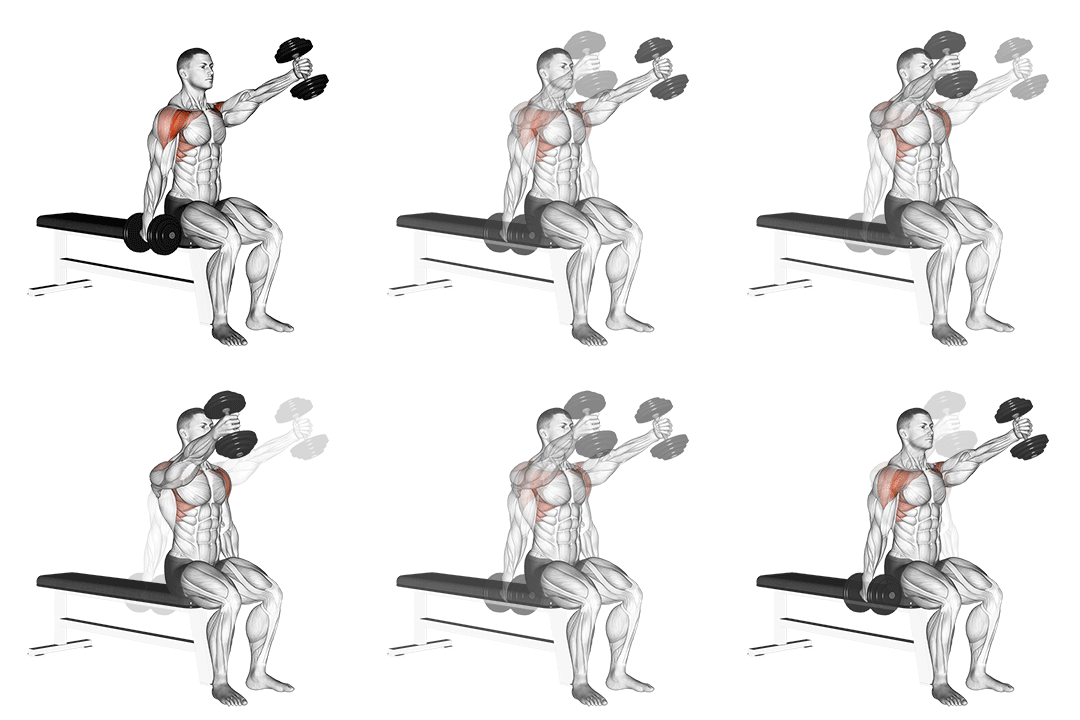
2. Dumbbell Seated Alternate Front Raise
67.5% MatchHow to perform this exercise
- Sit on a bench with your back straight and feet flat on the ground.
- Hold a dumbbell in each hand with your palms facing your body and arms extended down by your sides.
- Keeping your arms straight, raise one dumbbell in front of you until it is parallel to the ground.
- Pause for a moment at the top, then slowly lower the dumbbell back down to the starting position.
- Repeat with the other arm.
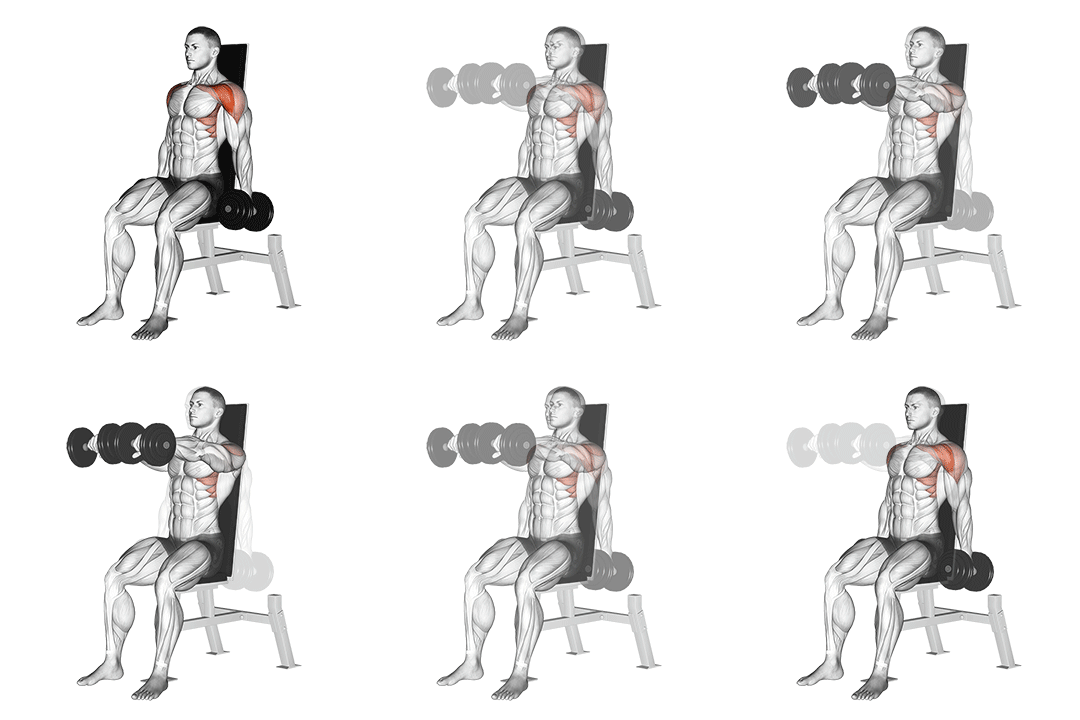
3. Dumbbell Seated Front Raise
61.2% MatchHow to perform this exercise
- Sit on a bench with your feet flat on the ground and a dumbbell in each hand, resting on your thighs.
- Keep your back straight and core engaged.
- Raise the dumbbells in front of you, with your palms facing down, until they are at shoulder level.
- Pause for a moment at the top, then slowly lower the dumbbells back down to the starting position.
- Repeat for the desired number of repetitions.
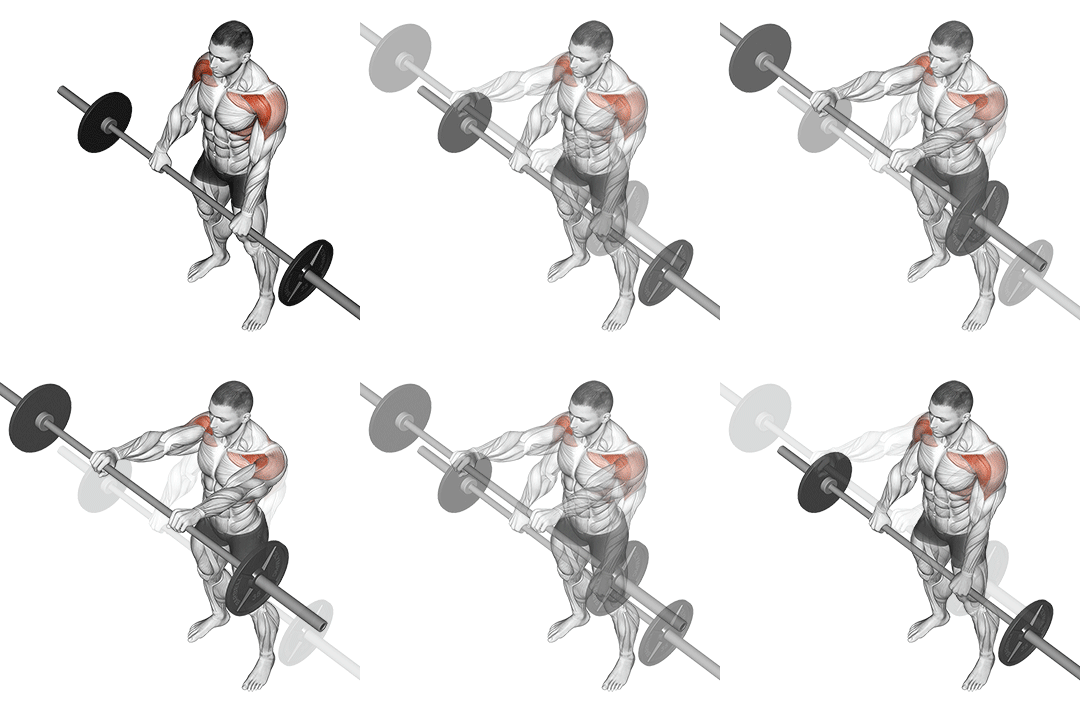
4. Barbell Front Raise
59.2% MatchHow to perform this exercise
- Stand with your feet shoulder-width apart and hold a barbell in front of your thighs with an overhand grip.
- Keep your arms straight and lift the barbell forward and upward until it reaches shoulder level.
- Pause for a moment at the top, then slowly lower the barbell back down to the starting position.
- Repeat for the desired number of repetitions.
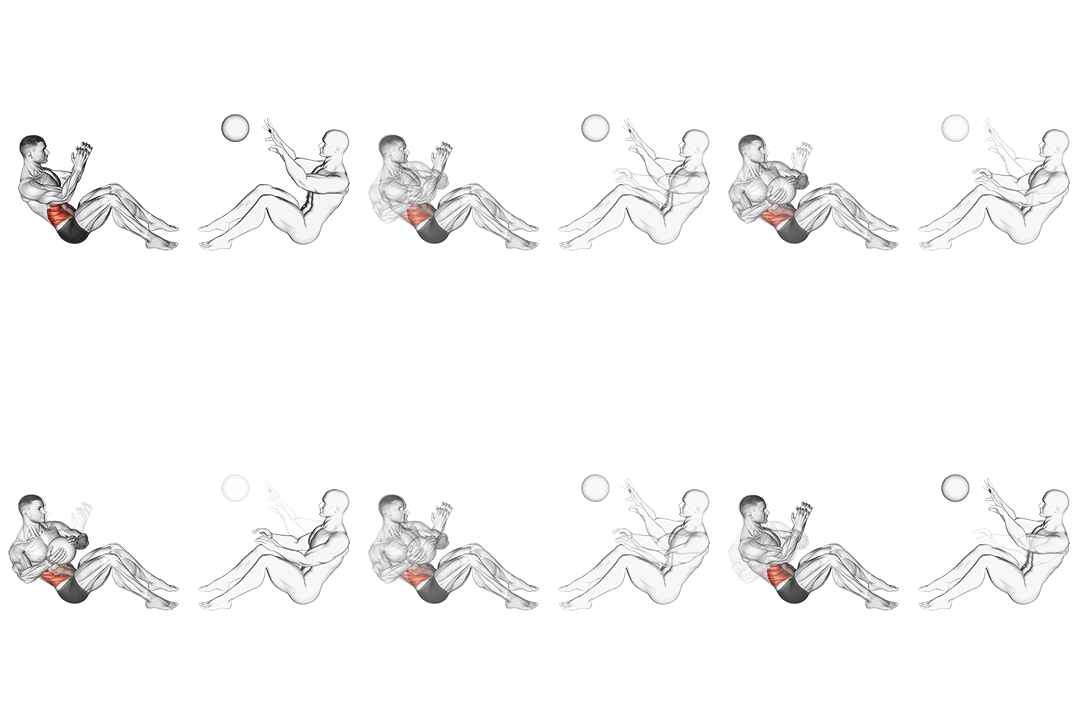
5. Assisted Motion Russian Twist
58.3% MatchHow to perform this exercise
- Sit on the ground with your knees bent and feet flat on the floor.
- Hold the medicine ball with both hands in front of your chest.
- Lean back slightly, engaging your abs and keeping your back straight.
- Slowly twist your torso to the right, bringing the medicine ball towards the right side of your body.
- Pause for a moment, then twist your torso to the left, bringing the medicine ball towards the left side of your body.
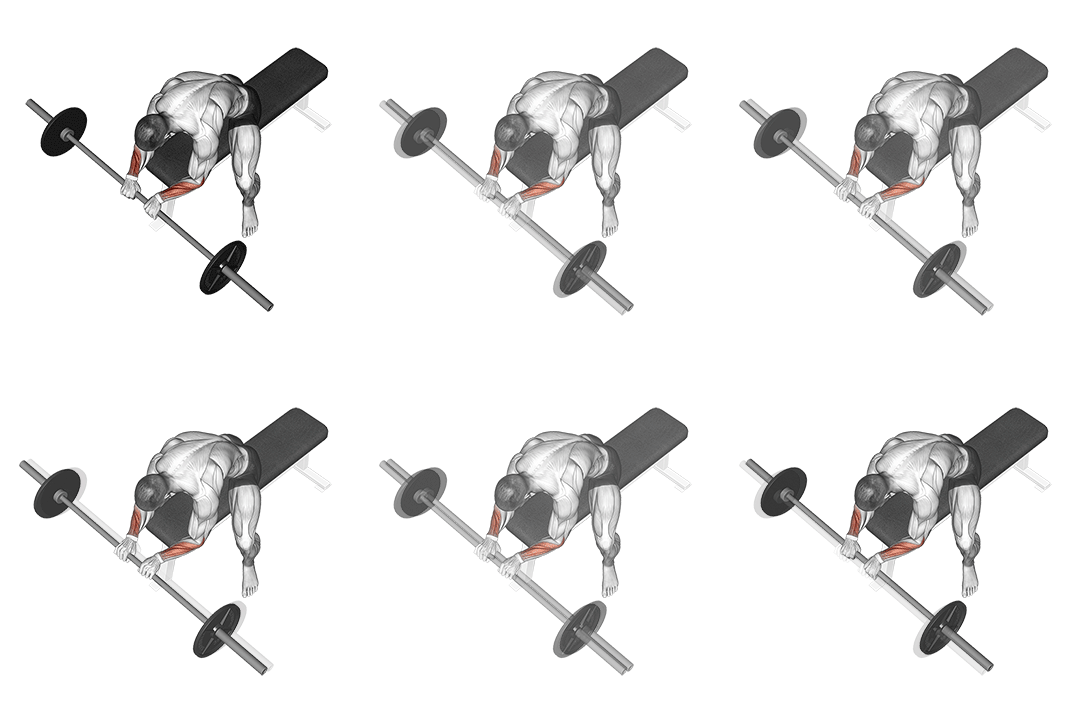
6. Barbell Reverse Wrist Curl
58% MatchHow to perform this exercise
- Sit on a bench with your feet flat on the ground and hold a barbell with an overhand grip, palms facing down.
- Rest your forearms on your thighs, allowing your wrists to hang off the edge.
- Slowly curl your wrists upward, bringing the barbell towards your body.
- Pause for a moment at the top, then slowly lower the barbell back down to the starting position.
- Repeat for the desired number of repetitions.
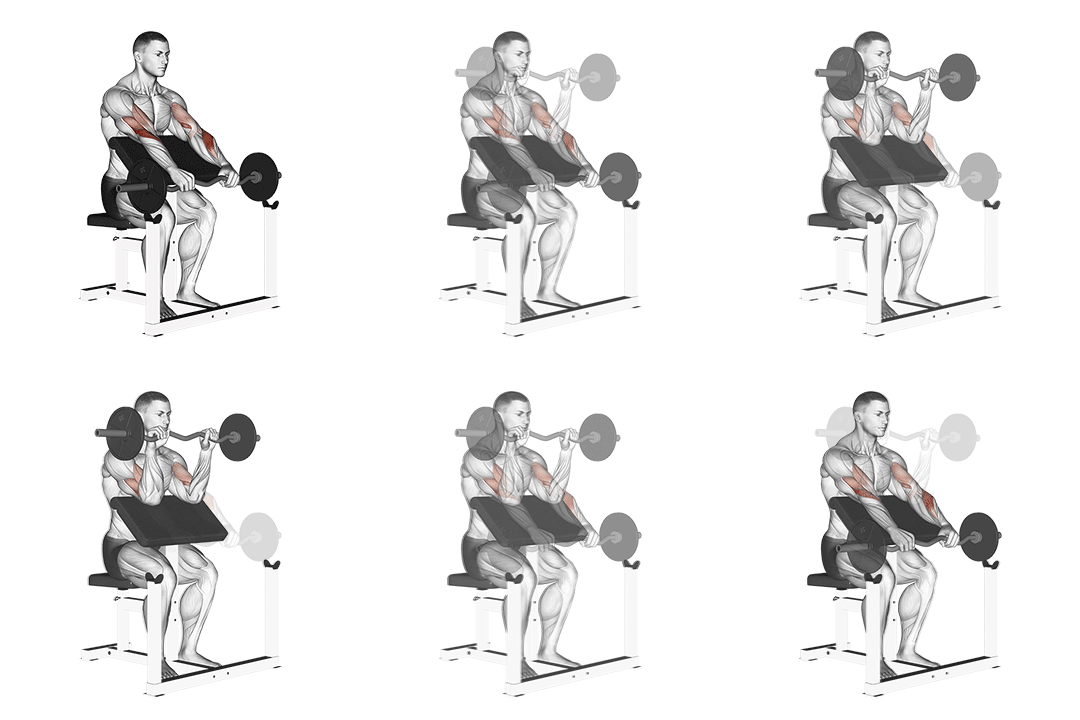
7. Ez Barbell Reverse Grip Preacher Curl
57.2% MatchHow to perform this exercise
- Sit on a preacher bench with your chest against the pad and your feet flat on the floor.
- Grasp the ez barbell with an underhand grip, hands shoulder-width apart.
- Rest your upper arms on the pad, allowing your forearms to hang down.
- Keeping your upper arms stationary, exhale and curl the barbell up towards your shoulders.
- Pause for a moment at the top, then inhale and slowly lower the barbell back down to the starting position.
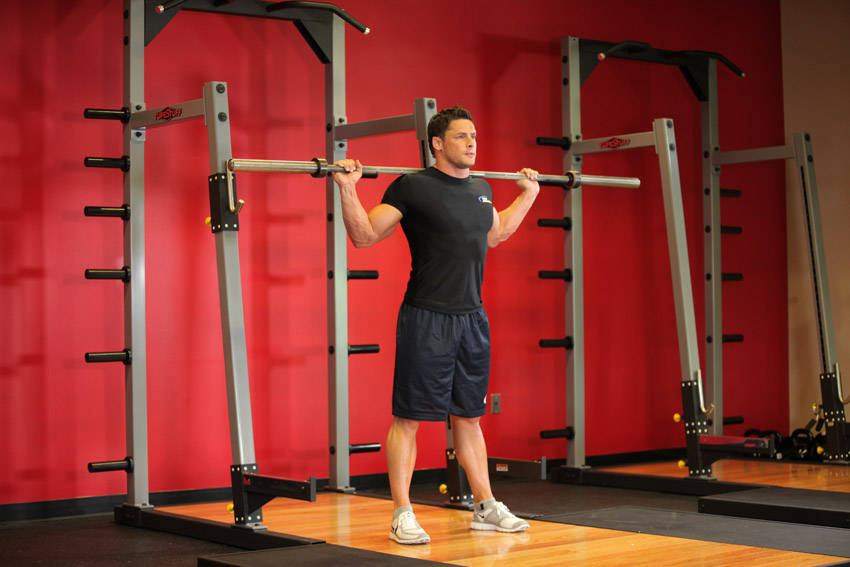
8. Barbell Side Bend
57% MatchHow to perform this exercise
- Stand up straight while holding a barbell placed on the back of your shoulders (slightly below the neck). Your feet should be shoulder width apart. This will be your starting position.
- While keeping your back straight and your head up, bend only at the waist to the right as far as possible. Breathe in as you bend to the side. Then hold for a second and come back up to the starting position as you exhale. Tip: Keep the rest of the body stationary.
- Now repeat the movement but bending to the left instead. Hold for a second and come back to the starting position.
- Repeat for the recommended amount of repetitions.
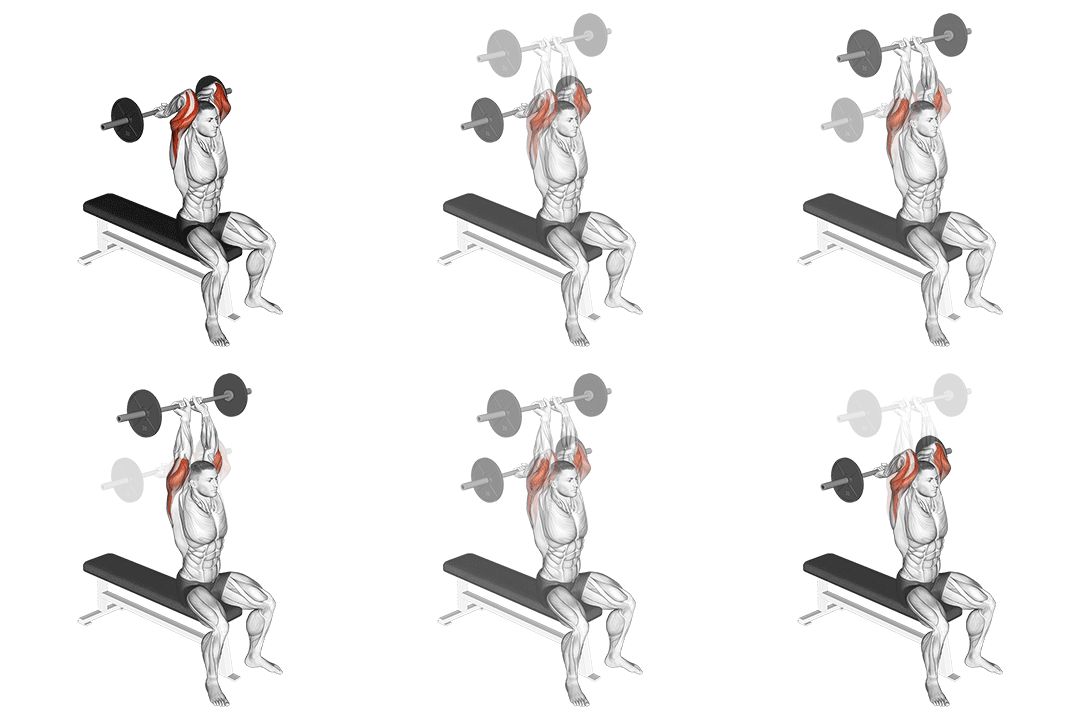
9. Barbell Seated Close Grip Behind Neck Triceps Extension
56.1% MatchHow to perform this exercise
- Sit on a bench with your back straight and feet flat on the ground.
- Hold the barbell with a close grip behind your neck, palms facing forward.
- Keep your elbows close to your head and slowly lower the barbell towards the back of your head.
- Pause for a moment, then extend your arms back up to the starting position.
- Repeat for the desired number of repetitions.
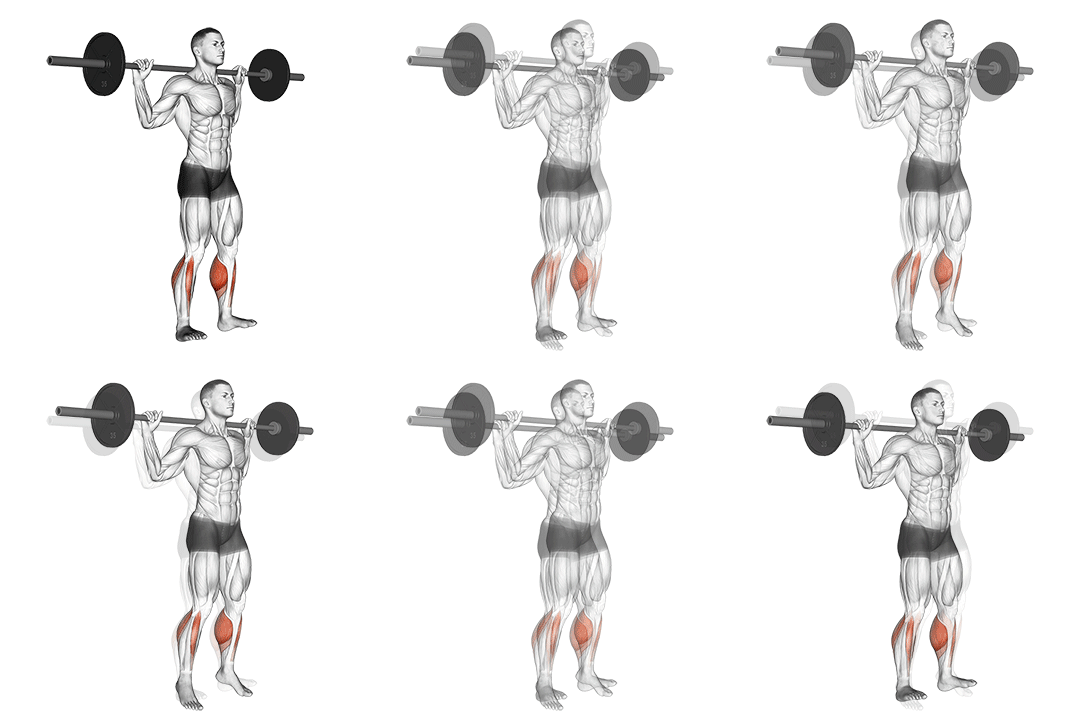
10. Barbell Standing Rocking Leg Calf Raise
54.3% MatchHow to perform this exercise
- Stand with your feet shoulder-width apart and hold a barbell across your upper back.
- Raise your heels off the ground as high as possible, balancing on the balls of your feet.
- Slowly lower your heels back down to the starting position.
- Repeat for the desired number of repetitions.
Why You Might Need a Barbell Sitted Alternate Leg Raise (female) Alternative
You may substitute this exercise for several reasons: pelvic discomfort from the barbell, limited equipment, hip-flexor overdrive, prior lower-back injury, or simply training variety. The barbell variation places pressure on the pelvis and can let hip flexors dominate the movement; alternatives let you bias spinal flexion and isolate the rectus abdominis. Choose exercises that keep the lumbar spine neutral or under controlled flexion and that let you progress load or volume safely. Cue: maintain posterior pelvic tilt and keep the lower back lightly contacting the bench or floor to ensure the abs, not the hip flexors, generate the movement.
How to Choose the Right Substitute
Select a substitute based on your goals, available equipment, and movement mechanics. If you want maximal isolation of the rectus abdominis, pick supine leg lowers or weighted reverse crunches and cue a slow eccentric with the lumbar against the mat. For progressive loading choose cable crunches or weighted decline crunches; for minimal hip-flexor involvement choose reverse crunches or stability-ball tucks. Consider pelvic position, range of motion, and whether you can add external load or increase tempo to progress. Always prioritize spinal control: exhale on the concentric, avoid lumbar extension, and stop the set if hips start substituting for the abs.
Frequently Asked Questions
What muscles does Barbell Sitted Alternate Leg Raise (female) work?
It primarily targets the rectus abdominis with secondary activation of the iliopsoas (hip flexors) and transverse abdominis for stabilization. The obliques work isometrically to control rotation and the lumbar extensors stabilize the spine during movement.
What is the best bodyweight alternative to Barbell Sitted Alternate Leg Raise (female)?
A top bodyweight substitute is the supine single-leg lowers (lying alternating leg lowers). Cue: press the lower back into the floor, posteriorly tilt the pelvis, and lower one leg slowly until you feel the pelvis rock, then lift—this emphasizes lower rectus abdominis while reducing hip-flexor takeover.
Can I build muscle without doing Barbell Sitted Alternate Leg Raise (female)?
Yes. You can build abdominal muscle using progressive overload through weighted crunches, cable variations, and added tempo or volume on bodyweight moves. Focus on controlled spinal flexion, progressive resistance, and consistent training to elicit hypertrophy without that specific barbell movement.
More Exercise Alternatives
Find Alternatives for Any Exercise
Use our free tool to discover the best substitute exercises based on your available equipment and goals.
Try the Exercise Substitution Finder →