

10 Best Sledgehammer Swings Alternatives for No Sledgehammer
Sledgehammer Swings are done standing. Ranked closest by our scoring: the Sledge Hammer, the Spell Caster and the Landmine 180's.
Updated Ranked by our 12-factor similarity model How it works
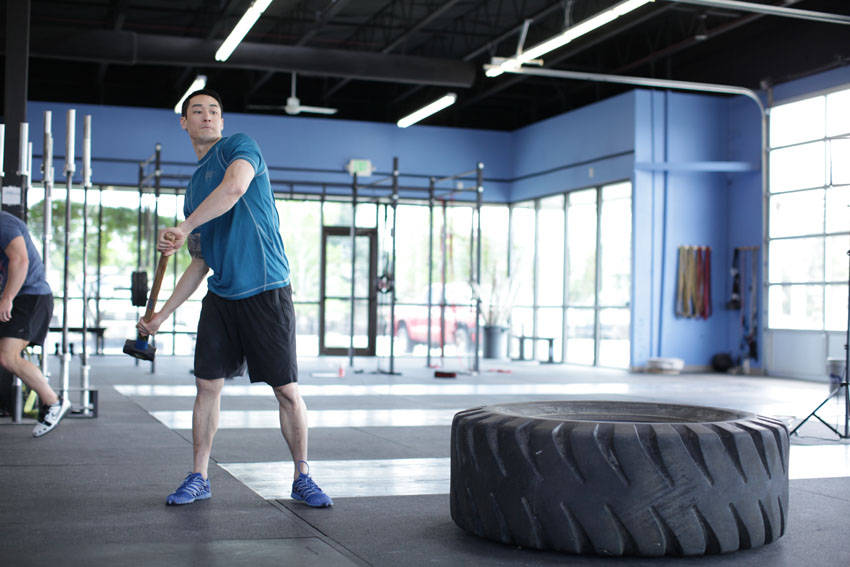
Original Exercise: Sledgehammer Swings
- Primary muscle
- Abs
- Equipment
- Other
- Difficulty
- Intermediate
- Type
- Compound
Secondary muscles: Calves, Forearms, Lats, Middle Back, Shoulders
How to perform Sledgehammer Swings
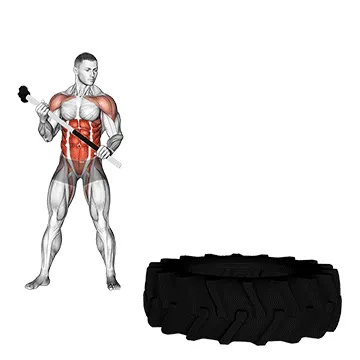
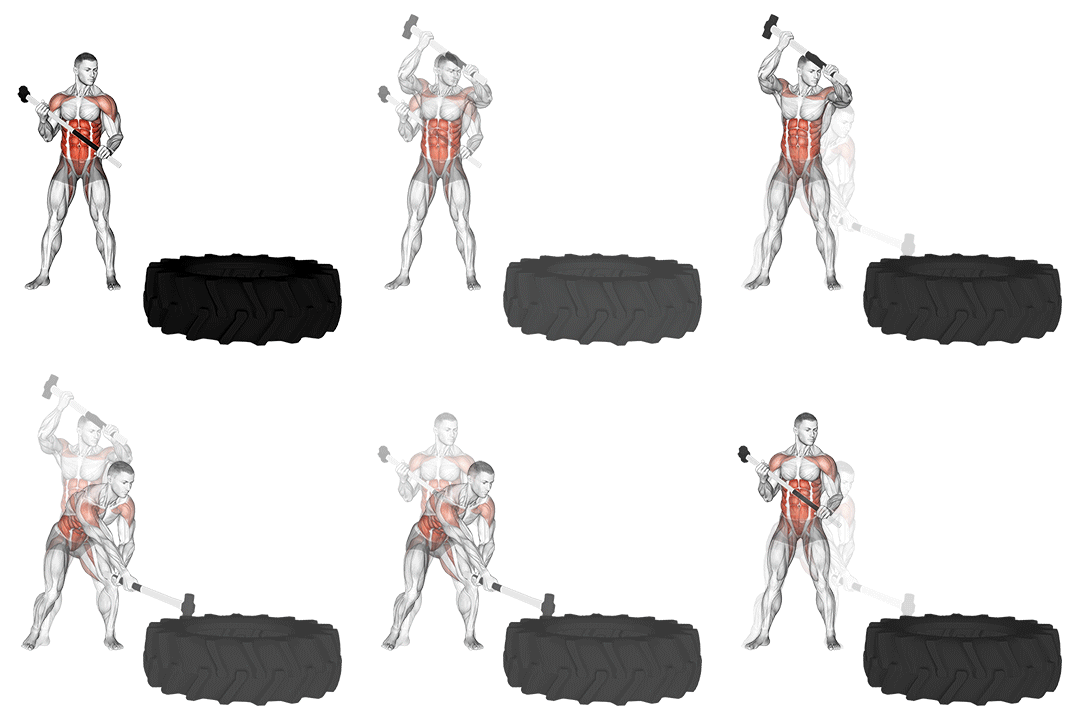
- You will need a tire and a sledgehammer for this exercise. Stand in front of the tire about two feet away from it with a staggered stance. Grip the sledgehammer.
- If you are right handed, your left hand should be at the bottom of the handle, and your right hand should be choking up closer to the head.
- As you bring the sledge up, your right hand slides toward the head; as you swing down, your right hand will slide down to join your left hand. Slam it down as hard as you can against the tire. Control the bounce of the hammer off of the tire.
- Repeat on the other side.
Ranked Sledgehammer Swings Alternatives
10 substitutes, ranked by how closely each one matches Sledgehammer Swings on movement pattern, muscles worked, equipment and body position. The higher the score, the less you change. Open "How to perform this exercise" on a card for the steps; every card title links to that exercise's own alternatives page.
Best match 1. Sledge Hammer
95% match- Abs
- Other
- Advanced
- Compound
Pick this when you want a harder version that still works the abs.
How to perform this exercise
- Stand with your feet shoulder-width apart and hold the sledge hammer with both hands.
- Engage your core and keep your back straight.
- Swing the sledge hammer down towards the ground, using your core and upper body strength.
- As you swing down, pivot your hips and transfer the force to the hammer.
- Repeat for the desired number of repetitions.
Sets and reps: 3 to 5 sets of 5 to 8 reps on each side.
Why this matches
- Primary muscle: abs, the same as Sledgehammer Swings
- Body position: standing, the same as Sledgehammer Swings
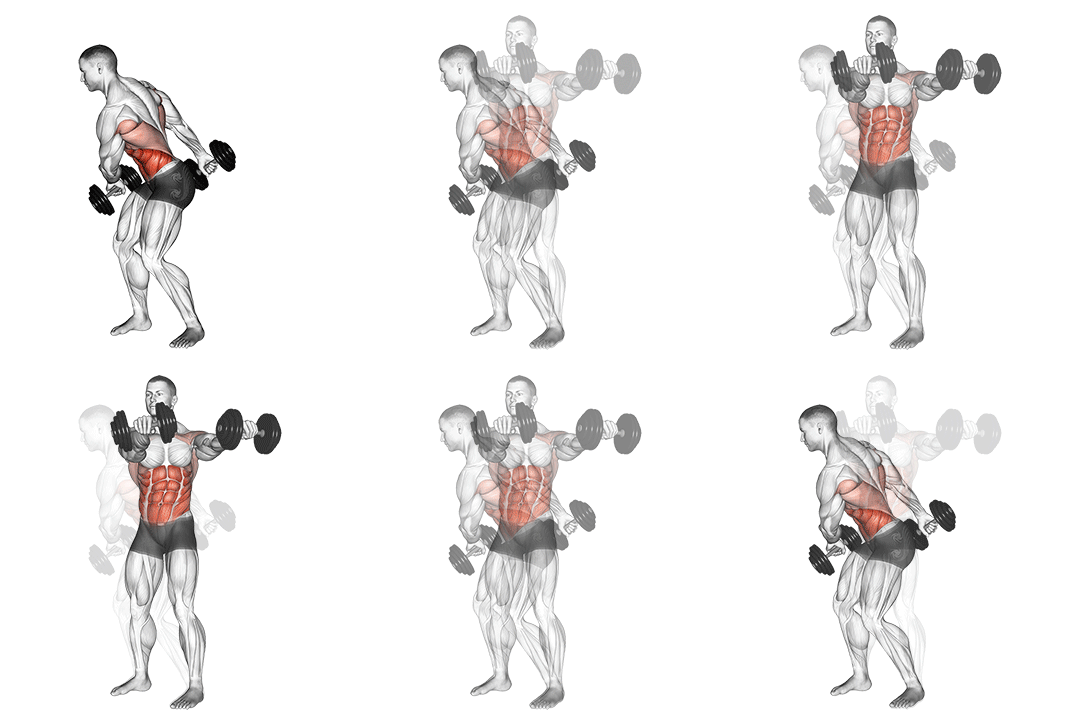
2. Spell Caster
95% match- Abs
- Dumbbell
- Intermediate
- Compound
A straight swap when you want to keep working the abs.
How to perform this exercise
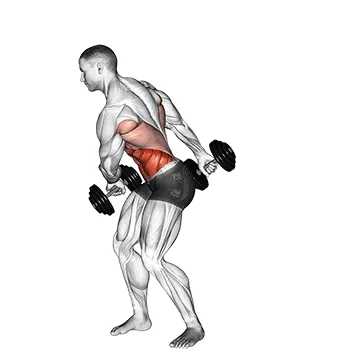
- Stand with your feet shoulder-width apart and hold a dumbbell in one hand.
- Bend your knees slightly and hinge forward at the waist, keeping your back straight.
- Extend your arm with the dumbbell towards the opposite foot, rotating your torso as you do so.
- Return to the starting position and repeat on the other side.
- Continue alternating sides for the desired number of repetitions.
Sets and reps: 3 or 4 sets of 6 to 10 reps on each side.
Why this matches
- Primary muscle: abs, the same as Sledgehammer Swings
- Equipment: free weights, the same as Sledgehammer Swings
- Body position: standing, the same as Sledgehammer Swings
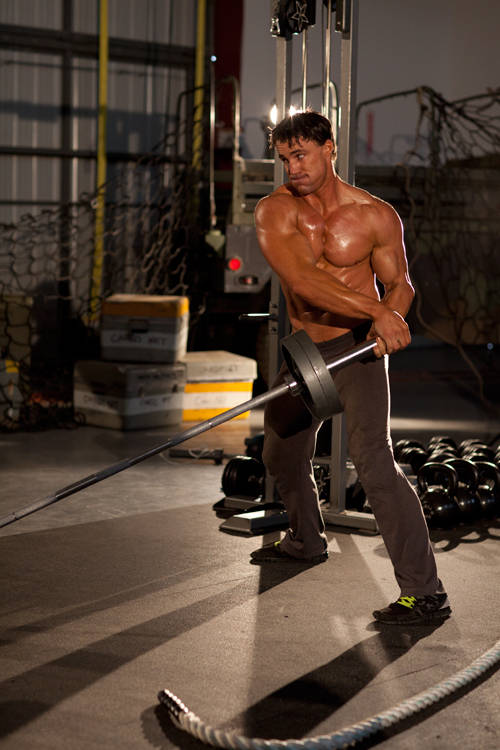
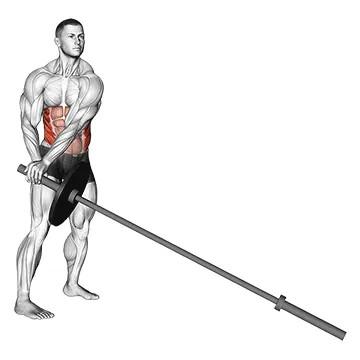
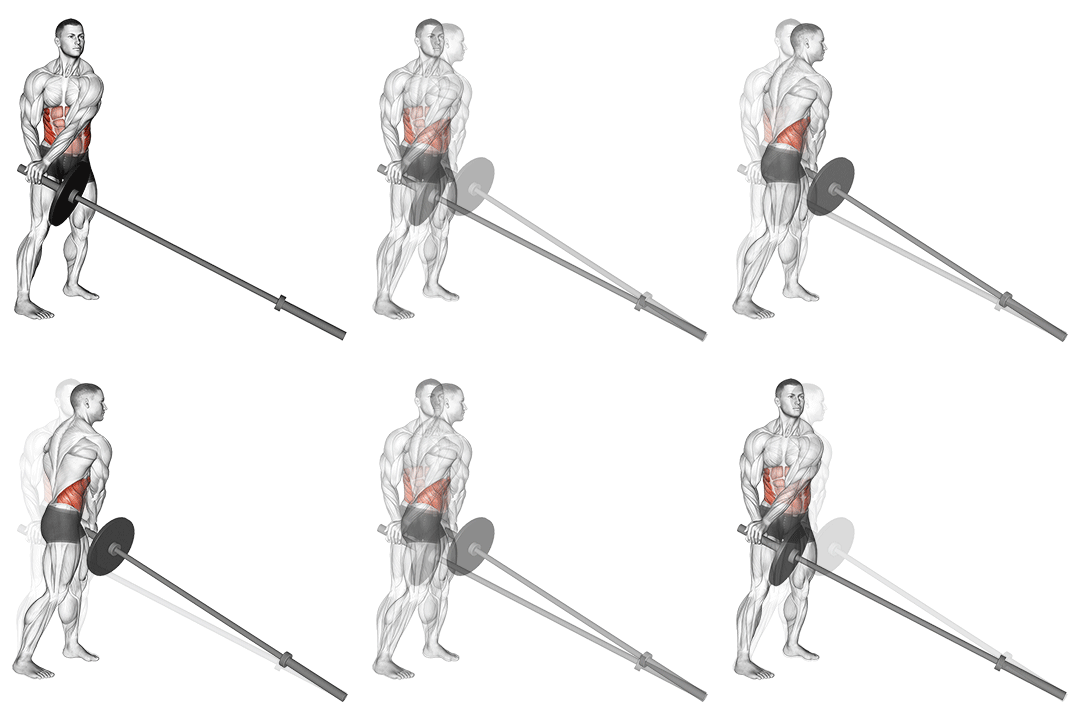
3. Landmine 180's
85% match- Abs
- Barbell
- Intermediate
- Compound
How to perform this exercise
- Position a bar into a landmine or securely anchor it in a corner. Load the bar to an appropriate weight.
- Raise the bar from the floor, taking it to shoulder height with both hands with your arms extended in front of you. Adopt a wide stance. This will be your starting position.
- Perform the movement by rotating the trunk and hips as you swing the weight all the way down to one side. Keep your arms extended throughout the exercise.
- Reverse the motion to swing the weight all the way to the opposite side.
- Continue alternating the movement until the set is complete.
Sets and reps: 3 to 5 sets of 5 to 8 reps on each side.
Why this matches
- Primary muscle: abs, the same as Sledgehammer Swings
- Equipment: free weights, the same as Sledgehammer Swings
- Body position: standing, the same as Sledgehammer Swings
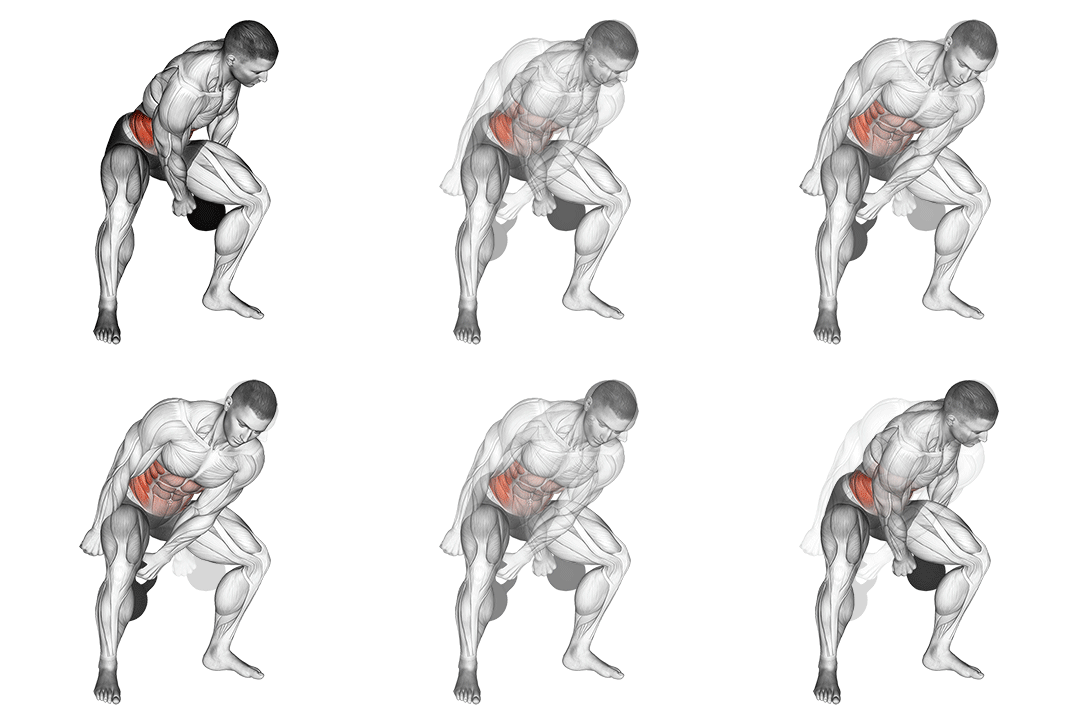
4. Kettlebell Figure 8
85% match- Abs
- Kettlebell
- Intermediate
- Compound
How to perform this exercise
- Stand with your feet shoulder-width apart, holding a kettlebell in one hand.
- Bend your knees slightly and hinge forward at the hips, keeping your back straight.
- Pass the kettlebell between your legs, switching hands as it reaches the back of your legs.
- As the kettlebell comes forward, pass it to the other hand between your legs.
- Continue passing the kettlebell between your legs in a figure 8 motion.
- Maintain a steady pace and engage your core throughout the exercise.
- Repeat for the desired number of repetitions.
Sets and reps: 3 to 5 sets of 5 to 8 reps on each side.
Why this matches
- Primary muscle: abs, the same as Sledgehammer Swings
- Equipment: free weights, the same as Sledgehammer Swings
- Body position: standing, the same as Sledgehammer Swings
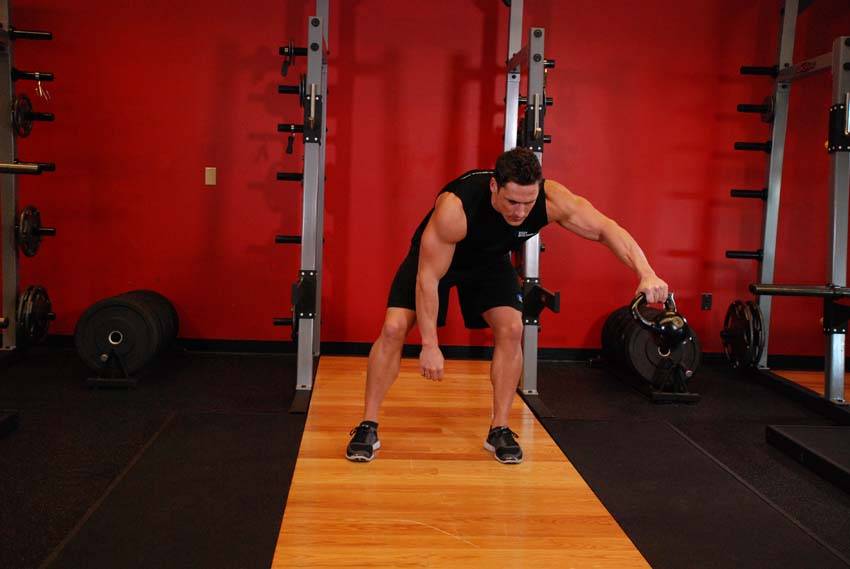
5. Kettlebell Pass Between The Legs
85% match- Abs
- Kettlebell
- Intermediate
- Compound
It still works the abs, through a different movement.
How to perform this exercise
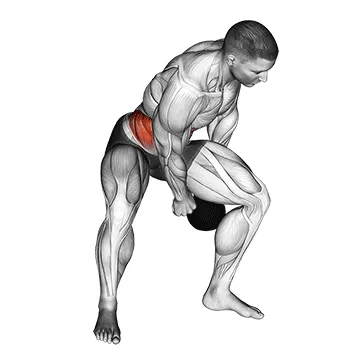
- Place one kettlebell between your legs and take a comfortable stance. Bend over by pushing your butt out and keeping your back flat.
- Pick up a kettlebell and pass it to your other hand between your legs, in the fashion of a "W". Go back and forth for several repetitions.
Sets and reps: 3 or 4 sets of 6 to 10 reps on each side.
Why this matches
- Primary muscle: abs, the same as Sledgehammer Swings
- Equipment: free weights, the same as Sledgehammer Swings
- Body position: standing, the same as Sledgehammer Swings
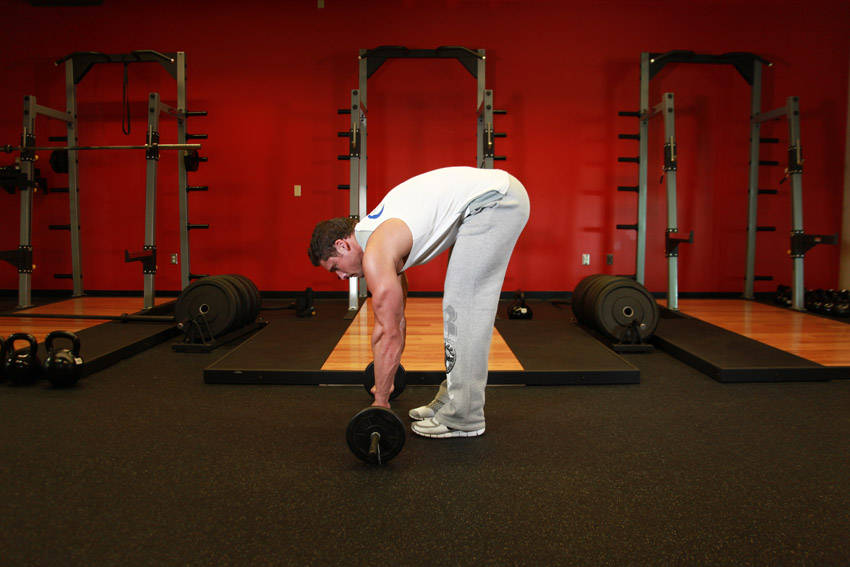
6. Barbell Ab Rollout
82% match- Abs
- Barbell
- Advanced
- Compound
How to perform this exercise
- For this exercise you will need to get into a pushup position, but instead of having your hands of the floor, you will be grabbing on to an Olympic barbell (loaded with 5-10 lbs on each side) instead. This will be your starting position.
- While keeping a slight arch on your back, lift your hips and roll the barbell towards your feet as you exhale. Tip: As you perform the movement, your glutes should be coming up, you should be keeping the abs tight and should maintain your back posture at all times. Also your arms should be staying perpendicular to the floor throughout the movement. If you don't, you will work out your shoulders and back more than the abs.
- After a second contraction at the top, start to roll the barbell back forward to the starting position slowly as you inhale.
- Repeat for the recommended amount of repetitions.
Sets and reps: 3 to 5 sets of 5 to 8 reps.
Why this matches
- Primary muscle: abs, the same as Sledgehammer Swings
- Equipment: free weights, the same as Sledgehammer Swings
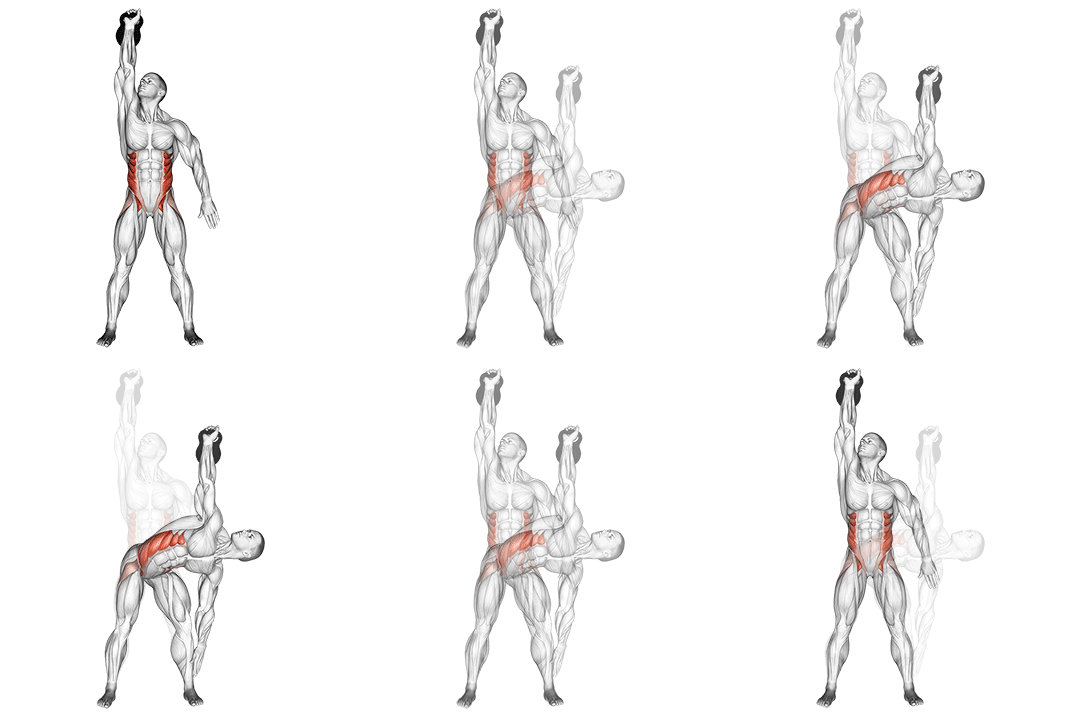
7. Kettlebell Double Windmill
80% match- Abs
- Kettlebell
- Advanced
- Compound
How to perform this exercise
- Stand with your feet shoulder-width apart, holding a kettlebell in your right hand.
- Extend your right arm overhead, keeping your eyes on the kettlebell.
- Rotate your left foot 45 degrees to the left and your right foot 90 degrees to the right.
- Bend at the waist to the left, keeping your right arm extended overhead.
- Lower the kettlebell towards the ground, reaching towards your left foot.
- Pause for a moment, then engage your core and push through your right foot to return to the starting position.
- Repeat for the desired number of repetitions, then switch sides.
Sets and reps: 3 to 5 sets of 5 to 8 reps.
Why this matches
- Primary muscle: abs, the same as Sledgehammer Swings
- Equipment: free weights, the same as Sledgehammer Swings
- Body position: standing, the same as Sledgehammer Swings
- Balance: harder to stay steady on than Sledgehammer Swings
8. Landmine 180
78% match- Abs
- Barbell
- Intermediate
- Compound
How to perform this exercise
- Stand with your feet shoulder-width apart and hold the barbell with both hands in front of your chest.
- Bend your knees slightly and rotate your torso to the right, swinging the barbell down towards your right hip.
- As you reach the bottom of the movement, quickly reverse the motion and rotate your torso to the left, swinging the barbell up and across your body towards your left shoulder.
- Continue this twisting motion, alternating sides, for the desired number of repetitions.
Sets and reps: 3 to 5 sets of 5 to 8 reps.
Why this matches
- Primary muscle: abs, the same as Sledgehammer Swings
- Equipment: free weights, the same as Sledgehammer Swings
- Body position: standing, the same as Sledgehammer Swings
9. Kettlebell Bent Press
77% match- Abs
- Kettlebell
- Advanced
- Compound
How to perform this exercise
- Stand with your feet shoulder-width apart, holding a kettlebell in your right hand.
- Bend your knees slightly and press the kettlebell overhead with your right arm, keeping your elbow locked.
- Rotate your torso to the left, shifting your weight onto your left foot.
- Bend your left knee and lower your torso towards the ground, keeping your right arm extended overhead.
- As you lower, keep your eyes on the kettlebell and your chest lifted.
- Once your left hand touches the ground, push through your left foot and straighten your left leg, driving your hips forward.
- As you drive your hips forward, use your core and right arm to press the kettlebell back up to the starting position.
- Repeat for the desired number of repetitions, then switch sides.
Sets and reps: 3 to 5 sets of 5 to 8 reps on each side.
Why this matches
- Primary muscle: abs, the same as Sledgehammer Swings
- Equipment: free weights, the same as Sledgehammer Swings
- Body position: standing, the same as Sledgehammer Swings
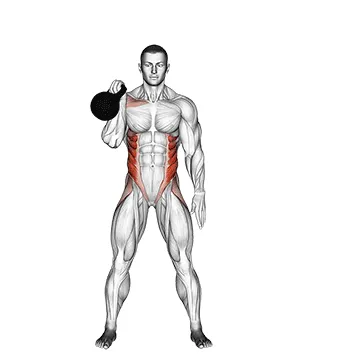
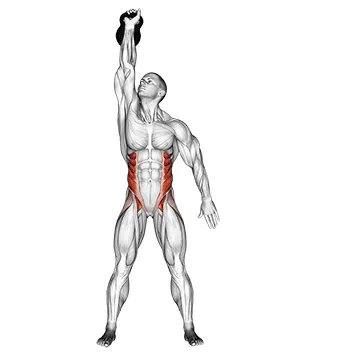
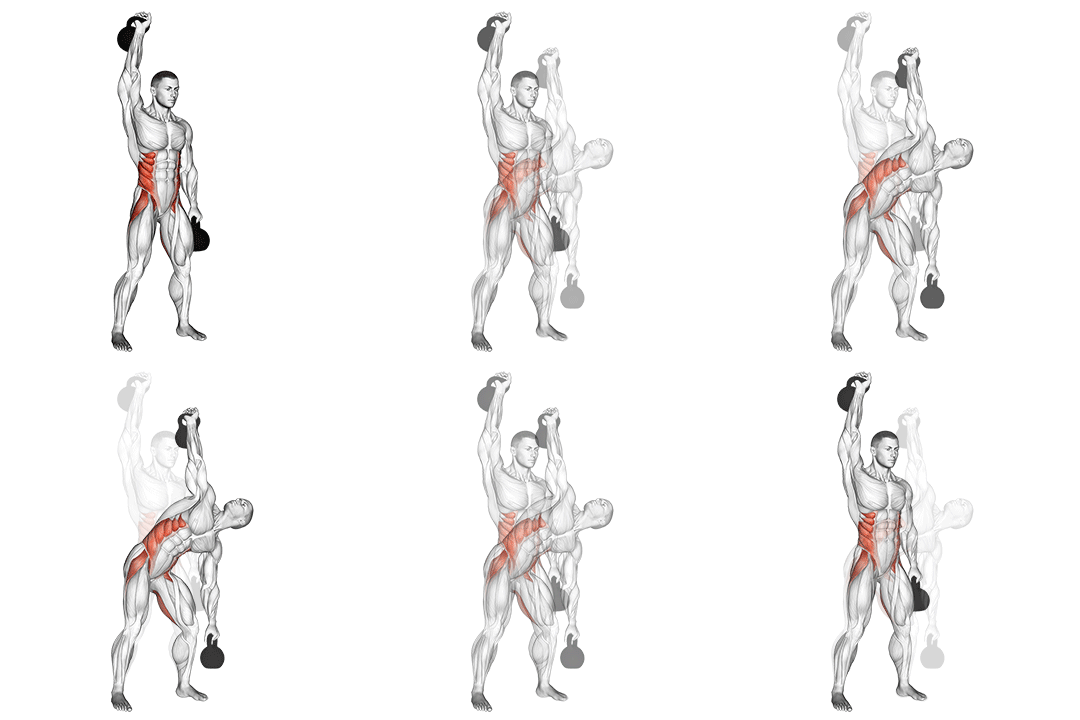
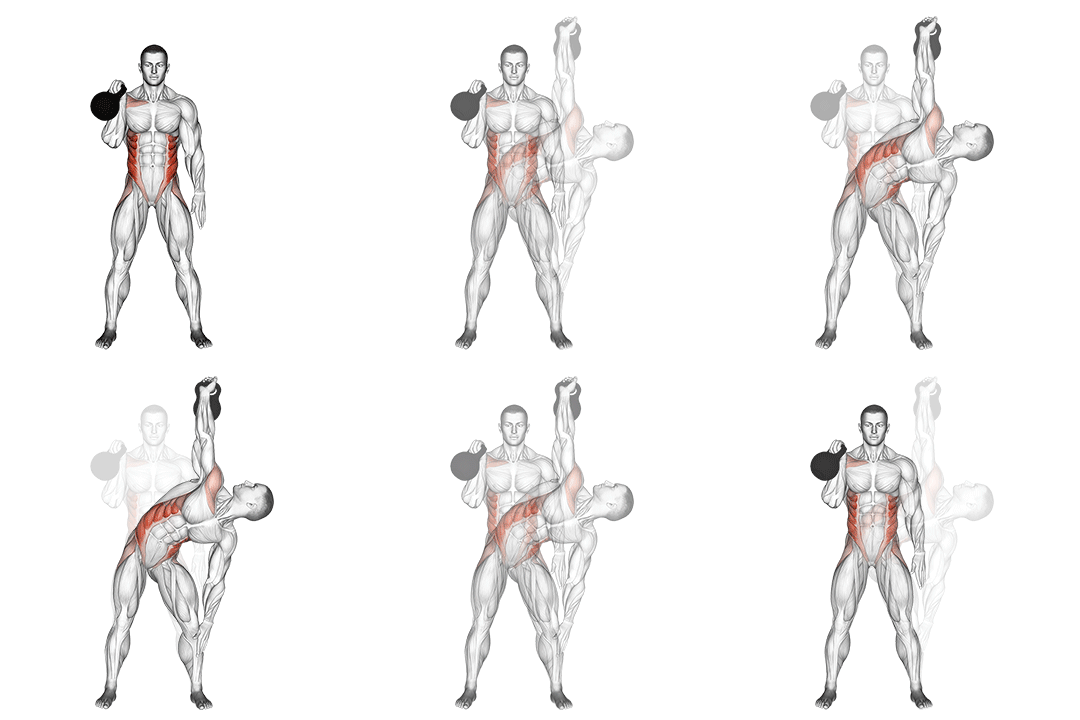
10. Kettlebell Windmill
77% match- Abs
- Kettlebell
- Intermediate
- Compound
How to perform this exercise
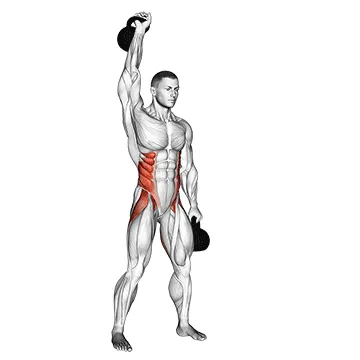
- Stand with your feet shoulder-width apart, holding a kettlebell in your right hand overhead.
- Rotate your left foot outwards about 45 degrees and keep your right foot pointing forward.
- Bend your torso to the left side, keeping your right arm extended overhead and your eyes on the kettlebell.
- Lower your torso as far as you can while keeping your right arm straight and your left arm extended to the side.
- Pause for a moment, then return to the starting position by pushing through your right foot and engaging your obliques.
- Repeat for the desired number of repetitions, then switch sides.
Sets and reps: 3 to 5 sets of 5 to 8 reps on each side.
Why this matches
- Primary muscle: abs, the same as Sledgehammer Swings
- Equipment: free weights, the same as Sledgehammer Swings
- Body position: standing, the same as Sledgehammer Swings
Why You Might Need a Sledgehammer Swings Alternative
You might replace sledgehammer swings because of limited equipment, shoulder or low‑back pain, or a need for cleaner loading. Alternatives let you target the obliques, rectus abdominis and transverse abdominis with safer joint mechanics. For example, cable woodchoppers reproduce the rotational torque while allowing load adjustment; cue: hinge at the hips, keep a soft knee and initiate rotation from the thoracic spine. Medicine ball slams give the same explosive hip drive and eccentric core control but reduce shear through the lumbar spine. Choosing a substitute can preserve rotational power and core tension while minimizing injury risk.
Sledgehammer Swings FAQ
What muscles does Sledgehammer Swings work?
Sledgehammer swings primarily target the obliques and rectus abdominis for rotation and force transfer, with strong involvement of the transverse abdominis for stabilization. The posterior chain, glutes and hamstrings, contributes to the hip drive that generates power, while the thoracic spine rotates to transmit force.
What is the best bodyweight alternative to Sledgehammer Swings?
A high‑quality bodyweight alternative is the side‑to‑side plank hip dip. Cue: hold a high side plank, lower your hips toward the floor with control, then drive them back up using your obliques. This trains anti‑rotation strength and oblique eccentric control without external load.
Can I build muscle without doing Sledgehammer Swings?
Yes. You can build core muscle and rotational power with a mix of loaded and unloaded exercises like cable woodchoppers, landmine twists, medicine ball slams, and progressive plank variations. Focus on progressive overload, controlled eccentric work, and consistent hip drive to stimulate hypertrophy and functional strength.
Find Alternatives for Any Exercise
Search the exercise database and filter the ranked substitutes by the equipment you own.
Similarity scores compare exercise metadata such as movement pattern, muscles, equipment and body position. They are not a safety rating or a check that you own the equipment. Learn about our methodology