

10 Best Barbell Upright Row V. 2 Alternatives for Safer Shoulder Training
If Barbell Upright Row V. 2 causes pain or you lack a barbell, choose movements that load the delts without excessive internal rotation. Try dumbbell lateral raises, face pulls, cable lateral raises, seated dumbbell press, or bent-over rear delt flyes. For lateral raises, hinge the scapula slightly and lead with the elbow to 90° abduction to isolate the medial deltoid.
Original Exercise: Barbell Upright Row V. 2
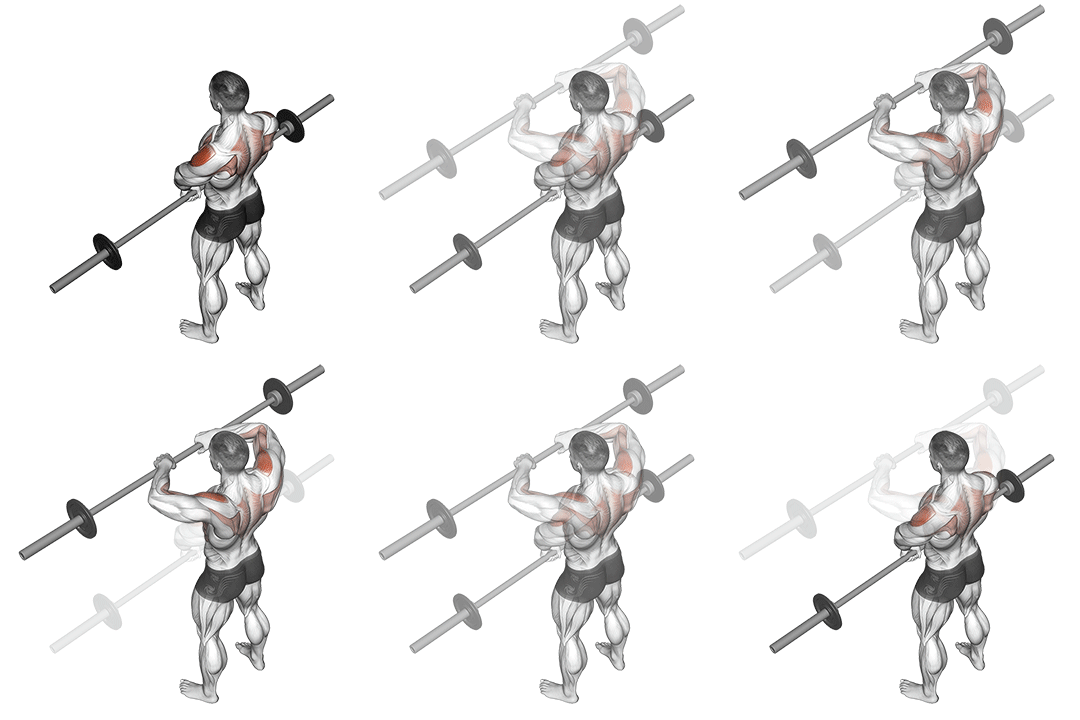
How to Perform Barbell Upright Row V. 2
- Stand with your feet shoulder-width apart and hold a barbell with an overhand grip, hands slightly wider than shoulder-width apart.
- Let the barbell hang in front of your thighs, arms fully extended.
- Keeping your back straight, exhale and lift the barbell straight up towards your chin, leading with your elbows.
- Pause for a moment at the top, then inhale and slowly lower the barbell back down to the starting position.
- Repeat for the desired number of repetitions.
Best Barbell Upright Row V. 2 Alternatives
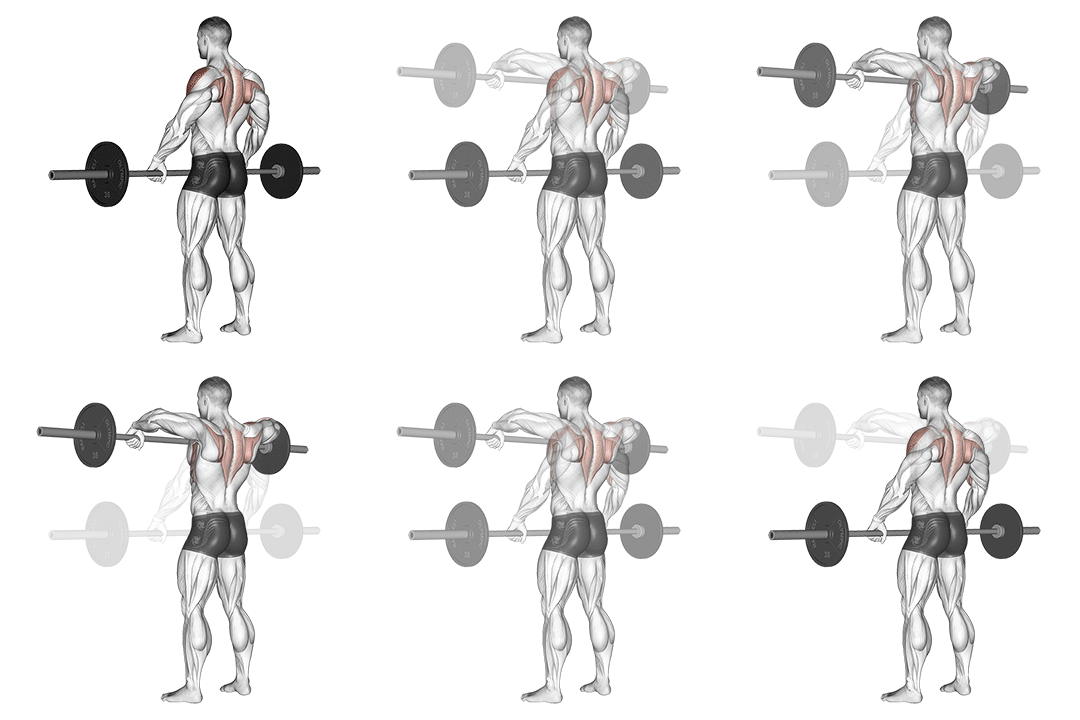
1. Barbell Wide-grip Upright Row
96% MatchHow to perform this exercise
- Stand with your feet shoulder-width apart and hold a barbell with an overhand grip, hands wider than shoulder-width apart.
- Let the barbell hang in front of your thighs, arms fully extended.
- Keeping your back straight, exhale and lift the barbell straight up towards your chin, leading with your elbows.
- Pause for a moment at the top, then inhale and slowly lower the barbell back down to the starting position.
- Repeat for the desired number of repetitions.
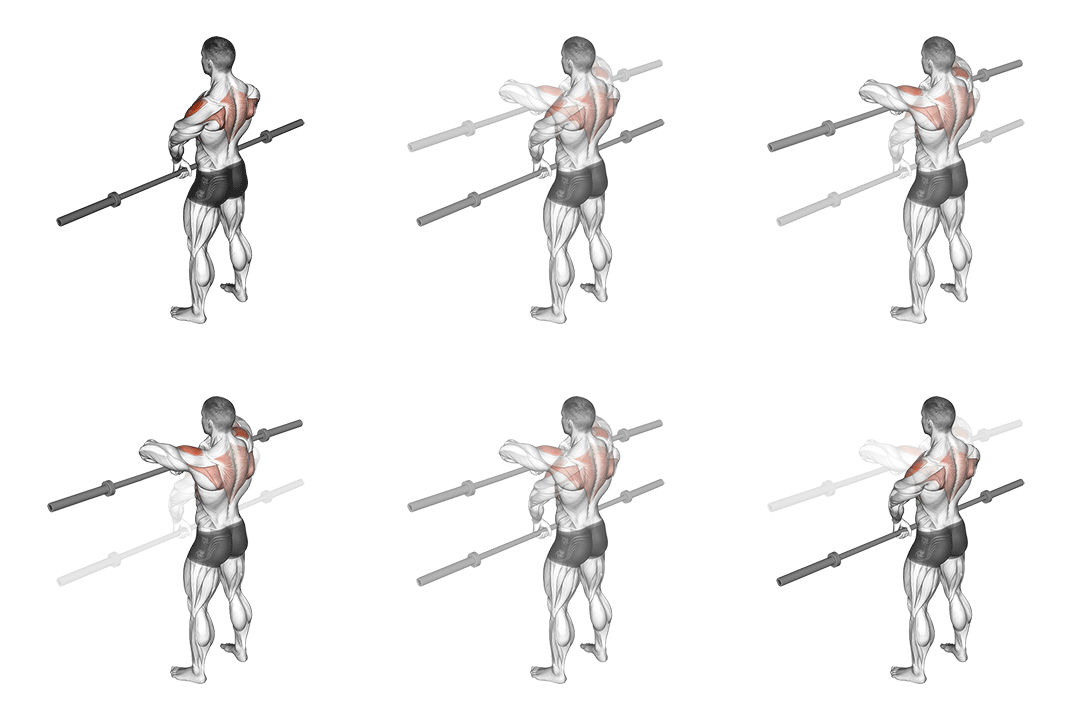
2. Barbell Upright Row V. 3
96% MatchHow to perform this exercise
- Stand with your feet shoulder-width apart and hold a barbell with an overhand grip, hands slightly wider than shoulder-width apart.
- Let the barbell hang in front of your thighs, arms fully extended.
- Keeping your core engaged and back straight, exhale as you lift the barbell straight up towards your chin, leading with your elbows.
- Pause for a moment at the top, then inhale as you slowly lower the barbell back down to the starting position.
- Repeat for the desired number of repetitions.
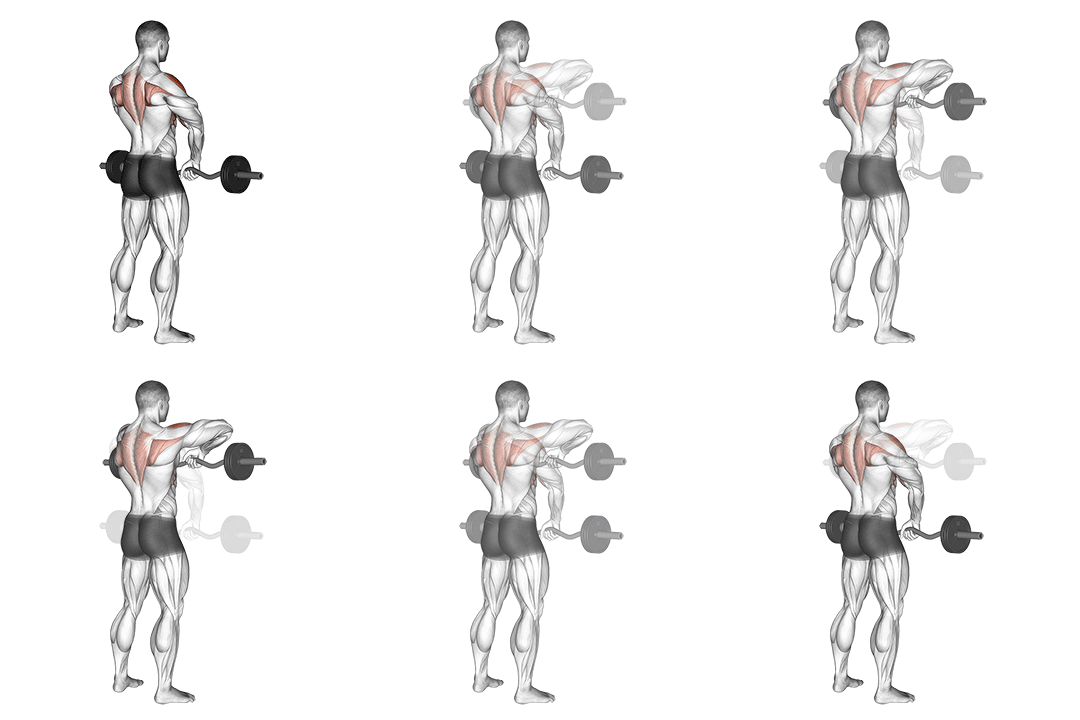
3. Barbell Upright Row
96% MatchHow to perform this exercise
- Stand with your feet shoulder-width apart and hold a barbell with an overhand grip, hands slightly wider than shoulder-width apart.
- Let the barbell hang in front of your thighs, arms fully extended.
- Keeping your back straight and core engaged, exhale and lift the barbell straight up towards your chin, leading with your elbows.
- Pause for a moment at the top, then inhale and slowly lower the barbell back down to the starting position.
- Repeat for the desired number of repetitions.
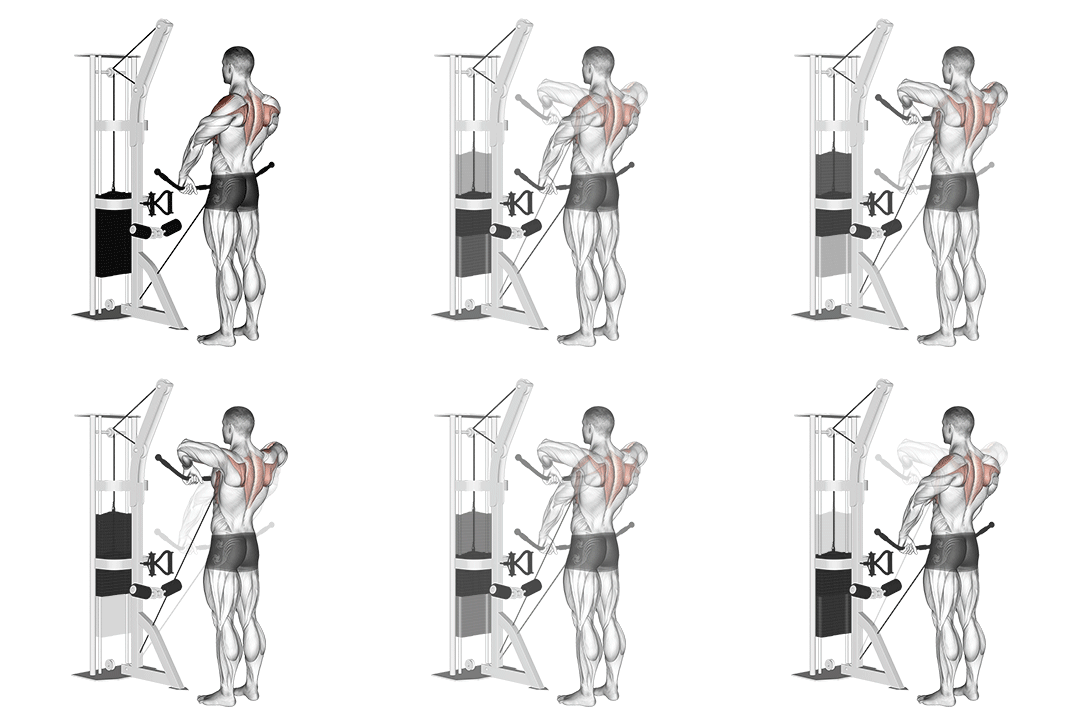
4. Cable Upright Row
79.4% MatchHow to perform this exercise
- Stand with your feet shoulder-width apart, knees slightly bent, and hold the cable attachment with an overhand grip.
- Keep your back straight and your core engaged throughout the exercise.
- Pull the cable attachment straight up towards your chin, leading with your elbows.
- Pause for a moment at the top, squeezing your shoulder blades together.
- Slowly lower the cable attachment back down to the starting position.
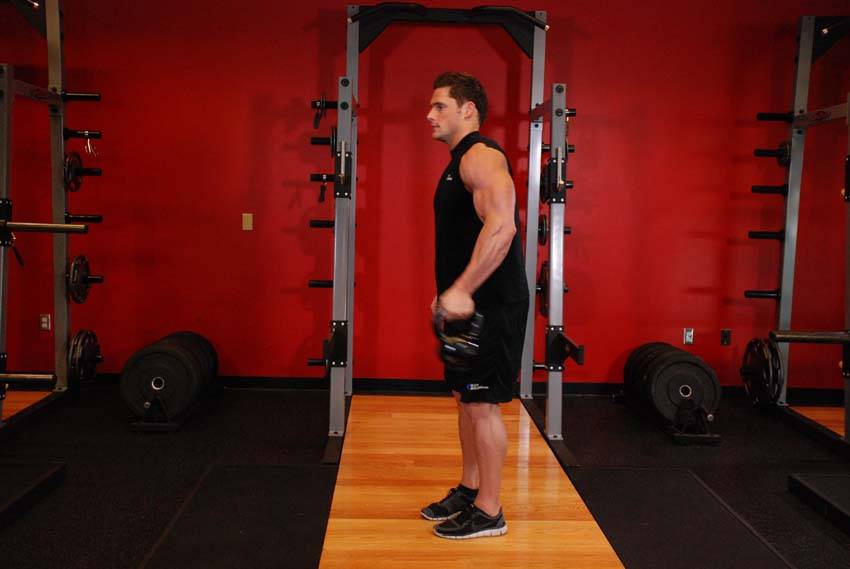
5. Bottoms-Up Clean From The Hang Position
66% MatchHow to perform this exercise
- Initiate the exercise by standing upright with a kettlebell in one hand.
- Swing the kettlebell back forcefully and then reverse the motion forcefully. Crush the kettlebell handle as hard as possible and raise the kettlebell to your shoulder.
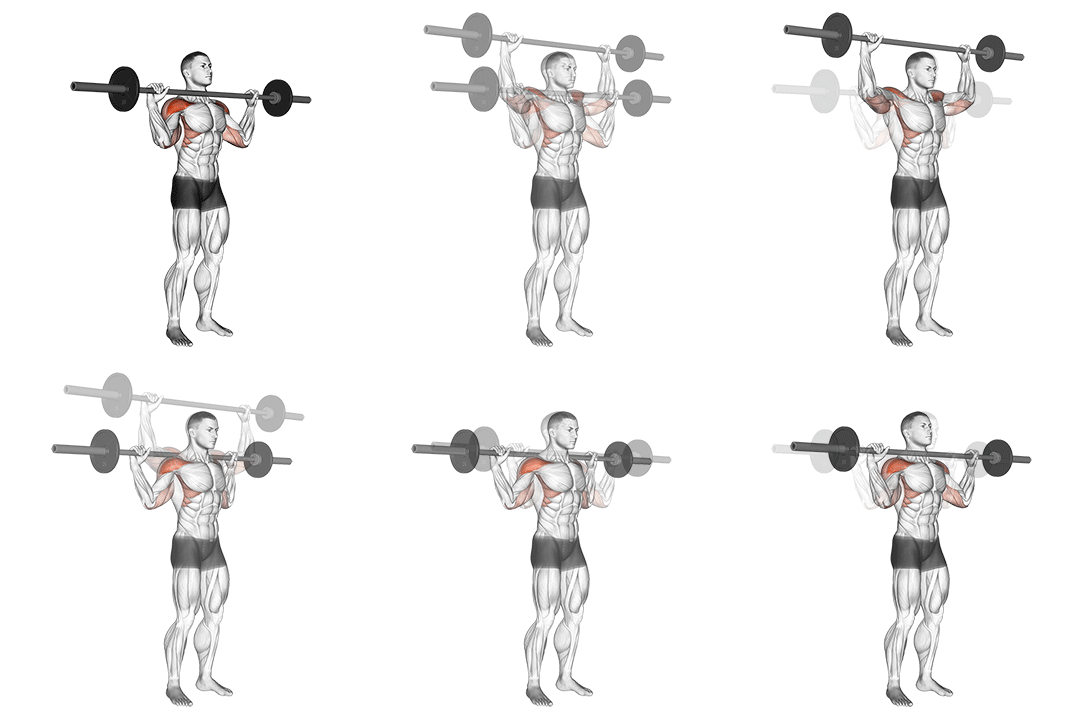
6. Barbell Standing Bradford Press
64.1% MatchHow to perform this exercise
- Stand with your feet shoulder-width apart and hold the barbell in front of your shoulders with an overhand grip.
- Press the barbell overhead, fully extending your arms.
- Lower the barbell back down to the starting position.
- Repeat for the desired number of repetitions.
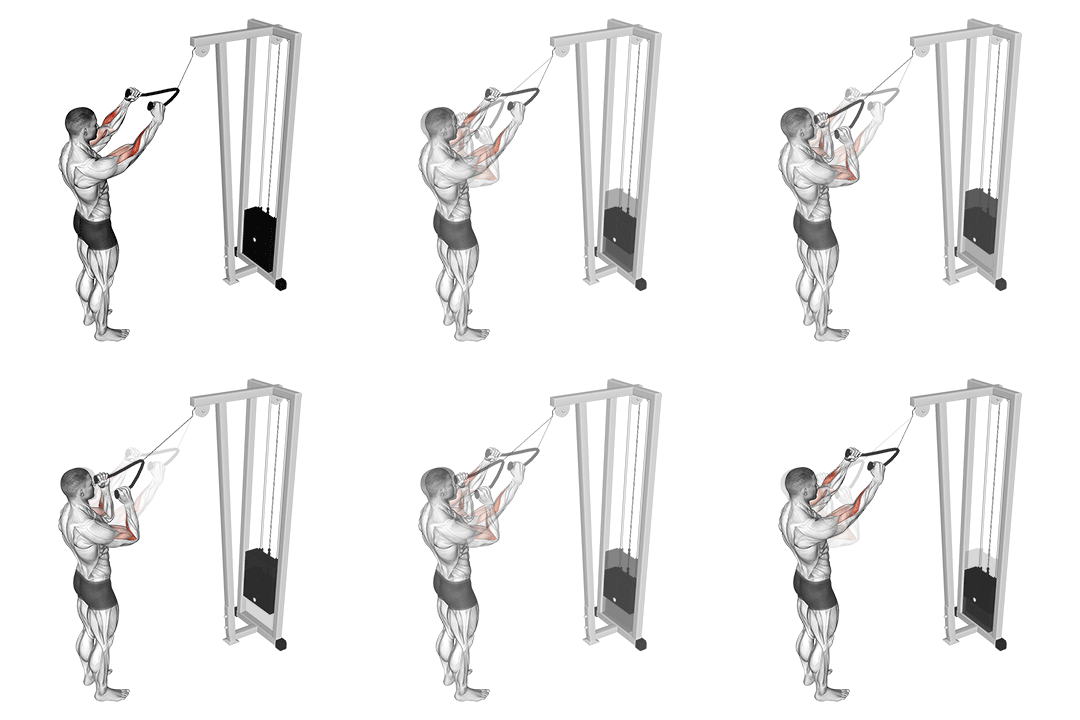
7. Cable Standing Pulldown (with Rope)
61.2% MatchHow to perform this exercise
- Attach a rope to the cable machine at the highest setting.
- Stand facing the machine with your feet shoulder-width apart.
- Grasp the rope with an overhand grip, palms facing down.
- Keep your back straight and core engaged throughout the exercise.
- Pull the rope down towards your thighs, squeezing your biceps.
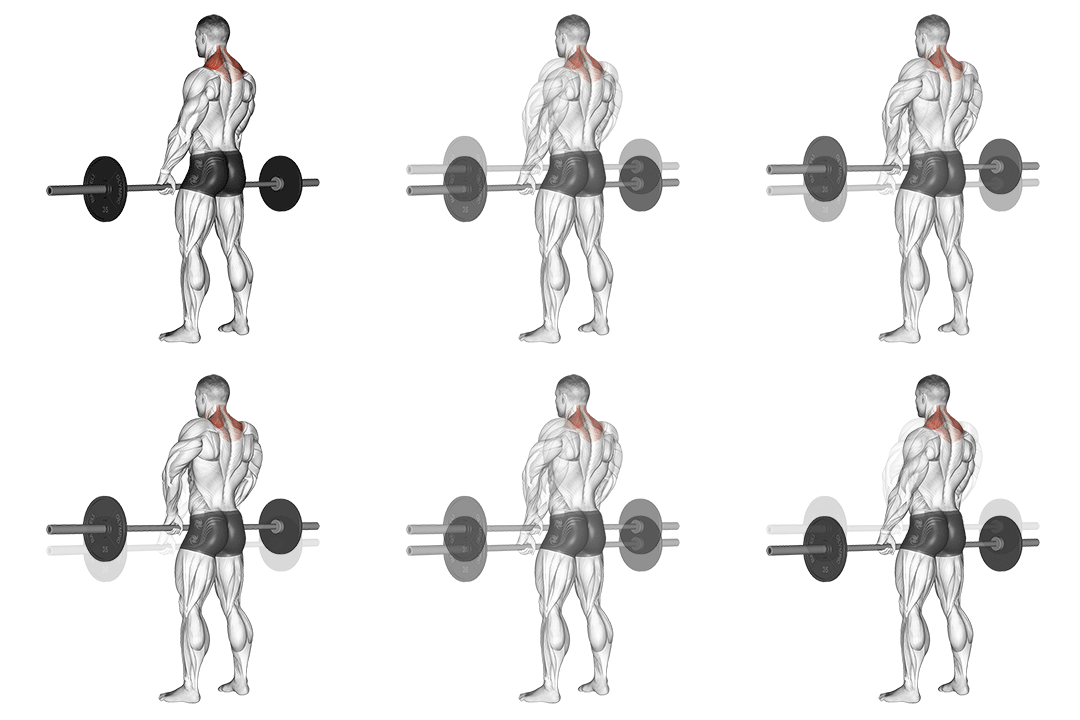
8. Barbell Shrug
60.9% MatchHow to perform this exercise
- Stand with your feet shoulder-width apart and hold a barbell in front of you with an overhand grip.
- Keep your arms straight and your back straight throughout the exercise.
- Lift your shoulders up towards your ears as high as possible, squeezing your traps at the top.
- Hold for a moment, then slowly lower your shoulders back down to the starting position.
- Repeat for the desired number of repetitions.
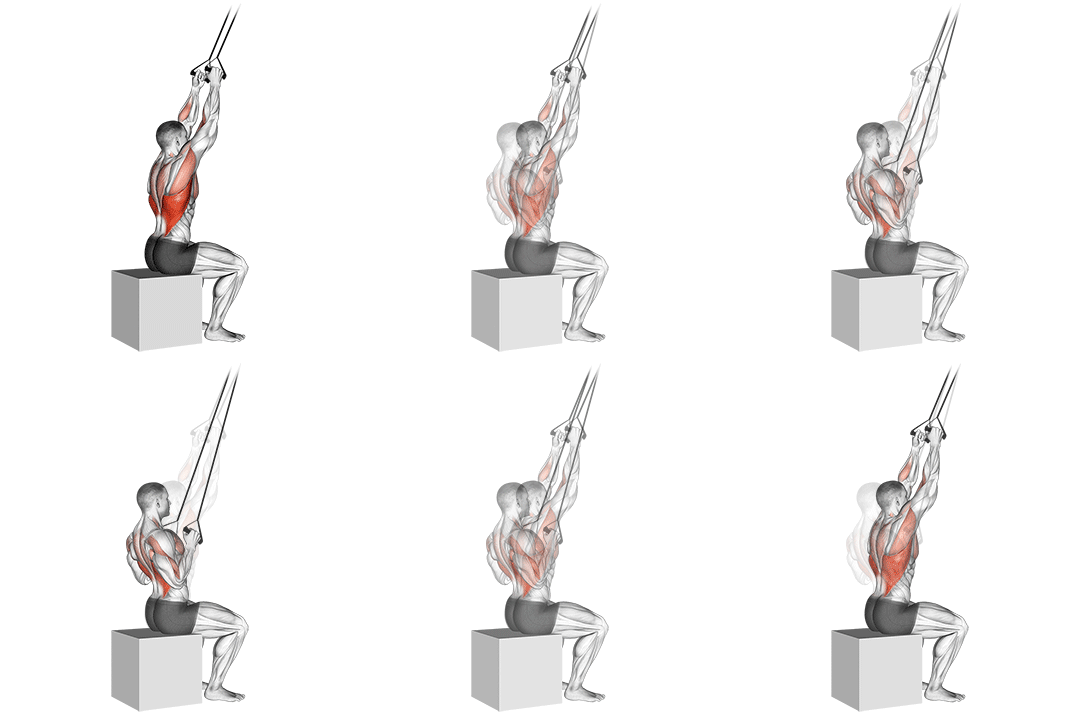
9. Band Close-grip Pulldown
60.7% MatchHow to perform this exercise
- Attach the band to a high anchor point, such as a pull-up bar or sturdy beam.
- Stand facing the anchor point and grab the band with an underhand grip, hands shoulder-width apart.
- Step back to create tension in the band, keeping your feet hip-width apart.
- Engage your core and keep your back straight as you pull the band down towards your chest, squeezing your shoulder blades together.
- Pause for a moment at the bottom of the movement, then slowly release the band back to the starting position.
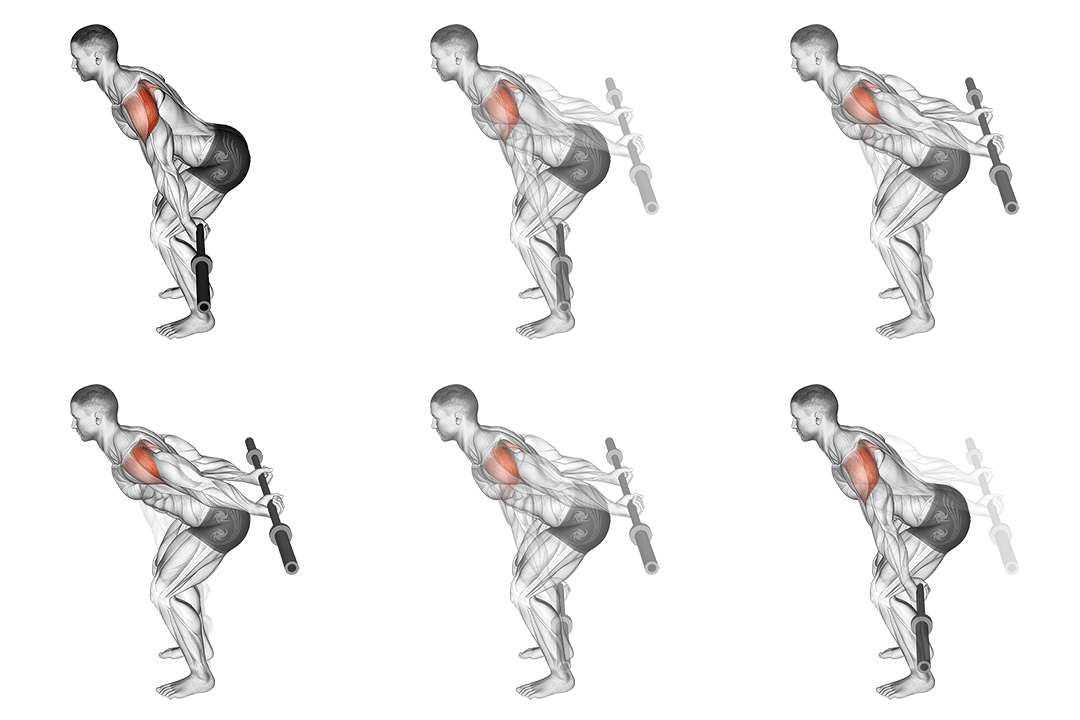
10. Barbell Skier
60.1% MatchHow to perform this exercise
- Stand with your feet shoulder-width apart and hold a barbell in front of your thighs with an overhand grip.
- Bend your knees slightly and hinge forward at the hips, keeping your back straight and chest up.
- Simultaneously lift the barbell up towards your shoulders while jumping slightly off the ground.
- As you reach the top of the movement, quickly reverse the motion and lower the barbell back down to the starting position.
- Repeat for the desired number of repetitions.
Why You Might Need a Barbell Upright Row V. 2 Alternative
You might substitute the barbell upright row for shoulder pain, limited equipment, or to better target specific deltoid heads. Upright rows bias internal rotation and can aggravate subacromial structures; alternatives reduce impingement by keeping the elbow below shoulder height or encouraging external rotation. For example, face pulls emphasize posterior deltoid and external rotators—pull to eye level with external rotation at the end of the movement to maximize rear delt activation. Dumbbell lateral raises isolate the medial deltoid when you keep a slight elbow bend and lift to shoulder level, minimizing trap dominance and improving scapulohumeral mechanics.
How to Choose the Right Substitute
Select a substitute based on goal, equipment, and shoulder mechanics. If you want medial deltoid size, choose dumbbell or cable lateral raises and lead with the elbow to 90° abduction while avoiding shoulder shrug. For posterior delts and rotator cuff balance, pick face pulls and pull to eye level with external rotation. If you need compound overload, use seated dumbbell presses with a neutral wrist and drive through the elbows; brace your core to prevent excessive scapular elevation. Consider movement pattern (abduction vs horizontal pull), required scapular control, and how the exercise loads the deltoid heads.
Frequently Asked Questions
What muscles does Barbell Upright Row V. 2 work?
The exercise primarily targets the medial deltoids and recruits the upper trapezius and anterior deltoids as secondary movers. Biomechanically it combines shoulder abduction and scapular elevation; reducing elbow height shifts emphasis away from traps toward the medial delts.
What is the best bodyweight alternative to Barbell Upright Row V. 2?
A solid bodyweight option is the reverse grip bodyweight row (inverted row) with hands wide to emphasize the rear delts and scapular retractors; pull your chest to the bar and squeeze the shoulder blades together. Keep the torso rigid and lead with the elbows to maximize posterior delt and rhomboid activation.
Can I build muscle without doing Barbell Upright Row V. 2?
Yes. You can build deltoid size using targeted alternatives like dumbbell lateral raises for the medial head and seated dumbbell presses for overall shoulder mass. Use progressive overload—increase load, reps, or time under tension (2–3 second eccentrics) while cueing elbow lead and scapular control to ensure proper deltoid activation.
More Exercise Alternatives
Find Alternatives for Any Exercise
Use our free tool to discover the best substitute exercises based on your available equipment and goals.
Try the Exercise Substitution Finder →