

10 Best Biceps Leg Concentration Curl Alternatives for Home Workouts
The Biceps Leg Concentration Curl is done seated. Ranked closest by our scoring: the Bodyweight Side Lying Biceps Curl, Concentration Curls and the Dumbbell Concentration Curl.
Updated Ranked by our 12-factor similarity model How it works
Original Exercise: Biceps Leg Concentration Curl
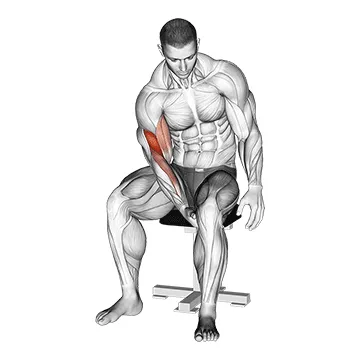
- Primary muscle
- Biceps
- Equipment
- Bodyweight
- Difficulty
- Beginner
- Type
- Isolation
Secondary muscles: Forearms
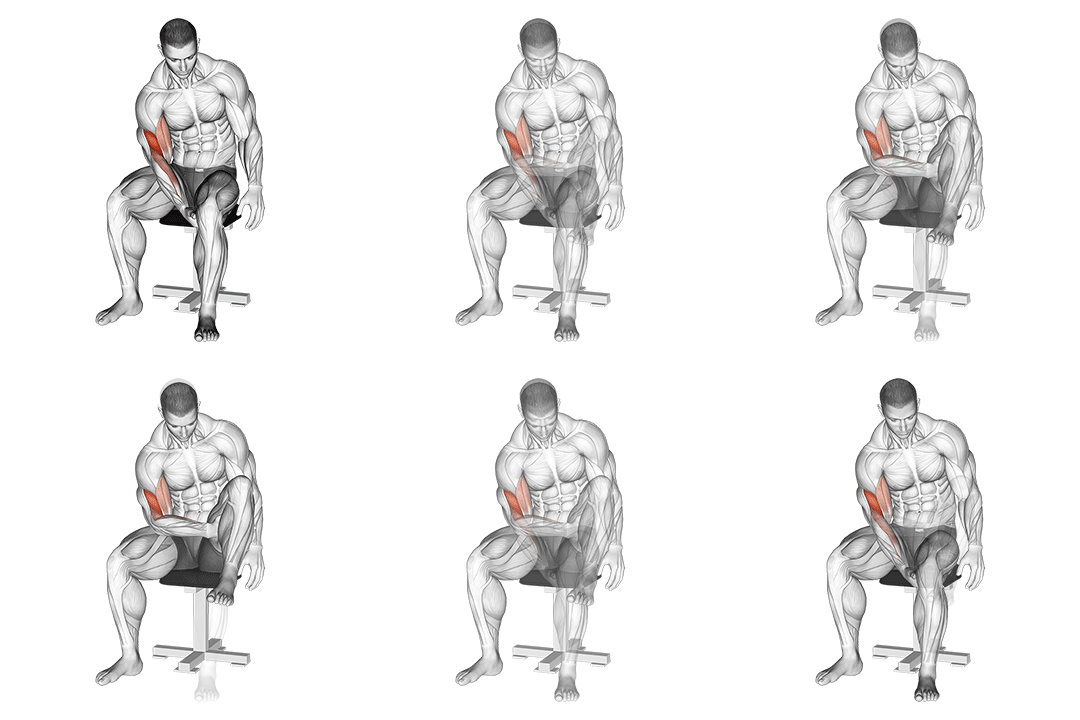
How to perform Biceps Leg Concentration Curl
- Sit on a bench with your legs spread apart and your feet flat on the ground.
- Hold a dumbbell in one hand and place your elbow on the inside of your thigh, just above the knee.
- With your palm facing up, curl the dumbbell towards your shoulder while keeping your upper arm stationary.
- Squeeze your biceps at the top of the movement, then slowly lower the dumbbell back to the starting position.
- Repeat for the desired number of repetitions, then switch arms.
Ranked Biceps Leg Concentration Curl Alternatives
10 substitutes, ranked by how closely each one matches the Biceps Leg Concentration Curl on movement pattern, muscles worked, equipment and body position. The higher the score, the less you change. Open "How to perform this exercise" on a card for the steps; every card title links to that exercise's own alternatives page.
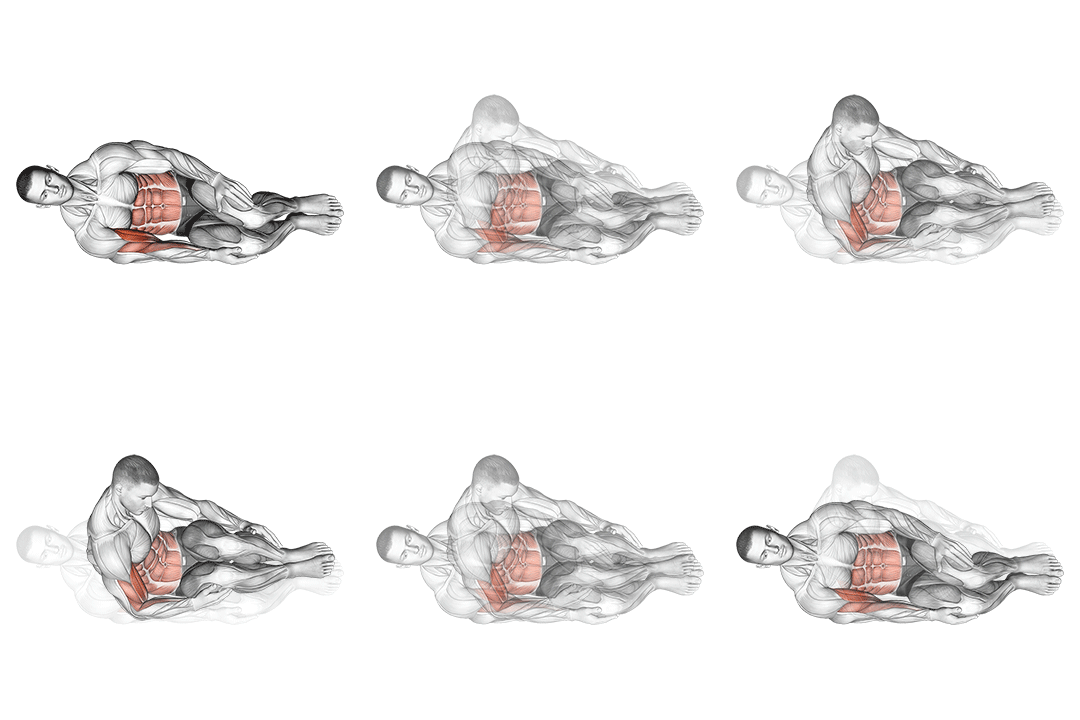
Best match 1. Bodyweight Side Lying Biceps Curl
90% match- Biceps
- Bodyweight
- Beginner
- Isolation
Pick this when you want to work the biceps with more balance to manage.
How to perform this exercise
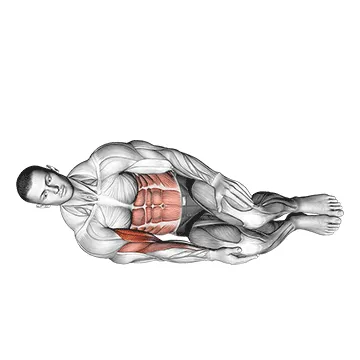
- Lie on your side with your legs extended and your head supported by your arm.
- Hold your upper arm against your side and bend your elbow to curl your forearm towards your shoulder.
- Pause for a moment at the top, then slowly lower your forearm back down to the starting position.
- Repeat for the desired number of repetitions.
Sets and reps: 3 sets of 8 to 12 reps on each side, and add reps before you add load.
Why this matches
- Movement: curl, the same as the Biceps Leg Concentration Curl
- Primary muscle: biceps, the same as the Biceps Leg Concentration Curl
- Equipment: bodyweight only, the same as the Biceps Leg Concentration Curl
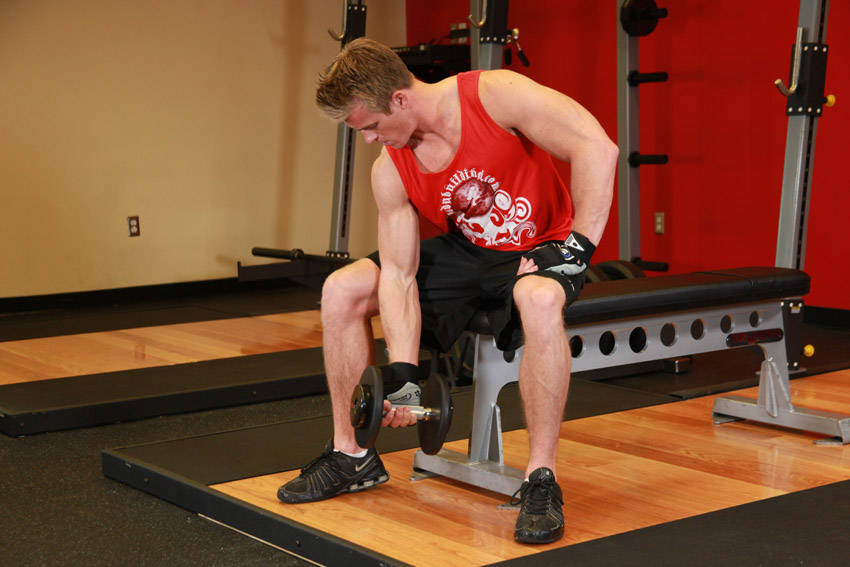
2. Concentration Curls
90% match- Biceps
- Dumbbell
- Beginner
- Isolation
A good swap when you have dumbbells to work with, and it still works the biceps.
How to perform this exercise
- Sit down on a flat bench with one dumbbell in front of you between your legs. Your legs should be spread with your knees bent and feet on the floor.
- Use your right arm to pick the dumbbell up. Place the back of your right upper arm on the top of your inner right thigh. Rotate the palm of your hand until it is facing forward away from your thigh. Tip: Your arm should be extended and the dumbbell should be above the floor. This will be your starting position.
- While holding the upper arm stationary, curl the weights forward while contracting the biceps as you breathe out. Only the forearms should move. Continue the movement until your biceps are fully contracted and the dumbbells are at shoulder level. Tip: At the top of the movement make sure that the little finger of your arm is higher than your thumb. This guarantees a good contraction. Hold the contracted position for a second as you squeeze the biceps.
- Slowly begin to bring the dumbbells back to starting position as your breathe in. Caution: Avoid swinging motions at any time.
- Repeat for the recommended amount of repetitions. Then repeat the movement with the left arm.
Sets and reps: 3 sets of 10 to 15 reps on each side.
Why this matches
- Movement: curl, the same as the Biceps Leg Concentration Curl
- Primary muscle: biceps, the same as the Biceps Leg Concentration Curl
- Equipment: free weights, not bodyweight only
- Body position: seated, the same as the Biceps Leg Concentration Curl
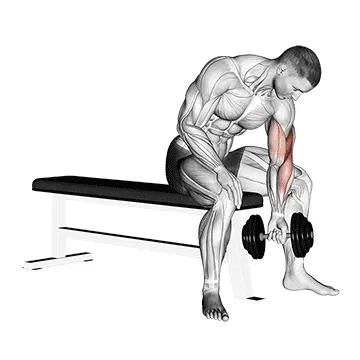
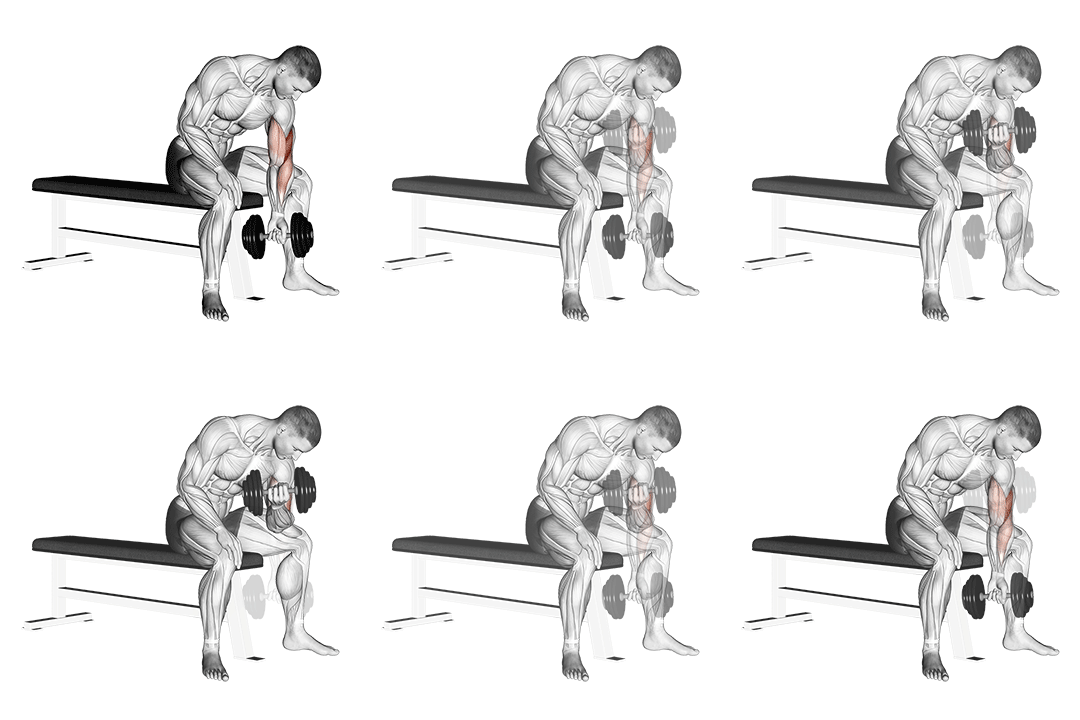
3. Dumbbell Concentration Curl
90% match- Biceps
- Dumbbell
- Beginner
- Isolation
How to perform this exercise
- Sit on a bench with your legs spread apart and a dumbbell in one hand, resting your elbow on the inside of your thigh.
- Fully extend your arm and hold the dumbbell with an underhand grip.
- Keeping your upper arm stationary, exhale and curl the weight up towards your shoulder while contracting your biceps.
- Continue to raise the dumbbell until your biceps are fully contracted and the dumbbell is at shoulder level.
- Hold the contracted position for a brief pause as you squeeze your biceps.
- Inhale and slowly lower the dumbbell back to the starting position.
- Repeat for the desired number of repetitions, then switch arms.
Sets and reps: 3 sets of 10 to 15 reps on each side.
Why this matches
- Movement: curl, the same as the Biceps Leg Concentration Curl
- Primary muscle: biceps, the same as the Biceps Leg Concentration Curl
- Equipment: free weights, not bodyweight only
- Body position: seated, the same as the Biceps Leg Concentration Curl
4. Band Concentration Curl
89% match- Biceps
- Band
- Beginner
- Isolation
A good swap when you have a band to work with, and it still works the biceps.
How to perform this exercise
- Sit on a bench or chair with your legs spread apart and your feet flat on the ground.
- Hold one end of the band in your hand and step on the other end with your foot on the same side.
- Lean forward slightly and rest your elbow on the inside of your thigh, just above the knee.
- With your palm facing up, slowly curl your hand towards your shoulder, keeping your upper arm stationary.
- Pause for a moment at the top, then slowly lower your hand back down to the starting position.
- Repeat for the desired number of repetitions, then switch sides.
Sets and reps: 3 sets of 10 to 15 reps on each side.
Why this matches
- Movement: curl, the same as the Biceps Leg Concentration Curl
- Primary muscle: biceps, the same as the Biceps Leg Concentration Curl
- Equipment: a band, not bodyweight only
- Body position: seated, the same as the Biceps Leg Concentration Curl
- Biceps
- Cable
- Beginner
- Isolation
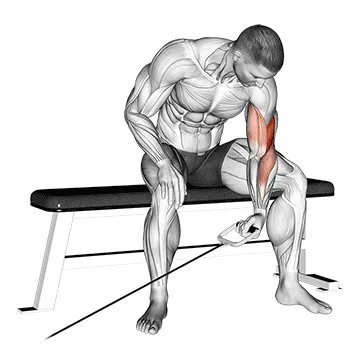
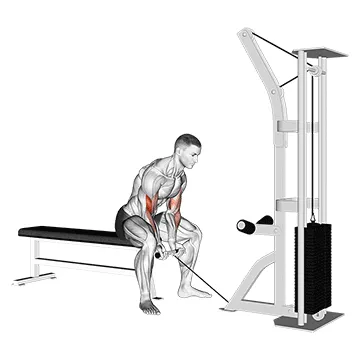
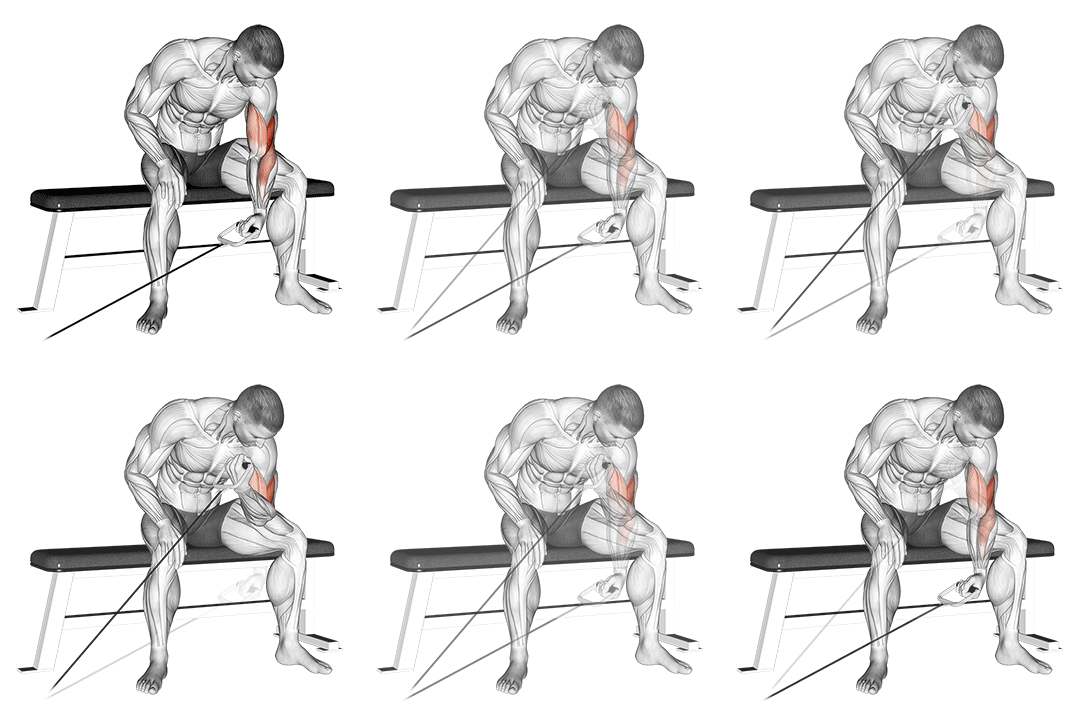
A good swap when you have a cable machine to work with, and it still works the biceps.
How to perform this exercise
- Sit on a bench with your feet flat on the floor and your back straight.
- Hold a cable handle with one hand and place your elbow on the inside of your thigh, just above the knee.
- Keep your upper arm stationary and curl the cable handle towards your shoulder while exhaling.
- Pause for a moment at the top of the movement, squeezing your biceps.
- Slowly lower the cable handle back to the starting position while inhaling.
- Repeat for the desired number of repetitions, then switch arms.
Sets and reps: 3 sets of 10 to 15 reps on each side.
Why this matches
- Movement: curl, the same as the Biceps Leg Concentration Curl
- Primary muscle: biceps, the same as the Biceps Leg Concentration Curl
- Equipment: a cable, not bodyweight only
- Body position: seated, the same as the Biceps Leg Concentration Curl
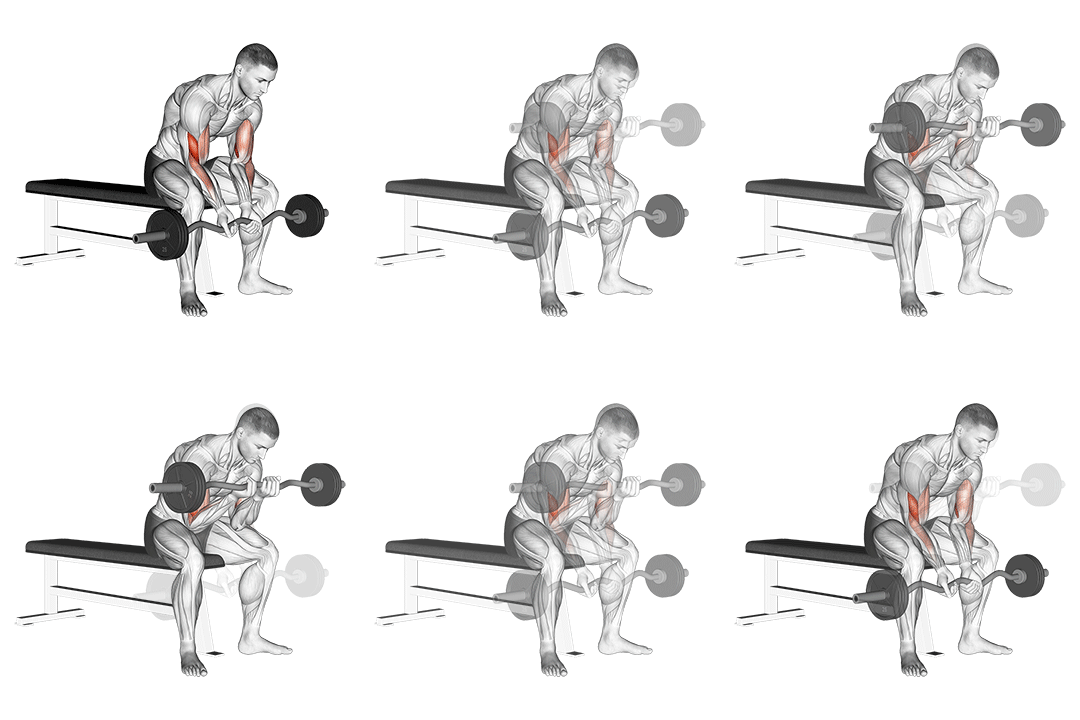
- Biceps
- Ez-barbell
- Intermediate
- Isolation
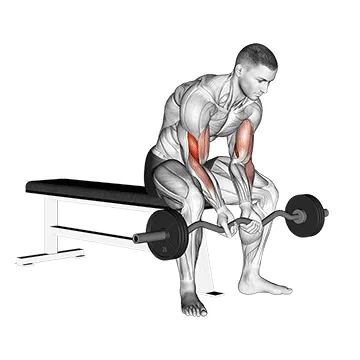
A good swap when you have an EZ bar to work with, and it still works the biceps.
How to perform this exercise
- Sit on a bench with your feet flat on the ground and hold an EZ barbell with an underhand grip.
- Rest your elbow on the inside of your thigh, just above the knee.
- Curl the barbell up towards your shoulder while keeping your upper arm stationary.
- Squeeze your biceps at the top of the movement, then slowly lower the barbell back down to the starting position.
- Repeat for the desired number of repetitions.
Sets and reps: 3 sets of 10 to 15 reps on each side.
Why this matches
- Movement: curl, the same as the Biceps Leg Concentration Curl
- Primary muscle: biceps, the same as the Biceps Leg Concentration Curl
- Equipment: free weights, not bodyweight only
- Body position: seated, the same as the Biceps Leg Concentration Curl
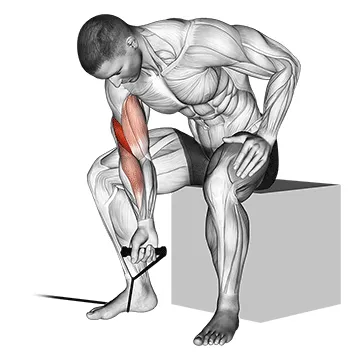
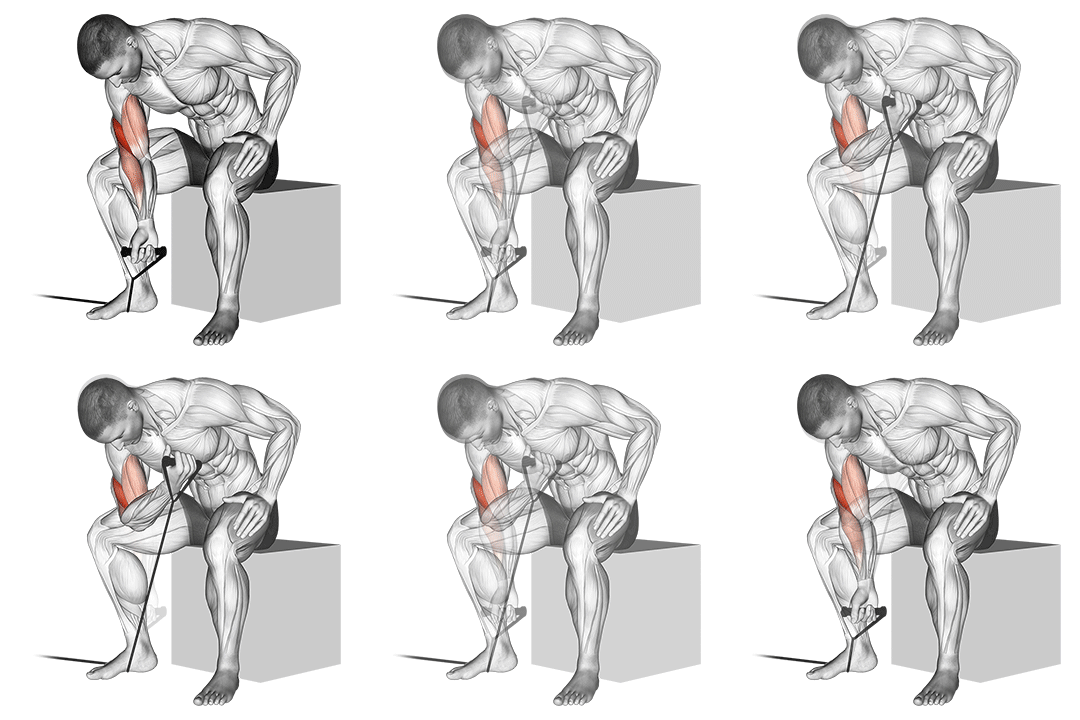
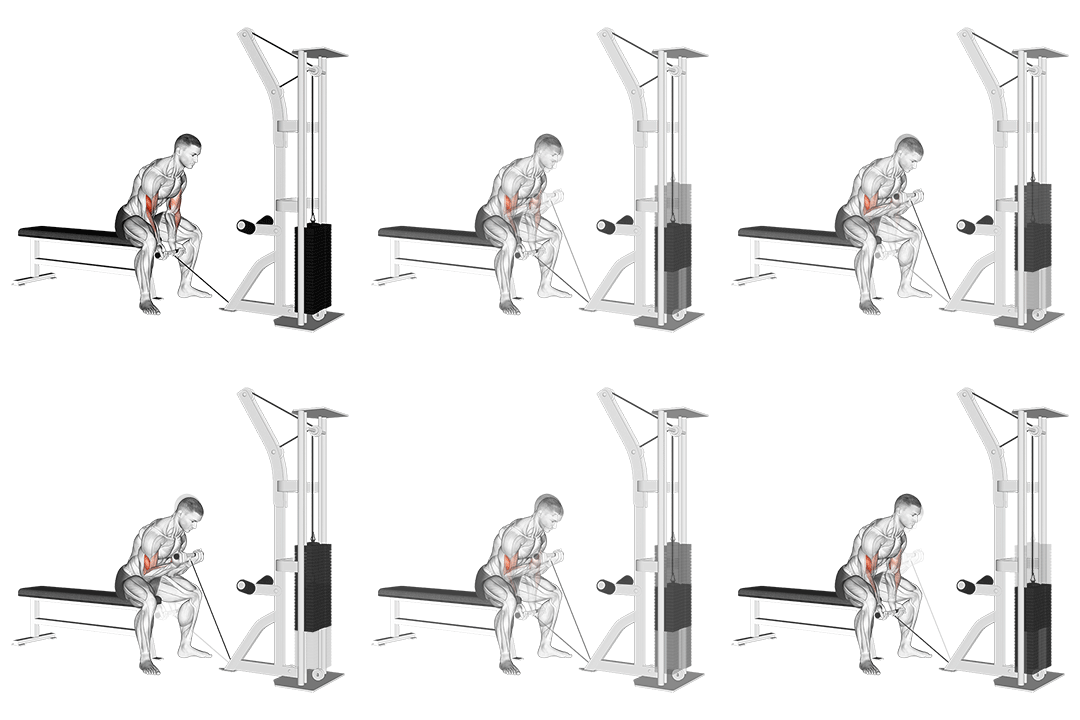
7. Cable Concentration Curl
89% match- Biceps
- Cable
- Beginner
- Isolation
How to perform this exercise
- Sit on a bench or chair with your feet flat on the floor and your knees slightly bent.
- Hold the cable handle with an underhand grip and rest your elbow against the inside of your thigh.
- Keeping your upper arm stationary, exhale and curl the cable handle towards your shoulder while contracting your biceps.
- Pause for a moment at the top of the movement, then inhale and slowly lower the cable handle back to the starting position.
- Repeat for the desired number of repetitions, then switch arms.
Sets and reps: 3 sets of 10 to 15 reps on each side.
Why this matches
- Movement: curl, the same as the Biceps Leg Concentration Curl
- Primary muscle: biceps, the same as the Biceps Leg Concentration Curl
- Equipment: a cable, not bodyweight only
- Body position: seated, the same as the Biceps Leg Concentration Curl
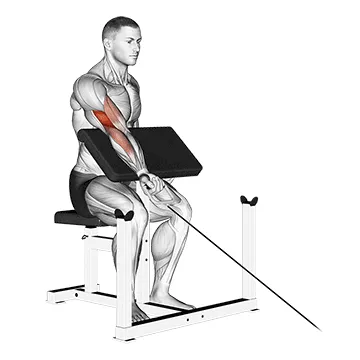
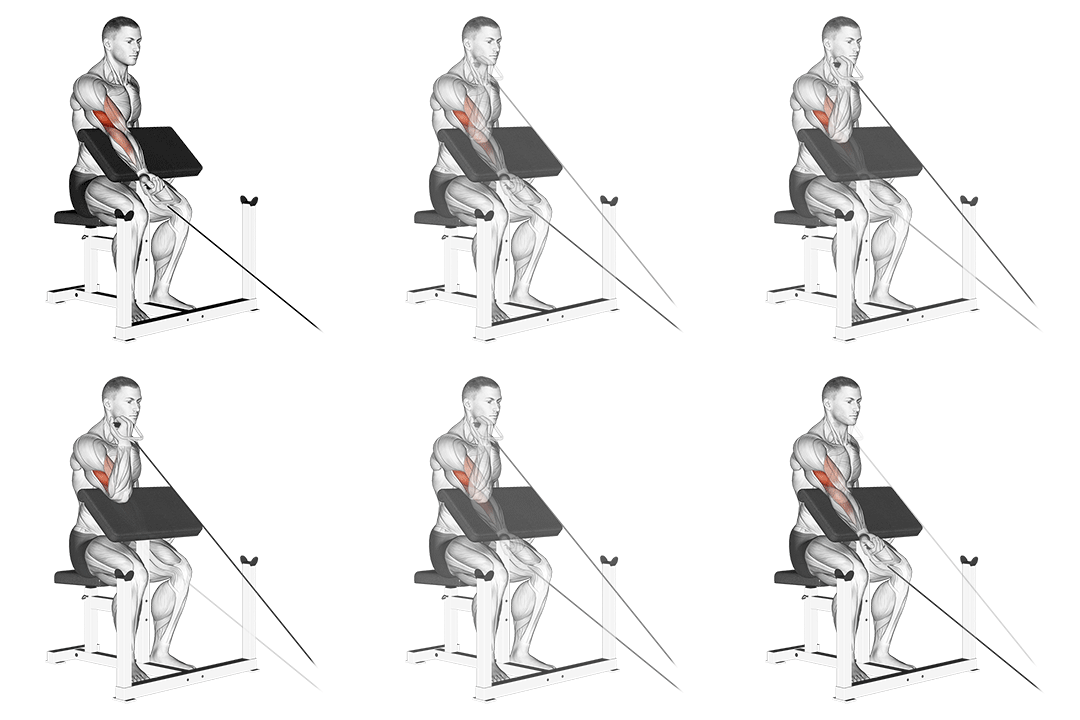
8. Cable One Arm Preacher Curl
89% match- Biceps
- Cable
- Beginner
- Isolation
How to perform this exercise
- Adjust the cable machine so that the preacher curl pad is at chest height.
- Stand facing the cable machine with your feet shoulder-width apart.
- Grasp the cable handle with an underhand grip and position your upper arm against the preacher curl pad.
- Keep your back straight and your core engaged.
- Slowly curl the cable handle towards your shoulder, keeping your upper arm against the pad.
- Pause for a moment at the top of the movement, squeezing your biceps.
- Slowly lower the cable handle back to the starting position.
- Repeat for the desired number of repetitions.
- Switch arms and repeat the exercise.
Sets and reps: 3 sets of 10 to 15 reps on each side.
Why this matches
- Movement: curl, the same as the Biceps Leg Concentration Curl
- Primary muscle: biceps, the same as the Biceps Leg Concentration Curl
- Equipment: a cable, not bodyweight only
- Body position: seated, the same as the Biceps Leg Concentration Curl
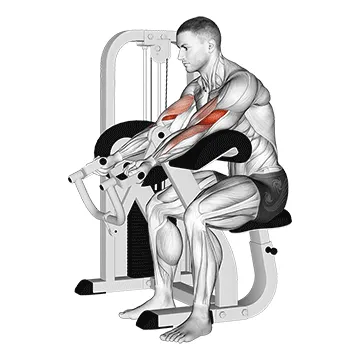
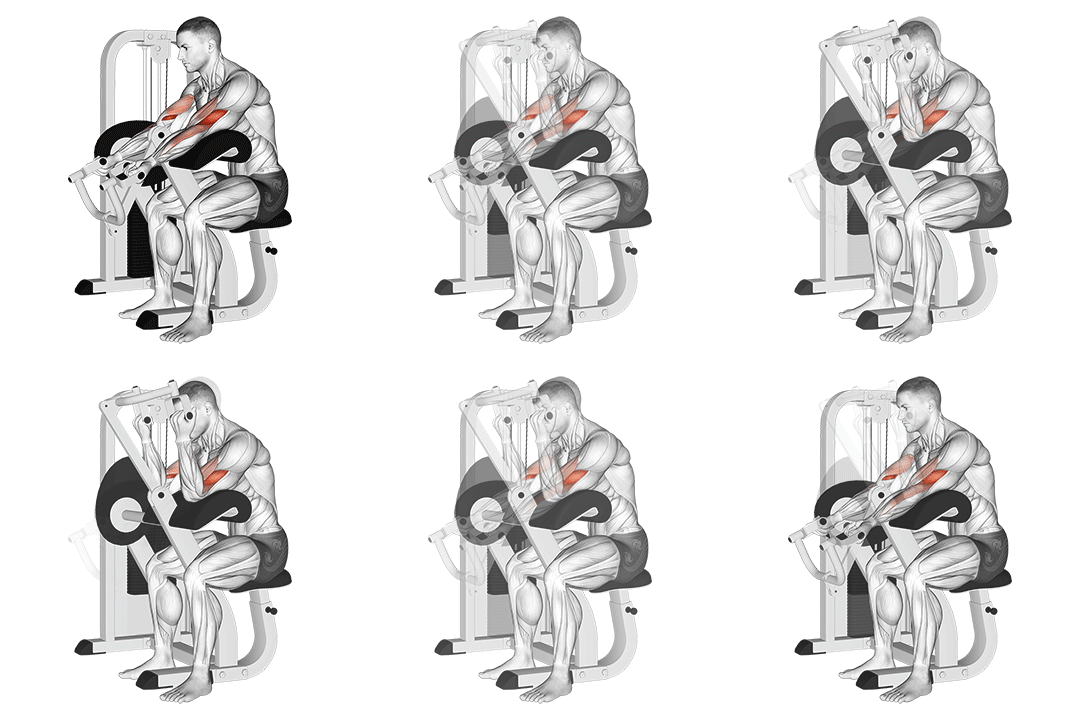
9. Lever Preacher Curl
89% match- Biceps
- Lever
- Beginner
- Isolation
How to perform this exercise
- Adjust the seat height and position yourself on the machine with your upper arms resting on the pad and your chest against the support.
- Grasp the handles with an underhand grip, slightly wider than shoulder-width apart.
- Keep your upper arms stationary and exhale as you curl the handles towards your shoulders, contracting your biceps.
- Pause for a moment at the top of the movement, squeezing your biceps.
- Inhale as you slowly lower the handles back to the starting position, fully extending your arms.
- Repeat for the desired number of repetitions.
Sets and reps: 3 sets of 10 to 15 reps on each side.
Why this matches
- Movement: curl, the same as the Biceps Leg Concentration Curl
- Primary muscle: biceps, the same as the Biceps Leg Concentration Curl
- Equipment: a machine, not bodyweight only
- Body position: seated, the same as the Biceps Leg Concentration Curl
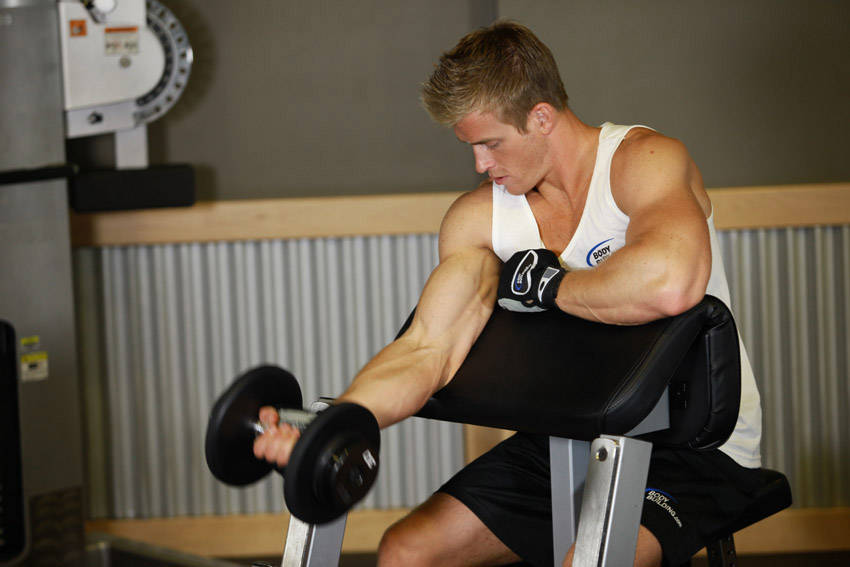
10. One Arm Dumbbell Preacher Curl
89% match- Biceps
- Dumbbell
- Beginner
- Isolation
How to perform this exercise
- Grab a dumbbell with the right arm and place the upper arm on top of the preacher bench or the incline bench. The dumbbell should be held at shoulder length. This will be your starting position.
- As you breathe in, slowly lower the dumbbell until your upper arm is extended and the biceps is fully stretched.
- As you exhale, use the biceps to curl the weight up until your biceps is fully contracted and the dumbbell is at shoulder height. Again, remember that to ensure full contraction you need to bring that small finger higher than the thumb.
- Squeeze the biceps hard for a second at the contracted position and repeat for the recommended amount of repetitions.
- Switch arms and repeat the movement.
Sets and reps: 3 sets of 10 to 15 reps on each side.
Why this matches
- Movement: curl, the same as the Biceps Leg Concentration Curl
- Primary muscle: biceps, the same as the Biceps Leg Concentration Curl
- Equipment: free weights, not bodyweight only
- Body position: seated, the same as the Biceps Leg Concentration Curl
Why You Might Need a Biceps Leg Concentration Curl Alternative
You may substitute the Biceps Leg Concentration Curl for several practical reasons: pain or elbow irritation, no access to a leg brace or specific setup, or a desire for greater load progression. A common cue when switching is to anchor the elbow against your thigh or bench and fully supinate the wrist to maintain peak biceps brachii activation. Substitutes that emphasize a long eccentric and a fixed humerus preserve isolated elbow flexion and limit momentum. If you feel tendon discomfort with the original movement, choose versions that distribute load across the brachialis and forearm, for example, a neutral-grip curl reduces biceps tendon strain while still recruiting elbow flexors.
How to Choose the Right Biceps Leg Concentration Curl Substitute
Match the substitute to the limitation you face. If you lack equipment, use a resistance-band one-arm curl and cue a paused peak contraction to replicate time under tension and biceps brachii activation. If you want more load progression, pick incline or seated dumbbell variations to increase range of motion and long-head recruitment. For tendon issues, favor neutral or hammer-grip movements to shift emphasis toward the brachialis. Always check that your upper arm stays stationary and that elbow flexion, not shoulder swing, produces movement, this maintains isolation and optimal biceps biomechanics.
Biceps Leg Concentration Curl FAQ
What muscles does Biceps Leg Concentration Curl work?
The exercise primarily targets the biceps brachii, emphasizing elbow flexion and forearm supination. It also recruits the brachialis and to a lesser extent the brachioradialis during stiff-elbow curls, while the fixed upper-arm position limits shoulder involvement.
Can I build muscle without doing Biceps Leg Concentration Curl?
Yes, you can build biceps size and strength using other isolation and compound options that emphasize elbow flexion and supination. Progressive overload via heavier loads, increased reps, or longer eccentrics in substitutes like incline curls or resistance-band curls will produce similar hypertrophy when performed with proper technique.
Find Alternatives for Any Exercise
Search the exercise database and filter the ranked substitutes by the equipment you own.
Similarity scores compare exercise metadata such as movement pattern, muscles, equipment and body position. They are not a safety rating or a check that you own the equipment. Learn about our methodology