

10 Best Cable Lateral Raise Alternatives for No-Cable Workouts
If you can't do the cable lateral raise, use dumbbell lateral raises, resistance-band laterals, leaning dumbbell laterals, single-arm low-pulley laterals, or landmine lateral raises. Focus on pure shoulder abduction to recruit the lateral deltoid: lead with a slightly bent elbow, raise to shoulder height, and pause to maximize lateral head tension.
Original Exercise: Cable Lateral Raise
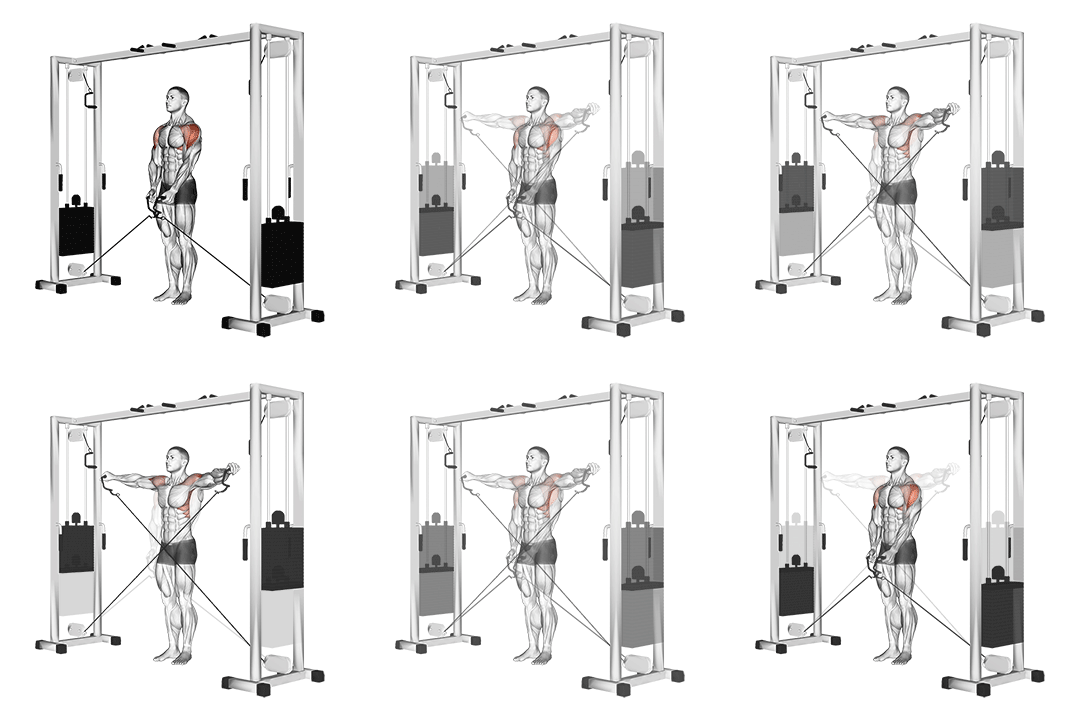
How to Perform Cable Lateral Raise
- Stand with your feet shoulder-width apart and grasp the cable handles with an overhand grip.
- Keep your arms straight and your core engaged.
- Raise your arms out to the sides until they are parallel to the floor.
- Pause for a moment at the top, then slowly lower your arms back down to the starting position.
- Repeat for the desired number of repetitions.
Best Cable Lateral Raise Alternatives
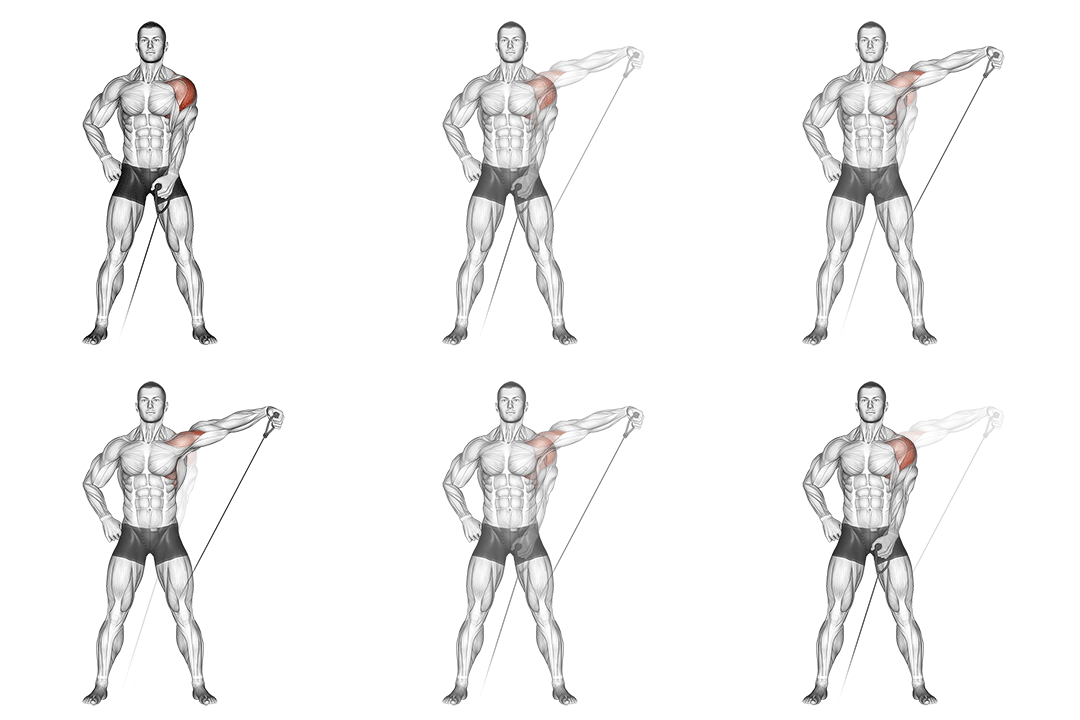
1. Cable One Arm Lateral Raise
85.1% MatchHow to perform this exercise
- Stand with your feet shoulder-width apart, facing the cable machine.
- Hold the cable handle with one hand, palm facing down, and stand far enough away from the machine so that there is tension on the cable.
- Keep your arm straight and slowly raise it out to the side until it is parallel to the ground.
- Pause for a moment at the top, then slowly lower your arm back down to the starting position.
- Repeat for the desired number of repetitions, then switch sides.
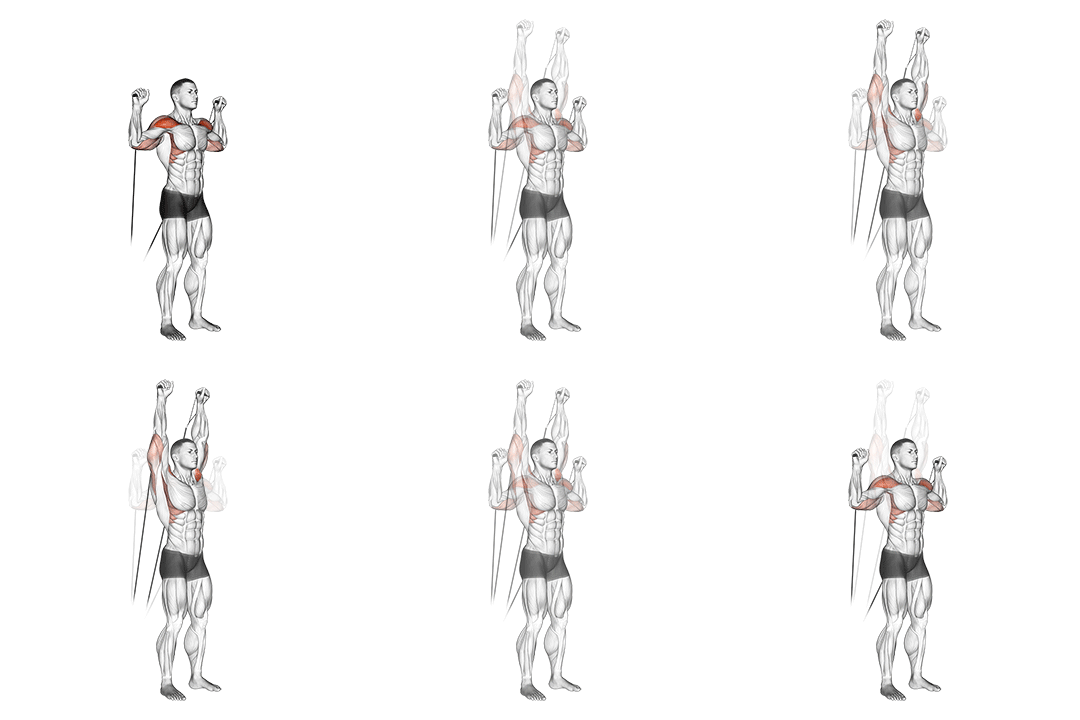
2. Cable Shoulder Press
79.7% MatchHow to perform this exercise
- Adjust the cable machine so that the handles are at shoulder height.
- Stand facing away from the machine with your feet shoulder-width apart.
- Grasp the handles with an overhand grip and bring them up to shoulder level, with your elbows bent and pointing outwards.
- Press the handles upwards until your arms are fully extended overhead.
- Pause for a moment at the top, then slowly lower the handles back down to shoulder level.
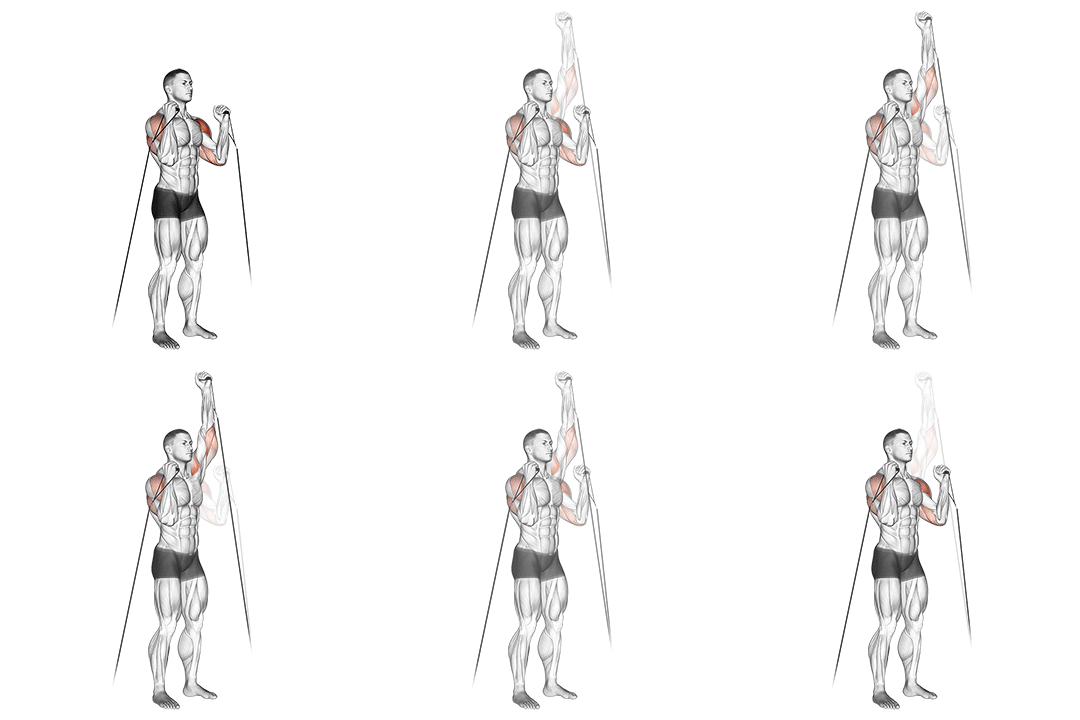
3. Cable Alternate Shoulder Press
75.1% MatchHow to perform this exercise
- Stand with your feet shoulder-width apart and grasp the handles of the cable machine with an overhand grip.
- Position your hands at shoulder height, with your palms facing forward.
- Keep your core engaged and your back straight.
- Press one handle up and forward until your arm is fully extended.
- Pause for a moment at the top, then slowly lower the handle back to the starting position.
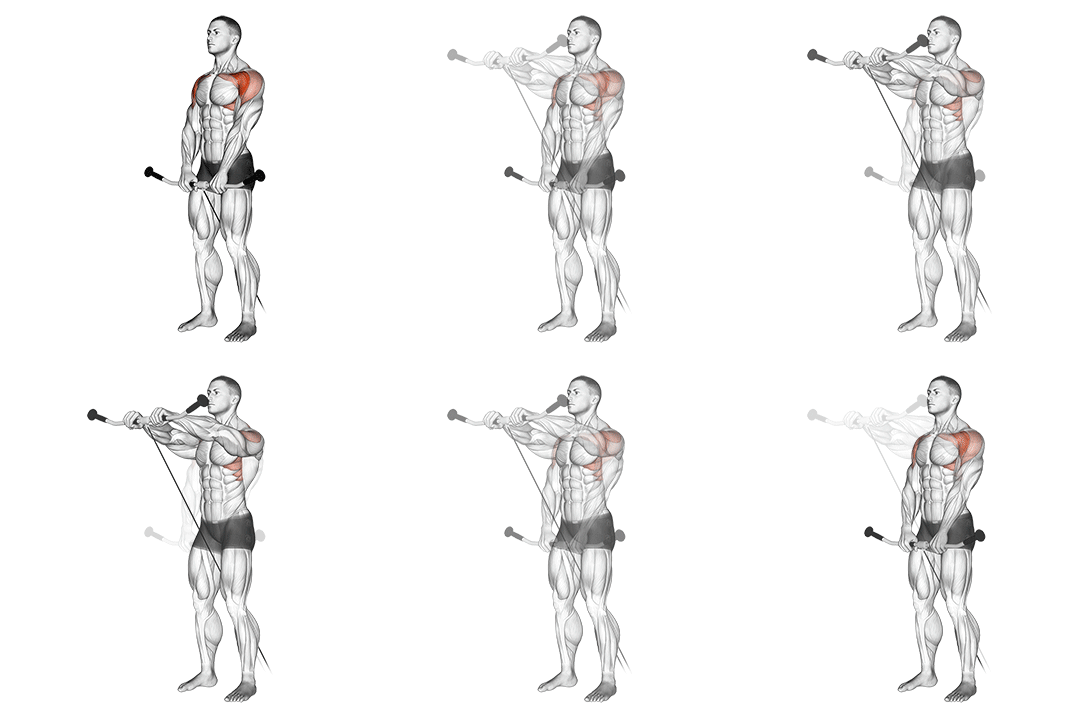
4. Cable Front Raise
71.4% MatchHow to perform this exercise
- Stand with your feet shoulder-width apart and grasp the cable handle with an overhand grip.
- Keep your back straight and your core engaged.
- Raise the cable handle in front of you, keeping your arms straight and your palms facing down.
- Continue lifting until your arms are parallel to the floor.
- Pause for a moment at the top, then slowly lower the cable handle back to the starting position.
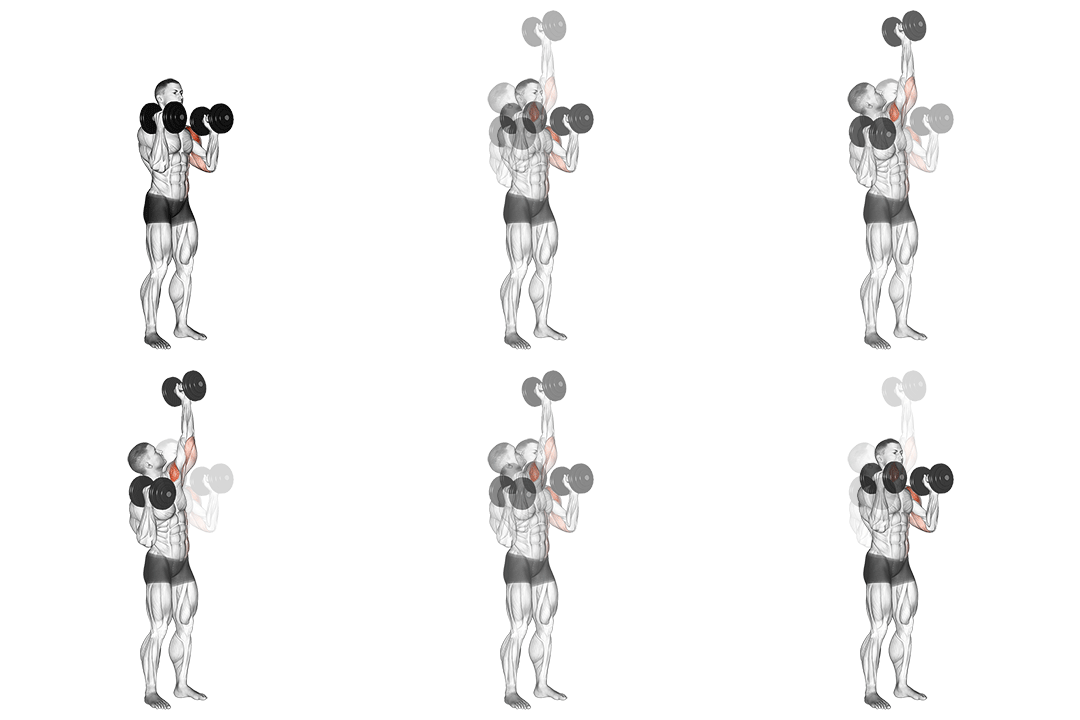
5. Dumbbell Alternate Side Press
71.4% MatchHow to perform this exercise
- Stand with your feet shoulder-width apart, holding a dumbbell in each hand at shoulder height.
- Press one dumbbell overhead while keeping the other dumbbell at shoulder height.
- Lower the pressed dumbbell back to shoulder height while pressing the other dumbbell overhead.
- Continue alternating sides for the desired number of repetitions.
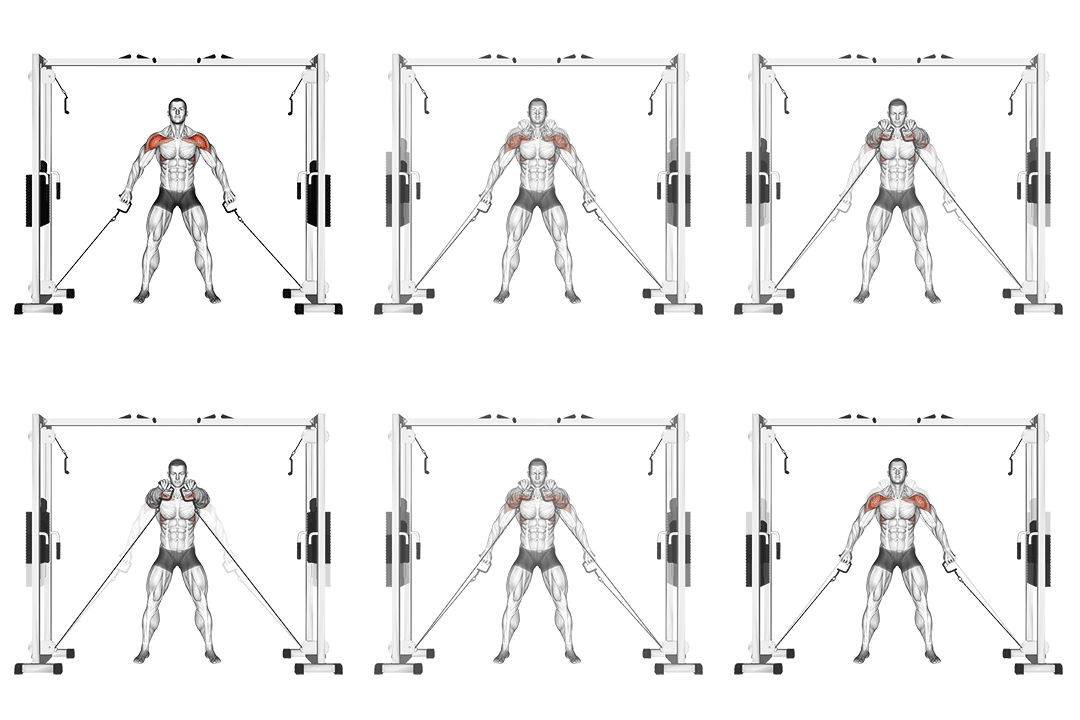
6. Cable Front Shoulder Raise
71.4% MatchHow to perform this exercise
- Stand with your feet shoulder-width apart and grasp the cable handle with an overhand grip.
- Keep your back straight and your core engaged.
- Raise the cable handle in front of you, keeping your arms straight and your palms facing down.
- Continue lifting until your arms are parallel to the floor.
- Pause for a moment at the top, then slowly lower the cable handle back to the starting position.
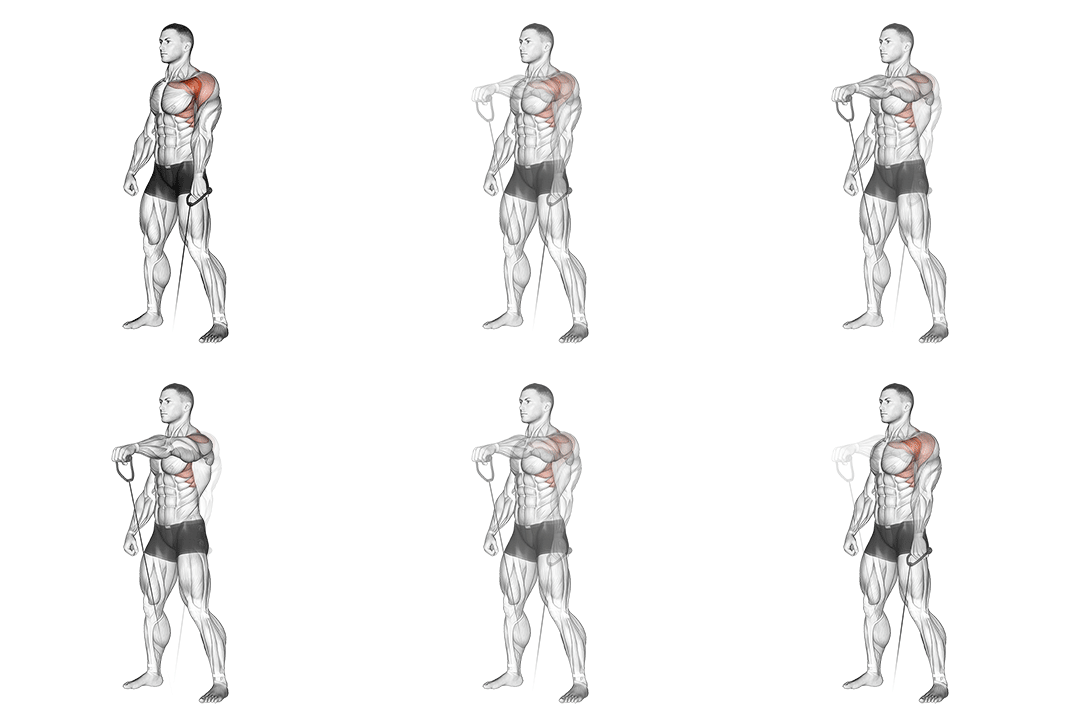
7. Cable Forward Raise
71.4% MatchHow to perform this exercise
- Stand with your feet shoulder-width apart and your knees slightly bent.
- Hold the cable handle with an overhand grip, palms facing down, and your arms fully extended in front of you.
- Keeping your arms straight, raise the cable handle up to shoulder level.
- Pause for a moment at the top, then slowly lower the cable handle back down to the starting position.
- Repeat for the desired number of repetitions.
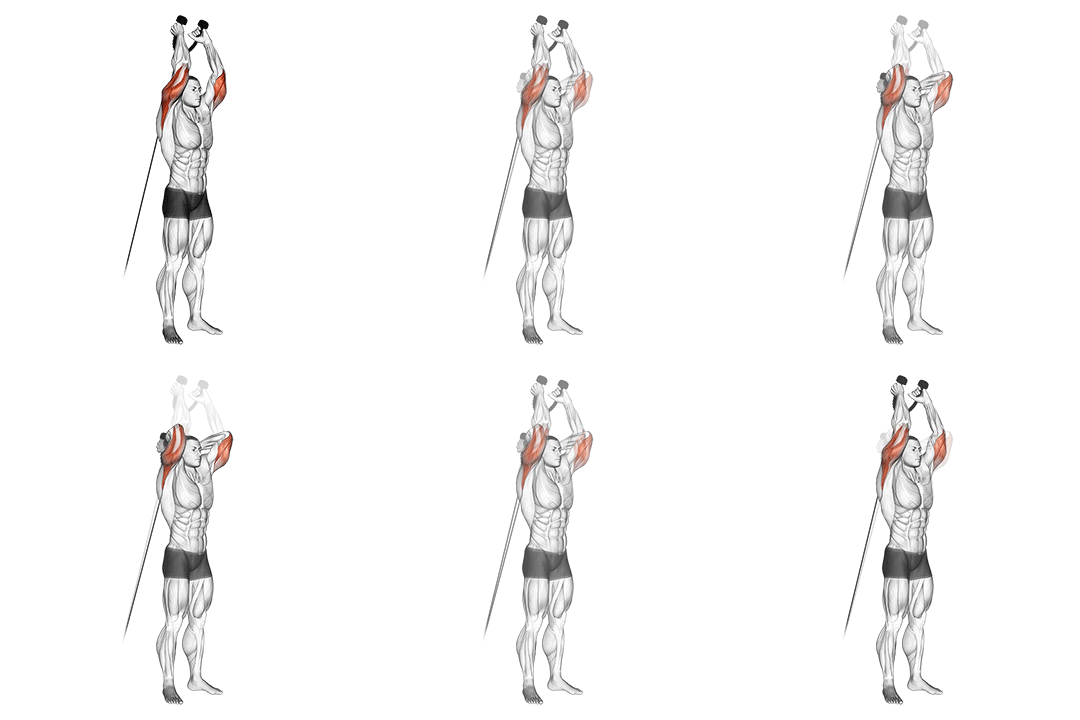
8. Cable Overhead Triceps Extension (rope Attachment)
70.7% MatchHow to perform this exercise
- Attach a rope to a cable machine at a high position.
- Stand facing away from the machine with your feet shoulder-width apart.
- Grasp the rope with both hands, palms facing each other, and bring your hands above your head.
- Keep your upper arms close to your head and your elbows pointing forward.
- Slowly lower the rope behind your head by bending your elbows.
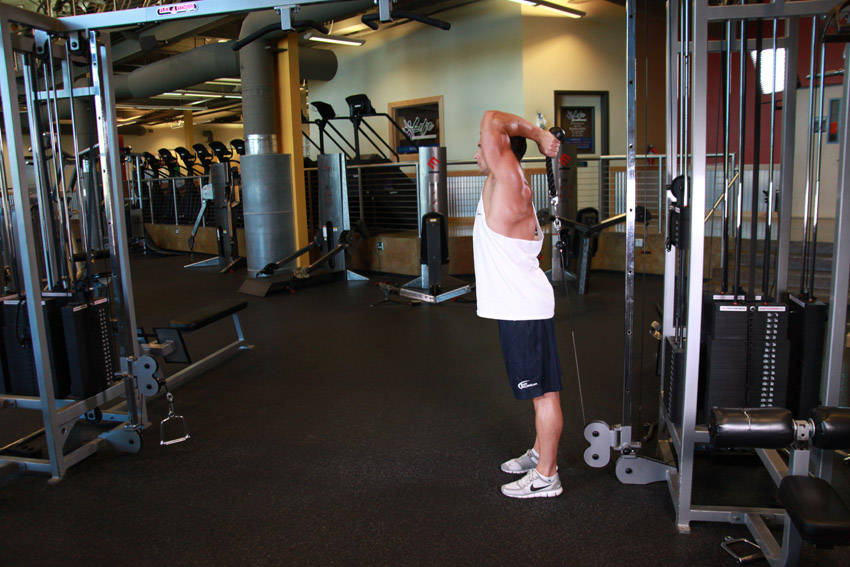
9. Cable Rope Overhead Triceps Extension
70.4% MatchHow to perform this exercise
- Attach a rope to the bottom pulley of the pulley machine.
- Grasping the rope with both hands, extend your arms with your hands directly above your head using a neutral grip (palms facing each other). Your elbows should be in close to your head and the arms should be perpendicular to the floor with the knuckles aimed at the ceiling. This will be your starting position.
- Slowly lower the rope behind your head as you hold the upper arms stationary. Inhale as you perform this movement and pause when your triceps are fully stretched.
- Return to the starting position by flexing your triceps as you breathe out.
- Repeat for the recommended amount of repetitions.
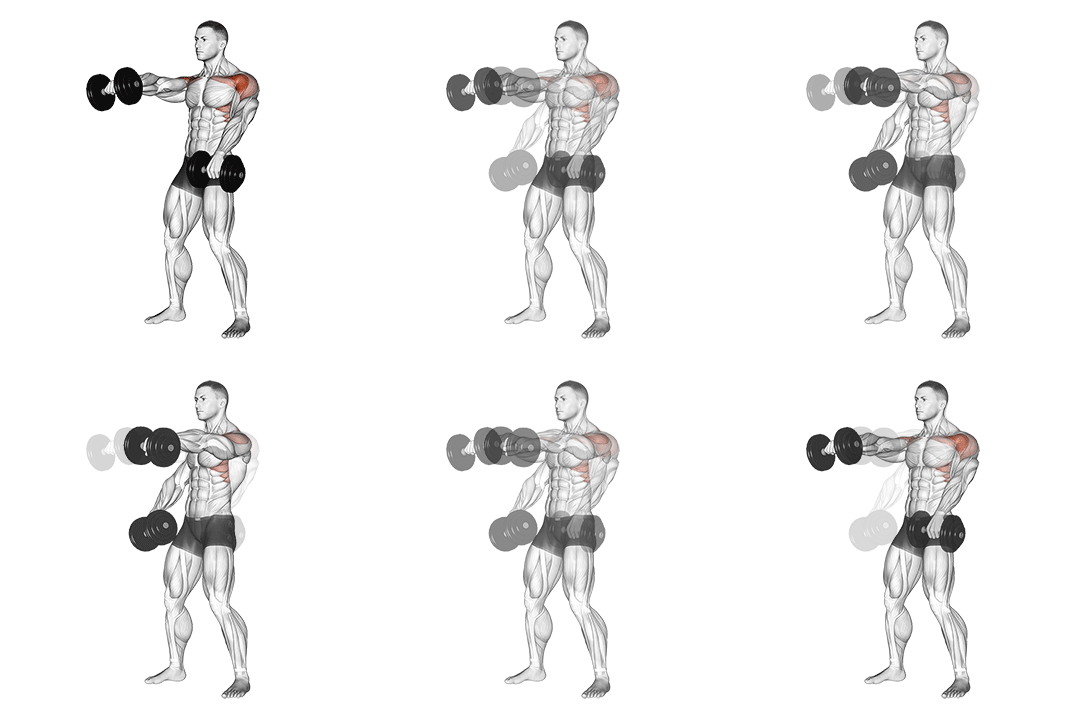
10. Dumbbell Standing Alternate Raise
68.8% MatchHow to perform this exercise
- Stand with your feet shoulder-width apart, holding a dumbbell in each hand with your palms facing your body.
- Keep your back straight and your core engaged.
- Raise one dumbbell to the side, keeping your arm straight and your palm facing down.
- Continue lifting until your arm is parallel to the ground.
- Pause for a moment at the top, then slowly lower the dumbbell back to the starting position.
Why You Might Need a Cable Lateral Raise Alternative
You may need substitutes because a cable station is unavailable, you feel shoulder pain with that line of pull, or you want a different loading curve for hypertrophy. Cables provide constant lateral tension; bands increase tension toward the top and dumbbells give a constant gravitational load. If impingement occurs, pick a leaning or neutral-grip variation and keep the scapula stable to reduce superior humeral translation. For rehab or unilateral work, choose low-load, high-rep band laterals and emphasize slow eccentric control to preserve deltoid activation without joint irritation.
How to Choose the Right Substitute
Select an alternative based on equipment, pain history, and training goal. For strict lateral isolation choose dumbbell lateral raises and lead with the elbow, keeping a 10–20° elbow bend to emphasize the lateral head. Use resistance bands if you want ascending tension and less joint compression; anchor the band low and pull with a steady tempo. For better scapular control and reduced impingement pick leaning lateral raises—torso angled away shifts the line of pull and increases lateral deltoid isolation. Prioritize exercises that let you control ROM, maintain scapular stability, and progressively overload the lateral deltoid.
Frequently Asked Questions
What muscles does Cable Lateral Raise work?
The cable lateral raise primarily targets the lateral (middle) deltoid via shoulder abduction. It also engages the supraspinatus and the upper trapezius for stabilization; keep the scapula depressed and avoid shrugging to isolate the lateral head.
What is the best bodyweight alternative to Cable Lateral Raise?
Bodyweight options are limited; the side-lying lateral raise is the closest isolated option—lie on your side and abduct the top arm to shoulder height, leading with the elbow. Use slow eccentrics and a pause at 90° to increase time under tension and compensate for lower external load.
Can I build muscle without doing Cable Lateral Raise?
Yes. You can stimulate the lateral deltoid with dumbbell lateral raises, band laterals, leaning variations, and compound presses that recruit the delts. Focus on progressive overload, strict form (lead with the elbow, limit trunk sway), and varying loading patterns to ensure consistent lateral head activation.
More Exercise Alternatives
Find Alternatives for Any Exercise
Use our free tool to discover the best substitute exercises based on your available equipment and goals.
Try the Exercise Substitution Finder →