

10 Best Cable Palm Rotational Row Alternatives for Limited Equipment
If you can’t perform the Cable Palm Rotational Row, use horizontal-pull or unilateral row variations that preserve the rotational end-range and scapular retraction. Options include single-arm dumbbell rows with rotation, ring or inverted rows with a supinating finish, and landmine or chest-supported rows. Cue: lead with the elbow and finish with a palm rotation while squeezing the mid-back.
Original Exercise: Cable Palm Rotational Row
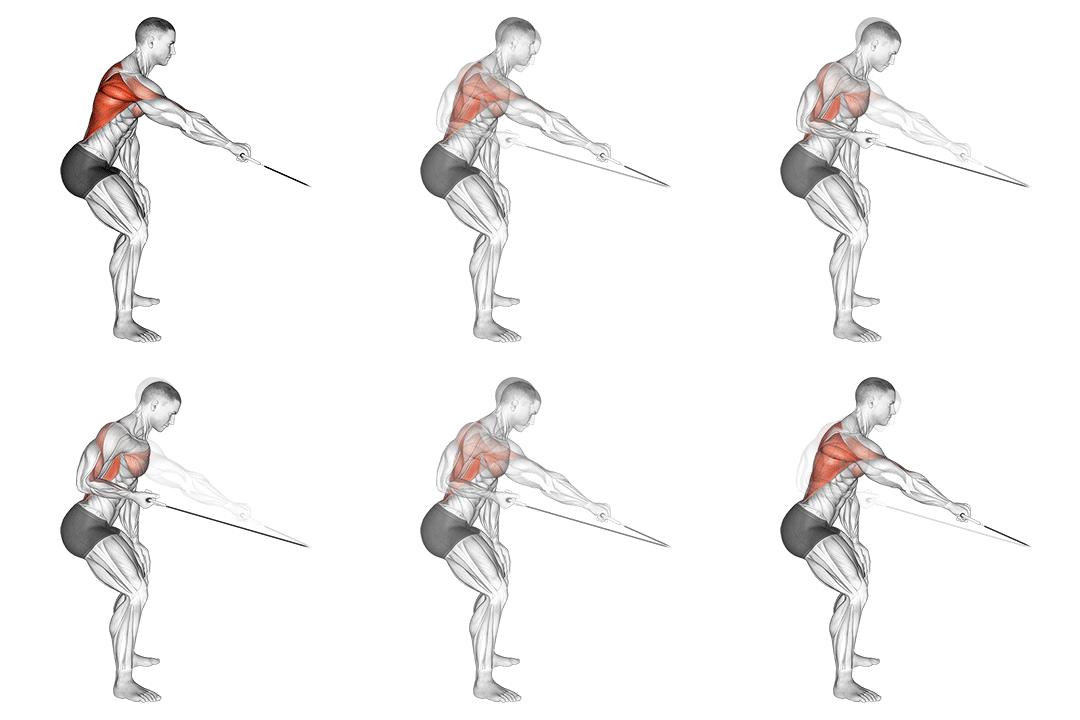
How to Perform Cable Palm Rotational Row
- Attach a handle to a cable machine at waist height.
- Stand facing the machine with your feet shoulder-width apart.
- Grasp the handle with an overhand grip, palms facing down.
- Step back to create tension on the cable, keeping your back straight and knees slightly bent.
- Pull the handle towards your body, rotating your palms to face upwards as you do so.
- Squeeze your shoulder blades together at the end of the movement.
- Slowly release the handle back to the starting position.
- Repeat for the desired number of repetitions.
Best Cable Palm Rotational Row Alternatives
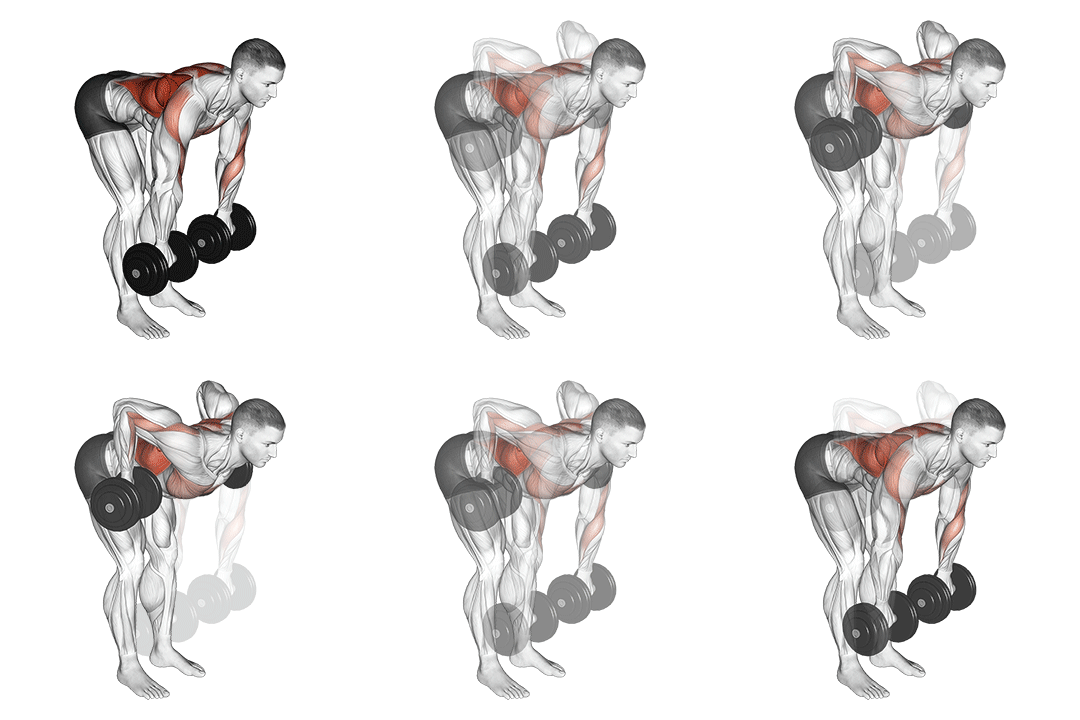
1. Dumbbell Palm Rotational Bent Over Row
84.2% MatchHow to perform this exercise
- Stand with your feet shoulder-width apart, holding a dumbbell in each hand with an overhand grip.
- Bend forward at the hips, keeping your back straight and your knees slightly bent.
- Let your arms hang straight down, palms facing your body.
- Engage your core and pull the dumbbells up towards your chest, keeping your elbows close to your body.
- As you pull the dumbbells up, rotate your palms so they face away from your body.
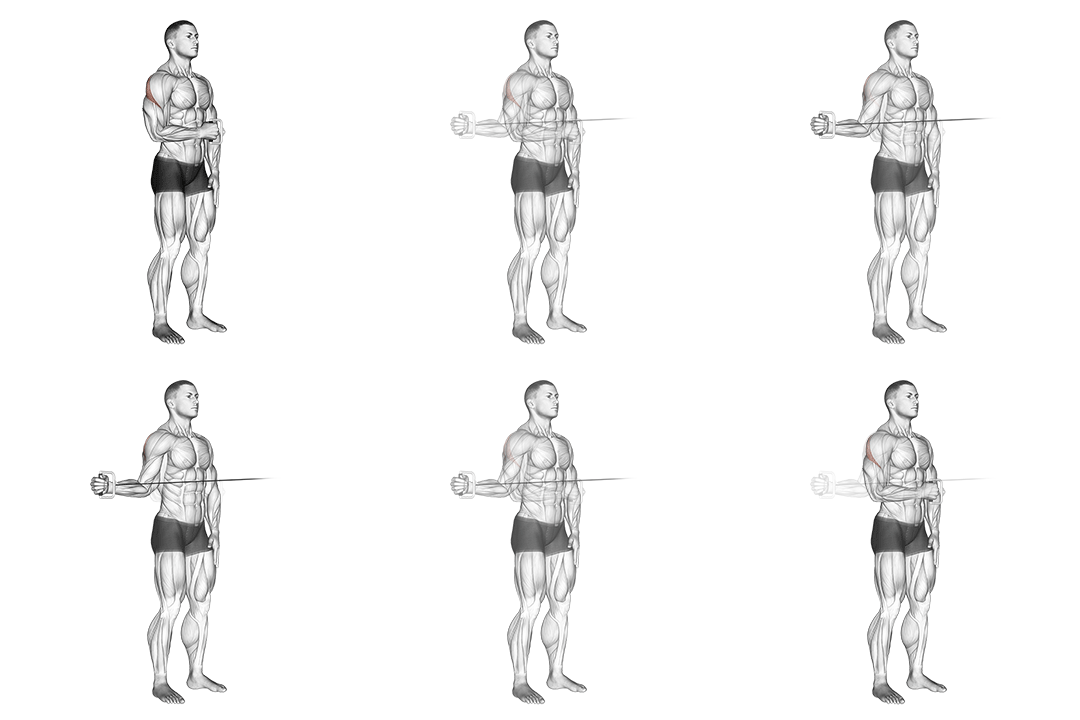
2. Cable Standing Shoulder External Rotation
69.8% MatchHow to perform this exercise
- Stand with your feet shoulder-width apart and your knees slightly bent.
- Hold the cable handle with your arm extended in front of you, parallel to the ground.
- Keep your elbow slightly bent and your shoulder blades pulled back.
- Slowly rotate your arm outward, away from your body, while keeping your elbow in the same position.
- Pause for a moment at the end of the movement, then slowly return to the starting position.
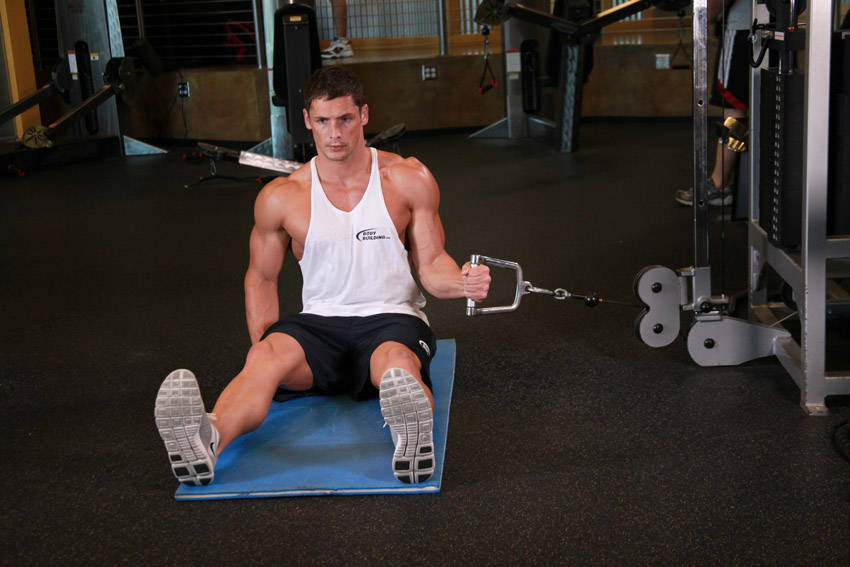
3. Cable Internal Rotation
69% MatchHow to perform this exercise
- Sit next to a low pulley sideways (with legs stretched in front of you or crossed) and grasp the single hand cable attachment with the arm nearest to the cable. Tip: If you can adjust the pulley's height, you can use a flat bench to sit on instead.
- Position the elbow against your side with the elbow bent at 90° and the arm pointing towards the pulley. This will be your starting position.
- Pull the single hand cable attachment toward your body by internally rotating your shoulder until your forearm is across your abs. You will be creating an imaginary semi-circle. Tip: The forearm should be perpendicular to your torso at all times.
- Slowly go back to the initial position.
- Repeat for the recommended amount of repetitions and then repeat the movement with the next arm.
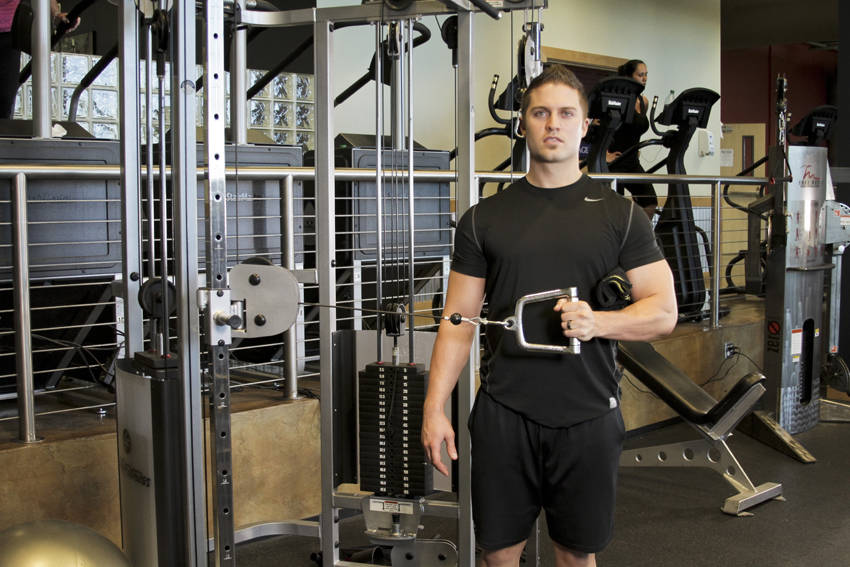
4. External Rotation With Cable
69% MatchHow to perform this exercise
- Adjust the cable to the same height as your elbow. Stand with your left side to the band a couple of feet away.
- Grasp the handle with your right hand, and keep your elbow pressed firmly to your side. We recommend you hold a pad or foam roll in place with your elbow to keep it firmly in position.
- With your upper arm in position, your elbow should be flexed to 90 degrees with your hand reaching across the front of your torso. This will be your starting position.
- Execute the movement by rotating your arm in a backhand motion, keeping your elbow in place.
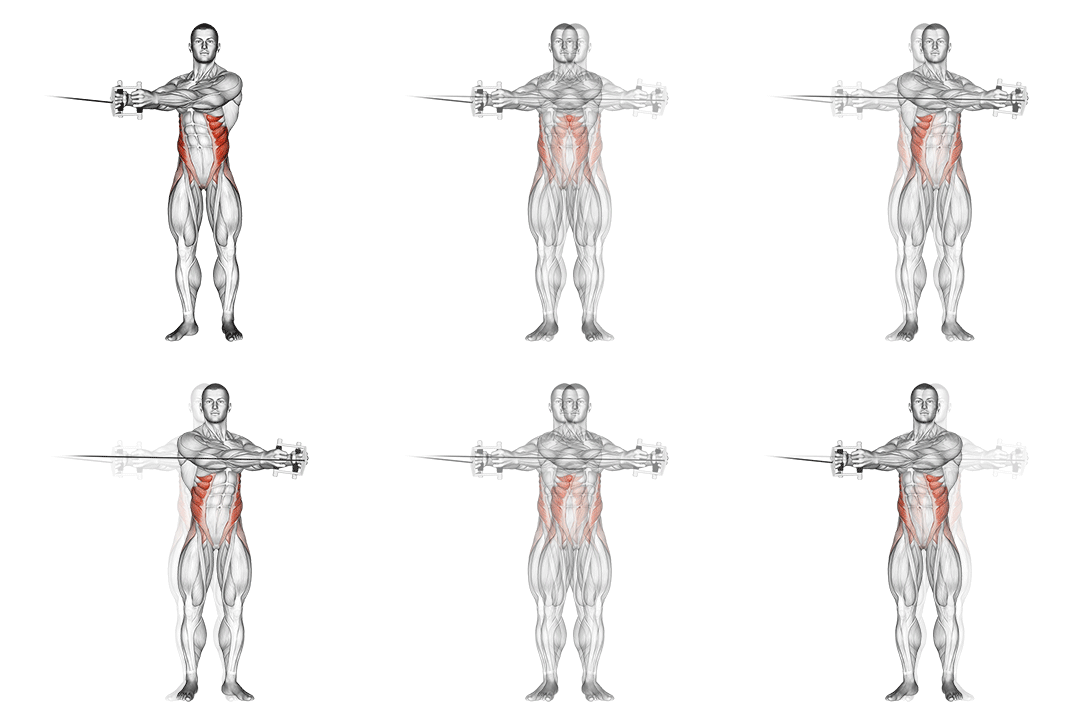
5. Cable Twist
66.3% MatchHow to perform this exercise
- Stand with your feet shoulder-width apart, facing the cable machine.
- Hold the cable handle with both hands in front of your chest, keeping your arms slightly bent.
- Engage your core and twist your torso to the right, pulling the cable across your body.
- Pause for a moment at the end of the movement, feeling the contraction in your abs and obliques.
- Slowly return to the starting position, resisting the cable's pull.
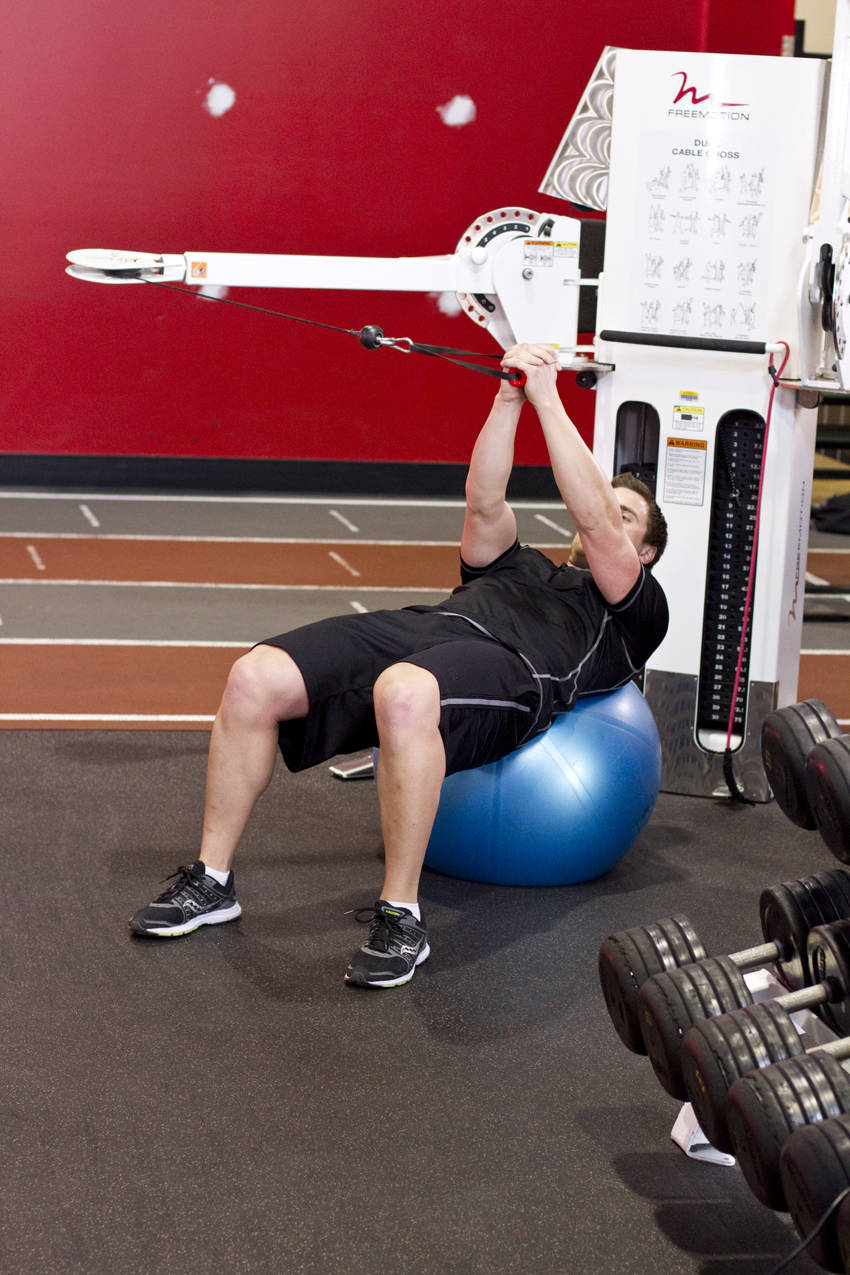
6. Cable Russian Twists
66.3% MatchHow to perform this exercise
- Connect a standard handle attachment, and position the cable to a middle pulley position.
- Lie on a stability ball perpendicular to the cable and grab the handle with one hand. You should be approximately arm's length away from the pulley, with the tension of the weight on the cable.
- Grab the handle with both hands and fully extend your arms above your chest. You hands should be directly in-line with the pulley. If not, adjust the pulley up or down until they are.
- Keep your hips elevated and abs engaged. Rotate your torso away from the pulley for a full-quarter rotation. Your body should be flat from head to knees.
- Pause for a moment and in a slow and controlled manner reset to the starting position. You should still have side tension on the cable in the resting position.
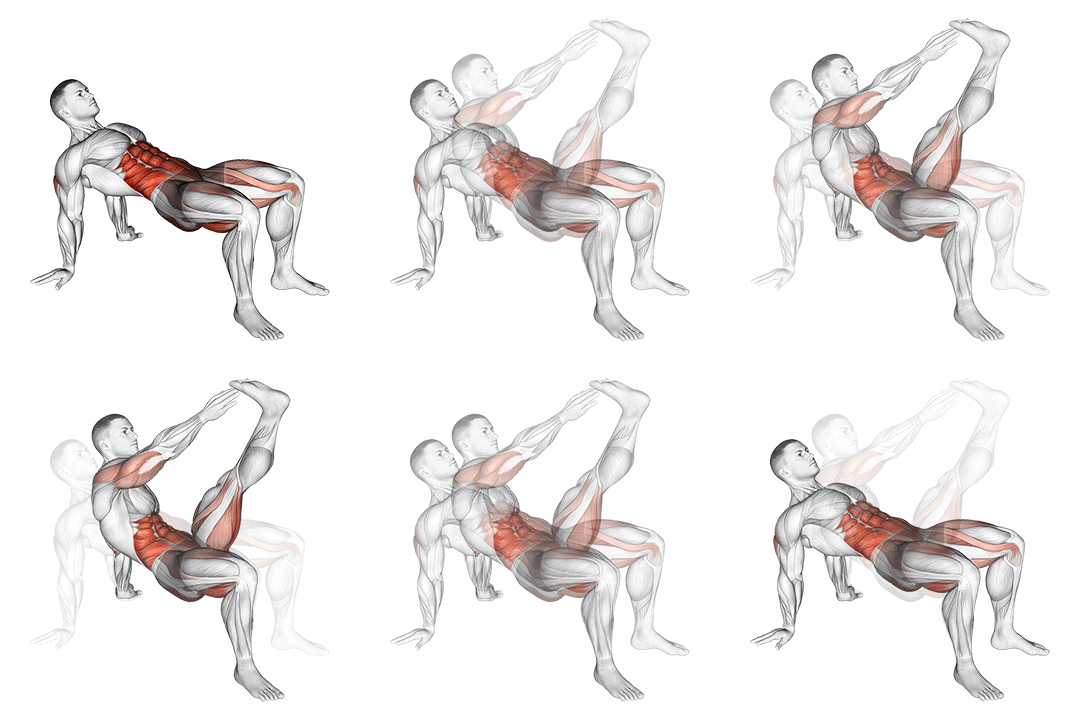
7. Crab Twist Toe Touch
66.2% MatchHow to perform this exercise
- Start by sitting on the ground with your knees bent and feet flat on the floor.
- Place your hands behind you, fingers pointing towards your feet, and lift your hips off the ground.
- Extend one leg straight out in front of you while simultaneously reaching your opposite hand towards your toes.
- Return to the starting position and repeat on the other side.
- Continue alternating sides for the desired number of repetitions.
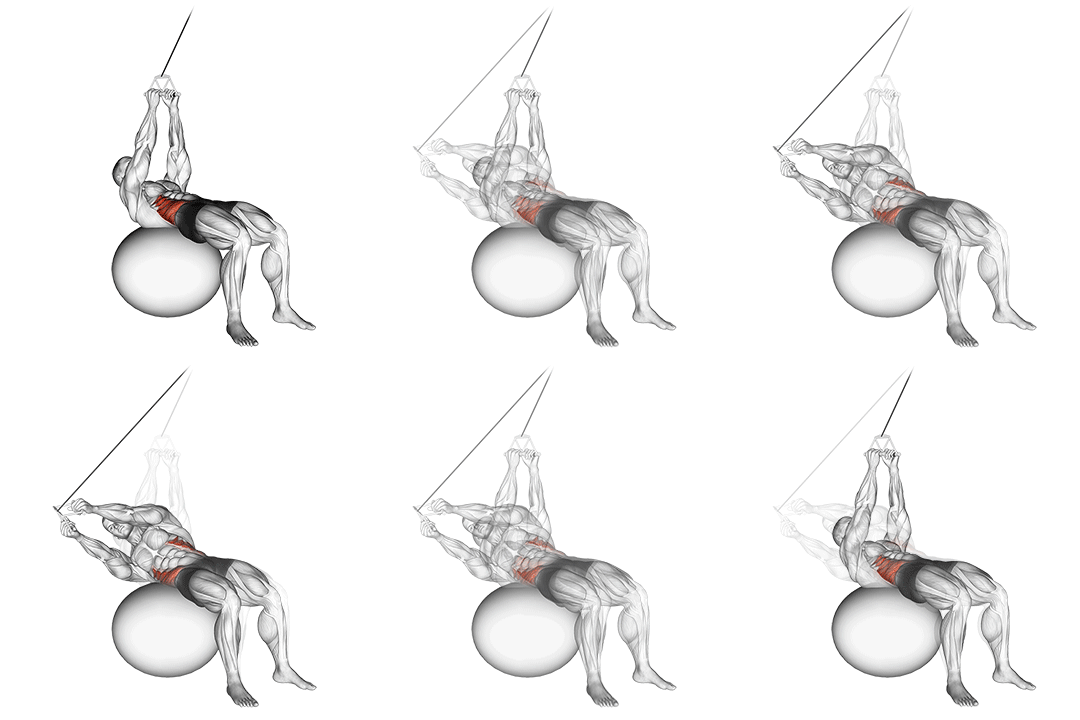
8. Cable Russian Twists (on Stability Ball)
65.9% MatchHow to perform this exercise
- Sit on a stability ball with your feet flat on the ground and your knees bent at a 90-degree angle.
- Hold the cable handle with both hands and extend your arms straight out in front of you.
- Lean back slightly while keeping your back straight and your core engaged.
- Twist your torso to the right, bringing the cable handle towards your right hip.
- Pause for a moment, then twist your torso to the left, bringing the cable handle towards your left hip.
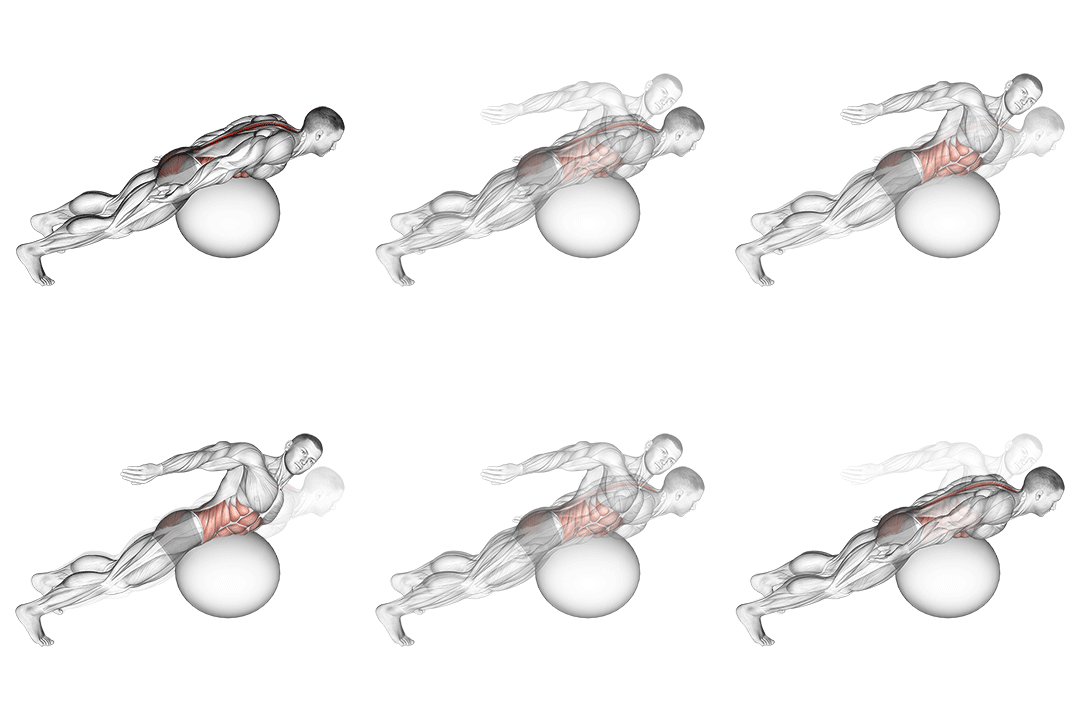
9. Exercise Ball Back Extension With Rotation
65.4% MatchHow to perform this exercise
- Start by lying face down on the stability ball with your hips resting on the ball and your feet firmly planted on the ground.
- Place your hands behind your head or cross them over your chest.
- Engage your core and slowly lift your upper body off the ball, extending your back until your body forms a straight line from your head to your heels.
- Pause for a moment at the top, then slowly rotate your torso to one side, keeping your hips and legs stable.
- Return to the center and repeat the rotation to the other side.
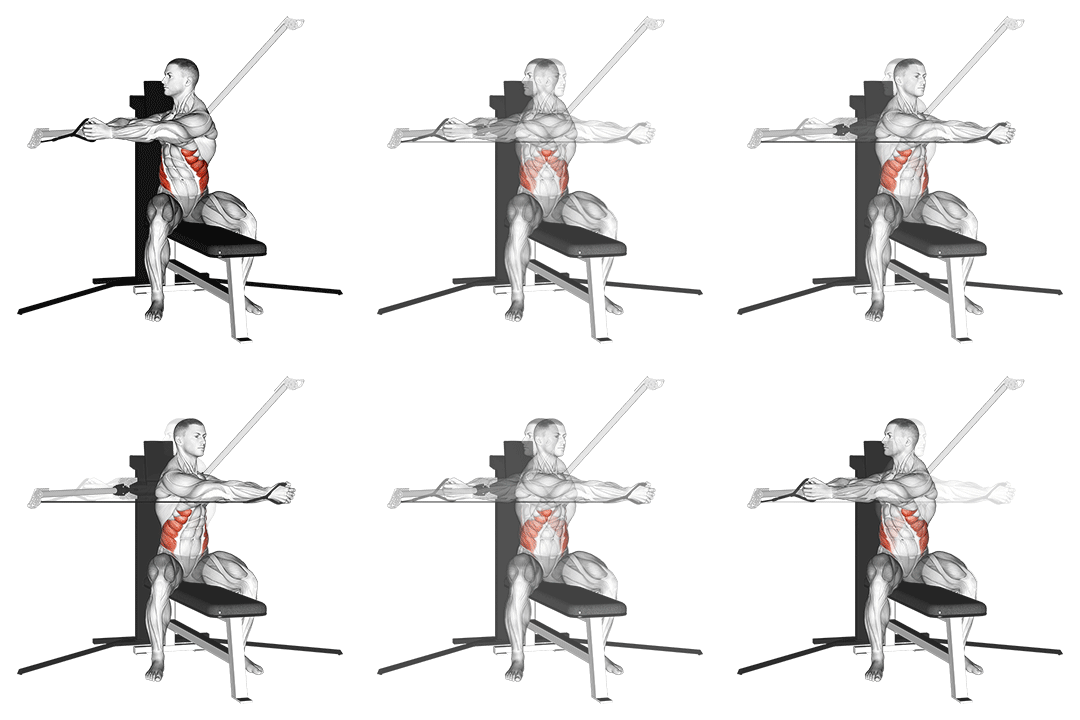
10. Cable Seated Twist
64.6% MatchHow to perform this exercise
- Sit on a cable machine with your feet flat on the ground and your knees slightly bent.
- Hold the cable handle with both hands and extend your arms straight in front of you.
- Keeping your core engaged, slowly rotate your torso to one side, pulling the cable across your body.
- Pause for a moment at the end of the range of motion, then slowly rotate back to the starting position.
- Repeat on the other side.
Why You Might Need a Cable Palm Rotational Row Alternative
You may swap the Cable Palm Rotational Row for several reasons: no cable station, shoulder pain with loaded rotation, or a programming need for unilateral control. Substitutes let you match key mechanics—horizontal pulling, thoracic rotation, and scapular retraction—while changing load path, grip, or body angle. For shoulder-friendly options choose chest-supported rows to reduce spinal shear and emphasize rhomboid activation; for rotational carryover pick single-arm rows that let you supinate the wrist at lockout to recruit posterior deltoid and teres minor. Technique cue: maintain a neutral spine, lead with the elbow, and end each rep with a deliberate scapular squeeze.
How to Choose the Right Substitute
Select a substitute by matching the original exercise’s primary demands: horizontal pull force, rotational finish, and scapular control. If your goal is hypertrophy of the upper back, prioritize options that allow progressive loading and full contraction (e.g., dumbbell or landmine rows). If joint tolerance is the limiter, use chest-supported or ring rows to reduce lumbar load and promote scapular retraction. For unilateral stability work, pick single-arm variations to expose asymmetries and train core anti-rotation. Technique cue: choose movements where you can ‘lead with the elbow, rotate the palm to supination at the top, and hold a 1–2 second peak contraction’ to replicate the Cable Palm Rotational Row’s biomechanics.
Frequently Asked Questions
What muscles does Cable Palm Rotational Row work?
The exercise targets the mid and upper back—rhomboids, middle trapezius, posterior deltoid—with secondary loading of the lats and rotator cuff (teres minor). Cue to maximize those muscles: pull with the elbow, retract the scapula, and rotate the palm at lockout to increase posterior deltoid and rotator cuff engagement.
What is the best bodyweight alternative to Cable Palm Rotational Row?
A supine ring row or single-arm inverted row with a rotational finish is the best bodyweight option. Set the rings low, pull the elbow back, and rotate the palm to face you at the top while squeezing the mid-back to mimic the rotational pull pattern.
Can I build muscle without doing Cable Palm Rotational Row?
Yes. You can build upper-back muscle with matched movement patterns like bent-over dumbbell rows, chest-supported rows, landmine rows, or weighted pull-ups. Focus on progressive overload, controlled eccentrics, and full scapular retraction—cue: lead with the elbow and hold the peak contraction for 1–2 seconds—to ensure equivalent muscle stimulation.
More Exercise Alternatives
Find Alternatives for Any Exercise
Use our free tool to discover the best substitute exercises based on your available equipment and goals.
Try the Exercise Substitution Finder →