

10 Best Cable Squat Row (rope) Alternatives for Limited Equipment
If you can't perform the Cable Squat Row with a rope, choose movements that preserve the hip-hinge plus horizontal-pull pattern and emphasize lat-driven humeral extension. Strong options: barbell bent-over row (knees soft, chest up), single-arm dumbbell row (hips square), seated V-bar row, inverted row, and wide-grip lat pulldown.
Original Exercise: Cable Squat Row (with Rope Attachment)
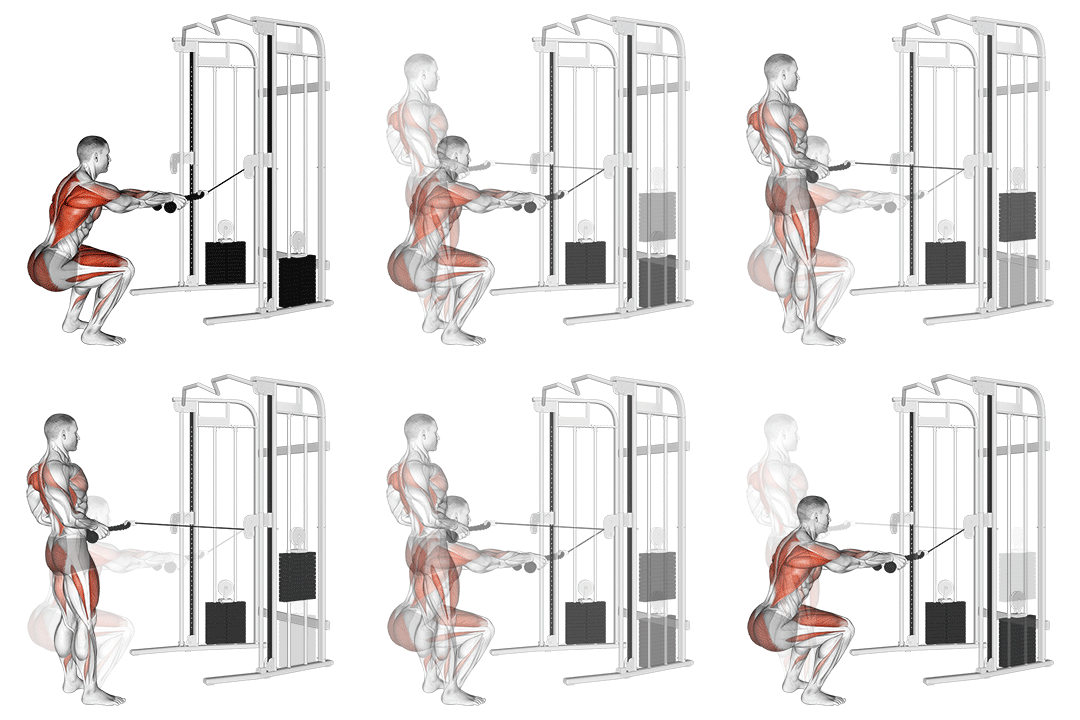
How to Perform Cable Squat Row (with Rope Attachment)
- Attach a rope to a cable machine at waist height.
- Stand facing the cable machine with your feet shoulder-width apart.
- Bend your knees and lower your body into a squat position, keeping your back straight and chest up.
- Grasp the rope with an overhand grip, with your hands shoulder-width apart.
- Engage your core and pull the rope towards your body, squeezing your shoulder blades together.
- Keep your elbows close to your body and continue pulling until your hands reach your chest.
- Pause for a moment at the top of the movement, then slowly release the rope and extend your arms back to the starting position.
- Repeat for the desired number of repetitions.
Best Cable Squat Row (with Rope Attachment) Alternatives
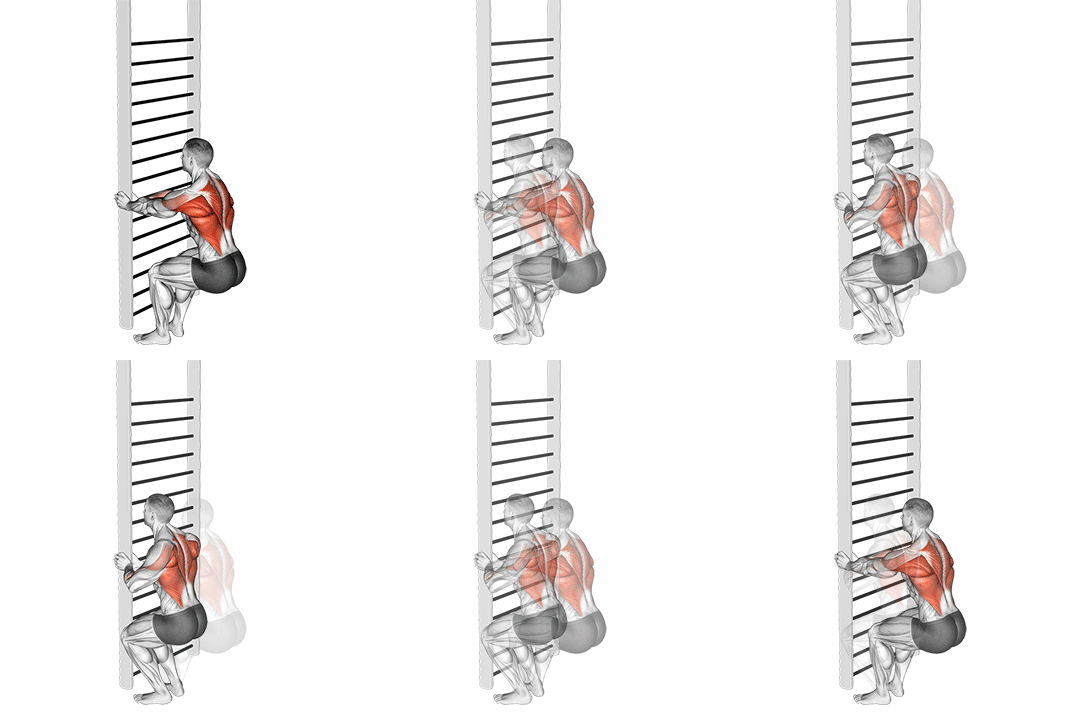
1. Bodyweight Squatting Row
85.2% MatchHow to perform this exercise
- Stand with your feet shoulder-width apart, holding onto a sturdy object or suspension trainer with your arms extended.
- Lower your body into a squat position, keeping your back straight and your knees behind your toes.
- From the squat position, pull your body up towards the object or suspension trainer, squeezing your shoulder blades together.
- Pause for a moment at the top, then slowly lower your body back down to the starting position.
- Repeat for the desired number of repetitions.
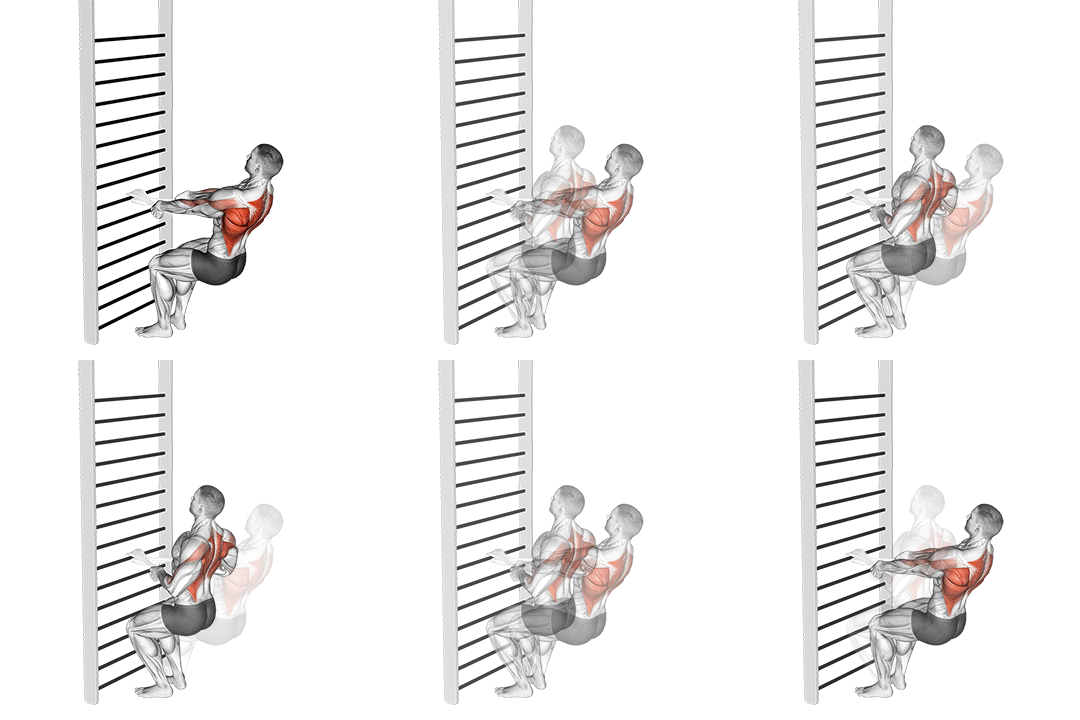
2. Bodyweight Squatting Row (with Towel)
83.1% MatchHow to perform this exercise
- Stand with your feet shoulder-width apart, holding a towel in front of you with your palms facing down.
- Bend your knees and lower your body into a squat position, keeping your back straight and your chest up.
- As you lower into the squat, simultaneously pull the towel towards your chest, squeezing your shoulder blades together.
- Pause for a moment at the bottom of the squat, then slowly return to the starting position while extending your arms.
- Repeat for the desired number of repetitions.
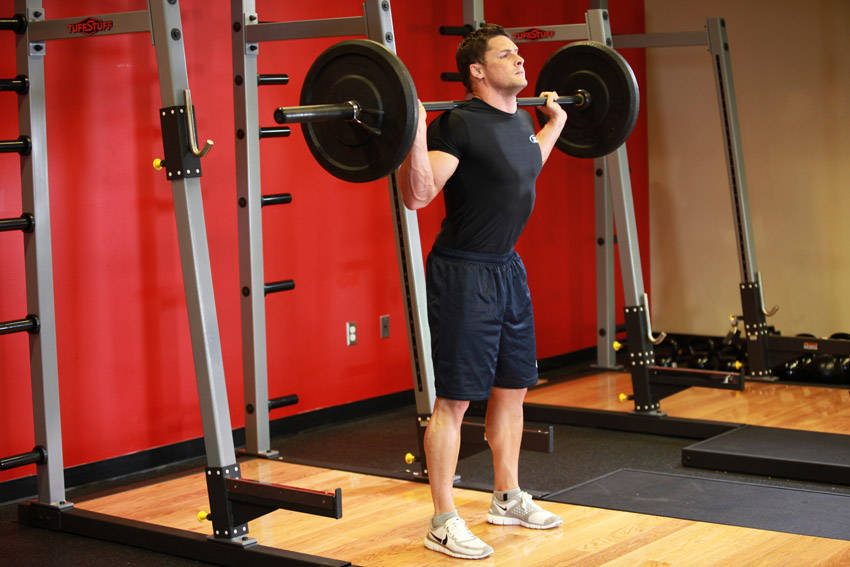
3. Barbell Squat
70.4% MatchHow to perform this exercise
- This exercise is best performed inside a squat rack for safety purposes. To begin, first set the bar on a rack to just below shoulder level. Once the correct height is chosen and the bar is loaded, step under the bar and place the back of your shoulders (slightly below the neck) across it.
- Hold on to the bar using both arms at each side and lift it off the rack by first pushing with your legs and at the same time straightening your torso.
- Step away from the rack and position your legs using a shoulder width medium stance with the toes slightly pointed out. Keep your head up at all times and also maintain a straight back. This will be your starting position. (Note: For the purposes of this discussion we will use the medium stance described above which targets overall development; however you can choose any of the three stances discussed in the foot stances section).
- Begin to slowly lower the bar by bending the knees and hips as you maintain a straight posture with the head up. Continue down until the angle between the upper leg and the calves becomes slightly less than 90-degrees. Inhale as you perform this portion of the movement. Tip: If you performed the exercise correctly, the front of the knees should make an imaginary straight line with the toes that is perpendicular to the front. If your knees are past that imaginary line (if they are past your toes) then you are placing undue stress on the knee and the exercise has been performed incorrectly.
- Begin to raise the bar as you exhale by pushing the floor with the heel of your foot as you straighten the legs again and go back to the starting position.
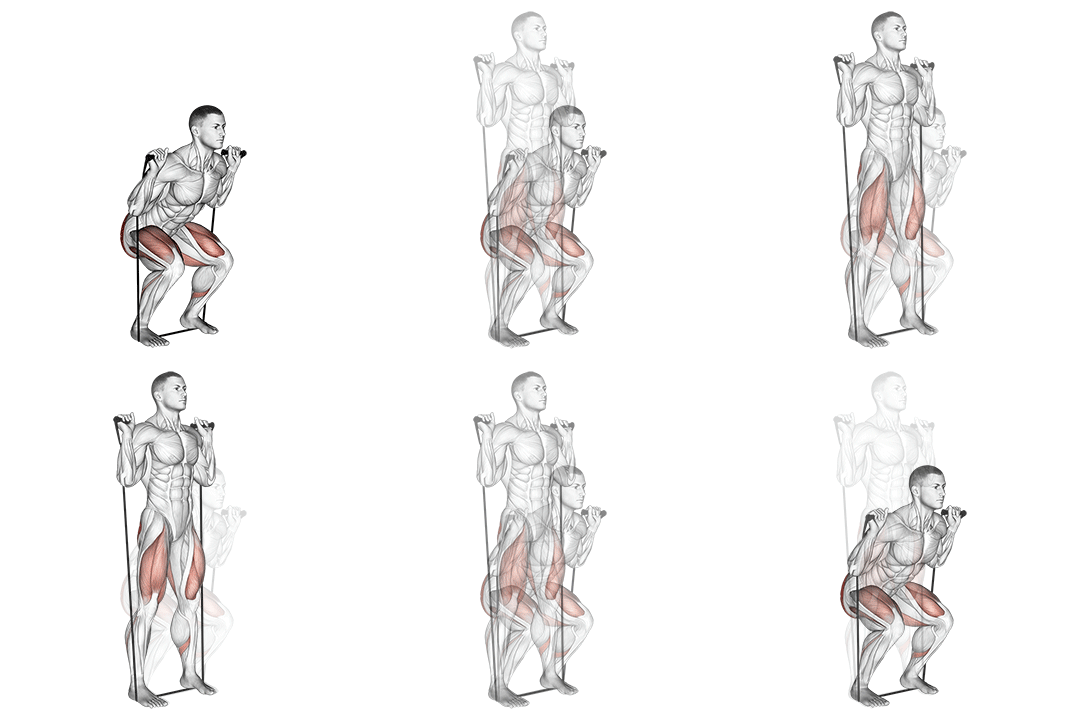
4. Band Squat
70.4% MatchHow to perform this exercise
- Stand with your feet shoulder-width apart, with the band placed just above your knees.
- Keeping your chest up and core engaged, push your hips back and bend your knees to lower into a squat position.
- Make sure your knees are tracking over your toes and your weight is in your heels.
- Pause for a moment at the bottom, then push through your heels to return to the starting position.
- Repeat for the desired number of repetitions.
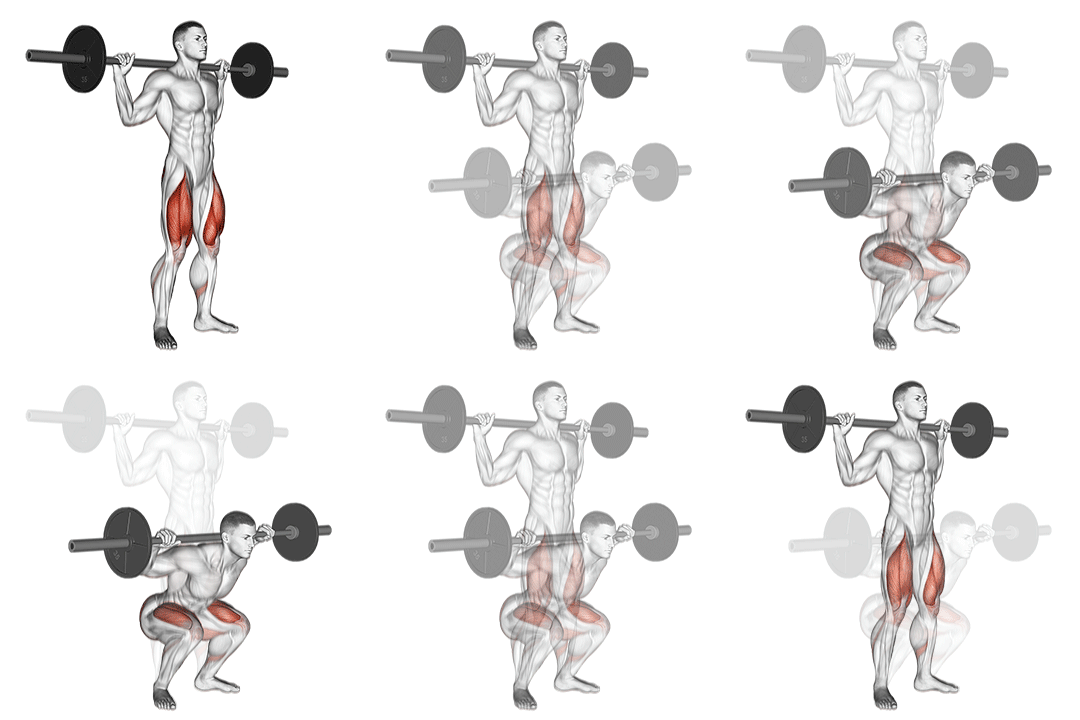
5. Barbell Speed Squat
70.4% MatchHow to perform this exercise
- Stand with your feet shoulder-width apart, toes slightly turned out.
- Hold the barbell across your upper back, resting it on your traps or rear delts.
- Engage your core and keep your chest up as you lower your hips back and down, as if sitting into a chair.
- Lower until your thighs are parallel to the ground, or as low as you can comfortably go.
- Drive through your heels to stand back up, squeezing your glutes at the top.
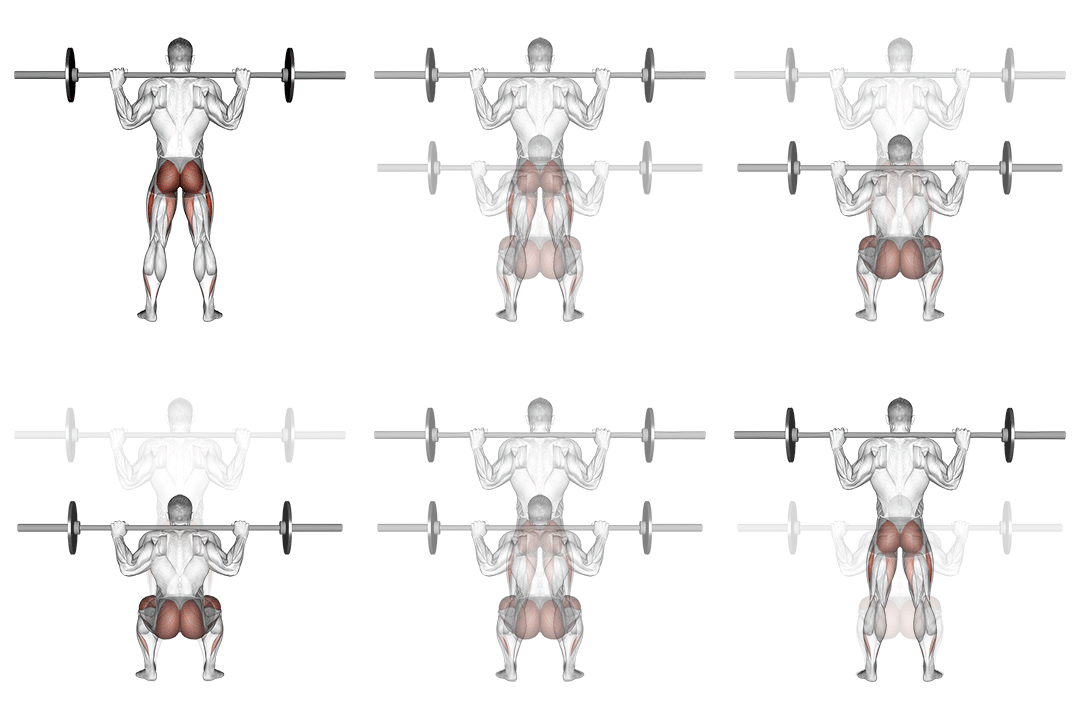
6. Barbell Full Squat (back Pov)
70.2% MatchHow to perform this exercise
- Stand with your feet shoulder-width apart, toes slightly turned out.
- Hold the barbell across your upper back, resting it on your traps or rear delts.
- Engage your core and keep your chest up as you begin to lower your body down.
- Bend at the knees and hips, pushing your hips back and down as if sitting into a chair.
- Lower your body until your thighs are parallel to the ground or slightly below.
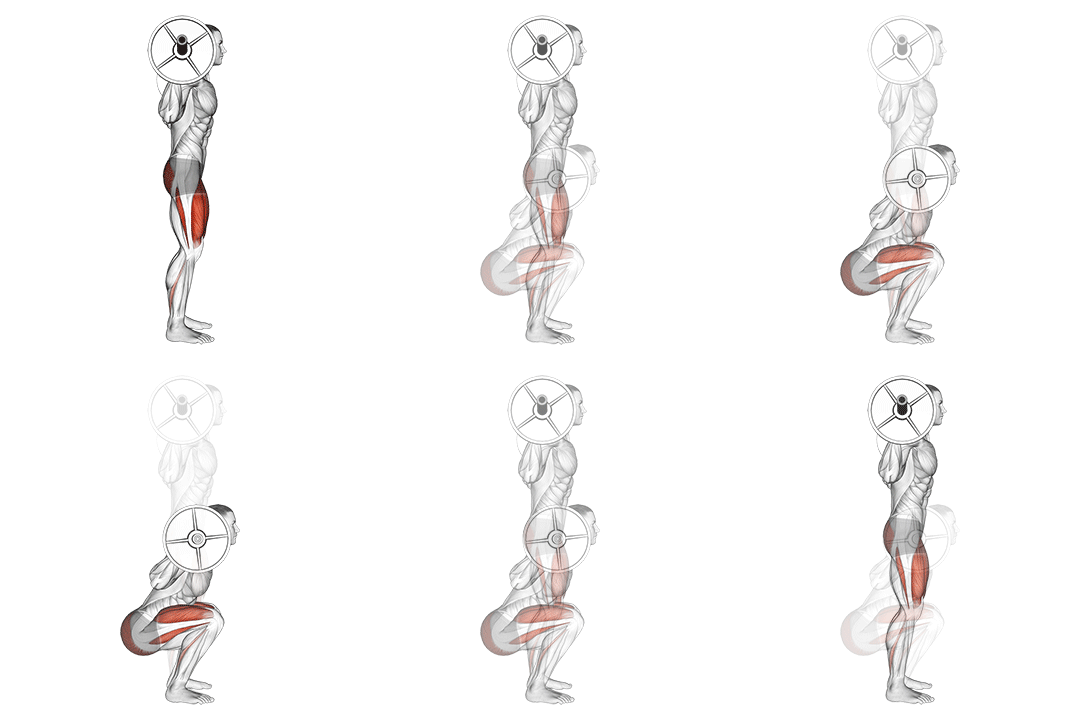
7. Barbell Full Squat (side Pov)
70.2% MatchHow to perform this exercise
- Stand with your feet shoulder-width apart, toes slightly turned out.
- Hold the barbell across your upper back, resting it on your traps or rear delts.
- Engage your core and keep your chest up as you begin to lower your body down.
- Bend at the knees and hips, pushing your hips back and down as if sitting into a chair.
- Lower your body until your thighs are parallel to the ground or slightly below.
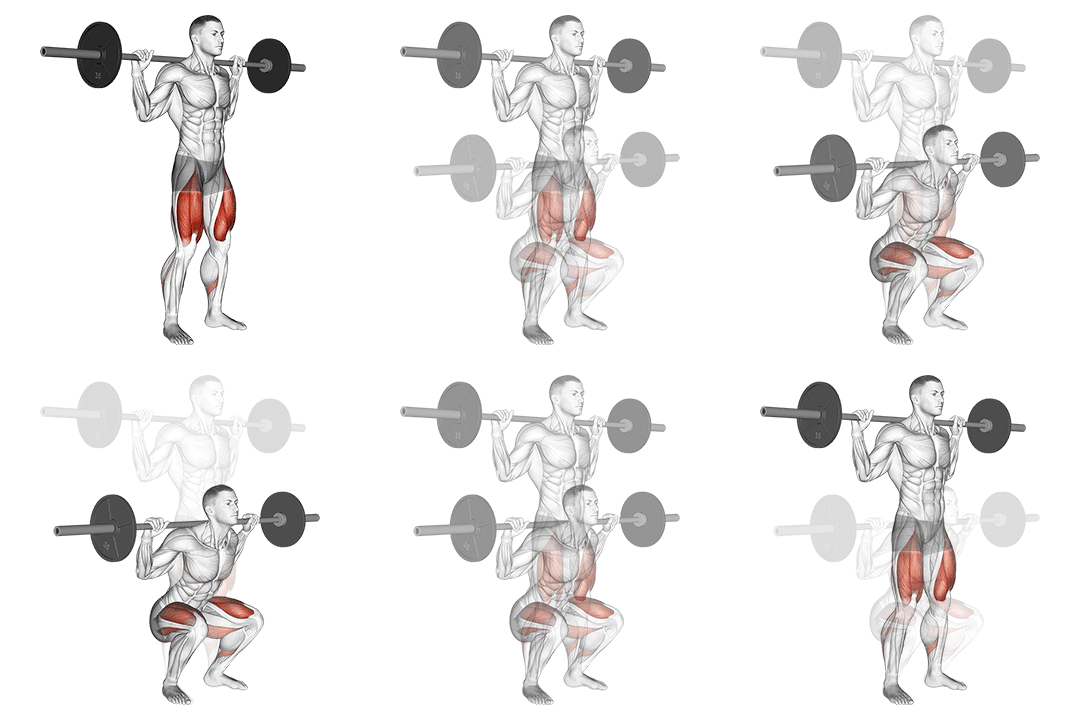
8. Barbell High Bar Squat
70.2% MatchHow to perform this exercise
- Stand with your feet shoulder-width apart, toes slightly turned out.
- Place the barbell on your upper back, resting it on your traps.
- Engage your core and keep your chest up as you begin to squat down, pushing your hips back and bending your knees.
- Lower yourself until your thighs are parallel to the ground, or as low as you can comfortably go.
- Drive through your heels to stand back up, extending your hips and knees.
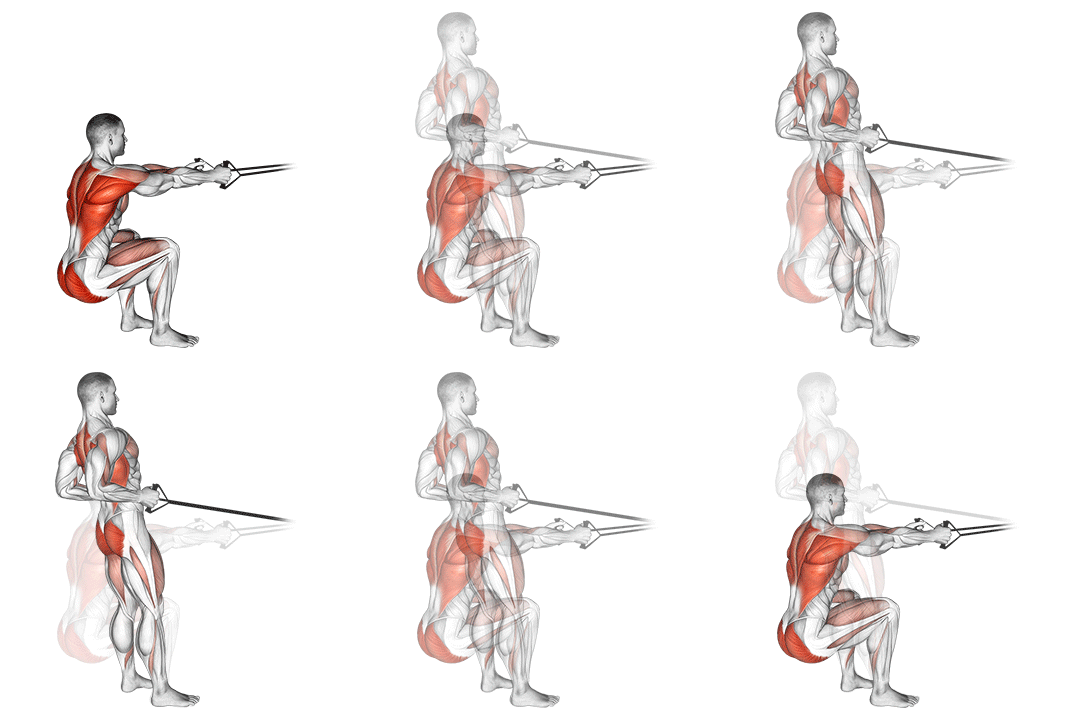
9. Band Squat Row
70.2% MatchHow to perform this exercise
- Attach the band to a sturdy anchor point at waist height.
- Stand facing the anchor point with your feet shoulder-width apart.
- Hold the band handles with your palms facing each other and your arms extended in front of you.
- Bend your knees and lower into a squat position, keeping your back straight and chest lifted.
- From the squat position, pull the band handles towards your body, squeezing your shoulder blades together.
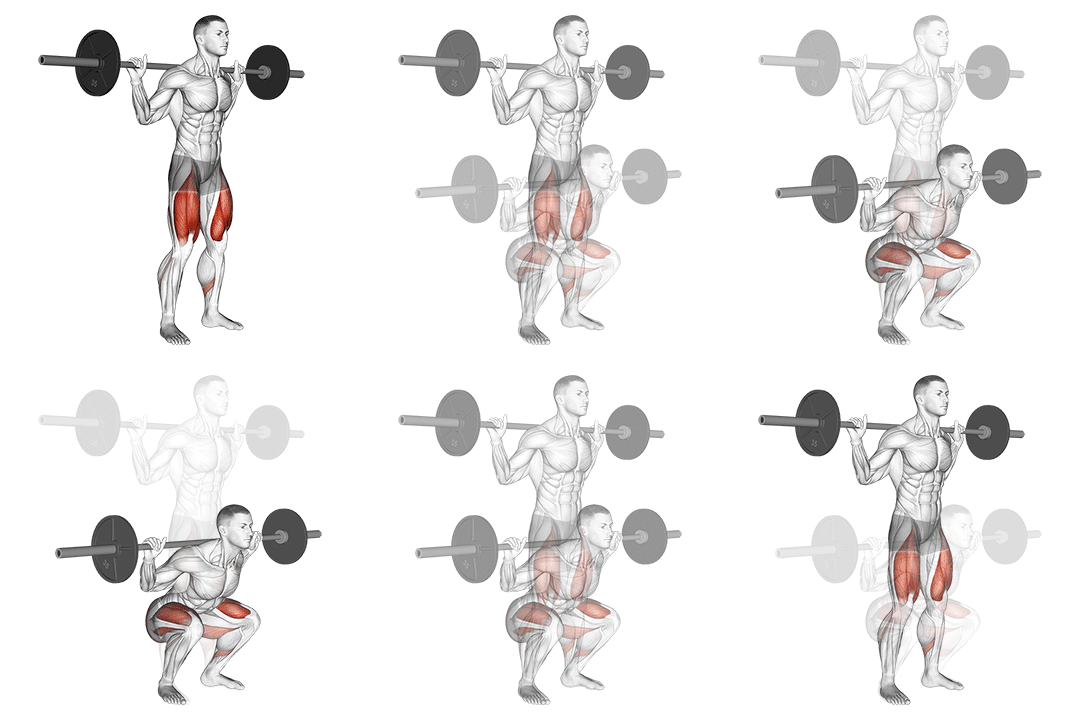
10. Barbell Low Bar Squat
69.7% MatchHow to perform this exercise
- Stand with your feet shoulder-width apart and the barbell resting on your upper back.
- Keeping your chest up and core engaged, slowly lower your body by bending your knees and pushing your hips back.
- Continue lowering until your thighs are parallel to the ground or slightly below.
- Pause for a moment, then push through your heels to return to the starting position.
- Repeat for the desired number of repetitions.
Why You Might Need a Cable Squat Row (with Rope Attachment) Alternative
You may substitute the Cable Squat Row because you lack a cable station, have shoulder or low-back sensitivity, or want a different loading stimulus. The original combines a hip hinge and horizontal pull that loads the lats through humeral extension and scapular retraction. Alternatives let you reduce spinal shear (chest-supported row), correct asymmetries (single-arm DB row), or remove machine dependence (inverted row). When selecting a substitute, cue a neutral spine and initiate pulls with scapular retraction so the lats — not the biceps or traps — do the work.
How to Choose the Right Substitute
Match the substitute to the movement pattern, available equipment, and your tolerance for spinal loading. Choose barbell bent-over rows when you need heavy bilateral resistance; cue a flat back and drive the elbows toward the hips so the lats lengthen and contract. Use single-arm dumbbell rows to correct asymmetry — pull the elbow tight to the ribcage and keep the hips square to maximize unilateral lat activation. Pick chest-supported rows to remove lumbar torque (brace core, chest on pad); select inverted rows for bodyweight training (keep a rigid plank line and retract scapula). Consider grip (neutral favors lats), ROM, and progressive overload options.
Frequently Asked Questions
What muscles does Cable Squat Row (with Rope Attachment) work?
The exercise primarily targets the latissimus dorsi through humeral extension and scapular retraction. It also recruits the posterior deltoid, rhomboids, teres major, and the spinal erectors for hip-hinge stability; cue scapular retraction first, then pull the elbows back.
What is the best bodyweight alternative to Cable Squat Row (with Rope Attachment)?
The inverted row is the best bodyweight substitute because it preserves the horizontal-pull pattern and loads the lats via scapular retraction. Set a bar at waist height, keep your body rigid, and pull your chest to the bar while driving the elbows down and back.
Can I build muscle without doing Cable Squat Row (with Rope Attachment)?
Yes — you can build lat mass using alternatives that provide comparable tension and range of motion, such as bent-over barbell rows, single-arm dumbbell rows, seated cable rows, and lat pulldowns. Focus on progressive overload, full lat contraction (pulling elbows to the ribs), and controlled eccentric tempo to stimulate hypertrophy.
More Exercise Alternatives
Find Alternatives for Any Exercise
Use our free tool to discover the best substitute exercises based on your available equipment and goals.
Try the Exercise Substitution Finder →