

10 Best Dumbbell Front Raise Alternatives for Front Delt Strength
If the dumbbells are all taken and a barbell is free, you still need a way to lift straight arms in front of you to shoulder height for the front delts. The Dumbbell Front Raise usually covers that job, and the Barbell Standing Front Raise Over Head is the closest barbell match because it keeps the same straight-arm lift on one bar held with both hands. With a pair of dumbbells still free, the Weighted Front Raise repeats that same forward lift with no other change.
Original Exercise: Dumbbell Front Raise
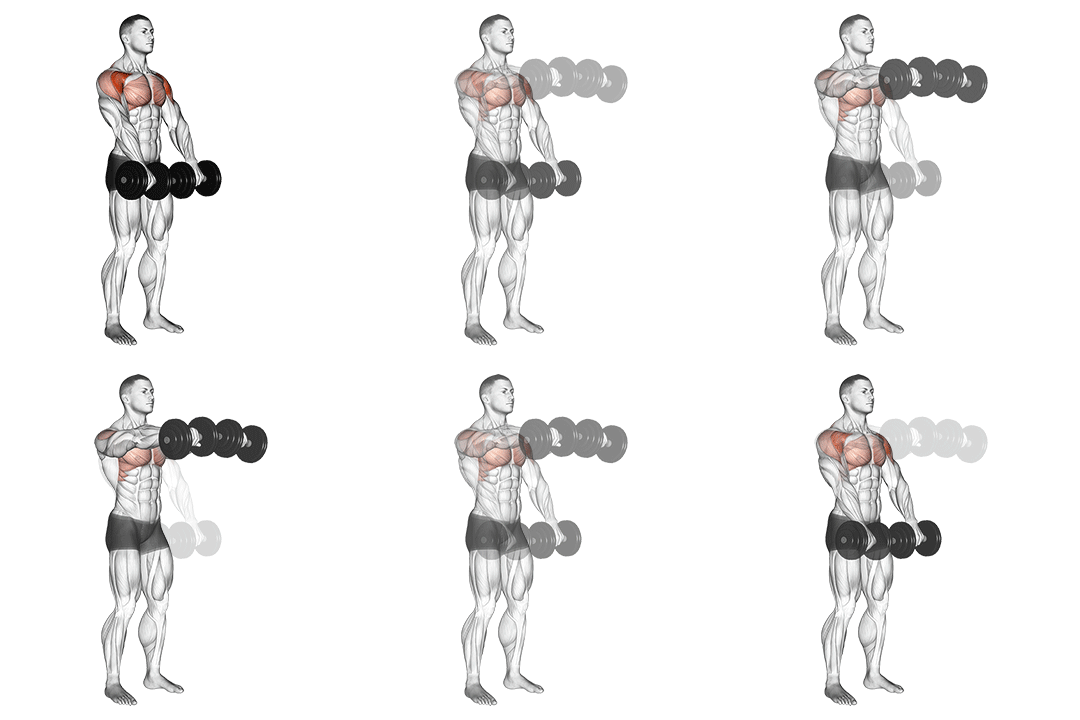
How to Perform Dumbbell Front Raise
- Stand with your feet shoulder-width apart, holding a dumbbell in each hand with your palms facing your thighs.
- Keeping your arms straight, exhale and lift the dumbbells in front of you until they are at shoulder level.
- Pause for a moment at the top, then inhale and slowly lower the dumbbells back down to the starting position.
- Repeat for the desired number of repetitions.
Ranked Dumbbell Front Raise Alternatives
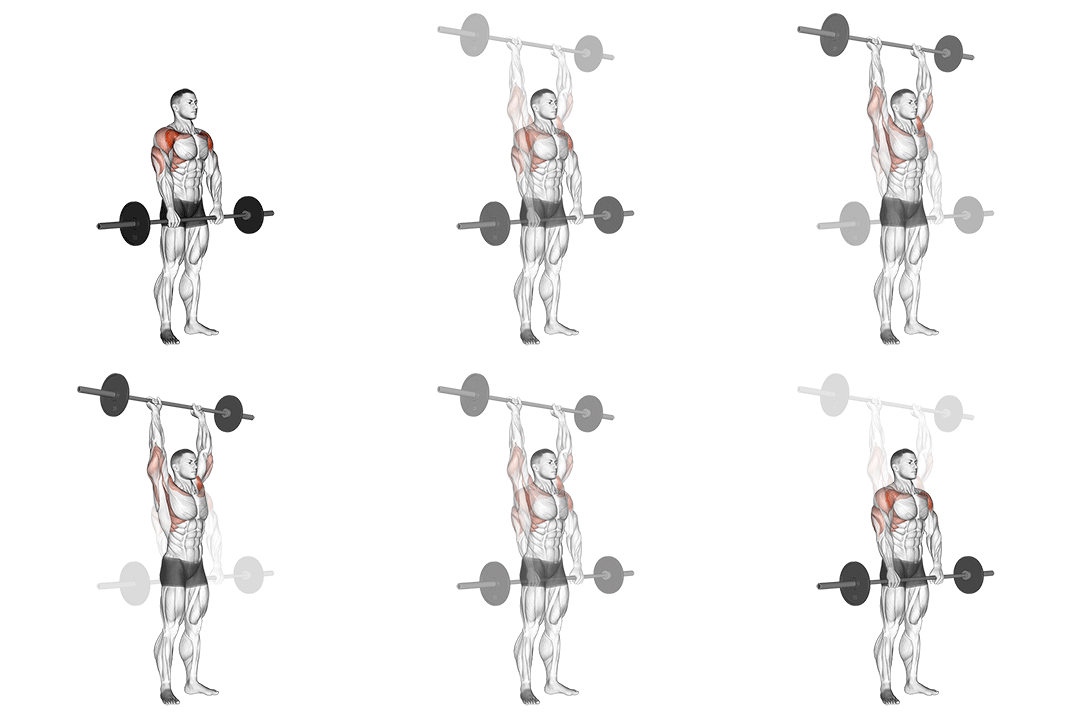
1. Barbell Standing Front Raise Over Head
95.2% MatchHow to perform this exercise
- Stand with your feet shoulder-width apart, holding a barbell in front of your thighs with an overhand grip.
- Keep your back straight and engage your core.
- Slowly raise the barbell in front of you, keeping your arms straight and your palms facing down.
- Continue lifting until the barbell is slightly above shoulder level.
- Pause for a moment at the top, then slowly lower the barbell back down to the starting position.
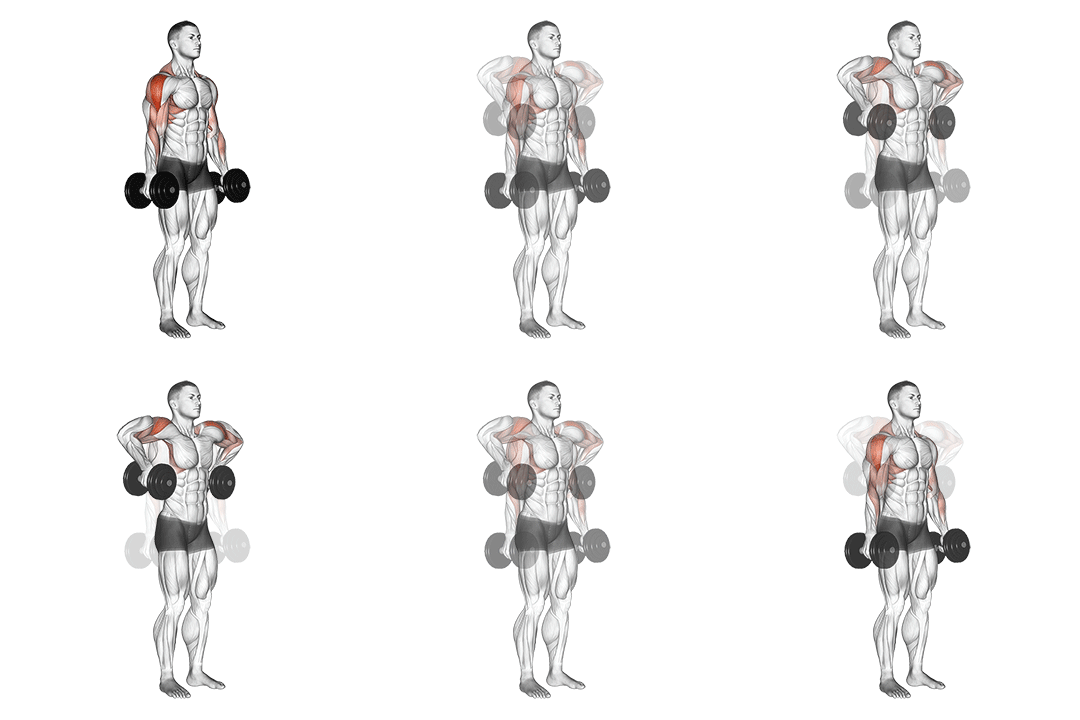
2. Dumbbell Raise
95% MatchHow to perform this exercise
- Stand with your feet shoulder-width apart and hold a dumbbell in each hand, palms facing your body.
- Keep your back straight and engage your core.
- Raise your arms out to the sides until they are parallel to the floor, keeping a slight bend in your elbows.
- Pause for a moment at the top, then slowly lower your arms back down to the starting position.
- Repeat for the desired number of repetitions.
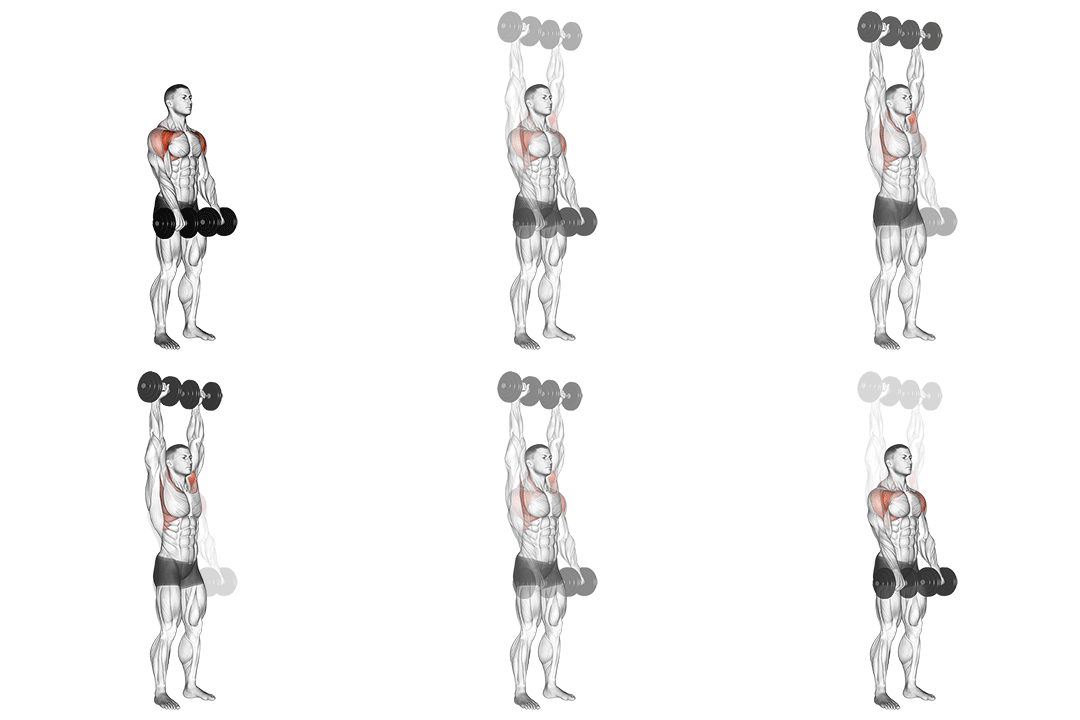
3. Dumbbell Standing Front Raise Above Head
95% MatchHow to perform this exercise
- Stand with your feet shoulder-width apart, holding a dumbbell in each hand with an overhand grip.
- Keep your arms straight and lift the dumbbells in front of you, raising them above your head.
- Pause for a moment at the top, then slowly lower the dumbbells back to the starting position.
- Repeat for the desired number of repetitions.
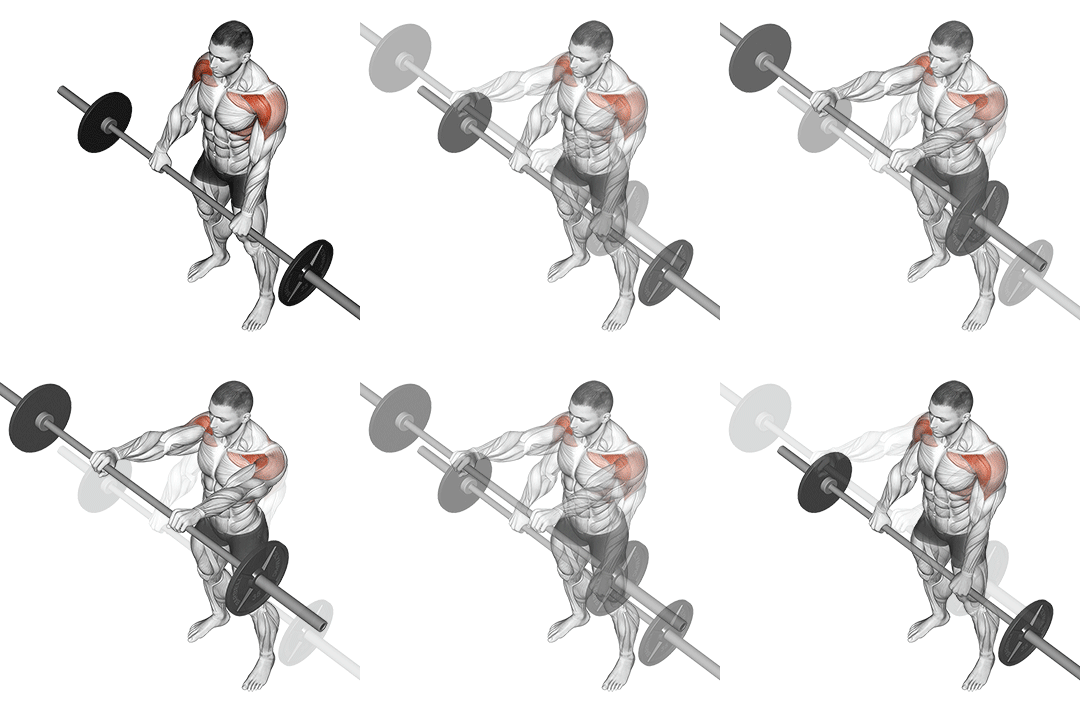
4. Barbell Front Raise
94.2% MatchHow to perform this exercise
- Stand with your feet shoulder-width apart and hold a barbell in front of your thighs with an overhand grip.
- Keep your arms straight and lift the barbell forward and upward until it reaches shoulder level.
- Pause for a moment at the top, then slowly lower the barbell back down to the starting position.
- Repeat for the desired number of repetitions.
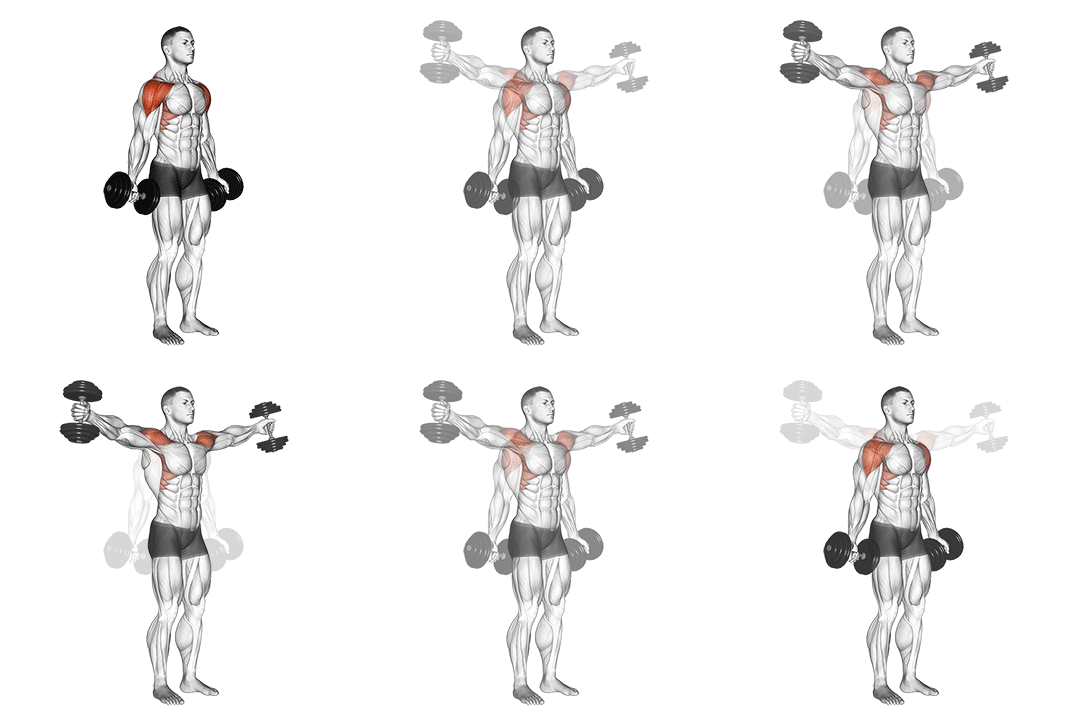
5. Dumbbell Full Can Lateral Raise
89.1% MatchHow to perform this exercise
- Stand with your feet shoulder-width apart, holding a dumbbell in each hand with your palms facing your body.
- Keep your back straight and engage your core.
- Raise your arms out to the sides, keeping a slight bend in your elbows, until they are parallel to the ground.
- Pause for a moment at the top, then slowly lower your arms back down to the starting position.
- Repeat for the desired number of repetitions.
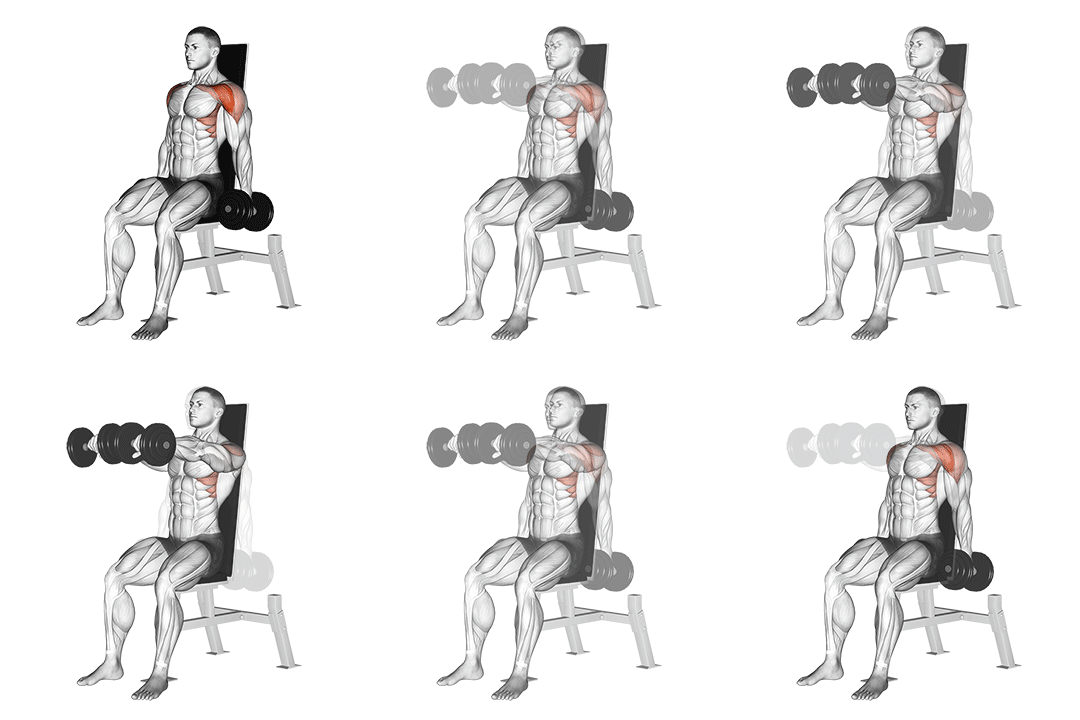
6. Dumbbell Seated Front Raise
85.4% MatchHow to perform this exercise
- Sit on a bench with your feet flat on the ground and a dumbbell in each hand, resting on your thighs.
- Keep your back straight and core engaged.
- Raise the dumbbells in front of you, with your palms facing down, until they are at shoulder level.
- Pause for a moment at the top, then slowly lower the dumbbells back down to the starting position.
- Repeat for the desired number of repetitions.
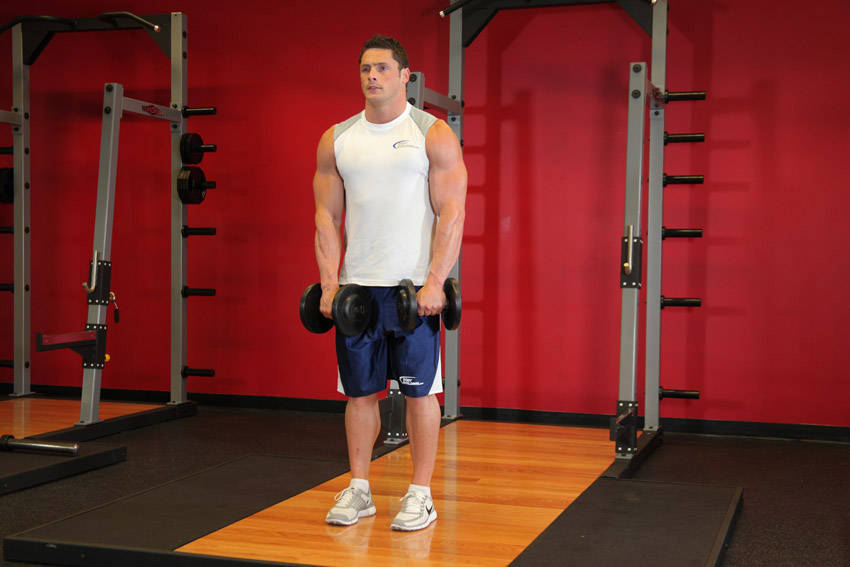
7. Front Two-Dumbbell Raise
85% MatchHow to perform this exercise
- Pick a couple of dumbbells and stand with a straight torso and the dumbbells on front of your thighs at arms length with the palms of the hand facing your thighs. This will be your starting position.
- While maintaining the torso stationary (no swinging), lift the dumbbells to the front with a slight bend on the elbow and the palms of the hands always facing down. Continue to go up until you arms are slightly above parallel to the floor. Exhale as you execute this portion of the movement and pause for a second at the top.
- As you inhale, lower the dumbbells back down slowly to the starting position.
- Repeat for the recommended amount of repetitions.
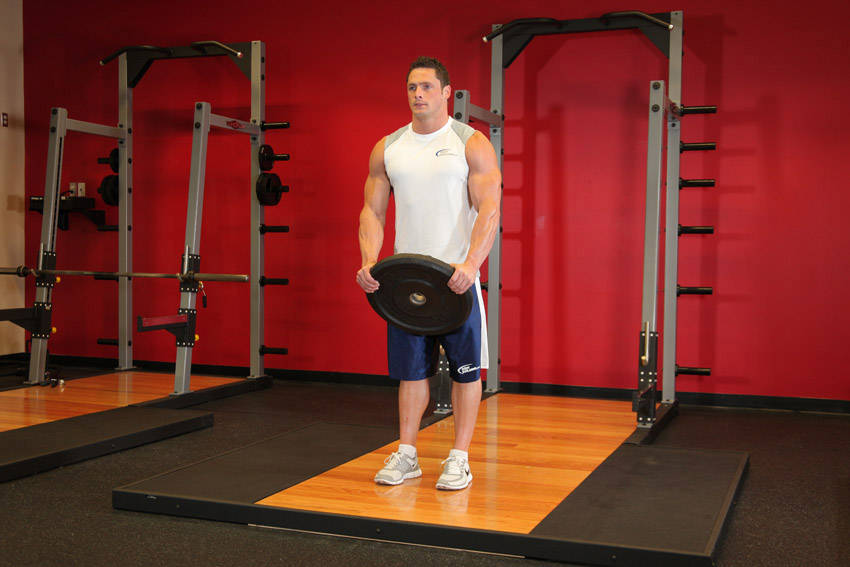
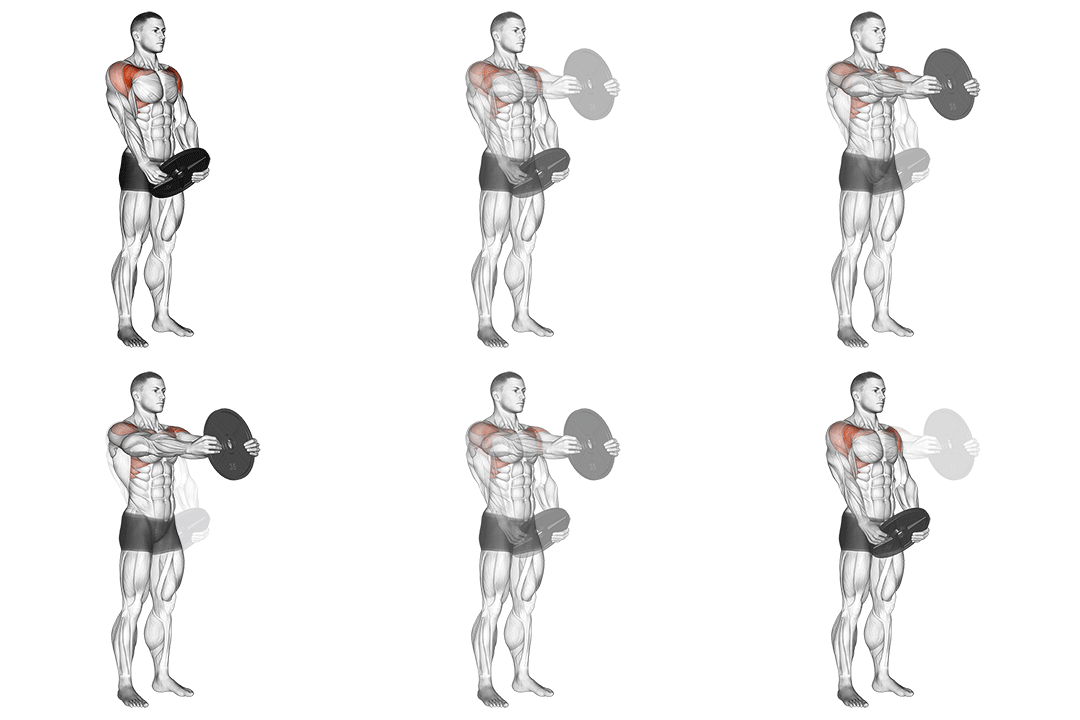
8. Front Plate Raise
85% MatchHow to perform this exercise
- While standing straight, hold a barbell plate in both hands at the 3 and 9 o'clock positions. Your palms should be facing each other and your arms should be extended and locked with a slight bend at the elbows and the plate should be down near your waist in front of you as far as you can go. Tip: The arms will remain in this position throughout the exercise. This will be your starting position.
- Slowly raise the plate as you exhale until it is a little above shoulder level. Hold the contraction for a second. Tip: make sure that you do not swing the weight or bend at the elbows. Your torso should remain stationary throughout the movement as well.
- As you inhale, slowly lower the plate back down to the starting position.
- Repeat for the recommended amount of repetitions.
9. Weighted Front Raise
85% MatchHow to perform this exercise
- Stand with your feet shoulder-width apart, holding a dumbbell in each hand with your palms facing your thighs.
- Keeping your arms straight, exhale and lift the dumbbells in front of you until they are at shoulder level.
- Pause for a moment at the top, then inhale and slowly lower the dumbbells back down to the starting position.
- Repeat for the desired number of repetitions.
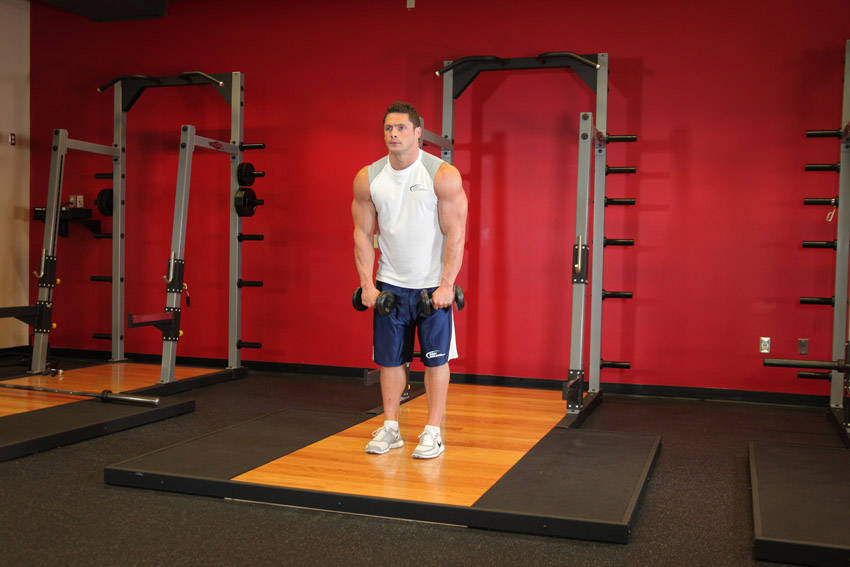
10. Standing Dumbbell Straight-Arm Front Delt Raise Above Head
84.4% MatchHow to perform this exercise
- Hold the dumbbells in front of your thighs, palms facing your thighs.
- Keep your arms straight with a slight bend at the elbows but keep them locked. This will be your starting position.
- Raise the dumbbells in a semicircular motion to arm's length overhead as you exhale.
- Slowly return to the starting position using the same path as you inhale.
- Repeat for the recommended amount of repetitions.
Why You Might Need a Dumbbell Front Raise Alternative
A front raise gets swapped for ordinary reasons: the dumbbells are gone, home only has a barbell, or standing steady while lifting isn't easy today. The Dumbbell Front Raise lifts straight arms from the thighs to shoulder height, working the front delts while you stand. The Barbell Standing Front Raise Over Head keeps that same straight-arm lift but puts both hands on one bar, and its steps carry the bar slightly above shoulder level rather than stopping at it. The Weighted Front Raise keeps the dumbbells and the exact same forward path, with nothing else different. The Dumbbell Raise and the Dumbbell Full Can Lateral Raise also stay on dumbbells, but their own steps send the arms out to the sides instead of forward, a different lift under a similar name.
How to Choose the Right Substitute
Check what's free first. If the dumbbells are taken but a barbell is open, take the Barbell Standing Front Raise Over Head: it keeps the same straight-arm lift and puts both arms on one bar, easier to manage two-handed than two separate weights. If dumbbells are what you have, the Weighted Front Raise repeats the same forward lift with no new equipment needed. The Dumbbell Full Can Lateral Raise and the Dumbbell Raise stay on dumbbells too, but their steps send the arms out to the sides instead of forward, so treat them as a different lift rather than a straight swap. Working around a shaky stance, sit down for the Dumbbell Seated Front Raise, which takes the standing balance out of the movement and leaves your arms with the only job.
Frequently Asked Questions
Can I do the Dumbbell Front Raise at home?
Yes, with just a pair of dumbbells. The Weighted Front Raise repeats the same forward lift to shoulder level with no other gear, so it swaps in without changing your setup. The Front Plate Raise works well too if you would rather lift one plate with both hands than a dumbbell in each hand.
Which alternative suits a beginner?
The Dumbbell Seated Front Raise is a solid starting point because sitting removes the standing balance from the lift, leaving your arms with the only job. The Front Plate Raise is another simple entry: you hold one plate with both hands and lift it the same way instead of using two separate dumbbells.
How do I make a Dumbbell Front Raise swap harder?
Take the lift higher. The Dumbbell Standing Front Raise Above Head keeps the same straight-arm lift but carries it past shoulder height, adding range to the same movement. The Standing Dumbbell Straight-arm Front Delt Raise Above Head goes further still, taking the dumbbells to arm's length overhead for the longest version of the same path.
What changes when I swap dumbbells for a barbell?
The Barbell Standing Front Raise Over Head puts both hands on one bar, so the two sides share a single weight instead of each hand carrying its own. Grip stays overhand, arms stay straight, and the bar rises a touch higher than the dumbbells do, to slightly above shoulder level, so the path you know barely changes.
More Exercise Alternatives
Find Alternatives for Any Exercise
Use the exercise substitution finder to compare ranked alternatives for your available equipment and training preference.
Try the Exercise Substitution Finder →