

10 Best Full Planche Alternatives for Building Core Strength
If you can't perform a Full Planche, use progressions and core-focused bodyweight moves. Prioritize dragon flags, hanging leg raises, L-sits, tuck planches, and hollow-body holds to overload your abs and anterior chain. Cue a posterior pelvic tilt and tight hollow: ribs down, glutes engaged, and scapula protracted during holds.
Original Exercise: Full Planche
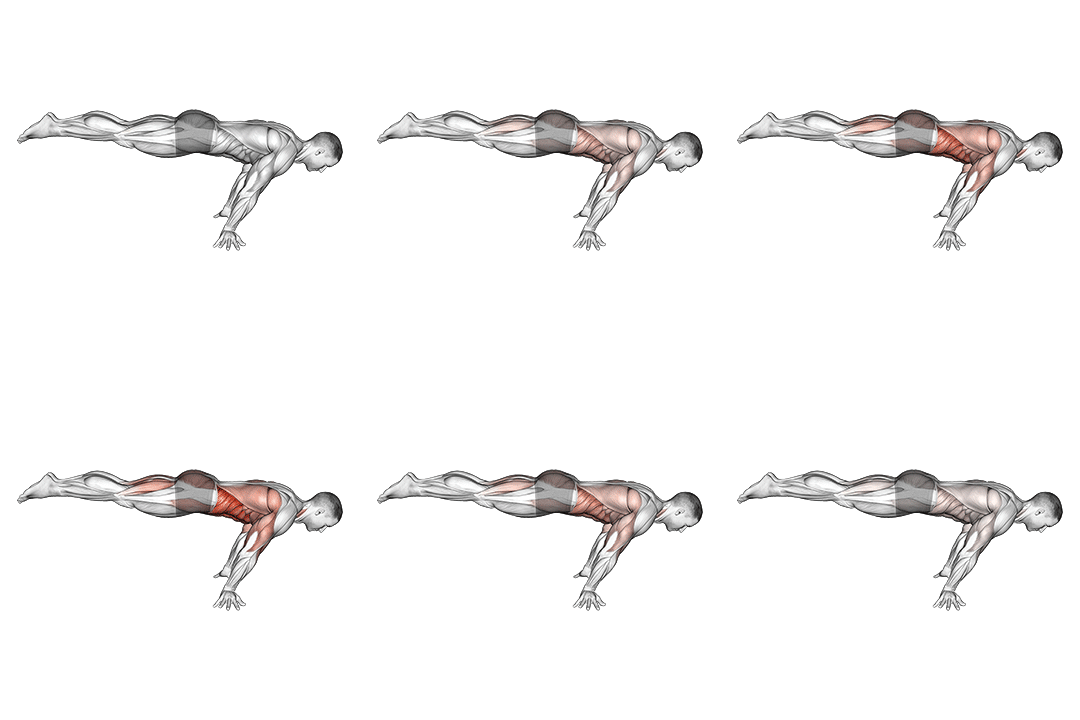
How to Perform Full Planche
- Start in a push-up position with your hands shoulder-width apart and your fingers pointing forward.
- Engage your core and slowly shift your weight forward, lifting your feet off the ground.
- Continue shifting your weight forward until your body is parallel to the ground, balancing on your hands.
- Hold this position for as long as you can, maintaining a straight body line.
- Slowly lower your feet back to the ground and return to the starting position.
- Repeat for the desired number of repetitions.
Best Full Planche Alternatives
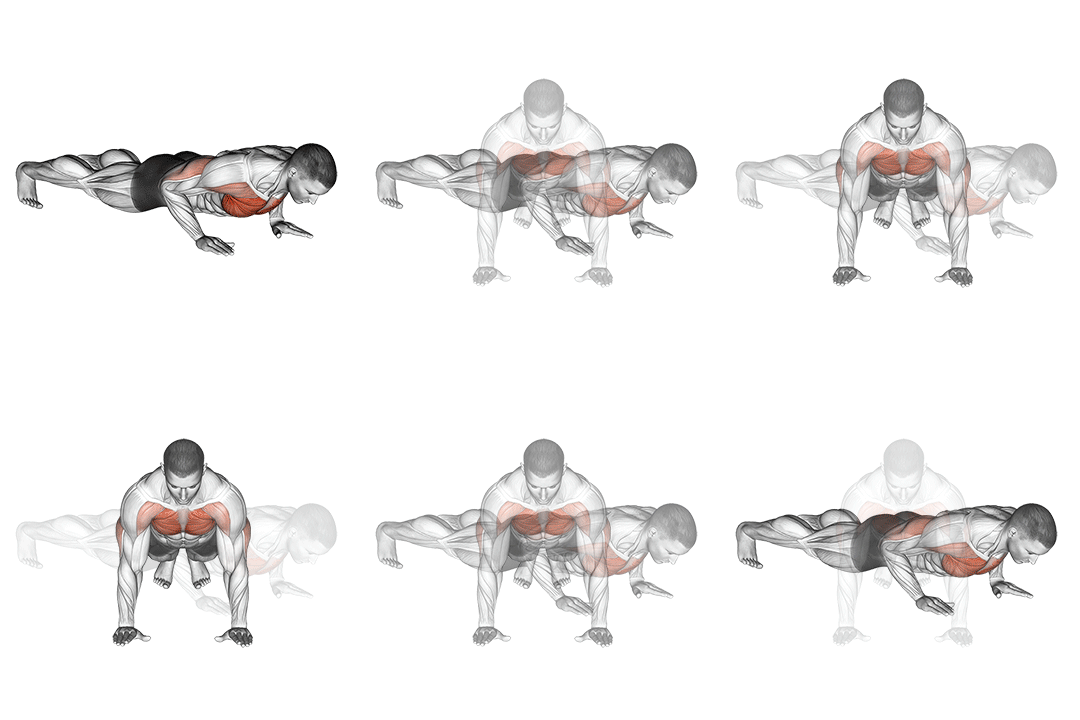
1. Clock Push-up
71.7% MatchHow to perform this exercise
- Start in a high plank position with your hands directly under your shoulders and your body in a straight line.
- Lower your body towards the ground by bending your elbows, keeping them close to your sides.
- As you lower, rotate your body to the left, extending your left arm straight out to the side.
- Push back up to the starting position, while rotating your body to the center.
- Repeat the push-up, this time rotating your body to the right and extending your right arm out to the side.
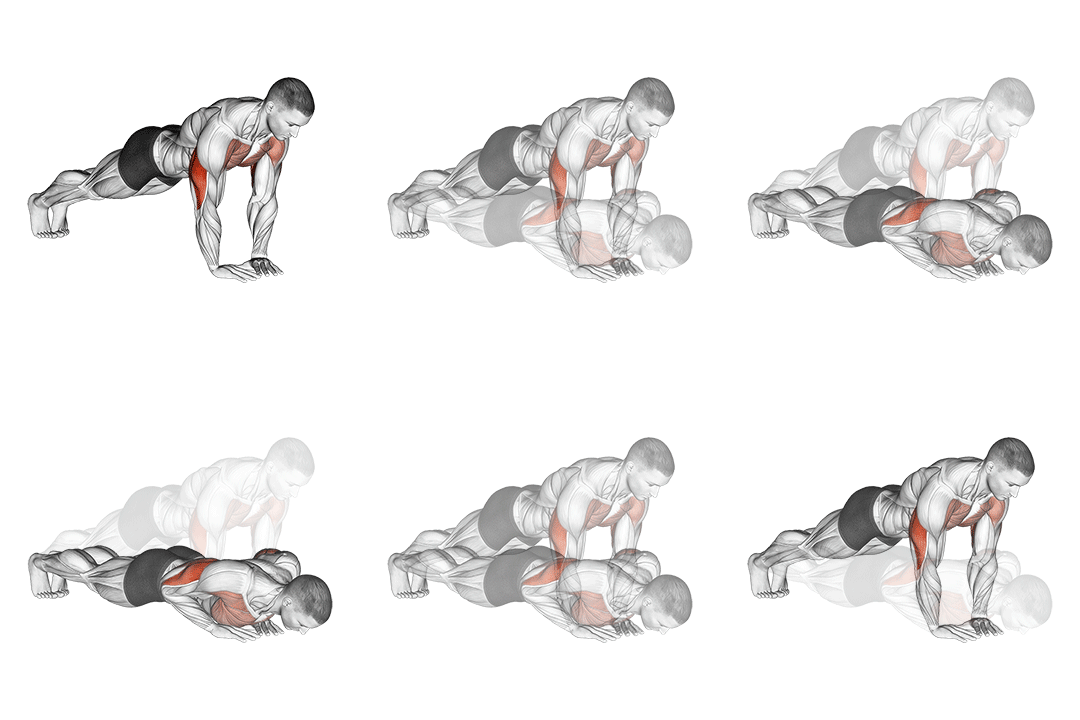
2. Diamond Push-up
71.1% MatchHow to perform this exercise
- Start in a high plank position with your hands close together, forming a diamond shape with your thumbs and index fingers.
- Keep your body in a straight line from head to toe, engaging your core and glutes.
- Lower your chest towards the diamond shape formed by your hands, keeping your elbows close to your body.
- Pause for a moment at the bottom, then push yourself back up to the starting position.
- Repeat for the desired number of repetitions.
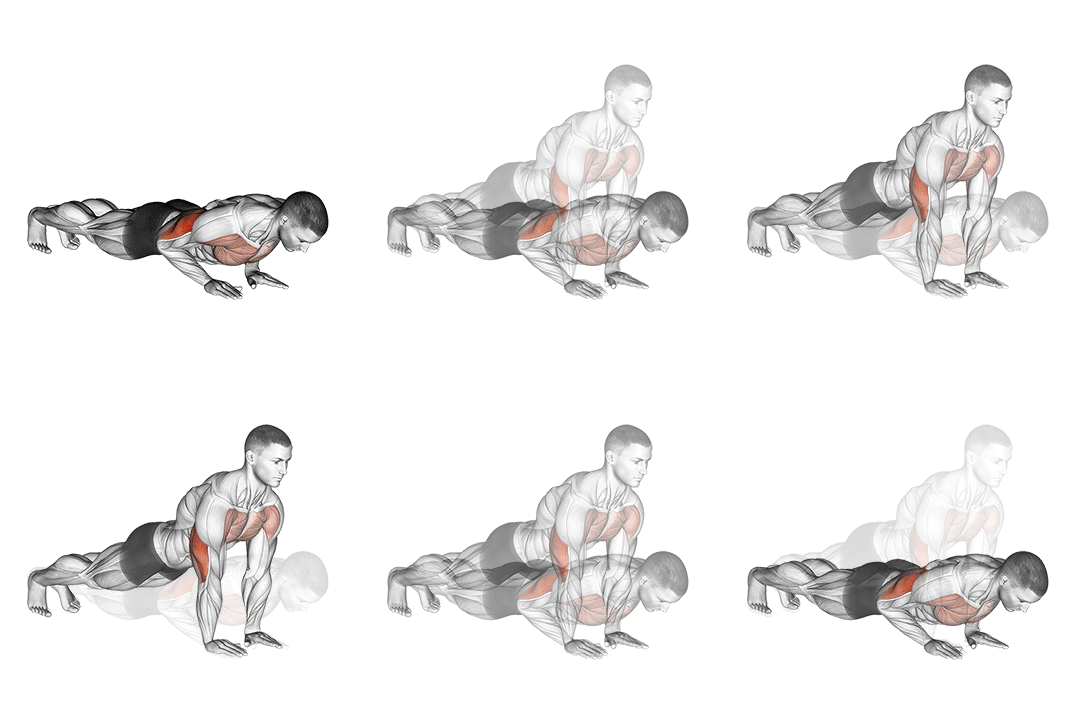
3. Close-grip Push-up
70.6% MatchHow to perform this exercise
- Start in a high plank position with your hands placed close together, directly under your shoulders.
- Engage your core and lower your body towards the ground, keeping your elbows close to your sides.
- Push through your palms to extend your arms and return to the starting position.
- Repeat for the desired number of repetitions.
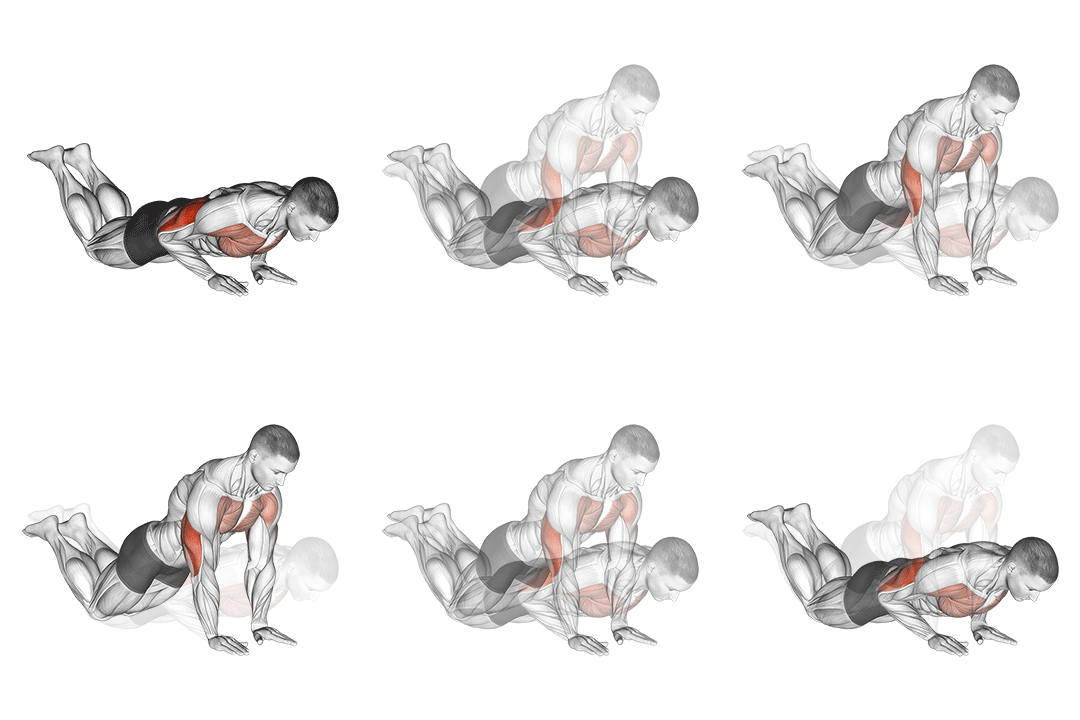
4. Close-grip Push-up (on Knees)
69.2% MatchHow to perform this exercise
- Start by getting on your hands and knees, with your hands shoulder-width apart and your knees hip-width apart.
- Lower your upper body towards the ground by bending your elbows, keeping them close to your sides.
- Pause for a moment when your chest is just above the ground.
- Push through your palms to straighten your arms and return to the starting position.
- Repeat for the desired number of repetitions.
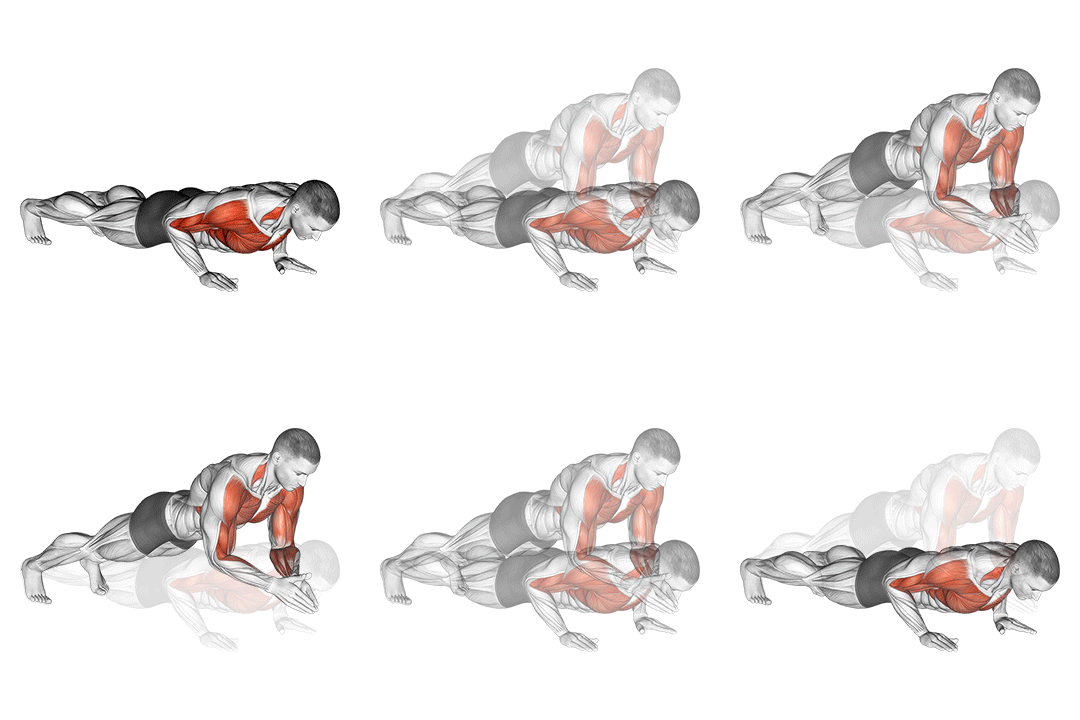
5. Clap Push Up
68% MatchHow to perform this exercise
- Start in a high plank position with your hands slightly wider than shoulder-width apart.
- Lower your body towards the ground by bending your elbows, keeping your core engaged.
- Push through your palms explosively to propel your body off the ground.
- While in mid-air, clap your hands together before landing back in the starting position.
- Repeat for the desired number of repetitions.
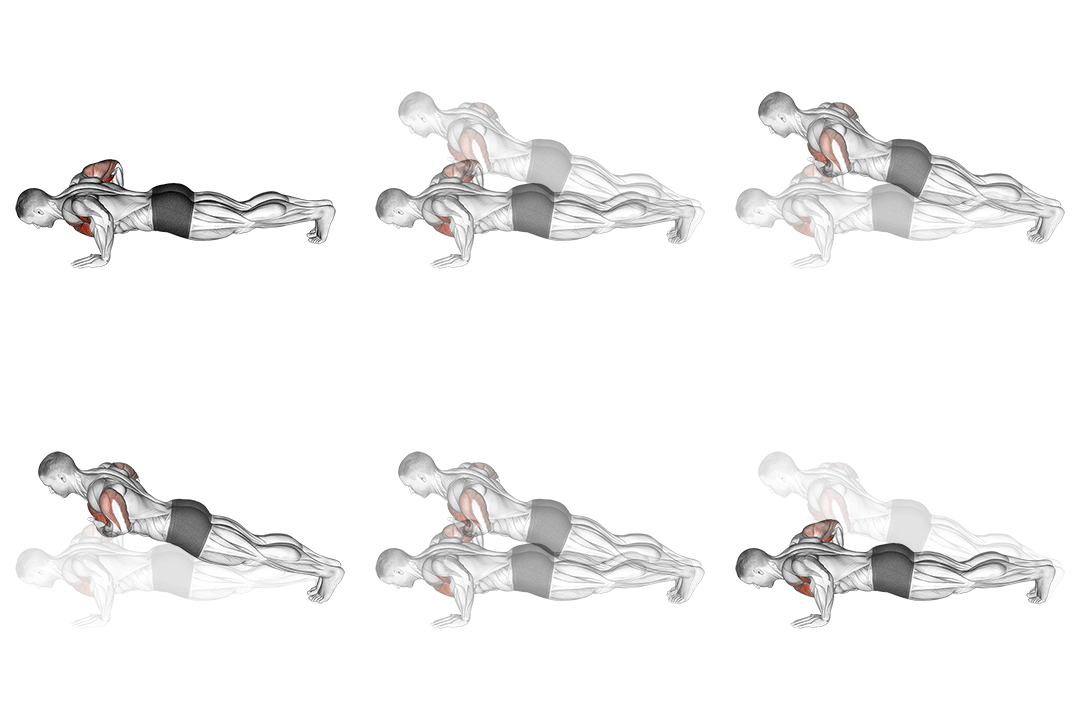
6. Chest Tap Push-up (male)
67.4% MatchHow to perform this exercise
- Start in a high plank position with your hands slightly wider than shoulder-width apart and your body in a straight line.
- Lower your body towards the ground by bending your elbows, keeping them close to your sides.
- As you lower yourself, tap your chest with your right hand.
- Push yourself back up to the starting position.
- Repeat the movement, this time tapping your chest with your left hand.
7. Drop Push Up
67.2% MatchHow to perform this exercise
- Start in a high plank position with your hands slightly wider than shoulder-width apart.
- Lower your chest towards the ground, keeping your elbows close to your body.
- Once your chest is just above the ground, quickly drop your knees to the ground.
- Push yourself back up to the starting position by extending your arms.
- Repeat for the desired number of repetitions.
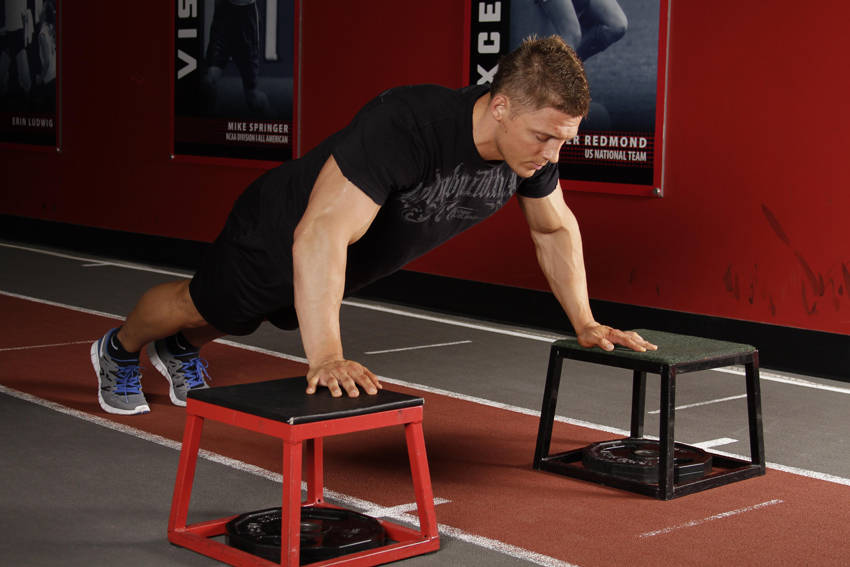
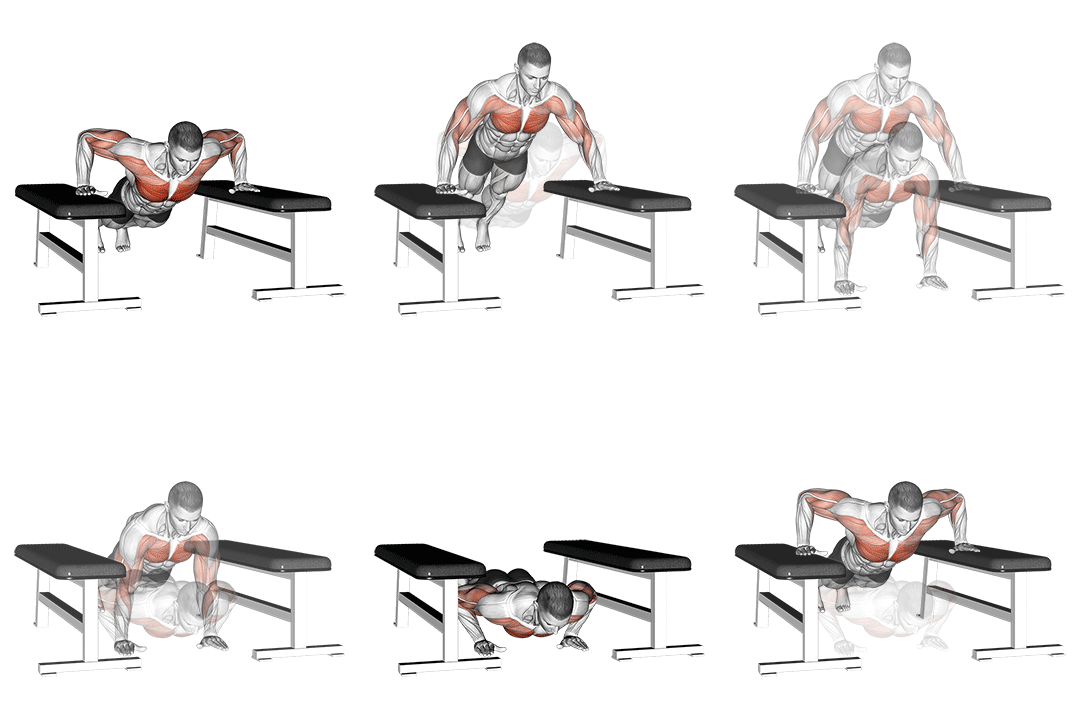
8. Drop Push
65.6% MatchHow to perform this exercise
- Position low boxes or other platforms 2-3 feet apart.
- Move to a pushup position between them, supporting yourself by placing your hands on the boxes.
- With good posture, drop from the platforms by pressing up and moving your hands to shoulder width, cushioning your landing by absorbing the impact through the arm.
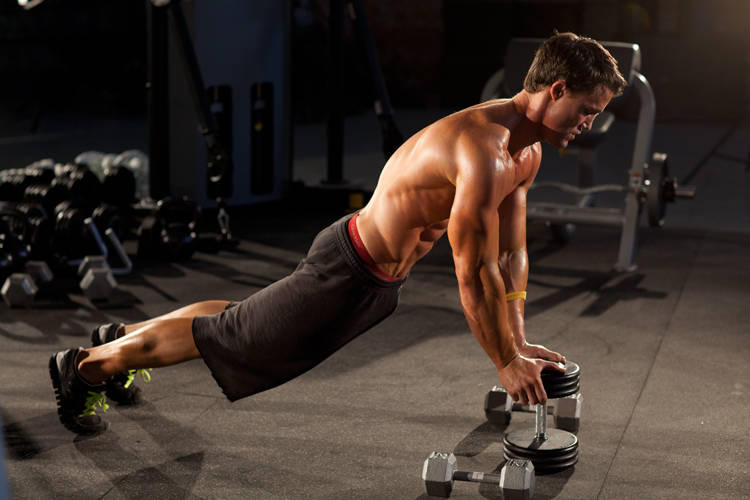
9. Close-Grip Push-Up Off Of A Dumbbell
65.6% MatchHow to perform this exercise
- Lie on the floor and place your hands on an upright dumbbell. Supporting your weight on your toes and hands, keep your torso rigid and your elbows in with your arms straight. This will be your starting position.
- Lower your body, allowing the elbows to flex while you inhale. Keep your body straight, not allowing your hips to rise or sag.
- Press yourself back up to the starting position by extending the elbows. Breathe out as you perform this step.
- After a pause at the contracted position, repeat the movement for the prescribed amount of repetitions.
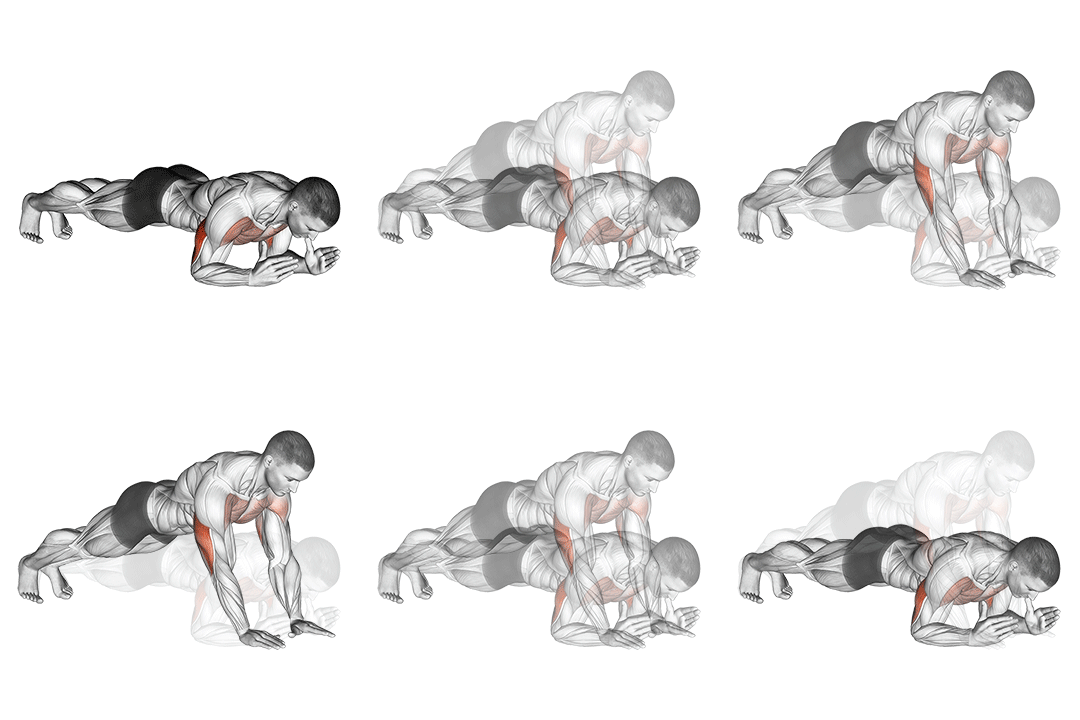
10. Body-up
64.8% MatchHow to perform this exercise
- Start by placing your hands on a raised surface, such as a bench or parallel bars, with your palms facing down and fingers pointing forward.
- Extend your legs out in front of you, keeping your heels on the ground and your body straight.
- Lower your body by bending your elbows, keeping them close to your sides, until your upper arms are parallel to the ground.
- Pause for a moment, then push through your palms to straighten your arms and lift your body back up to the starting position.
- Repeat for the desired number of repetitions.
Why You Might Need a Full Planche Alternative
You may substitute a Full Planche for several reasons: limited shoulder or wrist tolerance, lack of low-body stability, or the long skill timeline. Alternatives let you target the same rectus abdominis and obliques with lower joint stress while preserving the horizontal body tension pattern. Choose exercises that replicate the planche’s anterior chain demand—slow dragon-flag negatives to emphasize eccentric abs activation, or L-sits to train hip flexors and transverse abdominis. Use progressive overload (more time under tension, increased reps, or added resistance) to stimulate adaptation without performing the full skill.
How to Choose the Right Substitute
Select a substitute based on your training goal, joint availability, and current skill. If you want maximal core tension with low shoulder load, pick dragon flags or weighted hanging leg raises and cue a firm posterior pelvic tilt to load the rectus abdominis. For static strength and carryover to planche levers, use tuck planche progressions and planche leans while keeping scapula protracted and shoulders stacked. If mobility or wrist pain limits you, favor hollow holds and L-sits with neutral wrists and active shoulder depression to train the same stabilizing patterns safely.
Frequently Asked Questions
What muscles does Full Planche work?
The Full Planche heavily targets the abs—especially the rectus abdominis and obliques—while also loading anterior deltoids, pectorals, triceps, and scapular protractors. Biomechanically it demands sustained shoulder flexion and scapular protraction while the anterior chain resists extension.
What is the best bodyweight alternative to Full Planche?
The dragon flag is the top bodyweight alternative for pure anterior chain overload; it trains long-lever core strength similar to a planche. Cue a tight hollow position, posterior pelvic tilt, and controlled slow descent to maximize eccentric rectus abdominis activation.
Can I build muscle without doing Full Planche?
Yes—you can build significant abdominal and waist muscle with progressive dragon-flag negatives, weighted hanging leg raises, L-sit holds, and tempo-controlled hollow holds. Focus on increasing time under tension, adding reps or weight, and maintaining strict technique to drive hypertrophy.
More Exercise Alternatives
Find Alternatives for Any Exercise
Use our free tool to discover the best substitute exercises based on your available equipment and goals.
Try the Exercise Substitution Finder →