

10 Best Internal Rotation With Band Alternatives for Rehab & Strength
The Internal Rotation With Band is done standing with a band. Ranked closest by our scoring: the Cable Standing Shoulder External Rotation, the Dumbbell Upright Shoulder External Rotation and the Cable Seated Shoulder Internal Rotation.
Updated Ranked by our 12-factor similarity model How it works
Original Exercise: Internal Rotation With Band
- Primary muscle
- Delts
- Equipment
- Band
- Difficulty
- Beginner
- Type
- Isolation
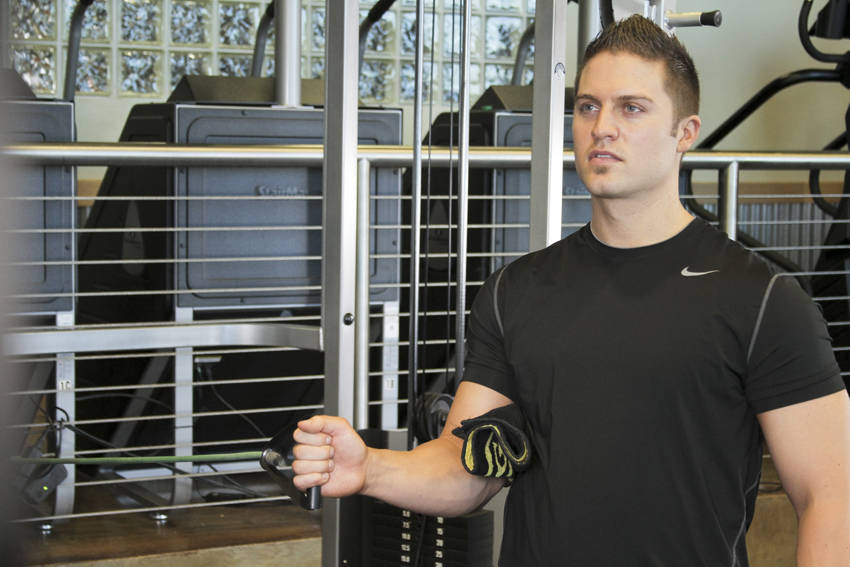
How to perform Internal Rotation With Band
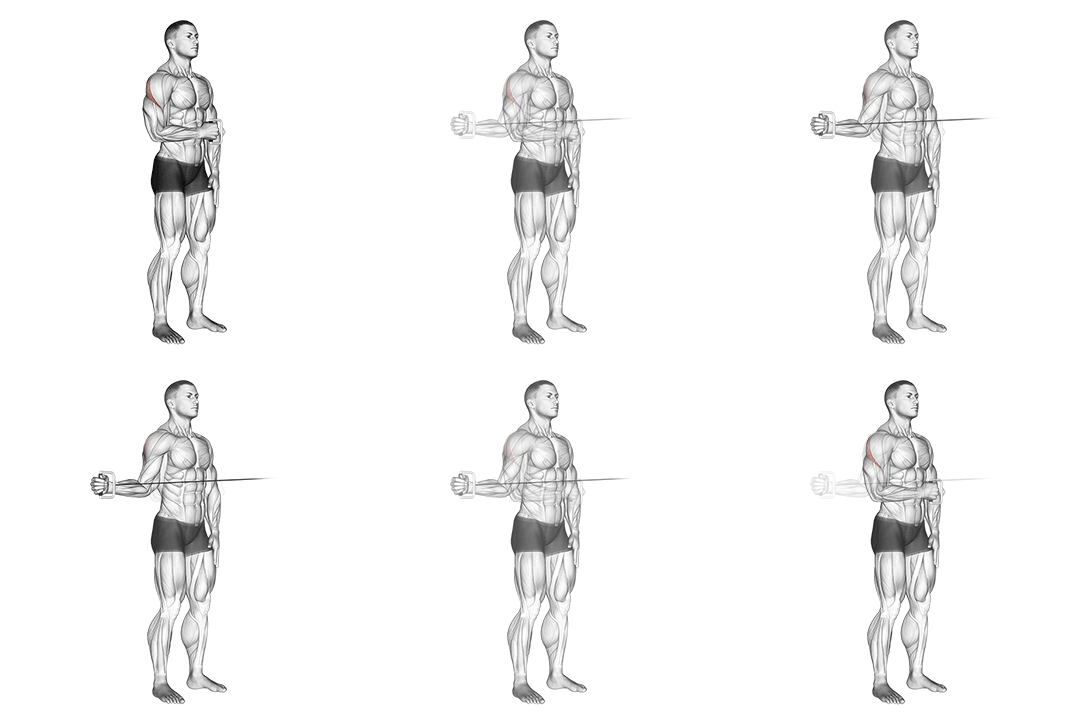
- Choke the band around a post. The band should be at the same height as your elbow. Stand with your right side to the band a couple of feet away.
- Grasp the end of the band with your right hand, and keep your elbow pressed firmly to your side. We recommend you hold a pad or foam roll in place with your elbow to keep it firmly in position.
- With your upper arm in position, your elbow should be flexed to 90 degrees with your hand reaching away from your torso. This will be your starting position.
- Execute the movement by rotating your arm in a forehand motion, keeping your elbow in place.
- Continue as far as you are able, pause, and then return to the starting position.
Ranked Internal Rotation With Band Alternatives
10 substitutes, ranked by how closely each one matches the Internal Rotation With Band on movement pattern, muscles worked, equipment and body position. The higher the score, the less you change. Open "How to perform this exercise" on a card for the steps; every card title links to that exercise's own alternatives page.
Best match - Delts
- Cable
- Beginner
- Isolation
A good swap when you have a cable machine to work with, and it still works the delts.
How to perform this exercise
- Stand with your feet shoulder-width apart and your knees slightly bent.
- Hold the cable handle with your arm extended in front of you, parallel to the ground.
- Keep your elbow slightly bent and your shoulder blades pulled back.
- Slowly rotate your arm outward, away from your body, while keeping your elbow in the same position.
- Pause for a moment at the end of the movement, then slowly return to the starting position.
- Repeat for the desired number of repetitions.
Sets and reps: 3 sets of 10 to 15 reps on each side.
Why this matches
- Primary muscle: delts, the same as the Internal Rotation With Band
- Equipment: a cable, not a band
- Body position: standing, the same as the Internal Rotation With Band
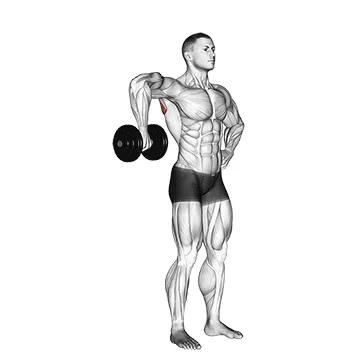
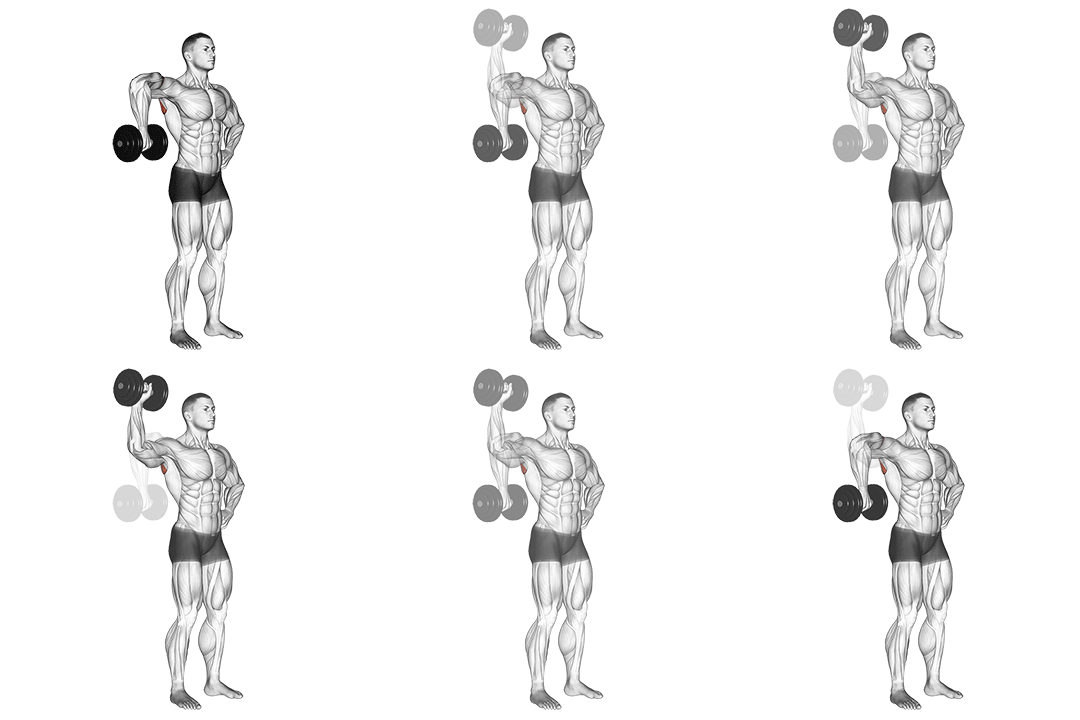
- Delts
- Dumbbell
- Beginner
- Isolation
A good swap when you have dumbbells to work with, and it still works the delts.
How to perform this exercise
- Stand with your feet shoulder-width apart and hold a dumbbell in each hand with your palms facing your body.
- Raise your arms out to the sides until they are parallel to the ground, keeping your elbows slightly bent.
- Rotate your arms externally, bringing the dumbbells up towards your head while keeping your elbows in the same position.
- Pause for a moment at the top, then slowly lower the dumbbells back to the starting position.
- Repeat for the desired number of repetitions.
Sets and reps: 3 sets of 10 to 15 reps on each side.
Why this matches
- Primary muscle: delts, the same as the Internal Rotation With Band
- Equipment: free weights, not a band
- Body position: standing, the same as the Internal Rotation With Band
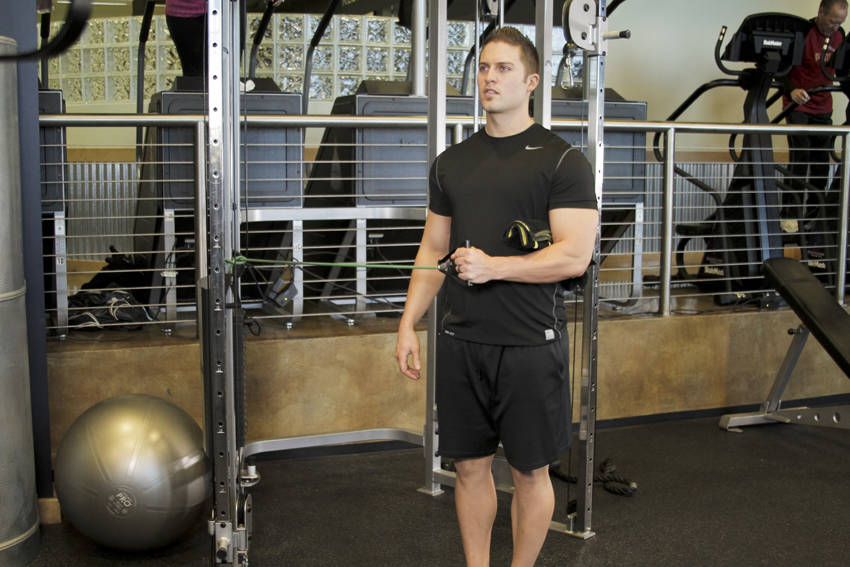
3. External Rotation With Band
84% match- Rotator Cuff
- Band
- Beginner
- Isolation
A looser match: it uses the same equipment, but it works the rotator cuff rather than the delts.
How to perform this exercise
- Choke the band around a post. The band should be at the same height as your elbow. Stand with your left side to the band a couple of feet away.
- Grasp the end of the band with your right hand, and keep your elbow pressed firmly to your side. We recommend you hold a pad or foam roll in place with your elbow to keep it firmly in position.
- With your upper arm in position, your elbow should be flexed to 90 degrees with your hand reaching across the front of your torso. This will be your starting position.
- Execute the movement by rotating your arm in a backhand motion, keeping your elbow in place.
- Continue as far as you are able, pause, and then return to the starting position.
Sets and reps: 3 sets of 10 to 15 reps on each side.
Why this matches
- Primary muscle: rotator cuff, not delts
- Equipment: a band, the same as the Internal Rotation With Band
- Body position: standing, the same as the Internal Rotation With Band
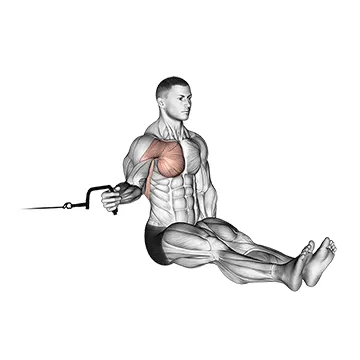
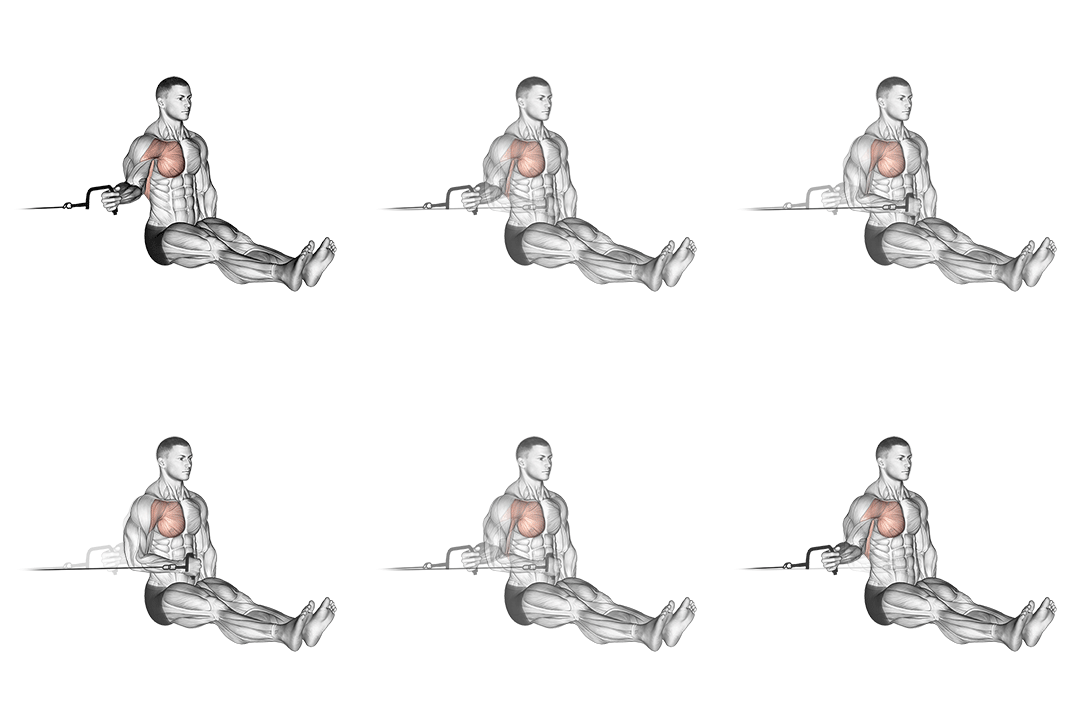
- Delts
- Cable
- Beginner
- Isolation
How to perform this exercise
- Sit on a bench or chair facing the cable machine with your feet flat on the ground.
- Hold the cable handle with your arm extended straight out in front of you, parallel to the ground.
- Keep your elbow slightly bent and your shoulder blades pulled back and down.
- Slowly rotate your arm inward, bringing the cable handle towards the center of your body.
- Pause for a moment at the end of the movement, then slowly return to the starting position.
- Repeat for the desired number of repetitions, then switch arms.
Sets and reps: 3 sets of 10 to 15 reps on each side.
Why this matches
- Primary muscle: delts, the same as the Internal Rotation With Band
- Equipment: a cable, not a band
- Body position: seated, not standing
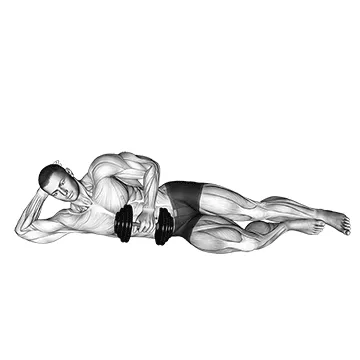
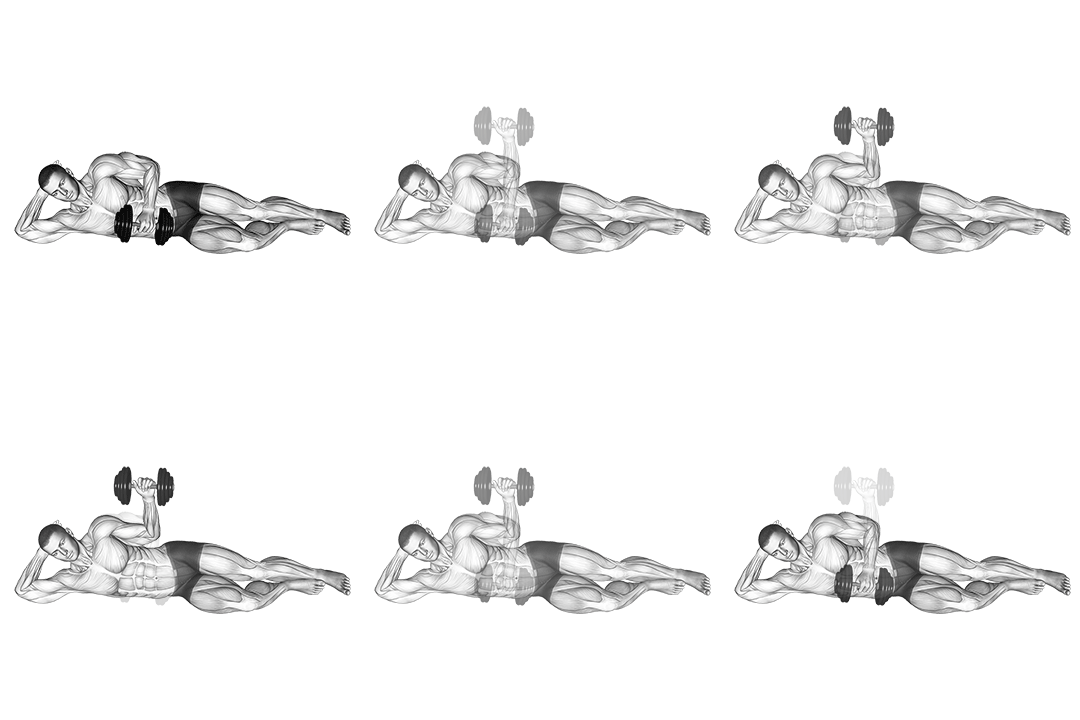
- Delts
- Dumbbell
- Beginner
- Isolation
How to perform this exercise
- Lie on your side on a flat bench with your upper arm against your side and your elbow bent 90 degrees.
- Hold a dumbbell in your hand with your palm facing down.
- Keeping your upper arm against your side, slowly rotate your forearm upward as far as possible.
- Pause for a moment at the top, then slowly lower your forearm back down to the starting position.
- Repeat for the desired number of repetitions, then switch sides.
Sets and reps: 3 sets of 10 to 15 reps on each side.
Why this matches
- Primary muscle: delts, the same as the Internal Rotation With Band
- Equipment: free weights, not a band
- Delts
- Dumbbell
- Intermediate
- Isolation
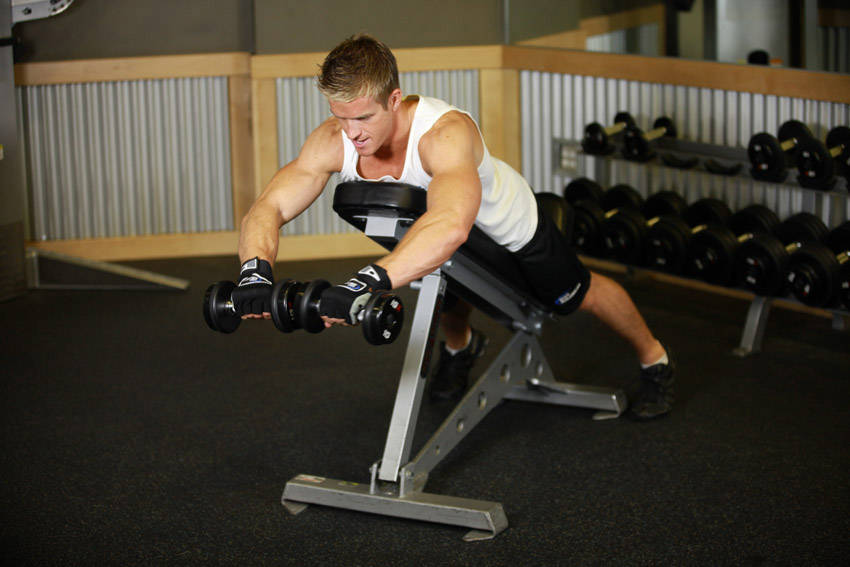
How to perform this exercise
- To begin, lie down on an incline bench set at a 30-degree angle with the chest and stomach pressing against the incline.
- Have the dumbbells in each hand with the palms facing down to the floor. Your arms should be in front of you so that they are perpendicular to the angle of the bench. Tip: Your elbows should have a slight bend. The legs should be stationary while applying pressure with the ball of your toes (your heels should not be touching the floor). This is the starting position.
- Maintaining the slight bend of the elbows, move the weights out and away from each other in an arc motion while exhaling.
- As you lift the weight, your wrist should externally rotate by 90-degrees so that you go from a palms down (pronated) grip to a palms facing each other (neutral) grip. Tip: Try to squeeze your shoulder blades together to get the best results from this exercise.
- The arms should be elevated until they are level with the head.
- Feel the contraction and slowly lower the weights back down to the starting position while inhaling.
- Repeat for the recommended amount of repetitions.
Sets and reps: 3 sets of 10 to 15 reps.
Why this matches
- Primary muscle: delts, the same as the Internal Rotation With Band
- Equipment: free weights, not a band
- Balance: harder to stay steady on than the Internal Rotation With Band
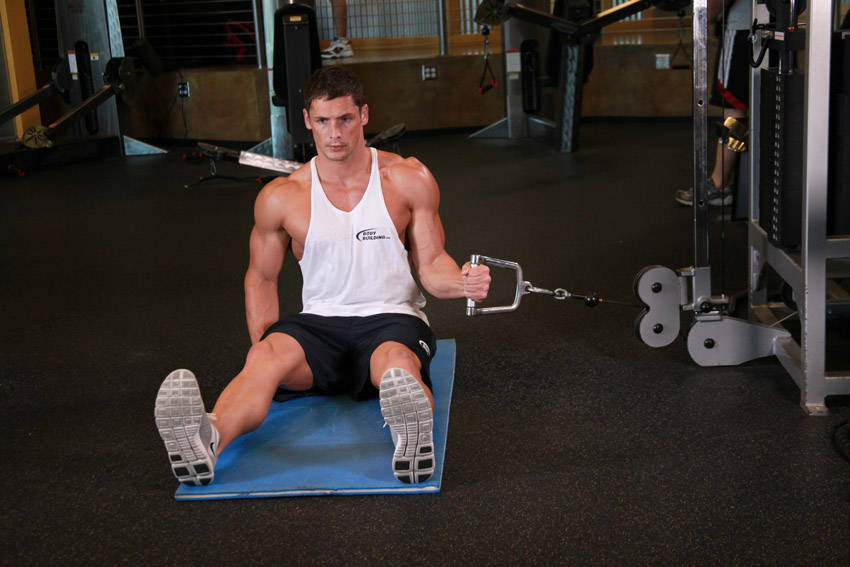
7. Cable Internal Rotation
74% match- Rotator Cuff
- Cable
- Beginner
- Isolation
A looser match: it works the rotator cuff rather than the delts.
How to perform this exercise
- Sit next to a low pulley sideways (with legs stretched in front of you or crossed) and grasp the single hand cable attachment with the arm nearest to the cable. Tip: If you can adjust the pulley's height, you can use a flat bench to sit on instead.
- Position the elbow against your side with the elbow bent at 90° and the arm pointing towards the pulley. This will be your starting position.
- Pull the single hand cable attachment toward your body by internally rotating your shoulder until your forearm is across your abs. You will be creating an imaginary semi-circle. Tip: The forearm should be perpendicular to your torso at all times.
- Slowly go back to the initial position.
- Repeat for the recommended amount of repetitions and then repeat the movement with the next arm.
Sets and reps: 3 sets of 10 to 15 reps on each side.
Why this matches
- Primary muscle: rotator cuff, not delts
- Equipment: a cable, not a band
- Body position: standing, the same as the Internal Rotation With Band
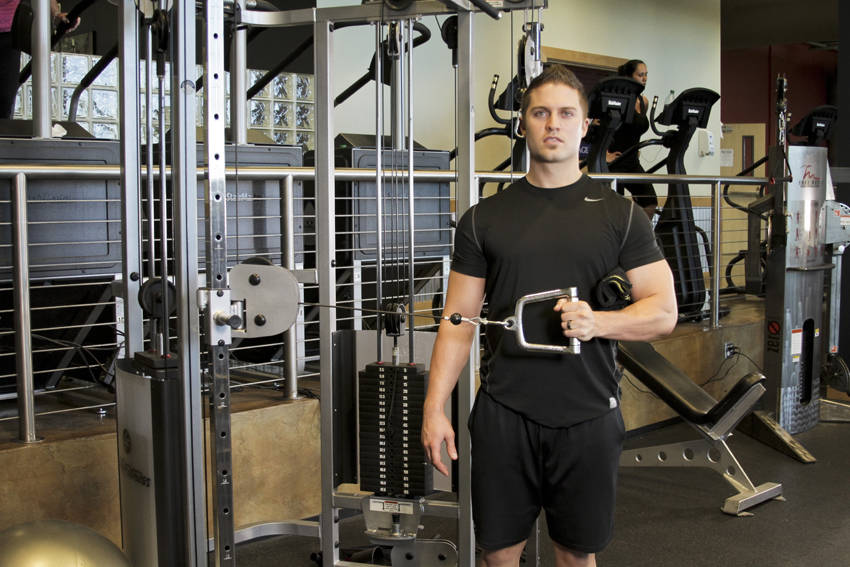
8. External Rotation With Cable
74% match- Rotator Cuff
- Cable
- Beginner
- Isolation
How to perform this exercise
- Adjust the cable to the same height as your elbow. Stand with your left side to the band a couple of feet away.
- Grasp the handle with your right hand, and keep your elbow pressed firmly to your side. We recommend you hold a pad or foam roll in place with your elbow to keep it firmly in position.
- With your upper arm in position, your elbow should be flexed to 90 degrees with your hand reaching across the front of your torso. This will be your starting position.
- Execute the movement by rotating your arm in a backhand motion, keeping your elbow in place.
Sets and reps: 3 sets of 10 to 15 reps on each side.
Why this matches
- Primary muscle: rotator cuff, not delts
- Equipment: a cable, not a band
- Body position: standing, the same as the Internal Rotation With Band
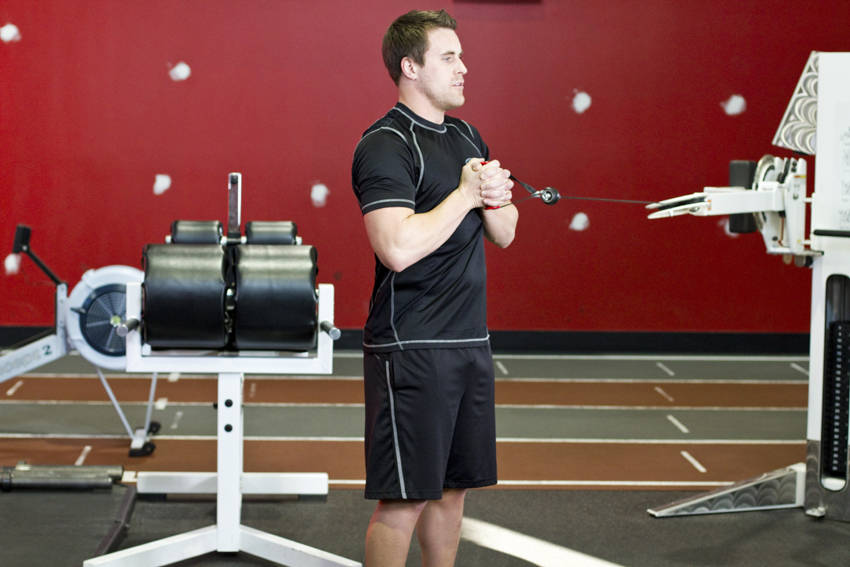
9. Pallof Press With Rotation
67% match- Abs
- Cable
- Intermediate
- Compound
How to perform this exercise
- Connect a standard handle to a tower, and position the cable to shoulder height.
- With your side to the cable, grab the handle with one hand and step away from the tower. You should be approximately arm's length away from the pulley, with the tension of the weight on the cable. Align outstretched arm with cable.
- With your feet positioned hip-width apart, pull the cable into your chest and grab the handle with your other hand. Both hands should be on the handle at this time.
- Facing forward, press the cable away from your chest. You core should be tight and engaged.
- Keeping your hips straight, twist your torso away from the pulley until you get a full quarter rotation.
- Maintain your rigid stance and straight arms. Return to the neutral position in a slow and controlled manner. Your arms should be extended in front of you.
- With the side tension still engaging your core, bring your hands to your chest and immediately press outward to a fully extended position. This constitutes one rep.
- Repeat to failure.
- Then, reposition and repeat the same series of movements on the opposite side.
Sets and reps: 3 or 4 sets of 6 to 10 reps on each side.
Why this matches
- Primary muscle: abs, not delts
- Equipment: a cable, not a band
- Body position: standing, the same as the Internal Rotation With Band
- Balance: harder to stay steady on than the Internal Rotation With Band
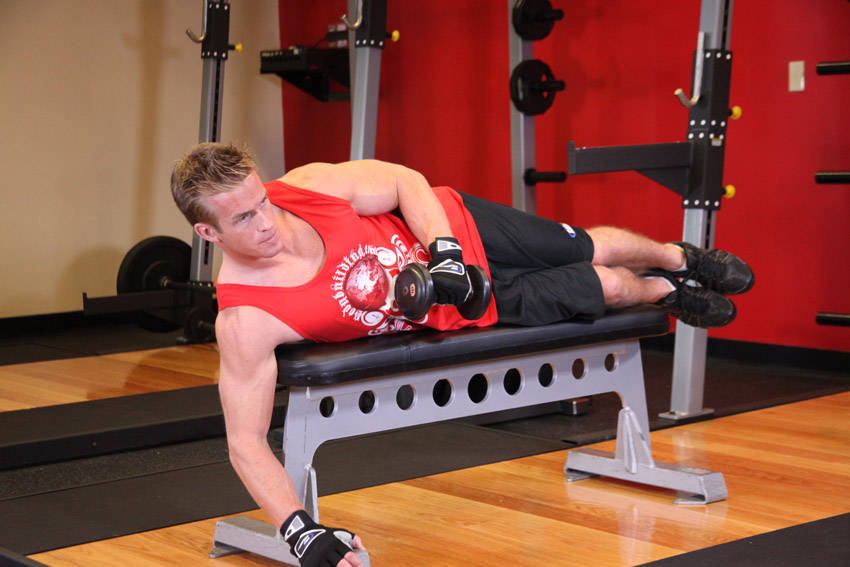
10. External Rotation
66% match- Rotator Cuff
- Dumbbell
- Beginner
- Isolation
How to perform this exercise
- Lie sideways on a flat bench with one arm holding a dumbbell and the other hand on top of the bench folded so that you can rest your head on it.
- Bend the elbows of the arm holding the dumbbell so that it creates a 90-degree angle between the upper arm and the forearm. Tip: Keep the arm parallel to your torso.
- Now bend the elbow while keeping the upper arm stationary. In this manner, the forearm will be parallel to the floor and perpendicular to your torso (Tip: So the forearm will be directly in front of you). The upper arm will be stationary by your torso and should be parallel to the floor (aligned with your torso at all times). This will be your starting position.
- As you breathe out, externally rotate your forearm so that the dumbbell is lifted up in a semicircle motion as you maintain the 90 degree angle bend between the upper arms and the forearm. You will continue this external rotation until the forearm is perpendicular to the floor and the torso pointing towards the ceiling. At this point you will hold the contraction for a second.
- As you breathe in, slowly go back to the starting position.
- Repeat for the recommended amount of repetitions and then switch to the other arm.
Sets and reps: 3 sets of 10 to 15 reps on each side.
Why this matches
- Primary muscle: rotator cuff, not delts
- Equipment: free weights, not a band
- Body position: seated, not standing
Why You Might Need an Internal Rotation With Band Alternative
You may substitute Internal Rotation With Band for several reasons: shoulder pain, limited band access, or a need for progressive overload. Pain often stems from poor scapular control or impingement; alternatives let you adjust arm angle, load, and range of motion to reduce anterior capsule stress. For rehab, choose isometrics or low-load dumbbell variations to limit shear at the glenohumeral joint while still activating the anterior deltoid and subscapularis. For strength or hypertrophy, use cables or unilateral dumbbell internal rotations to increase time under tension and load without changing the fundamental internal-rotation movement pattern. Always keep the elbow pinned and avoid compensatory trunk rotation.
How to Choose the Right Internal Rotation With Band Substitute
Select a substitute based on joint tolerance, desired overload, and movement specificity. If pain limits range, use isometric internal rotations against a fixed object to train motor control while minimizing movement through the painful arc. For progressive loading, pick cable or single-arm dumbbell variations that allow precise resistance and tempo changes. Prioritize exercises that maintain a stable scapula and a 90° elbow position to isolate internal rotators and the anterior deltoid. If you need carryover to pressing, choose horizontal-plane variations that reproduce the same shoulder internal rotation angle. Cue: brace the scapula and rotate only at the glenohumeral joint.
Internal Rotation With Band FAQ
What muscles does Internal Rotation With Band work?
Internal Rotation With Band mainly targets the anterior deltoid and internal rotators of the shoulder, especially the subscapularis. It also engages the pecs and biceps to a lesser degree while the scapular stabilizers maintain position.
What is the best bodyweight alternative to Internal Rotation With Band?
A practical bodyweight option is an isometric internal rotation against a doorframe or immovable surface: press your forearm into the frame with the elbow at 90° and hold 10–30 seconds. Cue: keep the scapula retracted and avoid trunk lean to ensure rotator-cuff and anterior deltoid activation.
Can I build muscle without doing Internal Rotation With Band?
Yes. You can hypertrophy the anterior deltoid and internal rotators using dumbbell lying internal rotations, cables, or specific pressing variants that reproduce the same internal-rotation stress. Focus on progressive load, controlled tempo, and maintaining proper elbow position for consistent muscle activation.
Find Alternatives for Any Exercise
Search the exercise database and filter the ranked substitutes by the equipment you own.
Similarity scores compare exercise metadata such as movement pattern, muscles, equipment and body position. They are not a safety rating or a check that you own the equipment. Learn about our methodology